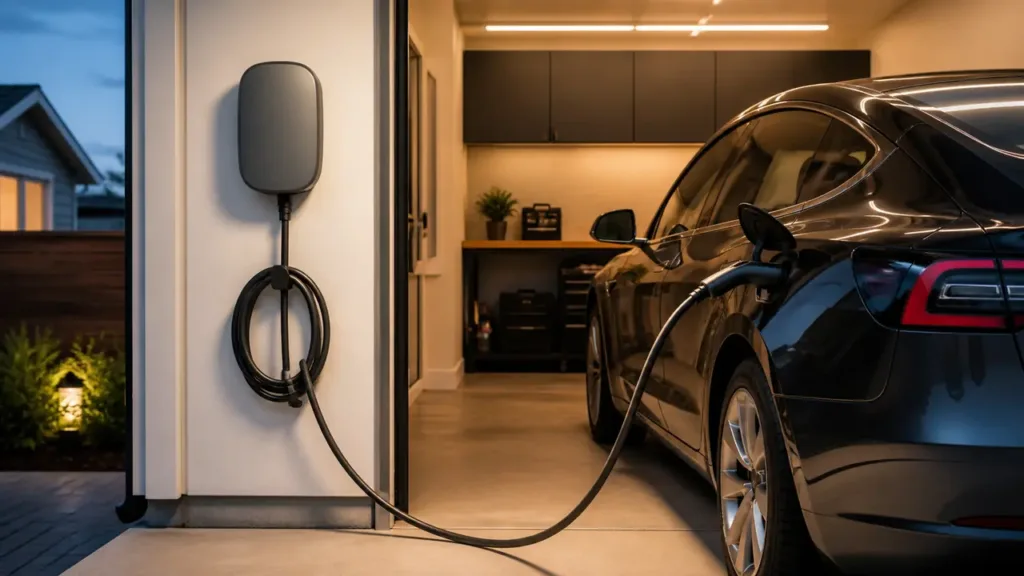
Finding the best Tesla home charger alternative usually starts with a simple frustration: the garage setup does not fit every driver the same way. Maybe you want a portable unit that can travel with you. Maybe you need a plug-in charger because a hardwired wall box feels like overkill. Or maybe you share charging duty between a Tesla and another EV, and the factory-style setup feels too narrow. The common mistake is chasing raw speed alone and overlooking the little stuff that matters every morning, like cable reach, plug type, weather resistance, and whether the charger plays nicely with your breaker setup.
The right pick depends on how you actually live with the car. Apartment dwellers usually care about portability and outlet flexibility. Commuters tend to want a reliable Level 2 unit that stays ready in the garage. Multi-EV households need compatibility and a cleaner install path. The standout recommendation here is the Tesla Universal Wall Connector, because it gives the closest thing to a future-proof home charging setup without boxing you into one connector style.
If you are short on time, the quick picks below give you the fastest read on the field.
Quick Picks
- Best Overall: Tesla Universal Wall Connector
- Best Premium: Tesla Universal Wall Connector
- Best Budget: eTimxon Level 2 & Level 1 EV Charger
- Best Value: AIMILER Level 2 Tesla Charger
Best Tesla Home Charger Alternative Comparison Table
| Product | Best For | Main Strength | Key Specs |
|---|---|---|---|
| Tesla Universal Wall Connector | Most households and multi-EV setups | Dual NACS and J1772 support | Up to 48A, 24 ft cable, Wi-Fi |
| AIMILER Level 2 Tesla Charger | App-controlled plug-in charging | Smart scheduling and adjustable current | 32A, 25 ft cable, NEMA 14-50 |
| 2026 Upgraded Level 1&2 Tesla Mobile Charger | Travel and mixed outlet use | Portable dual-voltage flexibility | 8A to 16A, 21 ft cable, timer |
| Level 2 EV Charger for Tesla | Portable high-output home charging | Strong Level 2 output with TFT display | 32A, 23 ft cable, NEMA 14-50 |
| Level 2 & Level 1 Mobile Charging for Tesla | Budget-minded Tesla owners | Low-cost dual-use charging | 16A, 25 ft cable, NACS |
| Portable Level 1/2 EV Charger for Tesla | Door-button convenience and travel | Wireless charge-port opening | 16A, 25 ft cable, IP66 |
| Level 2 & Level 1 EV Charger for Tesla Mobile Charging | Balanced everyday portability | Solid midrange feature set | 16A, 25 ft cable, ETL |
| FOCSPROD for Tesla to J1772 Charger Adapter | J1772 drivers needing Tesla-side compatibility | Simple adapter convenience | Up to 60A, UL 2252, compact |
| Level 1/2 Tesla EV Charger | App visibility and all-weather portability | LCD plus app monitoring | 16A, 25 ft cable, dual voltage |
For a closer look at how these chargers differ in daily use, the detailed reviews below walk through the tradeoffs that matter most.
1. Best Overall: Tesla Universal Wall Connector

The Tesla Universal Wall Connector earns the top spot because it solves a problem that keeps showing up in real garages: too many homes are no longer a one-brand charging household. If you have a Tesla now and a J1772 vehicle later, or a friend or family member occasionally plugs in, this unit keeps the setup from feeling boxed in. The dual connector support is the big win here, and it makes the charger feel more like an investment than a single-car accessory. It also brings the clean, purpose-built look many owners want on a permanent home install, with a cable that feels substantial and a wall-mounted setup that looks tidy instead of improvised.
Performance is where this charger really flexes. Up to 48A output gives it the kind of headroom that makes overnight charging feel effortless, especially if your electrical panel can support it. The Wi-Fi connectivity and firmware updates add a modern layer that many plug-and-play chargers skip, and the power-sharing feature is a smart touch for households that may add a second charger later. If you have a newer EV plan, a larger garage, or just want the least fussy long-term answer, this is the one that feels built for the next few years, not the next few months.
Pros
- Supports both NACS and J1772 use, which broadens compatibility.
- Up to 48A output gives it serious home-charging muscle.
- Wi-Fi connectivity enables updates and remote access features.
- Power-sharing support is useful for multi-charger installations.
- Indoor and outdoor installation options make it flexible.
Cons
- Requires a proper installation plan, so it is less casual than a plug-in unit.
- Usually makes more sense for owners ready to commit to a permanent setup.
- Cost sits well above the simpler portable options in this roundup.
If you want the closest thing to a no-compromise home charging answer, this is it. It suits owners who care about clean installation, high output, and future compatibility, especially in homes where another EV may show up later. If you are renting, moving soon, or want something you can toss in the trunk, this probably feels like too much charger for the job.
To buy this product, click here.
2. Best Value: AIMILER Level 2 Tesla Charger

The AIMILER charger makes a strong case for itself if you want a smart plug-in unit without paying for the polished-wallbox experience. It feels like the kind of charger that fits a real suburban garage: bracket it near the outlet, keep the cable handy, and let the app handle the schedule. The 32A ceiling is plenty for most overnight routines, and the 25-foot cable gives you enough slack to work around awkward parking angles, which matters more than people expect after a few cold mornings or rainy nights.
What gives this model extra appeal is the mix of app controls and straightforward physical operation. You can leave it in plug-charge mode for simple use, or lean on the app when you want timed charging and session tracking. That is handy for households that try to avoid peak utility rates or for drivers who like seeing a record of what they used. It also supports adjustable current, which makes it easier to match different circuits. The tradeoff is that it asks for a little more setup awareness than the most basic charger, but the payoff is a flexible unit that slots into everyday life with very little drama.
Pros
- Good balance of charging speed, app control, and price.
- Adjustable current helps match different circuit sizes.
- Wi-Fi app features add scheduling and charging history.
- 25-foot cable is practical for garages and driveways.
- ETL certification and built-in protection features inspire confidence.
Cons
- Works best with a 240V outlet, so it is not as plug-anywhere friendly as a portable dual-voltage charger.
- J1772 vehicles need an adapter, which adds one more thing to keep track of.
- The app setup can feel fussy on some home networks.
This is a smart pick for Tesla owners who want a serious home charger alternative without stepping into premium-wall-connector territory. It works best for drivers who mainly charge in one place but still want app control and flexible amperage. If your plan is to move the charger around constantly, you will probably be happier with one of the portable picks below.
To buy this product, click here.
3. Best For Travel Flexibility: 2026 Upgraded Level 1&2 Tesla Mobile Charger

This Raylix mobile charger stands out because it understands how messy real charging can be. One night you are in your own garage, the next you are parked at a friend’s place or squeezed into a motel spot with the kind of outlet that makes you squint and think twice. The dual-voltage design gives you that flexibility, and the 5-15 plus 6-20 support means you are not locked into one charging scenario. The 21-foot cable is a touch shorter than some rivals, but it still covers the basics well for a mobile kit that is meant to stay light and manageable.
The smart delay timer and adjustable current controls are where this model starts to feel more polished than a typical travel charger. You can slow things down to fit a weaker outlet or schedule charging overnight and wake up to a fuller battery without thinking about it. The TFT display is another nice real-world detail because it gives you direct feedback at the charger instead of forcing you to guess from the car’s screen alone. For road-trip drivers, multi-stop families, and anyone who keeps a backup charger in the trunk, this one feels like a clever little survival tool for EV life.
Pros
- Dual-voltage support makes it useful in more places.
- Adjustable current and timer add useful control.
- TFT display gives clear live charging data.
- Built-in safety features and water resistance help for mobile use.
- Compact enough to keep as a backup or travel charger.
Cons
- Not the fastest option in this roundup.
- The 21-foot cable may feel a bit tight in some driveway setups.
- Best for flexibility, not for owners chasing maximum wall-mounted power.
If your charging routine changes from week to week, this is one of the easiest chargers to live with. It suits Tesla owners who want a dependable portable option without paying for a fixed install, especially travelers and apartment dwellers. If you need a permanent high-output home solution, the slower charging ceiling here may feel limiting.
To buy this product, click here.
4. Best Portable High-Output Option: Level 2 EV Charger for Tesla
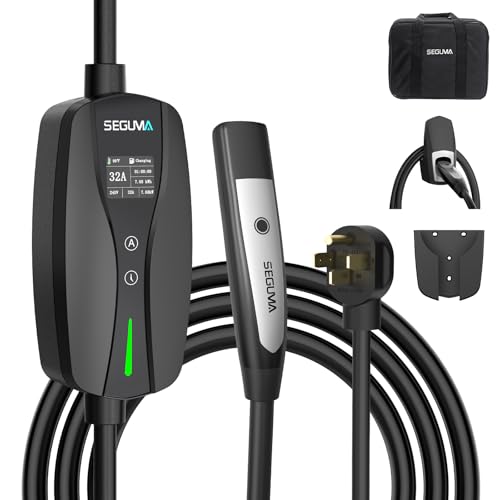
The Seguma 32A charger feels like the sweet spot for buyers who want Level 2 speed without committing to a hardwired setup. The 32A rating and NEMA 14-50 plug put it into the useful middle ground where it can handle most home garage routines with ease. That makes it a nice fit for people who already have the right outlet or plan to have one installed, but still want a charger that can be unplugged and taken along if needed. The 23-foot cable is long enough for most parking situations, and the included holders and carry bag make the whole thing feel thoughtfully packaged rather than thrown together.
The 1.77-inch TFT display is surprisingly handy because it keeps the key information visible without forcing you to lean into the Tesla screen every time. That matters during bad weather or quick top-offs when you just want to confirm the amperage and move on. Its strong weather resistance also gives it a practical edge for owners who may leave it in a garage with temperature swings or use it on outdoor circuits. If you want a rugged, balanced, move-it-between-locations charger with a real sense of everyday utility, this one hits the mark nicely.
Pros
- 32A Level 2 output is a strong fit for home charging.
- Long 23-foot cable improves parking flexibility.
- TFT display shows useful live charging information.
- Portable design includes holders and a carry bag.
- Good weather resistance for garage or outdoor use.
Cons
- Needs a suitable 240V outlet for best results.
- Not as smart-feature heavy as app-first chargers.
- Bulkier than the lightest mobile units.
This is a strong choice for drivers who want more output than a 16A travel charger but still want portability. It works especially well for homeowners with a NEMA 14-50 setup who may occasionally take the charger on the road. If you want a permanent install with app control and Wi-Fi, the AIMILER or Tesla wall unit will feel more refined.
To buy this product, click here.
5. Best Budget Pick: Level 2 & Level 1 Mobile Charging for Tesla
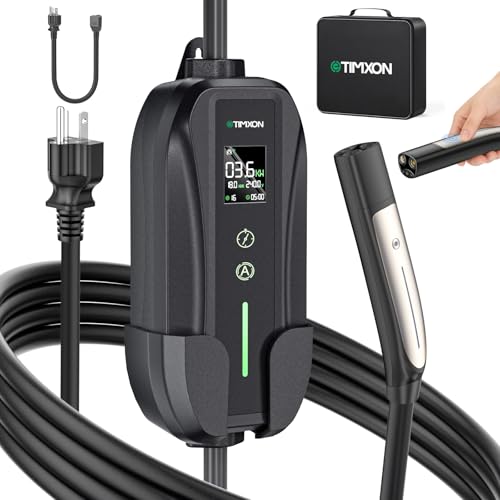
This eTimxon charger earns its budget tag by focusing on the basics that matter most: dual-voltage support, a Tesla-native connector, and a price that stays within easy reach. It is the sort of charger a practical owner buys after realizing they do not need a giant wall unit just to keep a Model 3 or Model Y fed overnight. The 6-20 plug gives it meaningful Level 2 capability for homes with the right outlet, while the 5-15 adapter makes it a backup for slower charging in a pinch. That flexibility can be a lifesaver for travel, temporary housing, or a second-car setup where charging needs shift a lot.
The feature list is straightforward, and that is part of the charm. You get a 25-foot cable, temperature protection, and a portable format that is easy to stash in the trunk. It is not trying to be the flashiest charger on the shelf. Instead, it keeps the experience simple and dependable. For the buyer who wants a low-cost Tesla home charger alternative and values a usable, no-fuss tool over a feature-packed gadget, this one is easy to respect.
Pros
- Very approachable price for a dual-voltage Tesla charger.
- Works for both Level 1 and Level 2 use.
- 25-foot cable gives decent reach.
- Portable enough for storage in the car.
- Temperature protection adds peace of mind.
Cons
- Only 16A, so it is slower than higher-output chargers.
- Manual current management is less convenient than app-based controls.
- Best for lighter-duty use rather than heavy daily charging loads.
If you want the least expensive route into Tesla-compatible home charging, this is one of the most appealing choices in the group. It suits commuters, backup-charger shoppers, and anyone who wants flexibility without a major spend. If your battery is large and your daily mileage is high, the slower charge rate may get old fast.
To buy this product, click here.
6. Best Convenience Feature: Portable Level 1/2 EV Charger for Tesla

The little detail that makes this Seguma model memorable is the wireless charging-port door control. It sounds minor until you use it in the dark with your hands full or during a wet evening when you would rather skip fumbling around the car body. That kind of daily convenience is what makes a charger feel well thought out. Beyond that, it offers the same useful dual-voltage formula many owners want: 6-20 for Level 2 and 5-15 for slower charging, plus a 25-foot cable and a portable bag for travel. It feels like a charger built for people who live a fairly ordinary charging life, but still appreciate a clever shortcut.
Safety and durability are solid enough to matter. The IP66 rating, flame-retardant jacket, and automatic shutoff all help make it comfortable as a backup or daily portable option. It is also easy to mount and move, which adds to the practical appeal. If you like small convenience wins, this is the kind of charger that quietly improves your routine without asking you to relearn anything. It may not have the highest output in the group, but it has one of the most satisfying day-to-day user experiences.
Pros
- Wireless charge-port door button is a standout convenience.
- Dual-voltage support adds flexibility.
- 25-foot cable works well for everyday parking layouts.
- IP66 protection and solid safety features help durability.
- Portable format is handy for home and travel use.
Cons
- 16A output keeps it in the slower range for Level 2 charging.
- Not ideal if you need rapid overnight replenishment.
- Does not suit dryer outlets, which narrows outlet compatibility.
This is a nice fit for Tesla owners who care about convenience as much as charging basics. It works well for daily drivers who want a backup unit they can also travel with. If your top priority is raw charging speed, this is not the strongest match, but if you enjoy little quality-of-life touches, it is a very likable option.
To buy this product, click here.
7. Best Balanced Midrange Pick: Level 2 & Level 1 EV Charger for Tesla Mobile Charging

This eTimxon charger sits in a very practical lane. It is not trying to be the fastest or the smartest, but it does enough things well that a lot of buyers will find it perfectly satisfying. The 16A output is respectable for a mobile charger, and the 25-foot cable makes garage or driveway positioning easy enough that you do not feel tethered to one exact spot. That matters more than people think when a car is parked a little crooked, the outlet is on the wrong wall, or you just want a bit more slack around the front end.
What helps this model stand out is the 5-level adjustable current and delay timer, which gives it more control than the bare-bones budget crowd. The ETL certification and 2-year warranty also help it feel like a stable middle choice for buyers who are nervous about going too cheap. It is the kind of charger that makes sense if you want a dependable backup with enough flexibility to handle home use, travel, and occasional top-offs without making a big production out of it.
Pros
- Solid midrange blend of features and cost.
- Adjustable current and delay timer add useful control.
- 25-foot cable improves placement flexibility.
- ETL certification and warranty help reassure cautious buyers.
- Portable enough to keep as a travel backup.
Cons
- Still limited to 16A, so it will not satisfy speed seekers.
- The setup and outlet requirements need a little attention.
- Lacks the app polish of smarter competitors.
This charger makes the most sense for buyers who want dependable portability with a few extra controls, but do not need a premium feature set. It is a good fit for commuters and backup-charger users who value a balanced buy. If you want a charger that feels richer in software or easier to monitor from your phone, the AIMILER or Energbison will probably suit you better.
To buy this product, click here.
8. Best Adapter Option: FOCSPROD for Tesla to J1772 Charger Adapter

This FOCSPROD adapter is a different kind of recommendation, and that is exactly why it deserves a place here. If you own a J1772 vehicle and want to tap into Tesla charging equipment, a good adapter can be a lot more useful than buying yet another standalone charger. The compact shape keeps it easy to store in the car, and the 60A rating gives it enough capacity for strong Level 2 charging with compatible Tesla hardware. That makes it ideal for drivers who split charging access between home and public destinations where Tesla-side equipment is available.
Its biggest strength is simplicity. There is no app to tinker with and no giant box to mount on the wall. You plug it in, lock it down, and keep moving. The UL 2252 safety compliance is reassuring, especially for a small accessory that sits in the middle of your charging chain. If your current charging life already includes a J1772 EV and you want access to Tesla chargers without replacing your whole setup, this is a tidy, focused solution that does one thing well.
Pros
- Great for J1772 drivers who want Tesla charger compatibility.
- Compact and easy to keep in the vehicle.
- Supports up to 60A for Level 2 use.
- UL 2252 safety compliance adds confidence.
- Simple operation with very little setup friction.
Cons
- It is an adapter, so it does not serve Tesla owners seeking a standalone home charger.
- Not compatible with Superchargers or DC fast charging.
- Its usefulness depends entirely on the rest of your charging ecosystem.
This is a niche pick, but a genuinely helpful one for the right buyer. It suits households where a Tesla charging setup already exists and another EV needs access. If you are specifically shopping for a Tesla home charger alternative for a Tesla vehicle, this is less relevant than the chargers above, but for mixed-brand garages it can be the right missing piece.
To buy this product, click here.
9. Best For Monitoring: Level 1/2 Tesla EV Charger

The Energbison charger is the one you pick when you want a little more visibility into what your car is doing. The built-in LCD screen and companion app give it a clear edge over the simplest portable models, especially for owners who like checking voltage, current, energy use, and temperature without relying only on the vehicle display. That kind of live data can be comforting if you have ever looked at a charger cable in the rain and thought, “I just want to know this thing is behaving.” The 25-foot cable and travel bag make it practical too, so it does not feel like a gadget trapped in one garage.
Dual-voltage use keeps it flexible across home and travel situations, and the NACS connector with charge-port door button makes it feel nicely Tesla-specific. It is also built for rougher conditions, with IP66 protection and a tough jacket that should hold up well to regular handling. This model is a solid fit for drivers who want more feedback and monitoring than the average portable charger offers, but do not want to jump all the way to a permanent wall-mounted setup. It is a tidy, smart-feeling middle road.
Pros
- LCD screen and app make charging status easy to monitor.
- Dual-voltage flexibility covers Level 1 and Level 2 use.
- 25-foot cable is practical for home and travel.
- IP66 rating helps it stand up to rough weather.
- Charge-port door button adds convenience for Tesla owners.
Cons
- 16A output is fine, but not quick compared with higher-power units.
- App features add value, yet also add setup complexity.
- Not the cheapest portable option in the lineup.
This charger fits owners who like to see more information while their car charges. It is especially appealing for daily users who split time between home and travel and want one charger they can trust in both places. If you want the fastest possible charge, look higher up the list, but if visibility and portability matter, this one makes a lot of sense.
To buy this product, click here.
How To Choose The Right Best Tesla Home Charger Alternative
Think About Permanent Versus Portable Use
The first big decision is whether you want a charger that lives on the wall or one that can ride in the trunk. A permanent wall unit feels cleaner and usually offers better output, while a portable charger gives you more freedom if your parking situation changes. A homeowner with a dedicated garage often benefits from a mounted charger, while a renter or frequent traveler usually gets more mileage from a portable design.
Match The Plug Type To Your Circuit
Most buyers make the mistake of shopping by amperage alone and forgetting the outlet. NEMA 14-50, NEMA 6-20, and NEMA 5-15 setups each tell a different story. If your garage already has the right 240V outlet, a plug-in Level 2 charger can be a sweet spot. If you only have standard household outlets, a dual-voltage charger keeps you from painting yourself into a corner.
Check Output Before You Chase Speed
Higher amperage usually means faster charging, but only if your panel and outlet can support it. A 48A wall charger is excellent for high-demand households, yet many drivers are perfectly served by 16A to 32A units. If your daily commute is moderate, chasing the biggest number often wastes money and may complicate installation for no real gain.
Look At Cable Length And Parking Layout
Cable length sounds boring until the first time you park slightly off-center and the plug is two feet short. A longer cable makes life easier in narrow garages, driveway setups, and shared parking spots. For portable chargers, a 25-foot cable often feels like the difference between “works every time” and “works only if I park perfectly.”
Do Not Ignore Weather And Build Quality
If the charger will live near a garage door or outdoors, weather resistance matters a lot. IP66 and similar ratings are reassuring, but the rest of the build matters too, including the cable jacket, connector feel, and strain relief. A charger that feels sturdy in hand usually ages better than one that flexes too much or looks delicate out of the box.
Use Smart Features For Real Needs
Wi-Fi, app controls, timers, and load monitoring are useful if you actually plan to use them. Some buyers love scheduling off-peak charging and checking history. Others just want to plug in and go to bed. It is easy to overspend on software features that never get touched, so think about whether you will really use the app every week or just admire it once and forget it.
Consider Who Else Might Use The Charger
Households with more than one EV should focus on compatibility first, then output second. A charger that works with both NACS and J1772 can save headaches later. If you may share the unit with a family member, valet, or another household car, broad compatibility and a simple interface usually matter more than a flashy display.
Best Tesla Home Charger Alternative FAQ
What Is The Best Tesla Home Charger Alternative For Most Buyers?
The Tesla Universal Wall Connector is the strongest all-around choice for most buyers. It offers broad compatibility, strong output, and a polished home-install feel that suits both current Tesla owners and households that may add another EV later.
Do I Need A Wall-Mounted Charger Or Is A Portable Unit Enough?
If you charge in one place every night, a wall-mounted unit usually feels cleaner and easier to live with. If your parking spot changes often, you rent your home, or you travel a lot, a portable charger is usually the more practical path.
How Much Charging Speed Do I Really Need?
Most daily drivers do fine with 16A to 32A as long as they charge overnight. Faster units are nice, but they matter most for large batteries, heavy commuting, or households where more than one person needs access to the charger.
Are Dual-Voltage Chargers Worth It?
Yes, if you value flexibility. A dual-voltage charger can handle a stronger 240V outlet at home and still work from a standard outlet in a pinch. That makes it much more useful for travel, temporary parking, or backup use.
What Should I Watch For With Home Installation?
Check the breaker size, outlet type, and whether the charger is designed for plug-in or hardwired use. A charger that looks great on paper can become annoying if your electrical setup does not match its needs. A quick look at your panel can save a lot of hassle.
Is App Control Actually Useful?
For some drivers, absolutely. App control helps with scheduling, charging history, and off-peak energy use. If you like simple routines and do not care about data, a non-app charger may be all you need. The feature is nice, but it is not essential for everyone.
Can One Charger Work For More Than One EV Brand?
Yes, especially if the charger supports both NACS and J1772 or if you are willing to use an adapter. Mixed-brand households should pay close attention to connector type, since that choice often matters more than the speed rating.
Final Verdict
The Tesla Universal Wall Connector is the best Tesla home charger alternative for buyers who want the cleanest blend of compatibility, power, and future readiness. It feels like the safest top pick because it can handle a wide range of North American EVs, supports strong output, and fits the kind of garage setup that grows with the household instead of getting replaced a year later. If you want a permanent install and you are serious about charging convenience, this is the one that looks smartest over time.
For shoppers who want to keep costs down, the eTimxon budget pick is the easiest low-friction entry point, while the AIMILER stands out as the best value choice for app control and 32A output. Portable buyers have several strong options too, especially the Raylix and Seguma models, which make a lot of sense if your charging life splits between home, road trips, and backup duty. The right choice really comes down to how you park, how often you move, and how much speed you actually need each night. Match the charger to your routine, and the whole EV ownership experience gets a lot smoother from there.