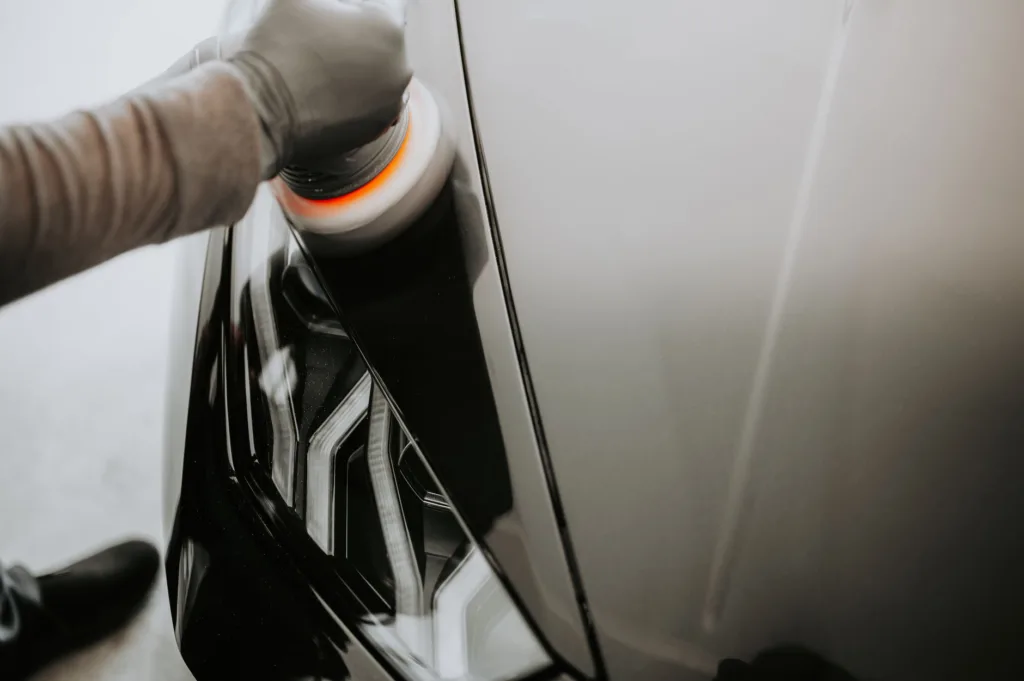
Paint correction is the process of removing or reducing defects in a vehicle’s clear coat so the paint looks smoother, glossier, and more reflective. Those defects usually include swirl marks, fine scratches, oxidation, water spots, holograms, and other surface imperfections that dull the finish. In simple terms, paint correction restores clarity to the paint by carefully leveling the clear coat, not by hiding the damage.
Many people confuse paint correction with waxing or polishing for shine alone. While those steps can improve appearance, true paint correction is more specific and more technical. It is usually done with a machine polisher, the right pads, the right compounds or polishes, and a measured approach so the clear coat is improved without removing more material than necessary.
What Paint Correction Actually Does
Modern automotive paint typically has a base coat for color and a clear coat on top for gloss and protection. Most visible defects sit in that clear coat. Paint correction works by refining the surface so light reflects more evenly, which makes the paint look deeper, sharper, and cleaner.
The key point is that paint correction is not just “buffing the car.” It is a controlled abrasive process. A detailer uses a compound or polish with a pad and machine to remove a very thin layer of clear coat, or to reshape the uppermost surface, depending on the product and method used. The goal is to reduce the depth and visibility of imperfections.
Because clear coat is limited, correction has to be done carefully. A car can only be polished so many times over its life, and aggressive work can permanently thin the finish. That is why good paint correction focuses on the least aggressive method that will achieve the result needed.
What Problems Paint Correction Can Fix
Paint correction is designed for surface defects, not structural damage. It can improve many common cosmetic issues, but it cannot repair every kind of paint problem.
Common defects paint correction can improve
- Swirl marks, which are the circular fine scratches often seen in sunlight.
- Light scratches, especially those that do not go through the clear coat.
- Water spots, if they are superficial mineral deposits or etched lightly into the clear coat.
- Oxidation, where the paint looks faded, chalky, or dull from exposure.
- Holograms or buffer trails, often caused by poor machine polishing technique.
- Etching from bird droppings, tree sap, or bug residue, if the damage is not too deep.
- Rough, hazy, or lifeless paint appearance caused by improper washing or aging.
What paint correction usually cannot fix
- Deep scratches that go through the clear coat or into the color coat.
- Rock chips, unless they are repaired separately with touch-up paint.
- Peeling or failing clear coat.
- Rust or corrosion.
- Paint mismatch from prior repairs or resprays.
- Dents and body damage.
If you can feel a scratch clearly with your fingernail, there is a good chance it is too deep to remove safely with correction alone. In that case, the scratch may be reduced visually, but it will not disappear completely without repainting or using a repair process beyond standard detailing.
How Paint Correction Works
Paint correction usually involves a combination of inspection, cleaning, test polishing, and controlled machine polishing. The exact process depends on the condition of the vehicle and the level of correction needed.
1. Inspection and lighting
The vehicle is examined under bright, focused lighting so the defects are visible. Normal shop lighting or sunlight from the wrong angle may not reveal the full condition of the paint. Good inspection helps identify where the worst defects are and how much correction may be possible.
2. Washing and decontamination
The paint must be fully cleaned before any correction begins. Dirt, tar, iron deposits, and bonded contaminants can interfere with the polishing process and may even create more marks if they are dragged across the paint.
This usually includes:
- A careful hand wash
- Tar or bug removal if needed
- Iron removal in some cases
- Clay bar or synthetic clay decontamination, when appropriate
Skipping proper prep is one of the most common reasons correction work fails to look right.
3. Test spot
A test spot is a small section of paint that is polished first to see how the finish responds. This helps determine the right pad, product, and machine speed. A test spot avoids jumping immediately to aggressive methods that might remove too much clear coat.
4. Compounding or polishing
This is the actual correction stage. A compound is more abrasive and used for heavier defects. A polish is less abrasive and used for refining the finish or removing lighter imperfections. Sometimes both are used in sequence.
Machine polishers are commonly used because they provide more consistent results than hand polishing. Two common machine types are:
- Dual-action polisher, which oscillates and rotates, making it generally safer for beginners and less likely to create heat damage.
- Rotary polisher, which spins in one direction and can cut faster but requires more skill because it can create heat and holograms more easily.
5. Final refinement
After defect removal, a finishing polish may be used to maximize clarity and gloss. This step is especially useful on darker vehicles, where even small haze marks can be visible. Refinement helps the finish look crisp under direct light.
6. Protection
Once the paint is corrected, it should be protected. Correction leaves the paint looking improved, but the surface is still vulnerable to new contamination and scratches if left bare. Protection can be wax, sealant, or a ceramic coating, depending on the owner’s goals and maintenance habits.
Paint Correction vs Polishing vs Waxing
These terms are often used interchangeably, but they do not mean the same thing. Understanding the difference helps set realistic expectations.
| Process | Main Purpose | Removes Defects? | Improves Shine? | Protects Paint? |
|---|---|---|---|---|
| Waxing | Adds a protective layer and boosts gloss | No, not really | Yes, slightly | Yes |
| Polishing | Refines the paint and can remove very light defects | Sometimes, depending on severity | Yes | No, not by itself |
| Paint correction | Removes or reduces visible defects in the clear coat | Yes, often significantly | Yes, substantially | No, protection is separate |
Wax can make paint look richer, but it does not level scratches or remove swirl marks. Polishing may improve the look of the paint, but paint correction is the broader process of defect removal and refinement. In practice, paint correction often includes polishing, but not every polish qualifies as real correction.
One-Step, Two-Step, and Multi-Step Paint Correction
Not every car needs the same level of work. The amount of correction depends on the paint’s condition and how perfect the owner wants it to look.
One-step correction
A one-step correction uses a single polishing stage that balances defect removal and finish quality. It is often chosen for vehicles with moderate swirl marks or light oxidation. It will improve gloss and reduce many visible marks, but it may not eliminate deeper defects.
Two-step correction
A two-step correction usually involves compounding first, then polishing. Compounding removes more visible defects, while polishing restores clarity and removes haze left by the heavier step. This is common for cars with heavier swirl marks, dealership prep damage, or neglected paint.
Multi-step correction
Some vehicles need more than two stages, especially if the paint is hard, heavily damaged, or the finish has been previously corrected poorly. Multi-step work is more time-consuming and can increase clear coat removal, so it should only be used when the finish justifies it.
| Correction Type | Typical Goal | Typical Time | Best For |
|---|---|---|---|
| One-step | Improve gloss and reduce light to moderate defects | Several hours to a day | Well-maintained vehicles with light swirls |
| Two-step | Remove more serious defects and refine the finish | One to two days | Cars with heavier swirl marks or oxidation |
| Multi-step | Maximize appearance on difficult paint systems | Two days or more | Severely neglected or show-level finishes |
Why Clear Coat Thickness Matters
Paint correction works because the top layer of clear coat is altered. That is also why it must be done with restraint. If too much clear coat is removed, the paint can lose durability, and in extreme cases the base coat may become exposed.
Clear coat thickness varies by vehicle, panel, repair history, and manufacturer. There is no universal safe amount to remove without measuring. Professional detailers often use a paint thickness gauge to check whether the panel has enough material to handle correction. This is especially important on repainted panels, edges, and body lines, where paint is often thinner.
Areas that are commonly more vulnerable include:
- Sharp edges and panel corners
- Body lines and creases
- Panels that have been repainted
- Heavily weathered horizontal surfaces, such as hoods and roofs
Because of this, a good correction job balances appearance with paint preservation. Removing every flaw is not always the safest or smartest approach.
What Paint Correction Costs
Costs vary widely depending on the car’s size, paint condition, and the level of correction requested. A lightly swirled sedan needs much less labor than a black SUV with heavy wash damage. Regional labor rates also affect pricing.
As a general real-world guide, paint correction can range from a modest single-stage job to a much more expensive multi-stage correction on a full vehicle. The price usually rises with:
- Vehicle size
- Paint hardness
- Severity of defects
- Need for sanding or specialized repair
- Level of finish requested
- Whether protection is included afterward
It helps to think of paint correction as labor-intensive surface restoration rather than a quick detailing add-on. If a quote seems unusually cheap for extensive correction, that often means less time, fewer steps, or less careful work.
Common Mistakes People Make With Paint Correction
Many paint correction problems come from rushing, using the wrong products, or expecting the process to fix damage it was never meant to repair.
Using too much pressure or too aggressive a pad
More aggressive does not always mean better. It can remove defects faster, but it also increases the risk of haze, excessive clear coat removal, and heat-related issues. The least aggressive effective method is usually the right place to start.
Skipping proper wash and decontamination
If the paint is dirty or contaminated, the polishing pad can grind debris into the finish. That can create new scratches while trying to remove old ones.
Correcting damaged paint without checking thickness
If a panel has been repainted or already polished many times, there may not be much clear coat left. Guessing is risky. Measuring when possible is the safer approach.
Expecting perfection from every panel
Some defects are too deep to remove safely. Others may be too close to the edge of the clear coat’s safe limit. A realistic correction plan often means improving the finish a great deal, not making it flawless under every lighting condition.
Leaving the paint unprotected afterward
Corrected paint can look great, but without protection it can pick up new marring quickly. Proper washing technique matters too. A corrected car can still get swirl marks if it is washed poorly.
How to Tell Whether Your Car Needs Paint Correction
Not every vehicle needs paint correction. Some only need a careful wash and protection, while others benefit from more focused work. A quick visual inspection can help you decide.
Signs your car may benefit from correction
- The paint looks dull even after washing
- Swirl marks are visible in sunlight or under LED lights
- Dark paint shows spider-web looking scratches
- Water spots remain after washing
- The finish looks cloudy or hazy
- The car has signs of dealership prep scratches or poor hand washing
Signs correction may not be the right first step
- The vehicle has peeling clear coat
- There are deep chips or scratches that need touch-up or paint repair
- The finish is already very thin from prior work
- The car needs bodywork before cosmetic refinement
If you are unsure, a paint inspection under bright light is usually the easiest way to judge the surface. Black, dark blue, and deep red finishes tend to reveal swirls more easily than silver or white paint.
Paint Correction on Different Paint Colors
All colors can be corrected, but the visibility of defects varies. Dark colors usually show the most improvement, and they also show the most defects.
Black paint
Black paint tends to reveal swirls, haze, and holograms more clearly than almost any other color. It can look dramatic after correction, but it also shows mistakes easily. Finish quality and technique matter a lot.
White, silver, and light colors
These colors often hide fine defects better, so the difference after correction may appear less dramatic at a glance. Even so, the paint can still gain clarity and a smoother appearance. On these colors, contamination and oxidation are often more noticeable than fine swirl marks.
Red and other bright colors
Red paint can oxidize more visibly, especially on older vehicles. Correction can restore brightness and depth, but severe fading may require more than simple polishing if the clear coat has aged heavily.
Paint Correction vs Repainting
Paint correction is often a good option when the issue is only in the clear coat. Repainting is a body-shop solution for damage that correction cannot safely remove.
| Question | Paint Correction | Repainting |
|---|---|---|
| Fixes swirl marks? | Yes | Usually yes, but may be unnecessary |
| Fixes deep scratches through the clear coat? | Usually no | Yes |
| Fixes peeling clear coat? | No | Yes |
| Preserves original paint? | Yes, when done properly | No, it replaces or adds new paint |
| Is it usually less expensive? | Often yes | Usually no |
If the damage is mostly cosmetic and confined to the top layer of the finish, correction is often the better first choice. If the paint is failing, chipped badly, or damaged through the coating layers, repainting may be the proper repair.
Can You Do Paint Correction Yourself?
Yes, but the skill level and risk vary. A beginner can learn basic one-step correction with a dual-action polisher and proper technique, especially on a vehicle that only has light swirl marks. More serious correction, however, takes practice and judgment.
What DIY correction requires
- A safe polishing machine, usually a dual-action polisher
- Proper pads and polishes
- Careful washing and decontamination beforehand
- Good lighting for inspection
- Patience and test spots
DIY risks
- Removing too much clear coat
- Leaving haze or micro-marring
- Creating heat damage on edges or thin panels
- Using the wrong pad or product combination
- Chasing perfection and making the finish worse
If you are working on a newer vehicle, a leased vehicle, or a car with uncertain paint history, cautious methods are especially important. For someone learning, starting with mild products and a simple one-step approach is usually more sensible than attempting heavy correction immediately.
How to Maintain Paint After Correction
Correction can dramatically improve appearance, but maintenance determines how long that improvement lasts. Good wash habits matter as much as the correction itself.
Use proper washing methods
Hand washing with clean mitts, gentle soap, and lots of rinse water helps reduce swirl marks. Avoid dragging dirt across the surface. If possible, use a two-bucket method or another careful washing system that reduces contamination on the mitt.
Dry carefully
Drying can create scratches just as easily as washing. Use clean, soft drying towels and avoid pressing debris into the paint.
Keep the paint protected
Whether you use wax, sealant, or a ceramic coating, the purpose is to add a layer of protection and make the surface easier to clean. Protection does not make the car scratch-proof, but it can help reduce environmental damage and simplify routine maintenance.
Avoid common contamination sources
- Bird droppings
- Tree sap
- Bug remains
- Hard-water spots
- Excessive automatic brush washing
If contamination lands on corrected paint, remove it sooner rather than later. The longer acidic or mineral contaminants sit on the surface, the more likely they are to etch the clear coat.
When Paint Correction Is Worth It
Paint correction is most worthwhile when the paint is structurally sound but visually degraded. That includes daily drivers with swirl marks, enthusiast cars that deserve better appearance, and used cars that need cosmetic improvement before sale or long-term ownership.
It may be especially worthwhile if:
- You own a dark-colored vehicle and want a noticeably cleaner finish
- The vehicle is otherwise in good condition
- You plan to protect the paint afterward
- You want to improve appearance without repainting
It may be less worthwhile if the finish is heavily compromised, if the paint is thin, or if the car has issues that correction cannot solve. In those cases, it can be smarter to focus on necessary repairs first.
FAQs About Paint Correction
Does paint correction remove scratches completely?
It removes or reduces many scratches, but not all of them. If a scratch goes through the clear coat or into the color layer, correction usually cannot eliminate it safely.
Is paint correction the same as polishing?
Not exactly. Polishing is one step that may be part of paint correction. Paint correction is the broader process of removing visible defects and refining the finish.
How long does paint correction last?
The results can last a long time if the car is washed carefully and protected afterward. The finish can lose some of its clarity sooner if it is washed aggressively or exposed to harsh conditions.
Can paint correction damage clear coat?
Yes, if it is done too aggressively or too often. Because correction removes a small amount of clear coat, it should be approached carefully and only as needed.
Do I need paint correction before ceramic coating?
Usually, yes, if the paint has swirl marks or visible defects. A coating locks in the condition of the surface, so correcting the paint first usually produces a better final result.
Will paint correction fix faded paint?
Sometimes. If the paint is only oxidized or dull on the surface, correction can help a lot. If the clear coat is failing or the color coat is damaged, more than polishing may be required.
How can I tell if my car has swirl marks?
Look at the paint in direct sunlight or under a bright inspection light. Swirl marks often appear as fine circular scratches or web-like patterns, especially on dark paint.
Conclusion
Paint correction is the process of improving a vehicle’s paint by removing or reducing defects in the clear coat. It is used to address problems like swirl marks, light scratches, oxidation, water spots, and holograms, but it is not a fix for deep paint damage, peeling clear coat, or bodywork issues.
The most important thing to understand is that paint correction is a controlled process. It can make a big visual difference, but it works by carefully leveling the paint surface, so it must be done with the right tools, proper inspection, and realistic expectations. When paired with good maintenance and protection, a corrected finish can stay cleaner, glossier, and easier to care for.