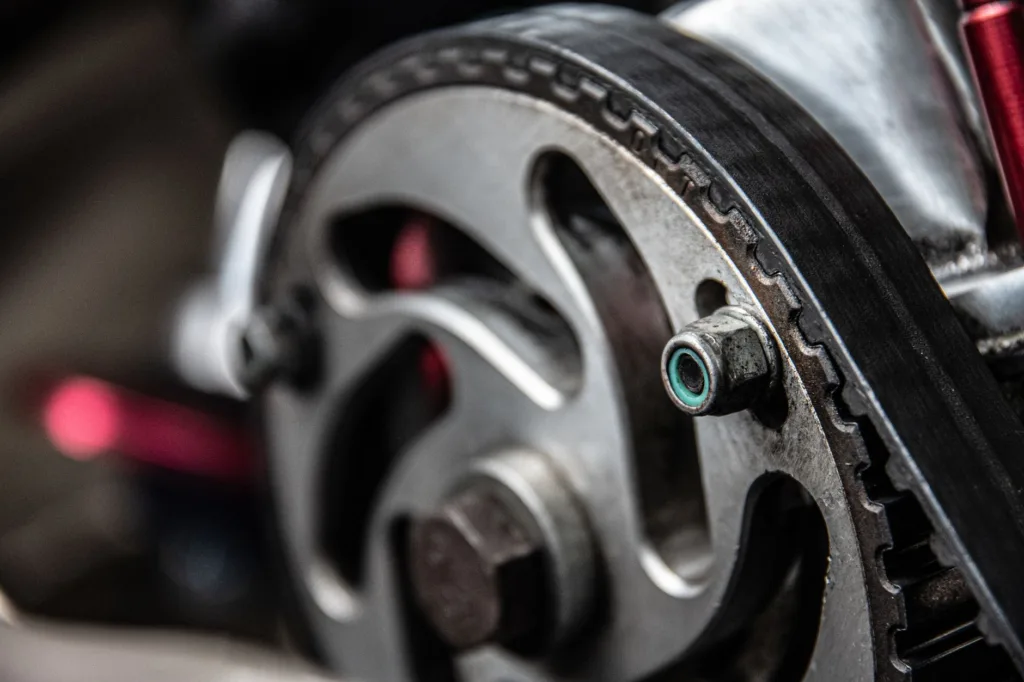
You should inspect a timing belt at every major service or at the interval listed in your owner’s manual, but the more important rule is to replace it on schedule, not wait for visible damage. Most timing belts are replaced somewhere between 60,000 and 100,000 miles, or about 5 to 10 years, depending on the engine and driving conditions. Unlike many other parts, a timing belt can look acceptable and still be close to failure, which is why inspection alone is not enough.
This matters because a worn or failed timing belt can leave you stranded, and on many engines it can also cause severe internal engine damage. If you are unsure when your timing belt was last replaced, it is smart to verify the service history as soon as possible. For many owners, the safest approach is simple: inspect during routine service visits, follow the manufacturer’s replacement interval, and do not push it past the recommended mileage or age.
How often should you inspect a timing belt?
For most vehicles with a timing belt, a reasonable general guideline is to have it checked during regular maintenance inspections, especially once the vehicle is getting closer to its replacement interval. That usually means asking for a visual inspection at oil change intervals if the belt is easily accessible, or at least at major scheduled services.
However, timing belts are often hidden behind covers, and many cannot be properly inspected without partial disassembly. Because of that, the service schedule in the owner’s manual or factory maintenance guide matters more than a quick visual check.
In practical terms:
- Before 60,000 miles: follow the manufacturer schedule, but inspection may not reveal much unless there are symptoms.
- Between 60,000 and 100,000 miles: inspection becomes more important, especially if replacement is approaching.
- On older, low-mileage vehicles: age matters. A belt can deteriorate even if the car is not driven much.
- If service history is unknown: inspection is useful, but replacement is often the safer decision.
If your manual gives a specific interval, use that over any generic rule. Some manufacturers are more conservative than others, and engine design makes a big difference.
Why timing belt inspection is important
The timing belt keeps the crankshaft and camshaft(s) synchronized so the valves open and close at the correct time. If that timing is off, engine performance suffers. If the belt breaks entirely, the engine stops running immediately.
On many modern engines, this is especially serious because they are interference engines. In an interference engine, the pistons and valves occupy the same space at different times. If the timing belt fails, they can collide. That can bend valves, damage pistons, and lead to an expensive engine repair.
On a non-interference engine, a broken timing belt may only cause a no-start or stall condition. That is still inconvenient and still requires repair, but it may not destroy the engine. Since many owners do not know which type of engine they have, it is safest to treat timing belt maintenance as critical.
Timing belt inspection vs timing belt replacement
Many drivers assume that if a timing belt looks okay, it is okay to keep using it. That is not always true. Timing belts do not always give obvious warning signs before failure. Cracking, glazing, missing teeth, or contamination can sometimes be seen, but internal wear may not be visible.
This is why timing belt service is usually based on preventive replacement intervals rather than waiting for symptoms.
| Service Approach | What It Involves | Best Use | Main Limitation |
|---|---|---|---|
| Visual inspection | Checking belt condition for cracks, fraying, oil contamination, missing teeth | Spotting obvious wear or damage | May not reveal internal weakness or age-related deterioration |
| Scheduled replacement | Replacing the belt at the mileage or age interval set by the manufacturer | Preventing unexpected failure | Costs more upfront than delaying service |
| Symptom-based replacement | Waiting until noise, running problems, or visible damage appear | Rarely advisable for timing belts | Risk of sudden failure and engine damage |
The key takeaway is simple. Inspection helps, but replacement on schedule is what protects the engine.
Typical timing belt replacement intervals
Replacement intervals vary by manufacturer, engine family, and model year. Some older vehicles specify shorter intervals, while some newer designs allow longer intervals. There is no single number that fits every car.
That said, these ranges are common:
| Vehicle Condition or Guidance | Typical Timing Belt Interval | Notes |
|---|---|---|
| Older vehicles | 60,000 to 75,000 miles | Older belt materials often had shorter service lives |
| Many modern vehicles with timing belts | 90,000 to 100,000 miles | Still check the owner’s manual for exact interval |
| Low-mileage, older vehicles | 5 to 10 years | Age can be as important as mileage |
| Unknown service history | Replace sooner rather than later | Especially important on interference engines |
Some schedules also include a note for severe service. This can include frequent stop-and-go driving, extreme temperatures, dusty environments, or repeated short trips. In those cases, a shorter interval may be wise.
What affects how often a timing belt should be inspected?
Vehicle age
Rubber and reinforced composite materials deteriorate over time. Even if a car has low mileage, a timing belt can age out. A 12-year-old car with only 45,000 miles may still need a timing belt because the belt material has been exposed to years of heat cycles.
Mileage
Mileage is still a major factor. Every mile adds wear as the belt turns with the engine. The closer your vehicle gets to the service interval, the more important it becomes to confirm the replacement history and inspect related components.
Heat and climate
High under-hood temperatures accelerate rubber aging. Vehicles driven in very hot climates may experience faster deterioration. Cold weather can also affect belt flexibility over time, although heat is generally more damaging.
Oil or coolant leaks
A timing belt should stay clean and dry. Oil contamination can weaken the belt material, while coolant leaks from a water pump can also shorten belt life. If there is any fluid leak near the timing cover area, the belt should be checked more carefully.
Driving conditions
Frequent short trips, heavy traffic, high engine loads, towing, and dusty conditions can all increase wear on engine components. While the timing belt itself does not wear in exactly the same way as tires or brakes, harsh operating conditions still matter.
Maintenance history
A car with complete records is much easier to manage. If you know the belt was changed at 92,000 miles and the vehicle now has 130,000 miles, you can estimate when the next service may be due. If records are missing, a mechanic may inspect the belt, but replacement is often recommended because guessing is risky.
Signs a timing belt may need immediate inspection
Some timing belts fail without warning, but there are still signs that justify prompt attention. If you notice any of the following, the belt system should be inspected soon:
- Ticking or slapping noises from the front of the engine
- Engine misfires or rough running
- Difficulty starting or no-start condition
- Oil leaking from the front of the engine near timing covers
- Visible belt damage during service access
- A squealing or chirping sound from related pulleys or tensioners
- Overheating if the water pump is driven by the timing belt
Not all of these symptoms point only to the timing belt, but none should be ignored. A bad tensioner, idler pulley, or water pump can damage a new belt or lead to belt failure if left unresolved.
What mechanics look for during a timing belt inspection
If the timing belt is accessible enough to inspect, a mechanic typically checks for several warning signs. The belt surface, tooth condition, edges, and surrounding components all matter.
Common belt condition problems
- Cracks: often a sign of age and material breakdown
- Fraying edges: may indicate misalignment or wear
- Glazing: a shiny belt surface can suggest hardening and reduced grip
- Missing teeth: a serious failure risk
- Oil or coolant contamination: can weaken belt material quickly
- Uneven wear: may point to tensioner or pulley problems
Related components that should also be checked
A timing belt does not work alone. The system usually includes a tensioner, idler pulleys, front seals, and in many cases the water pump. If one of these parts fails, the belt can be damaged even if the belt itself was still usable.
That is why many timing belt services include replacement of:
- Tensioner
- Idler pulleys
- Water pump, if belt-driven
- Camshaft and crankshaft seals if leaking
- Accessory belts if removed during service and worn
How often should timing belts be inspected on low-mileage cars?
Low-mileage cars create a common maintenance trap. Owners assume that low use means low urgency. That is true for some service items, but not always for a timing belt.
If a vehicle is driven only a few thousand miles per year, the timing belt can still age and harden. For example, a car with 38,000 miles after 11 years may be well under a mileage interval but still overdue by time.
In these cases, inspection should happen if the car is nearing the age limit in the manufacturer schedule. If you do not know the age recommendation, many mechanics treat 7 to 10 years as a practical caution zone, but the factory schedule is still the best source.
How often should timing belts be inspected on high-mileage cars?
High-mileage vehicles need closer attention because replacement intervals can come around more than once in the car’s life. A vehicle with 210,000 miles may already be on its second or third timing belt, depending on the original schedule.
For these cars, records matter more than appearance. A belt that was changed 15,000 miles ago may be fine, while a belt with 95,000 miles on it may be near the end of its service life even if it does not look terrible.
On high-mileage vehicles, inspection should be tied to:
- Documented replacement date and mileage
- Current engine condition
- Any leaks from the timing cover area
- Age of related parts such as water pump and tensioner
Timing belt vs timing chain inspection
Many drivers are unsure whether their car has a timing belt or a timing chain. This matters because maintenance needs are different.
| Feature | Timing Belt | Timing Chain |
|---|---|---|
| Material | Reinforced rubber/composite | Metal chain |
| Typical replacement schedule | Usually scheduled by mileage or age | Often no fixed interval, but may wear over time |
| Inspection approach | Visual inspection may be possible in some cases | Usually diagnosed by noise, timing issues, or internal inspection |
| Common owner mistake | Waiting too long because it still looks okay | Assuming it will last forever |
If your vehicle uses a timing chain, this article’s replacement intervals do not apply in the same way. Chains can still wear, especially if oil changes were neglected, but they are maintained differently.
Common mistakes owners make with timing belt maintenance
Waiting for symptoms
This is the biggest mistake. A timing belt can fail with little or no warning. If you wait for rough running, noise, or visible damage, you may already be very close to a breakdown.
Ignoring the age limit
Some owners focus only on mileage and forget that timing belts age. A garage-kept weekend car still needs time-based maintenance.
Assuming inspection is enough
Inspection is helpful, but it is not a guarantee. A belt can pass a quick visual check and still be overdue for replacement.
Replacing only the belt
Installing a new belt while leaving a worn tensioner or old water pump in place can create problems. If a related part fails, the new belt may be ruined.
Not checking service records after buying a used car
Used car buyers often hear that the timing belt was “done recently” without seeing proof. If there is no documentation, treat the belt schedule as unknown until verified.
Ignoring oil or coolant leaks
A small leak from a front seal or water pump can shorten timing belt life. Leaks and belt condition need to be addressed together.
Practical maintenance tips for timing belt care
There is not much routine maintenance an owner performs directly on the timing belt, but there are several smart habits that reduce risk.
- Check the owner’s manual: find the exact mileage and time interval for your engine
- Record the replacement: keep a dated receipt and note the mileage
- Ask about related components: tensioners, pulleys, and water pump often matter just as much as the belt
- Fix leaks early: oil and coolant can damage the belt area
- Do not delay once due: going “a little longer” can be expensive
- Verify used car history: if unsure, inspect promptly and consider replacement
What happens if you do not inspect or replace a timing belt on time?
The mild outcome is that you replace it late but before failure. The serious outcome is that the belt slips or breaks while driving. That can cause an immediate stall, no-start condition, towing costs, and possibly major engine damage.
For example, imagine a commuter car with 112,000 miles on a belt rated for 90,000 miles. It may continue driving normally for weeks or months, or it may fail tomorrow morning on the way to work. There is often no predictable grace period.
This is why timing belt service is one of the clearest examples of maintenance that should be done before there is a problem.
Typical timing belt service costs
Costs vary widely by vehicle, engine layout, labor rates, and whether other parts are replaced at the same time. A four-cylinder economy car is usually less expensive than a V6 mounted in a tight engine bay.
| Service Type | Typical Cost Range | What Affects Cost |
|---|---|---|
| Basic timing belt replacement | $400 to $1,000+ | Vehicle design, labor access, parts quality |
| Timing belt with water pump and tensioners | $600 to $1,500+ | Recommended on many vehicles because labor overlaps |
| Repair after belt failure | Much higher, sometimes several thousand dollars | Depends on whether engine damage occurred |
These are broad estimates, not fixed prices. Local labor rates and vehicle type make a big difference. Still, preventive replacement is almost always cheaper than repairing damage after a failure.
When should you replace the timing belt instead of just inspecting it?
Replacement is usually the better choice when any of the following are true:
- The belt is at or near the manufacturer mileage interval
- The belt is at or near the manufacturer age interval
- You bought the car used and cannot verify service history
- The belt shows cracking, fraying, glazing, or contamination
- The water pump or front seals are leaking
- A tensioner or idler pulley is noisy or worn
If your mechanic says the belt cannot be thoroughly inspected without significant labor, it often makes more sense to replace it when due rather than pay for repeated inspections.
FAQ
Can a timing belt last longer than the recommended interval?
Sometimes it can, but that does not make it safe to rely on. Timing belts are replaced preventively because failure can be sudden and expensive.
Should I inspect a timing belt every oil change?
Only if it is accessible and your vehicle is nearing its replacement interval. Many timing belts are covered, so a meaningful inspection is not always possible during a basic oil service.
How do I know if my car has a timing belt or a timing chain?
Check the owner’s manual, factory service information, or ask a repair shop using your VIN. Do not guess, because maintenance schedules differ.
Is mileage or age more important for a timing belt?
Both matter. High-mileage cars wear belts out through use, while low-mileage older cars can age belts out through time and heat cycles.
Can I drive with a cracked timing belt?
It is not a good idea. A cracked timing belt may be close to failure, and a break can cause severe engine damage on interference engines.
Do all timing belt replacements include a water pump?
No, but many do, especially when the water pump is driven by the timing belt. Replacing both together often saves labor and reduces future risk.
What if I do not know when the timing belt was changed?
Try to find service records first. If no proof exists, inspection is a good first step, but replacement is often the safest plan.
Can a mechanic tell exactly how much life is left in a timing belt?
Not exactly. A mechanic can identify visible wear or contamination, but timing belt condition is not always predictable just from appearance.
Final takeaways on timing belt inspection intervals
You should inspect a timing belt during scheduled maintenance and pay even closer attention as the vehicle approaches the manufacturer’s replacement interval. But the real protection comes from replacing the belt on time, not depending on visual checks alone.
For most vehicles, that means following a schedule somewhere in the 60,000 to 100,000 mile range, or roughly 5 to 10 years, depending on the engine. If your car is older, has unknown service history, or is showing signs of leaks or belt wear, do not wait. Confirm the schedule, inspect the system, and plan replacement before failure becomes the expensive reminder.