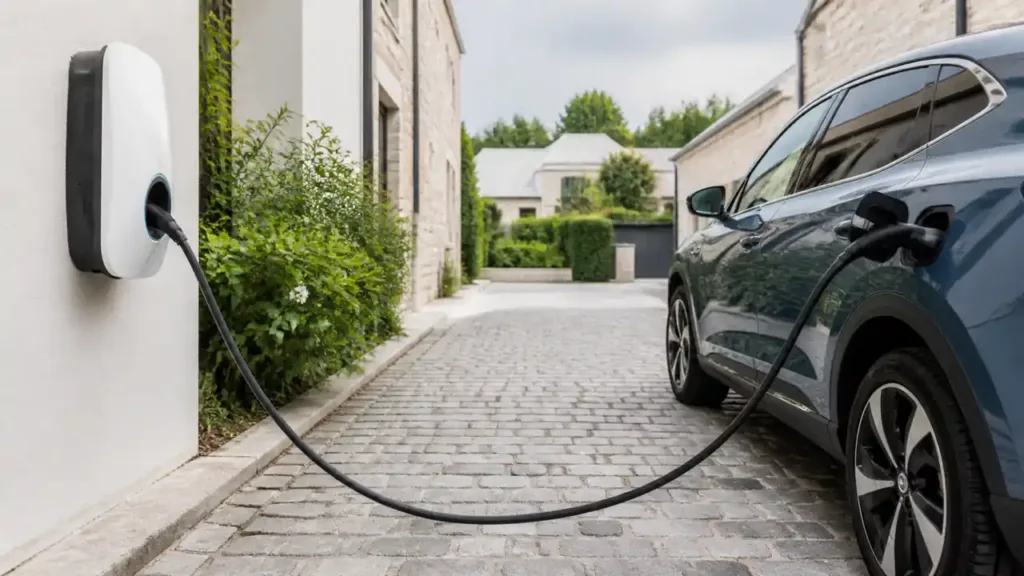
Anyone who has ever pulled into the driveway with 8 miles left and found the charge port parked two stubborn feet too far from the outlet knows why people hunt for the best EV charger with long cable. A longer cord sounds like a small detail until it saves you from backing into a flower bed, shuffling cars in the rain, or doing that awkward inch-by-inch parking dance in a cramped garage. For a lot of buyers, cable length is really about daily convenience. It is also about flexibility, especially if your charger has to serve different parking spots, different vehicles, or the occasional overnight guest.
The mistake many shoppers make is focusing on length alone and skipping the boring but crucial stuff. A long cable is great, but it still needs the right amperage, plug type, weather resistance, and compatibility for your EV and your outlet. Some buyers truly need a complete portable charger with a 25-foot cord. Others already own a solid charger and only need a heavy-duty J1772 extension cable to close the distance. Those are two different jobs, and mixing them up can lead to wasted money and a very annoying return label. For most people wanting a ready-to-use charger, the ELEGRP Level 1/2 EV Charger stands out as the top overall pick because it balances reach, portability, safety features, and broad everyday usefulness.
Different drivers have different priorities, though. Apartment renters, road trippers, homeowners with 240V service, and drivers who simply need extra reach across a wide garage all shop with different pain points in mind. Some will want the fastest home charging possible. Some want the easiest travel backup. Some need a serious extension cable that can take a beating outdoors. That is where the short list below gets useful fast.
If you want the highlights first, the quick picks and table below make it easy to compare the strongest options at a glance.
Quick Picks
- Best Overall: ELEGRP Level 1/2 EV Charger
- Best Budget Pick: AIXINE Level 1&2 EV Charger
- Best Premium Option: TLE LEVEL Level 2 EV Charger
- Best Value Choice: Grasside Level 1&2 EV Charger
Best EV Charger With Long Cable Comparison Table
| Product | Best For | Main Strength | Cable / Power |
|---|---|---|---|
| ELEGRP Level 1/2 EV Charger | Most buyers | Strong mix of safety, portability, and 25 ft reach | 25 ft, 16A, 120V/240V |
| AIXINE Level 1&2 EV Charger | Budget-minded drivers | Affordable dual-voltage portable setup | 25 ft, 16A, 120V/240V |
| TLE LEVEL Level 2 EV Charger | Faster home charging | 40A output with long 25 ft cable | 25 ft, 40A, 240V |
| Grasside Level 1&2 EV Charger | Value seekers | Useful timer and current control for daily charging | 25 ft, 8-16A, 120V/240V |
| AIMILER Level 2 EV Charger | App control | WiFi scheduling with adjustable amperage | 25 ft, up to 32A, 240V |
| BETUMODA Level 1 EV Charger | Easy display controls | Touchscreen interface with 25 ft cord | 25 ft, up to 16A, 120V/240V |
| VEVOR 40 ft Extension Cable | Maximum reach | Very long 40 ft J1772 extension | 40 ft, 40A, 120V/240V |
| WenStorm 50A 21 ft Extension Cable | Heavy-duty outdoor use | 50A extension with strong certifications | 21 ft, 50A, 240V |
| VEVOR 48Amp 21 ft Extension Cable | Extension on a tighter budget | Good reach and included storage accessories | 21 ft, 48A, 120V/240V |
If you want the finer details, the reviews below show where each option shines and where the tradeoffs creep in.
1. Best Overall: ELEGRP Level 1/2 EV Charger

One reason this option stands out is how neatly it hits the sweet spot for real homes. A lot of drivers want one charger they can toss in the trunk for travel, use in the garage during the week, and trust during bad weather without hovering over it nervously. That is exactly the lane this ELEGRP model occupies. The 25-foot cable gives you useful reach for awkward parking angles, and the included NEMA 6-20 and 5-15 setup means you can charge from either 240V or standard 120V outlets. That flexibility matters more than people expect. One day you are charging in your own garage, the next you are at a relative’s house with a basic wall outlet and a steep driveway.
Its safety story is also stronger than many bargain chargers flooding the category. ELEGRP calls out protection against surges, leakage, and overloads, and the IP67 weather resistance adds peace of mind for outdoor setups. If you have ever plugged in during freezing wind while the cord drags across wet concrete, you know ruggedness is not some fluff spec on a sales page. The charging speed is still modest at 16 amps, so this is not the pick for buyers chasing the quickest possible refill. Still, as an all-around long-cable portable charger, it feels well judged and easy to live with.
Pros
- Long 25-foot cable is genuinely useful in tight garages and driveways
- Works with both 120V and 240V outlets
- IP67 weather resistance is strong for outdoor use
- Solid safety feature set with overload and leakage protection
- Portable design makes it a good home-and-travel charger
Cons
- 16A output is slower than higher-powered Level 2 home chargers
- Tesla drivers need a separate adapter
- Less appealing for buyers who already have a charger and only need an extension cable
This is the charger I would point most people toward first, especially first-time EV owners who want fewer headaches and more flexibility. It suits households that park in slightly different spots, renters who move around, and anyone who wants a long cable without jumping straight into premium 32A or 40A territory. Skip it if your main goal is maximum home charging speed from a dedicated 240V setup. In that case, a stronger Level 2 unit makes more sense. For everyone else, this one gets a lot right without feeling fussy.
To buy this product, click here.
2. Best Budget Pick: AIXINE Level 1&2 EV Charger

For buyers who prioritize affordability but still want a long cable and dual-voltage usefulness, the AIXINE charger makes a strong case. The formula is simple and appealing. You get a 25-foot cord, 16A charging, a NEMA 6-20 plug for 240V use, and an adapter for 120V charging when that is all you have. That setup is practical for drivers who are easing into EV ownership and do not want to overspend on day one. Picture the classic scenario: new EV in the driveway, no wallbox installed yet, and a need to start charging tonight. This kind of charger fits that moment well.
The product also leans into portability. The waterproof storage case and industrial-style cable materials make it feel geared for trunk duty rather than something that must stay bolted to one wall forever. Scheduled charging and current adjustment sweeten the package, especially if you like plugging in after dinner and letting the charger kick on later during lower-rate utility hours. The big caveat is that budget chargers can vary in refinement. You may not get the same polished app experience, premium housing feel, or stronger brand reputation you would with pricier models. Still, for an entry-level long-cable charger, this one checks a lot of important boxes.
Pros
- 25-foot cable offers excellent reach for the money
- Dual-voltage setup adds useful flexibility
- Portable design with storage case is travel friendly
- Current adjustment and scheduled charging are handy features at this level
- IP67 rating is reassuring for rough weather
Cons
- 16A charging is still on the slower side for home Level 2 use
- Brand trust is not as established as some better-known names
- May lack the more refined interface of pricier chargers
This is a smart pick for budget-focused drivers who still want something more capable than a bare-bones Level 1 cord. It makes sense for commuters with modest daily mileage, plug-in hybrid owners, and anyone building out a starter charging setup without spending into the premium tier. Buyers with long commutes or bigger battery packs may outgrow the 16A ceiling quickly. But for affordable, long-reach charging that stays practical, AIXINE gets the basics right.
To buy this product, click here.
3. Best Premium Option: TLE LEVEL Level 2 EV Charger

If your goal is faster home charging without giving up the convenience of a long cable, this TLE LEVEL unit is one of the most compelling upgrades in the group. The headline is the 40A output and 25-foot cable, which is the kind of combo that feels noticeably easier to live with if your car does serious miles every week. There is a huge difference between waking up with a meaningful refill and waking up wishing you had started charging three hours earlier. For busier households, that gap gets real pretty fast.
The practical touches help, too. A NEMA 14-50 plug is a familiar format for many garages and can also be handy during travel stops where compatible outlets exist. Adjustable current settings up to 40A are useful if your circuit cannot support max output. The IP66 and NEMA 4 protection add confidence for outdoor use, and the included storage bag is a nice small touch for portability. The tradeoff is obvious. This is more charger than some drivers need, and it makes the most sense where a proper 240V setup is already available or planned. Without that, you are paying for muscle you will not fully use.
Pros
- 40A output is much better for faster home charging
- 25-foot cable gives strong parking flexibility
- Adjustable current settings help match your circuit safely
- Weather-resistant build suits indoor or outdoor placement
- NEMA 14-50 plug works well for many home charging setups
Cons
- Requires a suitable 240V outlet to make sense
- More expensive than 16A portable chargers
- Overkill for low-mileage drivers or PHEV owners
This is the one to buy if your EV is a core daily machine and you want charging that feels less like an overnight compromise and more like a serious home utility. It is especially appealing for larger battery EVs and drivers with busy schedules. Skip it if you mainly need a travel backup or use only standard household outlets. For faster charging with a genuinely useful long cable, this is the premium choice that feels earned.
To buy this product, click here.
4. Best Value Choice: Grasside Level 1&2 EV Charger
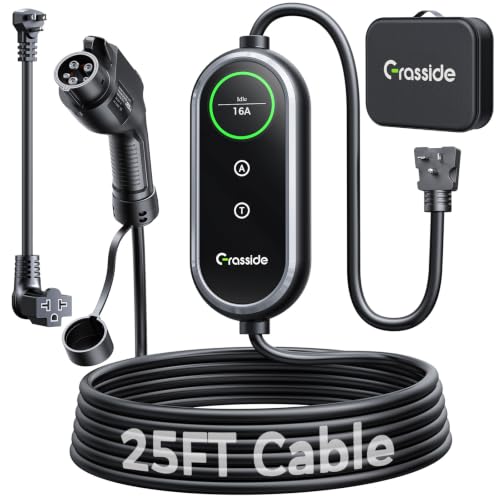
This model earns a place because it offers the kind of features people actually use, without wandering into premium pricing. The 25-foot cable is long enough for most garage and driveway headaches, and the adjustable current settings from 8A to 16A give it more day-to-day flexibility than a basic fixed-output charger. That matters if your outlet situation changes or if you are cautious about loading an older household circuit. The delay timer is another nice touch. Plenty of EV owners plug in after work, hear the little click, and then remember off-peak rates five minutes later. A built-in timer saves that annoyance.
The Grasside also feels tuned for dual-duty life. It can live in your garage as a daily charger, then ride in the trunk as a backup for weekend travel. The included carrying case helps with that, and the LCD display keeps the core information visible without needing an app. That old-school simplicity will appeal to buyers who are tired of pairing, resetting, and poking through menus. The downside is speed. Like the other 16A chargers here, it is practical rather than thrilling. For many drivers that is fine. For high-mileage EV households, it may feel a little tame after the first month.
Pros
- 25-foot cable suits most home charging layouts
- Adjustable current settings improve flexibility
- Delay timer is useful for overnight off-peak charging
- LCD display is simple and easy to check at a glance
- Portable enough for both home use and travel backup
Cons
- 16A maximum output limits charging speed
- No advanced app ecosystem for remote control
- Tesla drivers need an adapter
This is a great middle-ground pick for shoppers who want more than the cheapest charger but do not need a high-amperage powerhouse. It fits daily commuters, smaller-battery EVs, and drivers who care more about practical control than flashy extras. Buyers chasing the fastest overnight refill should look higher up the power ladder. For sensible feature-per-dollar value, though, this one lands cleanly.
To buy this product, click here.
5. Best For Smart Scheduling: AIMILER Level 2 EV Charger

If your ideal charging routine involves phone control, scheduling, and a little more oversight of what the charger is doing, the AIMILER stands out. Its 25-foot cable already puts it in the right conversation for long-reach charging, but the bigger draw is the adjustable 16A to 32A output and WiFi app support. That combination can be genuinely useful in a household where charging habits vary. Maybe one person plugs in early, another comes home late, and both want to catch lower electricity rates. A simple plug-and-charge box starts to feel limited in that situation.
The onboard screen is another practical touch, showing the kind of info you often want at a glance, like amperage, speed, voltage, and delay status. It also has a NEMA 14-50 plug, which fits many home Level 2 setups. The product notes suggest some app and setup quirks, especially around WiFi reset and 2.4GHz requirements, so this is not the most friction-free pick for people who hate tinkering. But for buyers who enjoy having settings and visibility in one place, it brings a lot to the table. On a chilly evening, being able to confirm charging from indoors is a convenience you feel pretty quickly.
Pros
- 25-foot cable provides strong reach for home charging
- Adjustable output up to 32A offers faster charging than 16A models
- WiFi app adds scheduling and usage tracking
- On-unit screen gives clear charging data
- NEMA 14-50 plug suits many dedicated garage setups
Cons
- App setup may take patience for some users
- Best suited to 240V use, which limits plug-and-go flexibility
- Less appealing for buyers who want total simplicity
This charger makes the most sense for homeowners who want a more connected setup and can take advantage of 240V charging. It is especially useful if off-peak scheduling matters in your area or if you like keeping tabs on charging sessions. Skip it if your priority is grab-and-go portability or zero-fuss operation. Choose it if control and visibility are part of the appeal.
To buy this product, click here.
6. Best For Simple Display Controls: BETUMODA Level 1 EV Charger

If your eyes glaze over every time a charger description starts talking about cloud features and pairing steps, the BETUMODA has a refreshing appeal. It keeps the long-cable formula straightforward while adding a 2.8-inch touch display for local control. That makes it easy to tweak current settings, set a delay start, and see what is happening without pulling out your phone in the dark. The 25-foot cable is also right in the sweet spot. Long enough to solve most parking issues, short enough that it does not feel like you are wrestling a fire hose every night.
On the technical side, it supports both 120V and 240V use and tops out at 16A, so it covers the common home-and-travel scenarios pretty well. It is a sensible charger for people who want portability but still appreciate having a bit of interface polish. The weakness is familiar. You are not getting high-amperage charging, and the certification story is less confidence-inspiring than some better-known picks in the list. Still, there is something satisfying about a charger that keeps the experience tactile and visible. You plug in, tap your setting, and you are done. No hunting for the right app menu while your groceries melt in the trunk.
Pros
- 25-foot cable works well for garages and driveways
- Touchscreen display is easy to use on the charger itself
- Supports both 120V and 240V charging
- Adjustable current and delayed charging add flexibility
- Portable format is handy for travel backup
Cons
- 16A maximum output is modest
- Brand is less established than some rivals
- Not the best choice for fastest overnight charging
This is a nice pick for drivers who want a longer cable and simple on-device controls without paying for smart charging extras they may never use. It fits smaller EV households, plug-in hybrids, and buyers who prefer practical simplicity. If you need more speed or stronger brand reputation, there are better matches above. If you want an easy charger with a nice local interface, this one has real charm.
To buy this product, click here.
7. Best For Maximum Reach: VEVOR EV Charger Extension Cable, 40 ft J1772 Extension Cord

If your main problem is pure distance, this VEVOR extension cable is the obvious standout. Forty feet is a lot. It is enough to stretch across deeper garages, awkward side-driveway parking, or charging setups where the outlet location was clearly chosen by someone who never owned an EV. There are homes where a 25-foot charger still comes up short, especially if the vehicle charge port sits on the “wrong” side for your layout. In those cases, the extra reach can feel like a complete reset of your charging options.
This is an extension cable, not a complete charger, so it is for people who already have a compatible J1772 charger and simply need more distance. That distinction matters. The cable supports Level 1 and Level 2 usage, works across 120V to 240V setups, and has IP66 protection for rough conditions. VEVOR also includes a bag, cleaning cloth, and cable tie, which help because a 40-foot cable can become a floppy snake if you do not manage it well. The tradeoff is bulk. A cable this long is inevitably heavier, more cumbersome to coil, and a little more annoying to store. But if reach is the whole point, this one absolutely brings it.
Pros
- 40-foot length solves charging layouts shorter cables cannot
- Works with Level 1 and Level 2 J1772 chargers
- IP66 weather resistance suits outdoor use
- Included storage accessories help with cable management
- Great for homes with difficult parking geometry
Cons
- It is an extension cable, not a complete charger
- Longer cable is bulkier to store and handle
- Brand concentration may matter less than verifying compatibility with your existing charger
This is the right buy for drivers who already own a charger they like and simply need to bridge a stubborn distance problem. It is especially handy in homes where only one outlet location is available and moving the car around is a pain. Skip it if you need a full charger from scratch. Buy it if reach is everything and 21 or 25 feet still leaves you cursing under your breath.
To buy this product, click here.
8. Best Heavy-Duty Build: WenStorm 50A 21 ft J1772 EV Extension Cable

For buyers who already own a charger and want an extension cable that feels built for hard use, the WenStorm stands out. The 21-foot length is shorter than the VEVOR 40-footer, but the bigger story here is the heavy-duty 50A rating and the focus on certified, outdoor-ready construction. This is the kind of product that makes sense if your charging setup lives partly outside, sees regular weather, or gets used often enough that durability becomes the deciding factor. Think exposed driveway charging, busy family use, or a worksite setup where equipment is handled less gently than product photos suggest.
The ETL listing, UL certification, and SAE J1772 compliance add confidence, and the 240V 50A capability makes it better suited to stronger Level 2 systems than lighter extensions. The ergonomic, tangle-resistant design matters, too. Nobody gets excited about cable flexibility until they have tried coiling a stiff cord on a cold morning. The main limitation is simple. This is an extension, not a charger, and it is focused on Level 2 style use rather than universal every-situation convenience. If you need a complete portable charger, look elsewhere. If you need a robust bridge between charger and vehicle, this one has real backbone.
Pros
- Heavy-duty 50A rating fits stronger Level 2 setups
- ETL and UL credentials add trust
- IP66 weather resistance is excellent for outdoor use
- Flexible design should be easier to handle than stiffer cords
- Strong choice for frequent, demanding use
Cons
- Only 21 feet, so it is not the farthest-reaching option
- Extension cable only, no built-in charger
- Most useful for buyers with existing higher-power charging setups
This one is ideal for homeowners or frequent EV users who want their extension cable to feel stout and dependable, especially outdoors. It is less about travel convenience and more about everyday durability. Skip it if you need an all-in-one charger or if your main problem is extreme distance. Pick it if you want a hardier extension that matches a serious Level 2 setup.
To buy this product, click here.
9. Best Extension Value: VEVOR EV Charger Extension Cable, 48Amp 21 ft J1772 Extension Cord

If your charger is fine and your only issue is reach, this VEVOR extension cable is one of the more practical low-cost fixes in the lineup. A 21-foot extension is enough to solve a surprising number of everyday problems. Maybe your charger reaches the rear port of one vehicle but misses the front fender port on another. Maybe the car fits in the garage only when parked a little crooked because bikes, shelves, and a lawn mower are hogging the walls. That extra 21 feet can suddenly make the setup feel sane again.
What makes this model appealing is the balance of features for the money. It supports up to 48A, works with 120V and 240V J1772 charging, and carries IP66 protection for weather resistance. The included carrying bag, cleaning cloth, and cable tie are small extras, but they are the kind you actually use. Extension cables can get filthy, and clean connectors are worth caring about. The obvious tradeoff is that it is not a full charger, and 21 feet is helpful rather than huge. Still, if you want a straightforward, well-equipped extension and do not need the absolute heaviest-duty or longest model, this VEVOR is easy to recommend.
Pros
- Good 21-foot extension for many driveway and garage setups
- Supports both Level 1 and Level 2 charging use
- 48A capacity is strong for the category
- IP66 rating supports outdoor charging situations
- Storage bag and cable tie improve everyday usability
Cons
- It is only an extension cable, not a charger
- 21 feet may still be short for larger properties or awkward layouts
- Less premium-feeling than some heavier-duty alternatives
This product is best for drivers who already have a charger they trust and simply want more reach without overspending. It works well for moderate extension needs and general home use. If you need 40 feet of reach or a more industrial-grade 50A cable, there are stronger niche picks above. For straightforward extension value, though, this one gets the nod.
To buy this product, click here.
How To Choose The Right EV Charger With Long Cable
Decide First Between A Full Charger And An Extension Cable
This is the biggest fork in the road, and it trips people up constantly. A full charger includes the control box and plug setup you need to actually charge the car. An extension cable simply adds reach to an existing J1772 charger. If your current charger works great but comes up short by a few parking-space inches, an extension is the cleaner fix. If you are starting from scratch, buy a full charger. The easiest way to waste money here is grabbing an extension when you still need the charger itself.
Look At Cable Length In Your Actual Parking Space
Numbers on a product page can feel abstract until you walk outside with a tape measure. Measure from the outlet or installed charger location to your vehicle’s charge port, then add a little slack for routing around the bumper or across the garage. A 25-foot charger often works beautifully in standard garages. A 21-foot extension can solve medium distance problems. A 40-foot extension is for more stubborn layouts, like deep driveways, side parking, or homes where the outlet sits in a frankly ridiculous place.
Match The Charger To Your Outlet And Your Daily Mileage
A 16A charger can be perfectly fine for many commuters and plug-in hybrids, especially if the car sits overnight for 10 to 12 hours. Drivers with larger EV batteries or longer daily commutes may feel happier with a 32A or 40A Level 2 charger. The feel is different. Lower-amperage charging is steady and practical. Higher-amperage charging feels more forgiving when you get home late and still want a healthy refill by morning.
Check Weather Resistance If The Cable Lives Outside
Rain, dust, summer heat, and winter cold can expose weak build quality fast. For outdoor charging, look for solid weather resistance like IP65, IP66, or IP67. A heavy jacket, sturdy connector housing, and decent strain relief matter too. If the cable is going to lie across wet concrete or hang outside the garage on stormy nights, this part stops being a spec-sheet footnote and starts feeling very personal.
Pay Attention To Plug Type And Circuit Reality
Many portable chargers in this category use NEMA 5-15, NEMA 6-20, or NEMA 14-50 arrangements. Make sure the charger matches the outlet you actually have. Better yet, make sure your circuit can safely support the charger’s output. A 40A charger is terrific, but only if your electrical setup can handle it. Buyers sometimes chase the biggest number and then realize they cannot use that speed without electrical work. That is a rude little surprise.
Think About Storage And Everyday Handling
Long cables are glorious when you need them and annoying when they are sloppy, dirty, and tangled. If you will unplug and pack the charger often, look for a carrying case, cable tie, or flexible jacket that coils without a fight. This is especially true for travel chargers. Wrestling a stiff cord into the trunk on a cold morning gets old fast, and a well-managed cable makes the whole ownership experience feel easier.
Do Not Ignore Simplicity
Apps, touchscreens, timers, and adjustable current settings can all be useful, but they are not equally useful for everyone. Some drivers want deep control and off-peak scheduling. Others want to plug in, hear the click, and move on with dinner. Buy the feature set that suits your real habits. A simpler charger you trust is often better than a smarter charger that irritates you twice a week.
Best EV Charger With Long Cable FAQ
How long should an EV charger cable be for home use?
For many homes, 25 feet is the sweet spot. It gives enough reach for most garages and driveways without becoming too awkward to handle. If your outlet is far from the parking spot or the charge port location changes between vehicles, you may need 40 feet or an extension cable.
Is a longer EV charger cable slower?
Length alone does not automatically make charging slow if the cable is properly built for the current it carries. What matters more is the charger’s amperage, voltage, wire quality, and certification. A long cable with the right gauge and design should still perform properly within its rating.
Can I use a J1772 extension cable with any EV?
You can use a J1772 extension cable with J1772-compatible charging setups. That includes many non-Tesla EVs and plug-in hybrids in North America. Tesla owners can often use J1772 equipment with the correct adapter, but compatibility should always be checked carefully before buying.
What is better, a 16A charger or a 40A charger?
It depends on your driving habits and electrical setup. A 16A charger is often enough for overnight charging, smaller batteries, shorter commutes, or travel backup. A 40A charger is better for faster home charging, larger EV batteries, and households that need more range added in less time.
Are portable EV chargers with long cables good for travel?
Yes, many are. Portable chargers with 21-foot to 25-foot cables can be very handy on trips because parking spots and outlet locations are unpredictable. The best travel-friendly models usually include multiple plug options, strong weather resistance, and a storage case.
Can I leave my EV charger outside?
Many chargers and extension cables in this category are built for outdoor use, but you should still check the IP rating and follow the manufacturer’s placement guidance. A weather-resistant unit is much better suited to rain, dust, and temperature swings than a charger with minimal protection.
What is the biggest mistake people make when buying a long-cable EV charger?
The most common mistake is buying for length alone and ignoring whether the product is a full charger or merely an extension cable. The next big mistake is choosing a charger that does not match the outlet or circuit available at home. Both errors are easy to avoid with a quick check before purchase.
Final Verdict
Out of these 9 picks, the ELEGRP Level 1/2 EV Charger is the best overall choice for most drivers because it blends a genuinely useful 25-foot cable with practical dual-voltage charging, strong weather resistance, and the kind of portability that makes sense in real life. It is the charger I would trust for the widest range of buyers, from first-time EV owners to households that need one flexible unit for home and occasional travel. If you want the most affordable entry into this category, the AIXINE Level 1&2 EV Charger is the budget play worth a look. If your main goal is faster home charging from a dedicated 240V outlet, the TLE LEVEL Level 2 EV Charger is the stronger premium move.
The final choice comes down to what “long cable” means in your driveway, not on a product page. Some buyers need 25 feet and a complete portable charger. Others already own a good charger and only need an extension like the VEVOR or WenStorm models to fix a frustrating parking layout. Measure your space, confirm your outlet and amperage needs, and decide whether portability or speed matters more. Get those three things right, and your nightly charging routine gets a whole lot smoother, quieter, and less annoying.