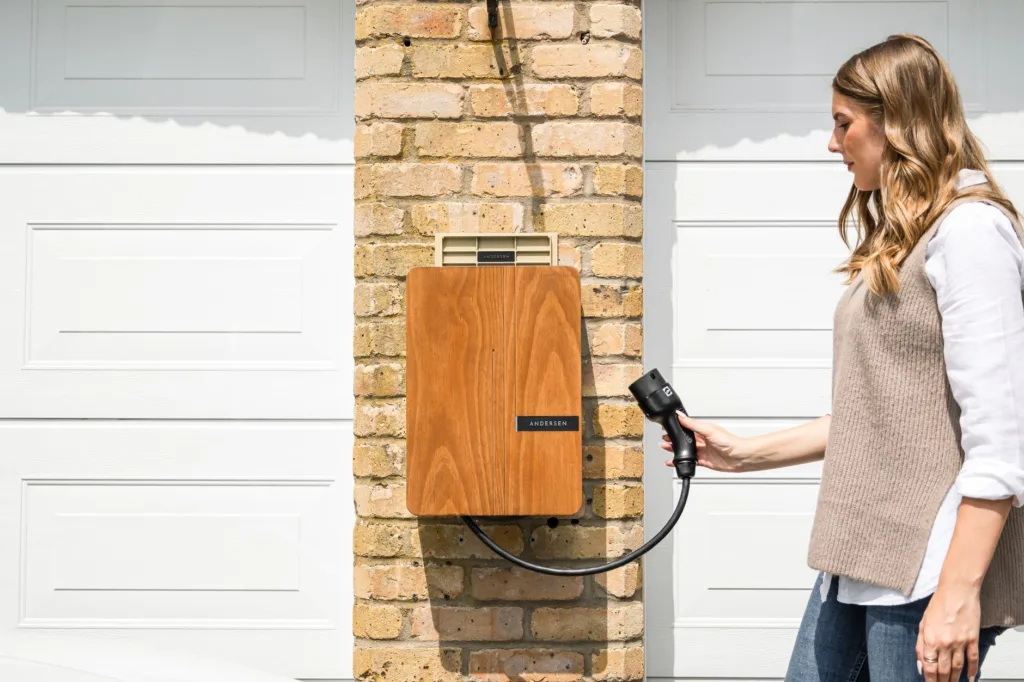
Shopping for the best EV charger for garage use usually starts with one annoying moment. You pull into the garage after a long day, battery lower than expected, and realize your current charging setup is either too slow, too awkward, or too sketchy to trust every night. That is why garage buyers usually want the same things fast enough charging for daily driving, a cable long enough to reach without parking like a surgeon, and controls that do not feel like a side project.
The biggest mistakes happen before the charger even arrives. A lot of people buy for headline amps alone, then discover their garage outlet, breaker, vehicle onboard charger, or parking layout does not match the charger they picked. Others grab the cheapest cord they can find and later get tired of flimsy holsters, short cables, clunky displays, or weak weather sealing around a garage door that stays cracked open in winter. The sweet spot is usually a charger that fits your circuit, your car, and your daily rhythm.
Different drivers need different things. Some want a plug-in unit they can mount in ten minutes. Some need a hardwired station for maximum output and cleaner installation. Some just want a reliable backup that can live in the trunk when travel plans get messy. If you want the strongest all-around pick for most garages, the EVIQO 40 Amp Level 2 stands out with the right mix of speed, certification, smart controls, and day-to-day usability.
If you want the short version first, the quick picks and comparison table below make the field easy to scan.
Quick Picks
- Best Overall: EVIQO Level 2 EV Charger 40 Amp
- Best Budget Pick: Raylix Level 1/2 Portable EV Charger 16 Amp
- Best Premium Option: EVIQO Level 2 EV Charger 48 Amp Hardwired
- Best Value Choice: ELEGRP Level 2 EV Charger 40 Amp
Best EV Charger For Garage Comparison Table
| Product | Best For | Power | Main Strength |
|---|---|---|---|
| EVIQO Level 2 EV Charger 40 Amp | Most garages | 40A, 9.6kW | Strong balance of speed, smart features, and certifications |
| ChargePoint HomeFlex | Smart-home users | Level 2 | Mature app ecosystem and trusted brand |
| EVIQO Level 2 EV Charger 48 Amp Hardwired | High-demand setups | 48A, 11.5kW | Hardwired higher-output option |
| ELEGRP Level 2 EV Charger 40 Amp | Value seekers | 40A, 9.6kW | Very competitive performance for the money |
| AIMILER Level 2 EV Charger 32 Amp | Feature shoppers on a tighter budget | 32A, 7.68kW | App plus onboard touch controls |
| ChargeHere Level 1 & 2 EV Charger | Portable home-and-travel use | Up to 32A, 7.68kW | Dual-voltage flexibility without app dependence |
| EVDANCE Level 2 EV Charger 24 Amp | Dryer-outlet garages | 24A | Built for NEMA 14-30 setups |
| Raylix Level 1/2 Portable EV Charger | Budget backup charging | 16A, 3.68kW max | Low-cost dual-voltage flexibility |
| ELEGRP Level 1/2 EV Charger 16 Amp | Apartment and light-duty garage charging | 16A, 3.84kW max | Portable simplicity with long cable reach |
If you want the full picture, the reviews below make the differences much clearer.
1. Best Overall: EVIQO Level 2 EV Charger 40 Amp

One reason this option stands out is how cleanly it fits the real life of a garage charger. A lot of drivers want something faster than a portable backup, but they do not want to jump straight into a more expensive hardwired install. This EVIQO lands right in that sweet spot. It delivers up to 40 amps on a NEMA 14-50 plug, offers a full 25-foot cable, and has the kind of weatherproof build that still feels reassuring if your garage gets dusty, damp, or drafty around the edges.
The small touches make it easier to live with. The app lets you adjust output from 6 to 40 amps, track usage, and schedule overnight sessions for cheaper utility windows. That fluorescent holster sounds gimmicky until you are plugging in late after a rainy grocery run and can actually spot the connector without fumbling around in a dim garage corner. It is also UL and ETL certified, which matters far more than flashy marketing copy when this thing is feeding your EV several nights a week.
Pros
- Strong 40A charging speed for daily garage use
- Plug-in NEMA 14-50 design avoids a hardwired install for many homes
- Useful smart app with current adjustment and scheduling
- 25-foot cable gives flexible parking reach
- UL, ETL, FCC, and Energy Star certifications add confidence
Cons
- Requires a proper EV-ready NEMA 14-50 outlet, not a dryer outlet
- Smart features rely on 2.4GHz WiFi
- Tesla and some NACS vehicles need an adapter
This is the pick for buyers who want very few compromises. It is quick enough for most overnight charging needs, easier to install than a hardwired unit, and more polished than many cheaper plug-in chargers. Skip it if your garage only has a 120V outlet or a NEMA 14-30 dryer receptacle, because this model really wants the right 14-50 setup. For everyone else, it nails the everyday experience better than most.
To buy this product, click here.
2. Best For Smart Charging Ecosystem: ChargePoint HomeFlex

For buyers who prioritize software polish and brand familiarity, ChargePoint still has serious appeal. This is the kind of charger people buy after using public ChargePoint stations and wanting a similar experience at home. The app is one of the biggest selling points. You can manage charging reminders, track sessions, and fold your home charging into a wider network experience that feels a bit more established than many lesser-known brands.
It also earns respect on the hardware side. The HomeFlex is UL certified, suitable for indoor or outdoor installation, and built with a cable designed for cold conditions. That matters in a garage where winter can turn a cheap cord stiff and annoying fast. Drivers in colder climates know the feeling. You head out early, coffee in one hand, charging handle in the other, and suddenly the cable feels like a frozen garden hose. A cold-resistant cable is a real quality-of-life feature, not fluff.
Pros
- Excellent app and strong smart-charging ecosystem
- Trusted, widely recognized EV charging brand
- UL certified for safer home charging
- Good fit for users already familiar with ChargePoint’s network
- Cold-resistant cable helps in winter garages
Cons
- Usually costs more than simpler chargers with similar raw output
- Best experience leans heavily on app use
- Tesla requires an adapter
The HomeFlex makes the most sense for households that care about data, remote control, and ecosystem integration as much as charging speed. If you want a no-fuss charger with the lowest possible upfront cost, other options in this roundup stretch your dollars further. If you want a polished smart experience from a brand with deep EV roots, this one feels reassuring every time you open the app.
To buy this product, click here.
3. Best Premium Option: EVIQO Level 2 EV Charger 48 Amp Hardwired

If your goal is a cleaner, more permanent garage setup with higher output, this hardwired EVIQO is the premium move in the lineup. It delivers up to 48 amps, with support that can go higher in certain circuit configurations, and that extra headroom matters for bigger battery packs or households juggling back-to-back charging windows. Think of the two-EV family where one car gets home nearly empty at 6 p.m. and the next one needs to leave early the next morning. Faster home charging starts to feel less like a luxury and more like schedule insurance.
The rest of the package feels well thought out too. You still get smart app controls, weatherproof construction, a 25-foot cable, and the same easy-to-grab connector style EVIQO uses on its plug-in model. The side reset button is a nice practical touch. If a charger ever needs a quick reboot, nobody wants to mess with shutting off power and opening panels. Hardwired chargers can feel intimidating. This one keeps the ownership experience more approachable.
Pros
- Higher 48A output suits demanding garage setups
- Hardwired installation offers a cleaner permanent look
- App scheduling and adjustable current improve flexibility
- Weatherproof, certified construction for long-term use
- Good support, rebate potential, and longer warranty coverage
Cons
- Requires electrician installation
- Higher-output charging is unnecessary for some smaller-battery EVs
- More commitment than a plug-in model if you move often
Buy this if you want a charger that feels like part of the house rather than a temporary accessory. It is especially appealing for heavier commuters, larger EV batteries, or multi-EV households. Skip it if your driving is light and you already have a perfectly located 14-50 outlet, because the 40-amp plug-in EVIQO covers most people beautifully. For premium home charging, though, this is a strong step up.
To buy this product, click here.
4. Best Value Choice: ELEGRP Level 2 EV Charger 40 Amp

This model earns a place because it checks a lot of the right boxes without wandering into premium pricing. You get 40-amp charging, five adjustable current levels, a 25-foot cable, a delay timer for off-peak charging, and ETL certification. For a garage buyer who wants genuine Level 2 speed and practical control without paying extra for brand prestige, that recipe is hard to ignore.
It also feels suited to messy real-world parking. The 25-foot reach helps if your garage is shared with bikes, storage bins, or that one shelf that somehow keeps creeping wider every year. The IP67 weather resistance is especially nice if your charger ends up near the garage opening or occasionally serves driveway duty. That sort of flexibility matters. Plenty of people start shopping for a “garage” charger, then realize half their charging happens with the rear hatch hanging out near the driveway lip.
Pros
- 40A charging performance at a very attractive value point
- Adjustable amperage helps match different home circuits
- Long 25-foot cable is easy to work with
- ETL certified with strong weather resistance
- Portable enough for travel or backup use
Cons
- Less established brand recognition than ChargePoint
- No app features for users who want remote monitoring
- Tesla requires a separate adapter
This is a smart buy for drivers who care more about capability per dollar than app extras. It offers better everyday punch than low-amp dual-voltage chargers and costs less than many premium smart stations. If your garage routine is straightforward and you simply want dependable 240V charging with enough reach to avoid daily cable drama, this one makes a lot of sense.
To buy this product, click here.
5. Best For Adjustable Controls: AIMILER Level 2 EV Charger 32 Amp

If your goal is useful features on a tighter budget, the AIMILER 32-amp model is easy to see on the shortlist. It brings app support, an onboard display, touch controls, adjustable amperage, and a 25-foot cable at a lower entry point than many 40-amp smart chargers. For the buyer who likes to tinker a bit and wants direct control from the unit itself, that mix is appealing.
The practical angle here is flexibility. You can run it at different current settings depending on circuit capacity, and the screen makes it easy to monitor charging without grabbing your phone. Picture a first-time EV owner standing in the garage late at night, hearing the cooling fan hum and glancing over to check charging speed at a glance. That simple display can be oddly reassuring. The downside is that setup and app behavior may feel less polished than what you get from pricier brands, so patience helps.
Pros
- 32A Level 2 charging is solid for overnight home use
- App support plus onboard display and touch controls
- Adjustable amperage improves compatibility with different circuits
- 25-foot cable adds garage flexibility
- ETL certification and NEMA Type 4 protection
Cons
- App setup may take more fiddling than premium competitors
- Not as fast as 40A or 48A options
- Brand reputation is lighter than the major players
This charger fits buyers who want plenty of controls and decent speed without moving into the upper price tier. It is a practical middle-ground choice for single-EV households with normal commuting patterns. If your battery pack is large or you need the fastest overnight turnaround possible, step up to one of the 40-amp or hardwired picks. If you like visible charging data and adjustable settings, this one is a fun, capable option.
To buy this product, click here.
6. Best For Home And Travel Flexibility: ChargeHere Level 1 & 2 EV Charger

If your garage charger may also become your road-trip backup, the ChargeHere makes a strong case. It can run as a Level 2 charger on a 240V NEMA 14-50 outlet or drop to standard 120V charging with the included adapter. That kind of dual-role gear is handy in the real world. One week it is your everyday garage station. Next month it is coiled in the trunk for a cabin stay, a relative’s house, or a sketchy motel parking lot where you are just grateful to find a standard outlet nearby.
The feature set is refreshingly direct. Adjustable current, delay start, and a clear LCD screen cover the essentials without forcing you into app setup. Some buyers genuinely prefer that. They want to press a button, see voltage and charging time, and move on with life. In a garage setting, simple hardware controls can feel a little more trustworthy than app-only interfaces, especially if your WiFi signal fades near the back wall.
Pros
- Works on both 120V and 240V setups
- Up to 32A charging is useful for home Level 2 duty
- No app required for current and timer adjustments
- LCD display is easy to read during charging sessions
- Portable format suits travel and backup charging
Cons
- Less elegant for permanent wall-mounted garage aesthetics
- Slower than 40A premium plug-in units
- Smart-home integration fans may want more connectivity
This is a very practical choice for people who want one charger to cover several jobs. It works well in garages where permanent installation is not the priority, or where the charger may regularly move between home and travel use. If you want the cleanest mounted setup with the most polished cable storage, choose a dedicated wall unit instead. For flexibility, this one punches above its weight.
To buy this product, click here.
7. Best For Dryer Outlet Garages: EVDANCE Level 2 EV Charger 24 Amp
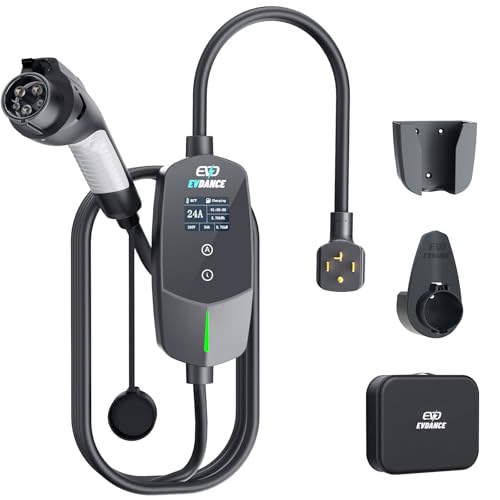
Some garages have an awkward truth hiding in plain sight. There is no NEMA 14-50 outlet, no dedicated EV circuit, and no appetite for a costly electrical project. There is, however, a dryer-style NEMA 14-30 receptacle nearby. That is exactly where the EVDANCE 24-amp charger earns its spot. It is tailored for that scenario instead of pretending every buyer has the ideal setup.
The 24A output will not wow spec chasers, but in a garage fed by a 14-30 outlet, it can be the most sensible solution. You get adjustable current, delay charging, a display for live stats, and a 25-foot reach that helps if the outlet location is a little ridiculous. Plenty of older homes have utility-room-adjacent garages where outlet placement feels like a bad joke. This charger is built for making the best of that reality instead of forcing a full rewire.
Pros
- Excellent fit for NEMA 14-30 dryer outlet setups
- Adjustable current helps protect older or more limited circuits
- Display shows useful real-time charging information
- 25-foot cable helps with awkward parking and outlet locations
- Weather-resistant housing adds garage and driveway versatility
Cons
- 24A is slower than 32A and 40A alternatives
- Less universal if you later switch to a 14-50-equipped home
- Plug interface has weather limitations compared with fully sealed units
This is the charger to buy when your existing outlet basically chooses for you. That might sound limiting, but it can actually save money and hassle if it means avoiding rewiring. Skip it if you already have a proper 14-50 or plan to install a high-output hardwired charger. For dryer-outlet garages, though, this is one of the more relevant picks in the bunch.
To buy this product, click here.
8. Best Budget Pick: Raylix Level 1/2 Portable EV Charger

If your budget is tight and you mainly need a reliable garage charger for lighter daily mileage, the Raylix portable unit makes a lot of sense. It supports both 120V and 240V operation, includes adjustable current settings, and gives you a timer plus a display without pushing you into a higher spending tier. For many first-time EV owners, that is enough. They are driving moderate distances, parking overnight, and simply need a charger that gets the job done while they sleep.
The biggest caveat is power. At 16 amps max on 240V, it is much slower than a 32A or 40A Level 2 unit. Still, that does not automatically make it the wrong pick. In a small-garage setup with a compact EV or plug-in hybrid, slower charging can be perfectly fine. Think of the commuter who drives 20 to 35 miles a day and plugs in every night while the garage settles into that familiar click-and-hum silence. For that person, paying a lot more for speed they will never use may be overkill.
Pros
- Very affordable path into garage EV charging
- Dual-voltage design supports Level 1 and light Level 2 use
- Adjustable current and timer features are useful at this level
- Display shows live charging information clearly
- Portable enough for travel backup duty
Cons
- 16A maximum output is slow for larger EV batteries
- 21-foot cable is decent but not class-leading
- Less ideal for households with heavy daily driving
Buy this if you want the lowest-cost practical answer for overnight charging in a garage and your mileage needs are modest. Skip it if you have a long commute, a large battery, or a second EV in the household. This is not the fastest charger here. It is one of the easiest to justify if your needs are simple and your wallet is already tired from buying the car.
To buy this product, click here.
9. Best For Light-Duty Garage Charging: ELEGRP Level 1/2 EV Charger 16 Amp

This ELEGRP 16-amp model is the sort of charger that quietly fits a lot of ordinary use cases. It is portable, runs on 120V or 240V depending on the outlet, and comes with a full 25-foot cable that is longer than many compact chargers in this class. That cable length matters more than people expect. In a crowded garage, a few extra feet can mean the difference between easy plug-in access and daily parking gymnastics.
It also leans hard into safety and weather resistance, with PBE and LRC technology, IP67 protection, and a design meant to stay stable in rough weather. That makes it a reassuring option for garages that occasionally spill into driveway charging. Picture a stormy evening, garage half full of storage, car parked just outside, and a charger that still feels sturdy instead of flimsy. This model is built for that kind of less-than-perfect routine.
Pros
- Dual-voltage charging supports both home outlet types
- 25-foot cable is generous for a 16A portable unit
- Strong weather resistance for garage or outdoor use
- Good safety-focused design and support coverage
- Portable format works well as a backup charger too
Cons
- 16A output is limited for full-size EVs with long daily mileage
- No smart app features
- Less compelling if you already have a 14-50 circuit available
This is a good fit for apartment movers, smaller EV owners, plug-in hybrid households, or anyone who values portability and reach over raw speed. It is also a smart backup to keep around if your main garage charger is fixed in place. If your goal is fast nightly replenishment for a bigger battery, move up to one of the 32A or 40A picks. If flexibility matters more, this one is easy to live with.
To buy this product, click here.
How To Choose The Right EV Charger For Garage
Start With Your Outlet And Circuit
This is the first filter, and it saves a ton of frustration. A 40-amp charger sounds great until you realize your garage has only a standard 120V outlet or a dryer-style NEMA 14-30 receptacle. Match the charger to the circuit you actually have, or the one you realistically plan to install. A plug-in 14-50 unit works beautifully in many modern garages. Older homes often push buyers toward 16A or 24A solutions unless they want electrical work done.
Think About Your Real Daily Mileage
Buyers often chase the highest amp rating they can afford, then use a fraction of it. If you drive 25 miles a day and plug in every night, a 16A or 24A charger may be plenty. If you commute far, arrive home low, and need the car ready again before sunrise, 32A to 48A starts making more sense. The right charger should feel boring in the best way. You plug in, go inside, and stop thinking about it.
Decide Whether You Want Plug-In Or Hardwired
Plug-in chargers are easier to install, easier to replace, and often easier to take with you if you move. Hardwired chargers look cleaner and can support higher output, but they usually require an electrician and feel more permanent. If your garage setup is stable and you want a polished home charging station, hardwired can be worth it. If flexibility matters, plug-in is often the smarter play.
Do Not Underestimate Cable Length
A short cable sounds manageable until you miss the parking spot by a foot, or switch vehicles, or back in during one season and nose in during another. A 25-foot cable is the comfort zone for many garages. It gives breathing room around shelving, kids’ bikes, lawn gear, or that freezer in the corner that refuses to live anywhere else. Reach makes ownership easier every single day.
Choose Smart Features Only If You Will Use Them
App controls, charging schedules, energy tracking, and notifications can be genuinely useful, especially with time-of-use electric rates. Still, some drivers never open the app after week one. If that sounds like you, a simpler charger with onboard controls may be the better buy. If you love data and want to schedule sessions precisely, the smarter models are worth the extra money.
Look For Real Safety Credentials
Garage charging is regular, high-power charging. This is not the category to get casual about certifications. Look for UL or ETL listing, solid enclosure ratings, and protection against overheating, leakage, and overcurrent. A charger may sit quietly on the wall for years, but it is doing serious work. The boring safety details are often the most valuable part of the purchase.
Avoid Buying For A Car You Do Not Own Yet
Some shoppers overbuild their setup for a hypothetical future EV, then overpay or complicate installation right now. Buy for your current vehicle, your current garage, and your current routine first. If you know a second EV is coming soon, sure, plan ahead. If not, there is no prize for installing more charger than you will use for the next three years.
Best EV Charger For Garage FAQ
What type of EV charger is best for a garage?
For most homes, a Level 2 charger is the best fit for garage use because it charges much faster than a standard 120V Level 1 unit. The right type depends on your electrical setup. A NEMA 14-50 plug-in charger is popular for easier installation, while a hardwired charger is better for higher amperage and a cleaner permanent setup.
Is a 40 amp EV charger enough for home garage charging?
Yes, for many drivers a 40 amp charger is the sweet spot. It is fast enough to refill most daily driving overnight and works well for a wide range of EV battery sizes. If you drive very long distances daily or have multiple EVs sharing one charger, a 48 amp hardwired unit can make more sense.
Can I use a dryer outlet for an EV charger in the garage?
Yes, but only if the charger is specifically designed for that outlet type. Many dryer outlets are NEMA 14-30, which is different from the NEMA 14-50 outlet used by many EV chargers. Do not force compatibility with random adapters unless the charger and circuit support it. For dryer-outlet garages, a model like the EVDANCE 24A is a more appropriate match.
Do I need a smart EV charger for my garage?
No, but smart features can be helpful. If your utility charges less overnight, app scheduling and energy tracking are handy. If you prefer simple hardware controls and rarely monitor charging details, a non-smart charger may be the better value. A lot depends on whether you enjoy remote control or just want to plug in and walk away.
Are portable EV chargers good for garage use?
They can be, especially if you want flexibility. Portable chargers work well in garages where permanent mounting is not a priority or where the charger may double as a travel backup. Dedicated wall-mounted chargers usually look cleaner and feel more polished for everyday use, but portable units are often the better buy for renters and frequent travelers.
How long should the charging cable be for a garage?
A 25-foot cable is ideal for many garages because it gives you more freedom in how you park and where the outlet sits. Shorter cables can work in tight, perfectly planned spaces, but they become annoying fast if you switch vehicles, park differently, or charge from the driveway edge.
Will these chargers work with Tesla vehicles?
Most chargers in this roundup use the J1772 connector, so Tesla and some NACS vehicles typically need a compatible adapter. Always confirm your vehicle’s port type before buying. If you own a non-Tesla EV, J1772 compatibility is generally straightforward.
Can I install an EV charger in an unheated garage?
Yes, as long as the charger is rated for the conditions. Many quality chargers are built for indoor and outdoor use and can handle cold temperatures, dust, and moisture. In colder garages, cable flexibility and weather-resistant construction matter a lot more than they do in a climate-controlled space.
Final Verdict
Out of these 9 picks, the EVIQO Level 2 EV Charger 40 Amp is the best EV charger for garage buyers who want the strongest mix of speed, installation convenience, smart features, cable reach, and trustworthy certifications. It feels like the most complete answer for the widest range of home charging setups. If you want to spend less while still getting serious Level 2 performance, the ELEGRP 40 Amp is the value choice that makes a strong argument. If you are building a more permanent high-output setup, the EVIQO 48 Amp Hardwired is the premium pick worth a close look.
The smart move is to match the charger to your outlet, circuit, vehicle, and daily mileage instead of buying from pure spec envy. A modest commuter can do perfectly well with a lighter dual-voltage charger. A long-distance driver with a larger battery will appreciate stepping up to 40 amps or more. Get the fit right, and your garage charger fades into the background, which is exactly what good home charging should do. Quiet, dependable, and ready every morning.