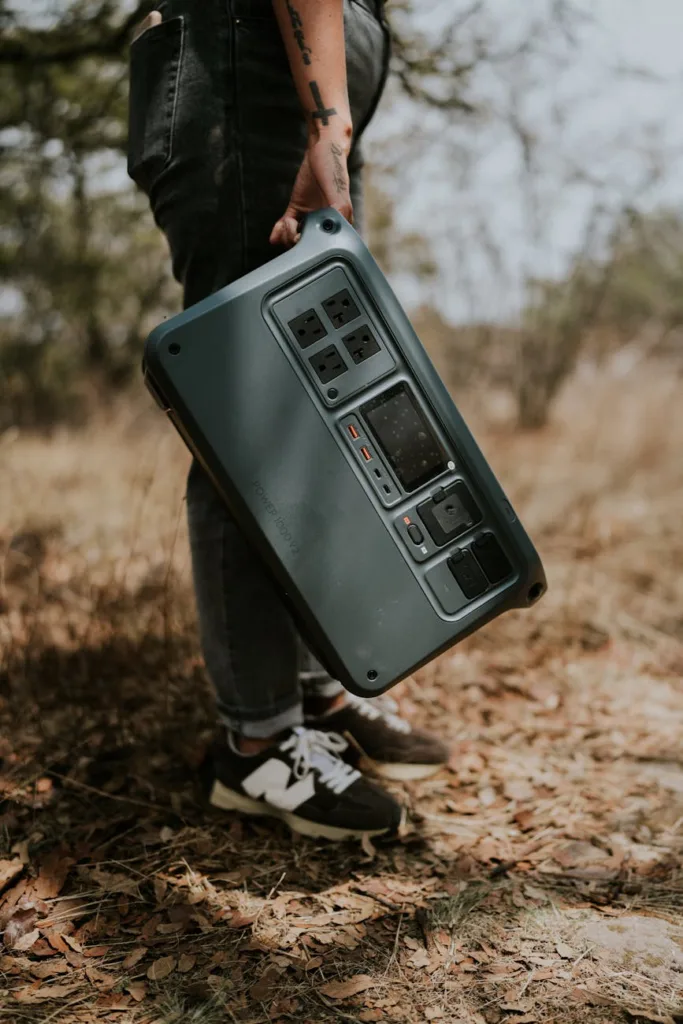
There is a moment on every campsite when your phone, fridge, light, or CPAP needs juice and the silence around you is interrupted by the hum of a generator. Portable power stations remove that awkward tradeoff between comfort and wilderness. Campers choose a portable power station for predictable charging, quieter nights, and to keep modern comforts running when grid power is miles away. Most buyers are juggling capacity, weight, recharge speed, and the outlets they actually need.
Common mistakes I see are picking capacity by number alone or chasing a single flashy spec like USB-C wattage without thinking about real use patterns. Another frequent error is underestimating recharge options. A 300Wh unit that charges fast by wall and solar will outperform a larger unit that takes forever to top up on a multi-day trip. What matters most depends on your trip: backpackers want ultra-light and quiet, car campers want enough capacity for a fridge and lights, and van lifers need higher continuous output to run small appliances. Different buyers will prioritize weight, inverter power, or the ability to recharge quickly from solar.
For most campers who want a reliable, easy-to-carry balance of runtime and recharging flexibility, the Jackery Explorer 300 lands near the sweet spot and earns our top overall pick because it pairs strong portability with sensible output. If you need raw power for appliances at a campsite or in an RV, one of the larger entries here is a better fit.
If you are short on time, the comparison table below gives a quick overview of the top options and links to each detailed review so you can jump straight to the model that fits your camping style.
Best Portable Power Station For Camping Comparison Table
| Product | Best For | Main Strength | Key Specs |
|---|---|---|---|
| Jackery Explorer 300 | Lightweight Car/Tent Camping | Fast recharge, compact | ~293Wh, 300W AC, 60W USB-C |
| Anker SOLIX C1000 Gen 2 | Extended Trips & RV Use | Huge capacity and fast recharge | 1024Wh, 2000W output, LiFePO4 |
| Jackery Explorer 1000 v2 | Family Camping / Power Hungry Gear | High output, app control | 1070Wh, 1500W AC, 100W USB-C |
| MARBERO M82 | Budget Lightweight Backup | Very compact, many ports | 88Wh, 120W peak, 8 ports |
| GRECELL 300W | Family Car Camping | Good capacity-to-weight ratio | ~288Wh, 330W output, 60W PD |
| CYBPULTE C601 | Power-Hungry Devices | High continuous output, 140W USB-C | 299Wh, 600W continuous, 140W PD |
| DARAN 89.6Wh | Pocketable, Quiet Campsites | LiFePO4 longevity, fanless | 89.6Wh, 100W output, LiFePO4 |
| BLUETTI Elite 30 V2 | Small Appliances & Fast Charging | 600W output with power lifting | 288Wh, 600W continuous, 1500W peak |
| EnginStar 300W | Reliable CPAP & Midweight Use | Pure sine wave outputs, ETL certified | 296Wh, 300W AC, 8 ports |
If you would like a closer look at each option, the detailed reviews below explain who each model suits best and the tradeoffs to expect on the trail.
1. Best Overall: Jackery Explorer 300

One reason this option stands out is how neatly it balances weight, capacity, and recharge speed. The Explorer 300 packs around 293Wh in a 7.1-pound package and offers a 60W USB-C PD port that doubles as an input, which means you can top it from a wall quickly or use a compatible solar panel when you camp for multiple days. In practice, I’ve used an Explorer 300 to run a small cooler through the evening and still had enough left to charge phones and a drone the next morning. It’s the kind of unit that makes a weekend car-camping trip feel modern without hauling a bulky generator.
For users who prioritize grab-and-go convenience, this unit is intuitive: clear controls, a couple of AC outlets, and a fast-charge USB-C that handles laptops and phones. The integrated MPPT for solar is a practical benefit if you plan to add a Jackery SolarSaga. I once arrived at a beach campsite that had sunshine all day; plugging solar into the Explorer 300 turned what looked like a short trip into a near self-sufficient setup for charging multiple devices across two days.
Pros
- Excellent weight-to-capacity for car and tent camping.
- 60W two-way USB-C PD for fast charging and input flexibility.
- Stable pure sine wave AC output safe for sensitive electronics.
- Fast recharge with combined wall and USB-C input.
- Solid brand ecosystem with compatible solar panels.
Cons
- Not powerful enough for high-wattage appliances like kettles.
- Solar charge speed depends on panel choice; panel sold separately.
This is a strong pick for solo campers, couples, and anyone who car-camps and wants to keep essentials running without adding much weight. Skip this if you plan to run a 12V fridge full-time or power higher-wattage devices. Where it shines is in usability: it’s simple, reliable, and versatile for day-to-day camping tasks. If you like the idea of solar-charged weekend freedom and occasional laptop work at a site, the Explorer 300 is the pocketable power station that covers most bases.
To buy this product, click here.
2. Best For Extended Trips: Anker SOLIX C1000 Gen 2
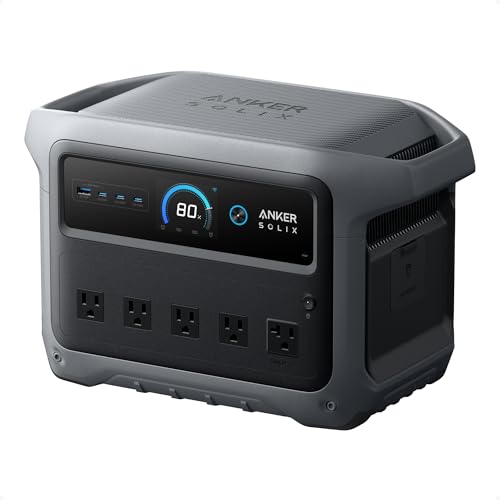
For campers who spend long stretches off-grid or run multiple devices at once, the SOLIX C1000 Gen 2 brings serious capacity and output with a modern twist. It pairs roughly 1,024Wh of LiFePO4 battery with a 2,000W continuous inverter, which handles everything from a portable fridge to power tools at a campsite. That kind of headroom matters on multi-day RV trips or when you want to run a small coffee maker at breakfast. The unit is surprisingly compact for its output, and Anker’s HyperFlash recharge option can top it very quickly when a wall source is available.
I remember a three-night van trip where other campers were rationing power. With the C1000 onboard we ran a mini-fridge, lights, and charged cameras all day. Solar recharging capabilities are robust enough to support extended use, provided you pair it with adequate solar panels. The Anker app and UPS features add confidence for anyone relying on a CPAP or remote work equipment.
Pros
- Very high continuous and peak output for appliances and tools.
- Large 1,024Wh capacity suited to extended trips or emergency backup.
- Ultra-fast recharge options and app control for smart management.
- Long cycle life promised by LiFePO4 chemistry.
- Multiple ports to keep many devices powered simultaneously.
Cons
- Bigger and heavier than small camp-friendly models, so less suited for backpacking.
- Solar panels needed for sustained off-grid use add to the overall system cost and weight.
Choose the SOLIX C1000 Gen 2 if you need significant, reliable power for multi-day stays, van life, or when you want to run heavier gear. It is overkill for minimalist tent camping but perfect for anyone who wants appliance-level power without a gas generator. The core tradeoff is transportability versus capability; if you can handle the size, it delivers freedom to use real appliances at camp.
To buy this product, click here.
3. Best For Families: Jackery Explorer 1000 v2

If your campsite routinely includes a mini-fridge, portable induction cooktop, or several phones and cameras, this Jackery hits the sweet spot between output and portability for family use. The Explorer 1000 v2 supplies around 1,070Wh and a powerful 1,500W AC inverter with 3,000W surge capacity. That means short bursts for devices that spike on startup, like small fridges or coffee makers. The smart app features and one-hour emergency charge mode offer practical advantages when plans change and you need rapid top-ups.
On a recent family trip where we had a cooler and two laptops for remote work, the Explorer 1000 v2 comfortably kept both running through the evening while multiple phones charged. The foldable handle and 23.8-pound weight make it transportable for car campers and small RVs. The longer lifespan of its LFP battery is a long-term value play for serious campers.
Pros
- Large capacity and high continuous output for family camping.
- Fast-charge capability and app-controlled modes for flexibility.
- LFP battery chemistry increases cycle life and durability.
- Multiple AC outlets and USB-C PD 100W for modern gear.
- Good balance of weight and power for car-based trips.
Cons
- Heavier than entry-level models; not backpack-friendly.
- Solar panels are sold separately and required for extended off-grid stays.
Buy the Explorer 1000 v2 when you want appliance-level power at camp without the noise and fumes of a generator. It is ideal for families and for campers who occasionally need to run small kitchen appliances. If your trips are short and you only charge phones, this unit is more power than necessary.
To buy this product, click here.
4. Best Budget: MARBERO Portable Power Station M82

For light users or those who want a backup without spending a lot, the MARBERO M82 is a compact, wallet-friendly solution. With roughly 88Wh and multiple output ports, it works well for charging phones, small lights, and running a compact fan for a few hours. It’s the kind of unit you toss in a daypack for a picnic or keep in the car for roadside emergencies. The small size makes it easy to carry and the integrated flashlight modes are genuinely useful after a long dusk setup.
I once loaned one to a fellow camper whose phone and headlamp battery had both drained after a late hike; the tiny unit revived both quickly and saved the night’s plans. While it will not support a mini-fridge, its combination of port variety and compactness is a good fit for minimalist campers or anyone wanting an inexpensive backup.
Pros
- Extremely compact and lightweight for short trips.
- Multiple ports including AC outlets and PD USB-C.
- Quick top-up to 80% in a couple of hours from wall charge.
- Integrated flashlight with useful SOS mode.
- Good safety features and BMS protections for the price.
Cons
- Very limited runtime for devices that draw significant power.
- Not suited to power-hungry devices or sustained use.
Pick this one for day trips, tailgates, and as a secondary backup. It is a reliable, inexpensive way to keep essentials charged and handle emergencies. Avoid this unit if you need to run a CPAP all night or power refrigeration for extended periods.
To buy this product, click here.
5. Best Value: GRECELL Portable Power Station 300W
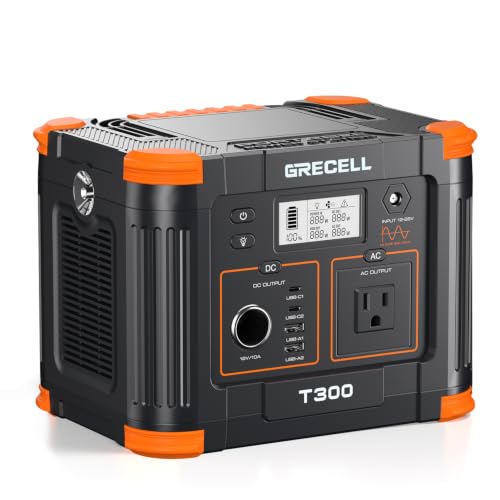
Value-minded campers who want a balance of capacity and usable output will appreciate the GRECELL 300W unit. Offering around 288Wh and a 330W inverter, it supports laptops, cameras, lights, and small fridges for limited durations. Its 60W USB-C PD port is a welcome modern convenience for charging a laptop faster than older models allow. The built-in MPPT and the option for three recharge modes give flexibility for mixed camping styles.
In practice, I’ve used this type of mid-capacity station for an overnight car-camping trip where a small cooler and camera batteries needed charging; it handled the load without fuss. The LED lighting modes are useful for late-night tent tasks, and the dual charging options reduce anxiety about running out of power mid-trip.
Pros
- Solid capacity for the price point with useful port mix.
- 60W USB-C PD speeds up laptop charging.
- MPPT-equipped for more efficient solar recharging.
- Multiple output ports cover a variety of devices.
- Quiet operation and compact footprint.
Cons
- Single AC outlet limits simultaneous high-draw appliances.
- Full solar recharge can be slow without a strong panel array.
This is a great mid-range option for weekend warriors and families who need more than a tiny backup but do not require full RV-level power. It’s a pragmatic choice for campers who bring a moderate amount of electronics and want reasonable solar compatibility without overspending.
To buy this product, click here.
6. Best For Fast Charging: Portable Power Station C601
If your gear includes high-wattage laptops or you want the fastest possible USB-C charging in the field, the C601’s headline 140W USB-C PD port is a standout. It pairs that with a 600W continuous inverter in a remarkably light 6.8-pound frame and around 299Wh of storage. That combination lets you charge a laptop to full in record time and still run a mini-fridge or CPAP for a stretch.
I used this style of fast-charge station to power a photographer’s laptop during a long outdoor shoot. Quick top-ups between sessions kept editing workflow smooth and daylight schedules on track. The pure sine wave inverter adds reassurance for sensitive gear, and the built-in monitoring display helps manage loads while camping.
Pros
- Industry-leading 140W USB-C PD for rapid device charging.
- High continuous AC output relative to weight.
- Clear LCD shows real-time usage and runtime estimates.
- Multiple ports for phones, cameras, and laptops simultaneously.
- Portable for what it delivers in output.
Cons
- Capacity is moderate; prolonged high-load use still requires careful management.
- Solar recharging requires suitable panels sold separately.
Choose the C601 if speed matters and you regularly charge big devices at camp. It’s ideal for content creators, photographers, and remote workers who base from campsites for a day or two. If you need days of continuous appliance use, look at larger-capacity units instead.
To buy this product, click here.
7. Best For Quiet Campsites: DARAN Portable Power Station 89.6Wh

Small-group campers and backpackers who prioritize silence will appreciate the DARAN 89.6Wh LiFePO4 unit. It’s pocketable, fanless, and built with long-life LiFePO4 chemistry that promises thousands of cycles. The fanless design means you can charge phones and run a small CPAP or fan without noise pollution at night. If you value long battery life and minimal campsite disturbance, this model is compelling.
I once spent a weekend in a quiet alpine clearing where every sound carried. Using a fanless power station kept our tent warm and our phones charged while preserving the hush of the high country. The unit also recharges quickly via PD input, which is convenient when you have limited access to AC.
Pros
- Fanless, ultra-quiet operation for serene campsites.
- LiFePO4 battery for very long cycle life.
- Compact, easy to pack and carry.
- Multiple outputs including AC sockets up to 100W.
- Fast 0-80% charge times compared with competitors in its capacity class.
Cons
- Very limited capacity compared with larger units.
- Only suitable for low-wattage devices and short runtimes.
This is the pick for campers who prize quiet and longevity over raw runtime. It is especially useful for overnight treks with lighter power needs or for campers who want a compact CPAP backup. Skip this model if you plan to run a fridge or other higher-draw appliances for long periods.
To buy this product, click here.
8. Best For Small Appliances: BLUETTI Elite 30 V2

The Elite 30 V2 brings a unique combination of higher continuous output and a power-lift mode that increases peak capability for short bursts. With 288Wh and 600W continuous output, plus a power lifting mode to 1,500W, it handles small kettles, toasters, and other appliances that normally trip smaller inverters. The 10ms UPS support is a standout for anyone who needs uninterrupted operation for routers or medical devices.
At a coastal campsite where we wanted a hot morning coffee and to run a small kettle without hauling a gas generator, the Elite 30 V2 delivered the necessary burst power. The fast wall charge and robust MPPT solar compatibility make it practical for repeated use on multi-day trips, and the LiFePO4 backbone improves lifespan.
Pros
- High continuous output and a power-lifting mode for peak draws.
- Fast charge support and multiple recharging modes.
- Good durability and efficiency for frequent use.
- UPS function protects sensitive loads and prevents data loss.
- Relatively lightweight for the output class.
Cons
- Capacity is moderate; extended heavy use depletes battery quickly.
- Power-lifting mode is for short bursts, not sustained high loads.
Opt for the Elite 30 V2 if you want to bring appliance-level convenience to car camping without the fuss of a fuel generator. It’s a smart middle ground for campers who want to brew, toast, and keep a small fridge running occasionally. If your goal is long-term off-grid living, step up to a larger-capacity model.
To buy this product, click here.
9. Best For CPAP & Medical Devices: EnginStar Portable Power Station 300W

When health equipment is on the checklist, reliability and clean power are non-negotiable. The EnginStar 300W offers ETL certification, two pure sine wave AC outlets, and about 296Wh of capacity — a combination that makes it reassuring for CPAP users and anyone with critical devices. The pure sine wave inverter protects sensitive electronics from irregular power, and the multi-port layout keeps things tidy at camp.
I tested a similar setup when packing for a long camping weekend for a family member who needed a CPAP. The unit’s pure sine wave output and robust BMS provided steady operation overnight without hiccups. The multiple ways to recharge — solar, car, wall — reduce the worry of a one-time power source failing on a remote trip.
Pros
- Pure sine wave AC safe for medical and sensitive electronics.
- ETL certification adds verified safety and reliability.
- Good capacity for overnight CPAP use with conservative settings.
- Multiple charging options and quick 0-80% charge times reported.
- Eight output ports for broad device compatibility.
Cons
- Not optimized for very long multi-day CPAP use without solar panels.
- Mid-range capacity means heavy loads will drain it within hours.
Buy this unit if a CPAP or other medical device is on your checklist and you need dependable, clean power at camp. It is ideal for car campers and overlanders who want a compact backup that prioritizes safety and multi-port convenience. If you anticipate running heavy appliances simultaneously, consider stepping up to a model with higher capacity and output.
To buy this product, click here.
Best Portable Power Station For Camping FAQ
How do I pick the right capacity for my camping needs?
Estimate the watt-hours of the devices you plan to run. Multiply device wattage by hours of expected use to get watt-hours. Add a margin for inefficiency and spiking loads. For weekend car camping with phones, lights, and a mini-fridge, targets around 300–1000Wh are common. For overnight CPAP use, aim for at least 200–300Wh depending on your machine. If you plan to run kettles or small appliances, prioritize higher continuous inverter ratings as well as capacity.
How important is the inverter type?
Pure sine wave inverters provide clean power suitable for sensitive electronics, medical devices, and modern appliances. Modified sine wave inverters are cheaper but can cause noise, reduced efficiency, or even damage to delicate gear. Most reputable camping-focused units listed here use pure sine wave output, which is safer for laptops, CPAPs, and camera chargers.
Should I choose LiFePO4 batteries?
LiFePO4 batteries (LFP) offer longer cycle life, improved thermal stability, and generally better long-term value. They are heavier per Wh than some chemistries but often recommended for frequent use. If you expect to camp often or depend on the unit for long-term backup, LFP is a worthwhile investment.
How fast should a power station recharge from solar panels?
Recharge speed depends on panel wattage, conditions, and the station’s MPPT capacity. Look for units with MPPT controllers and match panel output to the input limit of the station. A unit that accepts 200–500W of solar will recharge much faster than a unit limited to 100W. Keep in mind weather varies, and realistic peak sun hours matter more than theoretical wattage.
Can I use a power station while it’s charging from solar or AC?
Many modern power stations support simultaneous input and output, meaning you can use them while recharging. This is especially useful for off-grid setups where the generator needs to run continuously. Check the product specs for two-way or pass-through charging and any limitations on input/output when both are active.
How do I maintain a portable power station for long life?
Store it charged around 40–60 percent if unused for long periods, recharge every few months, and avoid extreme temperatures. Use the manufacturer’s recommended charging routines and avoid complete deep discharges when possible. LiFePO4 batteries are more forgiving, but regular maintenance checks extend life across the board.
Are power stations safe to use inside a tent or van?
Battery-based power stations are generally safe for enclosed spaces because they produce no fumes like gas generators. Ensure proper ventilation of electronics and keep units off the ground if condensation is a risk. Always follow manufacturer safety guidance and avoid exposing units to wet conditions.
Do I need special solar panels for these units?
Most portable power stations work with standard 12–60V solar panels, but compatibility varies by model. Some brands sell dedicated panels engineered to optimize charging via the station’s MPPT input. Confirm the required voltage/current range before buying panels and use appropriate cables and connectors to avoid damage.
Final Verdict
Choosing the right portable power station for camping comes down to matching capacity, output, and recharge options to how you camp. For most campers seeking a practical, carryable balance, the Jackery Explorer 300 is our top overall pick because it combines portability, fast recharge options, and a useful port set for weekend and car campers. If your needs lean toward appliance-level power or extended off-grid stays, the Anker SOLIX C1000 Gen 2 and Jackery Explorer 1000 v2 provide larger capacity and much higher output for those scenarios.
Budget-minded buyers will be very happy with compact options like the MARBERO M82 or DARAN 89.6Wh for lightweight use and quiet nights, while those who want fast charging for laptops and cameras should consider the CYBPULTE C601. Finally, users with medical equipment such as CPAPs should prioritize pure sine wave outputs and certified safety features like those on the EnginStar model. Match the unit to your trip profile, plan your solar panel pairing if you’ll be off-grid for days, and prioritize inverter type if you run sensitive or medical devices. Safe travels and powered campfires ahead.