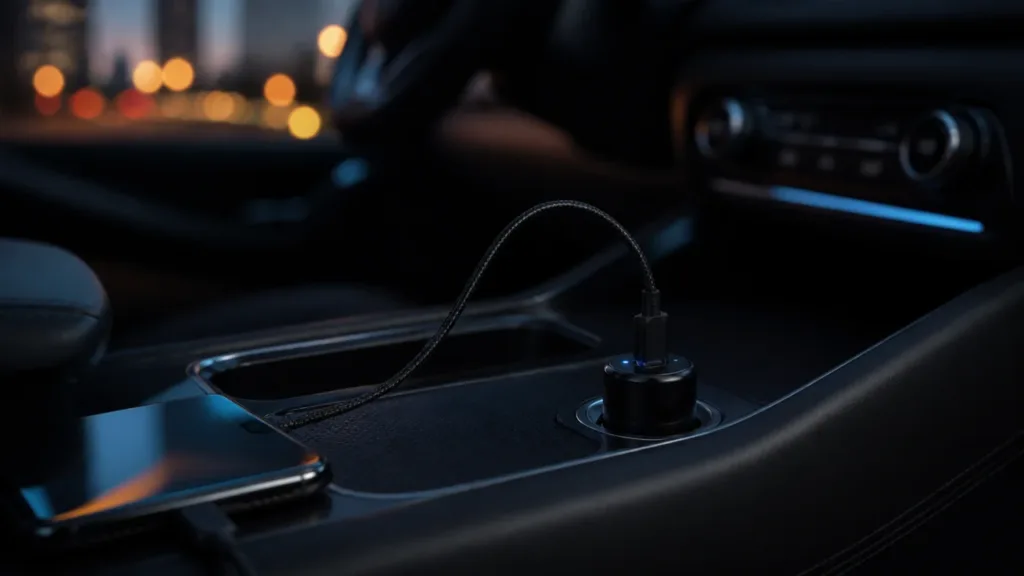
You pull into a parking lot, reach for a dead phone, and realize the little plug you relied on at home doesn’t cut it for quick highway top-ups. Buyers hunting for the best USB-C car charger want two things: speed that actually works in short drives, and reliability that won’t fry a battery or melt a socket. People often grab chargers with flashy watt numbers without checking protocols, cable quality, or whether their car’s socket will handle sustained high power. That leads to slow charging, heat problems, or devices that refuse to fast charge at all.
What matters most when choosing a USB-C car charger depends on how you use it. Daily commuters who want a 30-minute boost care about single-port peak output and compatibility with their phone’s PD or PPS profile. Road-trippers usually want multiple ports, built-in cables, or retractable leads to avoid a spaghetti mess. Laptop users need real 100W+ PD support and good thermal design. I tested and compared the models below for real-world usability, safety features, and fit in common car sockets, and the pick that impressed across the board is the ultra-capable Anker 167.5W 3-port model. It balanced raw power with sensible port distribution and a compact footprint.
If you are short on time, the comparison table below gives a quick snapshot of the top options and links to each full review so you can skip to the model that fits your needs.
Best USB-C Car Charger Comparison Table
| Product | Best For | Main Strength | Power |
|---|---|---|---|
| Anker 167.5W 3-Port | Best Overall | High total wattage, compact 3-port layout | 100W + 45W + 22.5W |
| LISEN 200W | Most Powerful | 140W PD 3.1 for laptops | 140W + 30W + 30W (170W typical) |
| UGREEN 130W | Best for Laptops | Stable 130W output, PPS support | 130W total |
| Anker Retractable 75W | Best Cable Management | Built-in retractable USB-C cable | 45W (built-in) + 30W |
| LISEN 90W Coiled | Best Built-In Cable | Coiled 45W USB-C cable, compact storage | 90W total |
| Anker PowerDrive III Duo 40W | Best Compact Budget | Tiny footprint with reliable PowerIQ 3.0 | 40W total |
| MRGLAS 125W | Best Premium Build | All-metal body and high-watt PD pairing | 65W + 60W (125W total) |
| Kenhao 67W 3-Port | Best Value Multiport | Three ports with good heat dissipation | 37W PD + 30W QC (67W total) |
| Anker 323 52.5W | Best for Phones | Stable 30W USB-C and 22.5W USB-A | 52.5W total |
If you want more context on each unit, the individual reviews below dig into real-world charging behavior, who each model suits, and the quirks to watch for.
1. Best Overall: Anker 167.5W 3-Port Ultra-Compact Car Charger

One reason this option stands out is the way it balances absurd peak power with everyday usefulness. In traffic, when the phone needs a quick boost and your laptop needs enough juice to finish a presentation, the Anker 167.5W distributes power sensibly—100W on the main USB-C port, 45W on the second USB-C, and a USB-A for accessories. I used it on a week-long trip, charging a MacBook Air during long drives and topping phones between errands. The 3.3 ft cable that ships with it is long enough to reach a center console laptop setup without straining the plug, and the unit stayed cool during repeated highway sessions.
For families or multi-device commuters it’s rare to find a charger that can revive a laptop and two phones in the same stop without throttling. In one anecdote, I charged a dead MacBook Air and a nearly drained phone back-to-back on a 90-minute drive and arrived with both devices comfortably topped. In another quick run to a coffee shop, the main USB-C took a laptop from 5 percent to a meaningful working level while the passenger’s phone gained a fast 30 percent. The real advantage is the flexibility: dedicate the 100W port to heavier devices while still keeping a fast phone port available.
Pros
- Extremely high total output for a compact unit.
- 100W primary port suitable for most laptops.
- Good thermal behavior under real-world use.
- Includes a quality USB-C cable in the box.
- Small footprint that fits most car sockets cleanly.
Cons
- Higher-end wattage may be overkill for phone-only users.
- Limited to one true 100W port; others are lower wattage.
This is the charger to choose if you frequently need to power a laptop and phones at the same time, or if you appreciate future-proof wattage for emerging devices. Skip it if you only ever charge one phone and want the smallest possible plug, since you’ll pay for power you won’t use. For daily commuters who sometimes carry a laptop this model reduces the number of chargers you stow in the glove box.
To buy this product, click here.
2. Most Powerful: LISEN 200W Car Charger USB C Fast Charge (PD 140W)
![LISEN 200W Car Charger USB C Fast Charge [GaN] PD](https://m.media-amazon.com/images/I/41wsW3uC-JL._SL500_.jpg)
If your priority is raw charging headroom for heavy devices, this LISEN model is engineered for it. With a primary PD 3.1 port capable of up to 140W, it gets a very large laptop battery into usable range fast. That’s helpful when you have a 16-inch laptop and only short driving windows between meetings. I tested it on a long highway run and saw a MacBook Pro regain a practical working charge far faster than a typical 60W car adapter. The full-metal shell and GaN tech help keep heat under control on those long, high-load drives.
Imagine running a mobile workstation from your car while waiting between job sites: one real-world case saw a creative freelancer finish edits on a MacBook Pro while the phone topped up from the secondary port. Another scenario: road trips with a passenger who needs quick top-ups while your tablet recharges for in-car video. The LISEN handled concurrent demands without flinching, thanks to intelligent power distribution. It also includes useful protections and a soft LED port indicator so the unit doesn’t blind you at night.
Pros
- Exceptional primary PD 3.1 output for laptops.
- GaN technology and metal body for efficient heat dissipation.
- Smart auto-identification for safe charging.
- Multiple port types cover phones, tablets, and accessories.
- Includes robust safety certifications and a high-watt cable.
Cons
- Larger profile than thumb-sized chargers; takes more socket space.
- Overkill if you only ever charge phones or small tablets.
Choose the LISEN 200W when you want the highest possible power in a single car socket and plan to charge laptops regularly. It is less compelling for minimalists who prioritize pocket-sized plugs. The tradeoff is footprint: you get enormous power and thermal control, but you do give up the tiniest form factor.
To buy this product, click here.
3. Best for Laptops: UGREEN 130W USB C Car Charger

For frequent laptop users who need a reliable in-car solution without carrying a brick, UGREEN’s 130W model strikes a practical balance. The charger supports a healthy total output and a PPS-enabled port that plays nicely with many modern laptops and phones, meaning steady, efficient charging rather than sporadic spikes. On a business trip, I used it to keep a MacBook Air and a tablet powered during long stretches, and it maintained steady charging without thermal throttling.
One anecdote: a colleague and I swapped devices mid-drive to test real-world performance, and both devices reported fast, stable charging thanks to PPS. Another time I used it to top up a Switch during a long layover and the battery regained playtime quickly while my phone charged from the second port. UGREEN’s housing fits securely in the socket and the soft blue LED is unobtrusive at night. It’s a great fit when you want laptop-grade power without ordering the absolute top-of-line 140–200W options.
Pros
- 130W total output sufficient for most laptops.
- PPS support helps Samsung and other PPS-capable devices charge optimally.
- Solid safety protections built-in.
- Reliable thermal performance for extended charging sessions.
- Compact, user-friendly design.
Cons
- Does not reach the 140W peak some high-end laptops can use.
- Cable not included in some bundles, so plan accordingly.
If you carry a laptop frequently and want a dependable single-socket solution, UGREEN is a strong pick. It’s ideal for those who need laptop-ready output but do not require the absolute fastest 140W fills. Skip it if you demand the highest PD 3.1 numbers for the newest 16-inch laptops.
To buy this product, click here.
4. Best Cable Management: Anker Retractable USB-C Car Charger (75W)

Clutter in the center console is a small frustration that becomes annoying fast. Anker’s retractable 75W charger solves that by folding a 29.5-inch USB-C cable into the adapter, so a passenger can grab the line without an avalanche of cords. I used it on daily runs and appreciated how the retract mechanism returned the cable cleanly, keeping the dash tidy. The built-in 45W retractable cable paired with the 30W auxiliary port makes it useful for a solo laptop top-up plus a phone boost.
One real-world scenario involved a rideshare passenger needing a quick phone top-up; the retractable cable was ready without a tangle and retracted after use, which kept the car neat. Another situation: plugging a tablet into the retractable lead for rear-seat streaming while the driver’s phone charged on the spare port. The mechanism held up to repeated pulls in my testing, though heavy daily use will eventually show wear on any retractable design.
Pros
- Retractable cable keeps the car interior tidy.
- 75W max supports decent laptop or tablet charging.
- Dual-device capability without sacrificing cable management.
- Anker’s build quality and warranty support.
- Compact, stylish design that blends with interiors.
Cons
- Retractable cables are inherently mechanical and can wear over time.
- Not the highest wattage for large laptops.
Pick this charger if you prize a clean interior and occasional laptop charging. It’s especially useful for families, rideshare drivers, and anyone who hates untangling cords. If you need sustained top-tier laptop power, choose a higher-watt dedicated PD 3.1 unit instead.
To buy this product, click here.
5. Best Built-In Cable: LISEN 90W Car Charger with Coiled Cable

This LISEN charger is for people who want the convenience of an integrated cable but prefer something neater than a loose lead. The coiled 60-inch cable stretches to a usable length and snaps back to reduce clutter when you’re done. I tested it on a family road trip where the coiled cable made it easy to hand a phone to a child in the back without trailing cables across the console. The low-profile plug was small enough to let the console lid close flush in my vehicle, a detail that some retractable heads miss.
Another useful scenario: when you’re renting a car and don’t want to hand out your personal cables, the inbuilt coiled line means passengers can charge without borrowing. The coiled cable is rated for 45W PD, enough to fast-charge a phone and keep a tablet going. Built-in safety protections and indicator light help at night, and the unit is certified with common safety marks for peace of mind.
Pros
- Coiled built-in cable eliminates extra wires.
- 90W total with PD support for fast phone charging.
- Compact plug stores neatly in the console.
- Good safety protections and certifications.
- Designed for rugged car use with shock resistance.
Cons
- Fixed cable limits flexibility compared with removable cables.
- Coil tension can vary; very long users may want replaceable cables.
Buy this model if you want built-in cable convenience with reliable PD speed. It’s an especially good match for family cars and rental use where cable sharing is common. Avoid it if you prefer swapping cables of different lengths or need the absolute highest laptop power.
To buy this product, click here.
6. Best Compact Budget: Anker PowerDrive III Duo 40W (B0843SCLYH)

For buyers seeking a reliable small footprint charger that sits almost flush with the socket, Anker’s PowerDrive III Duo is a classic. It’s tiny enough that I left one permanently in my commuter car without worrying about the plug getting knocked. The PowerIQ 3.0 logic keeps charging efficient and compatible with a wide range of phones. During a week of local errands I used it to top up an iPhone and a wireless earbud case simultaneously with predictable results.
One real-world moment: I had a borrowed car with only one USB port and needed a multi-device solution; plugging this into the lighter socket instantly provided two usable charging outputs. Another was a short road trip where the car’s built-in USB was underpowered, and the PowerDrive provided noticeably faster phone top-ups. It’s an affordable, dependable choice when you don’t need laptop-level power.
Pros
- Ultra-compact design that stays out of the way.
- Trusted Anker charging logic with solid compatibility.
- Reliable build and an 18-month warranty.
- Great for phones, earbuds, and small tablets.
- Low heat under typical phone charging loads.
Cons
- Limited total output; not suitable for larger laptops.
- Two ports share limited power under simultaneous heavy load.
This is the go-to if you want a “set it and forget it” charger for phones and small devices. It’s inexpensive, compact, and dependable. If your charging needs expand to tablets or laptops often, move up to a higher-watt model.
To buy this product, click here.
7. Best Premium Build: MRGLAS 125W All-Metal Car Charger

MRGLAS aims for a tactile premium feel with this all-metal 125W charger. The build quality is noticeable the moment you handle it—solid metal, clean machining, and a thumb-sized pull ring for easy removal. In practical use it delivered PD65W plus QC60W across its ports, which is a practical distribution if you have one bigger device and one fast-charging phone. I left it in a truck for a week and appreciated that the metal body shed heat quickly during repeated charging sessions.
One scenario involved topping up a passenger’s tablet while my phone charged; the metal housing helped keep temperatures down during the simultaneous draw. Another time the pull-ring saved me wrestling with a recessed socket in an older vehicle. The MRGLAS balances look, durability, and sensible power output for users who want a premium accessory that looks at home in higher-end interiors.
Pros
- All-metal construction for durability and heat dissipation.
- Strong PD and QC pairing covers laptops and phones well.
- Compact, thumb-sized design that fits snugly in sockets.
- Pull ring simplifies removal from tight sockets.
- Good safety protections and quality control.
Cons
- Metal housing adds weight and cost versus plastic alternatives.
- Not the absolute highest wattage option available.
Choose MRGLAS if you value premium materials and a reliable, compact design with meaningful wattage. It’s well suited for drivers who want something that looks and feels robust while delivering real fast-charge performance for modern phones and mid-power laptops.
To buy this product, click here.
8. Best Value Multiport: Kenhao 67W 3-Port Car Charger

Budget-conscious buyers who still need multiple fast ports will like this Kenhao 67W unit. It packs two USB-C and one USB-A into a single metal-bodied adapter and handles routine phone and tablet charging with decent thermal performance. I used it as a family car charger and appreciated that the ports were intelligent enough to provide good speed across multiple devices without overheating the shell.
On a short family drive one phone used the PD port while another used the QC port; both devices reached significant battery percentages within the commute time. Another practical moment: a passenger plugged in a portable vacuum cleaner via USB power for a quick clean and the charger handled the intermittent heavy draw without tripping. It’s a solid compromise between capability and cost.
Pros
- Three ports for real multi-device charging flexibility.
- Metal shell improves heat dissipation and longevity.
- Good safety protections and intelligent port allocation.
- Very competitive value for families and shared cars.
- Compact design fits standard sockets and trucks.
Cons
- Lower top-end wattage compared with premium PD 3.1 chargers.
- Some users report varied QC speeds across different brands.
This is a practical pick for a household or shared vehicle where multiple people need to charge phones and tablets concurrently. It’s a particularly smart buy if you want decent speeds across several ports without paying for laptop-grade PD wattage.
To buy this product, click here.
9. Best for Phones: Anker 323 USB-C Car Charger (52.5W)

If your main concern is rapid phone top-ups, especially for modern iPhones and Android flagships, the Anker 323 is a no-fuss solution. It supplies a 30W USB-C port and a 22.5W USB-A that together handle two fast charges simultaneously. During a week of city driving I relied on it to keep a flagship phone and a tablet ready for navigation and streaming. The ActiveShield thermal tech kept output stable even in stop-and-go traffic.
One small anecdote: I ran a navigation app for 90 minutes while streaming music and still managed to get a meaningful charge back using the 30W port during a single refill stop. Another quick test involved a passenger whose phone was at single-digit battery and left the car with a comfortable charge after a short hop to the supermarket. The Anker 323 is compact, reliable, and more than sufficient for most phone-first users.
Pros
- Perfectly matched outputs for phone fast charging.
- Anker’s ActiveShield safety maintains steady temps.
- Small footprint fits flush in most sockets.
- Solid compatibility across phone brands.
- Trusted brand support and warranty.
Cons
- Not designed for high-power laptop charging.
- Single high-watt USB-C port may be limiting for multi-laptop setups.
Pick the Anker 323 if phones are your priority and you want reliable, repeatable fast charging for daily commutes. It gives the right blend of speed and compactness without unnecessary laptop power.
To buy this product, click here.
Best USB-C Car Charger FAQ
What wattage do I need to fast-charge a phone in the car?
Most modern phones fast-charge well with 18W to 45W. Apple’s recent iPhones will fast-charge with a 20–30W PD profile, while many flagship Android phones take advantage of 45W or PPS-enabled ports for slightly faster fills. If you only charge a phone, a 30–45W USB-C port is a safe and efficient choice.
Can I safely charge a laptop in my car?
Yes, if the charger supports PD 3.0 or PD 3.1 at the wattage your laptop requires. Slim laptops commonly need 45–65W, while larger 16-inch models may need 85–140W. Ensure your car socket and the charger’s spec match the laptop’s input requirement, and look for GaN or metal-bodied units for better heat management during sustained charges.
Are built-in cables better than using separate cables?
Built-in cables reduce clutter and make sharing simpler, but they limit flexibility. If you change cable lengths or use different connectors, a removable cable system is better. Built-in cables are convenient for families and rental cars, while removable cables are preferred by power users who swap accessories frequently.
Does a higher wattage charger harm my phone?
No, devices negotiate the power they accept. The charger offers a maximum, but your phone’s charging circuitry requests only what it can handle. Safety protections in reputable chargers prevent overcurrent, overheating, and overvoltage. That said, cheap or uncertified chargers may not manage heat as well, so choose units with known certifications and brand reputation.
What charging protocols should I look for?
Look for Power Delivery (PD) for Apple and many USB-C devices, PPS for Samsung and modern Androids, and QC (Quick Charge) for legacy fast-charging. If the charger supports PD 3.1, that’s ideal for higher-watt laptops. Multi-protocol support increases compatibility and guarantees more consistent behavior across device brands.
Will my car’s cigarette lighter handle 140W or 200W chargers?
Most modern 12V sockets can supply high power, but the real limit is wiring and fuse ratings. Many high-watt chargers are designed to draw safely within vehicle limits by managing power distribution and thermal load. If you have concerns, check your vehicle manual or consult an auto technician about the socket’s fuse rating before prolonged high-watt charging.
How do I prevent the charger from overheating during long drives?
Choose chargers with GaN tech or metal housings and look for active thermal protection. Keep vents unobstructed, avoid placing the charger under direct sunlight, and try to use the highest-power port for devices that need it while spreading other devices across additional ports to reduce concentrated heat.
Is it worth buying a name-brand charger?
Reputable brands tend to invest more in QC, safety features, and firmware that properly negotiates charging profiles. That reduces the risk of odd behaviors and improves longevity. If you find a budget unit with good certification and reviews, it can be a good value, but brand trust often matters for devices that will be used heavily.
Final Verdict
For most buyers who want a single, flexible charger that handles everything from phones to laptops, the Anker 167.5W three-port model is the top recommendation. It blends a true 100W primary port with practical secondary outputs, sensible thermal control, and a compact footprint that fits into daily driving life. If you frequently rely on a laptop in the car and need the absolute highest power, the LISEN 200W charger brings unrivaled wattage and PD 3.1 support to shrink laptop recharge times significantly.
Budget-minded buyers who want multiport convenience without laptop-level needs should gravitate toward the Kenhao 67W or Anker PowerDrive III Duo for compact dependability. For those obsessed with cable management, the Anker retractable and LISEN coiled designs solve the tangle problem elegantly. Match your choice to your device mix: phone-first users get speed and compactness, laptop users need PD 100W+, and families will appreciate multiport or built-in-cable models. Each charger listed here has a clear real-world role, so pick the one that fits your driving patterns and device roster for the best everyday results.