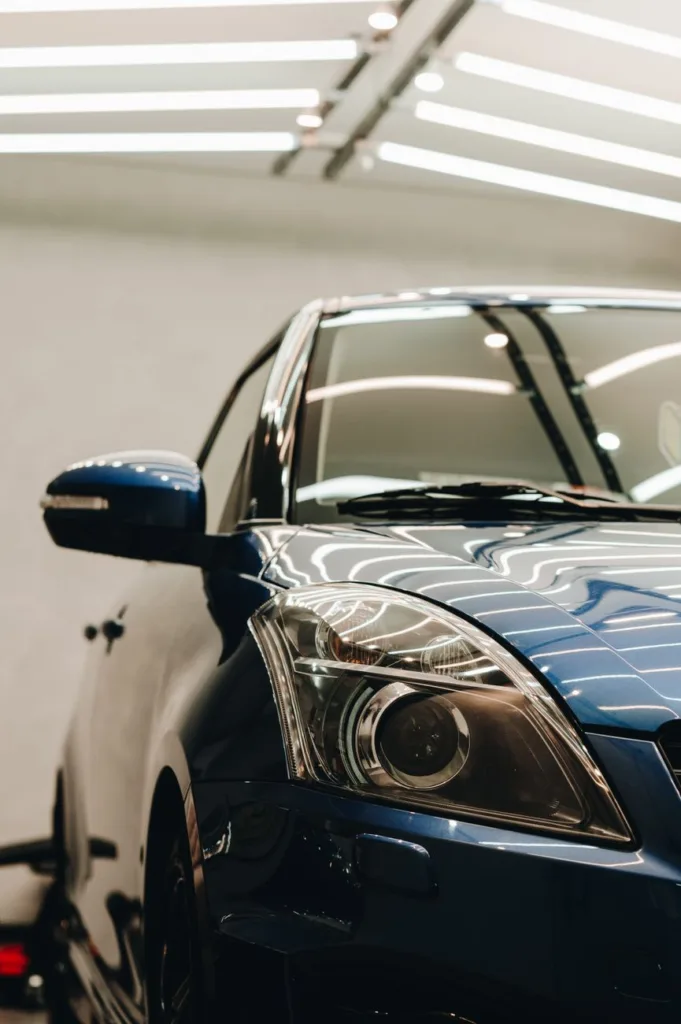
Mobile detailing is usually the better choice when convenience matters most, while shop detailing is often the better choice when you want access to a controlled work environment, more equipment, or advanced correction work. Neither option is automatically better for every car or every owner. The right choice depends on your budget, the condition of the vehicle, where you park, what level of detailing you need, and how much risk you want to take with weather, access, and scheduling.
If your car only needs a maintenance detail, interior cleanup, wash, decontamination, or light paint enhancement, a mobile detailer may be perfectly suitable. If your vehicle needs paint correction, ceramic coating prep, heavy stain removal, or more intensive restoration work, a detailing shop often has practical advantages. Understanding those differences helps you avoid paying for the wrong service.
What Is the Difference Between Mobile Detailing and Shop Detailing?
Mobile detailing means the detailer comes to your home, office, or another agreed location and performs the work on-site. They may bring water, power, tools, chemicals, lighting, and a generator, or they may need access to some of those resources depending on their setup.
Shop detailing means you bring the vehicle to a fixed location where the work is done indoors or in a dedicated bay. That location usually has stable lighting, climate control, fixed power, water supply, drainage, lifts or ramps in some cases, and secure storage if the car needs to stay overnight.
At a basic level, both can offer washing, interior cleaning, polishing, waxing, and other detailing services. The difference is not just the service menu. It is also about the environment in which the work is performed, and that can affect results, efficiency, and which jobs are realistic.
Mobile Detailing vs Shop Detailing at a Glance
| Factor | Mobile Detailing | Shop Detailing |
|---|---|---|
| Convenience | Very high. Service comes to you. | Lower. You must drop off and pick up the vehicle. |
| Work environment | Depends on weather, shade, space, and site conditions. | More controlled and predictable. |
| Best for | Maintenance details, routine cleaning, busy owners. | Paint correction, coatings, heavy restoration, multi-day work. |
| Lighting quality | Varies by time of day and setup. | Usually stronger and more consistent. |
| Weather impact | Higher risk of delays or reduced efficiency. | Much lower risk. |
| Equipment capacity | Limited by what can be transported. | Usually greater tool and equipment access. |
| Water and power needs | May need owner access unless self-contained. | Already available on-site. |
| Vehicle security during work | Depends on your location. | Often better for vehicles staying all day or overnight. |
| Pricing | Can be similar or slightly higher due to travel and setup time. | Can be more efficient for complex jobs. |
When Mobile Detailing Makes More Sense
Mobile detailing works best when convenience is your top priority and the job does not require an ideal indoor environment. Many owners choose it because it saves time and avoids the hassle of arranging transportation or waiting at a shop.
Good situations for mobile detailing
- You work from home or have a long office day and want the car cleaned while you are busy.
- Your vehicle is in reasonably good condition and just needs maintenance.
- You want a wash, interior vacuuming, light stain cleanup, trim dressing, or basic protection.
- You have driveway or parking lot space with safe access.
- You do not want to drive a dirty vehicle across town and leave it for hours.
For example, a family SUV that gets weekly school-run use may only need regular interior cleanup, pet hair removal, and exterior washing every few weeks. In that case, mobile detailing is often the practical choice because the owner gets the service without changing their day.
Why convenience matters more than many people expect
One of the biggest reasons people delay detailing is lost time. Dropping off a car, arranging a ride, and returning later can turn a simple cleaning service into a half-day task. Mobile detailing removes that friction.
This matters especially for people with multiple vehicles, parents with car seats to manage, rideshare drivers, commuters, or owners of larger vehicles that are inconvenient to move around. The ability to keep your normal schedule is a real advantage.
When Shop Detailing Makes More Sense
Shop detailing makes more sense when the condition of the vehicle or the scope of work requires better control over the environment. A dedicated shop can reduce variables that make precise detailing harder, especially for paint correction and long-duration services.
Good situations for shop detailing
- The vehicle has swirl marks, oxidation, water spotting, or deeper paint defects.
- You want machine polishing or multi-stage paint correction.
- The car needs ceramic coating preparation and curing under stable conditions.
- The interior has severe staining, odor issues, mold concerns, or major contamination.
- The vehicle may need to stay for many hours or overnight.
If you have a dark-colored car with visible paint defects under sunlight, a shop often has an advantage. Paint correction depends heavily on controlled lighting, clean working conditions, and enough time to inspect results from multiple angles. That is simply easier to do indoors.
Why a controlled environment changes the result
Detailing quality is not only about skill. It is also about the conditions under which that skill is used. Temperature, humidity, dust, direct sun, wind, and inconsistent lighting can all affect washing, polishing, coatings, and interior drying times.
A shop can make the process more repeatable. That does not guarantee a better detailer, but it does remove obstacles that can limit what even a skilled mobile operator can do.
How the Work Environment Affects the Final Result
The biggest practical difference between mobile and shop detailing is the work environment. Many vehicle owners focus on service menus and prices, but the environment often has more impact than the wording on a package list.
Lighting
Proper lighting helps reveal swirl marks, haze, missed spots, streaks, and interior dirt. Outdoor light can be useful, but it changes throughout the day and may be too harsh or too soft depending on conditions. Shop lighting is usually more consistent, especially for polishing work.
Temperature and humidity
Some products behave differently depending on heat and moisture in the air. Wax application, sealant curing, coating installation, and even stain extraction can be affected by weather. A shop can usually maintain a more stable environment.
Dust and wind
Wind can blow dust, leaves, and debris onto freshly cleaned surfaces. Dust in the air can also interfere with finishing work. Mobile detailers can work around this to a degree, but a shop has the clear advantage.
Access and working space
A cramped apartment parking space, street-side parking, or a sloped driveway can make some detailing tasks slower or less comfortable. Shops are designed for access around the vehicle, which can improve efficiency and consistency.
Which Option Is Better for Different Types of Detailing?
| Service Type | Mobile Detailing Suitability | Shop Detailing Suitability |
|---|---|---|
| Basic wash and dry | Excellent | Excellent |
| Interior vacuum and wipe-down | Excellent | Excellent |
| Maintenance detailing | Excellent | Very good |
| Pet hair removal | Good to very good | Very good |
| Shampoo and extraction | Good, depending on weather and setup | Very good |
| Odor treatment | Good for light issues | Better for severe issues |
| Clay bar and decontamination | Very good | Very good |
| One-step polishing | Good, if conditions allow | Very good |
| Multi-stage paint correction | Possible, but less ideal | Best choice |
| Ceramic coating | Possible in some cases | Usually preferred |
Cost Differences and What You Are Really Paying For
Many people assume mobile detailing is cheaper because it does not involve a building. In practice, pricing can go either way. A mobile detailer has travel time, setup time, fuel costs, vehicle maintenance, and limitations that affect scheduling efficiency. A shop has rent, utilities, insurance, and facility overhead.
That means the price gap is often smaller than people expect. Sometimes mobile detailing costs more for the same advertised service, especially if the provider is traveling a long distance or bringing a fully self-contained setup.
Factors that affect pricing
- Vehicle size
- Interior condition
- Paint condition
- Travel distance
- Access to water and electricity
- Weather-related difficulty
- Time required for pet hair, stains, sand, or heavy grime
- Whether the job is a maintenance detail or a restoration-type detail
Typical pricing patterns
A mobile detailer may charge a convenience premium for coming to your location. A shop may charge more for advanced correction work because it can offer more time-intensive services with better environmental control. What matters is not who is cheaper on paper, but whether the quoted service actually matches your car’s needs.
A low quote for a heavily neglected interior can be misleading if it only covers a quick wipe-down. A higher quote may reflect the real labor needed for stain extraction, odor treatment, and detailed cleaning around trim, seat rails, vents, and cargo areas.
Water, Power, and Drainage Considerations
One issue many customers overlook is whether the mobile detailer is fully self-contained. Some arrive with tanks, pressure washers, generators, and waterless or rinseless processes. Others need access to your hose bib and outlet.
That is not necessarily a problem, but it should be clarified before the appointment. If you live in a condo, apartment complex, or office building, access rules may limit what the detailer can do.
Questions to ask before booking mobile detailing
- Do you bring your own water and electricity?
- How much space do you need around the vehicle?
- Can you work in a parking garage or only outdoors?
- What happens if it rains?
- Do local property rules allow on-site detailing?
- Will wastewater runoff be an issue at my location?
Some neighborhoods and commercial properties have restrictions related to runoff, noise, or use of shared parking areas. Rules vary by location, so it is wise to confirm before the day of service.
Weather and Seasonal Issues With Mobile Detailing
Weather is one of the biggest variables in mobile detailing. A skilled mobile detailer can work around many conditions, but weather still affects scheduling and sometimes the result.
Hot weather
Direct sunlight can cause soap, cleaners, and protectants to dry too quickly. That can increase the risk of streaking or make products harder to remove. It can also make interior work less comfortable and less efficient.
Cold weather
Cold temperatures can limit water use, slow drying, and affect how some chemicals perform. In freezing conditions, mobile detailing may be impractical unless the vehicle is inside a garage and the service is tailored to the environment.
Rain and wind
Rain can delay exterior work or make it pointless if the timing is poor. Wind can carry dust and debris onto cleaned surfaces. Even if the appointment goes ahead, the detailer may need to adjust the service.
Shop detailing is less affected by all of these issues. That predictability matters if you are planning around work, travel, or a special event.
Quality Depends More on the Detailer Than the Format
It is important not to assume that shop detailing is always better quality or that mobile detailing is always lower-end. A highly skilled mobile detailer can outperform an average shop, and a poorly run shop can still deliver mediocre results.
The service format sets boundaries, but the detailer’s experience, process, honesty, and attention to detail matter more. The smartest approach is to judge both the provider and the environment.
Signs of a capable detailer, mobile or shop-based
- They ask about the vehicle’s condition and your goals.
- They explain what is realistic and what is not.
- They distinguish between cleaning, enhancement, and correction.
- They mention limitations such as severe etching, permanent wear, or damaged trim.
- They inspect the vehicle rather than quoting blindly from a menu.
- They can explain their process in plain language.
Red flags to watch for
- Promises that the car will look “brand new” regardless of condition
- Very low pricing for labor-intensive restoration work
- Unclear definitions of services like paint correction or ceramic coating prep
- No discussion of weather, access, or curing conditions for mobile work
- No mention of extra charges for excessive dirt, pet hair, or stains
Paint Correction and Ceramic Coating: Which Setting Is Better?
This is one area where shop detailing often has a real edge. Paint correction requires inspection, polishing, reinspection, and controlled lighting. Ceramic coatings also benefit from stable temperature, lower contamination risk, and proper cure time.
Why shops are often preferred for paint correction
- Consistent inspection lighting reveals defects more clearly.
- Indoor space reduces dust and weather interruptions.
- The car can stay longer if extra polishing passes are needed.
- Panel temperatures are easier to manage.
Can mobile detailers do paint correction and coatings?
Yes, some can, especially if they use a garage or covered area and bring specialized lighting. But the conditions have to be right. If the vehicle is parked on the street in open sun, that is not ideal for precision finishing work.
If you are paying for higher-level paint correction, ask where the work will actually happen and what conditions are required. That matters more than whether the business calls itself mobile or shop-based.
Interior Detailing Differences
Interior detailing can be handled well by either mobile or shop services, but the type of interior issue matters. Routine vacuuming, dusting, surface cleaning, and glass cleaning are usually easy to perform on-site. More severe interior jobs may benefit from a shop.
Mobile detailing works well for
- Regular vacuuming
- Wipe-downs of dashboards, doors, and consoles
- Child snack messes and light dirt
- Basic leather or vinyl cleaning and conditioning
- Maintenance cleaning between deeper details
Shop detailing works better for
- Deep carpet extraction
- Heavily stained cloth seats
- Persistent odors from smoke, food, or moisture
- Extended drying time needs
- Major contamination after spills or neglect
As an example, a sedan with a few weeks of dust and crumbs is a routine mobile job. A vehicle that sat with wet floor mats and developed a strong odor may need shop time, stronger ventilation, and more drying control.
Security, Liability, and Practical Risk
Where the work takes place can affect security and peace of mind. Some owners feel more comfortable having the car at home where they can see it. Others prefer a professional shop with secure indoor storage, cameras, and controlled access.
Mobile detailing security considerations
- Your driveway or parking space may be visible to neighbors or passersby.
- Street-parked vehicles may be more exposed during the job.
- You should remove valuables before any detail appointment.
Shop detailing security considerations
- Ask whether vehicles are stored indoors or outside after hours.
- Confirm whether the car may be moved by multiple staff members.
- Check pickup timing if the vehicle is being left overnight.
These points are not unique to one format, but they become more important for higher-value vehicles or any service that requires longer possession of the car.
Common Mistakes People Make When Choosing Between Mobile and Shop Detailing
Choosing only by price
The cheapest option is often the wrong option if your car needs more than a surface-level cleaning. Detailing is labor-intensive, and serious interior work or paint correction takes time.
Not matching the service to the vehicle’s condition
A neglected work truck, smoker’s car, or swirl-heavy black sedan may need shop-level conditions or a more extensive process than a quick mobile package. On the other hand, paying for a shop visit for a nearly clean car may be unnecessary.
Assuming every “full detail” means the same thing
One provider’s full detail may include decontamination, deep interior work, and machine polishing. Another may mean wash, vacuum, and wipe-down. Always ask what is actually included.
Ignoring the location requirements for mobile service
Customers sometimes book mobile detailing without confirming space, shade, building rules, or access to power and water. That can lead to delays, extra fees, or an incomplete service.
Booking advanced services in poor conditions
Paint correction or coating work on a hot driveway in windy weather may not be the best use of your money. If the detail requires precision, the work environment matters.
How to Decide Which One Is Right for Your Vehicle
A simple way to decide is to think in terms of condition, convenience, and complexity.
Choose mobile detailing if:
- Your car is moderately clean and needs routine maintenance.
- You value convenience more than a controlled environment.
- You have a suitable location for the service.
- You want to fit detailing into a busy day.
Choose shop detailing if:
- Your car needs correction, restoration, or deeper interior recovery.
- You want the most stable conditions for the work.
- The job may take all day or longer.
- Weather or your parking situation makes mobile work difficult.
A quick decision guide
| Your Situation | Better Fit |
|---|---|
| Busy professional with a clean daily driver | Mobile detailing |
| Family vehicle needing regular upkeep | Mobile detailing |
| Dark car with visible swirl marks and dull paint | Shop detailing |
| Vehicle needing ceramic coating prep | Shop detailing |
| Apartment resident with no service-friendly parking | Often shop detailing |
| Light interior cleanup while you work from home | Mobile detailing |
Questions to Ask Before Booking Either Service
- What exactly is included in the service I am considering?
- How long will the vehicle realistically take?
- Do you need access to water or electricity?
- What happens if weather changes on the appointment day?
- Can you handle pet hair, stains, odors, or paint defects, or is that extra?
- Will the vehicle be indoors, outdoors, or in a garage during the work?
- Is this a cleaning service, a polishing service, or true paint correction?
- If the car stays overnight, where will it be stored?
These questions often reveal whether the provider understands the work and whether the service format matches your needs.
FAQ
Is mobile detailing as good as shop detailing?
It can be for routine cleaning and maintenance services. For advanced paint correction, coating work, or severe interior restoration, a shop often has practical advantages because the environment is more controlled.
Is mobile detailing more expensive?
Sometimes. Mobile detailing may include travel and setup costs, while shops have facility overhead. Pricing depends more on the service level, vehicle condition, and local market than on the format alone.
Can a mobile detailer do paint correction?
Some can, especially if they have proper lighting and a suitable covered workspace. However, a shop is usually a better setting for extensive correction because lighting and contamination control are more consistent.
Which is better for ceramic coating?
Shop detailing is usually preferred because preparation and curing are easier to control indoors. Mobile installation can work in the right conditions, but it depends heavily on the setup.
What if I live in an apartment or condo?
Mobile detailing may still be possible, but you need to confirm parking access, property rules, water and power availability, and whether on-site work is allowed. In many cases, a shop is simpler.
Does shop detailing mean better quality?
Not automatically. A shop has environmental advantages, but the detailer’s skill and honesty still matter. A good mobile detailer can outperform a poor shop.
Which option is better for a very dirty interior?
For light to moderate dirt, either can work well. For heavy staining, strong odors, or moisture-related issues, a shop often has the advantage because it can support deeper cleaning and better drying conditions.
How often should I use mobile or shop detailing?
Many owners use mobile detailing for regular upkeep and reserve shop detailing for occasional deeper work. The right schedule depends on how the vehicle is used, where it is parked, and how sensitive you are to dirt, stains, and paint condition.
Key Takeaways for Choosing Between Mobile Detailing and Shop Detailing
Mobile detailing is mainly about convenience. Shop detailing is mainly about control. If your vehicle needs routine upkeep and you have a suitable place to work, mobile service can be an efficient and sensible option. If your vehicle needs advanced correction, deeper restoration, or weather-proof conditions, a shop is often the better fit.
The best choice is not based on the business model alone. It comes down to the condition of your car, the type of service you actually need, and whether the work environment supports that service properly. When you match those factors correctly, both mobile and shop detailing can provide strong results.