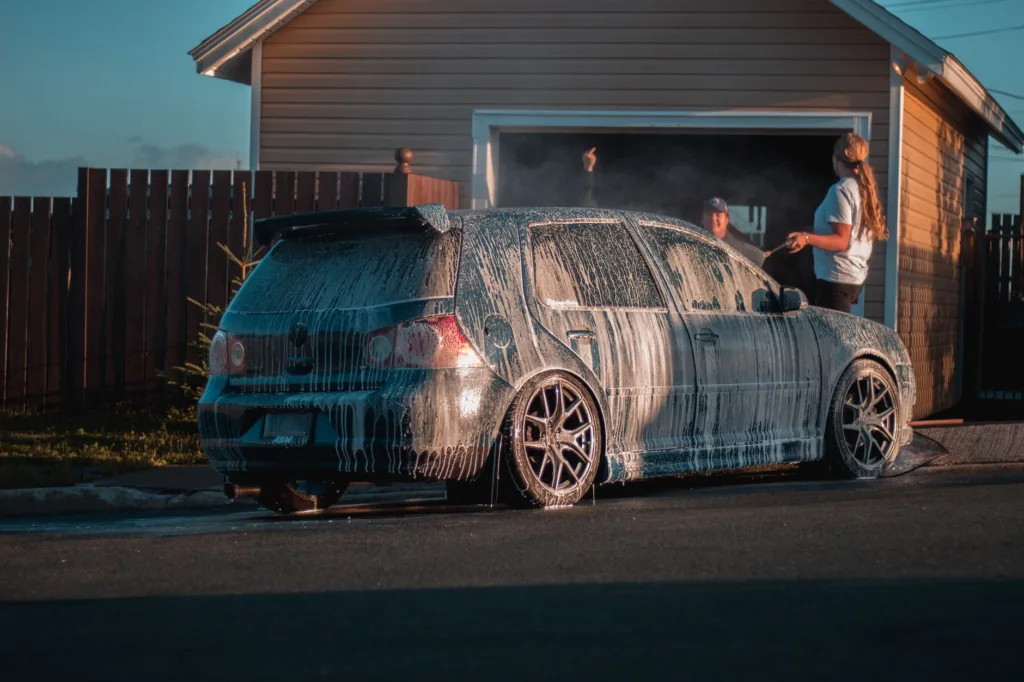
The best time of day to wash a car is usually early morning or late afternoon, when the vehicle’s surface is cool and the sun is not directly beating on the paint. Those conditions give you more time to rinse and dry the car before water, soap, or minerals bake onto the surface. If you have full shade and the body panels are cool to the touch, the exact hour matters less. If you are washing in direct sun, timing matters a lot more.
Most car washing problems that people blame on soap or technique are actually caused by heat, sunlight, and fast evaporation. Washing at the wrong time can leave water spots, soap residue, streaks, and in some cases make the process harder on waxes, sealants, trim, and glass. Choosing the right time makes the job easier, faster, and safer for the finish.
The short version is simple. Avoid washing a car in the middle of a hot, sunny day. Try to wash when the paint is cool, the air is moderate, and you can control drying before water spots form.
Why the Time of Day Matters When Washing a Car
A car wash is not just about getting dirt off the paint. It is also about controlling what happens to water and cleaning solution while they sit on the surface. Time of day affects three important things.
- Surface temperature. Dark paint, glass, and metal heat up quickly in direct sun.
- Evaporation rate. Hot air, wind, and sunlight make water dry faster.
- Working time. Cooler conditions give you more time to wash, rinse, and dry properly.
When paint is hot, soap can dry before you rinse it off. Water can evaporate and leave behind mineral deposits, especially if your tap water is hard. Drying towels can drag on the surface instead of gliding, which increases the chance of marring if there is any remaining dust or grit.
By contrast, washing in cooler, lower-light conditions gives you a more forgiving process. You can clean one section at a time without racing against the sun.
What Is Usually the Best Time of Day to Wash a Car?
Early morning
Early morning is often ideal because the car has usually cooled overnight and the sun is less intense. Body panels, wheels, and glass are easier to work on before they heat up. This reduces streaking and spotting and gives you time to finish before stronger sun arrives.
Morning is especially useful in summer or in warm climates, where midday temperatures can quickly turn a simple wash into a rushed job.
Late afternoon or early evening
Late afternoon can also be a very good choice, especially once direct sunlight is no longer hitting the car. The key is that the vehicle should be cooling down, not still holding heat from sitting in the sun all day.
If the car has been parked outside, feel the hood, roof, and doors first. A late afternoon wash works well only if those surfaces are no longer hot.
Whenever the car is in shade and cool to the touch
If you have a shaded garage entrance, covered driveway, or carport, you have more flexibility. In that case, the best time becomes less about the clock and more about conditions. A shaded wash at noon can be better than a sunny wash at 9 a.m. if the paint stays cool.
Times of Day Compared
| Time of Day | Typical Conditions | Pros | Cons | Overall Suitability |
|---|---|---|---|---|
| Early Morning | Cool panels, weaker sun, lower evaporation | More working time, fewer water spots, easier drying | Morning dew or cooler temperatures in winter can slow drying | Excellent |
| Late Morning | Rising sun, warming panels | Still manageable in mild weather or full shade | Risk increases as temperatures climb | Good to fair |
| Midday to Early Afternoon | Strong sun, hot paint, rapid evaporation | Convenient for some schedules | Highest risk of spots, streaks, soap drying, and surface heat issues | Poor |
| Late Afternoon | Cooling air, softer light | Good if the car is in shade or no longer hot | Panels may still hold heat after a sunny day | Very good |
| Evening | Cooler conditions, low sun | Less evaporation, easier on paint | Reduced visibility can make it harder to see dirt, residue, or missed spots | Good |
Why Midday Car Washing Often Causes Problems
Water spots form faster
When water evaporates quickly, it leaves behind the minerals that were dissolved in it. Calcium and magnesium are common in hard water. Those minerals dry into visible spots on paint, trim, and glass.
On hot panels, this can happen in minutes. By the time you rinse the second half of the car, the first half may already be spotting.
Soap and shampoo can dry on the surface
Car wash soap is meant to loosen dirt and rinse clean. If it dries before rinsing, it can leave residue and streaks. Dried soap may also force you to rewash sections, which wastes time and water.
Heat changes how the wash feels and performs
Hot paint makes towels and wash mitts feel sticky instead of slick. Lubrication decreases as water flashes off the surface. That does not automatically damage the paint, but it reduces your margin for error.
Glass and dark paint are especially unforgiving
Black, dark blue, and other dark finishes absorb more heat and make spotting easier to see. Windshields and side glass also heat up quickly and show mineral spots clearly, especially in bright light.
How Weather Changes the Best Time to Wash a Car
The best hour depends on more than sunlight. Temperature, humidity, wind, and even pollen levels can affect the result.
Hot summer weather
In summer, early morning is usually the safest option. Even by mid-morning, dark paint and glass may already be too warm for a comfortable wash. If mornings are not possible, wait until later in the day when the sun drops and the car has had time to cool.
Cool spring and fall weather
In mild temperatures, you have more flexibility. Late morning or late afternoon can both work well, especially in shade. Still, direct sun can create spots even on a cool day if the paint is dark and the water is hard.
Cold winter weather
Winter changes the question from spotting to freezing. If temperatures are near or below freezing, the best time is often the warmest part of the day, provided it is still safe and practical. Water can freeze on door seals, locks, mirrors, and the ground around the vehicle.
In winter, you may need to choose between avoiding strong sun and avoiding ice. Safety comes first. A slightly warmer daytime wash may be the better choice if freezing conditions are a concern.
Humid conditions
Humidity can slow evaporation, which can help reduce immediate spotting. But humidity can also slow drying, especially in the evening. That means you may need a more careful drying step to prevent residual moisture from spotting later.
Windy conditions
Wind speeds up evaporation and can blow dust or pollen back onto wet paint. A breezy day can be almost as tricky as a sunny one, even if temperatures are mild.
Best Time of Day by Climate and Situation
| Situation | Best Washing Window | Why |
|---|---|---|
| Hot, sunny summer day | Early morning | Cooler panels and slower evaporation |
| Mild day with good shade | Morning or late afternoon | Either can work if the paint stays cool |
| Cold weather above freezing | Late morning to early afternoon | Warmer air reduces freezing risk |
| Car parked outside all day | After the car has cooled in shade | Panels may remain hot even when the sun is lower |
| Garage or carport wash | Flexible | Shade reduces the effect of direct sun |
| Hard water area | Coolest practical time of day | Less evaporation means fewer mineral spots |
How to Tell if It Is a Good Time to Wash Your Car
You do not need a perfect forecast or a thermometer gun. A few simple checks can tell you whether conditions are suitable.
Touch the paint
If the hood, roof, or doors feel hot to your hand, it is not an ideal time. Warm is manageable. Hot is a warning sign.
Look at the sunlight
Direct overhead sun is a problem. Full shade is helpful. Partial shade can work if you wash and dry the car in small sections.
Check the wind
Light air is fine. Strong wind dries water too quickly and may carry dirt onto the paint.
Think about your drying plan
If you cannot dry the car promptly, wait for better conditions. Drying is not a minor final step. It is a major part of preventing spots.
Shade vs Time of Day: Which Matters More?
In most cases, shade matters more than the clock. A cool, shaded area at noon is often better than direct sunlight at 8 a.m. That said, the best results usually come when both factors work in your favor. Early morning shade or late afternoon shade is ideal.
Not all shade is equal. A shaded spot beside a building may still be hot if the pavement and surrounding surfaces have been baking all day. Shade removes direct solar load, but it does not always cool a car immediately.
Artificial shade can help
Covered wash bays, carports, parking structures, or a garage entrance can make washing more manageable. Just make sure the area has enough light to see remaining dirt, bugs, road film, and streaks.
Does the Best Time Change for Different Types of Vehicles?
The general advice stays the same, but some vehicles create extra challenges.
Dark-colored cars
Dark paint shows water spots, streaks, and soap residue more easily. It also absorbs heat faster. Owners of black or dark vehicles should be especially careful about avoiding hot, sunny conditions.
Large SUVs, trucks, and vans
Bigger vehicles take longer to wash and dry. That increases the chance that one section will dry before you finish another. For large vehicles, cooler conditions become even more important.
Cars with ceramic coatings, waxes, or sealants
Protective coatings can make washing easier, but they do not eliminate the problem of hot panels and fast evaporation. Water spots can still form on coated vehicles. The best time is still when the surface is cool.
Older vehicles with oxidized paint
Older or neglected paint may hold onto contaminants and residue more stubbornly. Washing in harsh sun can make the surface look dull or streaky faster, especially if the finish is already compromised.
How Long Should You Wait if the Car Is Hot?
If your car has been sitting in direct sun, give it time to cool before washing. The exact time depends on air temperature, paint color, and whether you can move it into shade. In many cases, parking it in shade for 20 to 45 minutes helps significantly. On very hot days, it may take longer.
A quick rinse can lower surface temperature somewhat, but if the panel is extremely hot, water may still evaporate too quickly to solve the problem. It is better to wait until the body panels are comfortable to touch.
Can You Wash a Car at Night?
Yes, you can wash a car at night, and cooler evening conditions can help reduce evaporation. But nighttime washing has trade-offs.
Benefits of washing at night
- Cooler paint and glass
- Reduced risk of soap drying too fast
- Lower chance of rapid spotting during the wash itself
Drawbacks of washing at night
- Lower visibility makes it easier to miss dirt or residue
- You may not see streaks until the next morning
- Artificial lighting can create shadows and hide water spots
If you wash at night, use bright, even lighting and inspect the car from multiple angles. Night washing works best when the area is well lit and the temperature is comfortably above freezing.
Can You Wash a Car in Direct Sun If You Have To?
Sometimes your schedule leaves no other option. You can wash in direct sun, but you need to change your approach to minimize spotting and residue.
Work one small section at a time
Do not soap the whole car at once. Wash and rinse one panel or one small area before moving on.
Keep the surface wet
If a section starts to dry, re-rinse it. This is not perfect, but it helps buy time.
Dry immediately
Do not let rinse water sit on the vehicle. Dry each section as soon as it is rinsed.
Start with the side away from the sun
If possible, begin on the shaded side of the vehicle. Save the hottest panels for later only if they have had a chance to cool.
Avoid unnecessary delays
Have your bucket, wash mitts, hose, drying towels, and wheel tools ready before you start. Midday washing is much less forgiving of interruptions.
Step-by-Step: Washing at the Best Time for Better Results
1. Choose your window
Pick early morning, late afternoon, or any period when the vehicle is shaded and cool. If the car is hot, wait.
2. Prepare everything first
Set out your wash supplies before wetting the car. This prevents soap from sitting while you look for towels or refill a bucket.
3. Rinse loose dirt off first
A pre-rinse helps remove dust, pollen, and grit that could be dragged across the paint during washing.
4. Wash from top to bottom
Upper surfaces are usually cleaner than lower ones. Washing in that order helps avoid moving the dirtiest grime onto cleaner areas.
5. Do wheels and tires carefully
Wheels often carry brake dust and road grime. If they are hot from driving, let them cool first. Spraying cold water onto very hot wheels is not ideal.
6. Rinse thoroughly
Make sure no soap remains in panel gaps, mirrors, trim edges, or around badges.
7. Dry the car promptly
Use a clean drying method and move panel by panel. Drying quickly matters almost as much as choosing the right time of day.
8. Inspect in good light
Before you finish, check glass, dark trim, and horizontal panels for remaining spots or streaks.
Common Mistakes People Make When Washing at the Wrong Time
Starting with a hot hood or roof
The top surfaces usually get the hottest. If you begin there in direct sun, soap often dries before you can rinse it.
Washing the whole car before rinsing
This is one of the biggest causes of residue. On a cool day it may be fine. On a warm day it often backfires.
Letting the car air dry
Air drying increases the chance of mineral spots, especially in hard water areas. Even if the wash itself went well, skipping the drying step can undo the result.
Ignoring the wheels after a drive
Wheels and brake components can be very hot after driving. It is better to let them cool than to rush into cleaning them.
Confusing cloud cover with cool panels
A cloudy afternoon is not automatically a good washing window if the car has been baking in heat. Always feel the surface first.
Special Considerations for Hard Water Areas
If your tap water leaves spots on shower glass or sprinklers, it may also leave spots on your car. In hard water areas, time of day becomes even more important because quick evaporation leaves more visible residue.
Under those conditions, the best time is the coolest practical part of the day, with a strong focus on quick drying. Shade helps, but drying technique matters just as much. Even a well-timed wash can spot if water sits too long on paint or glass.
Signs your local water is affecting results
- White or chalky spots remain after washing
- Glass looks hazy after drying
- Spots return after the car seems dry
When a Professional or Self-Serve Wash Might Make More Sense
If your home setup forces you into direct sun or if local restrictions affect driveway washing, a covered self-serve bay or shaded professional wash facility can be easier to manage. Rules on residential car washing, drainage, and water use can vary by location, so it is worth checking local guidance if that applies where you live.
The same timing logic still applies. Even at a wash bay, a hot car and strong sun can create spotting once you exit and begin drying.
Quick Reference: Best and Worst Conditions for Washing a Car
| Condition | Impact on Washing | Recommendation |
|---|---|---|
| Cool paint in full shade | Slow evaporation, easier rinsing and drying | Ideal |
| Early morning with mild temperatures | Good working conditions | Strong choice |
| Late afternoon after the car has cooled | Good balance of light and lower heat | Strong choice |
| Midday sun on dark paint | Rapid spotting and soap drying | Avoid if possible |
| Strong wind | Faster drying and possible dust contamination | Use caution |
| Near-freezing temperatures | Risk of ice on surfaces and ground | Wash only if conditions are safe |
Frequently Asked Questions
Is it bad to wash your car in the sun?
It is not automatically harmful, but it makes the process harder and increases the chance of water spots, streaks, and soap residue. Direct sun also heats the paint, which shortens your working time.
Can I wash my car at 2 p.m. if it is cloudy?
Possibly, but check the surface temperature first. If the car is cool and the light is diffused, it may be fine. If the body panels still feel hot, wait for better conditions.
What temperature is too hot to wash a car?
There is no single number that applies to every situation because paint temperature matters more than air temperature. If the surface feels hot to your hand, it is too warm for ideal washing conditions.
Is morning better than evening for washing a car?
Both can work well. Morning often has better visibility and cooler panels, while evening may offer lower heat. The better choice is whichever gives you a cool car, lower evaporation, and enough light to dry and inspect properly.
Should I wash my car after it rains?
Often yes, especially if the rain left dirt, pollen, road film, or mineral residue. Rainwater itself is not a substitute for a proper wash, and a dirty wet car can dry with spots and grime still on the surface.
Can I let my car air dry if I washed it at the right time?
You can, but it usually increases the chance of spots. Even in good conditions, hand drying or blow drying gives a cleaner result than letting water evaporate on its own.
Does a ceramic-coated car still need to be washed at the right time of day?
Yes. Coatings can help water move off the surface more easily, but they do not prevent heat-related spotting or soap drying on hot panels.
Key Takeaways for Choosing the Best Time to Wash a Car
The best time of day to wash a car is usually early morning or late afternoon, especially when the vehicle is in shade and cool to the touch. Those conditions reduce fast evaporation, make drying easier, and help prevent water spots and soap residue.
The worst time is usually midday in direct sun, particularly on hot days, on dark paint, or in hard water areas. If you must wash in those conditions, work in small sections and dry immediately.
In the end, the best washing time is not just about the hour on the clock. It is about cool surfaces, lower sun, manageable temperatures, and a good drying plan. If you get those factors right, washing your car becomes easier and the finish usually looks better when you are done.