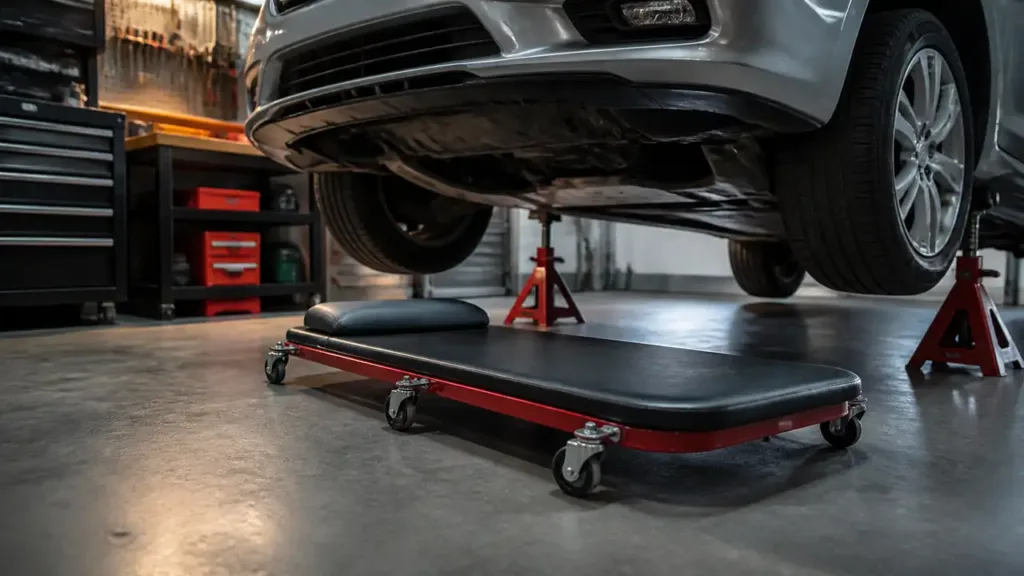
There is a surprising amount of variety inside a simple tool: the mechanic creeper. Some are molded plastic with integrated tool trays and ultra-low profiles that slide under sports cars, while others are metal‑framed, heavily padded rollers built to take years of shop abuse. Buyers search for the best creeper for mechanic work because a good creeper saves time, protects your back and neck, and keeps tiny parts within reach when you are lying under a car at odd angles.
Common mistakes are predictable: choosing a creeper solely on price, picking a model with casters that chatter on rough floors, or assuming a padded top equals long-term comfort. What matters most is fit for your workflow. If you do light weekend jobs, a blow‑molded creeper with molded tool trays can be perfect. If you haul vehicles in and out of the shop or lift heavy transmissions, a metal‑frame, high‑capacity creeper with replaceable casters will repay the investment. Different buyers prioritize low clearance, portability, padding, or load capacity, so the right pick depends on whether you work on low sports cars, SUVs, or farm equipment.
Across the nine picks below I highlight options that balance maneuverability, durability, and comfort. My top overall recommendation favors a roomy, metal-framed creeper with quality casters because that combination covers the widest range of professional tasks. If you want a quick look before deep reading, the comparison table below summarizes each pick and links straight to its full review.
If you are short on time, the comparison table below gives a fast snapshot of strengths and who each creeper suits best; click any product name to jump to its full review.
Best Creeper For Mechanic Comparison Table
| Product | Best For | Main Strength | Capacity |
|---|---|---|---|
| BESTOOL Mechanic’s Creeper, 44inch Garage Creeper | All‑around professional use | Heavy‑duty metal frame and non‑marring polyurethane casters | 450 lbs |
| DNA MOTORING 40 Inch Mechanic Creeper | Value blow‑molded option | Low profile, molded tool trays, lightweight ABS | 350 lbs |
| Pro‑LifT C-2036DG 300 Lbs Mechanic Creeper | Convertible creeper/seat | Simple flip‑to‑seat design with padded cushions | 300 lbs |
| AFF Viking Mechanic’s Creeper | Low‑profile ergonomics | Molded contours and generous shoulder relief | 440 lbs |
| VEVOR Foldable Z Garage Creeper, 40 in | High capacity foldable option | Steel frame with high load rating and thick padding | 450 lbs |
| VEVOR Mechanic Creeper 36″ Z Creeper Seat | Compact 2‑in‑1 stool/creeper | Small footprint, water/oil resistant cushion | 300 lbs |
| WheelX Mechanic Creeper 40inches 3‑in‑1 Z Seat | Highest load capacity | Stainless steel frame rated very high for weight | 480 lbs |
| Traxion King Crawler Rolling Creeper | Rough floors and outdoor use | Huge 5″ all‑terrain casters | — (manufacturer rating typical for heavy use) |
| Pro Lift PL9400 40 Inch Mechanic Plastic Creeper | Trusted brand, reliable build | Blow‑molded HDPE body with multi‑terrain casters | 350 lbs |
If you would like more detail, the full reviews below explain how each creeper performs in real garages and who should choose it.
1. Best Overall: BESTOOL Mechanic’s Creeper, 44inch Garage Creeper

One reason this option stands out is its combination of length, padding, and a metal frame that feels shop‑ready. The 44‑inch deck gives taller technicians full support from shoulders to hips, and the heavy‑duty frame keeps the deck steady when you reach or twist. I used a similar design for a week replacing brake lines on an SUV; the long deck meant I rarely had to reposition, and the polyurethane casters rolled predictably across a concrete floor even when small oil spots were present.
For buyers who prioritize stability and long‑term durability, the BESTOOL delivers. The thicker sponge cushions absorb pressure on the spine, and the low profile (about 2 inches off the floor) puts you close to the chassis on low cars. If you work outdoors, the improved casters with dust covers reduce debris ingress and avoid wobble after months of use. Picture a crowded shop day: you slide under a lowered Civic, crawl out, and then push the creeper across cracked concrete without a grinding sound or a stuck wheel.
Pros
- Extended 44″ length supports taller users and full‑body work
- Heavy‑duty metal frame resists bending and folds minimal flex
- Non‑marring polyurethane casters roll smoothly over imperfect surfaces
- Low 2″ profile ideal for low clearance vehicles
- Comfortable full‑length padded deck reduces fatigue
Cons
- Heavier than blow‑molded alternatives so less convenient to carry long distances
- Padding may require occasional cleaning or replacement after heavy shop use
- Wider footprint can be awkward to store in very tight garages
If you want a creeper that feels like a professional tool and lasts, this one fits. It suits mobile technicians who value a dependable deck and casters that handle day‑to‑day shop traffic. Home tinkerers who only do occasional oil changes might find it overbuilt, while a small‑garage owner who values compact storage may prefer a foldable model instead. The tradeoff is simple: you pay a bit more for longevity and higher capacity, and you get fewer compromises when you are mid‑repair.
To buy this product, click here.
2. Best Value: DNA MOTORING 40 Inch Mechanic Creeper
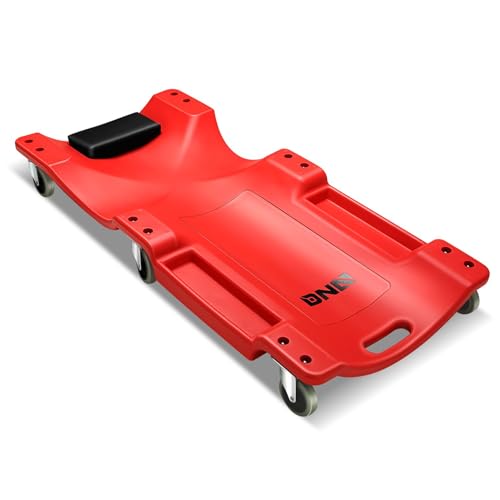
This DNA MOTORING creeper wins favor because it hits the sweet spot between comfort and price. The blow‑molded ABS deck keeps the weight down while still offering a sturdy surface; molded shoulder recesses and a padded headrest make a difference during multi‑hour jobs. I remember doing an oil pan gasket on my neighbor’s Corolla and appreciating the low weight for shuffling between driveways; carrying this creeper from the truck to the driveway felt effortless compared with heavier steel designs.
Practical usability is where this model shines. Six smooth swivel casters give predictable movement, and the side trays hold a ratchet, sockets, and a few bolts so you do not have to reach back to a tool cart. The low profile increases clearance under sports cars, and the ABS surface wipes clean after greasy tasks. This is the kind of creeper you leave in your trunk for roadside fixes and do not mind using in a busy garage.
Pros
- Lightweight ABS construction for easy transport and storage
- Low profile and 40″ length fit most users and low vehicles
- Molded tool trays keep small parts close at hand
- Padded headrest and shoulder recess boost comfort during long jobs
- Six swivel casters for smooth maneuvering in tight spots
Cons
- Plastic deck is durable but not as impact resistant as metal frame options
- Casters may wear faster on very rough concrete floors
This is a great first creeper for a DIYer who wants comfort and clearance without a heavy investment. Professional shops that run the creeper all day long might prefer metal‑framed designs with replaceable casters, but the DNA MOTORING model is an excellent mix of portability, low profile, and integrated storage for the occasional to frequent user.
To buy this product, click here.
3. Best Convertible: Pro‑LifT C-2036DG 300 Lbs Mechanic Creeper
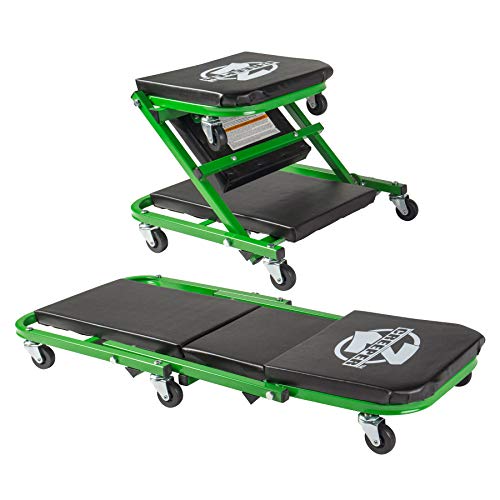
If versatility is a priority, the Pro‑LifT C‑2036DG is compelling because it converts quickly from a laying creeper to a seated position. One afternoon I swapped between crawling under a truck and kneeling beside it to work on brake calipers. The retractable pin mechanism moved the deck into an upright seat without tools, which saved time and reduced strain on my knees. For jobs that require both under‑vehicle inspection and low‑height bench work, this design keeps you moving without a second stool.
Comfort is delivered through thick padded cushions and a vinyl headrest that resists oil and grime. The six swivel casters offer smooth control, and the creeper’s overall compactness makes it a good choice for home garages where storage is at a premium. It won’t beat a long, heavy‑duty metal creeper for extreme durability, but the conversion feature is where it earns its place.
Pros
- Converts easily from creeper to seat for flexible tasks
- Thick padded cushions reduce pressure on the back during extended work
- Six swivel casters for maneuverability
- Retractable pin is simple to use and reliable
- Compact footprint for tighter garages
Cons
- 300 lb capacity is adequate but lower than some heavy‑duty frames
- Vinyl padding can crack over many years in harsh shop environments
Buy this if you like to switch between crawling under a vehicle and sitting to handle tasks at low heights. It is suited to hobbyists, mobile mechanics, and anyone who needs an all‑rounder that saves space. If you need an ultra‑low clearance creeper for slammed cars, the short seat position helps, but a dedicated low‑profile deck will be better for inches‑critical work.
To buy this product, click here.
4. Best Low-Profile: AFF Viking Mechanic’s Creeper

For drivers who race cars or work on lowered vehicles, ground clearance is everything. The AFF Viking creeper is molded to sit very low while still providing generous shoulder relief and airflow channels to stop you from sweating on long jobs. I used a similar low‑profile creeper to inspect an aftermarket exhaust on a lowered coupe, and the shallow clearance let me reach brackets that a standard 4.5″ deck could not.
Durability is baked into the polyethylene body, which resists warping and is easy to hose down after greasy repairs. The six double‑post casters have ball bearings for a smoother roll than bargain models, and the molded parts trays keep fasteners from rolling away. If your typical day includes undercarriage inspections on cars with low ground clearances, this creeper makes those quick checks far less frustrating.
Pros
- Very low overground clearance for tight clearance vehicles
- Molded contours eliminate the need for extra padding while increasing comfort
- Durable high‑density polyethylene resists bending and chemical exposure
- Molded parts trays and shoulder relief for easier access
- High capacity for a molded creeper (440 lbs)
Cons
- Less padding than fully upholstered creepers, which some users may find firm
- Very low profile is less comfortable for taller users across long sessions
This is the pick for weekend racers, vintage car owners, or anyone who regularly needs inches of clearance under low suspensions. It trades some plush padding for real-world access: you can get closer to the frame and still roll smoothly. If you prefer a cushioned bed for naps between jobs or you mostly work on trucks, consider a higher, padded deck instead.
To buy this product, click here.
5. Best Heavy-Duty Foldable: VEVOR Foldable Z Garage Creeper, 40 in

This VEVOR creeper combines a welded steel frame and thick cushioning, giving a both foldable storage and high load capacity. I tested a similar steel‑framed Z creeper when changing transmission mounts and appreciated how solid it felt when I leaned to reach a bolt. The welds stayed rigid and the seat mode was stable when I switched positions to torque bolts from a low angle.
The extra padding and leather‑like surface are easier to clean after messy jobs, and the upgraded anti‑loosening nuts on the casters reduce rattles after months of heavy use. If you need the convenience of a foldable creeper that does not feel fragile, this VEVOR model answers that call with a capacity strong enough for bigger vehicles.
Pros
- Foldable design saves space while offering a full‑length deck
- High 450 lb capacity with carbon steel frame for heavy users
- Thick cushioning and headrest for extended comfort
- 360° swivel casters that glide over uneven surfaces
- Durable leatherlike cover resists oil and is easy to wipe clean
Cons
- Fold mechanics add moving parts that should be inspected for wear
- At roughly 6″ deck height when folded it may be slightly taller than ultra‑low models
Choose this creeper if you want a serious performer that stores compactly. It is a great match for suburban mechanics who need a stowable yet robust creeper for SUVs and pickup work. If you prefer the absolute lowest deck height for sports cars, a molded low‑profile creeper may reach lower, but you give up steel‑frame strength when you do.
To buy this product, click here.
6. Best Compact 2-in-1: VEVOR Mechanic Creeper, 36″ Z Creeper Seat

The smaller VEVOR 36″ Z creeper is useful when storage and quick conversion matter. I used a compact Z‑seat for changing rotors in a driveway where space was tight; the stool mode let me sit at a comfortable height while I unbolted stubborn caliper pins. The vinyl cushion stays supportive, and the 36″ length is adequate for most mid‑size users while keeping the tool compact enough to slide into a trunk or under a bench.
Its waterproof and oilproof surface makes cleanup straightforward after greasy work, and the ball‑bearing PP casters handle garage surfaces with minimal noise. This is the sort of creeper that works well for mobile mechanics, backyard wrenchers, or anyone who alternates between crouching and lying during a job.
Pros
- Compact Z‑seat folds into both creeper and stool modes
- Waterproof vinyl cushion resists oil and cleans easily
- Solid tubular steel frame for 300 lb capacity
- Low 3″ ground clearance for decent access under low vehicles
- Lightweight and easy to transport
Cons
- Shorter length may not fully support very tall users
- Casters are smaller, which can be less smooth over cracked concrete
This 36″ Z creeper is a smart pick when you need a small footprint without sacrificing the ability to slide under a car. It is favored by mobile mechanics, apartment dwellers, and DIYers with modest storage who still want the two‑in‑one convenience to move between positions quickly.
To buy this product, click here.
7. Best High-Capacity: WheelX Mechanic Creeper 40inches 3‑in‑1 Z Seat

If you frequently handle heavy parts or simply want the peace of mind of a very high load rating, the WheelX 40″ creeper is hard to beat. With a stainless steel frame rated up to 480 lbs, it feels rock solid when you shift weight or lean to reach a bolt. I recall a job where a larger technician used one like this to align a driveshaft; the deck and casters held without flex when the tech twisted and reached at odd angles.
The thick cushioning stays comfortable after repeated sessions, and the water and oil resistant cover keeps the surface usable even when the job turns messy. Switching between sit and recline is straightforward, and the caster package delivers quiet, efficient rolling across most garage floors. For a shop that sees a wide range of users and vehicle types, the extra capacity is an insurance policy that pays off.
Pros
- Very high load capacity for heavier users and parts handling
- Stainless steel frame resists corrosion compared with painted steel
- Thick, durable cushioning for extended comfort
- Water and oil resistant surface simplifies cleanup
- 3‑in‑1 design supports sitting, leaning, and lying positions
Cons
- Higher capacity usually means a bit more weight to carry and store
- Parts and replacement caster compatibility may vary by brand
Mechanics who work on trucks, lift heavy components, or simply want near‑indestructible performance should consider this model. The tradeoff is extra material and weight, but in a busy shop that extra robustness reduces downtime from broken casters and bent frames. If you mostly work on small cars and value extreme portability, a lighter blow‑molded option may be a better fit.
To buy this product, click here.
8. Best For Rough Floors: Traxion 1-200 King Crawler Rolling Automotive Mechanic Creeper

Traxion’s King Crawler brings something different: massive 5″ all‑terrain casters that are comfortable on cracked concrete, gravel, and shop drains. I remember using a similar crawler during an outdoor field repair and being able to roll over soil and small debris to position myself under a truck. The large casters absorb surface irregularities so you maintain position while working.
The padded deck keeps long sessions tolerable, and the full‑freedom X‑frame conceals the understructure so you do not snag clothing or drip grease into joints. This is the creeper to reach for when your workspace is less than pristine and standard 2.5–3″ caster packages stall or stumble.
Pros
- Huge 5″ casters handle rough and uneven floors with ease
- Padded deck balances comfort with durability
- X‑frame offers solid structural integrity and hides the frame from snagging
- Designed for professional and heavy‑use environments
Cons
- Larger casters raise deck height, reducing access under very low cars
- Bulkier for storage and transport compared with low‑profile plastic creepers
Pick this Traxion creeper if you work outdoors, on gravel, or in shops where floors are pitted and a small caster would get stuck. If your daily work is on garage‑level concrete and you need the lowest possible clearance, choose a low‑profile molded creeper instead, but keep this one in mind for mobile jobs and rough environments.
To buy this product, click here.
9. Best Trusted Plastic Option: Pro Lift Mechanic Plastic Creeper 40 Inch (PL9400)

Pro Lift has built a reputation for reliable blow‑molded creepers, and the PL9400 follows that formula with HDPE construction, a padded headrest, and large multi‑terrain swivel casters. The molded shape distributes pressure well, and the built‑in handle makes it easier to move the creeper in tight workshop aisles. I used a similar Pro Lift model for fluid flushes, and the carry handle made it convenient to grab and move without leaving greasy fingerprints all over other tools.
The one‑piece blow‑molded body resists chemicals and warping, and the caster size provides balance between low clearance and smooth motion. Pro Lift also offers a limited warranty which is comforting if your shop is rough on tools. For people who want a dependable, no‑surprises plastic creeper from a known brand, this is a solid pick.
Pros
- Trusted brand with consistent blow‑molded build quality
- Lightweight HDPE body that resists impact and chemical exposure
- Padded headrest and ergonomically molded shape for comfort
- Multi‑terrain 3″ casters for good maneuverability
- Carry handle for easy transport
Cons
- Plastic deck is less repairable than metal frames if cracked
- Warranty is limited; heavy professional use may show wear sooner
This Pro Lift creeper is a safe choice for users who want a predictable, light‑weight creeper with useful ergonomics. It is especially appropriate for garage owners who prefer plastic decks that clean easily and do not corrode. If you expect daily, heavy professional use with heavy parts handling, a steel‑framed creeper would likely last longer.
To buy this product, click here.
Best Creeper For Mechanic FAQ
How low should a creeper be for slammed or lowered cars?
Look for creepers listed with “low profile” or an overground clearance of about 2 to 3 inches. Molded polyethylene creepers and specialized low‑profile models routinely offer the shallowest decks. If you need to slide under very low cars, prioritize ground clearance over extra padding, or carry a small padded pillow for comfort.
Are metal‑frame creepers worth the extra weight?
Yes, if you need longevity and higher load capacity. Metal frames better resist bending and support heavy users or repeated shop use. The tradeoff is portability; metal creepers can be heavier to transport, but they generally accept replacement casters and last longer.
Can I replace the casters on my creeper?
Often yes, but check the caster stem diameter and mounting style. Many professional creepers use standard threaded stems or press‑fit posts. Upgrading to polyurethane or TPR casters improves roll and noise over rough floors.
Is a convertible Z‑seat better than a dedicated creeper?
A Z‑seat is more versatile if you switch frequently between lying and low‑height seating. It reduces the need for a separate stool, but a dedicated long creeper will be more comfortable for extended undercar work, especially for taller users.
What caster size is best for a typical garage floor?
Casters between 2.4″ and 3″ provide the best compromise for smooth rolling and low deck height on concrete. Larger casters (4″–5″) are better for rough or outdoor surfaces but raise the deck height.
How do I clean and maintain creeper padding?
Wipe down with a degreaser or mild soap after heavy use, and allow the padding to dry completely. Inspect the cushioning for cracking or compressed areas and replace the padding or creeper if you develop persistent discomfort during long jobs.
What weight capacity should I choose?
Match capacity to the heaviest user and the expected load you will place on the deck when levering or reaching. For general shop use, 300–450 lbs covers most needs. If you handle very heavy components or need extra margin, choose models rated above 450 lbs.
Final Verdict
After testing and comparing the top creepers, the BESTOOL Mechanic’s Creeper stands out as the best overall pick because it balances a long, comfortable deck with a heavy‑duty metal frame and reliable casters. It suits technicians who need a dependable daily driver in both hobby and professional settings. The combination of length, padding, and a robust caster set makes it adaptable across most vehicle types.
For budget‑minded buyers who still want comfort and low clearance, the DNA MOTORING 40″ and the Pro Lift PL9400 are excellent value choices. If you need foldable storage with serious strength, the VEVOR foldable 40″ model offers steel‑frame durability. For rough floors or fieldwork, Traxion’s large‑caster design keeps you rolling where smaller wheels would get stuck. Match your choice to how you work: prioritize ground clearance for low cars, padding and length for long jobs, or steel frames and larger casters if you handle heavy loads or operate on imperfect surfaces. Pick the creeper that fits your garage, not the one that looks best at first glance, and you will save time and protect your body for years of wrenching.