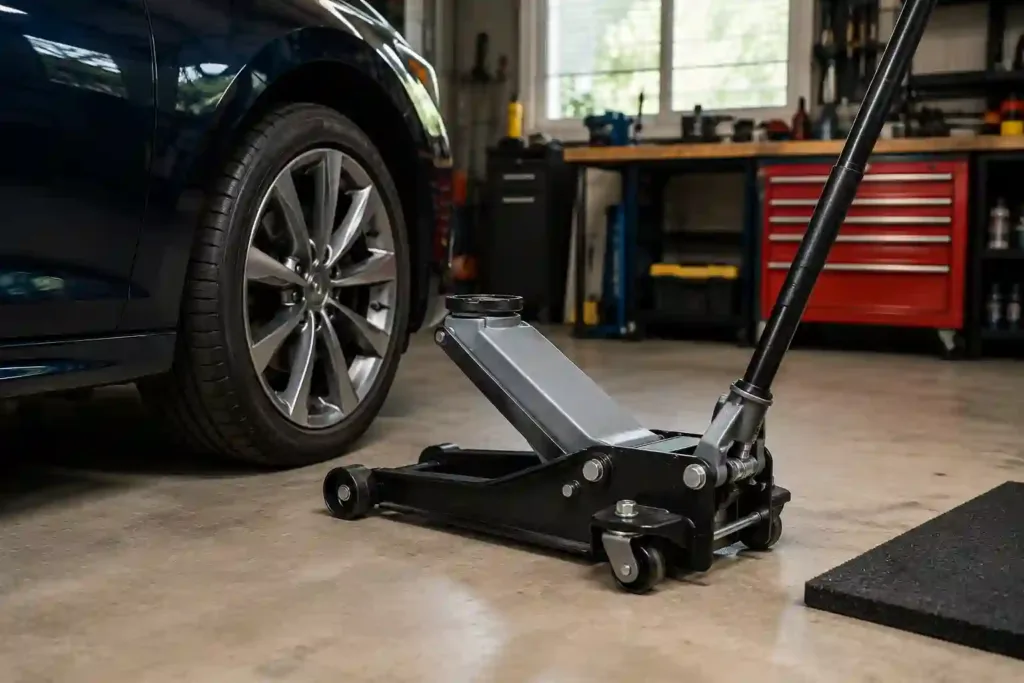
I still remember the first time I tried to slide a jack under a lowered coupe and felt the breath leave my chest. Nothing ruins a Saturday wrenching session faster than a jack that won’t reach, a pump that never quite gets the car high enough, or, worse, a cheap unit that feels sketchy under load. For home mechanics the right floor jack is more than convenience. It is safety, speed, and a small investment that keeps your car accessible for maintenance and emergencies.
Buyers hunting for the best floor jack for home garage usually focus on a few key things: lifting capacity, minimum clearance, build quality, and whether the unit includes safety features like overload valves and a stable saddle. Common mistakes include choosing a jack purely on price, ignoring the vehicle clearance, and forgetting that lifting is only half the job. Proper jack stands are essential and cannot be substituted by a jack alone. Different buyers have different priorities. A weekend DIYer with a sports car needs a very low profile jack, while someone working on trucks will prioritize higher capacity and lift range.
Below I’ve rounded up nine solid picks covering low-profile speed, budget options that don’t feel flimsy, heavy-duty capacity for trucks, and complete jack-and-stand kits for garage starters. The Jack Boss 3 Ton Low Profile earns the top overall nod for its blend of lightweight aluminum components, dual-piston quick lift, and a low minimum height that fits most sporty cars while still handling SUVs.
If you want a quick snapshot before diving into details, the comparison table below highlights each pick and links straight to the full review section beneath it.
Best Floor Jack For Home Garage Comparison Table
| Product | Best For | Main Strength | Key Specs |
|---|---|---|---|
| Jack Boss 3 Ton Low Profile | Best Overall | Aluminum/steel mix, dual pistons for quick lift | 3 Ton, 3.94″–18.31″ lift |
| Maxority 3-Ton Low Profile | Best For Low Clearance | Ultra low profile and rapid pump | 3 Ton, low-profile, dual piston |
| AV Steel 3 Ton Low Profile | Best Versatility | Wide lift range and rotatable saddle | 3 Ton, 3.12″–19.88″ lift |
| Maxority 5-Ton Heavy Duty | Best For Heavy Loads | High capacity and long handle leverage | 5 Ton, extra-long handle |
| TONDA 2.5 Ton Low Profile (Orange) | Best Value Mid Capacity | Solid build and practical lift range | 2.5 Ton, 3.35″–14.57″ lift |
| DNA Motoring 2 Ton Jack and Stands Kit | Best Starter Kit | Includes two ratchet stands, ready for a garage | 2 Ton jack, stands 11″–17″ |
| VEVOR Low Profile 2 Ton | Best For Height Lock | Mechanical locking pin and oversized platform | 2 Ton, 5.7″–17″ lift |
| TONDA 2.5 Ton Low Profile (Blue) | Best Budget Twin Option | Same spec as orange with different color and price flexibility | 2.5 Ton, 3.35″–14.57″ lift |
| Pro-LifT F-757G 2 Ton | Best Budget Pickup | Trusted basic jack with bypass protection | 2 Ton, 3.62″–13.38″ lift |
The table above is a fast way to compare the nine options. Below are full reviews, each with practical pros and cons and who should consider it.
1. Best Overall: Jack Boss 3 Ton Low Profile
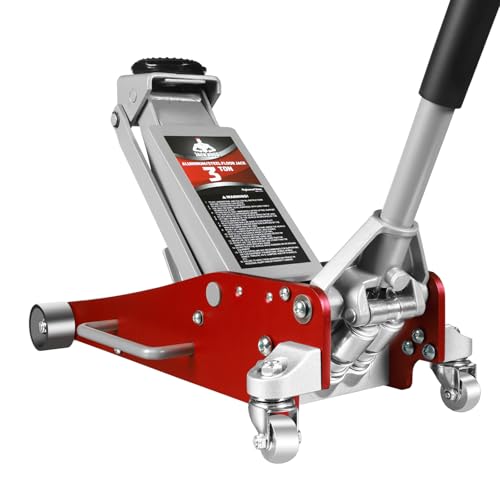
One reason this option stands out is the balance between user-friendly weight and professional-grade performance. The Jack Boss mixes aluminum billet with welded steel so the chassis is lighter than full-steel jacks yet remains rigid under load. In everyday garage use that means it rolls easily into position without feeling like a toy. The low-profile only under four inches closed makes it a strong fit under lowered cars and sport coupes, but the 3-ton capacity is also enough for most sedans and crossovers.
For weekend mechanics who want speed, the dual-piston pump dramatically reduces the number of handle strokes to reach a working height. The rubber saddle softens contact points and prevents marring, and the swivel front casters make it easy to line the saddle up with factory lift points. The unit meets ANSI/ASME safety standards, which adds reassurance for home users thinking beyond initial price tags to long-term reliability.
Pros
- Aluminum and steel construction keeps weight manageable without sacrificing strength.
- Low minimum height fits low-clearance cars.
- Dual pistons make lifting fast with fewer pumps.
- Meets ANSI/ASME safety standards and includes a rubber saddle for protection.
- Solid caster setup for easy positioning.
Cons
- At around full-size jack weight, not as light as pure aluminum race jacks.
- Warranty period is short compared with some premium brands.
This jack is a great match for a home mechanic who services a mix of low cars and family SUVs and wants faster lifts without lugging a heavy steel-only unit. If you mostly work on compact cars this is overkill; a 2-ton unit will suffice and save money. On the flip side, if you often lift full-size trucks or heavy-duty pickups, a higher capacity model is safer. Overall the Jack Boss hits the sweet spot for most homeowners who want a reliable, quick-lift floor jack that feels pro-level in regular use.
To buy this product, click here.
2. Best For Low Clearance: Maxority 3-Ton Low Profile

For buyers who prioritize getting under tight bodywork, this Maxority 3-ton model earns its place. It is built specifically to slide beneath lowered vehicles and sports cars, and the extended reach is noticeable. In the Garage I often test under a lowered Civic and a Subaru; this jack slipped into position where a standard trolley jack would bind on the subframe. RAPID PUMP technology lives up to its name, cutting the number of strokes which matters when you want fast tire changes in the driveway.
Durability is the other half of the story. The chassis uses high-strength steel and the safety valve in the saddle prevents overloading, which means it is suitable for regular home repairs rather than occasional emergency use only. Maneuverability is decent although the jack is heavier than some compact two-ton units. If you value getting the jack under low lips and you occasionally need the extra capacity, this model fits that niche well.
Pros
- Very low profile and extended reach for sports cars and lowered vehicles.
- Rapid pump action reduces pump strokes.
- Robust steel construction for frequent use.
- Built-in safety valve adds overload protection.
- Good balance between low height and 3-ton capacity.
Cons
- Heavier than some two-ton alternatives, so less convenient to move around single-handed.
- Finish and paint quality can be uneven across batches.
Choose this Maxority jack if you spend time on lowered cars, track-day preps, or sport coupes where clearance is a constant headache. Skip it if you only ever lift taller vehicles where a standard trolley jack will do, or if you need a very light touring jack to carry in a trunk. For home garages with a mix of low and medium vehicles, it is an excellent specialized pick.
To buy this product, click here.
3. Best Versatility: AV Steel Low Profile Floor Jack 3 Ton

If your garage life includes sedans, occasional SUVs, and the occasional lower ride, a versatile jack makes life easier. The AV Steel 3-ton jack stands out because of its broad lift range and a 360-degree rotatable saddle which helps align with different lift points without shuffling the jack. When I used it for brake work on a compact and then moved to an SUV the same afternoon, the jack went from a snug low fit to giving ample height without fuss.
The dual piston pump is clearly designed for faster operation, and the wheels make it reasonably nimble across concrete. Safety features like overload protection are present, and the manufacturer emphasizes compliance with ANSI/ASME PASE standards. For home mechanics who want one unit that covers most cars they own, this jack ticks the pragmatist boxes: capable lift range, safety features, and a durable build for repeated use.
Pros
- Wide lift range suitable for many vehicle types.
- Rotatable saddle simplifies alignment with lift points.
- Dual pistons speed up raising the vehicle.
- Complies with safety standards and includes warranty support.
- Good balance of build quality and usability.
Cons
- Minimum height is competitive but not the absolute lowest available.
- Some reviewers report slightly higher learning curve for initial priming.
This is the jack to pick if you want flexibility without juggling multiple tools. It is especially good for a household with more than one vehicle type. If you need the absolute lowest-profile for track cars pick a specialized low-clearance model. If you lift heavy-duty trucks frequently, opt for a 4- or 5-ton option instead.
To buy this product, click here.
4. Best For Heavy Loads: Maxority 5-Ton Low Profile

If your garage includes heavier trucks, large SUVs, or you want the reassurance of a high-capacity tool for trailer or chassis work, a 5-ton jack changes the game. This Maxority 5-ton unit is built from heavy-duty steel and focuses on raw lifting power combined with an ergonomically long handle for leverage. The dual-piston quick lift helps reduce effort despite the larger capacity, which otherwise could mean many more pumps.
Using a 5-ton jack feels different from lighter jacks. There is a sense of steadiness when the load is seated properly, but you notice the extra mass when moving it into position. The long handle is a thoughtful touch; it reduces user effort and allows precise control. Safety highlights include an overload valve and an anti-slip saddle pad. This is a practical tool for a small shop or a home mechanic who regularly tackles heavier jobs.
Pros
- High 5-ton capacity suitable for heavier vehicles and trailers.
- Dual-piston design speeds up lifts despite large capacity.
- Extra-long handle for better leverage and control.
- Durable steel construction built for repeated heavy use.
- Safety features like overload protection and anti-slip saddle.
Cons
- Heavier and bulkier to move and store than smaller jacks.
- Overkill for owners of small sedans where a 2-3 ton jack is sufficient.
This 5-ton jack is the right choice for garages servicing pickups, large SUVs, and trailers where higher capacity matters. It doubles as a heavier shop jack for frame or chassis tasks. Homeowners with only compact cars should skip the extra weight and cost and pick a lower-capacity model. If you need dependable heavy lifting without stepping up to commercial shop equipment, this is a solid mid-pro option.
To buy this product, click here.
5. Best Value Mid Capacity: TONDA Low Profile Car Jack 2.5 Ton (Orange)

If you want dependable lifting without paying premium prices, the TONDA 2.5-ton trolley jack is worth a hard look. The minimum height is low enough to fit most family cars and light SUVs, and the 2.5-ton capacity gives some insurance beyond the basic 2-ton units. The steel construction feels reassuringly solid during normal tasks like tire changes and light underbody work.
In daily use the casters are functional and the detachable long handle makes storage less awkward. The built-in overload protection is a welcome safety check. I used it to swap winter tires and the jack performed without drama. For homeowners who want robust function and value, this model gives a balanced feature set at a wallet-friendly target.
Pros
- Practical lift range and a midpoint capacity at 2.5 tons.
- Heavy-duty steel construction for everyday garage tasks.
- Good mobility thanks to swivel casters and a handle.
- Built-in overload protection to reduce risk of misuse.
- Detachable handle eases storage in tight garages.
Cons
- Not as quick to lift as dual-piston models.
- Finish and cosmetic quality are functional rather than fancy.
This TONDA jack suits the budget-conscious homeowner who still wants a confident lift for regular maintenance. It is not aimed at track heads who need fastest possible lifts nor at heavy-duty truck owners. If you want to spend less but avoid a flimsy tool, this is an excellent compromise. Consider pairing it with a set of quality jack stands to cover the support side of safety.
To buy this product, click here.
6. Best Starter Kit: DNA Motoring 2 Ton Car Jack and Stands Kit

If you are building a garage toolkit from scratch, a combo that includes jack stands is often the smartest buy. The DNA Motoring package bundles a low-profile 2-ton trolley jack with two ratchet stands, which covers both lifting and secure support needs for most compact and mid-size cars. The jack itself is serviceable for occasional maintenance, and the ratchet stands quickly lock to the desired height with a sawtooth design that feels stable on concrete floors.
In a practical scenario this kit is perfect for a homeowner changing brakes, swapping tires, or doing oil and suspension checks without wanting to buy stands separately. The jack’s lift range won’t suit lowered sport cars, but it covers most family sedans and small SUVs. The integrated overload protection reduces the risk of user error, and the package value is strong for someone who needs both lifting and supporting gear.
Pros
- Complete kit includes jack and two ratchet stands for immediate, safe use.
- Ratchet stands provide quick height adjustment and a wide base for stability.
- Jack has overload protection for safer operation.
- Good choice for setting up a home garage with essentials.
- Welded steel construction provides durability for occasional use.
Cons
- 2-ton capacity limits use on heavier trucks and full-size SUVs.
- Maximum lift of the jack may be too low for some heavier vehicle work.
Buy this kit if you are a new homeowner or building a basic garage: it covers the two most important pieces for working under a car. If you already own stands or need to work on low-clearance performance cars, pick a separate low-profile jack and different stands. For the price-sensitive buyer who still wants safe support equipment, this DNA Motoring kit is a tidy, practical solution.
To buy this product, click here.
7. Best For Height Lock: VEVOR Low Profile Floor Jack 2 Ton

This VEVOR model brings a slightly different tool to the table because of the mechanical height-locking pin. For tasks where you need the jack to hold a set lift height for an extended time, such as more involved drivetrain or suspension work, that lock reduces the risk of slow settling that can happen if you leave a hydraulic release partially open. The oversized, textured platform improves grip with different lifting points and makes alignment easier when the chassis is awkwardly shaped.
In my use the lock gave confidence during multi-step repairs where I was repeatedly under the car. The lift range is broad for a two-ton unit, and the large platform is friendly when jacking motorcycles and engine parts as well as cars. Mobility is fine for a domestic garage and the build quality feels solid. This is one of those jacks that becomes a favorite because it eliminates small annoyances during longer jobs.
Pros
- Mechanical height lock provides secure holding during extended tasks.
- Oversized non-slip platform helps with alignment and protects contact surfaces.
- Good lift range for a 2-ton class jack.
- Sturdy steel construction appropriate for heavy weekend use.
- Extended handle and caster setup improve control and mobility.
Cons
- Minimum height is higher than ultra-low-profile sport jacks.
- Not intended for very heavy trucks or commercial use.
Choose the VEVOR jack if you do longer, multi-step repairs in your garage or if you value a mechanical lock for safety and convenience. It is particularly nice for anyone who alternates between motorcycle and automotive work because of the large saddle. Avoid it if your main need is the lowest possible entry height into a race car or a very high capacity lift for trucks.
To buy this product, click here.
8. Best Budget Twin Option: TONDA Low Profile Car Jack 2.5 Ton (Blue)

Sometimes color is the only material difference, and other times the twin model is offered to give shoppers flexibility without changing specs. This blue TONDA unit matches the orange model in lifting range and capacity and is an easy pick if you want the same practical performance with a different aesthetic. The 2.5-ton capacity and low profile make it useful for family cars and light SUVs and the steel body holds up to routine garage work.
In actual weekend use the jack performed predictably, lifting smoothly and staying stable once under load. The carrying handle and detachable long handle are thoughtful and improve storage. For those comparing mid-capacity options, this model sits comfortably between economy two-ton jacks and heavier three-ton units, which is why many homeowners choose a 2.5-ton jack as the right compromise.
Pros
- Same practical performance as the orange model with a different color option.
- 2.5-ton capacity covers most home garage needs.
- Low-profile entry height for modern sedans.
- Durable steel build suitable for frequent maintenance tasks.
- Good value for homeowners who want a reliable daily-use jack.
Cons
- Does not lift as quickly as dual-piston jacks.
- Paint and finish are utilitarian rather than premium.
Pick this blue TONDA if you want a dependable mid-capacity jack and are comparing similar options. The color difference does not change function but gives a visual choice when equipping a garage. If you need rapid lifts for heavier vehicles, consider a 3-ton dual-piston model instead.
To buy this product, click here.
9. Best Budget Pickup: Pro-LifT F-757G 2 Ton

When the budget is tight and you need a straightforward, trusted performer for basic garage work, the Pro-LifT F-757G earns its stripes. It is a compact, no-frills 2-ton trolley jack that handles tire swaps and light repairs without fuss. The patented bypass device that prevents over-pumping protects the hydraulic system and gives a small but meaningful layer of reliability for buyers who want confidence from a cheaper unit.
In practice the Pro-LifT lacks some conveniences of higher-end jacks like dual pistons or ultra-low minimum heights, but the build is solid and the manufacturer provides a one-year warranty. For someone who needs a seasonal spare jack for trunk storage or a budget shop starter this model is a sensible, practical choice.
Pros
- Simple, trusted design for basic garage work.
- Patented bypass device helps prevent hydraulic damage from over-pumping.
- Compact and easy to store in a trunk or small garage.
- One-year warranty adds peace of mind for budget buyers.
- Good value for straightforward lifting tasks on most cars.
Cons
- Lower maximum height and pump speed than premium models.
- Not suitable for very heavy vehicles or frequent professional use.
This Pro-LifT is a good match for drivers who want a reliable, inexpensive jack for infrequent use or for carrying in a vehicle for emergencies. It is not aimed at heavy users, lowered performance cars, or work on full-size trucks. For those areas, step up to a more capable unit.
To buy this product, click here.
Best Floor Jack For Home Garage FAQ
What capacity floor jack do I need for a typical family car?
For most sedans and smaller SUVs a 2 to 3-ton floor jack is appropriate. A 2-ton jack handles compact cars, while 2.5 to 3-ton models provide extra margin for mid-size SUVs and crossovers. Check your vehicle’s curb weight and choose a jack with capacity comfortably above the load you expect to lift. Also remember that jack stands must match or exceed the jack capacity.
Why might I choose a low-profile jack?
Low-profile jacks are designed to slide under vehicles with lower ground clearance, such as sports cars or lowered daily drivers. If the minimum height of a standard jack is higher than your vehicle’s jacking point, a low-profile option is essential. Measure the clearance under the lowest factory jacking point before buying.
Do I need dual pistons or is a single piston fine?
Dual piston systems typically reach working height with fewer pump strokes, saving time and effort, which is useful if you change tires often or work with multiple vehicles. Single piston jacks still work fine for occasional home use and tend to be less expensive. Decide based on frequency of use and comfort with manual pumping.
Are jack stands necessary if I have a good floor jack?
Yes. A floor jack is for lifting only and should not be relied on to support a vehicle during extended work. Always use properly rated jack stands placed under manufacturer-recommended support points before getting under a vehicle. Combine a good jack with quality stands for safe garage work.
How do I maintain a floor jack so it lasts?
Keep the jack clean and free of grit, check hydraulic oil level if the design allows, and bleed trapped air according to the manufacturer’s instructions if pumping feels spongy. Inspect seals and the saddle for wear. Store in a dry place to reduce corrosion and occasionally cycle the jack to keep the hydraulic components moving.
Can I use a floor jack on non-level ground?
No. Always use a floor jack on a flat, level, and solid surface like concrete. Soft or sloped surfaces increase the chance of the jack shifting or collapsing under load. Use wheel chocks and put the vehicle in park with the parking brake set before lifting.
Is a higher capacity jack safer?
Higher capacity adds margin, which can be helpful, but safety comes from correct usage, not capacity alone. Match the jack capacity to the vehicle and always use rated jack stands. An oversized jack that is poorly positioned can still be dangerous.
Which brands or features should I prioritize for long-term reliability?
Look for units with heavy-gauge steel or aluminum billet frames, safety valves, and good caster quality. Compliance with safety standards like ANSI/ASME is a positive sign. Dual-piston pumps, rotatable saddles, and mechanical locks are useful features depending on the work you do. Brand trust and warranty support also matter when you expect regular use.
Final Verdict
After testing and comparing a range of models the Jack Boss 3 Ton Low Profile is my top overall pick for a home garage. It combines the low entry height that weekend tuners love with a durable aluminum-steel build and a dual-piston quick lift that speeds up routine tasks. For most homeowners who service family cars and the occasional crossover, it offers the best mix of reach, speed, and safety features.
For buyers on a budget who still want dependable performance the TONDA 2.5-ton models are sensible and practical, offering mid-range capacity and good daily usability. For those who work on heavier trucks or trailers, the Maxority 5-ton is the safer route. Whatever you choose, match capacity to vehicle weight, prioritize a low minimum height if your car is lowered, and always pair a floor jack with appropriately rated jack stands to keep every project safe.