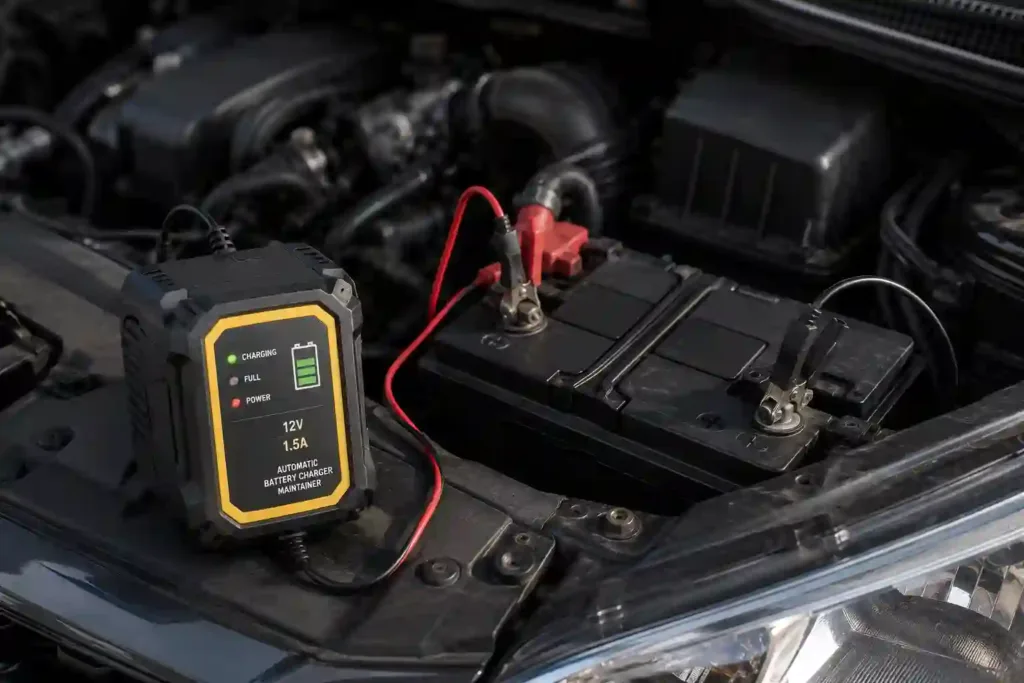
If you own a car that sits for days or months at a time, a reliable trickle charger is a quiet, inexpensive insurance policy against surprise dead batteries. People search for the best trickle charger for car battery because phones, garages, and roadside helpers only get you so far. A good maintainer keeps voltage topped up without cooking the battery, helps reverse sulfation on tired cells, and can revive a battery that would otherwise leave you stranded on a chilly morning.
Buyers often make the same mistakes: choosing a “one-size-fits-all” cheap wall wart that lacks temperature compensation, confusing amp rating with suitability for long-term maintenance, or buying a fast charger when their goal is long-term storage. What matters most is matching charger output and modes to how you use the vehicle. Someone storing a motorcycle in a shed needs a different tool than a snowbird with an RV or a hobbyist with a classic car that runs once a month. My top overall pick is a small smart maintainer with temperature compensation and a reliable desulfation mode because that combination covers most real-world headaches.
If you need a quick way to compare options, the table below gives a compact snapshot of each pick and where it fits best. Click any product name to jump to its full review further down the page.
Best Trickle Charger For Car Battery Comparison Table
| Product | Best For | Main Strength | Key Specs |
|---|---|---|---|
| NOCO Genius1 | Garage & Long-Term Storage | Compact, temp-compensated maintainer | 1A, 6V/12V, Desulfation, Force Mode |
| NOCO Genius5 | Weekend Cars & Small Trucks | Balanced 5A charge + maintainer | 5A, 6V/12V, Thermal Sensor, Desulfation |
| NOCO Genius2 | Everyday Use & Power Sports | Good middle ground for cars and bikes | 2A, 6V/12V, Force Mode, Temp Compensation |
| CTEK MXS 5.0 | Cold Climates & Classic Cars | Proven 8-stage charging and reconditioning | 4.3A, 12V, 8-Stage, Splashproof |
| Battery Tender Plus | Motorcycles & Lawn Gear | Simple, reliable float charger | 1.25A, 12V, 4-Step Charging, Quick Disconnect |
| YONHAN 10A | Fast Maintenance & Diagnostics | 10A bulk with LCD diagnostics | 10A, 12V/24V, LCD, Repair Mode |
| TowerTop 25A Max Pro | Workshops & Large Batteries | High-current charging + engine start | Up to 25A, 12V, 8-Stage, Engine Start |
| Battery Tender Junior | Powersports & Small Engines | Ultra-compact, easy install | 0.75A, 12V, 4-Step, 12ft Cord |
| NOCO Genius2D | Onboard/Direct-Mount Needs | Direct-mount for under-hood installation | 2A, 12V Onboard, Thermal Sensor |
If you want a deeper look at each option, the reviews below unpack strengths, weaknesses, and who each charger suits best so you can match a pick to your routine and budget.
1. Best Overall: NOCO GENIUS1

One reason this option stands out is how it squeezes advanced features into a tiny housing. The GENIUS1 may look like a simple wall-wart, but it combines a full smart charge algorithm, temperature compensation, and a pulse desulfation routine that helps revive weak batteries. In real terms that means you can leave this on a car or motorcycle in storage for winter and come back to a battery that starts reliably. Imagine storing a vintage project car for winter, then hearing the familiar clatter of the starter instead of silence. Picture an overnight trip where a paranoid neighbor offers to keep a charger on your battery; small size and safety make GENIUS1 non-intrusive in tight garages.
Performance skews toward maintenance and recovery rather than rapid refilling. At 1 amp it’s not built to repair a heavily discharged 100Ah truck battery quickly, but it’s ideal for maintenance, trickle charging, and slow recovery of sulfated cells. The Force Mode that allows charging from very low voltage is handy when a battery has been neglected, and the built-in eyelet terminals mean you can hardwire it to a vehicle for permanent onboard maintenance. For weekend drivers, lawn equipment owners, or anyone keeping a classic alive, it’s a versatile, low-risk choice.
Pros
- Very compact, easy to store and hide in a garage
- Temperature compensation prevents over/undercharging
- Desulfation and Force Mode for recovering weak batteries
- Works with many battery chemistries including LiFePO4
- Safe for indefinite maintenance connection
Cons
- Only 1 amp, so slow on large or heavily discharged batteries
- No large display for diagnostics
This is the pick if you want a low-stress maintenance tool you can leave connected and forget about. It’s an excellent match for classic cars, motorcycles, and seasonal gear where long-term float and occasional reconditioning matter more than fast fill rates. Skip it if you routinely need to bring oversized truck batteries from dead to fully charged in a hurry, but for most personal vehicles it’s a top performer that quietly prevents headaches.
To buy this product, click here.
2. Best Value for Power: NOCO GENIUS5
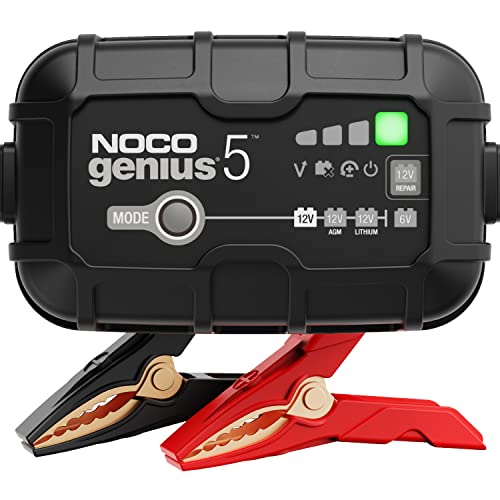
For buyers who prioritize a balance of useful charging speed and smart maintenance, the GENIUS5 hits the sweet spot. At 5 amps it charges small car batteries faster than a 1–2 amp maintainer without becoming aggressive. That makes it a good day-to-day workshop tool: you can top off a weekend project car, maintain a daily driver that sits overnight often, or keep fleet batteries healthy between uses. Think about tackling a weekend restoration: the GENIUS5 will revive a battery faster so you can test systems and run diagnostics without waiting all afternoon.
Usability is strong thanks to the included mounting bracket and long cables, and the charger’s thermal sensor adjusts charge rates with ambient temperature. That feature matters if you keep your garage cold in winter or hot in summer. The unit also includes desulfation and Force Mode for bringing low-voltage batteries back within a useful range, and it’s rated for both 6V and 12V applications. If you own multiple vehicles or occasionally need a faster top-up, it’s an excellent mid-range option.
Pros
- 5A output balances speed and safety
- Thermal compensation for accurate charging in varying climates
- Includes mounting hardware and long cables
- Desulfation/Force Mode can recover weak batteries
- Safe to leave connected for maintenance
Cons
- Larger and heavier than pocket-sized maintainers
- More expensive than very small trickle chargers
Buy the GENIUS5 if you need faster top-ups and a bit more versatility than a 1–2 amp device. It’s a practical choice for home mechanics, tow vehicle owners, and anyone who wants an “one box” solution for regular maintenance and occasional recovery. It pulls double duty as both a maintainer and a faster charger when time matters.
To buy this product, click here.
3. Best For Everyday Use: NOCO GENIUS2

If your goal is a reliable all-rounder, GENIUS2 is the kind of charger that quietly earns trust. It’s a compact, efficient 2 amp unit that’s ideal for cars, motorcycles, and powersports. Imagine pulling into a snowy driveway at night, leaving the car idle for a week, and then starting the engine with no drama because a small maintainer preserved the battery. Or picture a neighbor lending your commuter car a quick overnight trickle charge so you don’t miss a morning meeting. GENIUS2 handles those scenarios with no fuss.
What I like about the GENIUS2 is that it’s slightly more powerful than 1 amp maintainers but still gentle enough for long-term float. It cycles through a reconditioning routine every 24 hours without overcharging and has Force Mode for stubbornly low batteries. The temperature compensation and compatibility with lithium and multiple lead-acid chemistries make it versatile. It’s a practical choice for someone with mixed vehicle types or a small garage where clutter and outlet space matter.
Pros
- Compact footprint with more power than 1A units
- Automatic reconditioning every 24 hours
- Force Mode to charge low-voltage batteries
- Temperature compensation for reliable charging across climates
- Works with LiFePO4 and many lead-acid types
Cons
- Not suitable for very large deep-cycle batteries
- No extensive on-device diagnostics or big display
This is the pick for everyday drivers who want a “set and forget” device with a little extra power. It does maintenance very well, while offering the flexibility to revive weak batteries when needed. If you’re maintaining a couple of cars and the occasional motorcycle, GENIUS2 will cover those bases without being overpowered.
To buy this product, click here.
4. Best For Cold Climates: CTEK MXS 5.0

For drivers who live where winters bite, CTEK’s MXS 5.0 is a reassuring tool. Its patented float/pulse charging algorithm and an eight-stage program do a thorough job of conditioning batteries and countering the effects of low temperatures. Picture leaving a car in a drafty garage all winter and returning to a battery that still holds capacity, or storing a vintage motorcycle and knowing that months of float charging won’t harm the cells. That’s the scenario CTEK aims to solve.
Build quality is noticeable: the unit is splash and dustproof with a rugged case that tolerates workshop life. The reconditioning function is one of the better-known features in the industry and can bring some underperforming batteries back to usable life. It’s slightly more of an investment than basic maintainers, but it pays off if you need dependable performance throughout a cold season or if you manage multiple stored vehicles.
Pros
- Reliable 8-stage charging with reconditioning
- Built solidly for garage use—splash and dustproof
- Set-and-forget float/pulse maintenance for months
- Good compatibility with lead-acid and AGM batteries
- Trusted brand with long track record
Cons
- Higher price than basic maintainers
- Single-voltage 12V focus, no lithium LiFePO4 support on older models
Choose the CTEK MXS 5.0 if your priority is robust, safe maintenance in tough climates, or you have classic cars that sit for long periods. The balance of reconditioning and float maintenance makes it ideal for long-term storage. It’s less about speed and more about maximizing battery life and reliability through proper charging logic.
To buy this product, click here.
5. Best For Powersports and Small Batteries: Battery Tender Plus

For motorcycle riders, lawn equipment owners, and anyone who wants a compact, trustworthy maintainer, Battery Tender Plus is a classic choice. Its 1.25 amp float charge and four-step algorithm gently bring a battery to full charge and then hold it there. A typical scenario is storing a bike over winter; the Tender’s quick-disconnect harness and ring terminals make seasonal hookup painless and secure. I’ve seen riders leave the unit connected in a cramped garage and return months later with a battery still at peak voltage.
The unit’s two-color LED is simple but effective for status checks, and the included fused ring terminal makes semi-permanent installs easy without messing with the factory wiring. It’s “smarter than a trickle charger” language for a reason: the Battery Tender monitors voltage and only applies power when needed, which prevents overcharging and extends battery life. If you own small engines or prefer a no-drama maintainer, this fits the bill.
Pros
- Simple, dependable float-charging behavior
- Quick-disconnect wiring for easy seasonal hookup
- Good warranty and long-standing brand support
- Perfect for motorcycles, ATVs, and small batteries
Cons
- Lower amperage limits utility on larger vehicle batteries
- No advanced display or repair modes
If you store powersports gear or want a fuss-free maintain option for lawn equipment and small cars, Battery Tender Plus is a practical go-to. It’s not meant for heavy repair work, but it excels at doing one job well: keeping small batteries healthy over months of inactivity.
To buy this product, click here.
6. Best For Diagnostics and Quick Workups: YONHAN 10A Battery Charger
For small shops and owners who value an informative display, the YONHAN 10A is a practical charger. It’s a 10 amp unit with an LCD that reports voltage, current, temperature, and progress percentage. That’s handy when you want to monitor the battery during a quick recovery or when diagnosing whether a battery is holding charge. Imagine prepping a car for inspection; the display helps you verify that the battery reached full capacity before you drive it to the testing station.
Beyond diagnostics, it includes repair and desulfation modes that can revive underperforming batteries. The unit supports 12V and 24V systems, which is useful if you occasionally work on trucks or tractors. The thermal compensation and safety protections mean you can use the charger in variable conditions without worrying about cooking the cells. It’s a great middle ground when you want more feedback than a basic maintainer and more speed than a 1–2 amp wall unit.
Pros
- High 10A current for faster charging
- Backlit LCD with detailed diagnostics
- Repair/desulfation mode for struggling batteries
- 12V/24V compatibility expands usefulness
- Winter and summer modes for climate adaptation
Cons
- Larger form factor and louder cooling fan during extended high-current use
- Not a plug-and-forget maintainer for indefinite connection on all models
Choose the YONHAN 10A if you want visible feedback while charging, faster bulk charging than small maintainers, and the ability to troubleshoot batteries before deciding whether to replace them. It’s especially useful for hobbyists who do occasional heavier charging and want clear diagnostics to guide next steps.
To buy this product, click here.
7. Best For Heavy-Duty Work: TowerTop 25A Max Pro

If you run a small shop or maintain large batteries, TowerTop’s 25A Max Pro is engineered for heavy lifting. With selectable currents up to 25 amps and an engine start function that delivers a high current pulse, it’s designed to charge large 100Ah batteries quickly and even help start a vehicle in an emergency. Consider a fleet manager who needs to quickly bring a truck battery back to life before a route; this charger moves fast and provides modes tailored for different battery chemistries.
The unit also supports multiple battery profiles including LiFePO4 and deep-cycle types, and its LCD displays charge stages and parameters. On the downside, the size and power require more careful handling and a well-ventilated workspace. This is not a discreet trickle maintainer for a cramped garage. But for workshops, DIYers with big toys, or anyone who needs fast repair capability, it’s an efficient, configurable tool.
Pros
- High 25A maximum for fast charging of large batteries
- Engine start mode and DC power supply functionality
- Multiple battery modes including LiFePO4
- Detailed LCD status and 8-stage intelligent charging
Cons
- Bulky and overkill for small batteries or simple maintenance
- Higher cost and requires space and ventilation for heavy use
This is the right tool for professional garages or owners with large deep-cycle batteries and frequent heavy charging needs. It serves dual roles as a fast charger and maintenance unit and includes repair/desulfation features that can extend battery life. Avoid it if your needs are limited to small engines or occasional trickle maintenance.
To buy this product, click here.
8. Best Budget Mini Maintainer: Battery Tender Junior

If you want the simplest, most compact maintainer for motorcycles or small engines, Battery Tender Junior is a no-nonsense pick. The tiny footprint, long output cord, and straightforward two-color LED status make it ideal for closet storage or a tight shed. Think of a scooter tucked under a blanket all winter, or a pressure-washer battery that only needs slow top-ups between uses—this unit covers those chores without fuss.
It’s a float charger through and through, with a 750mA output that’s right-sized for small batteries. The included fused ring terminal harness makes permanent or semi-permanent connections easy, and the automatic switch to float mode prevents overcharge. It’s not a repair tool, but for preserving battery life on seasonally used equipment, it’s an economical and reliable option.
Pros
- Very compact and lightweight for tight storage spaces
- Simple LED indicator makes state checks easy
- Quick-disconnect and ring terminal harness included
- Good warranty and customer support history
Cons
- Low current unsuitable for car batteries or quick recovery
- No advanced charging modes or repair features
Pick Battery Tender Junior when you need a low-cost, reliable maintainer for motorcycles, ATVs, lawn tractors, or other small-battery applications. It’s perfect for seasonal owners who want a “set and forget” solution without spending on more advanced features they won’t use.
To buy this product, click here.
9. Best For Onboard/Direct Mount: NOCO GENIUS2D
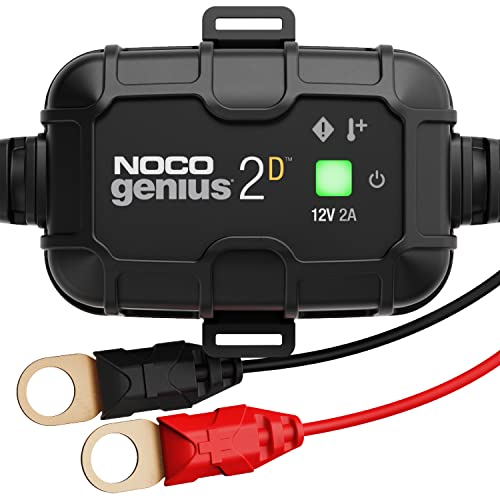
For owners who want a charger permanently installed under the hood or in an RV bay, the GENIUS2D is specifically built for direct-mount situations. It snaps into place, connects with eyelet terminals, and provides continuous maintenance with temperature compensation. Imagine owning a camper that stays parked most of the year; an onboard maintainer ensures electronics retain memory and the starter remains ready, saving a trip to the mechanic before a weekend getaway.
The GENIUS2D supports 12V lead-acid chemistries and includes Force Mode and desulfation, so it handles both maintenance and occasional recovery. Onboard installation keeps the unit protected and out of sight while delivering the same safe, automatic maintenance routines as NOCO’s portable units. If you want a neater, permanent solution without running external wires each time, this is a tidy, factory-like option.
Pros
- Direct-mount design for permanent under-hood installation
- 2A maintenance with thermal compensation and desulfation
- Secure mounting bracket and short cables for clean install
- Safe for indefinite connection while vehicles are stored
Cons
- Onboard placement limits portability for multi-vehicle use
- 12V-only model, not for 6V systems or LiFePO4 variants
This model is perfect for RV owners, boaters, and drivers who prefer a tidy permanent charging solution. It keeps batteries healthy without the fuss of setting up a portable unit each time. Skip this if you need a charger that travels between vehicles or if you need lithium LiFePO4 support.
To buy this product, click here.
Best Trickle Charger For Car Battery FAQ
What’s the difference between a trickle charger and a maintainer?
A trickle charger supplies a very low, steady current to counteract self-discharge, while a modern maintainer uses smart circuitry to top off a battery then switch to a float or pulse mode that holds voltage without overcharging. Smart maintainers monitor voltage and apply charge only when needed, protecting battery lifespan.
How many amps should a trickle charger be for a car battery?
For long-term maintenance, 0.5–2 amps is usually sufficient for most car batteries. Larger outputs (5–25A) are useful when you need to recharge a discharged battery quickly, but those are not intended for indefinite connection. Match the amp output to your battery size and use case: small engines for low amps, workshops or fast charging for higher amps.
Can I leave a trickle charger connected all winter?
Yes, if it’s a smart maintainer with float/pulse modes and temperature compensation. These units are designed for continuous connection and will avoid overcharging. Avoid leaving basic constant-current trickle chargers attached for months, because they can overheat or overcharge the battery.
Will a trickle charger repair a dead battery?
Some smart chargers include desulfation or repair modes that can recover batteries with sulfation or mild weakening. However, a completely dead battery (internal short or cells physically damaged) cannot usually be revived. Use repair modes as a troubleshooting step, not a guaranteed fix.
Are lithium batteries compatible with trickle chargers?
Not always. Lithium chemistries like LiFePO4 require chargers with specific voltage settings and charge algorithms. Many modern smart chargers list LiFePO4 compatibility; always check the product specs. Using the wrong charger can damage lithium batteries or create safety risks.
What safety features should I look for?
Look for reverse polarity protection, spark-proof clamps, overcharge and short-circuit protection, and temperature compensation. An LCD or LED status indicator helps you know what the charger is doing. Certifications like UL, CE, or ETL provide added reassurance.
Is temperature compensation important?
Yes. Batteries accept and hold charge differently across temperatures. Temperature compensation adjusts charging voltage to prevent undercharging in cold weather and overcharging in hot weather. If you live in extreme climates, pick a charger with this feature.
How do I choose between portable and direct-mount chargers?
Choose portable if you want to move the charger among vehicles or use it for roadside emergencies. Choose direct-mount/onboard models when you want a neat, permanent solution that stays installed under the hood or in an RV bay. Both types have their place; decide on portability versus convenience.
Final Verdict
For most drivers who want a reliable, low-effort way to keep batteries healthy, the NOCO GENIUS1 earns the top spot because it combines compactness, temperature compensation, and desulfation in a maintenance-friendly package. It’s ideal for classic cars, seasonal gear, and anyone who prefers a tiny unit that quietly keeps batteries ready. If you need more charging speed for occasional recovery or faster top-ups, the NOCO GENIUS5 and YONHAN 10A offer stronger bulk charging while retaining smart maintenance features.
For specific use cases, pick logically: Battery Tender Junior or Battery Tender Plus for powersports and small engines, CTEK MXS 5.0 for cold-climate reconditioning and long-term storage, TowerTop 25A Max Pro for heavy workshop work, and NOCO GENIUS2D when a neat onboard mount is preferable. Match charger amperage and chemistry support to your battery type and how often you’ll use it. Proper maintenance prevents surprise no-start mornings, extends battery life, and keeps your vehicle ready when you are.