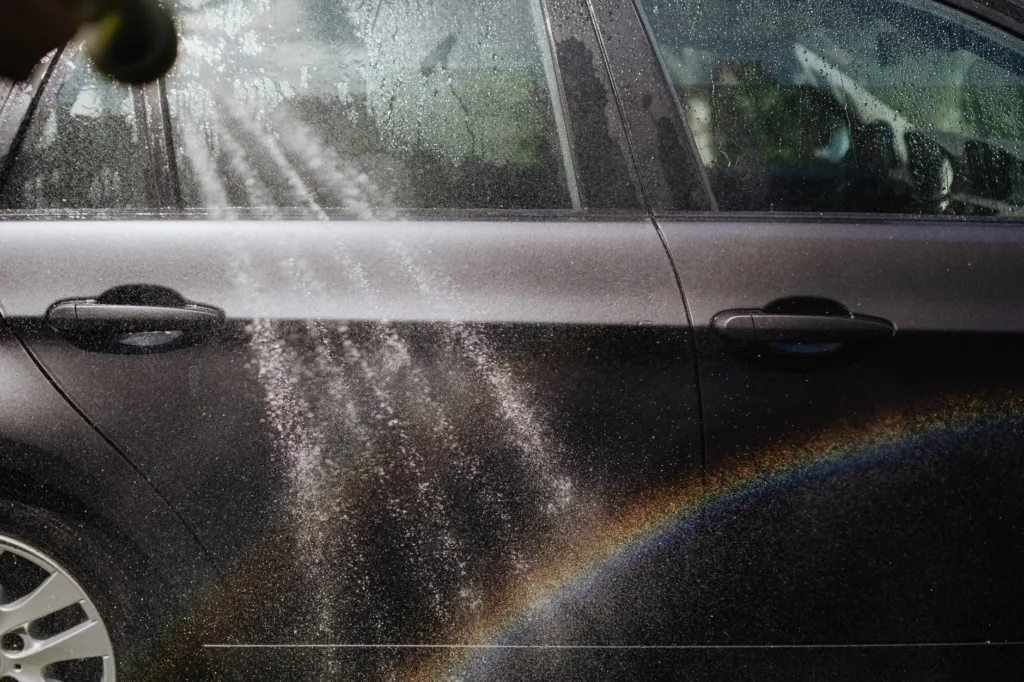
Car wash soap helps loosen and lift dirt, road film, grease, and other contaminants from your vehicle so they can be safely rinsed away without scratching the paint. It is formulated to clean effectively while reducing the risk of stripping wax, sealant, or other protective layers, which is why it is different from dish soap or household cleaners.
For the cleaning step, our car wash soap comparison covers purpose-made wash products to use alongside the method discussed here.
In simple terms, car wash soap does two jobs at once. First, it breaks the bond between grime and the paint surface. Second, it suspends that grime in the wash water so it can be carried away instead of being dragged across the finish.
What Car Wash Soap Actually Does
Car wash soap is designed for automotive surfaces, especially painted panels, clear coat, glass, plastic trim, and sometimes wheels depending on the formula. Its main purpose is not just to make the car look clean, but to do so in a way that is gentle enough for repeated use.
Modern vehicles have clear coat paint systems that can scratch easily if dirt is rubbed across the surface. Car wash soap helps reduce that risk by creating lubrication between the wash mitt and the paint. That lubrication matters just as much as cleaning power.
It loosens dirt and road film
Cars collect more than visible mud. They also gather exhaust residue, oily road film, pollen, dust, bug splatter, tree sap, salt, and airborne pollution. A quality car wash soap helps break up these layers so they rinse off more easily.
This is especially important for road film, which is the thin greasy layer that builds up over time and can make paint look dull even when the car is not heavily soiled. Water alone often beads around this film instead of removing it.
It suspends contaminants in water
Once dirt is loosened, the soap helps keep those particles floating in the wash solution rather than settling back onto the paint. This is a major reason car wash soap is safer than using plain water.
If dirt stays suspended, it is more likely to rinse away with the mitt or the final rinse. If it does not, the particles can act like fine abrasive grit and create micro-scratches or swirl marks.
It provides lubrication
Lubrication is one of the most important things a car wash soap provides. A slick wash solution lets your wash mitt glide over the surface more smoothly, which lowers the chance of dragging abrasive particles across the clear coat.
This is why people often notice that car wash soap feels slippery or slick when mixed properly. That feel is not just cosmetic, it is part of the cleaning process.
It helps preserve protection
Many vehicles have wax, sealant, ceramic spray coating, or other paint protection applied. Car wash soap is usually pH-balanced or at least formulated to be gentle enough to clean without quickly stripping that protection.
This does not mean it can never remove any protection. Over time, repeated washing will gradually reduce weaker waxes and some spray sealants. But it is far less harsh than cleaners not meant for automotive finishes.
Why Not Use Dish Soap or Household Cleaners?
Dish soap is often mentioned because it cuts grease well, but that is exactly why it is not ideal for regular car washing. It is designed to remove food oils and heavy kitchen residue, which makes it more aggressive than necessary for paint care. Before substituting a cleaner, review the drawbacks of washing a car with household soap.
Using dish soap occasionally will not instantly ruin a car, but repeated use can strip wax or sealant faster than a proper car wash soap. It may also leave the finish feeling dry or unprotected.
| Cleaner Type | Main Purpose | Effect on Car Paint | Best Use |
|---|---|---|---|
| Car wash soap | Clean automotive surfaces safely | Generally gentle on paint and protection | Routine washing |
| Dish soap | Remove grease and food residue | Can strip wax and feel harsh | Limited use when removing old protection before correction or recoating |
| Household all-purpose cleaner | General surface cleaning | May be too strong or leave residue | Interior or non-painted surfaces, if label allows |
| Engine degreaser | Break down heavy oil and grime | Not safe for regular paint washing | Engine bay or specific mechanical cleaning tasks |
Another reason not to use household cleaners is residue. Some products leave films, streaks, or surfactants that can be hard to rinse from automotive paint or glass. That can make the vehicle look worse, not better.
How Car Wash Soap Works Chemically
You do not need a chemistry degree to understand the basics. Car wash soap uses surfactants, which are cleaning agents that help water interact with oil, dirt, and grime. In plain language, they help water lift contaminants off the surface. If you are using an old bottle, check whether car wash soap expires and the signs that its condition has changed.
Water by itself does not mix well with oily residue. Surfactants bridge that gap, allowing grime to loosen and rinse away more effectively. Some formulas also include polymers or gloss enhancers that improve slickness and help the wash feel smoother.
Surfactants
Surfactants are the core cleaning ingredient in most car wash soaps. They reduce the surface tension of water and help surround dirt particles so they can be lifted from the paint.
This is why soap works better than plain water for removing road grime. The goal is not just to soak the dirt. The goal is to separate it from the surface.
Lubricants
Many car wash soaps include extra lubricating agents. These are not there just to make the product feel slippery in your hands. They help reduce friction during contact washing, which is where scratches often happen.
If you use a wash mitt, sponge, or wash pad, lubrication can make a noticeable difference in how safely the mitt moves over the surface.
pH balance
Many car wash soaps are designed to be pH-neutral or close to it. That does not mean every formula is identical, but it generally means the product is intended to clean without being overly acidic or overly alkaline.
A balanced pH is useful because strong acids or bases can be harder on waxes, trim, polished metal, and sensitive finishes. For routine washing, gentler is usually better.
What Car Wash Soap Removes, and What It Does Not
Car wash soap is effective at removing loose to moderately bonded dirt, but it is not a miracle product. Understanding its limits helps set realistic expectations and prevents damage from over-scrubbing.
| Type of Contaminant | Does Car Wash Soap Remove It? | Notes |
|---|---|---|
| Dust and light dirt | Yes | Usually removed easily with proper washing |
| Road film | Yes, usually | May need a stronger pre-wash or two-bucket wash technique |
| Bug splatter | Sometimes | Fresh bugs are easier; baked-on residue may need a dedicated bug remover |
| Bird droppings | Sometimes | Fresh droppings may wash off, but older spots can stain clear coat |
| Tree sap | Usually no | Often requires a dedicated remover or careful decontamination |
| Brake dust | Partially | Light dust may rinse away; heavy buildup on wheels often needs a wheel cleaner |
| Tar and asphalt | Usually no | Often needs a tar remover |
| Iron fallout | No | Needs iron remover or decontamination treatment |
One common mistake is assuming soap alone can handle every kind of contamination. It can handle routine dirt very well, but bonded contaminants need different products or methods.
Why Car Wash Soap Is Safer Than Scrubbing With Water Alone
When people wash a dirty car with only water, they often end up rubbing dry or nearly dry contamination across the paint. That is one of the fastest ways to create swirls and fine scratches.
Soap changes the equation by creating a slippery barrier and helping move grit away from the paint. Even if the wash mitt picks up tiny particles, the soap helps keep those particles from grinding into the finish as easily.
This is especially important on dark-colored vehicles. Swirl marks and towel marring tend to show up more clearly on black, dark blue, and deep gray paint.
Example of the difference
Imagine washing a dusty hood with plain water and a sponge. The dust can smear into a muddy layer, and any grit trapped in the sponge can drag across the surface. Now imagine washing that same hood with a proper soap solution and a clean wash mitt, then rinsing the mitt often. The dirt is more likely to float away instead of acting like sandpaper.
The soap does not eliminate all risk, but it reduces it significantly when used correctly.
Different Types of Car Wash Soap
Not all car wash soaps are built the same. The label may say car wash soap, car shampoo, wash and wax, or foam soap. These products can all clean a car, but they do not behave exactly the same way.
Standard car wash soap
This is the basic routine-wash option. It is meant to clean dirt and road film while remaining gentle on paint and any existing protection.
For most people, this is the most appropriate type for regular maintenance washing.
Foaming car wash soap
Foam-heavy soaps are often used in foam cannons or foam guns. The thick foam helps saturate dirt and can improve pre-wash cleaning by loosening debris before contact washing.
Foam itself does not clean by magic. The real value comes from how it helps soften grime and reduce the amount of dirt that remains during hand washing.
Wash and wax soaps
These formulas clean and leave behind a light layer of wax or gloss enhancers. They can make rinsing and drying feel easier, and they may add some shine.
However, the protection they leave behind is usually lighter and shorter-lived than a dedicated wax or sealant. They are useful for convenience, but they are not a substitute for durable paint protection.
pH-neutral soaps
Many detailers prefer pH-neutral soaps for regular use because they are generally gentler on existing protection. They are designed to clean without being overly aggressive.
That said, pH-neutral does not mean ineffective. A well-formulated neutral soap can still clean very well when paired with good washing technique.
Strong or specialty soaps
Some soaps are designed for heavier cleaning, such as stripping old wax before paint correction or preparing the surface for new protection. These are not always appropriate for every wash.
If a product is intended to remove old protection quickly, it may be too aggressive for routine maintenance. Use those formulas only when you have a specific purpose.
How Car Wash Soap Fits Into the Washing Process
Car wash soap is only one part of a safe wash. Its effectiveness depends on how you use it. A good soap can still be used poorly, and poor technique can still scratch the paint even if the soap is excellent.
Pre-rinse first
Before touching the paint, rinse off loose grit, sand, and debris. This helps reduce the chance of rubbing large particles across the surface.
If the car is heavily dirty, a stronger pre-rinse or foam pre-soak can help loosen contamination before contact washing.
Mix at the correct dilution
More soap is not always better. Too much can make rinsing harder and may leave residue. Too little may reduce lubrication and cleaning ability.
Always follow the dilution instructions on the bottle or package when available. Using the right ratio matters for both performance and economy.
Use clean wash tools
A soft wash mitt, microfiber pad, or similar safe wash tool works best when kept clean. Rinse it often in your wash bucket so the dirt it picks up does not go right back on the paint.
If you drop the wash mitt on the ground, replace it or wash it thoroughly before using it again. A small amount of grit can create a lot of scratches.
Wash from top to bottom
The upper panels of a vehicle are usually less contaminated than the lower rocker panels, bumpers, and rear end. Washing from top to bottom helps reduce cross-contamination.
Save the dirtiest areas for last. Wheels and lower body panels often hold the most abrasive grime.
Rinse and dry properly
After washing, rinse away all soap residue and dry the vehicle with a clean microfiber drying towel or another safe drying method. Letting the car air dry can leave water spots, especially in hard-water areas.
Soap helps clean the car, but it does not replace careful drying.
Does Car Wash Soap Remove Wax or Ceramic Coating?
Most car wash soaps are designed not to immediately strip wax or ceramic coatings, but the answer depends on the type of protection, the soap formula, and how often the vehicle is washed.
Gentle routine soaps generally preserve wax and sealants reasonably well. Stronger formulas, frequent washing, or aggressive pre-wash chemicals can reduce protection more quickly.
| Protection Type | Effect of Regular Car Wash Soap | Notes |
|---|---|---|
| Natural wax | May slowly reduce durability over time | Wax is usually the most vulnerable to repeated washing |
| Synthetic sealant | Usually holds up better than wax | Still wears with time and repeated cleaning |
| Ceramic spray coating | Often survives routine washing fairly well | Can still weaken if harsh soaps or heavy chemicals are used |
| Professional ceramic coating | Generally durable, but maintenance matters | Use pH-appropriate cleaners when possible |
It is also important to remember that protection wears from washing technique, abrasion, environmental exposure, and time, not just from the soap itself. A gentle wash method is just as important as the cleaner you choose.
Common Mistakes People Make With Car Wash Soap
Even a good soap will not produce good results if the basics are ignored. These are some of the most common mistakes car owners make.
Using too much soap
Extra soap does not automatically mean extra cleaning. It can create too much residue, make rinsing more difficult, and waste product.
Stick to the recommended dilution unless a specific product instruction says otherwise.
Washing a hot surface
When paint is hot, soap and water can dry too fast, leaving spots or streaks. Washing in direct sun or on a hot panel makes the process harder and can reduce the effectiveness of the soap.
Cool the vehicle down first if possible, and work in the shade.
Letting dirt build up too long
The longer grime sits on paint, the harder it becomes to remove safely. Bird droppings, bug residue, and tree sap can bond to the surface and may stain if ignored.
Regular washing gives the soap a much easier job and reduces the need for aggressive cleaning later.
Using a dirty sponge or mitt
A contaminated wash tool can reintroduce grit to the paint. That defeats one of the main benefits of using soap in the first place.
Wash tools should be rinsed often and replaced when they become worn or embedded with debris.
Ignoring the lower panels and wheels
The lower half of a vehicle collects the worst contamination. If you clean those areas with the same mitt used on cleaner upper panels without rinsing, you can spread grit everywhere.
Using separate tools for wheels and lower body areas helps reduce scratching.
Does the Type of Soap Matter for Hand Washing vs Foam Cannon Use?
Yes, it can matter. Some soaps are formulated for traditional bucket washing, while others are made to create thick foam in a cannon or foam gun. A product may work in both situations, but performance can vary.
Bucket wash use
For hand washing, lubrication and glide matter most. The soap should help the mitt move smoothly and keep contaminants suspended while you rinse the mitt often.
A bucket-friendly soap should mix well without leaving much residue and should rinse cleanly from paint and trim.
Foam cannon use
For foam cannon use, cling and coverage become more important. The foam should coat the surface long enough to soften dirt before the contact wash.
Foam is most useful as a pre-wash step. It reduces the amount of loose dirt before you physically touch the paint.
How Often Should You Use Car Wash Soap?
There is no universal schedule, because driving conditions vary widely. A daily driver exposed to rain, dust, salt, or highway use may need more frequent washing than a garage-kept weekend car.
A practical approach is to wash the car whenever visible contamination starts to build or when the finish begins to feel gritty. For many vehicles, that means every 1 to 3 weeks, but location, season, and use can change that significantly.
In winter, especially in areas that use road salt, washing more often can help reduce corrosion risk and keep salt from sitting on the underside and painted panels. In dry, mild weather, the interval may be longer.
What to Look for on the Label
If you are trying to understand whether a soap is appropriate, the label usually gives clues. You do not need the most complicated formula, just one suited to the job.
- Intended use: Car wash, car shampoo, foam wash, or maintenance wash are common terms.
- Dilution instructions: Clear measuring guidance is a good sign of a practical formula.
- pH description: Neutral or gentle formulas are usually suitable for routine washing.
- Surface compatibility: Some products note whether they are safe for wax, sealant, or ceramic-coated surfaces.
- Residue claims: Low-residue or rinse-clean formulas are often easier to use.
Be cautious with vague marketing language. Terms like “advanced cleaning power” do not tell you much unless the product also explains how it should be used and what surfaces it is intended for.
Real-World Examples of When Car Wash Soap Helps Most
Car wash soap is useful in many everyday situations. Here are a few common examples.
After a week of commuting
A commuter car may not look heavily dirty, but it often carries a film of exhaust residue, dust, and traffic grime. Car wash soap helps remove that dull layer and restore gloss.
After highway travel
Highway driving leaves behind bug splatter, fine tar, and extra road film on the front end. Soap can remove some of it, though stubborn bug residue may still need extra attention.
After rain
Rain does not clean a car. It can actually leave behind dirt deposits, water spots, and grime trails once the water evaporates.
Soap helps remove the residue left by rainfall and road spray.
After winter driving
Salt and slush are especially important to remove quickly. Soap helps clean the panels, while thorough rinsing is needed to remove salt from seams, wheel wells, and lower body areas.
How Car Wash Soap Relates to Paint Health
Clean paint is easier to maintain than neglected paint. Regular washing with proper soap helps reduce the buildup of contaminants that can dull the finish or, in some cases, damage it over time.
That does not mean soap prevents every problem. Swirl marks, scratches, and oxidation can still happen if the car is washed poorly or left exposed to harsh conditions. But using the right soap is one of the simplest ways to support long-term paint care.
It also makes future cleaning easier. A vehicle washed regularly is usually faster to clean and less likely to need aggressive decontamination later.
FAQ
Can I use car wash soap without a bucket?
Yes, if the wash method you are using supports it, such as a foam cannon or rinseless-style setup designed for that purpose. For a traditional wash, a bucket is usually part of the safer process.
Does car wash soap kill wax?
Routine car wash soap usually does not strip wax immediately, but repeated washing and stronger formulas can reduce wax durability over time.
Is more suds always better?
No. Suds can help with visual coverage and lubrication, but cleaning depends on the formula, dilution, and technique. A soap can clean well without creating huge amounts of foam.
Can I use car wash soap on matte paint?
Some car wash soaps are safe for matte paint, but you should use a product specifically labeled for that finish. Matte surfaces are more sensitive to glossing agents and certain additives.
Why does my car still feel dirty after washing?
Soap removes loose dirt, but bonded contaminants like tar, sap, and fallout may remain. In that case, the car may need decontamination, not just another wash.
Can car wash soap be used on wheels?
Sometimes, but many wheels need a dedicated wheel cleaner because brake dust and baked-on grime are tougher than normal paint contamination. Always check compatibility with the wheel finish.
How much car wash soap should I use?
Use the amount listed on the product label. Too little may reduce cleaning and lubrication, while too much can make rinsing harder and leave residue.
Conclusion
Car wash soap does more than make water smell clean. It loosens dirt, suspends grit, adds lubrication, and helps remove road film safely from paint and other exterior surfaces. That makes it a key part of routine car care.
Its biggest advantage is not just cleaning power, but cleaning power with less risk of scratching or stripping protection. Used correctly, it helps maintain paint appearance, preserve wax or sealant longer, and make routine washing safer and easier.
The main takeaway is simple. Car wash soap is formulated for vehicle surfaces, and that makes it different from dish soap or general household cleaners. For regular washing, that difference matters.