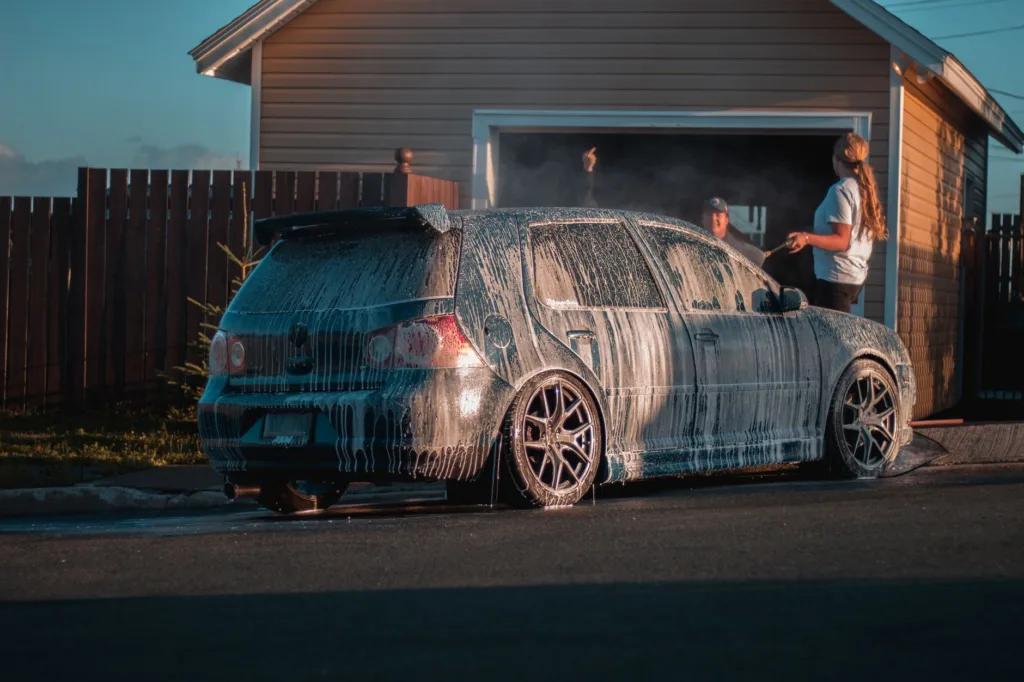
Yes, you can wash a car with household soap in an emergency, but it is usually not the best choice for regular car care. Many household soaps can strip away wax, leave residue, dry out trim, or affect protective coatings over time. If you only have household soap available, it is better to use a very small amount temporarily than to scrub a dirty car with harsh cleaners or let grime sit for too long.
The short answer is simple. Occasional use is possible, regular use is not ideal. The details matter because different soaps are made for different jobs. Dish soap, laundry detergent, hand soap, and all-purpose cleaners may seem harmless, but they are often formulated to cut grease aggressively or leave behind ingredients that are not friendly to automotive paint, rubber, plastic, or wax protection.
If your goal is to clean a car safely and preserve the finish, car wash soap is the better choice. If your goal is to get road salt, bird droppings, mud, or pollen off the vehicle right now and household soap is all you have, you can make it work carefully for one wash. The key is understanding what household soap does to paint and how to minimize the downside.
What Household Soap Does to Car Paint
Car paint is not just color. Most painted surfaces also have a clear coat on top, and many owners add wax, sealant, or ceramic protection over that. Household soap can interfere with those layers in a few ways, depending on the formula.
Some household soaps are designed to remove oils and food grease. That cleaning power is useful in a kitchen, but on a car it can also remove wax and weaken the slick protective layer that helps water bead and dirt slide off. Over time, repeated washing with the wrong soap can make the finish look dull faster and may force you to wax or protect the car more often.
Another issue is residue. Some soaps leave a film behind, especially if they are heavily scented, moisturizing, or loaded with additives. That film can reduce gloss, attract dust, and make rinsing less effective. On dark paint, residue can show up as streaking or hazy patches if the car is not dried well.
Plastic trim and rubber weatherstripping can also be affected. Strong detergents may dry out these materials over time, which can make trim look faded. One wash will not usually ruin anything, but repeated use can contribute to wear.
Household Soap vs Car Wash Soap
The biggest difference is not just cleaning strength. It is the balance between cleaning and protection. Car wash soap is formulated to lift dirt while being gentler on wax, sealants, and coatings. Household soap often prioritizes grease cutting or everyday cleaning, which can be too aggressive for automotive surfaces.
| Feature | Household Soap | Car Wash Soap |
|---|---|---|
| Cleaning strength | Often strong on grease and oils | Balanced for road grime and dirt |
| Effect on wax | May strip wax faster | Designed to preserve protection better |
| Residue | Possible film or streaking | Usually rinses cleaner |
| Paint safety | Depends on formula, but less ideal | Made for automotive clear coat |
| Trim and rubber | May dry or dull over time | Generally safer for repeated use |
| Best use | Emergency, one-time cleaning | Routine washing |
In practical terms, if you wash your car occasionally with dish soap, you may notice the water stops beading as strongly afterward. That usually means any wax or sealant on the car was reduced, not that the paint was damaged. The finish can still be fine, but it may need re-protection sooner.
Which Types of Household Soap Are Most Problematic?
Dish Soap
Dish soap is the household soap most people think of first. It is made to remove food grease and oils from plates, pans, and utensils. That same ability can remove wax from your car paint fairly quickly.
Used once, dish soap usually will not cause dramatic damage to a healthy clear coat. Used often, it can leave the car unprotected and more vulnerable to water spotting, UV exposure, and grime sticking to the surface. If you use dish soap, the car may feel clean, but it may not stay protected.
Laundry Detergent
Laundry detergent is generally a worse choice than dish soap. It may contain stronger surfactants, brighteners, enzymes, and other additives meant for fabric. These ingredients are not designed for automotive finishes and may leave residue or be harsh on plastics and rubber.
It is not a good idea to use laundry detergent as a regular car wash substitute. If you are dealing with a severe emergency, it is still better to avoid it if possible and rinse the car with plain water until proper wash soap is available.
Hand Soap and Body Wash
Hand soap and body wash are often milder than dish soap, but they are still not ideal for car washing. Many contain moisturizers, fragrances, and skin conditioners. Those additives can leave a film on glass, paint, and trim.
If you are thinking these products are safer because they are gentle on skin, remember that skin-friendly and paint-friendly are not the same thing. A soap designed not to dry out hands may still leave unwanted residue on a vehicle.
All-Purpose Cleaners
All-purpose cleaners are sometimes used around the house because they cut dirt well. On a car, they can be too aggressive, especially if they are concentrated or contain degreasers. Some can also affect wax, plastic trim, and clear plastics.
These should generally be reserved for specific surfaces only when the product label clearly allows automotive use. Otherwise, avoid them on painted panels.
When Household Soap Might Be Okay
There are a few situations where household soap can be acceptable as a temporary solution. The important word is temporary. This is not a recommendation for regular maintenance, but a practical fallback when you need to remove contamination and no car soap is available.
- You need to remove fresh bird droppings or tree sap residue before it etches the paint.
- The car is heavily soiled after a road trip, and you do not want grime sitting on the finish for days.
- You are washing an older vehicle with worn protection and no wax to preserve.
- You are cleaning wheels or tires and need a basic soap solution for a one-time wash, with caution.
Even in those situations, less is more. Use the mildest option you have, dilute it well, and rinse thoroughly. Avoid scrubbing dry dirt with harsh soap because the biggest risk to paint is often not the soap itself, but the abrasive grime being dragged across the surface.
How to Wash a Car With Household Soap as Safely as Possible
If you must use household soap, the goal is to reduce the chance of stripping protection or leaving residue. The wash process matters as much as the soap choice.
1. Rinse the Car First
Start with a strong rinse to remove loose dust, grit, and sand. This step lowers the risk of scratching the paint. Never go straight in with a soapy mitt on a dry, dusty car if you can avoid it.
2. Use the Mildest Soap Available
If you have several household soaps, choose the mildest one and avoid anything with heavy degreasing claims. Use a small amount in a bucket of water rather than pouring soap directly onto the paint.
There is no exact universal ratio because products vary, but the broader point is to keep the solution light. More soap does not mean a better wash. It often means more residue and a greater chance of removing protective layers.
3. Wash in the Shade if Possible
Direct sun speeds up drying and can make soap spot before you rinse it off. That can create streaks and spots on paint and glass. A shaded area or cool surface is better for both safety and finish quality.
4. Use a Soft Wash Mitt or Microfiber Cloth
Do not use a rough sponge, old towel, or kitchen scrubber. The safest tool is a soft microfiber wash mitt or microfiber cloth dedicated to car washing. The soap may not be ideal, but the wash tool should be as gentle as possible.
5. Wash Top to Bottom
Start with the roof, glass, hood, and upper panels, then move to the lower panels and wheels last. The lower parts of the car carry the most grit and road film. Washing them first can transfer dirt upward and increase scratching risk.
6. Rinse Thoroughly
Household soap residue can be stubborn. Rinse each section well so it does not dry into a film. If the water sheets oddly or leaves visible streaks, rinse again.
7. Dry the Car Promptly
Use a clean microfiber drying towel or soft drying cloth. Letting water air-dry can leave spots, especially if the soap changes how water behaves on the surface. Drying also makes it easier to inspect for leftover residue.
8. Reapply Protection if Needed
If the car previously had wax or sealant, household soap may have reduced it. After the wash, check whether water still beads. If the surface seems less protected than before, plan to reapply wax or another protective layer when convenient.
What Can Go Wrong?
Most problems from using household soap are not immediate disasters. They are usually gradual and subtle. That makes them easy to ignore until the paint feels less slick, looks duller, or dirt clings more easily.
Wax and Sealant Removal
The most common issue is stripping away protection. Wax and sealants are designed to sit on the surface and help repel water, dirt, and UV exposure. Strong household soaps can remove them faster than intended.
Streaking on Glass and Paint
Some household soaps leave a visible residue, especially if they are fragranced or moisturizing. On glass, that can turn into streaks. On dark paint, it can look like haze or uneven gloss.
Dry or Faded Trim
Repeated exposure to harsh detergent can make black plastic trim look chalky or faded. This is more of a long-term appearance issue than a sudden failure, but it is still something to avoid.
Less Effective Future Washing
A car with stripped wax can attract dirt more quickly. That means future washes may become harder, not easier. You may find bug splatter, tar, and road film stick more stubbornly once the protective layer is gone.
What Household Soap Does Not Usually Do
It is also important not to overstate the risk. One emergency wash with a household soap is unlikely to ruin a paint job by itself. Modern automotive clear coats are fairly durable, and a short contact wash is not the same as prolonged chemical exposure.
Household soap usually does not instantly damage factory paint, cause rust in one wash, or peel clear coat simply because it touched the car. The issue is mostly about protection, residue, and long-term maintenance habits. If the vehicle is rinsed well and dried properly, the damage from a single wash is typically minimal.
When You Should Avoid Household Soap Completely
There are a few cases where using household soap is a poor choice and may create more trouble than it solves.
- Freshly applied wax or sealant, because the soap may remove it quickly.
- Matte paint or matte wrapped surfaces, which can be harder to clean safely and may show damage or gloss changes more easily.
- Specialty coatings if you want to preserve their performance.
- Very hot panels, because soap can dry too fast and leave spots.
- Paint with heavy contamination like sand, mud, or industrial fallout, since scrubbing is riskier than the soap choice alone.
Matte finishes and wrapped surfaces deserve extra caution because the wrong cleaner can alter appearance. If the vehicle has an unusual finish, it is worth using a cleaner specifically approved for that surface rather than guessing with household soap.
Household Soap vs Water Only
Some people wonder whether plain water is safer than household soap. The answer depends on the amount of dirt on the car. For very light dust, a rinse may be enough. For real road grime, water alone will not remove oily residue or stuck contaminants very well.
| Method | Pros | Cons | Best For |
|---|---|---|---|
| Water only | No chemical residue, very gentle | Weak cleaning power on grease and grime | Light dust, quick rinse |
| Household soap | Better cleaning in a pinch | May strip wax and leave residue | Emergency wash |
| Car wash soap | Balanced cleaning and protection | Requires the proper product | Routine washing |
If the car is coated with light dust, a rinse and careful drying may be enough. If the surface has oily road film, bug residue, or salt, a proper wash soap is the better long-term solution.
Common Mistakes People Make When Using Household Soap
Using Too Much Soap
More soap does not make the wash safer or more effective. It often makes rinsing harder and increases the chance of residue. A heavy concentration can also be more aggressive toward wax.
Washing a Dirty Car Without Rinsing
When dust and grit are still sitting on the panels, any rubbing action can scratch the paint. Soap is not a substitute for pre-rinsing.
Using Kitchen Sponges or Rough Towels
Some of the most visible wash damage comes from poor wash tools, not the soap itself. A rough sponge can trap grit and drag it across the clear coat.
Letting Soap Dry on the Car
Drying soap leaves spots and film. This is especially noticeable on black paint and glass. Work in sections and rinse promptly.
Ignoring the Wheels
Wheels and tires collect the most brake dust and grime. If you use household soap on the whole car, be careful not to contaminate the body wash mitt after cleaning the wheels.
How Often Can You Wash With Household Soap?
There is no fixed safe schedule because it depends on the soap, the car’s finish, and whether the vehicle has wax or coating. Still, the general rule is straightforward: use household soap only when necessary, not as a regular wash routine.
If you rely on it once or twice in a pinch, the effect is usually limited to reduced protection. If you use it every week, you are more likely to notice duller water beading, faster dirt buildup, and the need to reapply wax more often. For regular washing, a car-specific soap is a better fit.
What to Do After Washing With Household Soap
After the wash, inspect the paint in normal light. Look for streaks, film, or signs that the protective layer has been reduced. Water behavior is a useful clue. If it no longer beads or sheets the way it used to, the wax or sealant may have been stripped or weakened.
If the car looks clean but feels less slick, that is another sign the soap removed some protection. You do not need to panic. You simply may need to reapply wax, sealant, or another form of surface protection when convenient.
Also check the trim, mirrors, and glass. Household soap residue is sometimes easier to see on these surfaces than on the paint. A clean microfiber towel dampened with plain water can sometimes help remove leftover film after the rinse.
Practical Alternatives If You Do Not Have Car Soap
If the question is really about what to do when you have no car wash soap, the best answer is to find a safer substitute than strong detergent. A dedicated vehicle wash product is still ideal, but a mild cleaner that is known to be safe on automotive finishes is better than something concentrated for kitchen grease or laundry.
Sometimes the safest temporary approach is a thorough rinse followed by careful drying, especially if the car is only dusty. For stubborn contamination, it may be better to wait until you have proper wash soap than to use a harsh household cleaner that could strip protection or leave residue.
FAQ
Will dish soap damage car paint?
One wash with dish soap usually will not damage factory paint, but it can remove wax or sealant and leave the car less protected.
Can I use laundry detergent to wash my car?
It is not recommended. Laundry detergent is made for fabric and may be harsher or leave more residue than dish soap.
Is hand soap safe for car washing?
Hand soap is usually milder than dish soap, but it can still leave film and is not formulated for automotive finishes.
What happens if I wash my car with household soap once?
Most likely, nothing dramatic. The most common result is reduced wax or sealant protection, not immediate paint damage.
How can I tell if the soap stripped my wax?
Watch how water behaves. If it stops beading strongly and the paint feels less slick, the wax or sealant may have been reduced.
Can I use household soap on a ceramic-coated car?
It may not damage the coating immediately, but it can still leave residue or affect the coating’s performance. A coating-safe soap is a better choice.
What is the safest household soap in an emergency?
If you must use one, the mildest, least concentrated option is generally better than a strong degreaser. Use very little, rinse well, and dry the car promptly.
Should I re-wax the car after washing with household soap?
If the car previously had wax or sealant and water no longer beads well, reapplying protection is a good idea.
Conclusion
You can wash a car with household soap in an emergency, but it should not be your regular cleaning method. The main concerns are wax stripping, residue, and faster wear on protective layers, not immediate paint damage. With careful rinsing, gentle tools, and prompt drying, a one-time wash is usually manageable.
For routine maintenance, car wash soap remains the better option because it is designed to clean road grime without being overly harsh on paint, trim, and protection. If you have to choose between dirty paint and a temporary household-soap wash, a cautious wash is often better than leaving contaminants on the vehicle too long. The best long-term habit, though, is to use the right soap for the job.