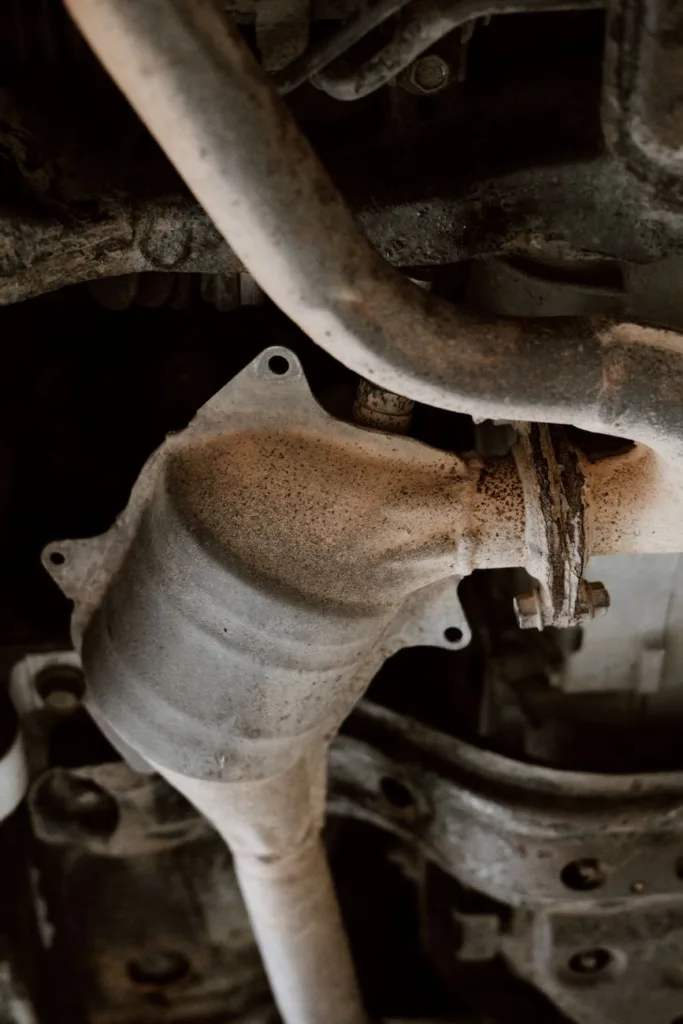
Yes, you can sometimes drive with a bad catalytic converter, but it is usually not a good idea for long. A failing catalytic converter can cause poor performance, reduced fuel economy, a check engine light, higher emissions, and in more serious cases, overheating or exhaust restriction that makes the vehicle unsafe or unreliable to drive. If the converter is clogged, the risk goes up quickly because the engine may struggle to breathe and can stall, lose power, or overheat.
For a short trip to a repair shop, some vehicles with an early-stage catalytic converter problem may still be drivable. But if you notice severe power loss, a rotten egg smell, rattling from under the car, excessive heat, or the car barely accelerates, it is smarter to stop driving and have it inspected as soon as possible.
What a catalytic converter does
The catalytic converter is part of the exhaust system. Its job is to reduce harmful emissions before they leave the tailpipe. Inside the converter is a honeycomb-like structure coated with materials that help turn pollutants such as carbon monoxide, hydrocarbons, and nitrogen oxides into less harmful gases.
In simple terms, it is an emissions-cleaning device. Modern engines are designed to work with it. When it begins to fail, the problem is often bigger than emissions alone because a bad converter can also affect how the engine runs.
Can you drive with a bad catalytic converter safely?
That depends on how the converter is bad. A converter that is only triggering a fault code because its efficiency has dropped may still allow the car to drive fairly normally for a while. A converter that is physically damaged or clogged is a much different situation.
Here is the practical breakdown:
| Condition | Can the car still move? | How risky is it? | Recommended action |
|---|---|---|---|
| Efficiency fault only, no major symptoms | Usually yes | Moderate | Schedule diagnosis soon |
| Rattling converter, light symptoms | Usually yes | Moderate to high | Inspect promptly |
| Clogged converter causing power loss | Sometimes barely | High | Avoid driving except if absolutely necessary |
| Severe overheating, strong odor, glowing exhaust parts | Maybe briefly | Very high | Stop driving and arrange repair |
If your vehicle still feels normal and the only symptom is a check engine light, the car may not be in immediate danger. But if drivability is getting worse, delay can turn a repairable problem into a more expensive one.
What happens if you keep driving with a bad catalytic converter?
The answer depends on whether the converter is inefficient, damaged internally, or clogged. Each type of failure creates different problems.
An inefficient converter may mostly cause emissions issues
Sometimes the catalyst material simply stops working as well as it should. In that case, the engine may still run fine, but the computer detects that the converter is not cleaning exhaust gases effectively enough. This often triggers a check engine light and a catalyst efficiency code, commonly something like P0420 or P0430.
In this situation, the biggest immediate issue may be emissions compliance. The vehicle may fail an inspection or smog test, depending on local rules. The car may still be drivable, but the underlying cause still needs attention.
A damaged converter can start breaking apart internally
If the converter’s internal honeycomb cracks or melts, pieces can loosen and rattle. Those broken parts can shift around and partially block exhaust flow. Sometimes the symptom starts as a light metallic rattle and gradually turns into noticeable power loss.
A converter in this condition can go from annoying to serious without much warning. One day the car may seem mostly fine. Later, it may struggle badly on hills or at highway speeds.
A clogged converter can create major drivability problems
A clogged converter is the condition that causes the most concern. Engines need to push exhaust gases out efficiently. If the converter is blocked, backpressure builds in the exhaust system. That limits engine performance and can cause rough running, poor acceleration, higher engine temperatures, and even stalling.
On a daily commute, this might feel like the vehicle has suddenly become weak or sluggish. Pressing the gas pedal may not do much. In severe cases, the car may start normally but lose power as exhaust restriction builds with heat.
Common signs of a bad catalytic converter
Many drivers first suspect a catalytic converter problem after seeing a warning light. Others notice changes in how the car feels, sounds, or smells. Common symptoms include:
- Check engine light
- Poor acceleration, especially under load
- Reduced fuel economy
- Rattling noise from underneath the vehicle
- Rotten egg or sulfur smell
- Engine misfires or rough running
- Difficulty reaching highway speed
- Failed emissions test
- Excessive heat under the vehicle
These symptoms do not always mean the converter itself is the original problem. In many cases, the converter is damaged by another issue such as an engine misfire, oil burning, coolant entering the combustion chamber, or an air-fuel mixture problem.
When it is especially risky to keep driving
Some converter problems are more urgent than others. The following warning signs mean driving should be limited or stopped altogether until the vehicle is checked.
Severe loss of power
If the car can barely accelerate, especially when merging onto a highway or climbing a hill, the converter may be heavily restricted. That creates a real safety issue because the vehicle may not respond when you need it to.
The underside of the car feels excessively hot
A failing converter can overheat. If the converter gets extremely hot, it can affect nearby components and raise safety concerns. You may notice an unusual hot-metal smell or heat radiating from under the floor.
The engine stalls or struggles to stay running
A clogged converter can choke the engine enough to cause stalling, rough idle, or hard starting. This can leave you stranded or create risk in traffic.
You hear loud rattling from inside the converter
Internal breakdown means the converter is physically deteriorating. Loose pieces may shift and worsen the blockage. Even if the car still drives, the condition often gets worse.
The check engine light is flashing
A steady check engine light can mean many things. A flashing check engine light often points to an active misfire, which can quickly damage the catalytic converter or indicate that damage is already happening. In that case, driving should be minimized.
Why catalytic converters fail in the first place
The converter is often the victim, not the root cause. Replacing it without fixing the underlying issue can lead to repeat failure.
Engine misfires
When an engine misfires, unburned fuel can enter the exhaust. That extra fuel overheats the catalytic converter and can melt its internal structure. Even a relatively short period of severe misfire can cause expensive damage.
Oil consumption
If the engine burns oil, contaminants can coat the catalyst material and reduce its effectiveness. Older high-mileage engines are especially prone to this.
Coolant entering the engine
A leaking head gasket or similar issue can allow coolant into the combustion chamber. Coolant contamination can damage the converter and other emissions components.
Rich fuel mixture
If the engine runs too rich, meaning too much fuel and not enough air, the converter can overheat. Bad sensors, fuel system problems, or intake issues can contribute.
Impact damage
The converter sits under the vehicle and can be damaged by road debris, speed bumps, curbs, or off-road impacts. Physical dents or internal cracking may follow.
Age and wear
Converters do not last forever. Heat cycles, contamination, and mileage eventually reduce efficiency. On some vehicles, they last well over 100,000 miles. On others, engine issues shorten their lifespan.
How a bad catalytic converter affects drivability
One reason drivers ask this question is that not every bad converter makes the vehicle undrivable right away. Understanding the difference helps you judge how urgent the issue is.
| Symptom | Possible effect on driving | Typical urgency |
|---|---|---|
| Check engine light only | May drive normally | Schedule diagnosis soon |
| Rattling under car | May still drive, failure can worsen | Prompt inspection |
| Poor acceleration | Unsafe for highway use in some cases | High urgency |
| Stalling or rough idle | Unreliable and potentially unsafe | High urgency |
| Overheating smell or glowing converter | Possible damage and safety concern | Immediate attention |
A commuter car with a mild catalyst efficiency code may still get you to work for a short time. A car that bogs down every time you press the gas is a different matter entirely. That distinction matters more than the fault code alone.
Can a bad catalytic converter damage the engine?
It can contribute to engine-related problems, especially if it becomes clogged. A restricted exhaust system increases backpressure, which makes it harder for the engine to expel exhaust gases. That can lead to poor performance, higher operating temperatures, rough running, and long-term stress on the engine.
More often, though, the bigger issue is the reverse. The engine damages the converter first. Misfires, rich running, oil burning, and coolant leaks frequently ruin catalytic converters. That is why a good diagnosis matters. If the root problem is missed, a new converter can fail again.
Can you drive short distances with a bad catalytic converter?
Sometimes, yes. But it depends on symptoms.
If your car has only a steady check engine light and no major change in how it drives, a short trip to a repair facility may be reasonable. If the vehicle has severe power loss, stalling, loud rattling, or overheating signs, even a short drive can be risky.
A practical rule is this:
- If the car feels normal, drive only as needed and schedule service soon.
- If the car feels weak or unstable, avoid routine driving.
- If the car can barely accelerate or smells extremely hot, stop driving.
How mechanics diagnose catalytic converter problems
Diagnosing a catalytic converter properly is important because many other problems can look similar. A check engine light with a catalyst code does not always mean the converter is the only part at fault.
Scanning trouble codes
A technician will usually start by reading stored diagnostic trouble codes. Common catalyst-related codes include P0420 and P0430, but misfire, oxygen sensor, and fuel system codes are just as important.
Reviewing live sensor data
Modern vehicles use upstream and downstream oxygen sensors to monitor converter performance. A mechanic compares sensor patterns to see whether the converter is working efficiently.
Checking for exhaust restriction
If clogging is suspected, a technician may test exhaust backpressure or use other methods to confirm a restriction. This helps separate a true blockage from a sensor issue.
Inspecting for root causes
A good diagnosis also includes checking spark plugs, ignition coils, fuel trim, oil consumption, coolant loss, and signs of engine damage. Replacing the converter without finding the cause is a common and expensive mistake.
Repair options and typical costs
Repair costs vary widely based on the vehicle, engine layout, emissions system design, labor rates, and whether additional repairs are needed. Some vehicles have a single converter. Others have multiple converters, including close-coupled units near the engine.
| Repair or service | What it addresses | Typical cost range |
|---|---|---|
| Diagnostic scan and testing | Confirms converter issue and root cause | $100 to $250 |
| Oxygen sensor replacement | Sensor-related false or related codes | $150 to $400+ |
| Ignition repair for misfire | Protects converter from further damage | $100 to $600+ |
| Catalytic converter replacement | Replaces failed or clogged unit | $600 to $2,500+ |
| Major engine issue repair | Fixes oil burning or coolant contamination | Varies widely |
These are broad estimates. Some luxury, turbocharged, hybrid, or hard-to-access vehicles can cost significantly more. In some regions, emissions-related parts must meet specific legal standards, which can affect price and part availability.
Common mistakes drivers make with catalytic converter problems
Ignoring a flashing check engine light
A flashing light usually points to an active misfire. Continuing to drive that way can quickly destroy the converter or worsen existing damage.
Assuming the converter is always the root cause
Many people replace the converter first because of a catalyst code. If the real issue is a misfire, oil burning, or a sensor problem, the new converter may fail too.
Driving too long with severe power loss
Some drivers keep pushing the car even when it is clearly struggling. A clogged converter can leave you unable to accelerate safely in traffic.
Clearing the code and forgetting about it
Resetting the check engine light may hide the warning temporarily, but it does not fix the failure. If the problem remains, the light will usually return.
Overlooking other symptoms
Unusual smells, heat, rattling, and poor fuel economy all add context. Looking only at the warning light can lead to a poor diagnosis.
Practical steps to take if you suspect a bad catalytic converter
If you think your converter may be failing, take a calm and systematic approach.
- Pay attention to drivability. Is the car simply showing a warning light, or is it struggling to accelerate?
- Notice any smells or noises. Rotten egg odor, rattling, and extreme heat matter.
- Check whether the engine light is steady or flashing. Flashing is more urgent.
- Avoid heavy driving if symptoms are severe. Highway merging, towing, or hill climbing can become risky.
- Get the codes read and the problem diagnosed. A proper diagnosis should look for underlying engine or fuel system issues.
- Repair the root cause before or along with converter replacement.
Maintenance tips that may help prevent catalytic converter failure
You cannot always prevent catalytic converter problems, but you can lower the odds by keeping the engine healthy.
- Fix misfires promptly.
- Do not ignore a check engine light.
- Keep up with spark plug and ignition maintenance.
- Address oil burning or coolant loss early.
- Use the correct fuel and follow the vehicle’s maintenance schedule.
- Avoid repeated hard impacts under the vehicle.
For high-mileage cars, it is especially helpful to pay attention to subtle changes in fuel economy, smell, and performance. Small signs often show up before a converter becomes badly restricted.
Real-world driving scenarios
Daily commuter with a steady check engine light
If the car still idles smoothly, accelerates normally, and has no strong odors or rattles, it may be drivable for a short period while you arrange service. You still should not ignore it for weeks or months, especially if inspections are due soon.
Older SUV that struggles uphill
If the vehicle feels weak under load and gets worse as it warms up, a clogged converter becomes more likely. This is the kind of problem that can turn a normal drive into a breakdown or unsafe merge situation.
Car with recent misfire and now a catalyst code
If the vehicle recently had a misfire and now shows a catalyst-related code, the converter may have been damaged by unburned fuel. The misfire cause must be fixed, or the problem may repeat.
Rattling converter but otherwise normal driving
This may indicate a broken substrate inside the converter. The car might still run acceptably for now, but the internal pieces can shift and cause restriction later. Prompt inspection is wise.
Legal and emissions considerations
A bad catalytic converter can cause an emissions inspection failure. Rules vary by state, province, and country, so exact requirements depend on where you live. In many areas, tampering with or removing emissions equipment is not legal for street-driven vehicles.
That means the right repair is not just about drivability. It is also about keeping the vehicle compliant with local emissions standards where applicable.
When you should stop driving and call for help
It is usually better to stop driving and arrange towing or professional help if:
- The car has extreme power loss
- The engine stalls or barely runs
- You smell strong burning or sulfur odors
- The underside seems excessively hot
- The check engine light is flashing
- The vehicle feels unsafe in traffic
The cost of a tow is often less painful than the cost of being stranded or causing further damage by continuing to drive.
Frequently asked questions
Can a bad catalytic converter ruin your engine?
It can contribute to poor performance and excess heat if it becomes clogged, but often the engine problem comes first and damages the converter. Both need to be evaluated together.
How long can you drive with a bad catalytic converter?
There is no reliable time limit. Some vehicles with mild efficiency issues can drive for a while, while a clogged converter can become a serious problem very quickly.
Will a bad catalytic converter always trigger a check engine light?
Usually, but not always right away. Some mechanical failures, such as internal rattling, may show symptoms before a code appears.
Can a bad catalytic converter cause poor acceleration?
Yes. A clogged converter can restrict exhaust flow and cause noticeable power loss, especially during acceleration or hill climbing.
Is it OK to drive on the highway with a bad catalytic converter?
Not if the car has reduced power, stalling, or overheating symptoms. Highway driving puts more load on the engine and can make the problem more dangerous.
Can a catalytic converter unclog itself?
Not usually if it is physically melted, broken, or heavily contaminated. In most true failure cases, the converter or the underlying engine problem needs repair.
What does a clogged catalytic converter feel like?
It often feels like the engine is struggling to breathe. The car may hesitate, bog down, lose speed on hills, or barely respond when you press the accelerator.
Is a rotten egg smell always a bad catalytic converter?
Not always, but it is a common sign of an emissions or fuel mixture issue. The converter, engine management system, and fuel system may all need inspection.
Final takeaway
You may be able to drive with a bad catalytic converter for a short time, but whether you should depends on the symptoms. If the only issue is a steady check engine light and the car still drives normally, you may have enough time to schedule a proper diagnosis. If the car has strong smells, rattling, overheating, stalling, or serious power loss, continued driving is a bad gamble.
The most important step is not just replacing the converter. It is finding out why it failed. A thorough diagnosis protects the new part, prevents repeat repairs, and helps keep the vehicle safe and reliable.