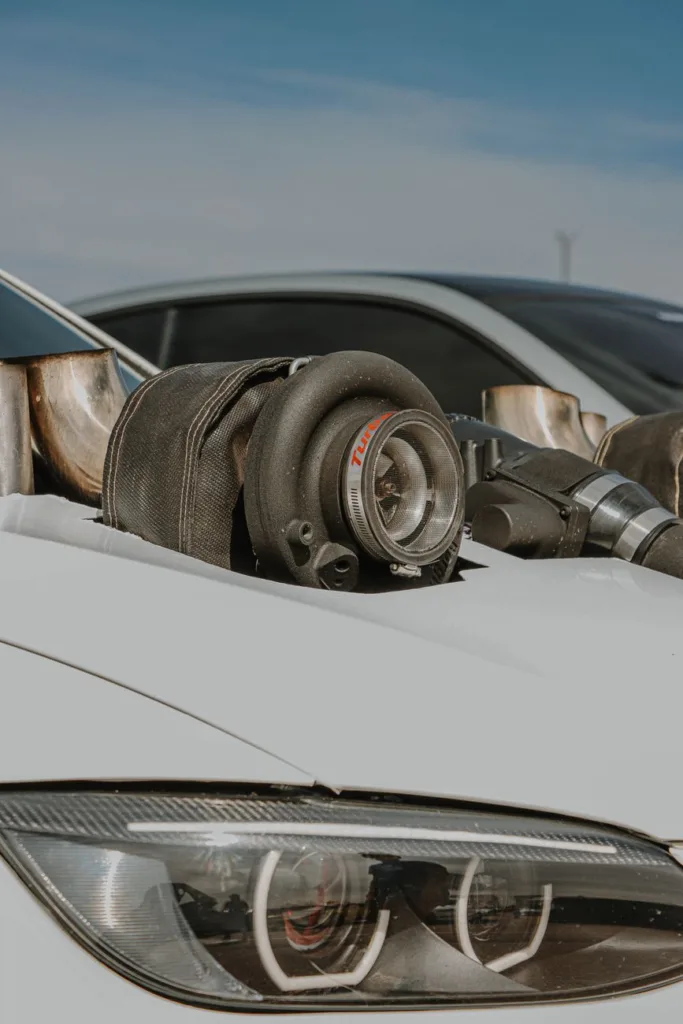
If a turbocharger fails, your engine can lose power quickly, start smoking, make unusual noises, burn oil, trigger a check engine light, or in severe cases suffer major engine damage. Some turbo failures leave you with a car that still runs poorly. Others can lead to an immediate breakdown, especially if the turbo sends metal fragments into the intake or exhaust system, or if the engine starts consuming its own oil.
How serious it is depends on how the turbo failed, what caused the failure, and how long the vehicle is driven afterward. A worn turbo seal is very different from a seized turbo shaft or a compressor wheel that breaks apart. The warning signs matter, and acting early can be the difference between replacing a turbocharger and replacing an entire engine.
Understanding what happens when a turbo fails helps you react correctly, avoid making damage worse, and know what a repair shop will usually inspect next.
What a Turbocharger Does and Why Its Failure Matters
A turbocharger uses exhaust gases to spin a turbine. That turbine is connected by a shaft to a compressor on the intake side, which forces more air into the engine. More air allows the engine to burn more fuel efficiently and produce more power from a smaller displacement.
The turbo spins at extremely high speed and depends on a constant supply of clean engine oil for lubrication and cooling. Because of that, turbochargers live in a harsh environment. They deal with heat, pressure, high RPM, and any oiling or air-filtering problem in the engine.
When a turbo fails, the problem often spreads beyond the turbo itself. A failed turbo can affect:
- Engine power
- Air-fuel balance
- Oil consumption
- Exhaust emissions
- Catalytic converter or diesel particulate filter condition
- Engine internals in severe cases
What Happens If a Turbocharger Fails While Driving?
The most common immediate effect is loss of boost pressure. That means the engine suddenly feels weak, sluggish, and less responsive. Acceleration may become much slower, especially when merging, climbing hills, or trying to pass another vehicle.
In some vehicles, the engine control module detects a boost problem and puts the car into limp mode. Limp mode limits engine power to help protect the engine and emissions system. The car may still move, but it will feel heavily restricted.
Depending on the failure, you may also notice:
- A loud whining, siren, grinding, or rattling noise
- Blue, gray, black, or white exhaust smoke
- A check engine light
- Oil smell or burning smell
- Rough running or poor throttle response
- Sudden increase in oil consumption
In the worst cases, driving with a failed turbo can lead to a runaway engine on some diesel vehicles. This happens when oil leaks past the turbo seals and enters the intake, where the engine starts burning that oil as fuel. The engine can continue revving uncontrollably even if you turn the key off, because it is no longer relying only on injected fuel.
Common Ways a Turbocharger Fails
Turbo failure is not one single event. Several different parts can fail, and the symptoms change depending on which part is damaged.
Bearing or Shaft Failure
The turbo shaft rides on bearings that rely on engine oil. If oil supply is poor, contaminated, delayed, or interrupted, the bearings wear out. The shaft can develop excessive play, which allows the compressor or turbine wheel to contact the housing.
Once that happens, you may hear scraping, whining, or grinding. Performance drops, and the turbo can fail completely.
Oil Seal Failure
Turbochargers have sealing systems that keep oil where it belongs. When those seals fail, oil can leak into the intake side, the exhaust side, or both. This often causes blue or gray smoke from the exhaust.
Even if the car still drives, oil seal failure should not be ignored. The engine may consume oil rapidly, foul sensors, and damage emissions components.
Compressor Wheel Damage
The compressor wheel sits on the intake side. If dirt, broken filter material, screws, plastic fragments, or other debris enter the intake system, the wheel blades can chip or break. A damaged compressor wheel reduces airflow and can throw the assembly out of balance.
That imbalance can quickly destroy the bearings and shaft.
Turbine Wheel Damage
The turbine wheel is on the exhaust side and is exposed to very high heat. Exhaust restrictions, foreign objects, overspeed conditions, or internal breakage can damage it. Cracks and blade damage can reduce boost or cause full turbo failure.
Wastegate or Variable Geometry Failure
Some turbos use a wastegate to control boost, while others use variable vanes. If these components stick or fail, the turbo may underboost or overboost.
Underboost usually causes sluggish performance. Overboost can stress the engine and trigger protective shutdown strategies.
Turbo Seizure
A turbo can seize if lubrication fails badly enough or if internal damage becomes severe. A seized turbo may create a dramatic loss of power and can sometimes block exhaust flow enough to make the engine run very poorly.
Symptoms of a Failing or Failed Turbocharger
Some turbochargers fail suddenly, but many give warning signs first. Catching them early can reduce repair costs.
| Symptom | What It May Mean | How Serious It Can Be |
|---|---|---|
| Loss of power | Low boost, damaged compressor, leak, seized turbo | Moderate to severe |
| Whining or siren noise | Bearing wear, air leak, compressor damage | Moderate to severe |
| Blue smoke | Oil leaking past turbo seals | Severe if oil loss is heavy |
| Black smoke | Too much fuel for available air, low boost | Moderate to severe |
| Check engine light | Boost pressure out of range, airflow problems | Varies |
| Oil consumption increases | Turbo seals or internal engine issue | Potentially severe |
| Grinding or scraping noise | Wheel contacting housing | Usually severe |
| Limp mode | Engine protection due to boost issue | Needs prompt diagnosis |
Can a Turbocharger Failure Damage the Engine?
Yes, a turbo failure can damage the engine. In mild cases, the engine itself may be fine and only the turbocharger needs replacement. In severe cases, a failed turbo can lead to oil starvation, internal contamination, runaway conditions, or broken engine parts.
Oil Starvation and Engine Damage
If the turbo failed because of low oil pressure, sludge, blocked oil feed lines, or poor maintenance, the engine may have suffered too. The turbo is often one of the first components to show oiling problems because it is so sensitive to lubrication quality.
That means a failed turbo is sometimes a symptom of a bigger issue, not the root cause.
Debris Entering the Engine
If the compressor wheel breaks apart, small metal fragments can enter the intake tract. In some cases, the intercooler catches some debris. In other cases, fragments can make their way into the engine. That can damage pistons, valves, and cylinder walls.
Even if debris does not reach the engine, it can still contaminate the intercooler and piping. Those parts often need thorough cleaning or replacement before a new turbo is installed.
Oil Entering the Intake
A failed turbo seal can allow a large amount of oil into the intake system. That oil can pool inside the intercooler and charge pipes. If enough oil gets drawn into the engine, combustion problems can occur.
On diesel engines, this is especially dangerous because the engine may start running on engine oil.
Exhaust System Damage
Turbo failure can also affect the catalytic converter, oxygen sensors, diesel oxidation catalyst, or diesel particulate filter. Burning oil and improper air-fuel balance can contaminate or overload these components.
What Happens If You Keep Driving With a Bad Turbo?
You might be able to drive for a short time with a failing turbo, but it is risky. The biggest problem is that you often do not know whether the failure is minor or about to become catastrophic.
If the issue is only reduced boost from a control problem, the vehicle may simply feel underpowered. But if the turbo is leaking oil, contacting the housing internally, or shedding metal, continued driving can turn a repairable problem into a very expensive one.
Likely Outcomes of Continued Driving
- Worsening power loss
- Rapid oil consumption
- Damage to the intercooler and intake piping
- Damage to the catalytic converter or DPF
- Sudden turbo seizure
- Engine damage from oil starvation or debris
- Breakdown on the road
If there is heavy smoke, loud metal contact noise, a sudden major loss of power, or oil warning indications, the safest choice is to stop driving and have the vehicle towed.
Can a Car Run Without a Working Turbo?
Sometimes, yes. A turbocharged engine can often still run if the turbo is no longer producing proper boost. But that does not mean it is safe to continue driving normally.
Whether the car will run depends on the type and severity of the failure:
- Minor boost leak or wastegate issue: The engine may still run fairly normally but feel weak.
- Bearing wear or oil leak: The engine may run, but smoke, oil consumption, and damage risk increase.
- Seized turbo or major internal breakage: The vehicle may run very poorly or may not be drivable at all.
Modern engine management systems can also limit operation when boost readings are outside expected values.
Why Turbochargers Fail in the First Place
Most turbochargers do not fail randomly. In many cases, the turbo is damaged by another problem.
Poor Oil Maintenance
Dirty oil, the wrong oil, overdue oil changes, or sludge buildup are major causes of turbo failure. Because turbo bearings spin at very high speed, even small lubrication problems matter.
Blocked or Restricted Oil Feed
A partially clogged oil feed line can starve the turbo of oil. On some vehicles, replacing the turbo without replacing contaminated feed lines can cause the new turbo to fail too.
Oil Drain Problems
The turbo also needs a clear oil drain path back to the engine. If the return line is restricted, oil can back up into the turbo and leak past the seals.
Foreign Object Damage
Anything entering the intake or exhaust can damage the turbo wheel. Common causes include a damaged air filter, broken intake hose, loose clamp, or engine fragments from another failure.
Air Leaks and Overspeed
If there is a significant boost leak, the turbo may work harder than normal trying to meet the requested pressure. In some cases, this contributes to overspeed and accelerated wear.
Hot Shutdown Habits
On hard-driven vehicles, shutting the engine off immediately after heavy load can increase heat stress inside the turbo. Modern oils and cooling designs have reduced this issue, but repeated hard use followed by immediate shutdown can still contribute to long-term wear.
Tuning or Excessive Boost
Engines modified for higher boost levels may place more stress on the turbo. If the tune, supporting hardware, or maintenance quality is poor, failure risk increases.
How a Mechanic Diagnoses Turbo Failure
Turbo diagnosis usually goes beyond checking the turbo itself. A good technician tries to determine both what failed and why it failed.
Common Diagnostic Steps
- Checking for fault codes related to boost pressure, airflow, and fuel control
- Inspecting intake hoses, intercooler pipes, and clamps for leaks
- Checking turbo shaft play
- Inspecting the compressor wheel for blade damage
- Looking for oil in the intake tract or exhaust
- Testing boost pressure under load
- Inspecting oil supply and return lines
- Evaluating engine oil condition and maintenance history
- Checking the air filter and intake for signs of debris ingestion
In severe failures, the shop may also inspect the intercooler for pooled oil or metal particles. This matters because installing a new turbo without cleaning contaminated components can cause repeat failure.
Typical Repair Scenarios After a Turbo Fails
The repair depends on what was damaged and what caused it. Sometimes the job is limited to the turbocharger and related lines. Other times it grows into a larger intake, exhaust, or engine repair.
| Failure Scenario | Typical Repair Needs | Possible Extra Work |
|---|---|---|
| Worn bearings, no debris damage | Replace turbo, gaskets, oil lines as needed | Oil and filter service, intake cleaning |
| Oil seal failure | Replace turbo, clean intake tract/intercooler | Inspect catalytic converter or DPF |
| Compressor wheel damage | Replace turbo, inspect intake path | Intercooler cleaning or replacement, engine inspection |
| Turbo failed from oil starvation | Replace turbo only after finding root cause | Oil pressure checks, engine inspection |
| Diesel runaway event | Turbo replacement and intake cleaning | Possible major engine repair or replacement |
How Much Turbo Failure Can Cost
Costs vary widely by vehicle type, engine layout, labor access, and the extent of collateral damage. A simple turbo replacement on one vehicle may be much less involved than on another vehicle where the turbo is buried behind the engine.
Typical repair cost factors include:
- Turbocharger assembly cost
- Labor time
- Oil feed and return line replacement
- Gaskets and hardware
- Intercooler and pipe cleaning or replacement
- Oil and filter change
- Catalytic converter or DPF damage
- Possible engine inspection or repair
As a broad real-world range, a straightforward turbo replacement might land anywhere from the high hundreds to several thousand dollars, depending on the vehicle. If engine damage is involved, the total can rise dramatically.
That is why identifying the cause early matters so much. Replacing only the failed turbo without correcting clogged oil lines, poor lubrication, intake debris, or boost leaks can lead to another failure and another bill.
What To Do If You Think Your Turbo Has Failed
Your next step depends on the symptoms. The goal is to avoid turning a turbo problem into an engine problem.
If the Car Suddenly Loses Power
Reduce load on the engine, avoid hard acceleration, and move to a safe location if necessary. If the vehicle enters limp mode but there is no smoke, no unusual noise, and no oil warning, you may be dealing with a boost control issue or leak. It still needs diagnosis soon.
If You See Heavy Smoke
Stop driving as soon as it is safe. Heavy blue or gray smoke can mean the turbo is leaking significant oil. Continuing to drive can damage emissions components and, on a diesel, raise the risk of runaway.
If You Hear Grinding or Metal Noise
Shut the engine off and do not restart it unless necessary for safety. Internal turbo contact often means severe failure.
If the Oil Level Drops Quickly
Check the oil level if it is safe to do so and stop driving if it is low. Running low on oil can damage the engine very quickly.
When To Tow Instead of Drive
- Heavy exhaust smoke
- Loud whining that becomes grinding or scraping
- Severe loss of power
- Oil pressure warning light
- Rapid oil loss
- Suspected internal turbo breakage
Common Mistakes Drivers Make After Turbo Failure
Turbo problems often become much more expensive because of what happens after the first symptom appears.
Ignoring Early Whining or Smoke
A faint siren noise or a little blue smoke may seem minor, but those are classic warning signs. Waiting too long can allow bearing wear or seal leaks to worsen until the turbo fails completely.
Continuing to Drive Hard
Using full throttle when boost control is already unstable can increase stress on the turbo and engine. If the vehicle feels weak or inconsistent, it should be checked before normal hard use continues.
Replacing the Turbo Without Finding the Cause
This is one of the biggest mistakes. If the original failure was caused by dirty oil, a blocked feed line, intake debris, or a drain restriction, a new turbo can fail just as quickly.
Skipping Intercooler and Pipe Cleaning
After an oil-leak or wheel-damage failure, residue and debris can remain in the charge-air system. If that material is left behind, it can be sucked into the new turbo or the engine.
Delaying Oil Service
When a turbo fails, contaminated oil can become part of the problem. Fresh oil and a new filter are commonly part of the repair process.
Maintenance Tips That Help Prevent Turbo Failure
You cannot prevent every failure, but good habits reduce the risk significantly.
- Change oil on time using the correct specification for your engine.
- Use quality oil filters and do not stretch service intervals excessively.
- Check oil level regularly, especially on higher-mileage turbo vehicles.
- Replace dirty air filters and make sure the intake system is sealed properly.
- Fix boost leaks early so the turbo is not overworked.
- Let the engine warm reasonably before heavy acceleration.
- After hard driving or towing, give the engine a short period of lighter operation before shutdown.
- Investigate new noises quickly, especially whining, siren sounds, or smoke.
Turbo Failure Symptoms Compared by Severity
| Symptom | Possible Cause | Can You Keep Driving? |
|---|---|---|
| Mild power loss, no smoke | Boost leak, control issue, early turbo wear | Only briefly and gently, then diagnose |
| Whining noise with reduced boost | Bearing wear or intake leak | Risky, have it checked soon |
| Blue or gray smoke | Oil leaking past seals | No, stop driving if smoke is heavy |
| Grinding or scraping noise | Internal wheel contact | No, shut it down |
| Rapid oil loss | Severe turbo oil leak or other engine issue | No, tow recommended |
| Runaway diesel engine | Oil entering intake and burning as fuel | Emergency situation |
When Turbo Failure Is More Likely
Some driving and ownership patterns place more stress on turbocharged engines.
High-Mileage Vehicles
As mileage increases, bearing wear, oil seepage, and carbon buildup become more common. A turbo may still last a very long time, but age and heat cycles add up.
Poor Maintenance History
A turbocharged engine that went too long between oil changes is at much higher risk. Even if it seems to run fine today, past neglect can shorten turbo life later.
Frequent Towing or Heavy Load Use
Towing, hauling, and long uphill drives create more exhaust heat and more turbo workload. These uses do not automatically cause failure, but they make maintenance quality even more important.
Short Trip Driving
Repeated short trips can contribute to oil contamination and moisture buildup. Over time, that can affect lubrication quality.
Frequently Asked Questions
Can a failed turbo destroy an engine?
Yes, it can. A failed turbo can leak oil into the intake, send debris through the system, or result from oil starvation that also affects the engine.
What does a bad turbo sound like?
Common sounds include whining, a siren-like noise, grinding, scraping, or rattling. Grinding or scraping usually suggests severe internal damage.
Will a bad turbo cause smoke?
Yes. A bad turbo often causes blue or gray smoke from oil leakage. Black smoke can also appear if the engine is not getting enough boosted air.
Can you drive with a failed turbocharger?
Sometimes the vehicle will still run, but continuing to drive is risky. If there is heavy smoke, metal noise, major power loss, or rapid oil consumption, it should not be driven.
Does turbo failure always mean the engine is bad?
No. Some turbo failures are limited to the turbo and related plumbing. But the engine should still be checked, especially if the turbo failed because of lubrication problems.
Can low oil cause turbo failure?
Yes. Low oil level, low oil pressure, dirty oil, or blocked oil lines are common causes of turbo bearing and shaft damage.
How do I know if it is the turbo or just a boost leak?
A boost leak can cause low power and underboost codes, but a failed turbo is more likely to involve shaft play, oil leakage, unusual turbo noise, or wheel damage. Proper diagnosis is the best way to tell.
What color smoke comes from a bad turbo?
Blue or gray smoke is the classic sign of oil burning through the turbo. Black smoke may appear when there is not enough air for proper combustion.
Final Takeaway
If a turbocharger fails, the results can range from reduced power and extra smoke to severe engine damage. The most common immediate effect is loss of boost, but the bigger concern is what happens next. Oil leaks, debris, overspeed damage, and lubrication problems can quickly turn a turbo issue into a much larger repair.
The safest approach is to treat turbo symptoms seriously. If you notice whining, smoke, sudden power loss, or rapid oil consumption, stop pushing the vehicle and get it diagnosed promptly. Catching the problem early often means a simpler repair, while ignoring it can lead to damage well beyond the turbocharger itself.