
Charging an EV from a regular household outlet can feel a little like filling a bathtub with a garden hose. It gets there, slowly and steadily, and for plenty of drivers that is perfectly fine. That is exactly why shoppers start looking for the best level 1 EV charger. Maybe you want a safer replacement for the charger that came with the car. Maybe you need a travel backup for weekend trips. Or maybe your garage only has a standard 120V outlet, and a simple overnight setup is the cleanest answer.
The mistake many buyers make is chasing flashy specs that matter more for Level 2 charging than Level 1 use. A great Level 1 charger should be safe on a household circuit, easy to plug in, weather-resistant enough for real driveway life, and long enough to reach without forcing awkward parking gymnastics. Another common slip is ignoring connector compatibility, outlet type, and whether the charger automatically limits current on a 120V plug. Those details are the difference between a smooth overnight top-up and an annoying return.
Different drivers care about different things. Some want the simplest plug-and-go option. Some want adjustable amperage and a timer for off-peak charging. Others want app control, extra cable length, or a tougher housing that can live in a cold garage all winter. For most shoppers, the standard Lectron Level 1 EV Charger lands in the sweet spot with its straightforward 120V focus, solid certifications, and easy everyday usability, but the right pick depends on how and where you charge.
If you want the fast shortlist first, the quick picks and comparison table below make it easy to size up the leading options.
Quick Picks
- Best Overall: Lectron Level 1 EV Charger
- Best Budget Pick: VEVOR Level 1&2 EV Charger
- Best Premium Option: Lectron Level 1 J1772 Charger (WiFi Version)
- Best Value Choice: ELEGRP Level 1/2 EV Charger
Best Level 1 EV Charger Comparison Table
| Product | Best For | Main Strength | Key Specs |
|---|---|---|---|
| Lectron Level 1 EV Charger | Simple overnight home charging | True Level 1 focus with strong safety credentials | 120V, 15A, 16 ft, IP65 |
| Raylix Level 1&2 Portable EV Charger | Adjustable control on a budget | Amperage settings, timer, TFT display | 120V/240V, 8-16A, 21 ft, IP65 |
| Lectron Level 1 J1772 Charger WiFi Version | Remote monitoring | App control in a dedicated Level 1 charger | 120V, 15A, 16 ft, WiFi, IP65 |
| BETUMODA Level 1 EV Charger | Long reach and display controls | 25 ft cable with touch screen | 120V/240V, 8-16A, 25 ft, IP65 |
| ELEGRP Level 1/2 EV Charger | Balanced everyday value | Tough cable and IP67 weather resistance | 120V/240V, 16A max, 25 ft, IP67 |
| VEVOR Level 1&2 EV Charger | Lowest-cost entry point | Affordable dual-voltage flexibility | 120V/240V, 12A/16A, 25 ft, IP66 |
| Grasside Level 1&2 EV Charger | Travel backup charging | Portable kit with adjustable current and case | 120V/240V, 8-16A, 25 ft, IP65 |
| DEWALT Level 1 & 2 Portable EV Charger | Heavy-duty durability | Rugged build and strong support coverage | 120V/240V, 16A, 25 ft, IP66 |
| AplysiaTech Portable EV Charger Level 1 | Dedicated 120V backup charger | Simple 15A Level 1 portability | 110V, 15A, 21 ft, IP65 |
If you want the fuller picture, the detailed reviews below show how these nine chargers differ in everyday garage, driveway, and travel use.
1. Best Overall: Lectron Level 1 EV Charger

One reason this option stands out is its clean, no-nonsense approach. A lot of chargers in this category are really hybrid Level 1 and Level 2 units, which can be handy, but they also add buttons, adapters, and setup choices that some drivers never touch. The Lectron keeps the mission simple. It is a 120V, 15A portable charger aimed squarely at overnight charging from a standard household outlet, and that focus makes it appealing for the driver who wants to come home, plug in, hear the connector click, and be done with it.
In practical use, this kind of simplicity feels good. Picture a daily commuter with a modest round trip who parks in the garage every night. They do not need a wall-mounted station or a spreadsheet of charging schedules. They need consistent replenishment and a charger that feels trustworthy in the hand. ETL certification, Energy Star efficiency, and IP65 weather resistance give this Lectron a reassuring backbone. The 16-foot length is not huge, but in a normal garage bay it often gets the job done without drama.
Pros
- Dedicated Level 1 design keeps setup straightforward
- 15A output is strong for household-outlet charging
- ETL certified and Energy Star certified
- IP65 weather resistance adds driveway and garage flexibility
- Good fit for drivers who want a plug-and-go backup or primary home charger
Cons
- 16-foot cable is shorter than some 25-foot rivals
- No app control, timer, or adjustable amperage settings
- Tesla owners need a separate adapter
This is the charger for the person who values straightforward reliability over extra tech. If you use a normal 120V outlet every night and want a dedicated Level 1 unit that does not make the process feel fussy, it is an easy recommendation. Buyers who need more reach, delayed charging, or dual-voltage versatility may lean elsewhere, but for classic Level 1 use, this one feels refreshingly direct. That clarity is what makes it the best overall pick here.
To buy this product, click here.
2. Best For Smart Scheduling: Raylix Level 1&2 Portable EV Charger

For buyers who prioritize control, the Raylix brings more brains than most chargers in this price band. Adjustable current settings from 8A to 16A let you tune charging to the circuit you are actually using, which matters if your garage outlet shares power with tools, a freezer, or that old beer fridge humming in the corner. The built-in delay timer is useful too. Set it for late-night off-peak hours, head inside, and let the charger handle the boring part.
The upgraded TFT display is a real perk in daily use. Instead of guessing or relying entirely on the car screen, you can glance at the charger and see voltage, current, power load, and temperature. That sounds small until you are charging away from home at a rental cabin or a friend’s driveway and want quick reassurance that everything is working properly. With both NEMA 5-15 and 6-20 support, it also grows with you. Start on Level 1 now, move to a 240V outlet later, and the charger still has a job.
Pros
- Adjustable 8A, 10A, 12A, and 16A settings add flexibility
- 1 to 12 hour delay timer is handy for off-peak charging
- TFT display gives clear real-time charging information
- Dual-voltage support works for present and future setups
- 21-foot cable is easier to live with than shorter travel chargers
Cons
- More controls means a slightly steeper learning curve
- As a hybrid Level 1 and Level 2 unit, it is less single-purpose than a dedicated 120V charger
- Brand recognition is lighter than Lectron or DEWALT
This one suits drivers who like to see what their charger is doing and want more say over timing and amperage. It makes a lot of sense for apartment-adjacent garages, shared circuits, or anyone trying to trim electricity costs overnight. If you want a charger that is almost boring in its simplicity, skip this and go with the basic Lectron. If you enjoy a little control panel intelligence without paying premium money, the Raylix is a strong fit.
To buy this product, click here.
3. Best Premium Option: Lectron Level 1 J1772 Charger (WiFi Version)

If your goal is a true Level 1 charger with a little extra polish, this Lectron WiFi model is the standout premium pick. It keeps the same 120V, 15A overnight-charging profile that makes a dedicated Level 1 unit so easy to live with, then adds app connectivity for remote monitoring and current adjustment. That is a nice mix. You still get the simplicity of household charging, but without feeling locked out of modern convenience.
Imagine plugging in after dinner, settling onto the couch, and checking charge progress from your phone while rain taps the garage door. That is the kind of low-key convenience this model is built for. You can verify charging status without walking outside in pajamas, and that matters more than it sounds after a few months of ownership. It is still portable, still weather-resistant with IP65 protection, and still familiar if you already trust the Lectron ecosystem. The catch is obvious: you are paying more for convenience rather than raw charging speed.
Pros
- Dedicated Level 1 format stays simple and focused
- WiFi and app control add useful remote monitoring
- 15A output is strong for 120V charging
- IP65 rating supports indoor or outdoor use
- Good choice for buyers who want modern features without stepping into a full wall-box setup
Cons
- Costs more than basic Level 1 chargers
- 16-foot cable may be tight in longer driveways
- App features may feel unnecessary for very simple charging routines
Buy this if you specifically want a premium Level 1 experience instead of a dual-voltage bargain charger stuffed with compromises. It fits drivers who charge at home most nights and appreciate remote visibility. Shoppers chasing the lowest cost or longest cable should look elsewhere, but if clean 120V charging with app convenience sounds right, this Lectron earns its spot.
To buy this product, click here.
4. Best For Long Reach: BETUMODA Level 1 EV Charger

This model earns a place because cable length solves real problems. A charger can look great on paper, then become a headache the first night you back into the garage and realize the plug barely reaches the port. BETUMODA gives you a 25-foot cable, which is generous enough for awkward parking layouts, side-wall outlets, and driveways where the car never seems to stop in the ideal spot. That extra reach feels downright luxurious if you have ever stretched a cord across a concrete floor while muttering under your breath.
The 2.8-inch touch display also gives it a more polished day-to-day feel. You can adjust current, set delayed charging, and monitor status without digging into a phone app. The unit supports both 120V and 240V use, so while it can serve as a Level 1 charger today, it also leaves room for a future outlet upgrade. For families with two EVs, visiting relatives with different parking situations, or a driveway setup that changes with the seasons, that adaptability matters.
Pros
- 25-foot cable is excellent for longer reach needs
- Touchscreen makes settings easy to access
- Adjustable current adds flexibility for different circuits
- Delayed start helps with overnight energy savings
- Dual-voltage capability gives it longer-term usefulness
Cons
- On 120V, it appears to support 10A rather than the full 12A or 15A some shoppers expect
- Touchscreen features may be more than basic users need
- Lighter-known brand than the category leaders
This charger makes the most sense for people whose parking situation is messy rather than neat. Detached garages, shared family driveways, or side-of-house outlets are where it shines. If your outlet sits right next to the charge port and you never need menus or timers, it is more product than you need. If reach and convenience are constant annoyances, BETUMODA can smooth them out quickly.
To buy this product, click here.
5. Best Value Choice: ELEGRP Level 1/2 EV Charger

If you want a charger that feels like money well spent instead of merely cheap, the ELEGRP is a very appealing middle-ground pick. It blends 25-foot reach, Level 1 and Level 2 flexibility, and especially strong weather protection with an IP67 rating. That last detail jumps out. Plenty of chargers are fine for a garage wall, but this one looks better suited for people charging outside through heat, rain, wind, and the gritty everyday mess of real home use.
There is a practical confidence to this one. A driver in a snowy climate or a renter who charges outside near a fence line will appreciate the tougher feel. The brand also leans on electrical-safety credibility, which matters in a product category where trust counts for a lot. It is still easy enough for a beginner to use, but it feels sturdier and more long-term minded than many bargain models that look great until the first rough winter or a few months of daily coil-and-uncoil cable life.
Pros
- Excellent value for the feature set and build quality
- 25-foot cable is practical for garages and driveways
- IP67 weather resistance is stronger than many rivals
- Dual-voltage charging adds flexibility
- Brand has a stronger electrical-products background than many no-name listings
Cons
- No app connectivity or fancy screen interface
- Less focused as a pure Level 1 charger than dedicated 120V options
- May be more rugged than some indoor-only users actually need
The ELEGRP is a smart buy for people who want one charger to cover current Level 1 needs and possible future 240V use without feeling flimsy. It is also a good match for outdoor charging setups where weather sealing matters. Buyers who prefer a simple dedicated 120V charger may still like the basic Lectron more, but for balanced value across everyday use cases, this one hits a very comfortable sweet spot.
To buy this product, click here.
6. Best Budget Pick: VEVOR Level 1&2 EV Charger
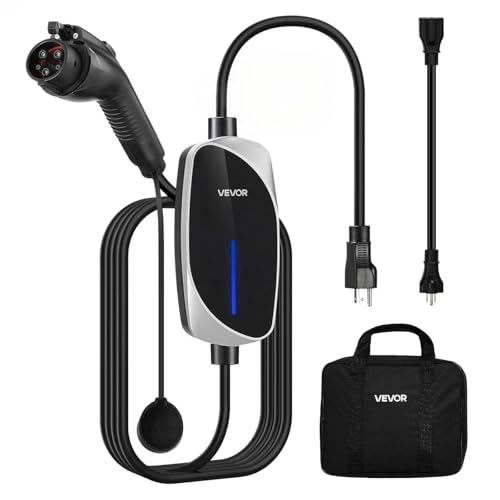
Budget chargers can be a little scary. You save money up front, then spend the next six months side-eyeing the control box every time you plug in. The VEVOR makes a stronger case than most low-cost entries because it still offers useful basics like ETL and FCC certification, a 25-foot cable, delay timer support, and IP66 protection. That is a pretty decent pile of features for shoppers trying to keep costs under control.
What makes it especially attractive is that it does not feel stripped bare. You still get dual-voltage use, basic current selection, and visible status monitoring. A new EV owner who just drained the wallet on registration, tires, and a home outlet check might appreciate a charger like this. It gets you charging without pushing you toward a premium price tier right away. The catch, of course, is that the interface and overall polish are more functional than refined.
Pros
- Very attractive entry-level pricing for the category
- 25-foot cable is generous for a budget charger
- ETL and FCC certification add peace of mind
- Delay timer and status indicators improve daily usability
- Works as both a Level 1 and Level 2 portable charger
Cons
- Only two current modes, 12A and 16A
- Fit and finish may not feel as polished as pricier rivals
- Brand trust is decent but not top-tier in EV charging
This is the pick for shoppers who need practical capability first and polish second. If you want a low-cost charger for occasional home charging, travel backup duty, or a starter setup before investing more, VEVOR makes sense. Buyers who plan to use one charger every single day for years may prefer stepping up to ELEGRP, DEWALT, or Lectron. Still, for budget-conscious value, this one is easy to keep on the shortlist.
To buy this product, click here.
7. Best For Travel Backup: Grasside Level 1&2 EV Charger
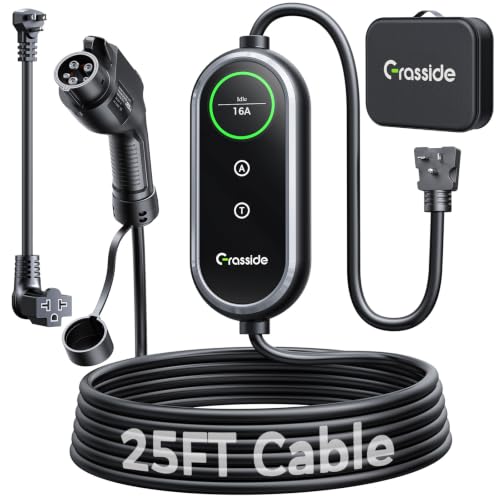
Some chargers are meant to live on a garage hook. Others are better as a trunk companion, ready for road trips, holiday visits, or that random weekend at a cabin where the charging situation is basically “there is an outlet by the porch.” The Grasside feels built for that second life. It offers a carrying case, a 25-foot cord, adjustable current, and a delay timer, so it can adapt to a surprising range of travel scenarios without feeling like dead weight in the cargo area.
That flexibility matters in the real world. Picture staying with relatives for three nights. You spot a usable outlet, run the cable across a neat little path to the car, and set a lower current because the circuit is older than your first smartphone. That is exactly the sort of scenario this charger handles well. The LCD gives enough information to confirm charging status without apps, and the rubberized connector plus UL-listed cable suggest it is meant for repeated handling rather than one perfect showroom setup.
Pros
- Excellent travel-backup feature set
- 25-foot cable helps in unfamiliar parking spots
- Adjustable current is useful on varied circuits
- Delay timer and LCD display improve flexibility
- Includes carrying case for easier storage and transport
Cons
- Brand is less established than Lectron or DEWALT
- IP65 rating is solid but not class-leading
- Controls require button presses that may take a minute to learn
Buy this if you want a charger that can bounce between home use and travel duty without complaint. It is especially handy for renters, frequent visitors, and drivers who like having a backup charger ready in the trunk. If your charger will never leave the garage, other options may offer better brand confidence or cleaner simplicity. For portable versatility, Grasside is a smart pick.
To buy this product, click here.
8. Best Heavy-Duty Build: DEWALT Level 1 & 2 Portable EV Charger

DEWALT enters the category with the same vibe its tools have carried for years. Rugged, jobsite-ready, and more concerned with taking a beating than looking elegant on a product page. If your charging setup is exposed to rough handling, cold snaps, busy family garages, or that chaotic corner where bicycles, ladders, and storage bins are constantly banging into each other, this charger makes immediate sense. The protective outer cage and anti-slip grip are small design choices that speak loudly about intended use.
It is also the kind of charger that reassures cautious buyers. A known brand, CSA certification, IP66 weather resistance, and a three-year limited warranty help justify the premium-ish positioning. Imagine a household where the charger gets unplugged, coiled up, tossed into the SUV, then dragged back into the garage next week. That sort of repeated use can expose weak spots quickly, and DEWALT is clearly aiming at buyers who want something tougher than the average generic travel unit.
Pros
- Rugged construction stands out in this category
- Known brand with strong support reputation
- 25-foot UL-certified cable is very practical
- CSA certification and IP66 rating inspire confidence
- Good option for heavy-use households and mixed indoor-outdoor charging
Cons
- Usually priced above many competitors
- No app control or advanced smart features
- Bulkier design may be overkill for light home use
This is a great fit for buyers who treat charging gear like equipment rather than a gadget. Contractors, multi-driver households, and outdoor chargers in rough climates should take a hard look here. If you only want a quiet little Level 1 charger tucked into a garage corner, it is probably more brawn than necessary. If toughness is your main priority, DEWALT is one of the strongest answers in the lineup.
To buy this product, click here.
9. Best Dedicated Backup Charger: AplysiaTech Portable EV Charger Level 1

This AplysiaTech model has a very specific appeal. It is for the driver who wants a straightforward Level 1 charger to keep at work, stash in the trunk, or leave at a second location without spending a fortune. There is no big touchscreen, no WiFi app, and no dual-voltage ambition here. It just aims to plug into a standard 110V outlet and provide 15A charging for J1772-equipped vehicles. That simplicity can actually be the whole point.
There is something nice about a charger that asks very little from you. Picture keeping one at the office, where you can grab a few hours of charge while you work, or carrying it on a trip where all you really need is an emergency overnight top-up. The included storage bag helps it stay organized instead of becoming a tangled trunk accessory buried under grocery totes and jumper cables. It is clearly a basic pick, but basic is sometimes exactly right.
Pros
- True Level 1 charger with simple plug-and-go use
- 15A output is solid for 110V charging
- 21-foot cable offers decent reach for a dedicated backup unit
- Portable design and storage bag make it easy to keep in the car
- Good choice for office, travel, or secondary-location charging
Cons
- No Level 2 capability
- Fewer advanced features than many competitors
- Less established brand and lighter feature depth overall
This charger makes the most sense as a backup or secondary unit rather than the most versatile long-term buy. Drivers who want one charger to grow with future 240V access should choose a dual-voltage model instead. But if you specifically want a simple 120V companion charger that can live in the trunk or at another property, AplysiaTech covers that niche well.
To buy this product, click here.
How To Choose The Right Level 1 EV Charger
Check Whether You Truly Want A Dedicated 120V Charger
Some buyers search for a Level 1 charger and really want a pure 120V plug-and-play unit. Others want a charger they can use on 120V now and 240V later. That is a huge difference. A dedicated Level 1 model like the standard Lectron or AplysiaTech keeps things simple and tidy. A dual-voltage charger like the ELEGRP or Raylix gives you more future flexibility if you later add a NEMA 6-20 outlet. If your setup is stable and you like less fuss, dedicated Level 1 works beautifully. If your charging situation may evolve, a combo unit gives you more runway.
Make Sure The Outlet And Connector Match Your Actual Setup
This is where people trip up. A charger may support both Level 1 and Level 2, but that does not mean it works with every outlet in your garage. Most Level 1 use centers on a NEMA 5-15 household plug. Many combo chargers include a NEMA 6-20 plug plus a 5-15 adapter. Read that part carefully. Also confirm your vehicle uses J1772, or that you already own the correct adapter for a Tesla. It is a frustrating moment when a shiny new charger arrives and the plug or connector does not match the charging plan you had in your head.
Think Hard About Cable Length
Cable length sounds boring until it ruins your week. A 16-foot cable may be fine in a tidy garage with the outlet right beside the front fender. A 25-foot cable can be a lifesaver in longer driveways, shared garages, or homes where the outlet is in the worst possible spot, which somehow happens all the time. If your parking position changes often, lean toward 21 to 25 feet. The extra slack can make nightly charging feel effortless instead of annoyingly precise.
Look For The Right Safety Signals
With EV charging gear, safety is part of the product, not a side detail. Certification marks like ETL or CSA are reassuring, especially for equipment that may stay plugged in for long sessions overnight. Weather resistance matters too. If the charger will ever touch rain, snow, dust, or a damp garage floor, IP65, IP66, or IP67 protection is worth paying attention to. A charger with overcurrent, overvoltage, overheating, and short-circuit protection gives you a sturdier margin of comfort while the car quietly charges through the night.
Decide Whether Smart Features Will Actually Help You
Some shoppers love app control, status displays, and delay timers. Others use them once and never again. Be honest about your habits. If you track off-peak utility rates, share circuits, or like seeing live charging data, smart features are genuinely useful. That is where options like the Lectron WiFi or Raylix shine. If you simply come home at 7 p.m., plug in, and leave at 7 a.m., those extra controls may not change your life much. A simpler charger can be easier to live with.
Balance Durability Against Price
There is a difference between a charger that survives occasional use and one that can handle years of coiling, uncoiling, trunk storage, cold mornings, and driveway charging. Outdoor users and frequent travelers should pay more attention to housing strength, connector grip, and cable durability. That is why DEWALT and ELEGRP stand out for tougher use cases. If your charger will live inside a calm garage and almost never move, you can often save money without sacrificing much.
Avoid Buying More Charger Than Your Routine Needs
The easiest mistake is buying a charger with every feature under the sun while your real routine is dead simple. If you drive short daily distances and charge overnight on a household outlet, a solid Level 1 unit may be all you need. If your commute is longer or you expect to upgrade your outlet later, then stepping into a dual-voltage model makes sense. Match the charger to the rhythm of your week, not the most impressive spec line on the page.
Best Level 1 EV Charger FAQ
Is a Level 1 EV charger enough for daily use?
For many drivers, yes. If you drive moderate daily miles and can leave the car plugged in overnight, Level 1 charging is often enough to keep up. It is especially workable for plug-in hybrids, shorter commutes, second vehicles, and drivers with regular home parking. If you drive long distances every day, Level 2 usually makes life easier.
How fast does a Level 1 EV charger charge?
Most Level 1 chargers on a standard 120V outlet add a modest amount of range per hour, often somewhere around a few miles per hour depending on the vehicle and amperage. A 15A Level 1 charger usually performs better than an 8A option, but it is still much slower than Level 2 charging. Think of it as steady overnight replenishment rather than a quick refill.
Can I use a Level 1 charger in any household outlet?
You can use one in a compatible standard outlet, usually NEMA 5-15, but the outlet should be in good condition and on a suitable circuit. Old, loose, or worn outlets can create problems. If you notice heat, discoloration, or inconsistent charging, stop and have the outlet checked by a qualified electrician. A healthy outlet matters just as much as the charger itself.
Are Level 1 and Level 2 combo chargers a good idea?
They can be an excellent idea if you want flexibility. A combo charger lets you use 120V now and switch to 240V later if your setup changes. That makes them attractive for renters, new EV owners, or buyers who expect to upgrade their home charging options. If you want the simplest possible everyday Level 1 experience, a dedicated 120V charger may still feel cleaner and easier.
Do Tesla owners need an adapter for these chargers?
For the products reviewed here, yes in most cases. These chargers use the J1772 standard, so Tesla owners typically need a compatible J1772-to-Tesla or J1772-to-NACS adapter, depending on their vehicle and setup. Check your specific vehicle and adapter compatibility before buying.
What cable length is best for a Level 1 EV charger?
A lot depends on where your outlet sits relative to the vehicle’s charging port. For a tight garage with a nearby outlet, 16 feet can work fine. For more awkward layouts, 21 to 25 feet is usually much easier. If you are unsure, longer is usually safer as long as the cable is well managed and stored properly.
Should I prioritize app control and timers?
Only if they fit your charging routine. App control is handy for remote status checks, and timers are useful if your electric utility offers cheaper overnight rates. If your routine is very simple, those features may be nice rather than necessary. A strong basic charger often provides a better ownership experience than a complicated one you barely use properly.
What is the biggest mistake people make when buying a Level 1 EV charger?
The biggest mistake is buying without checking the full setup. People focus on the charger listing and forget to verify outlet type, cable length, vehicle connector compatibility, and whether the charging speed actually suits their daily mileage. A charger can look perfect online and still be wrong for the driveway, garage, or commute it will face every day.
Final Verdict
Out of these nine picks, the Lectron Level 1 EV Charger is the one I would point most people toward first. It captures what makes a strong Level 1 charger worth buying in the first place. It is focused, easy to use, properly safety-minded, and built for the steady overnight charging routine that a lot of EV owners rely on. If your goal is simple 120V charging without extra fuss, it is the cleanest answer in the group. For shoppers spending less, the VEVOR Level 1&2 EV Charger is the budget-friendly place to start, while the Lectron Level 1 J1772 Charger (WiFi Version) is the premium pick for people who want remote monitoring and a little more convenience built in.
The best choice, though, comes down to your actual parking and charging life. A long driveway points toward a 25-foot model. Rough outdoor use points toward DEWALT or ELEGRP. Shared circuits and off-peak charging make adjustable-current units more attractive. Travel-heavy drivers may get more value from a portable backup-focused option like Grasside or AplysiaTech. Match the charger to your outlet, your vehicle, your cable reach needs, and the number of miles you drive in a normal week. Get those pieces right, and even slow-and-steady Level 1 charging can feel surprisingly easy.