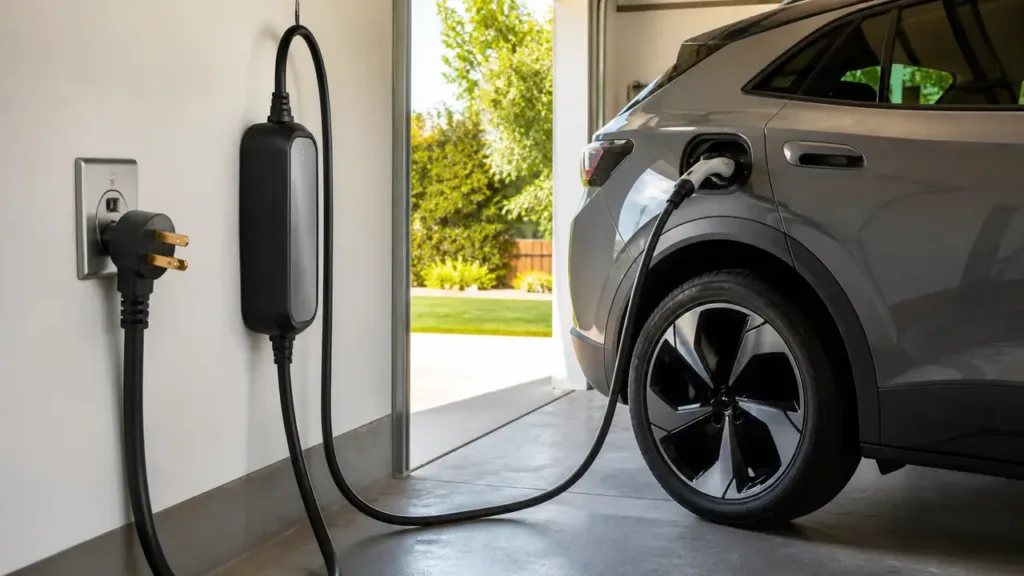
Picture the usual Tuesday night garage scene. You pull in with 18 percent battery left, toss your bag on the passenger seat, and want one simple thing: plug in, walk away, wake up charged. That is exactly why so many shoppers hunt for the best EV charger with NEMA 14-50 plug. A plug-in Level 2 charger gives you faster home charging without committing to a permanent hardwired install right away, and for plenty of households that flexibility feels like a small luxury every single evening.
The catch is that buyers often make a few messy mistakes. Some grab the cheapest unit and forget to check connector type. Others assume every NEMA 14-50 charger delivers the same power, cable reach, weather resistance, and app control. Then there is the classic headache of buying a Tesla-focused charger for a J1772 vehicle, or the reverse, and realizing the whole setup needs an extra adapter before the first charge even starts. The details matter here. Amperage, safety certifications, cable length, weather sealing, scheduling features, and whether you want portable or wall-first use all shape the real ownership experience.
Different drivers want different things. A Tesla owner with a driveway in snow country has different priorities than a Bolt owner in a mild-climate garage, and a traveler who wants to toss the charger in the trunk thinks differently from someone building a polished home charging station. After comparing the current options, the ChargePoint HomeFlex stands out as the top overall pick for most households because it blends trusted brand reputation, smart features, strong charging performance, and a polished everyday experience without feeling fussy.
If you want the highlights fast, the quick picks and comparison table below make it easy to size up the top options in a minute or two.
Quick Picks
- Best Overall: ChargePoint HomeFlex
- Best Budget Pick: Junsun Level 1&2 EV Charger
- Best Premium Option: EVIQO NACS Charger
- Best Value Choice: ELEGRP Level 2 EV Charger
Best EV Charger With NEMA 14-50 Plug Comparison Table
| Product | Best For | Main Strength | Key Specs |
|---|---|---|---|
| ChargePoint HomeFlex | Most homeowners | Trusted smart charging ecosystem | J1772, up to 240V Level 2, NEMA 14-50, app control |
| Junsun Level 1&2 EV Charger | Budget shoppers | Dual-voltage flexibility | J1772, up to 32A, 20 ft cable, NEMA 14-50 plus 5-15 adapter |
| EVIQO NACS Charger | Tesla owners wanting premium features | Strong certifications and smart app tools | NACS, 40A, 25 ft cable, WiFi, IP66/NEMA 4 |
| ELEGRP Level 2 EV Charger | Value-focused buyers | 40A performance with strong weather rating | J1772, 40A, 25 ft cable, ETL, IP67 |
| TLE LEVEL Level 2 EV Charger | First-time home charging setups | Easy plug-and-play use | J1772, 40A, 25 ft cable, LED screen, IP66/NEMA 4 |
| AIMILER Level 2 Tesla Charger | Tesla drivers on a tighter budget | NACS connector with app scheduling | NACS, 32A, 25 ft cable, WiFi app, ETL |
| Lectron Level 2 EV Charger | Portable charging with brand familiarity | Simple 40A travel-friendly setup | J1772, 40A, 16 ft cable, ETL, IP65 |
| 50 Amp EV Power Outlet Box | Outdoor outlet installations | Lockable weatherproof NEMA 14-50R housing | 50A receptacle box, Type 3R enclosure, ETL listed |
| Suplevel 6-50P to 14-50R Adapter Cord | Existing 6-50 outlet conversions for EV use | Heavy-duty EV-specific adapter | 50A, 250V, 6 AWG, ETL listed, 1 ft cord |
If you want the full story, the reviews below show where each option shines, where it falls short, and which driver it fits best.
1. Best Overall: ChargePoint HomeFlex

Some chargers feel like a gadget. The ChargePoint HomeFlex feels like part of a solid home EV routine. That difference matters more than the spec sheet sometimes suggests. If you are plugging in five nights a week after work, you want something that feels settled, steady, and easy to live with. ChargePoint has built a strong reputation in public charging, and that shows up here in the app polish, support structure, and overall confidence this unit gives off from day one.
For a lot of drivers, the sweet spot is a charger that moves well beyond a basic cord without becoming a hassle to configure. This one lands there nicely. You get Level 2 charging through a NEMA 14-50 outlet, support for J1772 vehicles, and app-based controls for reminders, energy data, and smart-home integrations. Picture a cold morning where you check charging status from the kitchen while coffee drips, or a late-night arrival where you want to confirm charging started without walking back into the garage. That is the sort of everyday convenience that makes HomeFlex easy to recommend.
Pros
- Well-known brand with strong support and a mature charging ecosystem
- Useful mobile app for scheduling, monitoring, and notifications
- Strong Level 2 charging performance for most home setups
- UL-certified design for added peace of mind
- Works for most non-Tesla EVs out of the box, Tesla with adapter
Cons
- Usually costs more than basic plug-in chargers
- Best features depend on using the app regularly
- Tesla owners need an adapter
Buy this if you want the most balanced pick in the group and care about long-term daily ease more than shaving every possible dollar off the purchase. Skip it if your main goal is getting the cheapest 14-50 charger that can still fill a battery overnight. The HomeFlex works best for households that want dependable smart charging from an established name, and that is why it earns the top spot here. To buy this product, click here.
2. Best Budget Pick: Junsun Level 1&2 EV Charger

If your goal is simple, affordable charging without a lot of drama, the Junsun earns a real look. Budget chargers can feel like a coin toss, but this one brings a practical angle that many first-time EV owners will appreciate. It supports both Level 1 and Level 2 charging, which means you can keep using it if your living situation changes. That is handy for renters, new EV owners, or anyone who is still figuring out whether their garage setup will stay the same a year from now.
The day-to-day appeal is flexibility. You can use the NEMA 14-50 plug for faster 240V charging at home, then keep the included Level 1 option in the trunk for backup charging at a relative’s place or a vacation rental. That backup-plan feeling is underrated. Plenty of drivers sleep better knowing they have a charger that can adapt if plans go sideways. The 20-foot cable is serviceable for most garages, and the LED display gives enough feedback to avoid the blind “hope it’s charging” routine that cheap units sometimes create.
Pros
- Lower entry cost than many 14-50 plug chargers
- Supports both Level 1 and Level 2 charging
- Adjustable current settings add flexibility
- Portable design works well for travel or backup use
- LED display provides useful real-time charging info
Cons
- 32A max is slower than the strongest 40A options here
- 20-foot cable is decent, though not especially long
- Brand reputation is less established than top-tier competitors
This is the right pick for shoppers who want to keep costs under control while still getting a real Level 2 home charging experience. It is also a smart fit for someone moving from hybrid to full EV ownership and wanting a charger that can serve multiple roles. If you want the slickest app experience or the heaviest-duty premium build, spend more. If you want value with useful flexibility, this one punches above its range. To buy this product, click here.
3. Best Premium Option: EVIQO NACS Charger

For Tesla owners who want a cleaner, more finished home charging setup, the EVIQO stands out fast. This is the sort of charger you buy after getting tired of compromise. Maybe you started with a basic mobile connector and realized your driveway routine needed something sturdier, smarter, and better sealed against rough weather. The EVIQO leans into that higher-end lane with a native NACS connector, 40A output, WiFi tools, and a body that looks built for years of daily use.
What makes it feel premium is the little stuff stacked on top of the core charging performance. The app handles current adjustment, reminders, usage tracking, and off-peak scheduling. The weatherproof build is rated for outdoor conditions, and the 25-foot cable gives the kind of reach that saves arguments over who parks where. One genuinely useful touch is the fluorescent holster, which sounds gimmicky until you are fumbling in a dark garage after a late grocery run and the connector is suddenly easy to spot. That sort of practical detail sticks with you.
Pros
- Native NACS connector is ideal for Tesla owners
- 40A charging with smart app controls and scheduling
- Strong certification and weatherproof credentials
- Long 25-foot cable improves parking flexibility
- Three-year warranty adds confidence
Cons
- Costs more than most plug-in options in this roundup
- J1772 vehicles need a separate adapter
- Smart features rely on 2.4 GHz WiFi
Choose this one if you have a Tesla or another NACS-based vehicle and want a more polished permanent-feeling charging setup without giving up the convenience of a NEMA 14-50 plug. Pass if you drive a J1772 vehicle and do not want adapter hassle. Among premium Tesla-friendly chargers in this format, this one feels thoughtfully equipped and easy to live with. To buy this product, click here.
4. Best Value Choice: ELEGRP Level 2 EV Charger

Value picks are tricky because “cheap” and “worth buying” are not the same thing. The ELEGRP gets that balance right better than most. It delivers 40A charging, adjustable current, a long 25-foot cable, and an especially strong IP67 weather rating, all while staying in a range that still makes sense for buyers who do not want to splurge. That combination gives it real bite in this category.
Think about the owner who parks outside some nights, inside others, and needs a charger that can take real-life mess. Rain blowing sideways, slush in winter, heat radiating off a driveway in July. That is where this charger starts to make a lot of sense. It is portable enough to stay flexible, but the feature set is strong enough that it does not feel like a throwaway starter unit. The adjustable amperage is useful too. If your electrical setup changes or you are matching a specific circuit, being able to dial output down helps keep things sane instead of forcing a one-size-fits-all approach.
Pros
- Very appealing mix of performance, reach, and price
- 40A output with adjustable current levels
- 25-foot cable is generous for garages and driveways
- IP67 weather rating is excellent for outdoor exposure
- Broad J1772 compatibility across many EVs and PHEVs
Cons
- Tesla drivers need a separate adapter
- App-centric smart features are more limited than premium rivals
- Newer product with less long-term market history than ChargePoint
This is a great fit for buyers who want more than bare-bones charging but are still watching the budget. It is especially strong for practical homeowners who care about cable length, weather resistance, and adjustable power more than fancy software. If that sounds like your kind of setup, the ELEGRP is one of the smartest buys in this lineup. To buy this product, click here.
5. Best For Beginners: TLE LEVEL Level 2 EV Charger

One reason this option stands out is how approachable it feels. A lot of first-time buyers are not looking for a charger that turns the garage into a tech project. They want to plug into a NEMA 14-50 outlet, set a current level that matches their circuit, maybe schedule off-peak charging, and get on with the evening. The TLE LEVEL charger makes a good first impression for exactly that crowd.
The 40A output and 25-foot cable hit a very practical sweet spot. In the real world, that cable length matters more than people expect. You notice it the first time you pull in crooked because it is raining hard, or the second car is already in the “good” garage spot, and you still need to reach the charge port without a weird stretch. The built-in screen also helps beginners feel less lost. You can actually see charging details rather than guessing from a blinking light and hoping everything is fine.
Pros
- Easy plug-and-play setup for homes with a 14-50 outlet
- 40A charging is strong for the price class
- 25-foot cable adds helpful reach
- Adjustable current and scheduling improve flexibility
- IP66 and NEMA 4 protection support indoor or outdoor use
Cons
- Brand is less proven than major established names
- Tesla owners need an adapter
- Warranty period is decent, though not class-leading
Buy this if you are setting up home charging for the first time and want a charger that feels straightforward instead of intimidating. It is a strong middle-ground option for J1772 drivers who want solid power and useful features without jumping into premium pricing. More experienced shoppers who want a deeper app ecosystem may lean elsewhere, but beginners should find this one refreshingly simple. To buy this product, click here.
6. Best For Tesla Owners On A Budget: AIMILER Level 2 Tesla Charger

For buyers who prioritize Tesla compatibility without climbing into premium pricing, the AIMILER makes a convincing case. It uses a native NACS connector, offers 32A charging, and adds WiFi app control plus a touch screen. That is a pretty appealing stack for Tesla drivers who want something more advanced than a super-basic portable cord but still want to keep spending reasonable.
Its personality is practical rather than fancy. The 25-foot cable helps with awkward parking, and the adjustable amperage makes it easier to match a 20A, 30A, or 40A circuit. That matters in older homes where the garage wiring situation is less than glamorous. Imagine moving into a place with a preexisting outlet, then realizing you need something adaptable instead of max-power-or-bust. This charger is built for that kind of middle-ground reality. The app can also handle scheduling and cost tracking, which is useful if you are chasing cheaper overnight rates.
Pros
- Native NACS connector for Tesla vehicles
- More affordable than many Tesla-focused smart chargers
- Adjustable 16A to 32A output supports different circuits
- 25-foot cable is generous for daily use
- App and screen both provide charging controls
Cons
- Max 32A output is slower than 40A rivals
- J1772 vehicles need a separate Tesla-to-J1772 adapter
- WiFi setup may take patience on some home networks
This is a smart buy for Tesla households that want native connector convenience and decent app features without drifting into the top pricing tier. Skip it if you want the fastest 40A Tesla-ready charging or the strongest brand pedigree in the bunch. For a budget-conscious Tesla setup, though, it covers the basics with enough polish to feel like a thoughtful purchase. To buy this product, click here.
7. Best For Portable Simplicity: Lectron Level 2 EV Charger

This model earns a place because it keeps things refreshingly uncomplicated. The Lectron is the kind of charger you buy if you want known-brand familiarity, 40A charging, and a portable form that still feels sturdy enough for regular use. There is no huge software pitch here. It is more about reliable plug-in charging with basic convenience and broad J1772 compatibility.
That simplicity works well for a certain buyer. Say you split time between two locations, or you like the idea of keeping a capable charger ready for travel without lugging around something clunky. The 16-foot cable is shorter than several rivals here, which is the obvious compromise, but the flip side is a setup that can feel more manageable and less spaghetti-like in smaller garages. Some people genuinely prefer that. Less cable to coil, less cable to drag through slush, less cable hanging everywhere.
Pros
- 40A Level 2 charging with a familiar brand name
- Portable design works for home or occasional travel
- ETL certification and Energy Star support confidence
- Simple plug-in use with J1772 compatibility
- IP65 protection supports varied conditions
Cons
- 16-foot cable is shorter than many competitors
- Feature set is more basic than app-rich smart chargers
- Tesla requires an adapter
Pick the Lectron if you value a straightforward experience and do not need heavy app integration. It is especially good for tighter garage layouts or drivers who want a capable charger they can move around more easily. If you need maximum reach or deeper smart controls, there are better fits above. For clean, no-fuss portability, this one deserves its spot. To buy this product, click here.
8. Best For Outdoor Outlet Protection: 50 Amp EV Power Outlet Box
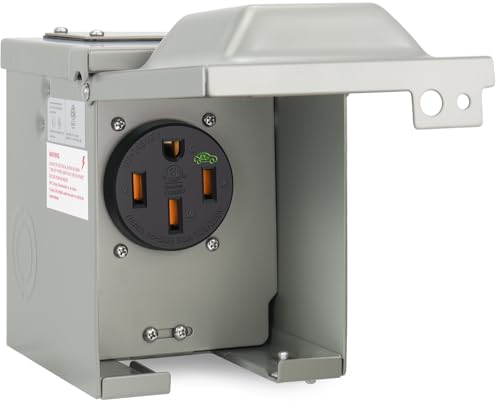
This one is the outlier in the lineup, and it belongs here because some buyers searching for a NEMA 14-50 charger setup are really solving a bigger problem. They do not just need the charger. They need the outdoor receptacle solution that makes a plug-in charger usable in the first place. If your driveway charging plan involves weather, security concerns, or a clean professional-looking install, a lockable outlet box can be the missing piece.
Think of the homeowner with a charger already picked out, standing outside with an electrician, staring at an exposed wall and trying to avoid a janky final result. That is where this weatherproof box makes sense. It provides a NEMA 14-50R receptacle inside a protective enclosure, with enough room for heavier wiring and enough clearance to close the door while a plug is connected. The anti-theft angle is useful too. In a shared or exposed area, keeping the outlet protected and lockable can save a lot of annoyance.
Pros
- Useful companion product for outdoor NEMA 14-50 charging setups
- Lockable weatherproof enclosure adds security
- Designed for 50A EV charging receptacle use
- Plenty of internal space for wiring and larger plugs
- Can help create a cleaner, more durable outdoor installation
Cons
- This is an outlet box, not a charger
- Installation may require an electrician for many households
- Only relevant for buyers building or upgrading the outlet side of the setup
Buy this if your charging problem starts at the wall, not at the EVSE. It is best for homeowners building an outdoor 14-50 charging point and wanting something sturdier than a plain exposed receptacle. If you already have a good outlet and only need the charger itself, skip this and focus on the actual EVSE picks above. For the right buyer, though, this solves a very real pain point. To buy this product, click here.
9. Best For Existing 6-50 Outlets: Suplevel 6-50P to 14-50R Adapter Cord

Here is another specialty pick that earns its keep for a very specific reason. Plenty of garages already have a NEMA 6-50 outlet from a welder or similar equipment, and the owner wants to use a 14-50 plug EV charger without rewiring immediately. That is where the Suplevel adapter steps in. It is clearly marketed for EV use, uses heavy 6 AWG wire, and avoids the “random generic adapter from nowhere” feeling that makes people nervous around high-amperage charging.
Real life gets messy with home electrical setups. Maybe you bought a house and found a 6-50 outlet already in place. Maybe your charger deal was too good to pass up, but it came with a 14-50 plug. In that moment, an EV-specific adapter can feel like a small rescue. The key here is using it properly and respecting the stated current guidance. This is not a magic pass to ignore circuit limits. It is a focused tool for a focused job, and used correctly, it can save time, money, and contractor hassle.
Pros
- Useful solution for garages with an existing 6-50 outlet
- EV-focused design instead of a general-purpose adapter
- Heavy-duty 6 AWG construction inspires more confidence
- ETL listed for added reassurance
- Compact cord length keeps the setup tidy
Cons
- This is an adapter, not a charger
- Requires careful current management and circuit awareness
- Only relevant for a narrow use case
This is the right pick for buyers trying to bridge the gap between an existing 6-50 outlet and a 14-50 EV charger. It is not for someone starting fresh with no outlet plan, and it is definitely not for RV use. For the right garage setup, though, it is a practical, heavy-duty workaround that can keep your charging project moving instead of stalling out. To buy this product, click here.
How To Choose The Right EV Charger With NEMA 14-50 Plug
Connector Type Comes First
This is the first fork in the road, and people still get tripped up by it all the time. Most non-Tesla vehicles use J1772, while many Tesla-focused chargers use NACS. If you buy the wrong connector type, you may still make it work with an adapter, but that adds cost and one more thing to keep track of. The easiest buying experience is matching the charger to your vehicle’s port from the start. If your household may switch brands later, think about whether you prefer a native connector now or more universal compatibility.
40A Vs 32A Changes The Daily Rhythm
On paper, 32A and 40A can look close enough. In practice, the difference can matter if you drive a lot and routinely come home with a low battery. A 40A charger gives you more breathing room overnight and feels more relaxed for higher-mileage commutes. A 32A model can still be perfectly fine for moderate use, especially if your car sits parked for long stretches. Think about your real routine. School drop-offs, errands, late-night returns, weekend road trips. That rhythm tells you more than a spec sheet ever will.
Cable Length Is A Bigger Deal Than Most Shoppers Expect
A charger can be excellent and still become annoying if the cable is too short. A 25-foot cable often feels much easier in shared garages, longer driveways, or homes where one car blocks another. Shorter cables can work well in tight, predictable setups and can feel cleaner to store. Picture a rainy night with the car parked a little off-angle. That is when extra reach suddenly feels glorious. Measure first, then buy.
Portable And Wall-Mounted Designs Serve Different Habits
Some drivers want a charger that mostly stays mounted but can unplug if needed. Others want something they can toss in the trunk for trips, second homes, or changing living situations. Portable models give flexibility, though they sometimes feel a little more temporary. Wall-oriented chargers can feel neater and more settled in a permanent garage setup. There is no universal winner here. The right answer depends on whether you move often, travel often, or simply like a clean garage wall with everything in its place.
Weather Resistance And Certifications Matter
If the charger will live outdoors or even in a damp carport, weather sealing should be high on your list. IP65, IP66, or IP67 ratings can make a real difference over time. Safety certification matters too. High-amperage charging is not where most people want to get adventurous. A charger with solid certification and a strong enclosure tends to inspire more confidence every time you plug in during rain, dust, or winter cold.
Smart Features Are Nice, But They Should Solve A Real Problem
App control, scheduled charging, cost tracking, and notifications can be genuinely useful. They help if your utility offers cheaper overnight rates or if you like monitoring energy use from your phone. Still, some apps are smoother than others, and some buyers will barely open them after the first week. Ask yourself what you will actually use. If all you want is reliable overnight charging, a simple screen and manual current adjustment may be plenty. If you love data and routine automation, a stronger smart charger becomes easier to justify.
Do Not Ignore The Outlet And Circuit
This is where a lot of charging plans wobble. A NEMA 14-50 plug charger still depends on having the correct receptacle and circuit behind it. Some buyers also need a weatherproof box, while others need an adapter for an existing 6-50 outlet. The charger is only half the setup. Before buying, confirm what outlet you already have, what circuit supports it, and whether your chosen amperage actually fits that electrical reality. A five-minute check here can save hours of frustration later.
Best EV Charger With NEMA 14-50 Plug FAQ
Is a NEMA 14-50 plug EV charger faster than a standard wall outlet charger?
Yes. A NEMA 14-50 setup typically supports Level 2 charging on 240V, which is much faster than a standard 120V wall outlet. For many drivers, that means waking up to a much fuller battery instead of creeping along overnight with Level 1 charging.
Do all NEMA 14-50 EV chargers deliver the same charging speed?
No. Charging speed depends on the charger’s amperage, your vehicle’s onboard charger, and the circuit feeding the outlet. A 40A charger can usually deliver more power than a 32A model, but your vehicle must also be able to accept it for the difference to matter.
Can Tesla vehicles use a NEMA 14-50 plug charger?
Yes, but compatibility depends on the connector. A Tesla-ready NACS charger works directly with Tesla vehicles. A J1772 charger can also work if you use the proper adapter. Many Tesla owners already know this drill, but it is still worth double-checking before buying.
Is a plug-in charger better than a hardwired charger?
For many households, a plug-in charger is easier to install and easier to replace or move later. Hardwired chargers can look cleaner and may suit some permanent setups better. If flexibility matters, a NEMA 14-50 plug-in model is often the easier path.
Can I use a NEMA 14-50 EV charger outdoors?
Many models are built for outdoor use, but you need to check the weather rating. Look for solid protection ratings such as IP65, IP66, or IP67, and make sure the outlet itself is properly installed and protected if exposed to the elements.
What is the difference between J1772 and NACS chargers?
J1772 is the common connector standard for many non-Tesla EVs and plug-in hybrids. NACS is used by Tesla and is appearing on more vehicles. The charger has to match your vehicle’s port, or you will need an adapter to make it work.
Do I need an electrician for a NEMA 14-50 plug charger?
If you already have a properly installed EV-ready NEMA 14-50 outlet, maybe not. If you need a new outlet, a circuit upgrade, or an outdoor receptacle box, an electrician is usually the safest route. The charger may be plug-and-play, but the outlet behind it still matters.
Are adapter cords safe for EV charging?
They can be, if they are specifically built for EV use, correctly rated, and used within the proper current limits. Cheap or poorly matched adapters are a bad gamble. If you need one, choose an EV-specific model and make sure your circuit setup matches the charger’s needs.
Final Verdict
If you want the best all-around pick, the ChargePoint HomeFlex is the one most buyers should start with. It combines strong charging performance, a polished app, trusted brand backing, and a daily-use experience that feels smooth instead of clunky. For budget-focused shoppers, the Junsun Level 1&2 EV Charger gives you welcome flexibility at a friendlier cost, while the EVIQO NACS Charger is the premium choice for Tesla owners who want a sharper, more feature-rich setup. The ELEGRP Level 2 EV Charger also deserves serious attention because its mix of 40A power, weather resistance, and value is plain hard to ignore.
The right charger depends on how you actually live with your EV. Check your connector type first, then look hard at amperage, cable length, installation reality, and whether smart features will truly help your routine. If your outlet or circuit situation is the weak link, the outlet box or adapter options in this roundup may solve the real problem faster than swapping chargers again and again. Match the charger to your car, your garage, and your habits, and your nightly charging routine gets a whole lot quieter, easier, and less annoying.