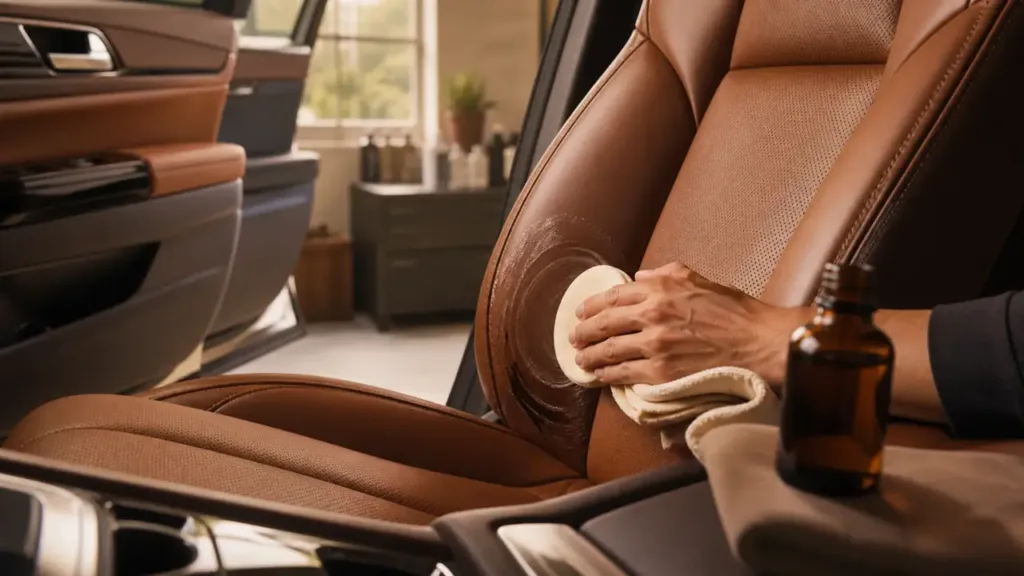
Leather seats can make a car feel grown-up and luxurious, but they demand a little TLC to stay that way. Drivers hunt for the best leather conditioner for cars because untreated leather dries, cracks, and fades under sunlight and body oils. People often make two common mistakes: skipping cleaning before conditioning, which traps dirt under the product, and reaching for heavy wax or oil-based treatments that seal pores and leave sticky residue. Those missteps shorten seat life and give leather an unnatural sheen instead of a supple finish.
What matters when choosing a conditioner depends on your priorities. If you commute in a sunny climate, UV protection and UV-stable formulas matter. If you care about preserving color and avoiding darkening, choose a water-based, non-darkening product. Budget shoppers want easy sprayers or two-step kits that simplify maintenance, while detailers look for concentrated formulas that penetrate and restore. My top overall pick is a proven penetrating conditioner that balances long-lasting protection with non-greasy feel.
If you are pressed for time, the comparison table below gives a fast snapshot of the nine top options and what each one does best. Click any product name to jump straight to its full review below.
Best Leather Conditioner For Cars Comparison Table
| Product | Best For | Main Strength | Key Specs |
|---|---|---|---|
| Leather Honey Leather Conditioner (8 oz) | Long-Lasting Protection | Deep-penetrating, long-lasting | 8 fl oz. Water-repellant, non-toxic |
| Chemical Guys Leather Cleaner & Conditioner Kit (2×16 oz) | Complete Two-Step Care | Cleaner + conditioner system | 2×16 fl oz. pH-balanced kit |
| Meguiar’s Gold Class 3-in-1 Spray (15.2 oz) | Quick Maintenance | One-step clean/condition with UV protection | 15.2 oz spray. Non-greasy |
| Weiman Leather Cleaner & Conditioner (12 oz) | Sun-Protection Focus | UV defense and no residue | 12 oz. UV protection |
| Bickmore Bick 4 Leather Conditioner (8 oz) | No Darkening | Wax-free, will not darken | 8 oz. Wax-free formula |
| Leather CPR Cleaner and Conditioner (18 oz) | Heavy Restore | One-step restoration, matte finish | 18 oz. Water-based, non-toxic |
| Chemical Guys Vintage Series Conditioner (16 oz) | Detailer Favorite | Deep conditioning without greasiness | 16 oz. Penetrating oils |
| Griot’s Garage Leather 3-in-1 Spray (22 oz) | Spray-and-wipe Convenience | 3-in-1, beeswax-infused | 22 oz. Spray. Feeder oils + wax |
| Lexol Leather Conditioner & Cleaner Kit (8 oz each) | Two-Step Regimen | Trusted cleaner and conditioner pair | 2×8 oz. Includes applicator sponges |
If you want a closer look at each option, the reviews below dig into how these products perform on real car seats and which buyers will get the most value from them.
1. Best Overall: Leather Honey Leather Conditioner, 8 Fl Oz

One reason this option stands out is its ability to get under the surface and stay there. Leather Honey is a dense, penetrating conditioner that targets dry automotive leather and keeps it supple for months. In practice that means fewer maintenance sessions. I recall treating a ten-year-old winter-beaten sedan seat that felt papery; one application softened the grain and eliminated the brittle creaks that greeted every driver. The product is odorless, so it won’t clash with your car’s interior scent.
For people who dislike greasy finishes, Leather Honey performs quietly. It’s not a quick spray-on gloss; it soaks in and leaves leather hydrated without shine. I used it on a pale leather interior that had coffee rings and light scuffs; after cleaning and a single treatment the stains faded and the seat looked replenished rather than glossy. This formula is pH balanced and free from silicones and common solvents, which appeals if you worry about chemicals touching your upholstery or pets hopping in the car.
Pros
- Penetrating formula lasts a long time—fewer reapplications.
- Non-sticky, odorless finish that repels water.
- Safe for a wide range of leather types (not suede or nubuck).
- Long track record and American-made reputation.
- pH balanced and free from harsh solvents and PFAS chemicals.
Cons
- Thicker formula can take longer to work in compared with sprays.
- Not suitable for suede, nubuck, or unfinished leathers.
- Requires initial cleaning beforehand for best results.
Leather Honey is best for owners who want infrequent maintenance and deep restoration. If you park outdoors a lot or have older seats showing dryness, this is a great fit. It’s less ideal if you want immediate shine or need a spray-on product for spot-treating while on the go. Compared to quick detail sprays, this provides longer protective benefits and a more natural hand, so choose Leather Honey when durability and health of leather trump instant gloss.
To buy this product, click here.
2. Best Kit: Chemical Guys Leather Cleaner and Conditioner Kit (2×16 oz)
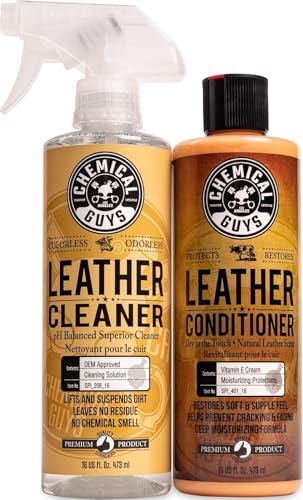
For buyers who prioritize a complete routine, this two-bottle kit earns its place. The cleaner lifts embedded dirt and oils that accumulate from daily commutes, and the conditioner follows with hydration that restores suppleness. I used this kit on a family SUV that had marker scuffs and kid snacks baked into seams; the cleaner loosened the grime without harsh scrubbing, and the conditioner smoothed the grain and reduced surface cracking. The kit’s step-by-step approach helps avoid the common mistake of applying conditioner over dirty leather.
The formula pair is pH-balanced and safe for most sealed leathers, so detailers and DIYers can use it across a range of surfaces. One evening I cleaned a leather jacket and then treated the car seats with the conditioner; both looked refreshed without feeling slick. The bottles are generous, making this a convenient purchase for someone who wants to maintain every leather surface in their home and vehicle without reordering constantly.
Pros
- Complete two-step system simplifies routine maintenance.
- Generous bottle sizes suitable for multiple treatments.
- pH-balanced, gentle formulations safe on many finished leathers.
- Versatile uses beyond cars, including furniture and apparel.
- Trusted brand among enthusiasts and detailers.
Cons
- Requires time and a bit of technique—clean before conditioning.
- Cleaner can be foamy on heavily soiled surfaces and may need repetition.
- Not formulated for suede or unfinished leather.
This kit is ideal for drivers who prefer a reliable routine rather than one-step conveniences. Buy it if you want methodical maintenance and a product pair that works across household leather. Skip it if you favor quick sprays or need a product specifically labeled for suede or exotic leather finishes. Its strength is a balanced approach that prevents trapped dirt from being sealed under conditioner.
To buy this product, click here.
3. Best Quick Maintenance: Meguiar’s Gold Class Rich Leather Cleaner and Conditioner 3-in-1 Spray

If your priority is speed and convenience, Meguiar’s 3-in-1 spray is a go-to. It cleans, conditions, and provides UV protection in a single pass, making it perfect for a quick touch-up before a weekend drive or a last-minute car sale. I’ve used this spray between longer detailing sessions to remove light soils and restore a soft hand. On a summer road trip, a quick wipe with this spray made the driver seat feel refreshed after several days of beach sand and sunscreen transfer.
The non-greasy formula and aloe enrichment leave a natural look, not an artificial shine. For everyday drivers who maintain their cars weekly or biweekly, this is a practical choice. It’s also easy to apply with a microfiber towel—spray, wipe, and you’re done. That simplicity makes it a popular pick for people who dislike multi-step regimens but still want solid protection against sun damage.
Pros
- One-step spray cleans and conditions quickly.
- Built-in UV protection helps slow fading and drying.
- Non-greasy, leaves no white residue when wiped properly.
- Convenient spray bottle for spot treatments and quick touch-ups.
- Good value for routine maintenance between deep conditioning sessions.
Cons
- Less penetrating than heavier conditioners for very dry leather.
- Not a substitute for a deep clean when leather is heavily soiled.
- May require follow-up on stubborn stains.
Meguiar’s 3-in-1 is perfect for busy drivers who need fast upkeep and UV defense without fuss. It performs best as an interim maintenance product rather than a restorative treatment. Choose this spray when you want quick results and an easy application; choose a deeper conditioner if your seats are cracked, dull, or very dry.
To buy this product, click here.
4. Best for UV Protection: Weiman Leather Cleaner & Conditioner (12 Fl Oz)

For drivers who park outdoors under harsh sunlight, UV protection often tops the priority list. Weiman’s formula contains sunblock elements to slow fading and cracking, which matters if you live in hot, sunny climates. I tested this product on a leather interior that spends a lot of time in direct sun; after regular monthly applications the leather retained color and showed fewer hairline cracks compared with untreated seats. The cleaner and conditioner pairing removes grime before sealing protective ingredients into the leather.
Weiman is gentle and leaves no sticky residue, so it’s comfortable for daily use. One afternoon I used it to revive a rental-car seat that had a dull, chalky finish from long-term exposure; the result was a restored, supple look without an oily film. The brand focuses on ease of use, making this a practical pick for weekend DIYers who want protection plus simple application.
Pros
- Formulated with UV protection to guard against sun damage.
- Leaves no greasy residue and maintains a natural appearance.
- Safe for most finished leathers and versatile for home use.
- Good balance between cleaning power and conditioning.
- Easy to apply for routine care.
Cons
- Not formulated for suede or unfinished leather.
- May need multiple passes on heavily soiled surfaces.
Pick Weiman if sun-exposure is your main concern and you prefer a product that won’t leave a fake shine. It’s especially useful for vehicles parked outdoors or left by the beach. If you require deep restoration for brittle seats, consider a penetrating conditioner as an occasional supplement.
To buy this product, click here.
5. Best For Preserving Color: Bickmore Bick 4 Leather Conditioner (8 oz)

If you drive a car with light-colored leather or valuable seats you don’t want to darken, Bickmore Bick 4 is a classic choice. Its wax-free formula is formulated to condition without darkening the hide or sealing pores. I treated a tan leather interior that had patchy, darkened spots from prior oil-heavy products; after cleaning and Bick 4 the color matched across panels and the leather regained flexibility without appearing darker. This feature matters if you want to preserve original shade and patina.
Bick 4 is breathable and won’t leave a gummy film, which helps surfaces avoid accumulating dust. An anecdote from detailing a friend’s vintage convertible: application left the seats feeling soft, and the owner appreciated that the leather kept its original tone when sunlight hit it. For collectors or owners of light leather, the non-darkening attribute is a key differentiator.
Pros
- Will not darken leather; preserves original color.
- Wax-free and breathable formula maintains leather flexibility.
- Simple, one-step application—no buffing required.
- Long-standing reputation and made in the USA.
Cons
- Less water-repellent than some treatment-focused conditioners.
- May not penetrate as deeply as heavier oil-based restorers on very dry leather.
Choose Bick 4 when color preservation is critical, such as with light interiors or classic cars where original appearance matters. It’s an excellent maintenance product for regular use, though if seats are already brittle, add a deep-penetrating conditioner periodically to restore lost oils.
To buy this product, click here.
6. Best One-Step Restore: Leather CPR Cleaner and Conditioner (18 oz)

This bottle is built for restoring neglected leather quickly. Leather CPR handles cleaning and conditioning in a single step while delivering a matte, natural finish. I remember tackling a rental truck’s worn seats that had years of surface grime and felt papery; the CPR treatment softened the leather, brought back some depth of color, and left a non-plastic finish. Its water-based, pH-balanced formula makes it safe for finished hides while still offering noticeable restoration.
Practical use cases include older family cars, motorcycles, or work boots that need life brought back without multiple products. One weekend I used it on an old motorcycle seat and leather jacket—both looked and felt more supple after application. Leather CPR’s no-buff requirement makes it accessible for people who want big improvements with minimal fuss.
Pros
- One-step cleaning and conditioning that restores matte finish.
- Good for heavily neglected leather and multiple household uses.
- Water-based and pH-balanced to reduce risk on finished leather.
- Large bottle covers sizeable areas like sofas or car interiors.
Cons
- Not intended for suede or nubuck surfaces.
- May not provide long-term protection equal to penetrating conditioners.
- Some users prefer a separate deep-clean step for very grimy leather.
This product is a strong pick when you want a fast, effective revive for old leather without fuss. It performs best on finished leathers that need both cleansing and replenishment. If your leather is only lightly dry and you maintain it regularly, a lighter conditioner or a two-step system might be preferable for longer-term protection.
To buy this product, click here.
7. Best Detailer Favorite: Chemical Guys Leather Conditioner, Vintage Series (16 fl oz)

Detailers often pick this Vintage Series conditioner because it penetrates well and leaves a tactile, supple hand without greasy buildup. If your goal is to maintain the leather’s natural look while replenishing oils, this formula fits. I used it on a couple of higher-mileage cars with different hide types; in each case the conditioner brought back a comfortable hand and richer color without creating shine. One detailing scenario involved an older GT with dry bolsters; the Vintage conditioner improved both texture and appearance in a single session.
The product works well for cars that receive periodic professional attention. It’s easy to apply with an applicator pad and buffs off cleanly. For someone who enjoys the ritual of seasonal detailing, this conditioner pairs well with a dedicated cleaner and finishing protectant to extend seat life between treatments.
Pros
- Penetrates deeply to restore suppleness without greasiness.
- Detailer-approved results and easy to work into leather.
- Enhances color richness and improves tactile feel.
- Versatile for OEM and aftermarket leather.
Cons
- Requires cleanup of excess to avoid a slight sheen on some hides.
- Not formulated for unfinished leathers like suede.
Choose Chemical Guys Vintage when you want professional-style conditioning at home. It’s especially effective on older seats that need oil replenishment without creating a slick surface. Pair with a targeted cleaner before application for best results.
To buy this product, click here.
8. Best Spray Convenience: Griot’s Garage Leather 3-in-1 Spray (22 oz)

Griot’s Garage offers a large spray bottle geared for quick, whole-car maintenance sessions. The 3-in-1 action cleans, conditions, and protects with a formulation enriched by feeder oils and a touch of beeswax for a pleasing finish. One weekend I took on a fleet of commuter cars; the spray-and-wipe workflow made it easy to treat multiple interiors quickly while achieving consistent, natural results. The genuine leather scent is a nice touch for those who enjoy that classic aroma.
The bigger bottle size makes this convenient for hobbyists or small detail shops. Because it’s a spray, you can reach seams and crevices fast, making it useful for textured or stitched surfaces often found in modern cars. It’s a dependable option when time is limited but you want more than a simple quick detail.
Pros
- Large 22 oz spray bottle for area coverage and value.
- 3-in-1 convenience removes light soils while conditioning and protecting.
- Beeswax and polymers add a natural finish and sun protection.
- Easy to apply across stitched and textured surfaces.
Cons
- Beeswax content can add slight surface protection that some prefer to avoid on delicate hides.
- May require buffing to remove excess on very smooth leather.
Griot’s is a strong choice for owners who prefer a spray application and want a larger bottle for regular whole-car maintenance. It’s particularly useful for treating multiple vehicles or for people who like an all-in-one wipe-down routine before seasonal checks.
To buy this product, click here.
9. Best Two-Step Regimen: Lexol Leather Conditioner and Cleaner Kit (8 oz Each)

When you want a trusted, classic two-step approach, Lexol’s kit delivers a reliable cleaner and a lightweight conditioner that won’t leave a heavy film. I remember using this kit on a lease-return sedan where a gentle but effective routine was required to avoid altering the leather’s finish. The cleaner lifted oils and dirt, then the conditioner quietly replenished flexibility. Lexol’s included applicator sponges make it easy for a first-timer to apply the correct amount and avoid over-saturation.
This kit is particularly useful for people who treat multiple leather items—car seats, jackets, and bags—since both liquids are gentle and versatile. In a practical scenario, a driver who rotates camping gear and passenger loads benefits from Lexol’s ability to clean off sunscreen residue and restore suppleness without adding shine.
Pros
- Trusted two-step system with cleaner and conditioner included.
- Conditioner is lightweight and non-greasy.
- Includes applicator sponges to control product use.
- Good for a range of finished leathers and everyday maintenance.
Cons
- Smaller bottle sizes mean more frequent repurchases for heavy use.
- Cleaner may require agitation for deep stains.
Pick Lexol if you want a careful, predictable regimen with tools included to guide application. It’s well suited for regular maintenance and multi-item leather care where you want consistent, safe results across different hides.
To buy this product, click here.
Best Leather Conditioner For Cars FAQ
How often should I condition leather car seats?
Frequency depends on use and climate. For daily drivers in moderate climates, conditioning every three to six months keeps leather supple. In hot, dry, or sun-exposed situations, every two to three months is safer. If seats are brand new, condition lightly after the break-in period and then follow a maintenance cycle; always clean heavy soiling before conditioning.
Do I need to clean leather before applying a conditioner?
Yes. Skipping cleaning can trap dirt and oils under the conditioner, which accelerates wear. Use a mild leather cleaner or a two-step kit; remove surface debris and oils, allow the leather to dry, then apply the conditioner sparingly and work it in with a soft applicator or microfiber towel.
Can leather conditioners darken my seats?
Some oil-heavy or wax-rich products will darken leather, especially lighter colors. If preserving original shade matters, choose formulations labeled water-based or non-darkening, such as Bickmore Bick 4. Test any product in an inconspicuous spot before treating the entire seat.
Are spray-on conditioners as effective as creams or oils?
Spray 3-in-1 products are excellent for light maintenance and convenience, offering UV protection and quick refreshes. For severe dryness or older leather, thicker penetrating conditioners usually provide deeper restoration. Use sprays between deeper treatments for consistent upkeep.
Can conditioners damage leather or make it sticky?
Conditioners with heavy wax or silicone can leave sticky residues if overapplied. Choose non-greasy, wax-free formulations and avoid over-application. Always remove excess and let the product penetrate; a little goes a long way with most modern conditioners.
Is it safe to use the same product on furniture and car seats?
Many conditioners are versatile and safe for both finished furniture leather and car seats. Check product labels: avoid using automotive formulas containing harsh solvents on fine upholstery, and do not use products intended for faux leather on genuine aniline hides. When in doubt, test a small area first.
Can conditioners protect against sun damage?
Yes. Several conditioners include UV inhibitors or sunblock agents that slow fading and cracking. Regular application of such products helps maintain color and flexibility, particularly for vehicles parked outdoors frequently.
What should I avoid putting on leather seats?
Avoid household oils, silicone-based polishes, and heavy waxes that can trap dirt or clog leather pores. Also avoid cleaners with harsh detergents or high alcohol content that dry out leather. Use pH-balanced, leather-specific formulas for best results.
Final Verdict
Choosing the best leather conditioner for cars depends on the condition of your seats and how you use the vehicle. For sustained protection and deep conditioning, Leather Honey (8 oz) stands out as the best overall thanks to its penetrating, long-lasting formula and non-sticky finish. It’s a smart choice for owners who want fewer maintenance sessions and a product that restores and protects without masking leather’s natural look.
For buyers on a routine schedule who want convenience, Meguiar’s Gold Class 3-in-1 or Griot’s Garage 3-in-1 are excellent for quick maintenance. If you prefer a methodical approach, the Chemical Guys kit and Lexol two-step regimen provide reliable cleaning followed by hydration. For sun-exposed vehicles, Weiman’s UV-focused formula offers targeted protection. Ultimately, match the product to your priorities—restoration, quick upkeep, color preservation, or UV defense—and always clean before conditioning to get the best, longest-lasting results.