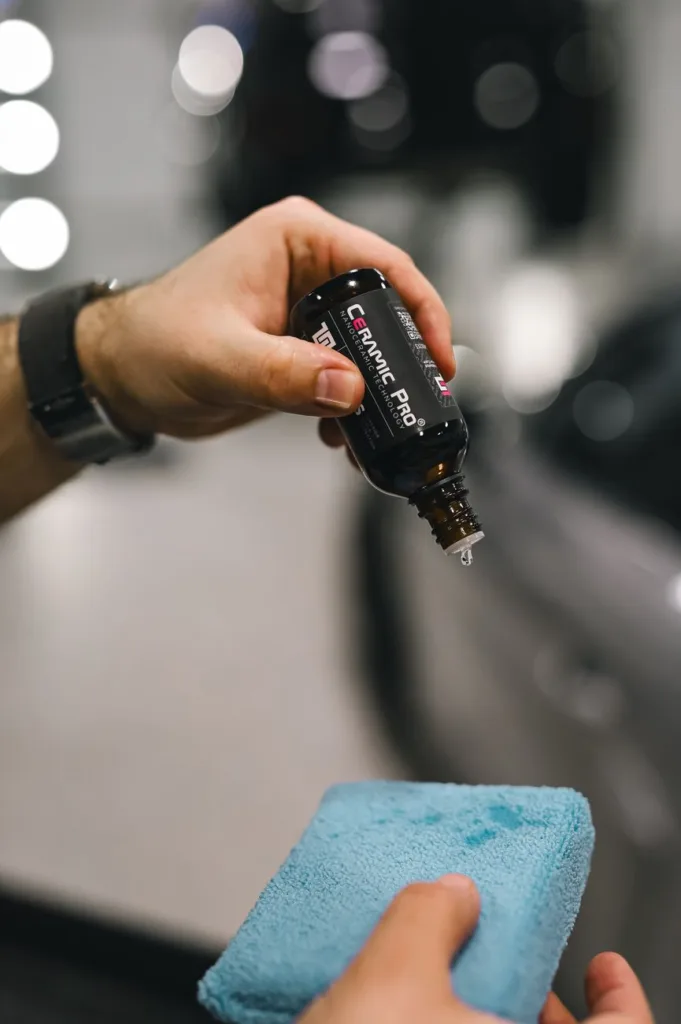
Ceramic coating is a liquid polymer applied to a vehicle’s exterior surfaces to create a thin, hardened protective layer. Once cured, it bonds to the clear coat and can help repel water, resist light contamination, and make washing easier. It does not make a car scratch-proof, and it does not eliminate the need for regular maintenance.
In simple terms, ceramic coating is a durable paint protection treatment that sits between traditional wax and more permanent protection methods. Many drivers choose it because it can improve gloss, reduce how quickly dirt sticks to the paint, and provide longer-lasting protection than wax. Understanding what it does, and what it does not do, helps set realistic expectations before spending money on it.
What Ceramic Coating Actually Is
Ceramic coating is usually made from silicon dioxide, often called SiO2, or related ceramic-based compounds. These materials form a chemical bond with the vehicle’s clear coat when applied properly. The result is a very thin protective layer that becomes part of the surface rather than sitting loosely on top like many waxes do.
That bonding is what gives ceramic coating its durability. Instead of wearing away quickly from heat, washing, and weather exposure, a properly applied coating can last much longer than a conventional wax or quick detailer protection. The exact lifespan depends on the product, preparation, environmental conditions, and how the car is washed and maintained.
It is important to separate consumer-grade ceramic coatings from professional coatings and from products that are only labeled “ceramic.” Not every product with ceramic in the name offers the same level of durability or performance. Some are true coatings, while others are spray sealants or hybrid products that provide shorter-term protection.
How Ceramic Coating Works
Ceramic coating works by creating a hydrophobic surface, which means water beads and sheets off more easily. This does not stop water from touching the paint, but it reduces how strongly water and many contaminants cling to the surface. That behavior can make the car easier to clean and may reduce water spotting if the vehicle is dried properly.
The coating also adds chemical resistance compared with bare clear coat alone. That can help the paint better withstand things like bird droppings, road grime, bug residue, and some tree sap if they are removed in a reasonable time. It is still not a substitute for cleaning, because prolonged contamination can damage any finish.
Another benefit is improved surface slickness and gloss. A coated car often looks cleaner after washing because dirt releases more easily. The coating does not magically make poor paint perfect, though. If swirl marks, oxidation, or scratches are already present, those defects usually remain visible unless the paint is corrected before coating.
What Ceramic Coating Does and Does Not Do
Many misunderstandings about ceramic coating come from overpromising marketing. A coating can be useful, but it is not a miracle shield. The table below gives a practical comparison of common expectations versus reality.
| What People Expect | What Ceramic Coating Usually Does |
|---|---|
| Prevents all scratches | Helps resist very light marring, but does not prevent scratches from brushes, improper washing, or road debris |
| Makes the car maintenance-free | Makes washing easier, but regular washing is still needed |
| Keeps the car spotless | Reduces how strongly dirt bonds, but grime still accumulates |
| Replaces paint correction | Usually works best after the paint has been corrected and prepared |
| Lasts forever | Durability varies and decreases over time |
| Makes a car completely waterproof | Improves water beading and shedding, but does not stop moisture from reaching the surface |
What It Can Help With
- Improving gloss and depth on well-prepared paint
- Helping water bead and run off more easily
- Making routine washing simpler
- Providing some resistance to light chemical contamination
- Helping maintain a cleaner look between washes
What It Cannot Do
- Prevent rock chips
- Eliminate the risk of scratches entirely
- Fix existing paint damage
- Remove the need for washing
- Replace proper drying, maintenance, or safe wash methods
Ceramic Coating vs Wax vs Paint Sealant
Many car owners compare ceramic coating with wax because both are used for paint protection and gloss enhancement. The main differences are durability, bonding, and maintenance expectations.
| Protection Type | Typical Durability | Appearance | Maintenance | Best For |
|---|---|---|---|---|
| Wax | Weeks to a few months | Warm glow, soft gloss | Needs frequent reapplication | Drivers who like easy, traditional upkeep |
| Paint sealant | Months | Clean, reflective finish | Less frequent than wax | People wanting a simple synthetic protection step |
| Ceramic coating | Months to years, depending on product and care | Sharp gloss and strong water behavior | Requires proper prep and ongoing care | Owners who want longer-lasting protection |
Wax is easier to apply and remove, and it can be a good choice for someone who enjoys frequent detailing. A sealant usually lasts longer than wax and is still relatively easy to use. Ceramic coating is more durable, but it usually demands better surface preparation and more careful application.
For some owners, the main advantage of ceramic coating is not dramatic visual change. It is the reduced effort during routine cleaning and the longer interval before protection needs to be renewed. That makes it especially appealing for daily drivers that see regular weather exposure.
What a Proper Ceramic Coating Job Involves
A coating only performs as well as the surface underneath it. This is one of the biggest reasons some people are disappointed. If the prep work is poor, the final result may look uneven, bond poorly, or fail sooner than expected.
1. Wash and decontaminate the paint
The car should first be washed thoroughly to remove dirt, road film, and loose contamination. Then a decontamination step is often used, such as iron remover, clay treatment, or both. The goal is to create a clean, smooth surface so the coating can bond directly to the clear coat.
2. Correct defects if needed
If the paint has swirl marks, oxidation, or light scratches, paint correction is often performed before coating. This may involve machine polishing. Coating over defects only locks in the appearance of those defects, which means the vehicle may still look flawed even though it is protected.
3. Remove polishing oils and residue
After polishing, the surface is typically wiped down with a panel prep product or alcohol-based solution, depending on the coating system and manufacturer guidance. This step removes oils that can interfere with bonding. Skipping it can reduce durability.
4. Apply the coating carefully
The coating is usually applied in small sections using an applicator pad or similar tool. It must be spread evenly and then leveled or buffed according to the product’s timing. Working in the wrong conditions, such as direct sun or extreme humidity, can make application harder.
5. Allow proper curing time
After application, the coating needs time to cure. During this period, exposure to water, dust, and contaminants should be minimized if possible. Some coatings require special post-application care for the first day or two, while others have longer curing periods. Always follow the specific product instructions.
Different Types of Ceramic Coating
Not all ceramic coatings are the same. The term is used broadly, and that can create confusion. A closer look at the main categories helps explain why one coating may last longer or require more skill than another.
Consumer ceramic coatings
These are designed for do-it-yourself application. They are usually more forgiving than professional-grade systems and may come in smaller kits or simple bottles. While they can provide real benefits, they may not last as long as higher-end professional coatings.
Professional ceramic coatings
These are typically installed by detailers with training and controlled application conditions. They may offer stronger chemical resistance and longer durability, but they also tend to require more surface preparation and experience to apply correctly. In many cases, the coating itself is only part of the cost, because paint correction and prep often make up a large portion of the job.
Ceramic sprays and hybrid sealants
Some products are labeled as ceramic but behave more like spray sealants. They may offer good gloss and easier application, but usually with shorter protection intervals. These products can be useful for maintenance, but they are not always equivalent to a true bonded coating.
| Type | Ease of Use | Typical Durability | Notes |
|---|---|---|---|
| Consumer coating | Moderate | Moderate to long | Good balance of protection and DIY application |
| Professional coating | Difficult | Longer, depending on care | Best applied by trained detailers |
| Ceramic spray | Easy | Shorter | Often used as a maintenance product or light protection |
How Long Does Ceramic Coating Last?
There is no single answer because longevity depends on the coating formula, prep quality, environment, and maintenance. Some coatings are advertised as lasting several years, while others may deliver useful protection for a much shorter period. Real-world durability often depends more on how the car is cared for than on the label alone.
A vehicle that is garaged, hand-washed gently, and dried properly will usually keep a coating performing better than a car that sits outdoors and is washed with harsh methods. Environmental stress matters too. Strong sun, road salt, industrial fallout, and frequent automatic wash use can shorten the effective life of the coating.
Even when the coating is still present, its performance can weaken gradually. Water may stop beading as aggressively, dirt may cling more easily, and the finish may lose some slickness. Those signs can indicate that maintenance is needed or that the coating is approaching the end of its useful life.
Is Ceramic Coating Worth It?
Whether ceramic coating is worth it depends on how you use your vehicle and what you expect from it. For some owners, the answer is yes because it saves time during washing and keeps the paint looking cleaner. For others, the cost and prep work may not make sense if they rarely maintain the vehicle or if it already has neglected paint.
The value is usually highest for people who:
- Want easier washing and drying
- Keep their vehicles long term
- Care about gloss and paint appearance
- Are willing to wash the car correctly
- Use the vehicle in environments where contamination is common
The value is lower for people who:
- Expect it to stop all wear and tear
- Rarely wash the car
- Want the cheapest possible protection
- Have neglected paint that needs correction first
- Frequently use abrasive or poorly maintained wash methods
In practical terms, ceramic coating is often best thought of as a maintenance aid and protection layer, not a permanent solution. It improves the ownership experience when the car is cared for properly.
Common Misconceptions About Ceramic Coating
“It makes the car scratch-proof”
This is false. Ceramic coating may help reduce very light marring, but it cannot protect against careless washing, key scratches, branches, or road debris. The clear coat is still the primary finish layer that can be damaged.
“I never have to wash the car again”
Also false. Dirt, brake dust, pollen, bird droppings, and road film still accumulate. The coating simply makes those contaminants easier to remove.
“All ceramic coatings are the same”
They are not. Formulas, durability, curing behavior, and application difficulty vary widely. Marketing terms can sound similar even when the products perform very differently.
“The coating fixes bad paint”
No coating can hide all paint defects. In some cases, a coating can actually make damage more visible by increasing gloss. If the paint is heavily swirled or oxidized, correction may be needed first.
What Ceramic Coating Means for Washing and Maintenance
A coated car still needs proper washing habits. In fact, the way you wash the vehicle has a big impact on how long the coating performs well. Harsh wash methods can wear the coating down faster or create swirl marks in the clear coat underneath.
Good maintenance habits
- Use a pH-balanced car shampoo when appropriate
- Wash with a clean microfiber mitt
- Rinse often to remove loose dirt
- Dry with a soft microfiber towel or air drying method
- Remove bird droppings and bug residue as soon as possible
Habits that can shorten performance
- Using dirty wash mitts or towels
- Relying on worn automatic brushes
- Letting hard water dry on the paint repeatedly
- Using abrasive cleaners not intended for automotive finishes
- Ignoring contamination for long periods
One common mistake is assuming that because a coating repels water, the vehicle can be washed less often. That may be true to a point, but grime still builds up. A coated car that is neglected can still become dull and dirty-looking.
Where Ceramic Coating Works Best
Ceramic coating can be applied to more than just painted panels. It is also used on several other exterior surfaces, although each surface has its own prep and maintenance needs.
Paint
This is the most common use. Paint benefits from gloss enhancement, easier cleaning, and chemical resistance. On well-prepared paint, the visual improvement can be noticeable.
Wheels
Wheel coatings can make brake dust easier to remove. Since wheels experience high heat and contamination, the right coating can be helpful, though not all coatings are suited to every wheel finish.
Glass
Some coatings are formulated for glass or can be used on glass with acceptable results. They may improve water beading on windshields and side windows, which can help visibility in rain. Glass-specific guidance matters here because not every paint coating is ideal for windshield wipers or glass surfaces.
Plastic trim
Coatings may help preserve some exterior trim and reduce fading, depending on the product and material. However, trim can vary widely, so compatibility should always be checked before application.
What Ceramic Coating Costs
Cost varies widely based on the type of coating, size and condition of the vehicle, and whether the work is done professionally. The coating itself is only one part of the expense. Proper prep, especially paint correction, often represents a significant share of the total.
For a DIY approach, the main costs are the coating product, prep materials, microfiber towels, applicators, and time. For a professional installation, costs can rise significantly because of labor, preparation, and expertise. Vehicles with heavily marked paint may need more correction work, which adds to the price.
It helps to think in terms of total value rather than just product price. A cheaper coating applied over poor prep may underperform. A more expensive professional job may make sense if the paint is corrected properly and the vehicle is kept long term.
Common Mistakes People Make With Ceramic Coating
- Skipping paint preparation. Coating over dirt, oils, or defects reduces performance.
- Expecting it to solve damage. It protects, but it does not repair.
- Applying in poor conditions. Heat, humidity, dust, and direct sunlight can complicate application.
- Using the wrong maintenance products. Harsh chemicals can shorten coating life.
- Not leveling high spots properly. Uneven application can leave streaks or hazy patches.
- Assuming “ceramic” always means true coating. Some products are sprays or sealants with shorter durability.
Another frequent issue is impatience. Many coatings need time to cure before the vehicle is washed or exposed to harsh conditions. Ignoring that period can weaken the finish early in its life cycle.
Should You DIY or Hire a Professional?
Both options can make sense, depending on your skill, time, and goals. DIY application is more affordable and can work well with the right preparation and patience. Professional application costs more, but it usually reduces the chance of application mistakes and can include paint correction.
| Option | Pros | Cons |
|---|---|---|
| DIY | Lower cost, more control, good learning experience | More chance of mistakes, more time required, prep can be challenging |
| Professional | Better prep, experienced application, often cleaner final result | Higher cost, depends on installer quality |
If the car is new and the paint is already in good condition, a DIY coating may be manageable for someone willing to follow instructions carefully. If the paint is older, heavily swirled, or very valuable to preserve, professional prep and application may be the safer route.
How Ceramic Coating Fits Into Overall Car Care
Ceramic coating works best as part of a larger care routine. It should not be viewed as a substitute for good washing habits, prompt contaminant removal, or occasional paint inspection. The coating helps preserve the surface, but the owner still has to maintain it.
For many vehicles, a sensible car care plan looks like this: wash regularly, dry properly, remove contamination quickly, and refresh protection when needed. Ceramic coating can reduce the effort involved, but it does not remove the need for attention.
This is why it is helpful to compare the coating to a protective tool rather than a finish line. It is one part of keeping the vehicle looking clean and protecting the clear coat for as long as possible.
Frequently Asked Questions
What is ceramic coating on a car?
Ceramic coating is a liquid protective layer that bonds to the vehicle’s clear coat. It helps repel water, improve gloss, and make cleaning easier.
Does ceramic coating stop scratches?
No. It may help reduce very light surface marring, but it does not make paint scratch-proof.
How long does ceramic coating last?
It depends on the product, surface prep, environment, and maintenance. Some coatings last months, while others can last years under the right conditions.
Can I apply ceramic coating myself?
Yes, many coatings are designed for DIY use. Good prep and careful application are important for decent results.
Do I still need to wax a ceramic-coated car?
Usually no. Wax is not required on top of a ceramic coating, though some owners use maintenance toppers if the coating system allows it.
Will ceramic coating make my car easier to wash?
Yes, that is one of its main benefits. Dirt and water tend to release more easily from the surface when the coating is performing well.
Is ceramic coating worth it for an older car?
It can be, but older paint often needs correction first. If the finish is heavily worn, the prep cost may be higher than expected.
Can ceramic coating be removed?
Yes. It can wear away over time, and in some cases it can be removed through polishing. Strong abrasion is not usually necessary if the goal is only to refresh the finish.
Conclusion
Ceramic coating is a bonded paint protection layer that can improve gloss, make cleaning easier, and help your car resist everyday contamination. It is more durable than traditional wax, but it is not a permanent shield and it does not eliminate the need for proper washing and maintenance.
The best results come from good paint preparation, realistic expectations, and regular care after application. For many drivers, ceramic coating is a practical way to keep a car looking cleaner for longer, but it works best as part of a complete detailing routine rather than as a stand-alone solution.