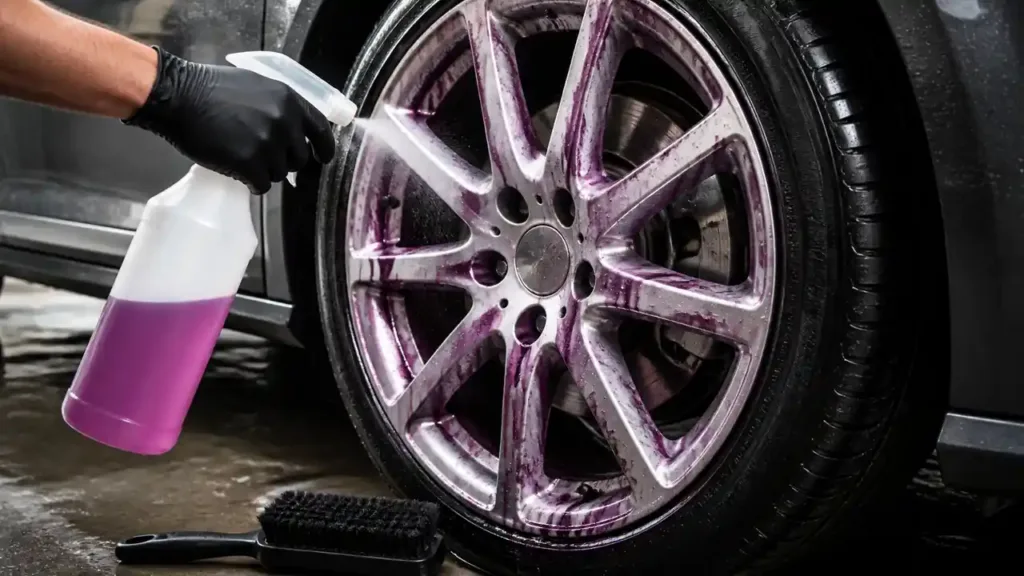
Wheels take the daily punishment that paint rarely sees. Between gritty brake dust, tar flecks, and road grime, a decent wheel cleaner saves you time and prevents permanent etching. People search for the best wheel cleaner for cars because wheels are a visual focal point and because neglected brake dust eventually corrodes finishes. The right product dissolves baked-on contaminants without attacking clear coats or powder-coated surfaces, while being quick to use on a weekend wash.
Common mistakes are easy to spot: grabbing an acid-based cleaner for sensitive finishes, skipping a test spot, or assuming the same cleaner works for coated, chrome, and raw aluminum wheels. Some cleaners work great on brake dust but leave a residue that repels tire dressings. Others promise color-changing chemistry but lack the dwell time or lubrication needed for ornate multi-piece rims. What matters most is matching the formula to your wheels, checking pH or “safe on” claims, and pairing the cleaner with the right brushes and rinse method.
Different buyers have different priorities. If you want quick maintenance between washes, choose a fast-spraying foam that rinses easily. If you prep wheels for ceramic coatings, a concentrated iron remover that reacts to embedded metal will save time. For value shoppers, gallon options or two-packs stretch your dollar without sacrificing results. My top overall pick combines safe formulation, broad finish compatibility, and reliable brake dust removal.
If you are short on time, the comparison table below gives a fast overview of the top options and links to each full review so you can jump straight to the one that fits your needs.
Best Wheel Cleaner For Cars Comparison Table
| Product | Best For | Main Strength | Size |
|---|---|---|---|
| Adam’s Polishes Wheel & Tire Cleaner (16 oz) | Safe All-Rounder | Balanced alkaline formula, safe on many finishes | 16 fl oz |
| Armor All Extreme Wheel and Tire Cleaner | Budget-Friendly Regular Use | Strong degreasing, easy foam action | 24 fl oz |
| P&S Professional Brake Buster (Gallon) | Pro-Grade Deep Clean | High-performance, foaming, protective finish | 1 gallon |
| Adam’s Polishes Wheel & Tire Cleaner (Gallon) | Detailer Supply Stock-Up | Same formula as 16 oz, bulk value | 1 gallon |
| Chemical Guys Signature Wheel Cleaner | Gloss Finish Care | Fast-acting foam, safe on gloss and clear coats | 16 fl oz |
| CAR GUYS Wheel Cleaner | pH Neutral Versatility | Clinging gel, safe on many surfaces | 18 fl oz |
| Chemical Guys Sprayable Diablo (32 oz) | Gentle Gel for Sensitive Rims | Oxygen-infused, foaming gel that protects finishes | 32 fl oz |
| Adam’s Polishes Wheel & Tire Cleaner (16 oz, 2-Pack) | Best Value Two-Pack | Same safe formula, two bottles | 2 x 16 fl oz |
| Turtle Wax Rapid Decon Iron Remover | Iron Removal & Prep | Color-changing iron remover, pH neutral | 23 fl oz |
If you want a deeper look at how these cleaners perform on specific rims, the full reviews below explain strengths, weaknesses, and who each cleaner suits best.
1. Best Overall: Adam’s Polishes Wheel & Tire Cleaner 16oz

One reason this option stands out is its balance of cleaning power and finish safety. Adam’s Wheel & Tire Cleaner uses an alkaline-concentrated blend that lifts brake dust, grease, and old dressings while being labeled safe on clear-coated, painted, powder-coated, and chrome wheels. In real-world use, it foams up nicely and clings to vertical spokes so the dwell time does actual work. I have a set of winter alloy wheels that take road salt and brown buildup. After a twenty-minute soak and light agitation with a brush, the grime released with minimal scrubbing.
For buyers who prioritize a straightforward routine, this bottle behaves like a professional product without fuss. Picture a Saturday morning where you hose the car, spray a rim, watch the suds bubble, and rinse to reveal cleaner rims. Another scenario: prepping wheels before a weekend detail. The cleaner removes old tire dressing to give a fresh surface for new protectant. It won’t replace an iron remover for deeply embedded particles, but for regular maintenance it hits the sweet spot between safe chemistry and visible results.
Pros
- Safe on a wide range of finishes, including clear coat and powder coat.
- High-sudsing action that clings to vertical surfaces for better dwell time.
- Good at removing brown tires and old dressings.
- Well-suited for routine maintenance and detail prep.
- Trusted brand with a satisfaction guarantee.
Cons
- Not a dedicated iron remover, so very embedded metallic contamination may need an extra product.
- Smaller bottle size for heavy users who prefer bulk purchases.
This is a practical pick for most drivers. Buy it if you want a no-surprises cleaner that will handle weekly or biweekly wheel care and won’t force you to worry about delicate finishes. If you race or frequently encounter heavy iron fallout from track days, pair it with a chemical iron remover. For casual detailers, the performance-to-size ratio makes it the most flexible daily driver on this list.
To buy this product, click here.
2. Best Budget: Armor All Extreme Wheel and Tire Cleaner

If your priority is price and speed, Armor All is an obvious contender. It delivers aggressive foaming action that penetrates grease, brake dust, and tar on a routine wash. I keep a bottle in the trunk for quick touch-ups after muddy runs, and it handles hubcaps and steel wheels with ease. Spray it on cool wheels, give it thirty seconds of dwell, and the worst surface soils lift away during the rinse. One afternoon I used it after a long commute that left unsightly road grime, and a single application significantly reduced staining.
Performance comes with tradeoffs. The formula is strong, which is why it cleans quickly, but some users with sensitive clear-coated custom finishes prefer pH-neutral options. Another scenario: cleaning highly intricate multi-piece rims where aggressive chemistries tend to pool under spokes. For everyday driver wheels, it represents excellent value and gets the job done fast, which is why it earns a place as the best budget option.
Pros
- Very affordable and widely available.
- Strong degreasing action removes heavy grime quickly.
- Works on a variety of factory wheels and hubcaps.
- Good for quick maintenance and trunk-ready emergencies.
Cons
- May not be the gentlest choice for delicate custom finishes.
- Dwell time and dilution control are important to avoid potential discoloration on sensitive surfaces.
Choose Armor All if you need a low-cost, effective cleaner for regular use on factory wheels and want fast results with minimal fuss. If you own high-end coatings, use a pH-neutral or labeled-safe product instead or test on a hidden area before full application.
To buy this product, click here.
3. Best Professional: P & S Professional Brake Buster Wheel and Tire Cleaner (1 Gallon)

This gallon jug is built for enthusiasts and small shops that need heavy-duty cleaning without damaging finishes. Brake Buster’s non-acid formula lifts heavy brake dust, embedded iron, and oil-based grime, and it foams well for use with foam guns or pump sprayers. I used it to restore a set of neglected alloys that had months of brake dust buildup. Diluted through a foam sprayer, it clung to vertical spokes and slowly loosened stubborn deposits so that light agitation finished the job.
Professional detailers will appreciate the foaming action and the protective residue that seems to help repel re-deposition for a short while. An anecdote: one weekend I prepped a track car and found that Brake Buster reduced cleaning time by half compared with a consumer spray because the concentrated formula lets you dial dilution for tasks. For users who need volume and consistent pro-level results, this product is a workhorse.
Pros
- Professional-grade cleaning power suitable for heavy contamination.
- Non-acid, safe on multiple finishes while still effective.
- Gallon size is cost-effective for frequent use or shops.
- Works well with foam sprayers for quick coverage.
- Leaves a short-term protective film that delays re-soiling.
Cons
- Gallon format requires a spray bottle or sprayer for everyday use.
- Stronger formulas can be overkill for very light maintenance.
This one is for enthusiasts, detailers, and anyone who cleans wheels often. Buy it if you want a reliable, concentrated product that gives professional results and lets you control dilution. If you only wash your car occasionally, the gallon size might be more product than you need, but it pays off across many sessions.
To buy this product, click here.
4. Best For Stocking Up: Adam’s Polishes Wheel & Tire Cleaner Gallon

This gallon variant delivers the same trusted Adam’s formula in a bulk format for home detailers who prefer fewer purchases over time. If you wash multiple cars or manage a household fleet, the gallon is a sensible choice. I stored the gallon in the garage and used a trigger sprayer for individual jobs, which made weekend maintenance faster. It dissolved road grime and brake dust well, and its alkalinity did not harm my clear-coated wheels during normal use.
A relatable scenario: prepping a family SUV and a sporty coupe on the same day. One 128-ounce jug provided enough product with dilution to cover both cars and leave room for follow-up detail work. Another anecdote: after a muddy off-road day, the gallon allowed me to dilute for heavy-duty degreasing then switch to a milder mix for finish-safe rinsing. For people who value consistency and economy, this gallon is a smart stocking choice.
Pros
- Bulk size for frequent detailers and multi-car households.
- Same finish-safe formula as the smaller Adam’s bottles.
- Flexible dilution for light maintenance or heavy cleaning.
- Reduces the need for frequent repurchasing.
Cons
- Requires storage space and a separate sprayer for everyday use.
- Not ideal for first-time users who want a small test bottle.
Pick the gallon if you detail regularly or run a small shop and want trusted chemistry in volume. For someone trying the product for the first time, start with a 16-ounce bottle and upgrade to the gallon after you’re happy with results.
To buy this product, click here.
5. Best For Gloss Finishes: Chemical Guys Wheel Cleaner Spray Signature Series

If your wheels have glossy clear coats or you own a car with delicate finishes, Chemical Guys’ Signature formula deserves attention. The foaming action clings and breaks down grime while being safe for anodized, painted, and custom wheels. I used it on a set of deep-lipped wheels with a polished face and saw no etching or streaking after rinsing, which is exactly what you want when you have expensive finishes. It also works well on lug nuts and barrels where clinging foam helps loosen embedded dirt.
For a weekend detailer aiming for show car results, imagine slowly working around each spoke and watching stubborn brake dust lift cleanly without aggressive chemistry. Another hands-on scenario: prepping wheels before a ceramic coating application. The cleaner removes organic grime without stripping protective residues, giving a clean surface for coating. It feels like a premium consumer product with pro-level safety around sensitive finishes.
Pros
- Formulated to be safe on a wide range of gloss finishes.
- Fast-acting foaming action that clings to surfaces.
- Works on small areas like lug nuts and calipers effectively.
- Good balance of power and gentleness for detail prep.
Cons
- Smaller bottle compared with bulk options, which may be costly for frequent users.
- Not a dedicated iron remover for heavy embedded contaminants.
Choose this if you value finish protection and want confidence that a cleaner won’t dull polished faces or strip coatings. It is ideal for owners of show cars or those prepping wheels for protective treatments. For heavy iron fallout you will still want an iron-specific product in your kit.
To buy this product, click here.
6. Best pH Neutral Option: CAR GUYS Wheel Cleaner

CAR GUYS markets a pH-neutral gel that clings to surfaces and gently dissolves grime. For people dealing with mixed wheel types, including chrome and polished aluminum, a neutral formula reduces the risk of etching. I tested it on a set of chrome-plated wheels that I avoid treating with strong alkalines, and it removed road film without the telltale hazing that aggressive cleaners can cause. The gel-like consistency means less runoff and better contact time on vertical spokes.
One scenario where it shines is in seasonal transitions. After winter, when salt and grime accumulate unevenly, a clinging cleaner that won’t strip protective waxes helps clean safely. Another example: a neighbor with whitewall tires needed grime removed without harsh scrubbing, and the CAR GUYS gel loosened deposits sufficiently for a soft brush to finish the job. It’s a safe, user-friendly option that favors finish preservation.
Pros
- pH-neutral formula is gentle on sensitive finishes.
- Clinging gel reduces runoff and increases dwell time.
- Versatile for whitewalls, chrome, and painted wheels.
- Made in the USA with brand support and a satisfaction promise.
Cons
- Less aggressive on extremely baked-on iron compared with strong acid or alkaline cleaners.
- Higher price point relative to some budget sprays for similar bottle sizes.
Buy CAR GUYS if you prioritize finish safety and prefer a product that tolerates mixed wheel materials. It is especially useful for gentle restoration and regular maintenance where an aggressive chemical is unnecessary and potentially harmful.
To buy this product, click here.
7. Best For Sensitive Rims: Chemical Guys Sprayable Diablo Wheel Cleaner (32 fl oz)

If your rims are expensive, multi-piece, or simply have delicate finishes, Chemical Guys Diablo gel offers an oxygen-infused cleaning approach that avoids caustic acids and heavy alkalis. In practice the gel lubricates and lifts contaminants, helping prevent micro-scratches from abrasive particles. I used it on a set of OEM matte-finish alloys and appreciated that the gel did not leave streaks or change the wheel’s appearance after rinsing. The larger 32-ounce size is handy for more than a few detail sessions.
Think of a careful weekend detail where you gently agitate spokes with a soft brush and allow a protective rinse to finish the job. Another real-world moment: after a gravel-road outing, you want to remove grit without scoring the faces. The Diablo gel minimizes the need for aggressive scrubbing while still removing grime. It is a product geared toward finish protection with solid cleaning performance.
Pros
- Gentle, non-acidic gel that preserves sensitive finishes.
- Oxygen-infused formula helps lift contaminants safely.
- Larger bottle size is good for frequent detailers or multiple vehicles.
- Prevents scratching by lubricating abrasive particles during cleaning.
Cons
- Not intended as a heavy iron remover for severe fallout.
- Gel texture may require more agitation on extremely stubborn deposits.
Pick Diablo if you are cautious about finish preservation but still need an effective cleaner. It is especially appropriate for matte or specialty-coated rims where aggressive chemistries risk damage. For iron-heavy wheel fallout, combine it with a dedicated iron decon product.
To buy this product, click here.
8. Best Value Pack: Adam’s Polishes Wheel & Tire Cleaner (16oz, Pack of 2)

Two bottles for maintenance-minded drivers. The twin pack brings the same Adam’s formula but with value and convenience. I found the two-pack useful for keeping one bottle in the garage and another in a car cleaning kit, so a midweek touch-up never means running inside for supplies. The formula is identical to the single 16-ounce bottle: high-sudsing, safe across common finishes, and effective at removing dressings and road grime.
Scenarios where a two-pack beats single bottles include households with multiple cars, or people who split detailing duties between a home base and a vacation property. Another example: sharing one bottle between a partner and yourself when prepping cars for a weekend meet. This option keeps costs down while ensuring you are never caught without cleaner during a spontaneous wash session.
Pros
- Good value for buyers who clean multiple vehicles or want a spare bottle.
- Same trusted formula as Adam’s single bottles.
- Convenient for storage and travel kits.
- Effective for routine brake dust and dressing removal.
Cons
- Two bottles may be unnecessary if you rarely wash wheels.
- Still not an iron-specific decon product for heavy embedded contaminants.
Choose the two-pack if you want a practical, cost-effective way to keep a reliable wheel cleaner on hand in more than one location. It is a low-risk way to stock up and keep maintenance consistent across vehicles.
To buy this product, click here.
9. Best Iron Remover: Turtle Wax Hybrid Solutions Rapid Decon Iron Remover
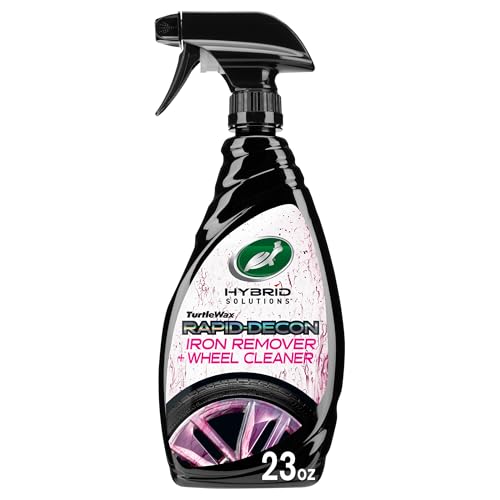
When embedded iron particles and rail dust have bonded to wheel surfaces, a color-changing iron remover is the right tool. Turtle Wax Rapid Decon is pH neutral and turns purple as it reacts with iron, which gives an immediate visual cue of effectiveness. I used it on a front brake rotor area where metallic fallout had left pinprick staining. The product reacted visibly and allowed the contamination to be rinsed away with limited mechanical effort. It also neutralizes offensive chemical smells that some iron removers produce, which is a welcome quality while working in a residential driveway.
Two practical scenarios. After a few track days or hard braking on long descents, iron fallout can be stubborn; Rapid Decon makes the job far less tedious. For detailing shops prepping cars for paint correction or coating, an iron remover simplifies the decon step before claying and polishing. Because it is pH neutral, it doubles as a wheel and paint-safe iron remover in careful hands, but always test first on non-visible areas of painted surfaces.
Pros
- Color-changing reaction provides visual confirmation of iron removal.
- pH neutral and safe for many surfaces when used correctly.
- Odor-neutralizing technology reduces unpleasant chemical smells.
- Great for prep work before claying, polishing, or coating.
Cons
- Not a replacement for a degreaser on oily contaminants.
- May require follow-up cleaning for heavy baked-on deposits.
Buy Turtle Wax Rapid Decon if your driving conditions produce iron fallout or if you need a reliable visual tool to confirm decontamination. It pairs well with a foam wheel cleaner or a pH-neutral gel for full-spectrum wheel care.
To buy this product, click here.
Best Wheel Cleaner For Cars FAQ
How often should I clean my wheels?
Frequency depends on driving conditions. For daily drivers in city traffic or areas with heavy brake dust, weekly cleaning keeps buildup from hardening. For low-use vehicles, monthly maintenance is usually enough. High-heat, track, or off-road use calls for cleaning after each event to prevent corrosion and staining.
Can I use wheel cleaner on painted or coated wheels?
Many modern wheel cleaners are labeled safe for painted, clear-coated, and powder-coated wheels. Choose pH-neutral or non-acid formulas for coated surfaces, and always test on a small hidden area first. Avoid strong acid or heavy alkaline cleaners on delicate finishes.
What is an iron remover and when should I use one?
An iron remover chemically reacts with embedded metallic particles from brake dust, turning purple as it binds them for easy rinsing. Use an iron remover when you see pinprick staining or a magnetic pickup test indicates metallic contamination. It’s a key step before claying or applying protective coatings.
Do I need special brushes with wheel cleaners?
Yes. Soft, non-metallic brushes prevent scratching and reach between spokes and barrels. Use a stiff tire brush for sidewalls and a soft detailing brush for lug nut holes and delicate finishes. Clean brushes after use to prevent cross-contamination.
Will wheel cleaner remove brake dust permanently?
No cleaner prevents new brake dust. Regular cleaning removes current deposits and prevents long-term etching. Brake dust is constantly produced, so combine cleaning with protective products like sealants or ceramic coatings to reduce how quickly deposits adhere and become stubborn.
How do I choose between a foaming spray and a gel cleaner?
Foaming sprays are quick and visible. They work well for regular maintenance and even coverage. Gels cling longer, which helps on vertical spokes and complex shapes, and they are often gentler, which matters for specialty finishes. Choose based on wheel design and how aggressive the contamination is.
Is pH-neutral always best?
pH-neutral is safest for mixed or sensitive finishes, but it can be less aggressive on heavy contamination. If you face severe baked-on brake dust or oil, a stronger non-acid cleaner may be necessary, followed by a neutral rinse. For routine maintenance, pH-neutral products reduce risk of damage.
Can I use wheel cleaner on brake calipers and rotors?
Many wheel cleaners work on calipers and exposed rotors, but avoid contact with worn brake pads and sensors. For rotors that are heavily corroded, mechanical cleaning may be required. Follow manufacturer recommendations for serviceable brake components.
Final Verdict
Across a range of budgets and needs, Adam’s Polishes Wheel & Tire Cleaner 16oz earns the top spot for its blended strengths. It balances cleaning power and finish safety, making it a reliable everyday option for most drivers. If you want bulk value for frequent cleaning, the Adam’s gallon fills that role well and cuts down on repurchases. For budget shoppers who need a no-fuss spray that works fast, Armor All provides straightforward value. For specialty tasks, Turtle Wax Rapid Decon is the go-to for iron removal while Chemical Guys and CAR GUYS offer finish-safe choices for gloss and sensitive rims.
Ultimately, match the cleaner to your wheels and habits. If you drive aggressively or track your car, pair a strong wheel cleaner with an iron remover and keep a gallon or larger supply on hand. If you have high-end finishes or recently applied coatings, favor pH-neutral gels and clinging foams that protect surfaces. Investing in the right cleaner and a couple of good brushes will save time and prevent costly wheel damage over the long run.