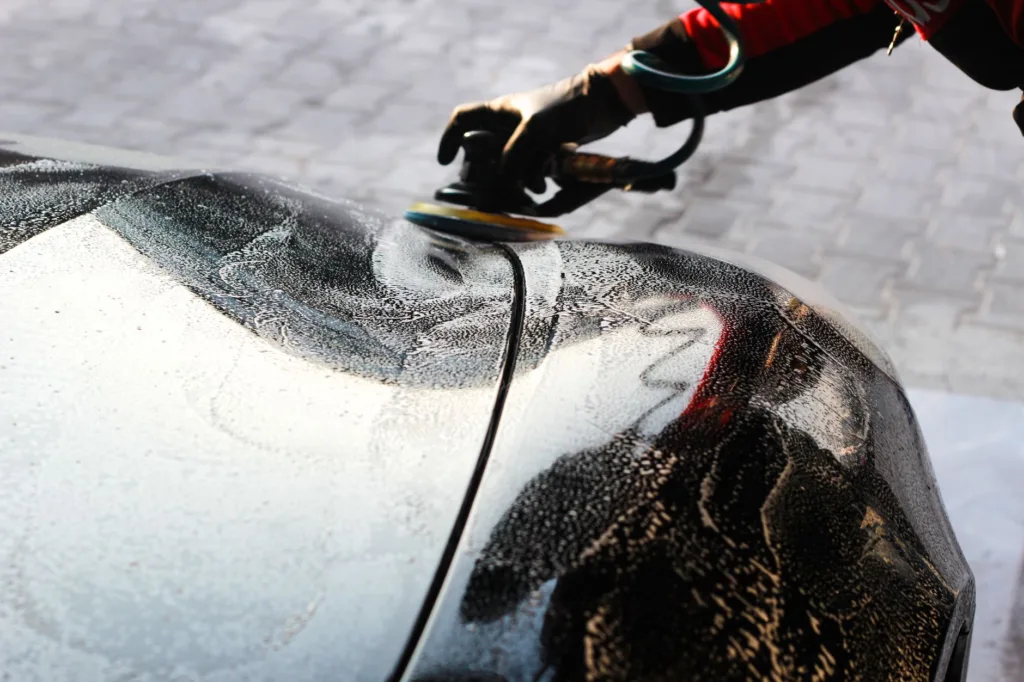
Auto detailing usually takes anywhere from 2 to 8 hours for a standard job, but the exact time depends on the vehicle’s condition, the size of the vehicle, the level of detail requested, and whether the work is being done as a quick refresh or a full interior and exterior restoration. A simple maintenance detail on a clean sedan may be finished in a few hours, while a heavily soiled SUV with stains, pet hair, oxidation, or paint correction needs can take most of a day or even longer.
If you are trying to schedule a detail, the most important thing to understand is that detailing is not one fixed service. It can mean anything from a basic wash and vacuum to a multi-step process that includes deep cleaning, clay bar treatment, polishing, stain removal, engine bay cleaning, and protective coatings. That is why two cars can be billed as “a detail” and still take very different amounts of time.
What Auto Detailing Actually Includes
Auto detailing is a careful cleaning and restoration process for both the interior and exterior of a vehicle. Unlike a regular car wash, detailing aims to clean areas that are often missed in routine maintenance and improve the overall appearance of the car, inside and out.
The time required depends heavily on which services are included. A detail may include some or all of the following:
- Hand wash and drying
- Wheel and tire cleaning
- Bug and tar removal
- Clay bar or paint decontamination
- Waxing, sealant, or other paint protection
- Machine polishing or paint correction
- Interior vacuuming
- Carpet and upholstery shampooing
- Leather cleaning and conditioning
- Dashboard, trim, and console cleaning
- Glass cleaning
- Odor treatment
- Engine bay cleaning
Not every detail includes all of these steps. A quick exterior detail can be far shorter than a full-service package that addresses the interior, paint, wheels, and stains.
Quick Answer: How Long Does Auto Detailing Take?
Here is a practical breakdown of common detailing times:
| Detailing Type | Typical Time | What It Usually Covers |
|---|---|---|
| Basic exterior detail | 1 to 3 hours | Wash, dry, wheels, tires, quick protection |
| Basic interior detail | 1.5 to 4 hours | Vacuum, wipe-down, glass, light stain removal |
| Full detail for a clean daily driver | 3 to 6 hours | Interior and exterior cleaning, light protection |
| Deep interior detail | 4 to 8 hours | Heavy vacuuming, shampooing, stain and odor treatment |
| Paint correction and full detail | 6 to 12+ hours | Machine polishing, decontamination, finishing protection |
| Heavily neglected vehicle | 1 full day or more | Deep cleaning, restoration work, multiple stages |
These are only general estimates. A small hatchback in decent condition may need less time than a large SUV that has pet hair, child seat stains, road salt buildup, and scratched paint.
What Affects How Long Auto Detailing Takes?
Several factors influence detail time. Understanding them helps set realistic expectations and prevents surprises when a shop gives you an estimate.
1. Vehicle Size
Larger vehicles take longer simply because there is more surface area and more interior space to clean. A compact sedan is faster to detail than a three-row SUV, minivan, or pickup truck with an extended cab.
More glass, more seats, more cargo space, and larger body panels all add time. Trucks and SUVs also tend to have larger wheel wells, more trim, and more carpeting, which means more cleaning steps.
2. Vehicle Condition
A well-maintained car is much faster to detail than one that has been neglected for months. Light dust and normal road grime can be handled relatively quickly. Heavy contamination, stains, salt residue, mold, pet hair, and sticky spills take significantly longer.
The dirtiest part of a vehicle is not always the most visible. For example, a car that looks “a little dusty” may still need a long interior detail if there is sand in the carpet, grime in the vents, or deep buildup around cupholders and seat tracks.
3. Interior Material Type
Different materials require different cleaning methods. Cloth seats can absorb spills and odors, while leather needs gentle cleaning and conditioning. Alcantara, suede-like materials, piano black trim, and delicate touch surfaces often take more care and more time to clean properly.
Textured plastics and complex dashboards also add time because detailers need to clean around seams, buttons, and crevices without damaging surfaces.
4. Level of Service
Not all detailing packages are the same. A basic maintenance detail is much faster than a full restorative detail. If the job includes paint polishing, stain extraction, or odor removal, the time can increase quickly.
Services that often extend the job include:
- Clay bar treatment
- Single-stage or multi-stage polishing
- Headlight restoration
- Engine bay cleaning
- Steam cleaning
- Pet hair removal
- Interior disinfecting or odor treatment
5. Level of Paint Correction Needed
Paint correction is one of the biggest time factors in exterior detailing. If the goal is simply to clean and protect the paint, the job may be completed in a few hours. If the goal is to reduce swirl marks, oxidation, light scratches, and dullness, the job can take much longer.
Polishing a vehicle properly is detail-oriented work. It usually involves washing, decontamination, inspection, test spots, machine polishing, and rechecking the finish. Even a single-stage polish can add several hours.
6. Number of Detailers Working on the Car
A one-person mobile detailer may need most of a day to complete a full service. A shop with multiple technicians can often complete the same vehicle faster because tasks can be done at the same time.
For example, one technician may focus on the interior while another handles the wheels, wash, and exterior protection. That said, more workers do not always mean better results. Care and technique still matter more than speed.
7. Weather and Work Environment
Outdoor detailing is affected by weather. Heat, cold, wind, and humidity can slow down certain steps, especially drying, polishing, and applying protectants. In very hot weather, products may flash too quickly. In cold weather, some products may not work as intended or may take longer to cure.
Indoor detailing in a controlled shop environment is usually more predictable. That often makes it easier to estimate how long the work will take.
Typical Time Estimates by Detail Type
To help you plan better, here is a more detailed look at common detailing services and how long each one usually takes.
Basic Hand Wash and Exterior Refresh
A basic exterior refresh may take 1 to 3 hours. This typically includes washing, drying, cleaning the wheels and tires, and applying a light protective layer such as a spray sealant or wax substitute.
This is faster when the vehicle is lightly dirty and has little to no buildup. It takes longer if there is heavy brake dust, bug splatter, road tar, or old wax residue that needs to be removed first.
Interior Vacuum and Wipe-Down
A basic interior detail usually takes 1.5 to 4 hours. It often includes vacuuming the seats, floor mats, cargo area, and carpets, followed by wiping surfaces and cleaning the windows.
Time increases if the cabin has lots of crumbs, sand, pet hair, or hard-to-reach areas. A vehicle used for family hauling or rideshare driving often needs more attention than a lightly used commuter car.
Full Interior Detail
A full interior detail commonly takes 3 to 8 hours, depending on condition and size. This may include shampooing fabric, cleaning leather, scrubbing mats, treating stains, cleaning vents, and working on odors.
Deep-cleaning seats and carpets is often the slowest part. Extraction and drying time can stretch the process, especially if the material is heavily soiled or there is moisture trapped in the fibers.
Full Exterior Detail
A full exterior detail usually takes 2 to 6 hours. This includes washing, decontamination, wheel cleaning, tire dressing, and a protective layer on the paint.
If the paint is in good shape, the job may be on the shorter end. If there is embedded contamination, water spots, or oxidation, additional prep and correction work can add significant time.
Paint Correction
Paint correction can take 6 to 12 hours or more, depending on the finish and the target result. Light swirl mark reduction may be done in a single day. More advanced correction, especially on neglected paint, can take much longer.
This step is not a simple polish-and-go process. The detailer usually has to wash, decontaminate, inspect under lighting, test a polishing method, and then refine the finish carefully. Black paint and soft clear coats often take longer because imperfections are easier to see.
Engine Bay Cleaning
Engine bay detailing usually takes 30 minutes to 2 hours. A light cleaning is fairly quick, but a more careful job on a dirty or delicate engine bay takes longer.
Older vehicles, modified vehicles, and vehicles with exposed wiring or fragile components require more caution. Safety and dryness are important here, so this task should never be rushed.
How Long Does a Full Detail Take vs a Quick Detail?
A quick detail and a full detail are not the same service. A quick detail is designed to refresh the car with minimal time, while a full detail aims for a deeper clean and more thorough finish.
| Service Type | Typical Time | Purpose |
|---|---|---|
| Quick detail | 1 to 3 hours | Light cleaning and refresh |
| Maintenance detail | 2 to 5 hours | Regular upkeep for a vehicle already in decent condition |
| Full detail | 4 to 8 hours | Thorough interior and exterior cleaning |
| Restorative detail | 8 hours to multiple days | Heavy correction and deep cleaning |
If you maintain your car regularly, a detailer can usually work faster because buildup is limited. If you wait too long between details, the job becomes more labor-intensive.
Real-World Examples of Detailing Time
Sometimes the best way to understand detailing time is through examples.
Example 1: Clean Compact Sedan
A compact sedan that is washed regularly, has light dust inside, and only needs a basic refresh may take about 2 to 4 hours for a full detail. The interior vacuuming and wipe-down are straightforward, and the exterior does not require major correction.
Example 2: Family SUV with Stains and Food Crumbs
A three-row SUV used for school runs and weekend trips may take 5 to 8 hours or more. Stains on seats, crumbs in the rear, sticky cupholders, and dirty mats increase labor time. If there is pet hair or spilled drinks, the job may take even longer.
Example 3: Black Sports Car with Swirl Marks
A black sports car that looks clean but has visible swirl marks may need a longer exterior-focused detail. If paint correction is involved, the total time may reach 6 to 12 hours, especially if the owner wants a high-gloss finish.
Example 4: Work Truck with Heavy Use
A pickup truck used for job sites may require a long, labor-heavy detail. Dirt in floor mats, dust in seams, stained upholstery, and grime on exterior trim can push the time to a full day. If the bed and engine bay are included, the total can stretch further.
Does Mobile Detailing Take Longer Than Shop Detailing?
Mobile detailing often takes a similar amount of actual labor time, but the overall appointment may run longer because the detailer has to set up equipment, manage limited water or power access, and work around outdoor conditions. In some cases, mobile detailers are also more constrained by weather and lighting.
Shop detailing can be more efficient because the work environment is controlled. There is usually better lighting, more tools on hand, and less interruption. However, a well-equipped mobile detailer can still complete many services in the same time frame as a shop.
From the customer’s perspective, the biggest difference is usually convenience rather than raw speed.
Why Some Details Take Much Longer Than Expected
It is common for first-time customers to underestimate how long detailing takes. That is because many parts of the process are slow, hands-on work rather than quick cleaning.
Here are some common reasons a detail runs long:
- Heavy pet hair embedded in upholstery or carpet
- Old stains that require repeated treatment
- Excessive brake dust on wheels
- Water spots or mineral buildup on glass and paint
- Oxidized or neglected paint
- Sand, mud, or salt deeply worked into mats and seams
- Spilled food or beverages in cupholders and consoles
- Odor issues that need multiple steps
- Multiple add-on services requested during the appointment
Another reason is drying time. Some materials, such as carpets and seats, may need to dry after shampooing or extraction. That does not always mean active labor is still happening, but it can affect when the car is fully ready to use.
How to Tell Whether a Detail Is Taking Too Long
Longer does not automatically mean better. A proper detail should be thorough, but it should also be organized and efficient. If you are at a shop or scheduling a service, it helps to know what is normal.
It may be reasonable for the job to take longer if:
- The vehicle is unusually dirty
- Paint correction is included
- There are stains, odors, or pet hair
- The detailer is working on a large vehicle
- Drying time is needed after shampooing or extraction
It may be worth asking questions if:
- The quoted time is far shorter than the service list suggests
- Nothing seems to be happening for a long time
- The car is returned before products have had time to cure or dry
- Areas that were supposed to be cleaned are clearly overlooked
Good detailing is methodical. It should not feel rushed, but it also should not seem careless or disorganized.
What You Can Do to Save Time Before a Detail
You usually should not deeply clean the car yourself right before a detail, because that can waste effort if you are paying for a full service. Still, there are some simple steps that can help the appointment go more smoothly.
- Remove personal items, trash, child seats, and loose valuables
- Empty the trunk or cargo area if it needs cleaning
- Tell the detailer about stains, odors, pet hair, or sensitive materials
- Be clear about which areas matter most to you
- Avoid hiding damage or problem spots, since that can affect the time estimate
If you want the fastest possible service, ask whether a maintenance detail or a lighter package is more appropriate than a full restorative detail.
Common Mistakes People Make When Estimating Detailing Time
People often misjudge how long detailing takes because they compare it to a quick wash or a fast vacuum. Detailing is more involved than that, especially when it includes correction or deep cleaning.
Expecting a Full Detail to Take an Hour or Two
This is one of the most common misconceptions. A thorough full detail usually takes several hours, not a quick lunch break. If the car has only light dust, a shortened service may be possible, but a proper detail often involves many slow steps.
Ignoring Vehicle Condition
Two cars with the same model and year can take completely different amounts of time to detail. Maintenance history matters. A garage-kept sedan and a family car with years of buildup are not comparable jobs.
Forgetting About Drying and Curing Time
Some products and cleaning steps need time to dry or settle. That can include carpet shampoo, upholstery extraction, dressing products, or paint protection. A car may be technically cleaned even if it is not immediately ready for heavy use.
Assuming Every Shop Uses the Same Process
Detailers do not all work the same way. One shop may include more steps in a standard package, while another may treat several services as add-ons. This is why it helps to ask what is included rather than focusing only on the quoted time.
How Long Should You Leave Your Car for Detailing?
If you are dropping off a car for detailing, the safest approach is to assume it may take most of the day unless the shop clearly states otherwise. For basic services, a few hours may be enough. For full details, especially with interior shampooing or paint correction, plan for a longer window.
Here is a practical guide:
- Express detail: Plan for 1 to 3 hours
- Routine full detail: Plan for half a day
- Deep detail or correction work: Plan for a full day or more
If the shop is busy or the vehicle needs follow-up drying, it may not be ready exactly at the quoted hour. Building in extra time helps avoid scheduling problems.
How Detail Time Affects Price
Detailing time and detailing cost are closely related. More time usually means more labor, and labor is one of the biggest parts of the price. A basic maintenance detail is typically less expensive than a deep restorative job because it requires less effort and fewer steps.
That said, pricing does not always scale perfectly with time. Some services involve specialized skills, extra materials, or a higher level of care that can increase cost even if the total time seems similar. Paint correction, odor treatment, and heavy stain removal are good examples.
If you are comparing quotes, look at the list of included services, not just the estimated hours.
Table: Detailing Time by Vehicle Type
| Vehicle Type | Typical Time for Basic Full Detail | Why It Varies |
|---|---|---|
| Compact car | 2 to 4 hours | Smaller cabin and less exterior surface area |
| Midsize sedan | 3 to 5 hours | Moderate size, standard cleaning needs |
| SUV | 4 to 7 hours | More interior space, more trim, larger wheels |
| Minivan | 4 to 8 hours | Large cabin, many seats, family-use wear |
| Pickup truck | 3 to 7 hours | Cab size, bed condition, wheel and trim area |
| Heavily neglected vehicle | 8 hours to multiple days | Deep contamination, staining, correction needs |
Can Auto Detailing Be Done in a Day?
Yes, many detailing jobs can be completed in a day. In fact, a large share of standard full details are done within a single business day. A clean car with no major issues may be finished in a morning or afternoon.
However, a car that needs paint correction, heavy interior restoration, or extensive drying may need more than one day. Multi-day work is more common when the detailer is also correcting paint, treating odors, or addressing deep stains and buildup.
If your schedule is tight, it is best to ask the shop upfront whether same-day completion is realistic for your specific vehicle.
FAQs About How Long Auto Detailing Takes
How long does a basic car detail take?
A basic detail usually takes about 2 to 5 hours, depending on the vehicle size and how dirty it is. A simple maintenance detail may be faster, while a fuller interior and exterior cleaning takes longer.
How long does interior detailing take?
Interior detailing typically takes 1.5 to 8 hours. Light vacuuming and wipe-downs are faster, while shampooing, stain removal, and odor treatment can add several hours.
How long does exterior detailing take?
Exterior detailing usually takes 1 to 6 hours. The time depends on the level of cleaning, whether decontamination is needed, and whether protection or polishing is included.
Why does detailing take so long?
Detailing takes time because it involves careful hand work, deep cleaning, and often multiple steps. Stains, pet hair, paint imperfections, and hard-to-reach areas all increase the amount of labor needed.
Can a car be detailed in 2 hours?
Yes, but only for very light services or vehicles in good condition. A 2-hour appointment is usually enough for a quick refresh, not a full restorative detail.
Does a bigger vehicle take longer to detail?
Usually yes. SUVs, minivans, and trucks generally take longer because they have more interior space, larger body surfaces, and more areas to clean.
Is paint correction included in a normal detail?
Not always. Paint correction is often a separate service or an upgrade because it takes more time and skill than a standard wash and wax-style detail.
How long should I leave my car at the detailer?
For a basic detail, a few hours may be enough. For a full detail, plan for most of the day. For deep restoration or correction work, you may need to leave it overnight or longer.
Conclusion
How long auto detailing takes depends on the vehicle, the condition it is in, and the services included. A simple detail may take only a couple of hours, while a full interior and exterior detail can take most of a day. If paint correction, stain removal, or heavy cleaning is involved, the time can extend even further.
The most important thing is to match your expectations to the type of service you are getting. A well-maintained car is faster to detail than a neglected one, and a basic refresh is very different from a full restorative job. When in doubt, ask exactly what the detail includes and how long the shop expects it to take for your specific vehicle.