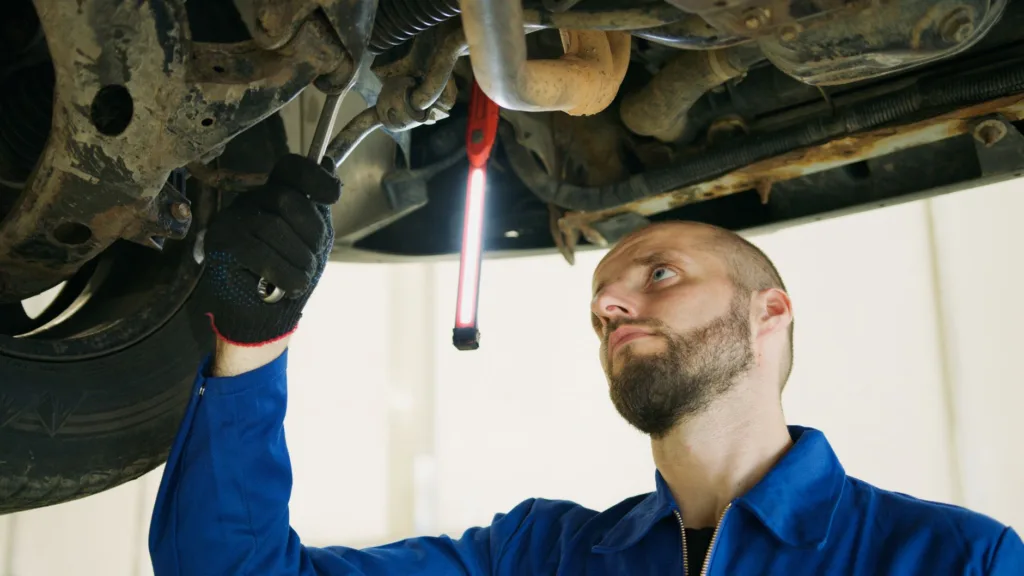
As a practical maintenance habit, have your ball joints inspected about once a year or during routine tire, alignment, brake, or suspension service. If you drive on rough roads, carry heavy loads, tow often, or notice symptoms like clunking, wandering steering, uneven tire wear, or vibration, inspect them sooner. Your vehicle manufacturer’s inspection procedure and maintenance schedule should take priority over any general mileage rule.
If the inspection procedure requires lifting the car, our low-profile floor jack comparison covers access options; use rated stands and the correct loaded or unloaded suspension test for your vehicle.
For many drivers, the easiest approach is to have ball joints checked during tire rotations, annual inspections, alignment checks, or brake service. That does not always mean they need replacement. It means they should be looked at for looseness, torn boots, grease leakage, or unusual movement.
Knowing how often to inspect ball joints matters because worn ball joints can affect steering control, tire wear, alignment, and overall handling. In severe cases, a failed ball joint can allow major suspension separation. That is rare when the problem is caught early, but it is exactly why regular inspection matters.
What a Ball Joint Does
A ball joint connects parts of the suspension and steering system while allowing movement in multiple directions. It works somewhat like a human shoulder joint. The suspension moves up and down, and the steering turns left and right, so this joint has to handle both at the same time.
Depending on the vehicle, you may have upper and lower ball joints on the front suspension, or just one lower ball joint combined with a different upper mounting design such as a strut. Some trucks and SUVs use heavier-duty ball joints because they carry more weight and often see rougher use.
Because ball joints help control wheel movement, any wear in them can create handling problems. Even a small amount of excess play can show up as loose steering feel or irregular tire wear.
How Often Should You Inspect Ball Joints?
A practical inspection schedule looks like this:
| Driving Condition | Practical Inspection Approach | Why It Matters |
|---|---|---|
| Normal daily driving | About once a year or during routine chassis, tire, or alignment service | Provides regular opportunities to catch developing suspension wear |
| Rough roads, potholes, gravel | Inspect more frequently and after significant impacts | Impacts accelerate wear and can damage protective boots |
| Towing, hauling, work-truck use | Check during regular tire, oil, or chassis service if heavily used | Extra load increases stress on suspension joints |
| Off-road use | After demanding trips and at regular service intervals | Dirt, water, and suspension articulation increase wear risk |
| High-mileage older vehicle | Every service visit where suspension is accessible | Age and wear make early detection more important |
If you want one simple rule, this is it: inspect ball joints whenever the wheels are already off or the suspension is being checked. That keeps the process easy and helps catch developing wear early.
Why Ball Joint Inspection Intervals Vary
There is no one universal mileage figure for every car and truck because ball joint life depends heavily on use. A compact sedan driven mostly on smooth highways may go a long time with minimal wear. A pickup driven on broken pavement or job sites may wear ball joints much faster.
Vehicle design also matters. Some suspensions place more load on the lower ball joints. Larger wheels, heavier tires, suspension lifts, and poor alignment can also increase stress.
Another major factor is whether the ball joints are sealed or greaseable. Sealed units are designed to operate without regular greasing, but once the boot tears or the grease degrades, wear can accelerate. Greaseable joints can sometimes last longer if maintained properly, but they still need inspection.
When You Should Inspect Ball Joints Sooner Than Scheduled
Do not wait for the next routine check if the vehicle is already giving warning signs. Ball joints should be inspected promptly if you notice any of the following:
- Clunking or knocking from the front suspension
- Steering that feels loose or wanders
- Uneven front tire wear
- Vehicle pulling or poor alignment stability
- Vibration through the steering wheel
- Squeaking from the suspension area
- A torn rubber boot or leaking grease
Not all of these symptoms automatically mean bad ball joints. Tie rods, control arm bushings, wheel bearings, struts, and tires can cause similar issues. Still, these symptoms are enough reason to include ball joints in the diagnosis.
Common Signs of Worn Ball Joints
Clunking Over Bumps
A worn ball joint may make a dull clunk when the suspension moves over potholes, driveway entrances, or speed bumps. The sound happens because extra play lets the joint shift more than it should.
Loose or Wandering Steering
If the steering does not feel precise, or the vehicle seems to drift and need constant correction, a worn joint could be contributing. Excess play in the suspension can reduce steering stability, especially at higher speeds.
Uneven Tire Wear
Ball joint wear can alter alignment angles and tire contact with the road. That may show up as inner-edge or outer-edge wear, cupping, or feathering. If new tires are wearing oddly, the suspension should be checked before simply replacing tires again.
Front-End Vibration
Some vehicles develop vibration or shimmy when suspension parts wear. Ball joints are only one possible cause, but they are part of the inspection list whenever front-end vibration appears.
Squeaking
Older or drying ball joints may squeak as the suspension moves. A squeak does not always mean immediate failure, but it does mean the joint should be checked.
Visible Damage
If the protective dust boot is cracked, split, or missing, dirt and moisture can enter the joint. Once contamination gets inside, wear can speed up quickly.
How Ball Joints Are Usually Inspected
A proper ball joint inspection is not just a quick glance. It usually combines a visual check with a play check. The exact method depends on the suspension design.
Visual Inspection
A technician or DIYer looks for:
- Torn or leaking dust boots
- Rust-colored grease or contamination
- Loose mounting hardware
- Signs of impact damage
- Abnormal tire wear that suggests suspension play
Checking for Movement
With the vehicle safely lifted and the suspension unloaded or loaded as required by the manufacturer’s procedure, the wheel may be moved by hand to feel for looseness. A pry bar or dial indicator may also be used to measure movement.
This is important because some ball joints can feel fine during casual checking but still exceed the manufacturer’s service limit. On certain vehicles, the suspension must be supported in a specific way to get an accurate result.
Inspection During Alignment or Tire Service
Many ball joint problems are found when a shop notices alignment will not hold, or when a tire rotation reveals unusual wear. That is one reason routine chassis inspection during normal maintenance is valuable.
Can You Inspect Ball Joints Yourself?
Yes, but with some limits. A DIY inspection can help you spot obvious problems, especially torn boots, leaking grease, or major looseness. However, not every suspension setup is easy to assess accurately at home.
If you want to check them yourself, keep these points in mind:
- Use a suitable jack to lift the vehicle and support it securely with jack stands on a solid surface. If clearance around the lifting point is limited, a low-profile floor jack can make access easier.
- Follow the correct lifting points for your vehicle
- Understand whether the joint should be checked with the suspension loaded or unloaded
- Compare left and right sides if possible
- Do not assume no noise means no wear
For beginners, a DIY check is best viewed as an early warning step, not a final diagnosis. If you suspect wear, a professional suspension inspection is the safer choice.
How Long Do Ball Joints Typically Last?
Ball joint lifespan varies widely. Some last well beyond 100,000 miles. Others wear much sooner under hard use. There is no fixed replacement interval for most vehicles unless the manufacturer specifies one, which is uncommon.
Factors that shorten ball joint life include:
- Frequent pothole impacts
- Off-road driving
- Heavy towing or payloads
- Lift kits or suspension modifications
- Large wheels and tires
- Damaged dust boots
- Lack of lubrication on serviceable joints
That is why inspection matters more than trying to guess an exact lifespan. A lightly used crossover and a hard-worked pickup can have very different wear patterns.
Ball Joint Inspection vs Ball Joint Replacement
Inspection and replacement are not the same thing. Ball joints do not need to be replaced just because the vehicle reached a certain mileage. They need replacement when they show excessive play, damage, or other clear signs of failure.
| Situation | Typical Action | Why |
|---|---|---|
| Boot is intact, no play, no symptoms | Continue routine inspection | No evidence of failure |
| Boot torn but joint still tight | Monitor closely or replace depending on design and contamination | Contamination can quickly lead to wear |
| Noticeable looseness or measured play beyond spec | Replace | Joint is worn out |
| Clunking, poor alignment, uneven tire wear with confirmed wear | Replace and align vehicle | Handling and tire life are affected |
| Severe looseness or safety concern | Do not continue driving until repaired | Failure risk is too high |
What Happens If You Ignore Ball Joint Wear?
Ignoring worn ball joints can lead to more than just annoying noise. As wear increases, steering precision often gets worse and front tire wear can become expensive. The vehicle may also become harder to align properly. If wear is suspected, compare the signs of a bad ball joint before deciding what to inspect next.
In more advanced cases, the joint can develop severe play. That can affect braking stability, cause harsh tire wear, and create unpredictable handling over bumps or during turns.
In the worst case, a ball joint can separate. When that happens, the wheel assembly can move out of position dramatically. While total separation is not the most common outcome, it is serious enough that suspicious symptoms should not be ignored.
How Driving Conditions Affect Inspection Frequency
City Driving With Potholes
Urban roads with repeated pothole hits can be very hard on suspension joints. Even if your mileage is low, repeated impact loads can justify more frequent checks.
Highway Commuting
Smooth highway miles are generally easier on ball joints. Periodic inspection during routine maintenance may be enough if the vehicle has no symptoms and the roads are good.
Rural Gravel Roads
Dust, washboard surfaces, and repeated vibration can shorten joint life. Boots should be checked regularly for tears or contamination.
Towing and Heavy Loads
Extra front suspension stress can show up sooner on trucks, vans, and SUVs that work hard. If your vehicle carries tools, equipment, or a trailer regularly, inspect the front end more often than the average commuter car.
Off-Road Use
Off-road driving increases suspension articulation and exposure to mud, water, and debris. After difficult trail use, checking boots and joint play is a smart habit.
Serviceable vs Sealed Ball Joints
Some vehicles use sealed ball joints with no grease fitting. Others have serviceable joints that can be lubricated periodically. Neither type is immune to wear.
| Type | Maintenance Need | Inspection Focus |
|---|---|---|
| Sealed ball joint | No routine greasing | Boot condition, leakage, looseness |
| Serviceable ball joint | Periodic greasing if specified | Grease condition, boot integrity, play |
If your vehicle has greaseable joints, follow the service interval recommended for chassis lubrication. Over-greasing can damage a boot, and under-greasing can shorten component life. Use the vehicle’s service information for the proper procedure.
Good Times to Have Ball Joints Checked
Instead of remembering a separate suspension date, tie inspection to other routine service visits. Good times include:
- During tire rotations
- When getting a wheel alignment
- At annual vehicle inspections where applicable
- During brake service when the front suspension is accessible
- Any time front tires show abnormal wear
- After a major pothole or curb impact
This approach is practical because the vehicle is already being serviced. It also helps catch wear before it becomes severe.
Typical Inspection and Repair Costs
A ball joint inspection is often inexpensive if done as part of a larger service. Some shops include a basic suspension check during tire or brake work. A standalone diagnostic inspection may cost more, depending on labor rates and how much disassembly or measurement is needed.
Replacement cost varies a lot by vehicle. On some models, the ball joint can be replaced by itself. On others, it may be integrated into the control arm, which raises parts cost. Labor also varies depending on whether the joint is bolted, pressed in, or part of a larger assembly.
After replacement, an alignment is often recommended or required. That adds to the total cost, but it helps protect tire wear and restore correct handling.
Common Mistakes Drivers Make With Ball Joints
Waiting for a Loud Noise Before Checking
Not all worn ball joints make obvious noise early on. By the time clunking becomes easy to hear, tire wear or alignment issues may already be happening.
Ignoring a Torn Boot
A torn dust boot may seem minor, but it exposes the joint to water and dirt. That can speed up wear significantly.
Assuming Tire Wear Is Just a Tire Problem
If tires are wearing unevenly, replacing them without checking the suspension can waste money. Suspension wear often causes recurring tire problems.
Skipping Inspection After Impact Damage
Hitting a deep pothole, curb, or road debris can damage suspension parts. Even if the car still drives, an inspection may be wise.
Not Checking Related Components
Ball joints are only one part of the front end. Tie rods, control arm bushings, struts, and wheel bearings can create similar symptoms. A full suspension check is better than guessing.
Overlooking Manufacturer Procedures
Different suspension designs require different inspection methods. A quick shake test done the wrong way can miss real wear.
Practical Maintenance Tips for Longer Ball Joint Life
- Avoid potholes and curbs when possible
- Keep tires properly inflated to reduce suspension shock
- Have alignments checked if the vehicle pulls or the steering wheel is off-center
- Inspect suspension boots during routine maintenance
- Lubricate serviceable joints at the proper interval, if your vehicle uses them
- Do not ignore small steering or noise changes
- Check the front end after hard impacts or off-road use
These steps will not make ball joints last forever, but they can reduce avoidable wear and help you catch problems early.
When Ball Joint Wear Becomes a Do-Not-Drive Issue
Minor wear and severe wear are not the same thing. If a mechanic finds excessive looseness, or if the suspension feels unstable, continuing to drive may not be wise. The same applies if the vehicle suddenly develops major clunking, erratic steering, or visibly shifted wheel position.
Because ball joints are critical steering and suspension parts, severe wear should be treated seriously. If in doubt, have the vehicle towed or professionally evaluated rather than risking a breakdown on the road.
FAQ
Should ball joints be checked at every oil change?
Not necessarily on every vehicle, but more frequent checks can make sense for high-mileage cars, work trucks, or vehicles driven on rough roads. For average use, checking them periodically during routine tire, alignment, brake, or suspension service is a practical approach.
How many miles do ball joints usually last?
There is no fixed number. Some last over 100,000 miles, while others wear sooner due to potholes, towing, off-road use, or damaged boots.
Can bad ball joints cause uneven tire wear?
Yes. Worn ball joints can affect alignment and wheel movement, which may lead to irregular front tire wear.
Do ball joints need regular lubrication?
Only if your vehicle has serviceable greaseable ball joints. Many modern vehicles use sealed joints that are not greased during routine maintenance.
Can I drive with a worn ball joint?
It depends on how worn it is. Mild wear may still allow short-term driving, but severe looseness can become a safety issue. A proper inspection is important before deciding.
What does a bad ball joint sound like?
It often sounds like a clunk or knock from the front suspension when driving over bumps or turning. Some worn joints may also squeak.
Are upper and lower ball joints inspected the same way?
Not always. Inspection method depends on the suspension design and whether the joint is load-bearing. Vehicle-specific procedures matter.
Should you replace both ball joints at the same time?
Not necessarily. If both sides have similar mileage and wear, replacing both may sometimes make sense for labor efficiency, but replacement decisions should be based on condition, vehicle design, and the manufacturer’s service criteria.
Final Takeaway
A practical rule is to have ball joints inspected about once a year or whenever the suspension is already being checked during routine tire, alignment, brake, or chassis service. Inspect them sooner if you drive on rough roads, tow, haul, use the vehicle off-road, or notice symptoms. Your vehicle manufacturer’s inspection procedure and maintenance schedule should take priority over any general interval.
If your steering feels loose, your front tires are wearing unevenly, or you hear clunking from the suspension, move the inspection up right away. Catching ball joint wear early can help protect handling, alignment, tires, and other suspension components.