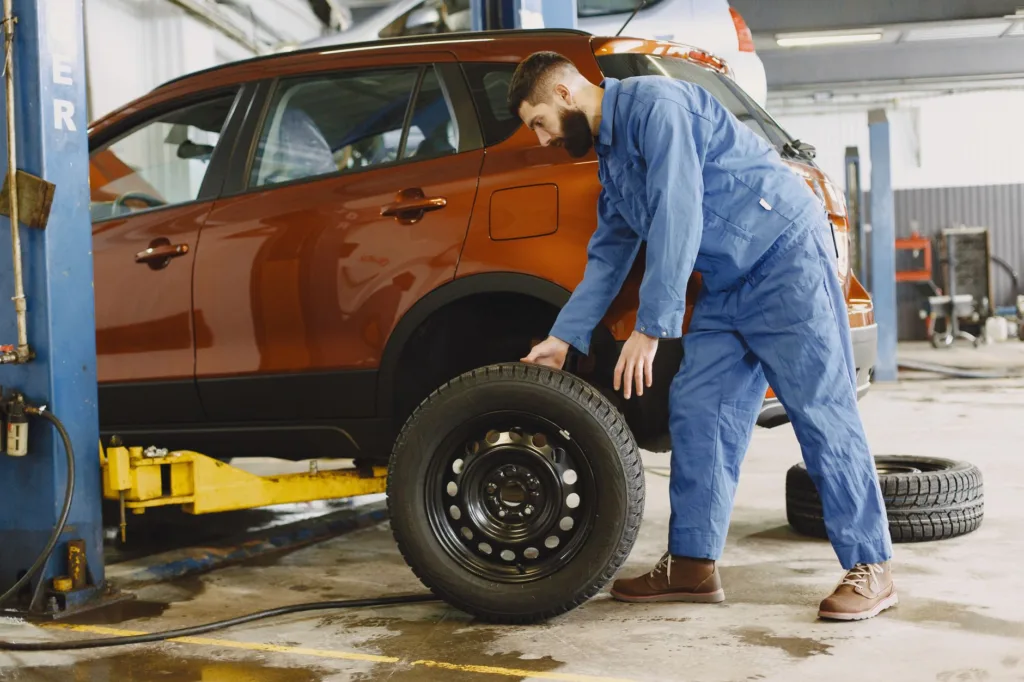
Tire rotation usually costs about $20 to $60 as a standalone service, though prices can be higher at some dealerships or in high-cost areas. In some cases, it is included free with tire purchases, maintenance packages, or warehouse club memberships. The exact price depends on where you go, what type of vehicle you drive, whether extra services are bundled in, and whether your vehicle uses a standard front-to-back pattern or a more limited rotation pattern.
When related maintenance involves refitting wheels or specified fasteners, our torque wrenches for cars guide compares tools; check the required torque range and vehicle procedure before use.
That cost matters because tire rotation is one of the cheapest ways to extend tire life, preserve ride quality, and help your tires wear evenly. Skipping it can lead to premature tire replacement, which costs far more than the rotation itself. For most drivers, rotating tires at the proper interval saves money over time.
If you are trying to budget for routine maintenance, tire rotation is generally considered a low-cost service. But the lowest advertised price does not always tell the full story. Some shops bundle balancing, inspections, and air pressure adjustment into the visit, while others charge separately.
Typical Tire Rotation Cost Range
Most drivers will fall into one of a few common price ranges. A simple rotation on a standard passenger car is usually inexpensive, especially at independent tire shops and general service centers.
| Service Type | Typical Price Range | What It Usually Includes |
|---|---|---|
| Basic tire rotation only | $20 to $40 | Moving tires to new positions, basic visual inspection |
| Rotation at dealership | $30 to $60 | Rotation, inspection, sometimes air pressure adjustment |
| Rotation plus balance package | $40 to $100+ | Rotation, wheel balancing, tire inspection |
| Rotation included with tire purchase | $0 | Often part of a road hazard or installation package |
| Rotation during oil change package | $0 to $30 extra | May be bundled into routine maintenance |
These are broad estimates, not fixed national rates. Labor pricing varies by region, and some vehicles take more time than others. A compact sedan with standard all-season tires is usually quicker and cheaper than a heavy SUV or truck with oversized wheels.
What a Tire Rotation Actually Is
Tire rotation means moving each tire to a different position on the vehicle to help them wear more evenly. For example, the front tires may be moved to the rear, and the rear tires may be moved to the front in a specific pattern.
This matters because front and rear tires do not wear at the same rate. On many vehicles, the front tires wear faster because they handle steering, a greater share of braking forces, and, on front-wheel-drive vehicles, engine power as well.
By rotating tires regularly, you spread that wear across the whole set. That can help maximize tread life and maintain more balanced traction.
Why Tire Rotation Costs Vary
The difference between a $25 tire rotation and a $60 one often comes down to more than just labor. Several factors affect what you pay. For the different pressure-loss limitations, compare run-flat tires versus regular tires before deciding what roadside equipment to carry.
Type of Shop
Independent tire shops often have competitive pricing because tire service is one of their core jobs. Dealerships may charge more, but they sometimes include a broader inspection. Quick lube shops may advertise low-cost packages, especially if paired with an oil change.
Vehicle Size and Wheel Setup
A small sedan with standard wheels is usually straightforward. A larger pickup, full-size SUV, or van may cost more because the wheels are heavier and require more labor. Performance vehicles can also be more expensive if access is tighter or if the tires use directional or staggered fitments.
Bundled Services
Some shops roll other work into the appointment. That may include:
- Checking and adjusting tire pressure
- Inspecting tread depth
- Inspecting brakes or suspension visually
- Relearning tire pressure monitoring system settings on some vehicles
- Wheel balancing
If a service advisor quotes more than expected, ask whether balancing or another inspection has been added. A higher price is not always a bad deal if it includes work you actually need.
Membership or Purchase Benefits
Many tire retailers offer free lifetime rotations if you bought the tires there. Some warehouse clubs and maintenance plans include tire rotation at no extra charge. If you already paid for a tire package, you may not need to pay again.
Regional Labor Rates
Labor costs are generally higher in urban areas and regions with a higher cost of living. The same service that costs $25 in one town might be $50 in another.
How Often Tires Should Be Rotated
For most vehicles, tire rotation is recommended every 5,000 to 7,500 miles. Many drivers simply rotate tires at every oil change or every other oil change, depending on the vehicle’s maintenance schedule and oil type.
Your owner’s manual is the best source for the correct interval. Tire manufacturers may also provide guidance. If those recommendations differ, follow the vehicle manufacturer unless there is a specific tire-related reason to do otherwise.
| Driving Situation | Common Rotation Interval | Why |
|---|---|---|
| Normal daily driving | Every 5,000 to 7,500 miles | Promotes even tread wear |
| Frequent stop-and-go commuting | Closer to 5,000 miles | Front tires may wear faster |
| Front-wheel-drive vehicle | Closer to 5,000 miles | Front tires handle power, braking, and steering |
| Heavy SUV or truck use | 5,000 to 6,000 miles | More load can increase uneven wear |
| Performance or staggered setup | Varies | Rotation options may be limited |
If you are unsure when your last rotation was done, inspect the tread wear or check maintenance records. Uneven wear often means the tires have gone too long without being rotated, though alignment or inflation problems can also be involved.
What Is Usually Included in a Tire Rotation Service
A basic tire rotation is simple, but a quality shop usually does more than just swap wheel positions. That added value can make a modestly higher price worthwhile.
Standard Inclusions
- Removing all four wheels
- Moving them according to the correct rotation pattern
- Reinstalling and tightening lug nuts to spec
- Checking tire pressure
- Basic tread and condition inspection
Possible Extra Inclusions
- Brake inspection
- Suspension check
- Tire pressure monitoring system reset or relearn
- Wheel balancing
- Tread depth measurement printout
Not every shop includes the same extras. If price is your main concern, ask exactly what the fee covers.
Tire Rotation vs Wheel Balancing Cost
Tire rotation and wheel balancing are related, but they are not the same service. A rotation changes tire positions. Balancing corrects weight distribution in the wheel and tire assembly to reduce vibration. For another source of wheel-area noise and wear, see how long wheel bearings last and what can shorten their service life.
| Service | Purpose | Typical Cost | When You Need It |
|---|---|---|---|
| Tire rotation | Even out tread wear | $20 to $60 | Every 5,000 to 7,500 miles |
| Wheel balancing | Reduce vibration from uneven wheel weight | $40 to $100+ for a set | When tires are installed, vibration appears, or recommended by shop |
| Rotation and balance together | Even wear plus smoother driving | $40 to $100+ | Useful during periodic tire service |
If your steering wheel shakes at highway speed, a rotation alone may not fix it. That symptom more often points to balancing issues, tire defects, or suspension concerns. On the other hand, if the car drives smoothly and you are simply maintaining tires, rotation may be all you need.
When Tire Rotation May Cost More
Some situations make the job more complicated or reduce the available rotation patterns.
Directional Tires
Directional tires are designed to spin in one direction only. These can usually only be rotated front to rear on the same side unless the tires are removed from the wheels and remounted, which adds labor and cost.
Staggered Tire Setups
Some performance cars have larger rear tires than front tires. In many of these setups, full rotation is not possible because the tire sizes differ. You may be limited to side-to-side movement if the tires are non-directional, or no rotation at all if both staggered and directional.
Oversized Truck Tires
Larger off-road or heavy-duty truck tires are heavier and may take more time to handle safely. Shops may charge more for these vehicles, especially if a spare tire is included in the rotation pattern.
Corroded or Seized Wheels
In areas with winter road salt, wheels can stick to hubs. Removing them can take extra labor. Shops do not always charge more, but sometimes they do if the job becomes unusually difficult.
Can Tire Rotation Be Free?
Yes. Free tire rotation is common in several situations:
- You bought the tires from the same shop and the package includes lifetime rotations
- The service is bundled with a maintenance plan
- The rotation is included with an oil change promotion
- You belong to a membership club that provides tire service
Free does not always mean no conditions. You may need to return at specific intervals, keep documentation, or have the tires serviced only at that location to maintain coverage. It is worth reading the terms, especially if tire warranty coverage depends on documented rotations.
Is Tire Rotation Worth the Cost?
In most cases, yes. A tire rotation is inexpensive compared with replacing a set of tires early. Even wear can help all four tires age at a similar pace, which is especially important on all-wheel-drive vehicles where major tread-depth differences can cause drivetrain concerns.
For example, spending $30 every 6,000 miles is minor compared with replacing tires thousands of miles sooner than expected. The financial logic is usually straightforward. A small preventive cost can delay a much larger purchase.
There is also a drivability benefit. Tires that wear more evenly tend to be quieter and provide more consistent traction over their lifespan.
What Happens If You Skip Tire Rotation?
Skipping rotations does not usually create an immediate breakdown, but it often shortens tire life. The front tires may wear down much faster than the rear, especially on front-wheel-drive vehicles.
That uneven wear can lead to:
- Earlier tire replacement
- More road noise
- Reduced wet-weather traction on the more worn pair
- Difficulty keeping tread wear even across the set
- Potential issues on all-wheel-drive vehicles if tread depth becomes too uneven
In real-world terms, a driver who ignores rotation may end up replacing two front tires much earlier while the rear tires still have usable tread. That can be inconvenient and, depending on the drivetrain, not always ideal.
How Tire Rotation Helps Different Types of Vehicles
Front-Wheel-Drive Cars
These usually benefit the most from regular rotation because the front tires do most of the work. They handle acceleration, steering, and a large share of braking force.
Rear-Wheel-Drive Vehicles
Wear patterns can still be uneven, though often in a different way. Rear tires may wear faster under acceleration, while front tires still manage steering loads.
All-Wheel-Drive Vehicles
Regular rotation is especially important here. Many AWD systems work best when all four tires remain close in tread depth. Significant differences can create unnecessary drivetrain stress, though the exact tolerance varies by manufacturer.
Trucks and SUVs
Heavier vehicles can wear tires unevenly due to load, towing, and suspension geometry. If you carry cargo frequently or tow a trailer, consistent rotations matter even more.
DIY Tire Rotation vs Paying a Shop
Some owners rotate their own tires at home. If you already have the right tools and know the correct pattern for your vehicle, that can save labor costs.
However, DIY rotation is not just about moving tires around. You also need to lift the vehicle safely, support it properly, torque lug nuts to specification, and know whether your tire design or wheel setup limits rotation options.
| Option | Pros | Cons |
|---|---|---|
| DIY tire rotation | Saves labor cost, convenient for experienced owners | Requires tools, safe lifting, torque knowledge, time |
| Professional tire rotation | Quick, documented, often includes inspection | Costs money, may require appointment or wait time |
For a beginner, paying a shop is often the more practical choice. The service is inexpensive, and the shop can spot tire or brake issues while the wheels are off.
Common Mistakes Drivers Make About Tire Rotation Cost
Assuming the Cheapest Option Is Automatically Best
A very low advertised price may be fine, but sometimes it excludes basic checks. If another shop charges a little more and includes tire pressure adjustment, tread inspection, and a quick brake look, the higher fee may provide better value.
Paying for Rotation When It Is Already Included
Many drivers forget that their tire purchase came with free rotations. Check your paperwork before paying out of pocket.
Confusing Rotation With Alignment
A tire rotation does not correct alignment angles. If your car pulls to one side or the tires are wearing heavily on one edge, you may need a wheel alignment in addition to rotation.
Waiting Too Long Between Rotations
If you delay rotations until wear is already obvious, you lose some of the benefit. Rotating earlier is better than trying to correct severe uneven wear later.
Ignoring Tire Type and Fitment
Not every vehicle can use the same rotation pattern. Directional and staggered setups may have restrictions. Applying the wrong pattern can create unnecessary problems.
Maintenance Tips to Get the Most Value From Tire Rotation
If you want your tire rotation dollars to go further, pair the service with a few smart habits.
- Follow the owner’s manual interval. Do not guess. Staying on schedule is what makes rotation effective.
- Check tire pressure monthly. Even a well-rotated tire will wear poorly if underinflated or overinflated.
- Watch tread wear patterns. Uneven wear can signal alignment, inflation, or suspension issues.
- Keep records. A documented service history helps with warranty questions and future maintenance planning.
- Ask for tread depth readings. This gives you a clearer picture of remaining tire life.
- Consider balancing if vibration develops. Rotation alone will not solve every tire-related issue.
Real-World Cost Scenarios
Daily Commuter Sedan
A driver with a front-wheel-drive compact car goes to an independent tire shop every 6,000 miles. The shop charges $25 for rotation and air pressure adjustment. Over 30,000 miles, that driver might spend around $125 on rotations, which is modest compared with early tire replacement.
Mid-Size SUV at a Dealership
An SUV owner visits a dealership for routine maintenance. The dealer charges $45 for tire rotation, but the visit includes a multi-point inspection and tread report. That price is on the higher side, but still within a normal range.
Pickup With Oversized Tires
A truck owner with larger all-terrain tires pays $60 for rotation because the tires are heavier and the shop includes a five-tire rotation with the full-size spare. That cost may be reasonable given the extra labor and the higher replacement cost of truck tires.
Warehouse Club Tire Buyer
A driver bought tires from a membership warehouse store that includes free rotations for the life of the tires. In this case, the out-of-pocket cost is zero, though the owner still needs to keep up with scheduling.
How to Ask for the Right Service
If you call a shop and ask only for a tire rotation, you may not get enough detail to compare prices accurately. Ask a few simple questions:
- Is the quoted price for rotation only?
- Does it include air pressure adjustment?
- Does it include wheel balancing?
- Are there extra charges for SUVs, trucks, or directional tires?
- Is lug nut torque checked to specification?
- Do you provide a tread depth or tire condition report?
Those questions help you understand whether one shop is genuinely cheaper or just quoting a more limited service.
Signs You Should Rotate Tires Soon
Even if you do not remember the mileage since your last service, some clues suggest it is time to rotate:
- The front tread looks noticeably more worn than the rear
- Your last oil change was several thousand miles ago and no rotation was done
- The tires are getting noisier as they wear
- You recently started towing, hauling, or doing more city driving
- You cannot find any record of the last rotation
Visible wear differences are a sign to act soon, but they are not the ideal trigger. Preventive rotation works best before those differences become significant.
FAQ
How much does a tire rotation cost at most shops?
Most shops charge about $20 to $60 for a standalone tire rotation. Basic service on a passenger car is often near the lower end, while dealerships and larger vehicles may cost more.
Is tire rotation included with an oil change?
Sometimes. Some shops bundle tire rotation into an oil change or maintenance package, while others charge separately. Always ask what is included.
Why would a tire rotation cost more than expected?
Higher pricing may reflect added services such as balancing, inspections, tire pressure monitoring system resets, or extra labor for trucks, oversized tires, or directional setups.
Can I get a tire rotation for free?
Yes, if your tire purchase or maintenance plan includes it. Many tire retailers offer free lifetime rotations for tires bought through them.
How often should I rotate my tires?
A common interval is every 5,000 to 7,500 miles. Your owner’s manual provides the best schedule for your specific vehicle.
Is tire rotation the same as wheel alignment?
No. Tire rotation changes the position of the tires. Wheel alignment adjusts suspension angles so the tires track properly.
Do all tires need to be rotated?
Most vehicles benefit from regular tire rotation, but some staggered or directional setups have limited options. Check the vehicle manual or ask a tire professional.
Is it worth paying for tire rotation on an older car?
Usually yes, as long as the tires still have useful life left. Even on an older vehicle, even tread wear helps maintain traction and can delay replacement.
Final Takeaway on Tire Rotation Cost
For most drivers, tire rotation costs $20 to $60, with some services available for free if included with tire purchases or maintenance packages. That makes it one of the more affordable routine maintenance items on a car.
The real value is not just the service itself. It is the longer tire life, more even wear, and reduced chance of replacing tires sooner than necessary. If you are comparing prices, focus on what is included, how often the service should be done, and whether your current tires already come with rotation coverage.
In practical terms, a reasonably priced tire rotation done on schedule is usually money well spent.