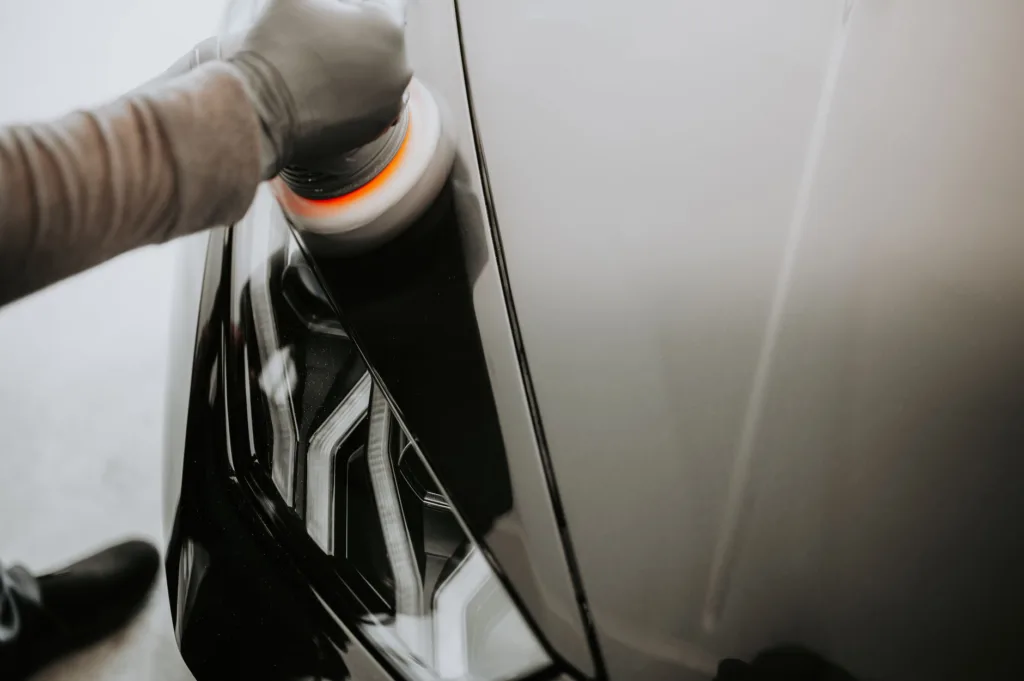
How much paint correction a car needs depends on the condition of the paint, the owner’s goals, and how much defect removal is realistic without sacrificing too much clear coat. A car with light wash marring may only need a one-step correction, while a neglected vehicle with deep swirls, etching, or scratches may need multiple stages, or in some cases only partial correction if the paint is already thin.
If you decide machine correction is appropriate, our dual action polisher comparison can help you compare tools before choosing a conservative pad-and-polish combination.
The short answer is that a car should get as much paint correction as needed to achieve the desired finish safely, and no more. Paint correction is not about removing every flaw at all costs. It is about improving the look of the paint while preserving enough clear coat for future maintenance and long-term durability.
If you are trying to figure out whether your car needs a light polish, a one-step correction, or a full multi-stage process, the best place to start is with the actual condition of the paint. Visible defects, paint thickness, color, age, and previous detailing history all matter. In many cases, a car does not need a “full correction” to look dramatically better.
What Paint Correction Actually Does
Paint correction is the process of removing or reducing surface defects in automotive paint by refining the clear coat. It is usually done with machine polishers, pads, and compounds or finishing polishes. The goal is to improve clarity, gloss, and uniformity by leveling the clear coat just enough to reduce imperfections. Before choosing a treatment, review what paint correction involves and how it differs from covering defects with protection.
Common defects that paint correction addresses include:
- Swirl marks
- Light scratches
- Wash marring
- Haze and oxidation
- Water spot etching, in some cases
- Light dealer-installed or previous detailer-induced sanding marks, if present
Paint correction is different from waxing, sealing, or coating a car. Those steps can protect and enhance appearance, but they do not remove defects. If the paint is already marked up, simply adding protection over it will lock in the appearance of those defects.
The Main Question: How Much Paint Correction Does a Car Need?
Most cars need less correction than owners think. For a daily driver that is washed regularly but has accumulated swirl marks, a one-step correction is often enough to create a major improvement. This typically removes moderate defects and leaves the paint looking much cleaner and glossier.
Cars with heavier damage, such as deep swirling, water spotting, or years of poor washing habits, may need a two-step process. That usually means a more aggressive compound step followed by a refining polish. However, even then, the paint may not become perfect, because not every defect can be safely removed.
Some vehicles need only spot correction. Others need a light polish over the whole car. A few need extensive correction on specific panels and a gentler approach on others. The right answer is not based on the car’s age alone. A garage-kept 10-year-old car may need less correction than a 2-year-old car that has been washed through an automatic brush tunnel every week.
What Determines How Much Correction a Car Needs?
1. The Type of Defects Present
Not all defects are equal. Fine swirls and haze are often removable with mild polishing. Deeper scratches may only be reduced, not eliminated. If a defect catches a fingernail, it is usually too deep to safely remove without removing an excessive amount of clear coat. If you are considering abrasive treatment, first review whether paint correction can damage paint and how to limit unnecessary clear-coat removal.
Different issues call for different levels of correction:
- Light swirls and marring: Often need one-step polishing.
- Moderate swirls and haze: Often need one-step correction or a light two-step process.
- Heavy defects: May need compounding followed by polishing.
- Water spot etching or oxidation: May require targeted correction, depending on severity.
2. Paint Thickness and Clear Coat Health
Every correction removes some clear coat. That is why paint thickness matters. A car with thin or previously corrected paint may not be able to tolerate aggressive polishing. In those cases, the goal should shift from maximum defect removal to safe improvement.
Paint thickness varies by manufacturer, model, and even panel. Repainted areas can be thicker or thinner than factory paint. Without measurement, it is difficult to know how much material is available. That is one reason experienced detailers often inspect paint with a thickness gauge before deciding how far to go.
3. Vehicle Age and History
Older cars often show more wear, but age alone does not tell the full story. A 15-year-old vehicle that has been hand-washed carefully might need only a light correction. A newer car can still have heavy wash marring if it has lived through rough automatic washes or poor washing techniques.
Previous polishing history matters too. If the paint has already been corrected several times, there may be less clear coat left. In that case, a lighter approach is usually smarter.
4. Color and Paint Type
Some colors make defects easier to see. Black and very dark colors tend to show swirls, haze, and micro-marring more clearly than silver or white. That does not necessarily mean they have more damage. It simply means the defects are more visible.
Soft paint can correct quickly but also mar easily. Hard paint can be more resistant to polishing and may require a more aggressive pad or compound. This is why identical-looking defects on two different vehicles can take very different amounts of work to correct.
5. The Owner’s Expectations
How much paint correction a car needs also depends on what the owner wants. A daily driver may only need a noticeable improvement. A weekend show car may need a much higher level of refinement. The more perfect the finish needs to be, the more time, labor, and risk are involved.
It is important to be realistic. A near-perfect finish is possible on many cars, but achieving it can require more paint removal and more hours of labor. Sometimes the safer choice is to preserve paint and accept a small amount of remaining imperfection.
Common Levels of Paint Correction
Paint correction is usually discussed in terms of one-step, two-step, or multi-step work. These are general categories, not strict industry standards. Different detailers may define them slightly differently.
| Correction Level | What It Usually Involves | Best For | Typical Result |
|---|---|---|---|
| Light polish | Mild polish with a finishing pad | Very light marring, fresh paint, routine refinement | Improved gloss and minor defect reduction |
| One-step correction | Single polish/compound combination | Moderate swirls and daily-driver paint | Noticeable improvement, often a strong balance of time and results |
| Two-step correction | Compounding followed by refining polish | Heavier swirls, haze, deeper visible defects | Greater defect removal and clearer finish |
| Multi-step correction | More aggressive staging, sometimes spot work by panel | Severe defects, show cars, difficult paint systems | Highest possible finish improvement, with more time and risk |
For many owners, a one-step correction is the sweet spot. It often gives a substantial visual improvement without the labor and clear coat removal of a full two-step process. If the car has heavy defects, the technician may still recommend a multi-step approach, but only where the paint condition justifies it.
When a Car Needs Only Light Correction
Light correction is usually enough when the paint has only minor wash marring, a few faint swirl marks, or a slightly dull appearance. This is common on well-maintained cars that are washed by hand and protected with wax, sealant, or a coating. The paint may not be flawless, but it often does not need a heavy polish.
Signs that light correction may be sufficient include:
- Swirls are only visible under strong light
- The surface feels smooth but looks a little hazy
- The paint has no obvious deep scratches
- The car has never been heavily neglected
In these cases, the goal is usually to restore clarity and gloss rather than chase every last defect. That keeps the process safer and more efficient.
When a Car Needs a One-Step Correction
A one-step correction is often the most practical choice for a typical daily driver with moderate swirls and light scratches. It can deliver a big cosmetic improvement without the cost and paint removal of a full two-step correction. Many owners are surprised by how much better the car looks after a single pass with the right combination of polish and pad.
This approach works well when:
- Defects are moderate, not severe
- The car is not a show vehicle
- The owner wants a strong improvement, not perfection
- Paint thickness is average and safe to work with
One-step correction is often the best compromise between time, money, and results. It is also a common choice before applying a ceramic coating or other long-term protection, because it cleans up the paint without going too aggressive.
When a Car Needs a Two-Step or Multi-Step Correction
Two-step correction is usually needed when the paint has heavier swirling, more visible scratches, oxidation, or a rougher overall finish. The first step removes the more obvious defects, and the second step refines the surface for better gloss and clarity. This is more labor-intensive, but it is often necessary on neglected paint.
A two-step process may be appropriate if:
- The car has years of wash-induced damage
- The finish looks cloudy or dull even after washing
- There is significant oxidation on single-stage or older clear coat paint
- Previous polishing attempts left haze or micro-marring
Multi-step work may be justified for show cars, concours prep, or vehicles with paint that responds poorly to simple one-step polishing. Even then, the work should be guided by paint depth and safety. Perfecting the appearance at the cost of long-term paint health is usually not a good tradeoff for a road car.
What Paint Correction Cannot Fix
One of the most common mistakes is expecting paint correction to solve every paint problem. It cannot. Paint correction improves the surface of the clear coat, but it does not repair everything underneath or beyond it.
Paint correction usually cannot fix:
- Deep scratches that penetrate through the clear coat
- Stone chips
- Peeling clear coat
- Severe oxidation that has already damaged the paint structure
- Body damage, dents, or panel distortion
- Etching that is too deep to safely level
If a scratch is deep enough to feel with a fingernail, it may be too deep for full removal. In that case, the best result may be reduction rather than elimination. That is normal. Safe correction always matters more than chasing a defect that cannot realistically be removed.
How to Tell How Much Correction Your Car Needs
Inspect the Paint in the Right Light
Paint defects often hide in shade and show up under direct light. Use bright sunlight, a handheld inspection light, or strong shop lighting to look at the paint from different angles. Swirls usually appear as fine circular marks, while scratches tend to look straighter and more directional.
Do not rely on how the car looks from 10 feet away. Many cars appear fine at a glance but show a large amount of wash marring when inspected closely. That is why detailers often do a full pre-inspection before deciding on the correction level.
Use the Fingernail Test Carefully
If a scratch catches a fingernail, it is likely too deep for safe removal through normal correction. That does not mean nothing can be done, but it does mean a conservative approach is usually best. Trying to remove a deep scratch entirely can remove too much clear coat from the surrounding area.
Look at the Car as a Whole, Not Just One Bad Panel
It is common for one door or the hood to look much worse than the rest of the car. That does not mean the whole car needs the same aggressive treatment. Sometimes spot correction on the worst panels is enough, while the rest of the car only needs a light polish.
Consider Paint Thickness Measurement
A paint thickness gauge can help show whether a panel is unusually thin, repainted, or inconsistent. While it does not tell you everything, it is a useful tool for deciding how aggressive to be. If a panel is already thin, a lighter correction may be the safest option.
How Much Correction Is Too Much?
Too much correction is when more clear coat is removed than is necessary to get the desired result. Every polishing session removes some material, even if the amount is small. On a healthy vehicle, a reasonable correction may be safe. On thin or previously worked paint, repeated aggressive polishing can create long-term problems.
Signs that correction may be too aggressive include:
- Visible edge thinning
- Burn-through risk near sharp body lines
- Excessive heat during polishing
- Hazy areas from improper pad or polish use
- Overly thinned clear coat on sensitive panels
For that reason, professional detailers often avoid chasing 100 percent defect removal on every car. A finish that looks excellent under normal viewing conditions is usually a better goal than absolute perfection with reduced paint life.
Typical Cost Factors by Correction Level
Costs vary widely by vehicle size, paint condition, region, and the detailer’s process. It is better to think in terms of what drives the price rather than expecting a single universal number. Heavier correction takes more time, more product, and more skill.
| Factor | How It Affects Cost |
|---|---|
| Vehicle size | Larger vehicles take longer and usually cost more |
| Paint condition | Heavier defects require more time and more stages |
| Paint hardness | Difficult paint may need more labor to correct |
| Prior damage or poor washing history | More defect removal usually means more work |
| Inspection and prep | Decontamination, masking, and testing add time |
| Desired finish level | Higher expectations usually require more steps |
Rather than asking only “How much does correction cost?”, it helps to ask “How much correction does this car actually need to look the way I want, safely?” That is the more useful question, because the level of work should match the paint’s condition.
Why Paint Correction Is Often Done Before Protection
Paint correction is commonly performed before wax, sealant, or ceramic coating because those products lock in the appearance of the paint underneath them. If the paint is dull or covered in swirls, protection will preserve that look. Correcting the paint first gives the protection layer a cleaner surface to bond to or sit on top of, depending on the product.
This does not mean every car must be fully corrected before protection is applied. Sometimes a light polish is enough. In other cases, a car in daily use may simply need cleaning and decontamination with only a minor correction where it matters most.
Common Mistakes When Deciding How Much Correction a Car Needs
Assuming More Correction Is Always Better
More aggressive correction can remove more defects, but it also removes more clear coat. That tradeoff is not always worth it. A car that looks excellent and remains healthy is usually a better result than one that looks slightly better but has had unnecessary paint removed.
Correcting Without Proper Inspection
Starting with a compound because the paint “looks bad” can lead to overcorrection. Always inspect first. Many cars only need a mild polish, and starting too aggressively can create haze or thickness issues that were not there before.
Ignoring Problem Areas
Edges, curves, and body lines are more vulnerable to burn-through. These areas often need reduced pressure or a lighter approach. A full-panel correction plan should still account for the car’s most delicate sections.
Expecting Scratch Removal from Polishing Alone
Not every scratch is a correction candidate. Some marks are too deep, and others are actually in the paint or beneath the clear coat. Polishing can improve many defects, but it is not a substitute for body repair when damage is structural or deep.
Skipping Proper Wash and Decontamination
If the paint is not washed and decontaminated first, polishing can drag dirt across the surface and create more marring. Proper prep helps ensure the correction process works as intended and reduces the chance of introducing new defects.
Real-World Examples of How Much Correction a Car May Need
Example 1: A Well-Maintained Daily Driver
A three-year-old sedan with hand-washed paint and only light swirls may need a one-step correction. The result could be noticeably better gloss and a large reduction in visible defects without a heavy compound stage.
Example 2: A Black SUV with Automatic Wash Damage
A black SUV washed weekly through a brush tunnel may show heavy swirl marks on nearly every panel. That car may need a two-step correction, especially if the owner wants the paint to look clean under bright sun and showroom lighting.
Example 3: An Older Garage-Kept Weekend Car
An older garage-kept coupe might have minor haze and a few small defects but otherwise healthy paint. It may only need a light polish, because the paint has been protected from harsh environmental exposure.
Example 4: A Repainted Panel With Thin Clear Coat
If one fender has been repainted and measures thinner than the rest of the car, that panel may need only a very light correction or none at all. In some cases, preserving the paint is more important than maximizing appearance on that one area.
How to Decide the Right Level for Your Car
The right amount of paint correction is the least aggressive process that gives you the result you want. That might mean a light polish, a one-step correction, or a more involved multi-step process. The decision should be based on the paint’s condition, not just on the desire for a perfect finish.
A practical way to think about it is this:
- Light defects often need only a light polish
- Moderate defects often need one-step correction
- Heavy defects may need two-step or targeted multi-step work
- Thin or fragile paint should be corrected conservatively
If you are unsure, a test spot is often the smartest approach. A small section can show how much improvement is possible before committing to the entire car. This helps prevent unnecessary work and reduces risk.
FAQ
Does every car need paint correction?
No. Many cars only need a light polish or no correction at all if the paint is already in good shape. Paint correction is only needed when the finish has visible defects or dullness that the owner wants improved.
How do I know if my car needs one-step or two-step correction?
If the defects are moderate and the paint is otherwise healthy, one-step correction may be enough. If the paint has heavier swirls, haze, or deeper visible defects, a two-step process may be more appropriate.
Can paint correction remove all scratches?
No. It can reduce or remove many surface defects, but deep scratches, chips, and damage through the clear coat usually cannot be fully polished out.
Will paint correction damage my car’s paint?
It can if it is done too aggressively or without proper inspection. When performed carefully, paint correction is a controlled process, but it still removes a small amount of clear coat.
How often should a car be paint corrected?
There is no fixed schedule. It depends on washing habits, paint condition, and how often the car is exposed to defects. Some cars may go years without correction, while others may need occasional light polishing.
Is paint correction worth it on an older car?
Often, yes, if the paint still has enough clear coat and the defects are mainly on the surface. On very thin or heavily damaged paint, a conservative approach may be better than a full correction.
Can I apply wax or ceramic coating without paint correction?
Yes, but any existing swirls or haze will still be visible under the protection layer. If appearance matters, some level of correction usually makes the final result look better.
Conclusion
How much paint correction a car needs depends on the paint’s condition, thickness, age, and your expectations. Many cars only need a light polish or a one-step correction, while heavily swirled or neglected paint may require a two-step process. The best result is not necessarily the most aggressive one. It is the one that improves the finish while preserving the paint for the long term.
If you inspect the paint carefully, understand what the defects really are, and choose the least aggressive method that achieves your goal, you will usually make a better decision. Paint correction should improve the car’s appearance, not create unnecessary risk.