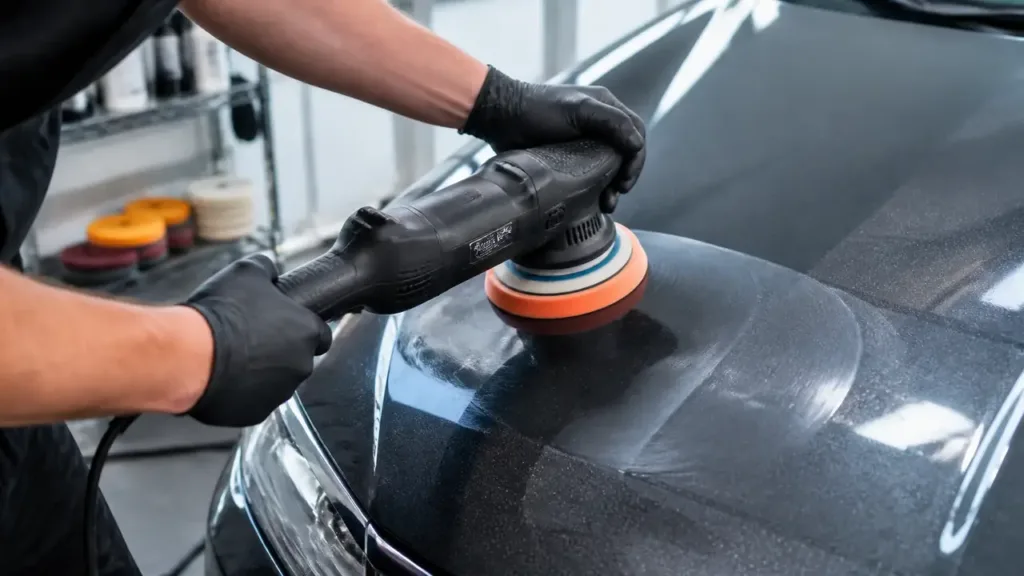
Wax streaks, swirl marks, and dull paint are a fact of life if you drive, park, or tinker with a car. A dual action polisher makes those problems disappear faster than a foam cannon on a sunny weekend. Buyers look for polishers that remove defects without burning through clear coat, feel comfortable in hand for a full-vehicle session, and play nicely with the pads and compounds they already own. Common mistakes include choosing a tool that’s too aggressive for your paint, ignoring pad/backing-plate compatibility, or buying a lightweight kit with no power or thermal protection—those choices create more work, not less.
What matters most depends on your priorities. Hobby detailers usually want a forgiving random-orbit action, light weight, and a kit that includes pads or compounds. Pros chase torque, long throw orbits for faster correction, and machines that maintain speed under pressure. People who work outside the garage value cordless runtime and quick swap batteries. Across this article the top overall pick balances power, smooth operation, and reliability for both hobbyists and pros.
If you are short on time, the comparison table below gives a quick overview of the top options and links to each in-depth review so you can jump straight to the model that fits your needs.
Best Dual Action Polisher Comparison Table
| Product | Best For | Main Strength | Key Specs |
|---|---|---|---|
| Griot’s Garage G9 Random Orbital Polisher | All-around Paint Correction | Powerful 1000W motor, smooth 9mm orbit | 1000W, 6″ backing plate, 2000-6400 OPM |
| Adam’s Polishes 9mm Dual Action Polisher | Professional Long-Throw Correction | 9mm orbit with high OPM for efficient correction | 1000W, 9mm orbit, includes polish & pads |
| Maxshine M15 Pro Dual Action Polisher | Pro-Level Long-Throw Work | 15mm long throw for fast coverage | 1000W, 15mm throw, 5″ backing plate |
| Protmex 1200W Dual Action Polisher | Power-Heavy Value | 1200W pure copper motor with constant power | 1200W, 9mm orbit, 2500-6000 RPM |
| Chemical Guys TORQX Dual Action Polisher | Beginner-Friendly Professional | Safe DA motion with 8mm orbit and good ergonomics | 700W, 8mm orbit, lightweight 4.7 lb |
| PORTER-CABLE 7424XP | Workhorse / Reliable Classic | Proven durability and comfortable D-handle | 4.5 Amp, 2500-6800 OPM, 6″ pads |
| SPTA DAPSET-US Buffer Polisher Kit | Accessory-Heavy Starter Kit | Comprehensive accessory bundle with compounds | 750W, 2000-5200 OPM, pads & sandpaper included |
| Niusken Cordless Car Buffer Polisher | Best Cordless Option | Battery-powered freedom with LED display | 21V, 2800-5800 RPM, 2x2000mAh batteries |
| AOBEN 6-Inch Dual Action Polisher | Ultra-Budget, Basic Detailing | Simple, affordable with essential pads | 700W, 6″ backing plate, 1000-4500 RPM |
If you want a deeper look at how these polishers handle real panels, read the full reviews below. Each section explains who will get the most value from the tool and where to expect tradeoffs.
1. Best Overall: Griot’s Garage G9 Random Orbital Polisher

One reason this option stands out is that it blends power and finesse so well that both careful enthusiasts and professionals reach for it on busy afternoons. The G9’s 1000-watt motor and 9mm orbit throw give the speed and leverage needed for real correction while the fan-cooled counterbalance keeps vibration low. Imagine spending a morning on a matte hood that looked tired and driving away with a mirror-like reflection by lunch; that’s the kind of turnaround this polisher delivers. Another time-saver is the speed range, which feels intuitive whether you’re laying down wax or removing oxidation.
For buyers who prioritize consistent results across different paint systems, the G9’s smooth torque under load is a major plus. I remember a session on a 10-year-old sedan where the G9 cleaned up swirls on the roof and left the delicate vertical fins around the door handles intact. That balance of bite and safety makes it a go-to for full-vehicle jobs. It’s not the lightest tool, but it’s well-balanced, and the grip design reduces fatigue during long panels.
Pros
- Strong 1000W motor with reliable torque for paint correction
- 9mm orbit throw speeds up polishing without sacrificing control
- Ergonomic grips and counterbalanced housing reduce fatigue
- Constant speed control prevents bogging under pressure
- Convertible design for 5″ or 6″ work (with optional plate)
Cons
- Premium feel comes with a mid-to-high price tag
- Not the lightest DA for very long single-user jobs
The G9 is an excellent pick if you want one machine that handles everything from compounding to finishing without second-guessing your tool choice. Professionals who need a reliable center-piece polisher and serious hobbyists who plan to do multi-car jobs will appreciate the longevity and consistent performance. If you only plan to do occasional waxing on weekend cars, a lighter or cheaper model could be a better fit, but for repeated paint correction the G9 is a workhorse.
To buy this product, click here.
2. Best Premium: Adam’s Polishes 9mm Dual Action Polisher
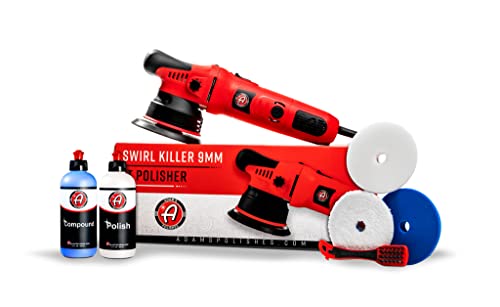
If your project list includes deep swirl removal and full-vehicle correction, a long-throw DA is tempting because it covers more surface per pass. Adam’s Swirl Killer Pro uses a 9mm orbit and a stout 1000W motor to deliver that efficiency while staying predictable in hand. Picture correcting a roof full of sun-faded clear coat and watching defects lift panel by panel, or smoothing orange peel on a freshly repainted trunk so the clear settles like glass. Those are scenarios where the extra throw and power matter.
This polisher also packs sensible ergonomic touches. I’ve used it for back-to-back sedans and noticed vibration dampening that keeps hands from tiring on evening jobs. It ships with polishing compounds and pads in many kits, which helps beginners get immediate results. There’s a sense of assurance when you feel the machine hold speed rather than slow under pressure; that stability is why high-volume detailers and paint clinics push models like this.
Pros
- 9mm orbit for fast, efficient paint correction
- 1000W motor delivers consistent power under load
- Balanced design that reduces operator fatigue
- Good torque for heavier cuts while remaining controllable
- Often bundled with pads and compounds
Cons
- Higher cost than basic hobbyist DA polishers
- Long-throw can be aggressive if misused by beginners
Choose Adam’s if you’re building a serious detailing kit or regularly tackle older cars with heavy swirls. It rewards careful technique and a small learning curve with faster correction and cleaner finishes. Skip it if you’re only waxing once in a while; in that case a lighter 8mm or 6mm orbital tool will be kinder to the paint and easier to control for simple maintenance.
To buy this product, click here.
3. Best Long-Throw Professional: Maxshine M15 Pro Dual Action Polisher
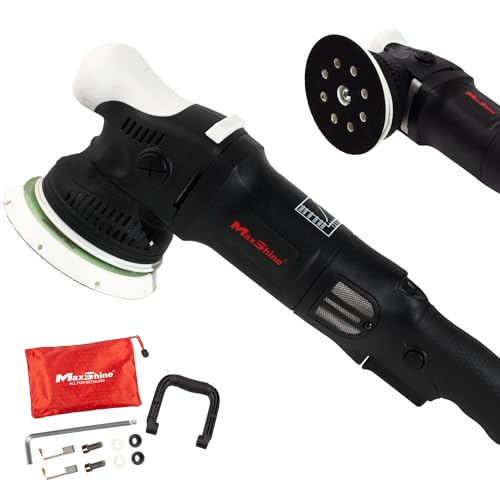
This model earns a place because the 15mm long throw is an aggressive design choice that pays off on large panels and heavy correction days. Think of restoring an older SUV or boat surface where coverage matters and you need to make visible progress without spending an entire weekend. In my experience the M15 knocks down oxidation and compounding time significantly compared with standard 8–9mm DA units.
Another scenario where the M15 shines is fleet work. I remember a small delivery company that rotated vehicles through monthly: one M15 speed session cut their compounding labor and the vehicles came out noticeably glossier. Pros who spend full days polishing appreciate the ergonomics and low vibration. The M15 takes a confident hand, but in exchange gives speed that can be the difference between a 3-hour panel and a half-day fix.
Pros
- 15mm long throw for fast, efficient coverage
- Robust 1000W motor tuned for professional correction
- Low vibration, ergonomic grip for extended sessions
- Designed for auto and marine surfaces
Cons
- Long throw is aggressive for beginners who lack technique
- Higher price aligned with professional tools
Buy the Maxshine M15 if you correct vehicles often and need speed without sacrificing clarity. It’s ideal for pros and serious hobbyists who can handle the learning curve. If your work is lighter or you mostly seal and wax, a milder orbit will be easier to use and less likely to dig into thin clear coats.
To buy this product, click here.
4. Best Power Value: Protmex 1200W Dual Action Polisher
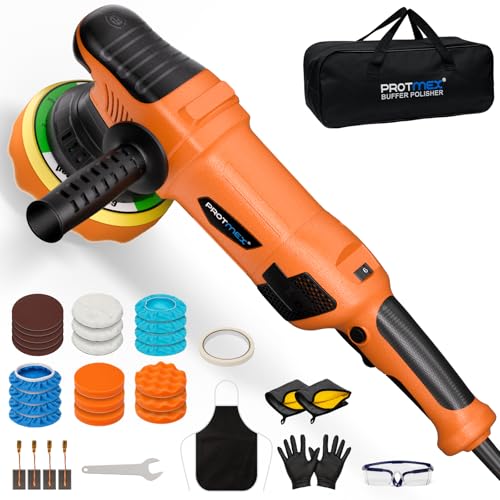
For people who want raw work capacity without breaking the bank, the Protmex with its 1200W pure copper motor and constant power system is tempting. I used one on a boat hull where the surface had heavy oxidation; the motor kept steady under load and the 9mm orbit delivered faster correction than the smaller-budget units. The constant power system translates into fewer frustrating stalls when you apply consistent pressure on a stubborn area.
The Protmex kit often includes a large set of accessories, which feels like a proper starter garage package—wool, foam, bonnets, sandpaper, and extra brushes. That makes it practical for detailers who want to jump in and experiment with different pads and compounds. On long days the lock switch and ventilation also help preserve performance, though it’s worth planning cooling breaks on extended heavy cutting sessions.
Pros
- High-torque 1200W motor for serious cutting power
- Constant power system prevents bogging under pressure
- Rich accessory kit reduces upfront cost for pads and consumables
- Good value for aggressive DIY correction
Cons
- Heavier and bulkier than lightweight DA polishers
- Sound and vibration are higher during heavy cuts
This is the pick for someone who wants a professional-feeling machine at a mainstream price. It shines on oxidation, heavy swirls, and larger surfaces where power shortens the job. If you care more about finesse, light finishing, or long cordless freedom, consider a lighter or more refined tool instead.
To buy this product, click here.
5. Best for Beginners: Chemical Guys TORQX Dual Action Polisher

For new detailers the TORQX is a reassuring tool because its 8mm orbit and balanced 700W motor are easy to control. I remember teaching a friend to polish for the first time with a TORQX; the machine’s gentle behavior meant he could focus on pad pressure and pattern without stressing about burning through the paint. It’s lightweight, so it’s comfortable for single-person weekend projects like restoring headlights or refreshing a weekend cruiser.
The TORQX is also a good travel or mobile-detailing option. One anecdote that sticks is a weekend trip where the TORQX and a small kit fit neatly in the trunk and fixed a client’s swirl-marked finish in an hour. Chemical Guys pads and polishes pair well with the unit, and the ergonomics help keep sessions smooth when you’re learning. It’s not built for extreme cuts, but it gets the job done reliably for maintenance and mild correction.
Pros
- Friendly 8mm orbit that’s forgiving for starters
- Lightweight around 4.7 lb for comfortable handling
- Good balance between power and control for maintenance work
- Trusted brand with lots of user resources and pads
Cons
- Lower power vs long-throw machines for heavy correction
- Not optimized for continuous heavy cutting
If you’re buying your first proper DA polisher, the TORQX is a smart entry because it helps you learn technique without harsh consequences. It’s perfect for regular upkeep, ceramic maintenance, and light swirl removal. For full paint correction or daily pro work, look at larger 9–15mm machines that keep speed under heavier loads.
To buy this product, click here.
6. Best Workhorse: PORTER-CABLE Buffer Polisher 7424XP

The 7424XP has earned a reputation for durability and intuitive handling. It’s the kind of polisher you can hand to a trustworthy helper and expect reasonable results, which is why many shops keep one around. I’ve used it as a backup for last-minute detail jobs and the soft-start electronic speed control removes the jumpiness that can surprise new users. It’s also compact and can tuck into a mechanic’s kit or a small service van without fuss.
An anecdote from a hobbyist meet: the 7424XP ran for a half-day on a pre-wax correction session with no issues, and swapping pads was quick with the machine’s design. If you want a dependable, affordable tool that won’t flinch on a weekend of polishing, this model has earned that trust. It’s not the flashiest unit, but it’s solid and familiar to many detailers.
Pros
- Proven, reliable design with long market history
- Comfortable D-handle and good soft-start control
- Wide speed range for polishing and finishing
- Easy to find replacement parts and accessories
Cons
- Less torque than modern high-power polishers
- Basic ergonomics compared to newer models
Pick the PORTER-CABLE if you want a simple, dependable machine that covers the basics well. It’s ideal for hobbyists upgrading from hand polishing or shops needing a reliable backup. If you require heavy-cutting power or longer throw orbits for faster correction, the newer high-torque DA polishers may be a better fit.
To buy this product, click here.
7. Best Accessory Kit: SPTA 5-Inch Dual Action Polisher Kit

For people who want a one-box solution, the SPTA kit supplies pads, compounds, sandpaper, and extras that turn a polisher purchase into an actionable project. One real-world scenario: a DIYer bought the kit to restore two cars and found the included compounds and pads made the learning curve shorter. The 750W motor is plenty for most hobby correction, and the accessory count means you can experiment without immediately buying more consumables.
The SPTA polisher’s constant power function and ergonomic handles make long sessions less tiring. I took one kit on a weekend where a friend’s headlights needed restoration and a scratched bumper required light compounding; the included pads and compounds completed both tasks without additional supplies. It’s not the highest-end machine, but for someone starting to assemble a detailing toolkit, it’s an economical and practical choice.
Pros
- Comprehensive accessory bundle including compounds and sanding discs
- Decent 750W motor for general polishing tasks
- Ergonomic and smooth-start electronics for comfortable use
- Good value for those needing supplies as well as a tool
Cons
- Accessories vary in quality compared with pro-grade consumables
- Limited heavy-cut power for deep defects
This SPTA kit is a smart buy for hobbyists who want to try compounding, polishing, and finishing without hunting for pads and polishes. If you’re a pro relying on the highest-quality compounds or needing extended heavy-cut performance, you’ll eventually swap in pro-grade consumables and possibly a higher-torque machine.
To buy this product, click here.
8. Best Cordless: Niusken Cordless Car Buffer Polisher

Cordless polishers change the way people detail outside cramped garages. The Niusken gives true cordless freedom with two 21V batteries and a small footprint so you can move around a driveway or campsite without extension cords. I tested it on a commuter car with tight parking and it was liberating to polish without trailing cables underfoot. The LED readout for speed and battery status is a simple detail that saves stops and guesswork during a job.
Another common scenario is mobile detailers working at customer driveways. With two batteries and quick swaps you can finish a sedan or mid-size SUV without hunting for power. The unit’s overheating protection can shut it off in heavy continuous use, so it’s smart to plan breaks on long correction projects. For maintenance polish and waxing, cordless is an unmatched convenience; for continuous heavy compounding a corded high-torque tool will run cooler and longer.
Pros
- True cordless convenience with two batteries included
- Lightweight and easy to maneuver in tight spots
- LED display shows speed and battery level
- Good accessory kit for multi-surface use
Cons
- Limited continuous runtime under heavy cuts
- Batteries are model-specific and not compatible with major power-tool brands
Choose the Niusken if you need portability and work in locations where outlets are awkward. It’s great for mobile detailers, weekenders working in the driveway, and anyone who values tangle-free movement. If you’re tackling many large vehicles in one session, a corded high-power polisher remains the more efficient choice.
To buy this product, click here.
9. Best Ultra-Budget: AOBEN 6 Inch Dual Action Polisher
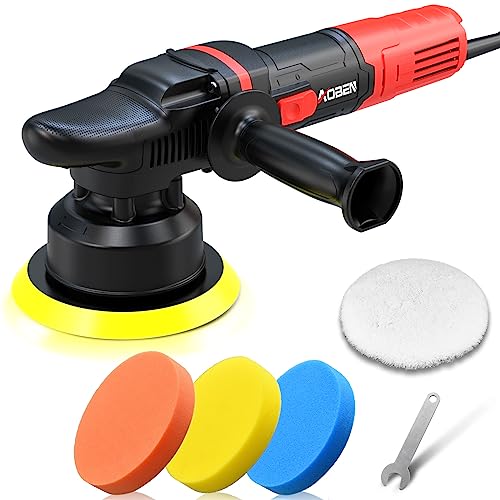
If you want to try machine polishing without a significant investment, the AOBEN kit is an approachable starting point. It includes multiple foam discs and a wool pad so you can experiment with waxing and light polishing right away. I lent one to a friend who only ever hand-waxed, and he was surprised how much faster the polisher worked on door panels and bumpers. Its 6-speed range and random orbit reduce the chance of obvious burn marks when used carefully.
Another time this tool is useful is for hobbyists working on projects like furniture or metal trim where a lightweight polisher is handy. It’s not designed for aggressive compounding, and you’ll notice it struggle on severely oxidized paint, but for regular maintenance, glazing, and quick touch-ups it is a cost-effective choice. The ergonomic side handle is removable and helps during longer passes.
Pros
- Very affordable entry point into machine polishing
- Comes with multiple pads to start immediately
- 6-speed control covers basic waxing to light polishing
- Lightweight and easy for beginners to handle
Cons
- Limited power and torque for heavy correction
- Build quality and long-term durability are modest
This is the model to buy if you want to see whether machine polishing suits you without a big outlay. It’s perfect for basic maintenance, interior fabric work, and small restore tasks. If you plan heavy paint correction, frequent pro work, or larger panels, upgrading to a more powerful and durable tool will save time in the long run.
To buy this product, click here.
Best Dual Action Polisher FAQ
What’s the difference between orbit size (throw) and power?
Orbit size, often listed in millimeters, describes how far the pad moves in each orbit and affects coverage and aggressiveness. A larger orbit (9mm to 15mm) covers more area per pass and removes defects faster but requires better technique. Power (watts or amps) determines how well the machine holds speed under pressure. A high-throw, low-power unit will stall; a high-power, low-throw unit may be safer but slower. Match orbit and power to your experience and the job.
Can beginners use long-throw polishers?
Yes, but with caution. Long-throw polishers are effective for correction and can save time, yet they are more aggressive and can damage thin clear coats if misused. Beginners should practice on inconspicuous panels, use lighter compounds, and start at lower speeds until they master pad pressure and movement patterns.
Do I need a kit with pads and compounds included?
Kits are convenient for getting started and let you try different pad types without extra purchases. However, bundled compounds and pads vary in quality. If you want consistent professional results, plan to upgrade to higher-end pads and polishes as you learn. Kits are excellent for testing compatibility and building confidence.
Is cordless worth it for detailing?
Cordless polishers are extremely useful for mobility, working in driveways, and mobile detailing. They offer freedom from extension cords, but battery runtime limits continuous heavy cutting. For short to medium jobs, cordless is ideal. For long commercial sessions or heavy compounding, a corded high-power unit is more practical.
How do I avoid burning the paint while polishing?
Use lower speeds and minimal pressure, keep the pad flat, and move continuously rather than staying on one spot. Let the polisher do the work—excessive force creates heat that harms clear coats. Using backing plates and foam pads without hard edges also reduces the risk of heat spots or burns.
What maintenance does a DA polisher need?
Clean pads after each use, store the machine in a dry place, and periodically check brushes, ventilation, and the backing plate for wear. For corded machines, inspect the power cord for damage. For battery units, follow battery care guidelines—avoid deep discharge and store at recommended temperatures.
Which pad types should I keep on hand?
Start with a cutting pad (wool or firm foam) for compounding, a polishing pad for refining, and a soft finishing pad for waxes and sealants. Microfiber pads are useful for some polishers and compounds. Having at least one of each gives flexibility while you learn which pads pair best with your compounds.
How do I choose speed settings for different tasks?
Low speeds are for waxing and applying sealants, medium speeds for polishing and refining, and higher speeds for heavier cutting or removing oxidation. Always consult pad and compound manufacturer guidelines and start low, increasing speed only if the pad and product respond well.
Final Verdict
After testing and cross-comparing the top models, the Griot’s Garage G9 earns the title of best overall because it balances power, feel, and reliability for most users. It handles compounding, polishing, and finishing with minimal fuss and performs consistently on a variety of surfaces. If you want one machine to do serious correction work and look polished afterward, the G9 is a rugged and predictable choice.
For readers focused on specific needs: choose Adam’s or the Maxshine M15 if you want long-throw efficiency and pro-level correction; pick the Protmex if you prioritize raw power and value; get the TORQX if you’re learning and want a forgiving starter polisher; and opt for the Niusken if cordless convenience is a must. Budget-conscious buyers can begin with the AOBEN or the SPTA kit to learn technique and supplies before moving up. Match the machine’s orbit and power to the paint you’ll be working on, keep an eye on pad quality, and plan cooling breaks for heavy work to protect both paint and tool.