Common signs of a bad ignition coil include engine misfires, rough idling, hard starting, poor acceleration, a flashing check engine light, reduced fuel economy, and a noticeable lack of power under load. In many cases, the vehicle may still run, but it will often feel uneven, sluggish, or shaky. If the problem gets worse, the engine may stall or run on fewer cylinders.
An ignition coil is a small but critical part of the ignition system. Its job is to convert the battery’s low voltage into the high voltage needed to fire the spark plugs. When a coil starts failing, the spark can become weak, inconsistent, or disappear entirely on one cylinder. That is why ignition coil problems often feel like a drivability issue before they become a complete no-start problem.
Understanding the warning signs matters because a bad coil can do more than make your car run poorly. It can also damage the catalytic converter if unburned fuel enters the exhaust, and it can leave you stranded if the failure becomes severe. The good news is that ignition coil symptoms usually follow recognizable patterns, and a methodical diagnosis can separate a coil problem from a spark plug, injector, vacuum leak, or fuel issue.
What an ignition coil does
Every gasoline engine needs three basic things to run properly: air, fuel, and spark. The ignition coil is responsible for the spark side of that equation. It takes 12-volt battery power and boosts it to the much higher voltage needed to jump the gap at the spark plug.
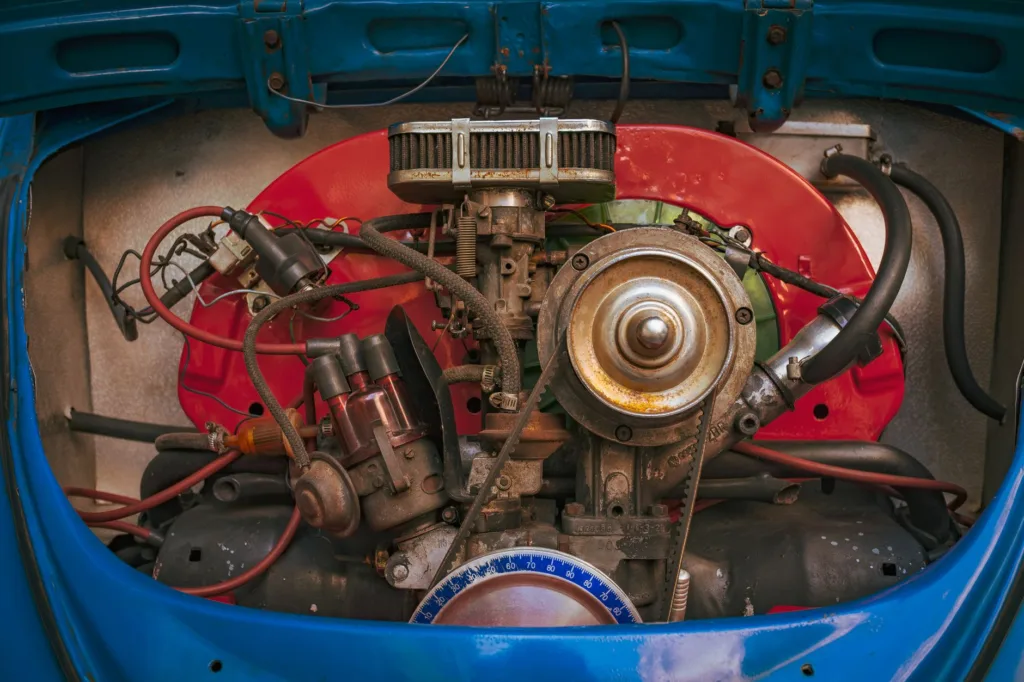
Older vehicles often used one coil and spark plug wires. Many modern vehicles use coil-on-plug systems, where each cylinder has its own coil mounted directly over the spark plug. Some engines use coil packs that serve multiple cylinders. No matter the design, the basic job is the same.
When one coil fails in a multi-coil engine, you may only notice a single-cylinder misfire. When a coil pack or shared coil fails, the symptoms can affect more than one cylinder at once. That difference can change how severe the vehicle feels when driving.
Most common signs of a bad ignition coil
1. Engine misfire
An engine misfire is the most common symptom of a failing ignition coil. A misfire happens when the air-fuel mixture in a cylinder does not ignite correctly, or does not ignite at all. You may feel this as a stumble, jerk, shudder, or rhythmic shake.
At idle, the engine may feel uneven, as if it is skipping every few seconds. Under acceleration, the misfire may become much more obvious. In some vehicles, the misfire only appears when the engine is under load, such as climbing a hill or merging onto the highway.
If the misfire is bad enough, the check engine light may flash. A flashing light usually means an active misfire severe enough to potentially damage the catalytic converter.
2. Rough idle
A bad ignition coil often causes a rough or unstable idle. The engine may vibrate more than usual when stopped at a red light, or the RPM may dip and recover in an irregular pattern. Some vehicles will feel as if they are about to stall, even though they continue running.
Rough idle alone does not prove the coil is bad. Vacuum leaks, dirty throttle bodies, worn spark plugs, and fuel delivery problems can cause similar symptoms. Still, when rough idle appears along with misfire codes or poor acceleration, ignition coils move higher on the suspect list.
3. Hard starting or no-start condition
If one ignition coil is weak, the engine may take longer to start. It may crank normally but struggle to catch right away. On a four-cylinder engine, one failed coil can make starting noticeably harder, especially in cold or damp conditions.
In more severe cases, a bad coil can contribute to a no-start condition. This is more likely on engines that use a single coil or coil pack rather than an individual coil for each cylinder. If the ignition system cannot produce adequate spark, the engine may crank but never fire.
4. Poor acceleration
A vehicle with a failing ignition coil often feels lazy when you press the gas pedal. Instead of smooth power delivery, it may hesitate or bog down. The problem is usually more obvious during passing, hill climbs, or heavy throttle.
This happens because one or more cylinders are not contributing full power. The engine control module may also reduce power output when it detects misfires in order to protect emissions components.
5. Loss of power under load
Some ignition coils fail only when they get hot or when cylinder pressure rises. That means the engine may idle fairly well, but begin misfiring during acceleration or highway driving. This is a classic pattern with weak coils.
For example, a car may feel normal on a light city drive but start bucking at 55 to 70 mph when you ask for more power. In these cases, the coil can still produce enough spark at low demand, but not enough when the engine is working harder.
6. Check engine light
A bad ignition coil commonly triggers the check engine light. The engine computer monitors crankshaft speed changes to detect misfires, and it will often store a trouble code when it sees a pattern. Common OBD2 codes include:
- P0300: Random or multiple cylinder misfire
- P0301 to P0308: Misfire on a specific cylinder
- P0351 to P0362: Ignition coil primary or secondary circuit faults, depending on vehicle design
A flashing check engine light deserves prompt attention. It usually means the misfire is happening right now, not just occasionally.
7. Bad fuel economy
If a cylinder is misfiring, fuel may enter the combustion chamber without burning efficiently. That reduces engine efficiency and can increase fuel consumption. You might notice you are filling up more often, even if your driving routine has not changed.
This symptom is usually not the first thing drivers notice, but it often shows up after the coil has been weak for a while. If the vehicle is also running rough and has misfire codes, poor fuel economy fits the pattern.
8. Fuel smell from the exhaust
A failing ignition coil can leave unburned fuel in the exhaust stream. In some cases, you may notice a stronger gasoline smell near the tailpipe. The engine may also sound uneven, especially at idle.
This symptom should not be ignored. Excess unburned fuel can overheat and damage the catalytic converter, which is much more expensive to replace than an ignition coil or spark plug.
9. Backfiring or popping sounds
Misfires caused by ignition coil issues can sometimes lead to popping or backfiring sounds from the exhaust. This happens when unburned fuel ignites in the exhaust system instead of inside the cylinder.
Not every bad coil will cause obvious backfiring, but it can happen, especially when the problem is severe or intermittent. It may be more noticeable during deceleration or when revving the engine.
10. Engine stalling
If the spark becomes inconsistent enough, the engine may stall at idle or low speed. This is less common than misfiring, but it can happen, particularly if more than one coil is affected or if the vehicle has another underlying issue at the same time.
Stalling is a more serious drivability symptom because it can create a safety issue in traffic. If your vehicle stalls while running rough or showing misfire codes, it should be diagnosed soon.
How ignition coil symptoms usually appear in real-world driving
Ignition coil problems do not always show up the same way. The exact symptoms depend on engine design, how many coils are failing, and whether the failure is constant or intermittent.
| Driving Situation | What You May Notice | Why It Happens |
|---|---|---|
| Cold start in the morning | Longer cranking, shaky idle, misfire for first minute | Weak coil may struggle when the engine and air are cold |
| Stop-and-go traffic | Rough idle, occasional stumble when pulling away | Low-speed operation makes single-cylinder misfires easier to feel |
| Highway merge | Hesitation, bucking, flashing check engine light | Higher cylinder pressure requires a stronger spark |
| Long drive after engine warms up | Symptoms appear only after 20 to 30 minutes | Heat can worsen internal coil breakdown |
| Climbing hills or towing | Power loss, misfire under load | Engine demand is higher, exposing weak ignition output |
One of the trickiest parts of diagnosing a coil problem is that it may come and go. A coil can work when cold and fail when hot, or misfire only in wet weather. That intermittent behavior can make the issue feel mysterious, even though the root cause is electrical.
What causes ignition coils to go bad
Heat and age
Ignition coils live in a hot environment. Over time, heat can break down the insulation and internal windings. As the coil ages, it becomes less able to produce a strong, consistent spark.
Many coils last well over 100,000 miles, but lifespan varies widely by vehicle, underhood temperatures, and operating conditions. There is no universal replacement interval for ignition coils on most vehicles.
Worn spark plugs
Worn or incorrectly gapped spark plugs can force the ignition coil to work harder than normal. A larger plug gap requires more voltage to fire. Over time, that extra strain can shorten coil life.
This is one reason spark plugs should be changed at the recommended interval. Ignoring old plugs can turn a basic maintenance item into a more expensive ignition repair.
Oil or moisture contamination
On coil-on-plug systems, oil leaking into the spark plug tube from a valve cover gasket can contaminate the coil boot. Moisture intrusion can do something similar. Both conditions can cause arcing, misfires, and premature coil failure.
If a coil is replaced without fixing the oil leak or moisture issue, the new coil may fail early too.
Electrical problems
Damaged wiring, poor grounds, corroded connectors, or charging system problems can affect coil operation. In some cases, the coil itself is fine but is not receiving proper power or control signals.
This is why replacing parts based only on symptoms can become expensive. Proper testing matters.
Vibration and physical damage
Repeated vibration, improper installation, or accidental damage during spark plug service can harm a coil housing or boot. Cracks in the coil body can allow voltage to leak where it should not.
Bad ignition coil vs bad spark plug
Ignition coil symptoms and spark plug symptoms overlap a lot. Both can cause misfires, rough idle, hard starting, and poor fuel economy. In practice, they are often inspected together.
| Symptom or Clue | More Likely Spark Plug | More Likely Ignition Coil |
|---|---|---|
| Vehicle is overdue for spark plug service | Yes | Possible secondary issue |
| Misfire moves when a coil is swapped to another cylinder | No | Yes |
| Plug is fouled, worn, or gap is excessive | Yes | Possible result of coil issue too |
| Coil boot is cracked or shows arcing marks | No | Yes |
| Symptoms only under load or after warming up | Possible | Very common |
In many repairs, technicians replace the failed coil and the worn spark plug together on that cylinder if the plug condition justifies it. If the entire set of spark plugs is due, replacing only the coil may leave the rest of the ignition system in poor shape.
Can you drive with a bad ignition coil?
You can sometimes drive with a bad ignition coil for a short distance, but it is not a good idea to keep using the vehicle that way. The engine may run poorly, stall, or lose power unexpectedly. More importantly, continued misfiring can damage the catalytic converter.
If the engine is shaking badly, the check engine light is flashing, or the vehicle feels unsafe to drive, it is better to stop driving it and have it inspected. A mild intermittent symptom can turn into a severe misfire with little warning.
On some vehicles, a single bad coil will not completely disable the car, which tempts owners to put off repair. That delay often increases the overall repair cost if the catalyst is damaged.
How a mechanic diagnoses a bad ignition coil
Scanning for trouble codes
The first step is usually scanning the engine computer for stored and pending codes. Misfire codes can point to a specific cylinder. Coil circuit codes may point even more directly at the affected ignition component.
Reviewing freeze-frame data
Freeze-frame data shows the conditions present when the fault was recorded, such as engine load, RPM, coolant temperature, and speed. This helps identify whether the issue occurs at idle, under load, or only when hot.
Inspecting the spark plugs and coil boots
A technician will often remove the coil and inspect the plug well for oil, water, or corrosion. The spark plug itself may be checked for wear, fouling, cracking, or incorrect gap. Burn marks or carbon tracking can indicate voltage leakage.
Swapping coils between cylinders
On engines with individual coils, a common test is to swap the suspected coil with a coil from another cylinder. If the misfire code moves with the coil, that strongly suggests the coil is faulty.
For example, if cylinder 3 has a misfire and the coil from cylinder 3 is moved to cylinder 1, a new misfire on cylinder 1 after clearing codes is a strong clue that the coil is bad.
Electrical testing
Depending on the vehicle and coil design, the circuit may be checked for battery voltage, ground, and control signal from the engine computer. On some systems, waveform analysis with a lab scope may be used.
This level of testing helps distinguish a bad coil from a wiring or control issue.
Typical repair costs
Ignition coil replacement cost varies by vehicle design, labor access, and how many parts need replacement at the same time. Coil-on-plug setups are often straightforward, while some engines require more labor to access rear bank cylinders or intake-mounted components.
| Repair Item | Typical Cost Range | Notes |
|---|---|---|
| Single ignition coil replacement | $100 to $350 | Depends on part quality and labor time |
| Spark plug replacement | $100 to $400+ | Wide range based on engine layout and plug type |
| Multiple coil replacement | $300 to $1,000+ | Usually higher on V6, V8, turbo, or hard-to-access engines |
| Catalytic converter damage from prolonged misfire | $800 to several thousand dollars | Often the most expensive consequence of delay |
These are broad estimates, and local labor rates vary. The important takeaway is that fixing a coil early is usually much cheaper than continuing to drive with a severe misfire.
Common mistakes people make when dealing with ignition coil symptoms
Replacing parts without diagnosis
A misfire does not automatically mean the coil is bad. Spark plugs, injectors, vacuum leaks, low compression, wiring faults, and fuel issues can create similar symptoms. Replacing coils at random can waste money and leave the real problem unresolved.
Ignoring worn spark plugs
Some owners replace only the failed coil and leave very old plugs in place. That can shorten the life of the new coil and lead to more misfires later. If the plugs are due, they should not be overlooked.
Driving too long with a flashing check engine light
This is one of the most expensive mistakes. A flashing light usually means an active misfire that can overheat the catalytic converter. Continuing to drive can turn a moderate repair into a major one.
Overlooking oil in the spark plug tubes
If a valve cover gasket is leaking into the plug wells, simply replacing the coil may not solve the issue for long. The leak needs to be corrected, and contaminated boots or plugs may also need attention.
Replacing all coils too quickly
There are cases where replacing all coils makes sense, especially on high-mileage vehicles with repeated coil failures. But on many cars, only one coil has failed. Blanket replacement without testing is not always necessary.
Practical maintenance tips to reduce ignition coil problems
- Replace spark plugs at the manufacturer’s recommended interval.
- Use the correct spark plug type and gap specification for your engine.
- Fix oil leaks around valve covers before they contaminate plug wells and coils.
- Do not ignore early misfire symptoms, especially under load or during wet weather.
- Inspect connectors and wiring if misfire symptoms persist after replacing obvious wear items.
- Avoid excessive force during coil removal and installation.
- Address charging system issues if battery voltage is unstable or the alternator is overcharging.
If you are a DIY beginner, one of the safest habits is to treat ignition system maintenance as a system rather than as isolated parts. A worn plug can stress a coil, and a leaking valve cover can damage both. Looking at the whole picture helps prevent repeat repairs.
When you should get the vehicle inspected right away
Some ignition coil symptoms can wait a day or two for diagnosis, but others should be treated as urgent. Have the vehicle checked promptly if you notice any of the following:
- A flashing check engine light
- Severe shaking or constant misfiring
- Stalling at intersections or low speed
- Strong fuel smell from the exhaust
- Very poor acceleration or unsafe highway performance
- A no-start condition with normal cranking
These symptoms do not always mean the coil is definitely bad, but they do indicate a problem that can affect drivability, emissions components, or safety.
FAQ
What does a bad ignition coil feel like while driving?
It often feels like hesitation, bucking, shaking, or a loss of power. Some drivers describe it as the engine skipping or stumbling, especially during acceleration.
Will a bad ignition coil always trigger a check engine light?
No. A weak or intermittent coil may not trigger the light right away. Early symptoms can appear before a fault code becomes consistent enough for the computer to store it.
Can a bad ignition coil damage spark plugs?
Yes, it can contribute to fouling or incomplete combustion on the affected cylinder. The opposite is also true, because worn spark plugs can stress and shorten coil life.
How long do ignition coils usually last?
There is no fixed lifespan, but many last well beyond 100,000 miles. Heat, old spark plugs, oil contamination, and vehicle design can all affect how long they last.
Should you replace all ignition coils at once?
Not always. If testing shows only one failed coil, replacing just that coil may be reasonable. On some high-mileage vehicles, multiple aging coils may justify replacing more than one, but diagnosis should guide the decision.
Can a bad ignition coil cause a car not to start?
Yes. A weak coil can cause hard starting, and a failed shared coil or severe ignition problem can cause a crank-no-start condition.
Is it safe to keep driving with a misfire?
It is risky. A persistent misfire can reduce power, cause stalling, and damage the catalytic converter. If the check engine light is flashing, driving should be minimized or avoided.
What codes are commonly associated with a bad ignition coil?
Common codes include P0300 for random misfire, P0301 through P0308 for cylinder-specific misfires, and various P035x-series coil circuit codes depending on the vehicle.
Final takeaway
The most common signs of a bad ignition coil are misfiring, rough idle, hard starting, hesitation, power loss, poor fuel economy, and a check engine light. In many vehicles, the symptoms are most obvious during acceleration or after the engine warms up. A flashing check engine light, strong shaking, or repeated stalling should be taken seriously.
Because ignition coil symptoms overlap with spark plug, fuel, and air-related problems, proper diagnosis matters. Catching the issue early can restore normal engine performance and help you avoid more expensive repairs, especially catalytic converter damage. If your vehicle has started running unevenly, stumbling under load, or showing misfire codes, the ignition coil is one of the first components worth checking carefully.