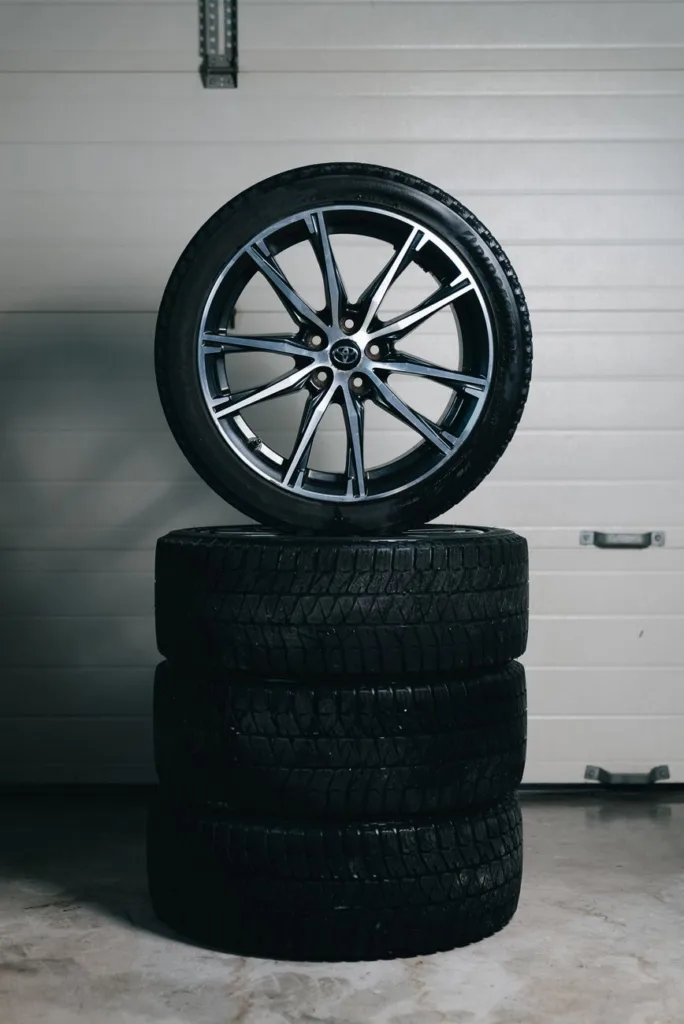
A spare tire does not last forever, even if it has never touched the road. In most cases, a spare tire should be inspected regularly and often replaced at around 6 to 10 years from its date of manufacture, depending on the tire maker’s guidance, storage conditions, and its condition. If the spare has been used, driven while underinflated, shows cracking or dry rot, or is older than the vehicle owner’s manual or tire manufacturer recommends, it should be replaced sooner.
That matters because many drivers assume the spare in the trunk is always ready for an emergency. In reality, spare tires age just like regular tires. Rubber hardens over time, internal materials can deteriorate, and long periods of sitting with low air pressure can make a spare unsafe when you need it most.
If you only want the short answer, use this rule of thumb: check the date code, inspect the spare at least twice a year, keep it properly inflated, and strongly consider replacement once it reaches the 6 to 10 year range, even if it looks unused.
How long do spare tires last in real-world use?
Most spare tires last longer in mileage terms than regular tires because they are rarely used, but their calendar age is usually the limiting factor. A spare can spend years under the trunk floor, mounted under a truck bed, or attached to an SUV tailgate. During that time, heat, moisture, oxygen, and temperature changes slowly age the rubber.
In real-world ownership, many spare tires are still original equipment after 8, 10, or even 15 years. That does not mean they are still safe. A tire can look acceptable at a glance and still be too old to trust for emergency driving.
There are also big differences between spare types:
- Temporary compact spares, often called donut spares, are meant for short-term emergency use only.
- Full-size spares are closer to a normal road tire, but they still age while sitting unused.
- Matching wheel-and-tire spare assemblies on trucks and SUVs may be exposed to weather if mounted underneath or outside the vehicle, which can shorten usable life.
Spare tire lifespan by type
| Spare tire type | Typical purpose | How lifespan is limited | Important note |
|---|---|---|---|
| Compact temporary spare | Emergency use to reach a repair shop | Age, storage condition, strict speed and distance limits | Usually not intended for normal driving |
| Full-size spare | Can temporarily replace a flat with fewer limitations | Age, tread condition, inflation, weather exposure | May still differ from the other tires in size or wear |
| Matching full-size spare used in rotation | Part of normal tire rotation on some vehicles | Tread wear plus age | If rotated regularly, it is less likely to become “forgotten” |
| Underbody-mounted truck/SUV spare | Emergency replacement | Age, road salt, moisture, dirt, corrosion, sun exposure | Often needs more frequent inspection than a trunk-mounted spare |
What causes a spare tire to expire?
Spare tires “expire” because tire rubber and internal materials age over time. This is often called tire aging. Even when a tire is not being driven on, chemical changes continue inside the rubber.
Heat accelerates tire aging
Heat is one of the biggest factors. A spare stored in a hot trunk, under a vehicle near the exhaust, or outside in direct sunlight will generally age faster than one kept in a cooler, protected environment.
This is why vehicles in very hot climates often need closer tire inspection. A spare in Arizona, Texas, Nevada, or Florida may age harder than one stored in a mild climate.
Ozone and oxygen affect rubber
Rubber naturally degrades as it is exposed to air and ozone. Over time, this can lead to surface cracking, sidewall stiffness, and reduced flexibility. Tires need some elasticity to handle load and road impacts safely.
Moisture and corrosion matter too
On many pickups and SUVs, the spare is mounted under the rear of the vehicle. That exposes it to water, mud, snow, and road salt. The tire itself may deteriorate, and the wheel, winch mechanism, or mounting hardware can corrode.
In some cases, the tire may still hold air but the carrier mechanism can seize, making the spare difficult or impossible to remove during an emergency.
Low air pressure damages spares
Many spare tires are neglected and slowly lose air over time. If a spare sits nearly flat for a long period, its sidewalls can be stressed in ways that reduce its reliability. If it is then used while underinflated, internal damage can occur even if the outside still looks acceptable.
How long can you drive on a spare tire?
This is different from how long a spare lasts in storage. A spare might remain in the vehicle for years before use, but once installed after a flat, driving limits become critical.
Temporary donut spare limits
Most temporary spares are meant for short distances and reduced speeds only. A common guideline is no faster than 50 mph, though drivers should always follow the exact limit printed on the tire sidewall or listed in the owner’s manual. Distance limits vary, but many are intended only to get you to a tire shop or safe repair location.
You should not treat a donut spare like a normal tire for commuting, road trips, heavy cargo, or highway travel over long distances.
Full-size spare limits
A full-size spare may allow more normal driving, but that does not automatically mean unlimited use. If it is old, underinflated, mismatched in size, or worn differently than the other tires, handling and traction can still be affected.
This is especially important on all-wheel-drive vehicles, where tire size differences can put stress on the drivetrain. Some vehicles require closely matched tire diameters.
How to tell if a spare tire is too old
The most reliable starting point is the tire’s DOT date code. This code is stamped on the sidewall. The last four digits show the week and year the tire was made.
For example:
- 2221 means the tire was manufactured in the 22nd week of 2021.
- 4818 means the tire was manufactured in the 48th week of 2018.
If your spare was made 8 or 10 years ago, it deserves close attention even if it still looks unused. If it is over a decade old, replacement is often the safest decision.
Signs your spare should be replaced
- Visible sidewall cracks
- Dry rot or weather checking
- Bulges, bubbles, or deformities
- Flat spots from long storage
- Repeated air loss
- Past use while underinflated
- Damage from impact, puncture, or road debris
- Severe rust or corrosion on the wheel
- Age beyond manufacturer guidance
Why appearance alone is not enough
A spare tire can look fine but still be unsafe because some aging happens internally. The bond between internal materials can weaken with time and heat. That is why age and inflation checks are just as important as visual inspection.
Where to find your vehicle’s spare tire recommendations
Your first source should be the owner’s manual. Vehicle makers often include information about spare tire pressure, speed limits, storage location, and use restrictions. In some cases, they also provide inspection or replacement guidance.
The tire manufacturer is the next source. Tire companies may recommend regular inspection after a certain age and replacement by a maximum service life limit. Because guidance can vary, it is smart to use the most conservative recommendation that applies to your vehicle and tire.
How storage conditions affect spare tire life
Where and how the spare is stored can make a noticeable difference.
Spare tires stored inside the trunk
A spare stored inside the trunk or cargo floor is usually better protected from UV light, road grime, and moisture. That does not stop aging, but it often helps the tire remain in better condition than one exposed under the vehicle.
Spare tires stored under the vehicle
These are common on trucks, SUVs, and vans. Underbody spares are convenient for cargo space, but they face a harsher life. They collect dirt and salt, and the wheel hoist or cable can corrode.
If your vehicle has an underbody spare, inspect not just the tire but also the carrier, cable, and release mechanism. A good spare is no help if you cannot get it down.
Spare tires mounted outside the vehicle
Rear-mounted spares on Jeeps and some SUVs see more sun and weather than trunk-stored spares. A cover may help reduce sun exposure, but the tire still needs routine checks for cracking, pressure loss, and general aging.
How often should you check a spare tire?
A practical schedule is to inspect the spare every 6 months and before long trips. Many drivers do this during seasonal maintenance, oil changes, or regular tire rotations.
At a minimum, check:
- Air pressure
- Date code
- Sidewall condition
- Tread and contact surface
- Wheel condition
- Jack, lug wrench, and tool kit completeness
- Spare tire carrier operation, if mounted underneath
Why pressure checks are especially important
Temporary spares often require much higher air pressure than regular tires. Many compact spares are inflated to around 60 psi, but you should always confirm the correct pressure on the tire label or sidewall. A spare that has dropped far below its required pressure may not be safe to use.
This catches many owners off guard because they assume all tires on the vehicle should be near the same pressure. That is not true for many donut spares.
Spare tire inspection checklist
| Inspection item | What to look for | Why it matters |
|---|---|---|
| Date code | Week and year of manufacture | Shows whether age alone may justify replacement |
| Air pressure | Matches the specified psi | Underinflation can make the spare unsafe immediately |
| Sidewalls | Cracks, cuts, bulges, dry rot | Sidewall damage can lead to failure |
| Tread area | Uneven wear, punctures, separation, flat spots | Indicates damage or deterioration |
| Wheel/rim | Bends, rust, corrosion, impact damage | A bad wheel can cause leaks or unsafe operation |
| Mounting hardware | Carrier cable, hoist, bracket, hold-down | You must be able to access and mount the spare |
| Tool kit | Jack, wrench, lock key if applicable | The spare is useless if installation tools are missing |
Do unused spare tires last longer than regular tires?
Yes and no. They usually last much longer in terms of tread wear because they are rarely driven. But they do not escape age-related deterioration. That means an unused spare can still become unfit for service long before its tread is worn out.
This is one of the most common misunderstandings about spare tires. Owners see deep tread and assume the tire is nearly new. In reality, age can matter more than tread depth for a spare.
Can you use an old spare tire in an emergency?
If the only option is an old spare or being stranded in an unsafe place, some drivers will understandably use whatever they have to move the vehicle to safety. But from a maintenance and safety standpoint, an old or deteriorated spare should not be relied on as a normal emergency solution.
If your spare is clearly cracked, badly underinflated, damaged, or far beyond a reasonable service age, it should be replaced before an emergency happens. Waiting until after a flat turns a simple maintenance issue into a roadside problem.
What happens if you never replace your spare tire?
Several things can go wrong:
- The spare may be flat when you need it.
- The rubber may be too aged to trust.
- The wheel or carrier may be corroded.
- The temporary spare may be driven beyond its safe limits.
- The tools needed to install it may be missing.
In practice, many roadside failures blamed on “bad luck” are really the result of a spare tire that was never checked. The flat tire is the first problem. The unusable spare becomes the second one.
When should you replace a spare tire?
Replace the spare tire if any of the following apply:
- It has reached the age limit recommended by the vehicle or tire manufacturer.
- It is in the 6 to 10 year range and shows any signs of deterioration.
- It has visible cracking, bulges, puncture damage, or uneven wear.
- It has been driven while flat or underinflated.
- It will not hold correct air pressure.
- The wheel is bent or badly corroded.
- The spare size is no longer appropriate for the vehicle.
A practical owner rule
If you do not know the spare tire’s age, condition, or inflation history, have it inspected and likely replace it if it is old enough to be questionable. Spare tires are not items you want to guess about.
How much does spare tire replacement usually cost?
Costs vary widely depending on whether you need a compact temporary spare, a full-size tire, a wheel-and-tire assembly, or related hardware. Prices also depend on tire size, vehicle type, and whether the wheel must be replaced too.
| Replacement item | Typical cost range | Notes |
|---|---|---|
| Compact temporary spare tire only | Low to moderate | May still require matching wheel size and load rating |
| Compact spare wheel-and-tire assembly | Moderate | Common when replacing the full compact spare setup |
| Full-size spare tire only | Moderate to high | Depends heavily on tire size and type |
| Full-size wheel-and-tire assembly | Higher | More expensive but often closer to normal driving use |
| Carrier, hoist, or mounting hardware | Additional cost | Often needed on corroded underbody spare setups |
Because pricing varies so much by vehicle, it is better to think in terms of “temporary spare setup versus full-size replacement” rather than a single universal number. The main point is that replacing a spare proactively is usually cheaper and easier than dealing with a failed spare during a roadside emergency.
Common mistakes people make with spare tires
Assuming the spare is fine because it has never been used
This is the biggest mistake. Age can make an unused tire unreliable.
Never checking the air pressure
Spare tires lose pressure over time just like regular tires. A compact spare that should be at high psi may be unusable if it has been ignored for years.
Ignoring the DOT date code
Many drivers have no idea how old their spare is. The date code gives a much clearer picture than appearance alone.
Forgetting the jack and tools
A complete spare setup includes the tire, wheel, jack, wrench, and any wheel lock key. It is surprisingly common for one of these items to be missing after years of ownership or previous service work.
Driving too far or too fast on a donut spare
Temporary spares are not regular tires. They have strict limits for a reason.
Not checking underbody carrier condition
Truck and SUV owners often inspect the tire but forget the hoist, cable, and release mechanism. Corrosion can make the spare inaccessible.
Practical maintenance tips to extend spare tire life
- Check inflation every 6 months. Add air to the exact specification listed on the tire or vehicle label.
- Inspect before road trips. A few minutes in the driveway is easier than a roadside surprise.
- Read the owner’s manual. Spare tire limits are vehicle-specific.
- Look up the DOT date code. Write the age down somewhere you will remember.
- Inspect the tools too. Make sure the jack works and the lug wrench fits.
- Lower and re-secure underbody spares periodically. This helps confirm the mechanism is not seized.
- Replace old valve stems if needed. Slow leaks are often overlooked.
- Protect externally mounted spares. Keeping them clean and shielded from prolonged sun helps reduce weathering.
Spare tire lifespan examples by ownership situation
Garage-kept commuter car
A compact spare stored inside the trunk of a garage-kept sedan may remain in decent condition longer than an exposed spare. Even so, it should still be checked regularly and replaced based on age and condition, not just appearance.
Pickup truck in a snowy climate
An underbody spare on a truck driven through road salt may deteriorate faster. The tire, steel wheel, and hoist mechanism all need close attention. In this case, corrosion may force replacement or hardware repair before the tire tread itself matters.
Off-road SUV with rear-mounted spare
An exposed rear spare may see heavy sun, weather, and trail impacts. If it is part of the normal tire rotation, that helps prevent age-only neglect. If it is just hanging on the back for years, it still needs age-based inspection.
Older low-mileage vehicle
A 12-year-old car with only 50,000 miles may still have its factory spare. The low mileage does not protect the spare from aging. In this situation, the spare’s age is the key concern.
FAQ
How many years is a spare tire good for?
Many spare tires should be closely evaluated once they are around 6 years old, and many are replaced within the 6 to 10 year range depending on condition and manufacturer guidance.
Does a spare tire expire if it has never been used?
Yes. Rubber ages over time even if the tire has never been driven on.
How do I find the age of my spare tire?
Check the DOT code on the sidewall. The last four digits show the week and year it was made.
Can I drive on a 10-year-old spare tire?
It is not a good idea to rely on a 10-year-old spare without careful inspection and consideration of manufacturer guidance. At that age, replacement is often the safer choice.
Do donut spare tires last as long as full-size spares?
Both age over time, but donut spares also have stricter speed and distance limits when used. Their emergency-only design makes condition and inflation especially important.
How often should I air up my spare tire?
Check it at least every 6 months and before long trips. Inflate it to the exact pressure specified for that spare.
Can a spare tire dry rot in the trunk?
Yes. Even in the trunk, rubber can age, harden, and crack over time, especially in hot climates.
Should I replace the spare if the tread looks new?
Possibly, yes. Tread depth does not cancel out age, cracking, air loss, or internal deterioration.
The bottom line on how long spare tires last
Spare tires usually last longer in storage than regular tires last in active driving, but they are still limited by age, condition, and inflation. For most drivers, the safest approach is to inspect the spare every 6 months, verify the date code, maintain proper air pressure, and replace it when it becomes old, damaged, or questionable.
If your spare is already several years old and you have never checked it, now is the right time. A spare tire is only useful if it is actually ready to do its job when a flat happens.