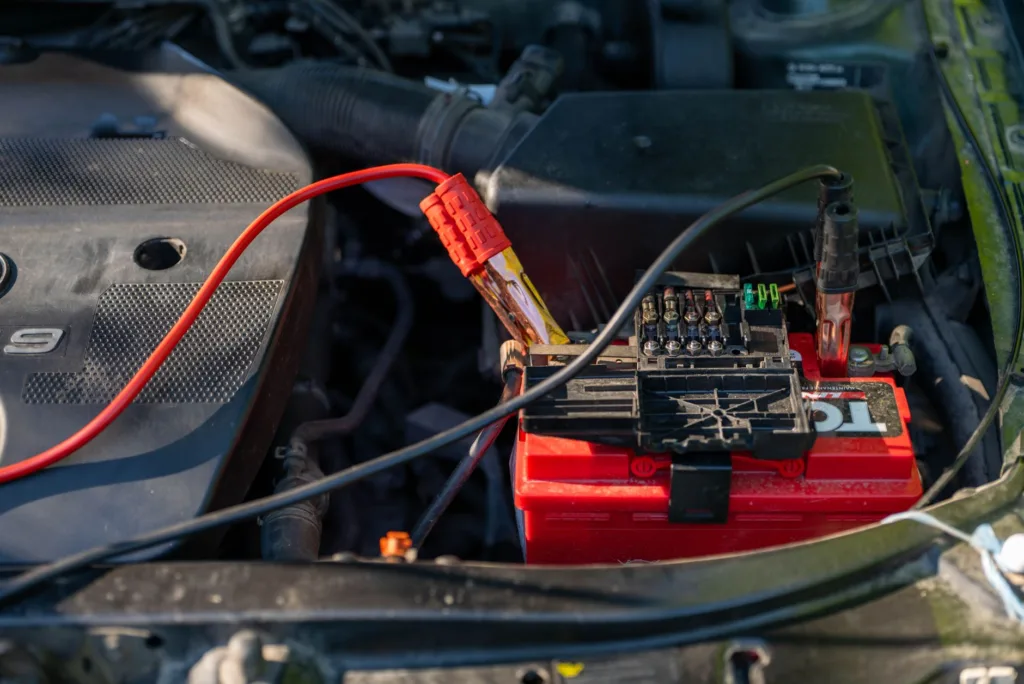
A car battery does not truly recharge itself while the car sits turned off. If it has lost charge, it usually needs electricity from the vehicle’s charging system, a battery charger, or a battery maintainer to recover. What people often mean by “self-recharge” is that the battery seems better after driving, and that happens because the alternator sends power back into the battery while the engine is running.
For a serviceable low-voltage battery that needs external charging, our car battery charger comparison covers equipment options; match the charger to the battery chemistry and vehicle instructions.
In other words, a car battery can be recharged by the car, but it cannot create its own charge out of nothing. If the battery is weak because of age, short trips, cold weather, corrosion, or a parasitic drain, simply letting the car sit will not fix it. In many cases, it will get worse.
Understanding this matters because repeated low-charge operation shortens battery life, increases the chances of a no-start situation, and can even lead you to misdiagnose the problem. A battery that seems dead may not be the real issue. The alternator, wiring, terminals, or an electrical drain may be to blame.
How a Car Battery Gets Recharged
A standard 12-volt car battery stores electrical energy chemically. Its main jobs are to power the starter motor, provide electricity when the engine is off, and stabilize voltage for the vehicle’s electronics.
Once the engine starts, the alternator takes over as the main source of electrical power. It runs off the engine by belt and produces electricity for the vehicle’s systems. At the same time, it sends charging current back to the battery to replace the energy used during starting.
This is why a battery that was slightly low can seem “better” after a drive. The battery did not heal itself. The vehicle’s charging system replenished some of its lost charge.
Battery vs Alternator: What Each One Does
| Component | Main Job | When It Works Most | What Happens If It Fails |
|---|---|---|---|
| Battery | Stores power and supplies high current for starting | Engine off, engine start | Slow cranking, clicking, no-start, electronic issues |
| Alternator | Generates electricity and recharges the battery | Engine running | Battery warning light, dim lights, dead battery after driving |
Can Driving Recharge a Dead Battery?
Sometimes, but not always. If the battery is only partially discharged, driving can often bring it back enough for normal starting. If it is deeply discharged, internally damaged, or nearing the end of its life, driving alone may not be enough.
A dead battery is not one single condition. There is a big difference between a battery that dropped a little low because the dome light stayed on and a battery that has been sitting dead for days in freezing weather. The first may recover with a decent drive. The second may need a charger, testing, or replacement.
When Driving May Recharge It Successfully
- The battery is fairly new and otherwise healthy.
- It was only discharged a small to moderate amount.
- The alternator and charging system are working properly.
- You drive long enough at road speed to restore charge.
- There is no ongoing parasitic draw draining the battery.
When Driving Usually Will Not Solve It
- The battery is several years old and weak.
- The battery is completely dead or has a bad cell.
- The alternator is undercharging or overcharging.
- You only take short trips.
- The weather is extremely cold or hot.
- Something in the car is draining the battery while parked.
How Long Does It Take for a Car to Recharge Its Battery While Driving?
There is no single time that applies to every vehicle. Recharging depends on battery size, how low the charge is, alternator output, engine speed, electrical load, and outside temperature.
As a rough real-world guideline, a battery that is only slightly low may recover after 20 to 40 minutes of steady driving. A more heavily discharged battery may need an hour or more. A deeply drained battery may not fully recover through normal driving alone.
Short trips are one of the biggest reasons batteries stay undercharged. Starting the engine uses a noticeable amount of power. If you drive only 5 to 10 minutes and then shut the car off, the alternator may not fully replace what was used.
Typical Recharge Scenarios
| Situation | Chance Driving Helps | Typical Outcome |
|---|---|---|
| Battery slightly low after leaving lights on briefly | High | Often recovers with a longer drive |
| Battery weak from repeated short trips | Moderate | May improve temporarily, but charger may be better |
| Battery fully drained overnight | Low to moderate | May need jump-start plus charger time |
| Battery old or sulfated | Low | Driving may not restore reliable performance |
| Alternator not charging properly | Very low | Battery keeps dying |
Why a Battery Cannot Truly Recharge Itself While Sitting
A lead-acid car battery does not generate new stored energy on its own. In fact, the opposite happens while it sits. All batteries have some level of self-discharge, which means they slowly lose charge over time even when disconnected.
Modern vehicles also have small continuous electrical loads, even when parked. The clock, alarm system, keyless entry module, computers, and memory settings all draw some power. Normally, this is low enough that a healthy battery can handle it for a while. But over days or weeks, especially with an older battery, the charge can drop too far.
If a battery is already weak, sitting idle usually makes matters worse. That is why a car that has not been driven for several weeks often cranks slowly or will not start at all.
What Self-Discharge Really Means
The term self-discharge can confuse people. It does not mean the battery is recharging itself. It means the battery is losing stored charge naturally over time through internal chemical processes.
Heat speeds this up. Long storage, repeated undercharging, and poor battery condition make it more noticeable. This is one reason a seasonal vehicle often benefits from a battery maintainer.
Common Reasons a Car Battery Goes Low
If you are wondering whether your battery can recharge itself, the more useful question is often why it went low in the first place. A healthy charging system should usually keep a battery in reasonable condition during normal use.
Short Trips and Infrequent Driving
This is one of the most common causes. If you mainly drive a few miles at a time, the battery may never fully recover from repeated starts. Over time, the charge level gradually drops.
Battery Age
Most car batteries do not last forever. Many last around 3 to 5 years, though climate, driving habits, and vehicle type matter a lot. As batteries age, they lose capacity and have a harder time accepting and holding a charge.
Extreme Temperatures
Cold weather makes engine oil thicker and increases the power needed to crank the engine. It also reduces battery performance. Hot weather can be even harder on battery lifespan because heat accelerates internal wear and fluid loss.
Corroded or Loose Battery Terminals
White, blue, or green corrosion around the terminals can interfere with charging and starting. Loose connections can create similar issues. Even a decent battery may seem weak if current cannot flow properly.
Parasitic Drain
A parasitic draw is an electrical load that continues using too much power while the car is off. Common examples include a glove box light that stays on, an aftermarket accessory wired poorly, or a control module that does not go to sleep.
Charging System Problems
If the alternator, voltage regulator, drive belt, or wiring has an issue, the battery may never get fully recharged. In that case, replacing the battery alone will not solve the problem for long.
Signs the Battery Is Recharging vs Signs It Is Failing
It helps to separate a battery that is simply low from one that is nearing the end of its life. If the battery is flat after parking, compare the possible causes in what drains a car battery overnight.
Signs the Battery May Just Need Recharging
- The car starts normally after a jump and a longer drive.
- The battery is relatively new.
- You know what caused the discharge, such as lights left on.
- No battery warning light appears while driving.
- The starter sounds stronger after charging.
Signs the Battery May Be Failing
- The car needs repeated jump-starts.
- The battery will not hold charge overnight or for a few days.
- Cranking is consistently slow, especially in mild weather.
- The battery case is swollen, cracked, or leaking.
- The battery is several years old.
- Voltage tests or load tests show poor condition.
How to Tell Whether the Alternator Is Actually Charging
If a battery keeps going flat, many people assume the battery itself is bad. That is not always true. The charging system needs to be checked too. To distinguish charging trouble from a battery-only problem, compare the signs of a bad alternator.
One simple clue is the dashboard battery or charging warning light. If it comes on while the engine is running, the car may not be charging correctly. Headlights that get dimmer, power accessories that slow down, and a vehicle that dies while driving can also point to charging problems.
Basic Voltage Checks
Using a digital multimeter can provide useful clues:
- Engine off: A healthy fully charged battery is often around 12.6 volts.
- Engine running: Many vehicles show roughly 13.5 to 14.7 volts if the alternator is charging properly.
These numbers are general guidelines, not universal rules. Some smart charging systems vary output depending on conditions and vehicle design. Still, a very low running voltage can suggest an alternator or charging issue.
Important Limits of DIY Testing
Voltage alone does not tell the whole story. A battery can show decent voltage and still fail under load. Likewise, a charging system can appear normal at idle but behave poorly under higher electrical demand.
If the problem keeps returning, a proper battery and charging system test is worth having done. Many shops can test battery condition, cranking performance, and alternator output more accurately than a quick driveway check.
Can Idling Recharge a Car Battery?
Idling can recharge a battery somewhat, but it is usually less effective than driving. Alternator output at idle may be lower than at cruising speed, and the vehicle is still using electricity for fuel injection, ignition, cooling fans, lights, climate control, and electronics.
If the battery is only a little low, idling may help. But if the battery is significantly discharged, idling can take a long time and may still not restore it well. A proper charger is usually more effective and easier on the system.
Driving vs Idling for Battery Recovery
| Method | Effectiveness | Best For | Limitations |
|---|---|---|---|
| Idling | Low to moderate | Minor top-up | Slow, less efficient, may not fully recover battery |
| Steady driving | Moderate to high | Replacing charge after normal starting or mild discharge | Not ideal for severely dead batteries |
| Battery charger | High | Deeply discharged batteries and full recharge | Requires equipment and time |
| Battery maintainer | High for storage | Vehicles parked for long periods | Not meant for rapid recovery of a dead battery |
What Happens If You Keep Letting a Battery Run Down?
Repeatedly allowing a lead-acid battery to discharge too deeply can shorten its life. One reason is sulfation, a condition where lead sulfate crystals harden on the battery plates. Some sulfation is part of normal battery chemistry, but chronic low charge makes it worse and harder to reverse.
As sulfation increases, the battery loses capacity and accepts charge less effectively. This can create a cycle where the battery seems to recharge after driving, but never quite returns to full strength. Eventually, it becomes unreliable.
This is especially common in vehicles used only for short errands, cars stored for long periods, or cars with hidden electrical drains.
Can a Completely Dead Battery Come Back?
Sometimes yes, sometimes no. A completely dead battery can sometimes be recharged if it has not been damaged internally and was not left discharged for too long. However, the deeper and longer the discharge, the lower the chance of full recovery.
For example, a battery drained overnight by an interior light may recover with a proper charge if it was healthy beforehand. A battery left dead for weeks, especially in extreme temperatures, may suffer permanent damage.
Factors That Affect Recovery
- How old the battery is
- How long it stayed discharged
- Outside temperature during discharge
- Whether the battery was healthy before the problem
- How deeply it was discharged
- Whether it has a bad cell or internal short
Best Ways to Recharge a Weak Car Battery
If the battery is weak but not necessarily ruined, the right recovery method depends on the situation.
Take a Longer Drive
This can work if the battery is only slightly low and the charging system is healthy. A longer drive at consistent speed is generally more useful than several short trips around town.
Use a Battery Charger
A charger is often the best option for a battery that is more than mildly discharged. It gives the battery a more complete recharge than relying on short drives, and it avoids depending entirely on the alternator to do recovery work.
Use a Battery Maintainer for Stored Vehicles
If a car sits for weeks or months, a battery maintainer helps keep the battery at an appropriate state of charge. This is useful for seasonal cars, collector vehicles, motorcycles, and vehicles parked during travel or deployment.
Fix the Underlying Problem
Recharging only treats the symptom. If the real cause is a bad alternator, corroded connection, or parasitic drain, the battery will keep going flat until that issue is repaired.
Common Mistakes Vehicle Owners Make
Battery problems often become more expensive because of simple misunderstandings. These are some of the most common ones.
Assuming the Battery Will Recover by Sitting
This is the core myth behind the question. A parked battery does not recharge itself. Sitting usually means more charge loss, not less.
Replacing the Battery Without Checking the Charging System
If the alternator is not charging correctly, a new battery may seem fine for a short time and then fail again. That leads many drivers to think they bought a bad battery when the real issue is elsewhere.
Ignoring Short-Trip Use
Many people think daily driving automatically keeps the battery charged. But daily driving made up of very short trips can actually leave the battery undercharged most of the time.
Overlooking Corrosion and Loose Connections
A weak battery symptom can be caused by poor terminal contact. Cleaning and tightening connections is basic but important.
Using the Alternator as a Substitute for Proper Charging
The alternator is designed to maintain battery charge and power the vehicle, not necessarily to recover a heavily drained battery repeatedly. Chronic deep discharges can overwork the charging system and still leave the battery in poor condition.
Practical Maintenance Tips to Prevent Battery Problems
You can reduce most battery-related surprises with a few simple habits.
- Drive long enough from time to time to fully support battery charging.
- If the car sits often, use a battery maintainer.
- Check battery terminals for corrosion and tightness.
- Test the battery before extreme winter or summer seasons.
- Replace an aging battery before it becomes unreliable.
- Investigate repeated low-battery symptoms instead of just jump-starting over and over.
- Turn off lights and accessories before leaving the vehicle.
Real-World Example: The Short-Trip Commuter
A driver who commutes only 3 miles each way may use the starter twice a day but never give the alternator much time to replace that energy. Add cold weather and heated accessories, and the battery can stay slightly undercharged for weeks. Eventually the car may fail to start even though nothing is technically broken.
Real-World Example: The Weekend Car
A second vehicle that sits in the garage most of the month may slowly lose charge through normal self-discharge and vehicle electronics. If it is only driven briefly once in a while, the battery may never recover fully. A maintainer is often the simplest solution in this situation.
When You Should Replace the Battery Instead of Trying to Recharge It
Recharging makes sense when the battery is otherwise healthy. Replacement becomes more reasonable when the battery is clearly worn out or damaged.
Consider Replacement If:
- The battery is in the typical end-of-life age range.
- It fails a professional load or conductance test.
- It will not hold charge after proper charging.
- The case is swollen, leaking, or cracked.
- You have repeated no-start events despite fixing charging issues.
Typical replacement cost varies by vehicle, battery size, and battery type. Many drivers can expect a broad range from roughly $100 to $300 or more for the battery itself, with some vehicles costing higher. Installation and registration procedures on newer cars can add to the total.
When to See a Mechanic or Auto Electric Specialist
Some battery problems are straightforward, but others require testing. It is smart to get help if the battery keeps dying, the car stalls after starting, or warning lights suggest charging issues.
You should also seek diagnosis if:
- The battery is new but still goes flat.
- The vehicle only starts with a jump.
- You suspect a parasitic drain.
- Electrical systems behave strangely, such as flickering lights or random warning messages.
- You have already charged or replaced the battery and the problem returned.
Frequently Asked Questions
Can a car battery recharge itself overnight?
No. If the car is off, the battery does not recharge itself overnight. It usually loses a little charge instead, and vehicle electronics may drain it further.
Will a car battery recharge after sitting?
No. Sitting does not recharge a battery. A battery typically needs charging from the alternator while driving or from an external charger.
Can jump-starting recharge the battery?
Jump-starting only provides enough power to start the engine. The battery then needs to be recharged by driving or by using a charger.
How far do I need to drive to recharge my battery?
There is no exact distance for every car. A mildly discharged battery may improve after 20 to 40 minutes of steady driving, but a heavily drained battery may need much longer or a dedicated charger.
Can a battery be too dead to recharge?
Yes. If the battery has been deeply discharged for too long, has a bad cell, or is heavily sulfated, it may not recover reliably.
Does idling charge the battery?
Yes, but usually less effectively than driving. Idling may help a little, but it is often not the best way to recover a low battery.
Can an alternator fully charge a dead battery?
Sometimes, but it is not ideal for a deeply discharged battery. A charger is usually better for a full recovery, while the alternator is better at maintaining charge during normal operation.
Why does my battery die even though I drive every day?
Common reasons include short trips, an aging battery, charging system problems, corroded terminals, or a parasitic drain.
Final Takeaway
A car battery cannot truly recharge itself while the vehicle is sitting off. It can only regain charge when electricity is supplied to it, usually by the alternator while driving or by an external charger or maintainer. If your battery keeps going low, do not assume time alone will fix it.
The practical approach is simple: determine whether the battery is merely discharged, confirm that the alternator is charging properly, and look for causes such as short-trip use, age, corrosion, or parasitic drain. If the battery is old or will not hold charge after proper testing and recharging, replacement is usually the next step.