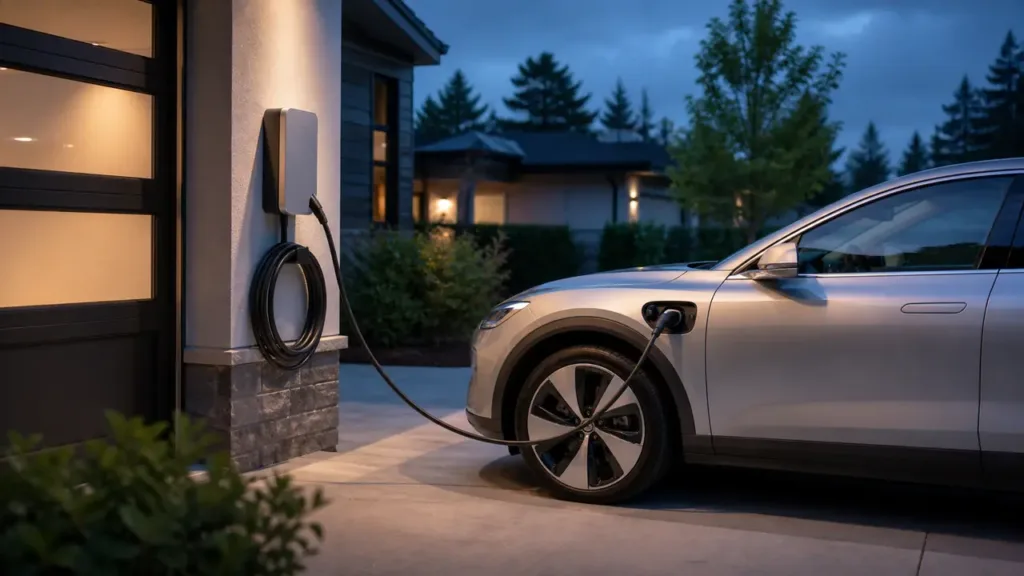
Buying a home EV charger feels simple until you stand in a garage at night, fumbling with adapters, wondering whether your breaker can handle 48 amps, or whether that slick app will actually save you money. Most buyers hunt for speed, reliability, and a setup that won’t require a major electrical upgrade. Yet common mistakes include choosing the wrong connector type, overpaying for power they do not need, or assuming every “smart” charger will play nicely with their home Wi‑Fi.
What matters most is matching charger power and connector type to your vehicle and household electrical capacity, while thinking through real-life use: how far you drive, whether you share a charger with a partner, and whether you need outdoor durability. Some buyers want plug-in convenience to avoid electrician fees, others want hardwired performance and smart load management. My top overall pick is the unit that balances real charging speed, weatherproofing, and a robust app for scheduling and energy tracking.
If you need a quick snapshot before deep dives, the comparison table below gives a fast overview of the best options and who they suit. Click any product name to jump to its full review below.
Best Home EV Charger Comparison Table
| Product | Best For | Max Output | Installation |
|---|---|---|---|
| EVIQO Level 2 40A (Plug-In) | Plug-and-play, fast everyday charging | 40A / 9.6 kW | NEMA 14-50 plug |
| ChargePoint Level 2 Home Flex | Trusted brand, flexible amperage | 16–50A selectable | Hardwire or NEMA plug |
| EVIQO Level 2 48A (Hardwired) | Higher power for longer ranges | 48A / 11.5 kW (configurable) | Hardwired |
| Autel MaxiCharger Up to 80A | Households that need extreme speed | Up to 80A / 19.2 kW | Hardwired |
| EVIQO NACS 48A (Tesla Focus) | Tesla-native charging at home | 48A / 11.5 kW | Hardwired |
| AIMILER Level 2 32A (Budget Plug) | Affordable Level 2 plug-in | 32A / ~7.7 kW | NEMA 14-50 plug |
| VEIPHLOX Level 2 40A | Value-focused outdoor-ready unit | 40A / 9.6 kW | NEMA 14-50 plug |
| Tesla Universal Wall Connector | Tesla owners and multi-vehicle households | Up to 48A / 11.5 kW | Hardwired |
| Emporia Level 2 48A (Smart) | Energy-conscious homes with monitoring | 48A / up to 11.5 kW | Hardwired or NEMA 14-50 |
If you want a closer look at each option, the full reviews below explain strengths, where each charger shines, and who should pick it.
1. Best Overall: EVIQO Level 2 EV Charger, 40 Amp 240V (Plug-In)

One reason this option stands out is how it balances real-world convenience with strong charging performance. The EVIQO 40A plug-in model gives most EV owners near-full overnight top-ups without the upfront cost and scheduling of a hardwire install. Plug into a NEMA 14-50 outlet and you’ll typically get a comfortable overnight recharge while still being able to move the unit if you relocate. I’ve seen it installed in single-car garages where homeowners wanted a fast upgrade without scheduling an electrician right away.
For buyers who prioritize usability, the 25 foot cable and fluorescent holster make nightly plugging pleasant instead of awkward. The app supports scheduling, current limiting, and energy tracking so you can shift charging to low-cost hours. Picture a commuter who returns late, sets the app to start charging at 2 AM, and wakes to a full battery without flipping breakers or babysitting the outlet. Another scenario is an apartment-dweller who rents a space and mounts the unit near a range-style outlet; the plug-in option keeps future moves simple.
Pros
- Plug-in convenience avoids immediate electrician cost.
- 40A output delivers near Level 2 speeds for most EVs.
- Weatherproof enclosure and long 25 ft cable for flexible placement.
- Smart app for scheduling, current limiting, and consumption tracking.
- Fluorescent holster improves nighttime use.
Cons
- Requires a NEMA 14-50 outlet for full output.
- Plug-in design may be less tidy than hardwired installations.
This model is ideal for a homeowner who wants Level 2 speed without a hardwire install. It performs best in single-vehicle garages and rented properties where permanence is a concern. If you plan to power multiple heavy-draw devices simultaneously or want maximum future-proofing, a hardwired 48A or higher charger might make more sense. For drivers who charge nightly and want hands-off scheduling, this EVIQO hits the sweet spot between performance, portability, and smart features.
To buy this product, click here.
2. Best For Flexibility: ChargePoint Level 2 Home Flex

For buyers who prioritize brand reliability and flexible installation, ChargePoint’s Home Flex is persuasive. It supports a wide amperage range so it adapts to different circuit sizes, and you can choose plug-in or hardwired install depending on your house and electrician recommendation. I’ve seen neighbors swap this unit between homes when they moved, seizing the plug option to avoid reworking their electrical panel immediately.
If your driving patterns change, or if you plan to move, the Home Flex’s adjustable amperage is useful. Imagine a household that initially wires a 40A circuit and later upgrades to 50A to charge two EVs faster. The device scales that way. Another common scenario: a weekend driver who wants remote start/stop and Alexa controls to begin charging from the couch after checking the app. ChargePoint’s ecosystem and support network also help if you rely on public networks for longer trips.
Pros
- Selectable amperage from 16 to 50A fits many home setups.
- Install options include hardwire or plug-in for flexibility.
- ChargePoint app and broad brand support with network access.
- Durable outdoor-capable design.
Cons
- Official price and installation planning can feel premium.
- Advanced features may be overkill for casual drivers.
Buy this if you want a proven ecosystem and the freedom to adapt amperage or swap installation styles later. Skip it if you need the cheapest possible plug-and-play option or if you prefer a Tesla-native connector out of the box. The Home Flex suits households that anticipate changing charging needs or value brand-level support and app polish.
To buy this product, click here.
3. Best For Power Without Compromise: EVIQO Level 2 EV Charger, 48 Amp (Hardwired)

If your daily mileage is high or you want to minimize charging windows, the 48A EVIQO hardwired unit is a solid step up. It delivers faster replenishment for large-battery EVs and supports configurable DIP switches to tweak output if electricians need to match local wiring. Homeowners with longer commutes will notice shorter charging sessions and fewer mid-day top-ups.
Think of a delivery driver who needs a near-full battery each morning; setting the charger to 48A reduces overnight time and gives flexibility to accept late returns. Another real-world example is a family with two EVs and staggered schedules; higher amperage lets both vehicles reach useful charge faster if one needs a top-up mid-evening. The hardwired design keeps the unit tidy and reduces loose-cable tripping hazards in a shared garage.
Pros
- High 48A output restores range quickly for larger battery packs.
- Robust weatherproof build and long cable for easy use.
- Smart app controls and scheduling for cost savings.
- Eligible for common rebates and tax incentives.
Cons
- Hardwired install requires a qualified electrician and a 60A+ circuit.
- More permanent than a plug-in option if you plan to move soon.
Choose this EVIQO if you want a higher continuous current than most plug-in chargers provide and are comfortable paying for professional installation. It performs best in single-family homes where installers can run a dedicated circuit and where faster charge rates will be used regularly. If you rarely exceed short commutes, the benefits versus a 40A plug-in may be marginal.
To buy this product, click here.
4. Best Premium Speed: Autel MaxiCharger Up to 80A

If you want to future-proof for the most demanding household needs, Autel’s 80A unit is a standout. It delivers rapid top-ups that are rare in residential chargers, making late-night range anxiety much less common. Homes with multiple EVs, or owners who routinely need big range increases between outings, will see the biggest gains. Autel packs robust hardware features to support reliability and theft protection that are useful on a driveway or shared parking area.
Two scenarios where 80A makes sense: a busy family that rotates vehicles and can’t guarantee long overnight windows, and an owner of a larger EV with very fast charge acceptance who wants to avoid utility upgrades in the future. The seller’s streamlined installer setup also lowers the pain of a technically complex job, so homeowners see the long-term payoff without a protracted install process.
Pros
- Very high 80A output delivers industry-leading residential speeds.
- AI-driven scheduling and redundant network connectivity.
- Built for heavy use with theft deterrence and extended warranties.
- Designed for reliability over a long service life.
Cons
- Requires significant electrical infrastructure and a high-capacity circuit.
- Premium cost and more complex installation than typical home chargers.
This charger is aimed at homeowners who want the fastest possible Level 2 charging and are prepared to upgrade wiring and panels if necessary. It makes sense for multi-EV families, small fleet owners, or anyone who prefers investing up front to avoid limitations later. For casual drivers, the extra power will feel like overkill and the installation complexity may not justify the speed gains.
To buy this product, click here.
5. Best For Tesla Owners: EVIQO NACS Charger for Tesla, 48 Amp

For Tesla owners who prefer a native connector, this EVIQO NACS charger is compelling. It avoids adapter clutter, lets the car control charging behavior directly, and keeps the user experience tight. If you park in a shared driveway and want to plug in without swapping adapters each time, the NACS plug saves steps and reduces wear. I personally know Tesla drivers who appreciate pressing the built-in button to open the car’s charging port and rely on the native connector for a tidy routine.
An everyday scene where this helps is a household with a Model 3 and a non-Tesla that uses an adapter for the secondary car. The Tesla gets the native connector and the convenience of in-car scheduling while the other EV shares a J1772 charger or adapter. Another common use is a Tesla owner who wants hardwired neatness and a professional installer to tuck wiring away for a garage that looks like an internal service bay.
Pros
- Native NACS connector for seamless Tesla charging.
- 48A power for fast overnight fill-ups.
- Smart app control with scheduling and energy tracking.
- Durable weatherproof rating and long cable.
Cons
- Hardwired install required, so electrician cost applies.
- Native NACS is Tesla-focused; other EVs need an adapter.
Choose this if you drive a Tesla and want a polished, integrated charging experience. Households that mix Tesla and non-Tesla vehicles will still be fine but should factor adapter use into daily routine. If you rent or move frequently, consider plug-in options, but for a permanent home setup with a Tesla, this unit makes charging virtually seamless.
To buy this product, click here.
6. Best Budget Level 2 Plug-In: AIMILER Level 2 EV Charger, 32A (Plug-In)

If you want an affordable route into true Level 2 speeds, AIMILER’s 32A plug-in model delivers solid value. It trims costs while providing adjustable amperage and a clear touch display so you can limit current for older wiring. For people testing the waters with EV ownership, this charger offers a low-friction stepping stone between slow Level 1 cords and full hardwired stations.
Picture a buyer who moved into a house with a 14-50 outlet and wants faster charge than a standard wall plug; the AIMILER is an economical upgrade that’s easy to install. Another scenario involves a homeowner who plans to upgrade the electrical panel later. They can use the plug now at 24–32A and bump up current when the panel is ready. The app and touch controls make it easy to schedule charges to take advantage of off-peak rates.
Pros
- Lower-cost path to Level 2 speeds with adjustable amperage.
- Plug-and-play convenience with 25 ft cable and weatherproofing.
- LED screen and app features for scheduling and monitoring.
- Built-in safety features reduce need for extra GFCI accessories.
Cons
- Max 32A output is slower than 40–48A alternatives.
- Brand support and long-term reliability track record are smaller than legacy brands.
This AIMILER is a strong choice for budget-conscious owners who still want meaningful speed improvements. It is not the fastest option, but it delivers practical charging with smart features for a lower initial outlay. If you plan heavy usage or want the fastest overnight fills, consider stepping up to a 40A or 48A hardwired model.
To buy this product, click here.
7. Best Value Outdoor Option: VEIPHLOX Level 2 EV Charger, 40 Amp

Outdoors matters. Driveway chargers need weatherproofing and a cable design that survives swings in temperature. The VEIPHLOX 40A unit is built with IP65 protection and a robust cable, making it a good fit for homes where the charging point sits outside. I’ve seen similar outdoor installs get hit by rain and cold without signal loss or cable stiffness, and that dependability matters long term.
Real-life situations where this helps include seasonal climates where freezing mornings are normal, and homeowners want a charger that still flexes and connects easily. Another scenario is a suburban household that uses a driveway charger and prefers a unit with built-in cable storage to keep the area tidy. The internal cord holding design keeps the garage or wall neat and avoids tripping hazards for kids or pets.
Pros
- Weatherproof housing and durable cable suited to outdoor installs.
- 40A output for solid overnight charging speeds.
- Integrated cord storage keeps installations clean.
- Plug-and-play design for quick setup on a NEMA 14-50 outlet.
Cons
- Fewer high-end app features compared with premium brands.
- Plug-in limitation if you want to hardwire later for higher amperage.
Pick the VEIPHLOX if you want a rugged, no-fuss charger for an outdoor spot that will see weather and seasonal stress. It brings reliability and storage convenience at a value price point. If you prioritize advanced network features or the highest possible amperage, consider a different model, but for true outdoor resilience this one performs well.
To buy this product, click here.
8. Best For Multi-Vehicle Households: Tesla Universal Wall Connector

Tesla’s Universal Wall Connector shines in households with mixed fleets or where Tesla ownership is central. The dual plug support for NACS and J1772 plus power-sharing features make it practical for two-car garages where circuit capacity must be balanced. Owners who value neat wall-mounted installs and strong manufacturer support will find the Tesla connector familiar and reliable.
Think of a house with a Model Y and a visiting friends’ non-Tesla EV. The dual connector and adjustable amperage reduce friction and keep both vehicles charging at useful rates. Another scene is a family that wants integrated power management to split available amperage intelligently and avoid tripping home service during heavy evening loads.
Pros
- Native NACS plus J1772 compatibility covers almost every North American EV.
- Variable amperage and power management for multi-vehicle homes.
- Energy Star partner and designed for durable performance.
- Long cable and tidy wall-mount fit most garages.
Cons
- Premium brand and installation expectations can increase overall cost.
- Some advanced features like Powershare have model-specific limits.
This wall connector is best when Tesla ownership is ongoing and you want built-in flexibility for other EVs. Multi-car households that need clean power distribution and reliable long-term support should prioritize this option. For renters or budget buyers, a plug-in Alternative may be more pragmatic.
To buy this product, click here.
9. Best For Energy Management: Emporia Level 2 EV Charger, 48 Amp

Emporia’s 48A charger adds two things that matter to cost-conscious homeowners. First, it offers high power for rapid overnight charging. Second, it integrates with energy monitoring tools so you can see how charging fits with home consumption. If you want to avoid surprises on your electric bill, Emporia’s data and scheduling give you clarity and control.
A couple of common scenarios: a homeowner with solar who needs to align charging with midday production can schedule accordingly and track household use. Another example is a family with high evening loads that uses Emporia’s app to delay charging until off-peak hours to economize. Those small shifts add up over months and benefit households that track their energy footprint.
Pros
- 48A fast charging with integrated energy monitoring features.
- PowerSmart options help avoid panel upgrades in many homes.
- Hardwired kit plus NEMA options for flexible installs.
- Good app controls for schedules and usage insights.
Cons
- Requires an electrician for hardwiring at top amperage.
- Advanced energy features add complexity for very casual users.
Buy Emporia if you care about seeing charging energy in the context of your whole home and want to optimize charging times. It is especially handy for solar owners or anyone looking to manage peak demand without immediately upgrading service. If you prefer a very simple plug-in charger, a basic 32A or 40A model may be easier day-to-day.
To buy this product, click here.
Best Home EV Charger FAQ
What amperage do I need for home EV charging?
Pick amperage based on driving habits and how many hours you have to charge. 32A gives a solid overnight boost for most commuters, 40A is a great middle ground for regular drivers, and 48A or higher shortens charge time for long-range vehicles. Also consider whether your electrical panel and driveway access support a hardwired 60A+ circuit for 48A+ chargers.
Should I choose plug-in or hardwired?
Plug-in models are excellent for renters or when you want portability, and they avoid immediate electrician fees. Hardwired units look neater and support higher continuous current reliably. If you plan to stay in a home and want top performance, hardwiring is a better long-term choice.
Do I need a specific connector for my car?
Most non-Tesla EVs use J1772 and work with any J1772 charger. Tesla vehicles use NACS natively, so they either need a native NACS charger or a J1772-to-NACS adapter. Check your car’s inlet type before buying and factor in whether you prefer native connectors or adapters in daily use.
Will a smart charger save me money?
Smart chargers let you schedule charging during off-peak hours and show energy usage, so they can cut charging cost significantly if you actively schedule. Savings depend on your utility rate structure and willingness to set schedules, but for many drivers the app features pay back quickly in lower monthly electricity bills.
Are rebates or tax credits available?
Many chargers qualify for local utility rebates or federal incentives; manufacturer pages and installer quotes usually list eligible programs. Always confirm current rebate rules with your utility or state agency before purchase since availability changes over time.
How long should an EV charger last?
Quality Level 2 units installed and maintained properly often last a decade or more. Weatherproofing, proper wiring, and firmware updates help maximize lifespan. Expect warranties typically between 3 and 5 years for most consumer models.
What if my Wi‑Fi is unreliable in the garage?
Some chargers work with Bluetooth as a fallback or provide offline scheduling. If Wi‑Fi is flaky, prioritize chargers that allow local controls or choose a model with strong external antennas and dual-network support where available. For the most reliability, hardwired or local timer-based chargers can operate without Wi‑Fi.
Can two chargers share the same circuit?
Usually not directly. Two chargers sharing a single household circuit will trip breakers. Some systems support power sharing between chargers on separate circuits through load management, and a few chargers offer integrated power management to distribute available amperage safely. Consult an electrician to design shared setups that comply with local electrical codes.
Final Verdict
Choosing the right home EV charger relies on a clear match between how you drive, how permanent your installation needs to be, and how much electrical capacity your home offers. For most drivers seeking a balance of speed, smart features, and installation simplicity, the EVIQO 40A plug-in stands out as the best overall because it gives strong Level 2 performance without forcing an immediate hardwire upgrade. It fits renters, homeowners testing Level 2 charging, and those who value portability and smart scheduling.
If budget matters, the AIMILER 32A plug-in and VEIPHLOX 40A value option are excellent cost-conscious choices that still deliver meaningful charging improvements. For Tesla owners and multi-vehicle households who want the cleanest integrated experience, the Tesla Universal Wall Connector and the higher-powered Autel 80A are top premium picks. Match your selection to your daily mileage, parking permanence, and appetite for electrician work. With the right charger in place, nightly charging becomes a seamless part of your routine rather than a second job.