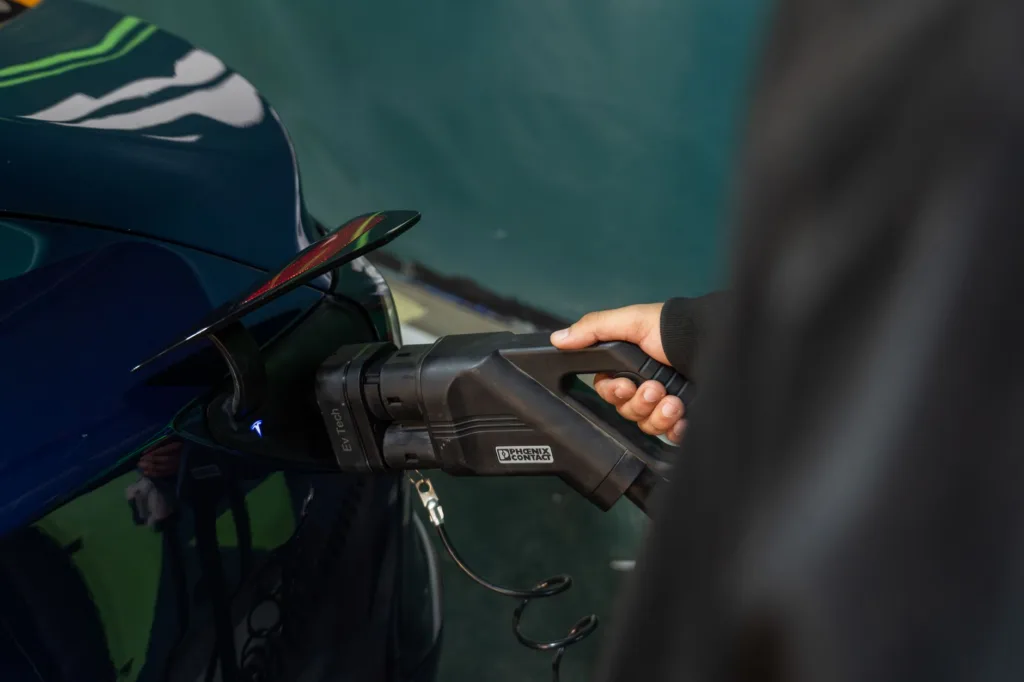
You feel it the first time you pull into a crowded fast-charging site with 8 percent left and a little knot in your stomach. Half the stalls are taken, one network app is acting weird, and then you spot a clean row of Tesla Superchargers humming away across the lot. That moment is exactly why buyers go hunting for the best NACS to CCS adapter. A good one can turn a stressful charging stop into a five-minute detour and a coffee break. A bad one can leave you staring at an error message, fiddling with locks and latches while the battery estimate keeps sliding lower.
The biggest mistake shoppers make is treating these adapters like simple chunks of plastic and metal. They are not. Compatibility with your vehicle and your automaker’s Supercharger access matters first. After that, safety certification, interlock design, thermal protection, connector fit, and weather resistance matter a lot more than flashy claims about charging speed. Most of these adapters are rated high on paper, but the real difference shows up in how confidently they latch, how well they handle repeated use, and how much trust you have tossing one in the frunk before a long interstate run.
Different drivers need different things. A Ford or Rivian owner planning cross-country miles may care most about certification and ruggedness, while a commuter who wants a backup option may focus on value and packability. After comparing the strongest options, the Lectron Vortex Plus stands out as the top overall pick for its UL 2252 certification, interlock design, and strong brand confidence. Still, several other adapters make a lot of sense depending on your budget, travel habits, and how cautious you want to be with safety features.
If you want the short version first, the quick picks and comparison table below make the field much easier to scan.
Quick Picks
- Best Overall: Lectron Vortex Plus
- Best Budget Pick: Aipechy NACS to CCS Adapter
- Best Premium Option: Lectron Vortex Plus
- Best Value Choice: LENZ NACS to CCS Adapter
Best NACS To CCS Adapter Comparison Table
| Product | Best For | Main Strength | Key Specs |
|---|---|---|---|
| Lectron Vortex Plus | Top overall safety and confidence | UL 2252 certification with interlock | 500A, 1000V, V3/V4 Supercharger support |
| Lectron Vortex Plug | Trusted mainstream choice | Strong brand reputation and easy usability | 500A, 1000V, dual-side locking |
| LENZ NACS to CCS Adapter | Balanced value | UL 2252 compliance plus travel case | 500A, 1000V, SGS certified |
| Fluxelle NACS to CCS EV Adapter | Feature-heavy safety pick | Interlock, locking system, thermal monitoring | 500A, 1000V, UL2252 certified |
| FOCSPROD NACS to CCS Adapter | Secure fit on a midrange budget | Interlock design and 3-year warranty | 500A, 1000V, UL 2252 |
| Aipechy NACS to CCS Adapter | Lowest-cost entry point | Affordable access to Superchargers | 500A, 1000V, up to 250kW |
| NACS to CCS Electric Vehicle Adapter | Broad brand compatibility claims | UL2252 safety locking features | 500A, 1000V, auto safety lock |
| Autodecor 1Up NACS to CCS Adapter | Heavy-duty weather exposure | IP65 build with temp sensors | 500A, 1000V, 250kW, IP65 |
| Tesla NACS to CCS Adapter | Simple plug-and-go backup use | Clear buyer intent and broad CCS1 focus | Up to 250kW, IP54 weather resistance |
If you want the fuller picture, the reviews below show where each adapter shines and where the compromises start to show.
1. Best Overall: Lectron Vortex Plus

One reason this option rises to the top is how much confidence it inspires before you even plug it in. The Lectron Vortex Plus is built around the stuff that matters most on a real charging stop: certified safety, a secure interlock, and fitment aimed squarely at eligible CCS1 vehicles using Tesla V3 and V4 Superchargers. If you road-trip often, you know the adapter isn’t there for decoration. It is the bridge between a charger handshake and your next 150 miles, so confidence in the hardware matters every single time you hear that charging session click alive.
This model earns the top spot because it blends strong specs with fewer question marks than most of the field. The UL 2252 certification is a big deal here, and so is the built-in interlock. Those details matter on a cold morning at a charging stall or during a hot afternoon in a packed travel plaza where the adapter gets handled fast and often. Lectron also has stronger brand recognition than many of the lesser-known listings in this category, which makes this feel less like a gamble and more like a deliberate piece of travel gear.
Pros
- UL 2252 certified, which adds meaningful safety confidence
- Built-in interlock helps maintain a secure charging connection
- 500A and 1000V rating is right where serious buyers want it
- Designed for Tesla V3 and V4 Supercharger access on supported CCS1 EVs
- Strong brand reputation compared with many generic alternatives
Cons
- Usually priced in the premium tier
- Still depends on your automaker enabling Supercharger access
- Not for AC charging or Tesla vehicles
This is the adapter I would point most CCS1 EV owners toward first, especially if they plan to use it regularly instead of leaving it untouched in the trunk. It suits drivers who want the least drama possible and who would rather pay more once than second-guess the hardware every time they stop to charge. If your budget is tight or you only want an emergency-use adapter, cheaper models can make sense. For frequent travel, though, this is the cleanest all-around choice in the group.
To buy this product, click here.
2. Best For Trusted Brand Confidence: Lectron Vortex Plug

For buyers who prioritize a recognizable name and a straightforward design, the standard Lectron Vortex Plug remains a strong contender. It gives you the same core promise most shoppers are chasing: access to a huge chunk of Tesla V3 and V4 Superchargers for supported CCS1 vehicles, backed by a 500A and 1000V rating. That alone makes it appealing for drivers who are tired of planning routes around only CCS stations and want a wider charging map in their pocket.
Where this adapter feels especially practical is in its simplicity. There is less marketing flash around it than some rivals, and that can actually be a good sign in this category. The locking mechanisms on both ends help keep the connection stable, and the brand’s charging-focused catalog gives it some credibility over no-name options with similar claims. The one thing to keep in mind is the note about heat-related charging faults and cooldown time. That does not automatically make it a bad adapter, but it is a reminder that thermal behavior is part of real-world use, especially during repeated fast-charge sessions in summer.
Pros
- Made by a widely recognized EV charging brand
- 500A and 1000V rating supports serious DC fast charging
- Dual-side locking helps with a secure connection
- Compatible with many Tesla V3 and V4 Superchargers for approved vehicles
- Good balance between premium build and mainstream availability
Cons
- No interlock advantage highlighted like the Vortex Plus
- Can require cooldown after excessive heat faults
- Costs more than budget-focused options
This one is a very sensible pick for drivers who want a dependable adapter from an established brand but do not necessarily need the top-tier version. It fits well for regular commuters, weekend travelers, and anyone who wants a backup charging option that still feels substantial in the hand. If you are shopping specifically for the strongest safety paper trail, the Vortex Plus edges it out. If you simply want a reputable adapter with broad appeal, this is still easy to recommend.
To buy this product, click here.
3. Best Value Choice: LENZ NACS to CCS Adapter

If your goal is finding a strong middle ground without sliding into bargain-bin territory, this LENZ adapter hits a sweet spot. It brings the specs serious shoppers want, including a 500A and 1000V rating plus SGS-certified UL 2252 compliance, while usually landing below the most expensive brand-name alternatives. In plain English, it looks like a product trying to earn trust through solid fundamentals instead of flashy promises, and that feels refreshing in this crowded category.
The real charm here is the mix of practical touches. LENZ includes a protective travel case, which sounds small until you picture a dusty trunk full of charging gear, groceries, and tie-down straps rattling around after a weekend trip. The brand also gives very clear guidance that the adapter is for approved CCS1 EVs using Tesla NACS Superchargers, and that kind of clarity matters. Too many adapter listings bury the compatibility caveats, which is how people end up annoyed at the charger with the wrong expectations and a low battery blinking back at them.
Pros
- Good balance of certification, performance, and price
- UL 2252 compliant and SGS certified
- Includes a protective travel case
- 500A and 1000V rating suits high-power DC fast charging
- Clear setup guidance and support emphasis from the brand
Cons
- Less brand recognition than Lectron
- Compatibility still limited to approved CCS1 vehicles
- Fewer standout premium features than top-priced rivals
This is a smart pick for buyers who want something trustworthy without pushing all the way into the highest price bracket. It suits drivers who take a few road trips a year, want a tidy case, and care about certification more than hype. If you are obsessed with buying the most proven mainstream name, you will probably lean Lectron. If you want a practical value buy that still looks serious, LENZ makes a compelling case.
To buy this product, click here.
4. Best For Advanced Safety Features: Fluxelle NACS to CCS EV Adapter
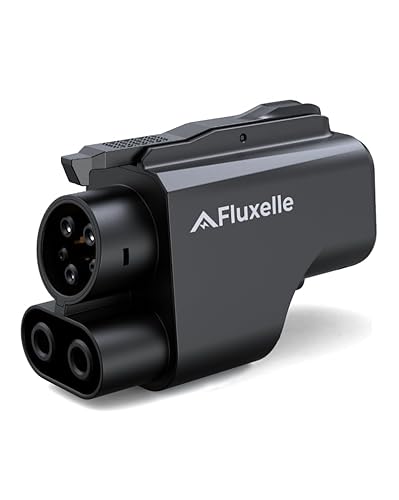
This model stands out because its listing leans hard into safety engineering, and in this product category that is exactly where extra attention belongs. Fluxelle highlights SGS UL2252 certification, dual locking on both ends, an automatic charging lock release when power cuts, triple temperature monitoring, and low-leakage electrical design. That is a mouthful, sure, but it paints a picture of an adapter built for buyers who get a little twitchy about thermal load, latch security, and repeated high-power use. Fair enough. An EV adapter is one of those things where paranoia can actually be healthy.
Beyond the safety angle, this adapter also tries to be a broad-appeal road-trip tool. It claims access to more than 23,500 Tesla Supercharger stalls and positions itself for a wide range of CCS1 brands, from Ford and Rivian to Hyundai, Mercedes-Benz, and Polestar, assuming access has been enabled. If you have ever rolled into a charger at dusk with rain tapping on the hood and wondered whether your hardware choice was too cheap, this is the sort of adapter built to quiet that little voice.
Pros
- Strong safety feature set with UL2252 certification
- Interlock-style security and dual locking features
- Triple temperature monitoring adds peace of mind
- Rated for 500A and 1000V fast charging
- Broad compatibility claims for many CCS1 EV brands with enabled access
Cons
- Brand is less established than Lectron
- Marketing claims are ambitious and worth verifying carefully
- Support history is harder to judge than longer-known brands
Fluxelle makes the most sense for cautious buyers who want a detailed feature list and who put safety design above brand familiarity. It is also appealing for drivers in hot climates or those who expect frequent fast-charge use and want more thermal-monitoring language on the product page. If you trust established charging brands more than a spec-heavy newcomer, you may still prefer Lectron or LENZ. If features calm your nerves, this one deserves a hard look.
To buy this product, click here.
5. Best For Midrange Security: FOCSPROD NACS to CCS Adapter

If you want an interlock-equipped adapter without going straight to the most expensive pick, FOCSPROD offers a pretty appealing lane. The headline features are solid: 500A and 1000V capacity, UL 2252 compliance via SGS, access to Tesla V3 and V4 Superchargers for supported vehicles, and a heavy-duty design with an interlock structure. That is a respectable package for buyers who want something more confidence-inspiring than the cheapest options but still keep one eye on value.
There is also a very practical side to this listing. FOCSPROD is unusually direct about incompatibilities, calling out a long list of brands and situations that may not work. Strange as it sounds, that honesty actually helps. Nobody wants to learn compatibility details while standing at the stall with an anxious family in the car and a navigation screen recalculating the route. The included three-year warranty also gives it a little more staying power than some listings that feel tossed onto the marketplace and forgotten a month later.
Pros
- Interlock design helps with secure connection confidence
- UL 2252 compliance is a meaningful plus
- Solid 500A and 1000V rating
- Three-year warranty is generous for this category
- Clear compatibility warnings reduce buyer confusion
Cons
- Compatibility exclusions are broader than some rivals
- Brand is less proven than the category leaders
- Listing language is a bit rough, which can make details harder to parse
This adapter fits drivers who want more than a bare-minimum backup and appreciate the extra security of an interlock, but who still want to avoid premium-brand pricing. It is a reasonable match for Ford, GM, or Rivian owners who will double-check vehicle support before buying. If your vehicle sits near the edge of compatibility lists, you may want a brand with clearer support documentation. If your vehicle is confirmed supported, this is a good midrange play.
To buy this product, click here.
6. Best Budget Pick: Aipechy NACS to CCS Adapter
![2026 Upgraded for NACS to CCS Adapter, [Max 500A 1000V]](https://m.media-amazon.com/images/I/71-82WI5VZL._AC_SL500_QL70_ML2_.jpg)
Sometimes you just want a low-cost way to get in the game. That is where the Aipechy adapter makes sense. It targets the buyer who wants access to Tesla Superchargers for a supported CCS1 EV without spending a premium-tier sum on an adapter they may use occasionally. The claimed specs are competitive, with a 500A and 1000V rating and up to 250kW charging, which is enough to put it on the radar for commuters and backup-kit shoppers.
The tradeoff, of course, is trust. Budget adapters often look fantastic on a bullet-point list, and then the question becomes how much faith you place in the materials, fit consistency, long-term durability, and support if anything goes sideways. Picture tossing this in the cargo bin for an emergency road trip route change. That can be a perfectly good use case. Picture relying on it every week across multiple states. That is where many buyers start leaning toward the more established names.
Pros
- Usually one of the most affordable NACS to CCS options
- Claimed 500A and 1000V rating is competitive
- Compact, portable design for occasional use
- Targets V3 and V4 Supercharger access for supported CCS1 EVs
- Good fit for buyers building a lower-cost emergency charging kit
Cons
- Less established brand and support history
- Fewer premium safety details than top picks
- Better as an occasional-use option than a heavy-duty travel companion
This is the adapter for the buyer who hates paying top dollar for gear that may sit unused most of the month. It works best as a budget-friendly backup, a glovebox insurance policy, or a first experiment for someone whose vehicle recently gained Supercharger access. If you travel heavily or care deeply about certification pedigree, pay more. If you want affordable access and understand the tradeoff, Aipechy is a reasonable budget bet.
To buy this product, click here.
7. Best For Broad Compatibility Claims: NACS to CCS Electric Vehicle Adapter

This adapter has one obvious hook: a broad compatibility pitch aimed at many CCS1 brands across North America. For buyers with less common badge combinations in the driveway, that alone can catch the eye fast. It also checks several boxes people actively search for, including UL2252 standards, dual locking, automatic release after power-off, thermal monitoring, and a 500A and 1000V rating. On paper, it reads like a well-rounded travel adapter for supported non-Tesla EVs.
What makes this one interesting is that it tries to split the difference between value and reassurance. It is not positioned like the absolute cheapest listing, but it also does not lean as heavily on brand cachet as Lectron. The broad brand list can be reassuring if your EV sits outside the usual Ford, GM, and Rivian focus. Still, compatibility lists in this category should always be treated like a starting point, not gospel. A Saturday afternoon charger stop is a lousy time to discover that your software access was the real bottleneck all along.
Pros
- UL2252 standards and safety-locking features are attractive
- 500A and 1000V rating suits DC fast charging needs
- Broad compatibility language covers many CCS1 brands
- Automatic safety locking and release functions sound practical
- Solid middle-ground option for buyers outside the most common EV brands
Cons
- Brand identity is less established than major names
- Compatibility claims still require independent verification
- Less field reputation than the top-tier picks
Buy this if you want a spec-competitive adapter and your vehicle brand is not always front and center in the most common recommendations. It is a better fit for shoppers who are comfortable doing a little homework and confirming app-side support before purchase. If you want the simplest brand-led decision, stick with Lectron or LENZ. If wider compatibility language matters to you, this one has some appeal.
To buy this product, click here.
8. Best Heavy-Duty Build: Autodecor 1Up NACS to CCS Adapter
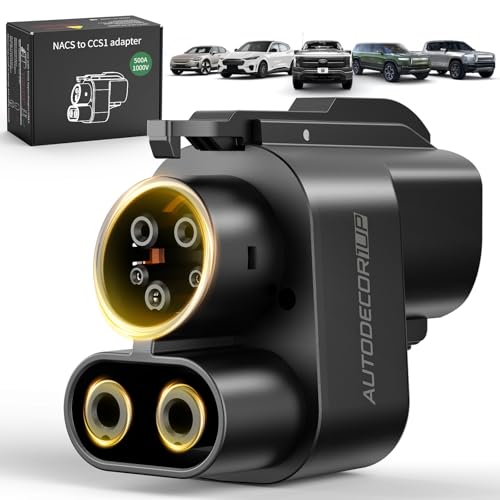
This model is for the buyer who sees charging gear as outdoor equipment. The Autodecor 1Up listing leans into ruggedness with IP65 protection, built-in temperature sensors, a 10,000-mating-test claim, and drop-test language that suggests a sturdier design than many slim budget adapters. If your adapter is going to live in a dirty truck bed compartment, bounce around in an SUV cargo cubby, or get used in rough weather on long drives, those details matter.
It also pitches broad compatibility across several brands and a 250kW peak charging claim, which makes it easy to picture as a road-trip companion for Ford, Rivian, GM, Hyundai, Kia, or Lucid drivers with approved access. There is a real-world appeal here. Think of pulling off the interstate in freezing rain, wrestling with a cold charging cable, and wanting an adapter that feels sturdy rather than toy-like. That is the emotional lane this product is trying to own, and honestly, it is a fair lane.
Pros
- Rugged build claims with IP65 weather resistance
- Built-in temperature sensors add reassurance
- Drop-test and mating-cycle durability claims are appealing
- 250kW charging support suits common fast-charging expectations
- Good fit for buyers who prioritize physical toughness
Cons
- Less proven brand reputation than the leaders
- Compatibility exclusions require careful reading
- Listing makes big durability claims that many buyers will still want to verify over time
This is a strong niche pick for drivers who care as much about physical durability as electrical specs. It makes sense for people who drive in harsh climates, keep gear in the vehicle full-time, or simply prefer hardware that feels overbuilt. If certification pedigree and brand trust matter more than rugged marketing, other picks rank higher. If weather exposure and repeated handling are high on your list, this one earns its spot.
To buy this product, click here.
9. Best For Backup Charging Access: Tesla NACS to CCS Adapter

If your main goal is simple, occasional Supercharger access for a compatible CCS1 EV, this adapter makes a straightforward pitch. It supports up to 250kW DC fast charging, claims stable connection performance, and uses heavy-duty materials with IP54 weather resistance. The broad positioning toward Ford, Rivian, and other CCS1 EVs gives it that emergency-kit vibe. You buy it, tuck it away, and feel better knowing that another charging network is available if your original plan falls apart.
That is really its sweet spot. This does not have the same premium-brand pull as Lectron, and it does not headline with as many certification details as some other choices here. Still, there is something attractive about a product that keeps the pitch clear: fast access, weather-resistant build, and broad CCS1 support. Picture a late-night reroute after a broken CCS stall or a holiday traffic snarl around your usual charging stop. In moments like that, a practical backup adapter can feel like a tiny hero.
Pros
- Good fit for occasional-use or backup charging needs
- Up to 250kW fast charging claim is competitive
- IP54 weather resistance is useful for real outdoor charging stops
- Broad CCS1 vehicle focus appeals to many EV owners
- Simple positioning makes it easy for casual buyers to understand
Cons
- Less certification detail than some top competitors
- Brand trust is harder to gauge than established charging names
- Not the first choice for buyers who want a proven heavy-use travel adapter
This is the pick for people who want wider charging access without overthinking the purchase. It suits drivers who charge at home most of the time, take occasional longer trips, and want a fallback option in the car. If you depend on public fast charging every week, I would spend more for a stronger certification and brand story. If you want a capable backup adapter, this one is easy to understand and easy to justify.
To buy this product, click here.
How To Choose The Right NACS To CCS Adapter
Start With Vehicle And Network Compatibility
This is the big one. Your EV must have a CCS1 port, and your automaker must have enabled access to Tesla Superchargers for your specific model. That means the adapter alone does not grant magic access. Plenty of buyers get tripped up here, especially after reading broad compatibility lists. Check your automaker app, Tesla app details, or manufacturer guidance first. If your vehicle is not approved yet, the fanciest adapter in the trunk will still leave you parked and annoyed.
Prioritize Safety Certification Over Hype
Charging hardware deals with serious current, heat, and outdoor conditions. That is why UL 2252 certification or clear UL-compliant language matters so much in this category. A cheap listing with giant charging claims can look tempting at midnight while you are scrolling, but certification is what helps separate serious gear from hopeful copywriting. If you plan frequent DC fast charging, paying for better safety credentials often feels smart long after the order is delivered.
Look Closely At Interlock And Locking Design
A secure physical connection makes a real difference. Adapters with interlock mechanisms or strong dual-side locking tend to inspire more confidence during high-power charging sessions. You do not want a loose, fussy fit when a thick Supercharger cable is hanging off the port in wind, heat, or sleet. That tiny click when the adapter seats properly matters more than people expect, especially during road trips where speed and simplicity keep the whole stop calmer.
Think About How Often You Will Actually Use It
If you are buying an adapter for one big vacation and a few backup moments each year, a value-oriented or budget-focused pick may be enough. If you drive long interstate routes often, public fast charging becomes part of your routine, and the adapter gets handled constantly, spend more. Frequent use changes the math. Build quality, thermal behavior, weather resistance, and support become much more important once the adapter stops being an emergency tool and starts being regular equipment.
Do Not Assume All 500A And 1000V Ratings Feel The Same
A lot of listings cluster around the same headline specs, which can make them look interchangeable. They are not. Materials, connector tolerances, thermal management, certification, and fit consistency all shape the real experience. Two adapters can both claim high amperage and voltage while delivering very different ownership experiences. One may feel solid and trustworthy in the hand, while another feels like something you would rather avoid on a scorching August charging stop.
Weather Resistance And Storage Matter More Than You Think
Most charging sessions happen outside. Rain on the pavement, road grit on the connector, winter gloves, and dust in the cargo area all become part of the story. An adapter with a sturdy shell, good seals, and a case or tidy storage setup is easier to live with long term. If your charging gear tends to get tossed next to jumper cables, soccer cleats, or camping bins, physical durability moves way up the priority list.
Avoid Buying Solely On Lowest Price
This is the most common mistake. Saving money feels great until you are parked at a charger with your family asking how long this is going to take and the session refuses to start. A budget adapter can be totally fine for light use, but the lower the price goes, the more carefully you should check certification, compatibility clarity, warranty support, and brand credibility. A few extra dollars for a better-built adapter can feel like cheap insurance once you are hundreds of miles from home.
Best NACS To CCS Adapter FAQ
What does a NACS to CCS adapter do?
It lets a compatible EV with a CCS1 charging port connect to a Tesla NACS Supercharger plug for DC fast charging. The key word is compatible. Your vehicle still needs software and network access approval from the automaker and charging network.
Will any CCS1 EV work with these adapters?
No. That is the biggest misunderstanding in this category. Some CCS1 vehicles have access to Tesla Superchargers, and some still do not, or only do at specific stations. Always confirm access for your exact vehicle before buying.
Can I use a NACS to CCS adapter for home charging?
Most products in this roundup are for DC fast charging at Tesla V3 or V4 Superchargers, not Level 1 or Level 2 AC charging. Many listings explicitly say they do not support home charging. Read that line carefully before checkout.
Is UL 2252 certification worth paying more for?
For many buyers, yes. It adds confidence around safety and performance testing in a product category handling high current outdoors. If you plan frequent road trips or regular fast charging, certification is one of the easiest ways to narrow the field.
Do charging speed claims like 150 miles in 15 minutes always happen?
No. Actual speed depends on your vehicle, battery temperature, state of charge, charger generation, and site conditions. Those headline claims are best treated as ideal-case examples, not guarantees for every stop.
What is the advantage of an interlock design?
An interlock helps secure the connection during charging, which can improve confidence and reduce the chance of a loose or unstable fit. It is a valuable feature for frequent users and for anyone who wants a more robust connection at high-power stations.
Should I buy a budget adapter or a premium one?
If you need an emergency backup and expect light use, a budget model may be enough. If you travel often, rely on public DC fast charging, or simply want stronger safety documentation, a premium adapter is usually the better buy.
How should I store a NACS to CCS adapter in the car?
Keep it clean, dry, and protected from loose cargo. A case is helpful because it prevents connector damage and keeps dirt out of the contacts. Avoid tossing it into a messy trunk corner where it can get banged up by tools or other heavy items.
Final Verdict
After sorting through these 9 options, the Lectron Vortex Plus is the one I would buy first for most drivers. It does the hard stuff right. You get UL 2252 certification, a secure interlock design, strong charging specs, and a brand that feels more established than many of the newer names filling this category. If you plan to use a NACS to CCS adapter regularly, that extra confidence is worth a lot. The Aipechy is the budget-friendly pick for lighter use, while the LENZ lands in a very appealing middle ground for buyers who want solid credentials without stretching to the top of the price range.
The smartest move is to match the adapter to your real driving life. If you mostly charge at home and want a backup for occasional road trips, value matters. If you live on DC fast charging during long highway days, prioritize certification, locking security, and build quality. Most of all, verify your vehicle’s Supercharger access before buying. Get that part right, and the right adapter can make your charging routine feel a whole lot smoother the next time the battery drops and the road keeps rolling.