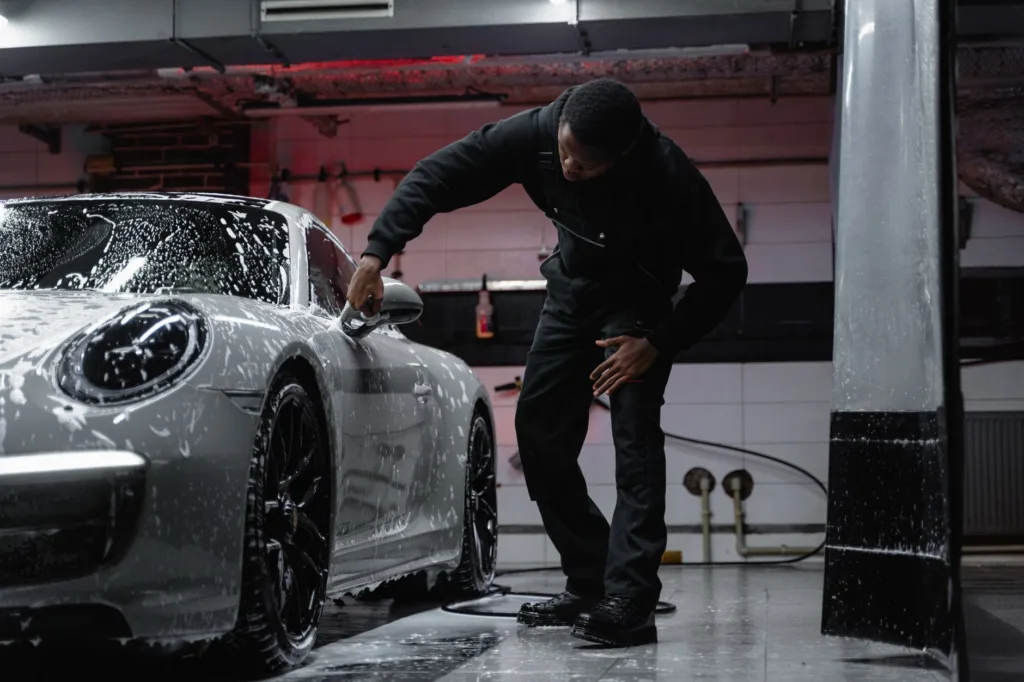
Yes, you can wash a ceramic coated car. In fact, regular washing is one of the main ways to keep a ceramic coating performing well. The coating helps the surface resist dirt, water spotting, and light contamination, but it does not eliminate the need for maintenance washing.
The important difference is that a ceramic coated car should be washed with the right technique. Harsh wash methods, dirty towels, abrasive brushes, and strong chemicals can reduce gloss, create swirls, and shorten the life of the coating’s hydrophobic behavior. If you treat a coated car like any other car wash job, you can still damage the finish.
The short answer is simple. Wash it, but wash it carefully.
What a Ceramic Coating Actually Changes
A ceramic coating is a protective layer applied over paint, wheels, glass, or other surfaces. It bonds to the surface and creates a slick, durable layer that helps repel water and makes dirt easier to remove. It does not make the car self-cleaning, and it does not make the paint immune to damage.
People often expect a coated car to stay clean for much longer than an uncoated car. While a coating can help reduce how quickly grime sticks, road film, salt, pollen, and dust still build up. Washing is still needed, just usually with less effort than before.
It is also important to understand what a coating does not do. It does not prevent scratches from bad washing, it does not stop rock chips, and it does not replace regular care. Think of it as a protective surface treatment, not a permanent shield.
How Often Should You Wash a Ceramic Coated Car?
There is no single correct schedule for every vehicle. How often you should wash depends on climate, driving habits, storage conditions, and how much contamination your car picks up. A daily-driven car in wet, salty, or dusty conditions may need washing every week or two, while a garage-kept car in mild conditions may go longer.
A good rule is to wash whenever the surface starts to collect visible grime, loses slickness, or no longer beads and sheets water as expected. If the car looks dusty but not heavily soiled, a gentle rinse or maintenance wash may be enough. If it has road salt, bird droppings, bug residue, or tree sap, clean it sooner rather than later.
Waiting too long can make washing harder. Contaminants bake onto the surface, which increases the chance of scratching during cleaning. Even with a coating, dirt should not be allowed to sit indefinitely.
Best Way to Wash a Ceramic Coated Car
The safest approach is a careful hand wash using clean tools, plenty of lubrication, and minimal contact pressure. The goal is to remove dirt without grinding it into the paint. A coating makes this easier, but the technique still matters.
Two-Bucket Wash Method
The two-bucket method remains one of the most practical ways to wash a coated vehicle. One bucket holds your wash solution, and the other is for rinsing your mitt after each pass. This reduces the chance of dragging grit back onto the paint.
Use a quality wash mitt or soft microfiber towel, and rinse it often. Start at the top of the vehicle and work downward, since the lower panels usually carry the heaviest contamination. The lower the panel, the more careful you should be.
Pre-Rinse and Foam If Available
Before touching the paint, rinse the vehicle thoroughly to remove loose dirt. If you have access to a foam cannon or pre-wash foam, that can help loosen grime so less friction is needed during the contact wash. This is especially useful on coated cars because the slick surface helps contaminants release more easily.
Foam is not a substitute for washing, but it is a useful prep step. The less dirt you physically touch, the lower the risk of swirls.
Use Gentle Drying Methods
Drying is just as important as washing. A clean drying towel, blower, or dedicated microfiber drying aid can reduce water spots and prevent towel marks. Never use an old bath towel, paper towels, or anything rough.
If the coating is healthy, water should usually bead or sheet away more easily than on uncoated paint. That makes drying quicker, but it still needs to be done carefully. Leaving hard water to dry on the paint can still create spotting, even on a coated vehicle.
What Products Are Safe to Use on a Ceramic Coated Car?
Most ceramic coated cars do well with pH-neutral car shampoos and mild maintenance products. The safest choices are typically designed to clean without stripping protection or leaving heavy residue. A coating does not require special soap every time, but it does benefit from gentle products.
Strong degreasers, aggressive all-purpose cleaners, and cheap wash soaps with heavy gloss additives are less ideal. Some of these can leave residue that interferes with the coating’s water behavior. Others can be too harsh for regular use.
If you are unsure whether a product is coating-safe, read the label carefully. Look for wash products intended for coated, sealed, or waxed surfaces. That usually indicates a gentler formula.
Common Product Types and Their Use
| Product Type | Generally Safe? | Typical Use | Notes |
|---|---|---|---|
| pH-neutral car shampoo | Yes | Routine washing | Usually the safest choice for regular maintenance |
| Foaming pre-wash | Usually | Loosening dirt before contact washing | Helpful, but should not replace a full wash when needed |
| Quick detail spray | Usually | Light dust removal or drying aid | Use only on light contamination to avoid scratching |
| All-purpose cleaner | Sometimes | Wheels, tires, lower trim, heavy buildup | Avoid using on the coated paint unless the label allows it |
| Strong degreaser | No for routine paint washing | Engine bays, severe grease, specific cleanup tasks | Too aggressive for general maintenance washing |
Can You Use an Automatic Car Wash on a Ceramic Coated Car?
You can, but it is not always the best choice. A ceramic coating may help a vehicle handle occasional automatic washing better than uncoated paint, but the wash method still matters. Brush-style car washes can introduce scratches and dull the finish over time, regardless of coating.
If you must use an automatic wash, a touchless wash is usually less risky than one with spinning brushes. That said, touchless systems often rely on stronger chemicals and high-pressure spray to compensate for the lack of physical contact. They may clean less effectively than a careful hand wash, especially on heavily soiled vehicles.
For most owners, an automatic wash is a convenience option, not the ideal routine. If appearance and coating longevity matter, hand washing is generally preferred.
Automatic Wash Type Comparison
| Wash Type | Pros | Cons | Suitability for Coated Cars |
|---|---|---|---|
| Touchless wash | No direct brush contact, fast, convenient | May use stronger chemicals, may miss heavy dirt | Better than brush washes, but not perfect |
| Brush or tunnel wash | Can clean quickly and thoroughly | Higher risk of scratches and swirl marks | Generally less desirable for coated paint |
| Hand wash | Most control, safest for finish when done properly | Takes more time and effort | Best option for routine care |
Does Washing Remove or Damage Ceramic Coating?
Normal washing should not remove a properly applied coating. The coating is designed to stay on the surface through routine maintenance. However, poor washing habits can reduce the coating’s performance and make it seem like the coating is failing sooner than it actually is.
For example, repeated use of dirty wash mitts can scratch the coating and paint beneath it. Harsh chemicals may leave the surface less slick or reduce water behavior. In some cases, contamination buildup can mask the coating, making it appear worn even though it is still present.
True coating degradation usually happens over time through use, weather exposure, abrasion, and improper maintenance. Washing itself is not the problem. The method is the issue.
Signs Your Ceramic Coating Needs Cleaning
Even if the car does not look extremely dirty from a distance, several signs can tell you it is time to wash.
- Dust or road film is visible on horizontal surfaces
- Water no longer beads or sheets as well as it used to
- The paint feels rough to the touch after rinsing
- Bug residue or bird droppings are present
- Brake dust has built up on wheels
- The vehicle looks dull instead of glossy
One common mistake is waiting until the whole car looks dirty. By then, contaminants may have bonded more firmly. Cleaning sooner usually makes the job easier and safer.
Common Mistakes When Washing a Ceramic Coated Car
Many coating owners assume the surface is so slick that care no longer matters. That leads to avoidable damage. The coating may make the car easier to clean, but the wrong process can still hurt the finish.
Using Dirty Wash Tools
A contaminated mitt or towel can turn into sandpaper. Even with a coating, dirt trapped in the fibers can scratch the finish. Always rinse tools thoroughly and replace worn towels when they begin to feel rough.
Skipping the Pre-Rinse
Touching a dry, dusty car without rinsing first increases the chance of scratching. A thorough rinse removes loose debris before contact washing starts. This step is especially important after driving in rain, through construction dust, or on salted winter roads.
Using Too Much Pressure
Pressing hard on the paint does not clean better. It only increases friction. Let the soap and mitt do the work, and use gentle passes instead of scrubbing.
Letting Soap or Water Dry on the Surface
Soap residue and hard water can leave spots, especially in direct sun. Work in smaller sections when possible, and dry the vehicle promptly. A coated car can still spot if the water chemistry is unfavorable.
Using a Single Towel for the Whole Car
A drying towel or wash mitt can hold dirt as you use it. Switching towels, rinsing frequently, or folding microfiber into clean sides helps reduce contamination. This is a simple habit that protects the finish.
How to Wash a Ceramic Coated Car Step by Step
If you want a straightforward routine, use this process as a general guide.
- Wash in a shaded area if possible, or when panels are cool to the touch.
- Rinse the entire vehicle to remove loose dirt.
- Apply pre-wash foam if available and allow it to dwell briefly according to the product instructions.
- Rinse again to remove loosened contaminants.
- Fill one bucket with wash solution and another with clean rinse water.
- Wash from top to bottom, rinsing your mitt often.
- Clean lower panels, rocker panels, and the rear bumper last.
- Rinse thoroughly to remove all soap.
- Dry with a clean microfiber drying towel or air blower.
- Inspect for missed areas, water spots, or residue.
This routine is simple, but it works well because it minimizes friction and keeps dirt from being dragged across the paint. If your coating is in good condition, the washing process should feel easier than on unprotected paint.
What About Washing Wheels, Glass, and Trim?
A ceramic coating may be applied to more than just the body panels. Many owners also coat wheels, glass, and trim. These areas still need regular cleaning, but the approach may differ slightly.
Wheels
Wheels collect brake dust, road grime, and heat-related contamination. Even if they are coated, they should be cleaned regularly because brake dust can bond quickly. Use separate brushes or mitts for wheels so you do not transfer heavy grime to the paint.
Glass
Coated glass often sheds water more readily, which can improve visibility in rain. When washing, use a clean glass-safe cleaner if needed, but avoid leaving residue that could streak. Clean microfiber towels help prevent lint and smearing.
Trim
Exterior trim can also be coated, but not every cleaning product is trim-safe. Gentle soap is usually fine for routine washing. Harsh chemicals may dull the surface or dry out certain trim materials over time.
Does a Ceramic Coated Car Need Special Drying?
Special drying is not mandatory, but careful drying is recommended. The slick nature of a coating often makes drying easier because water does not cling as aggressively. Even so, if you wipe a dirty panel carelessly, you can still mark the finish.
Blow drying with filtered air can help reduce towel contact, especially around mirrors, trim pieces, grilles, emblems, and panel gaps where water tends to hide. If you use towels, choose soft microfiber and keep them clean.
A drying aid can sometimes improve glide, but it should be used sparingly and only if compatible with the coating system. The main idea is to remove water without introducing friction.
What If the Coating Stops Beading?
Reduced beading does not always mean the coating is gone. Road film, detergent residue, mineral deposits, or surface contamination can all reduce the coating’s water behavior. Sometimes a proper wash restores performance.
If the coating still seems weak after washing, a light decontamination step may help. Depending on the situation, that can include a safe iron remover, tar remover, or a careful clay process if appropriate for the coating and paint condition. These steps should be used cautiously because aggressive decontamination can increase the risk of marring.
If the coating has simply aged out or worn down, washing alone will not restore its original behavior. At that point, professional inspection or reapplication may be necessary.
Seasonal Washing Considerations
Weather and road conditions can change how you care for a coated car. A winter-driven vehicle, for example, may need more frequent washing because salt and brine are highly corrosive. In summer, bug residue and tree sap can require quick attention.
Winter
Winter washing is especially important because road salt can cling to the underbody, wheels, and lower panels. If temperatures allow, rinse the car regularly to reduce salt buildup. Pay extra attention to wheel wells and the lower rear of the vehicle.
Summer
Bug splatter and bird droppings can etch surfaces if they sit too long. A ceramic coating may make removal easier, but it does not make these contaminants harmless. Clean them as soon as practical.
Rainy or Muddy Conditions
Rain does not clean a car. In many cases it leaves behind mineral spots or a dirty film after the water dries. Mud splashes should be removed before they harden, especially on lower body panels.
Quick Comparison: Coated Car Washing vs Uncoated Car Washing
| Factor | Ceramic Coated Car | Uncoated Car |
|---|---|---|
| Dirt release | Usually easier | Often requires more effort |
| Water behavior | Often beads or sheets more readily | Water may cling more |
| Wash safety | Still depends on technique | Also depends on technique |
| Risk from bad washing | Still present | Still present, sometimes more visible |
| Maintenance frequency | Can be easier to maintain, not maintenance-free | Usually requires more effort to keep clean |
When Should You Avoid Washing?
There are times when washing is not a good idea. If the paint is extremely hot, products can dry too quickly and leave marks. If you are dealing with frozen surfaces in very cold weather, washing may be impractical or unsafe without a controlled environment.
Also avoid washing when the surface is covered in heavy abrasive debris and you do not have a proper pre-rinse. In that case, removing the loose contamination first is more important than scrubbing immediately. A rushed wash can do more harm than good.
Frequently Asked Questions
Can you wash a ceramic coated car with soap and water?
Yes. A mild, pH-neutral car shampoo and clean water are usually the standard choice for routine washing.
Do you need special soap for a ceramic coated car?
Not always. Special coating-specific shampoos can be helpful, but a gentle, residue-light car wash soap is often enough.
Can you take a ceramic coated car through a car wash?
Yes, but brush-style automatic washes are not ideal. Touchless washes are usually gentler, though hand washing is typically the safest option.
Will washing remove the ceramic coating?
Normal washing should not remove a properly applied coating. Harsh chemicals, poor technique, and long-term wear are more likely to reduce performance.
How do you dry a ceramic coated car?
Use a clean microfiber drying towel, a blower, or both. Avoid rough cloths and do not let hard water dry on the paint.
Why does my ceramic coated car not bead water anymore?
It may be contaminated with dirt, detergent residue, or mineral deposits. A proper wash may help, but if the coating has aged significantly, it may need reconditioning or replacement.
Can you use a pressure washer on a ceramic coated car?
Yes, if used correctly. A pressure washer can help with rinsing and pre-wash removal, but keep a safe distance and never use excessive force on edges, trim, or damaged areas.
Is hand washing better than automatic washing for ceramic coatings?
Usually yes. Hand washing gives you more control and reduces the risk of scratching, especially when you use clean tools and proper technique.
Conclusion
You can absolutely wash a ceramic coated car, and regular washing is part of proper coating maintenance. The coating helps dirt release more easily and can make the car simpler to clean, but it does not replace good wash habits.
The safest approach is a careful hand wash with clean microfiber tools, gentle shampoo, good rinsing, and proper drying. Avoid dirty mitts, harsh chemicals, and brush-style automatic washes when possible. If you treat the surface well, a ceramic coating can continue to make maintenance easier without being damaged by routine cleaning.