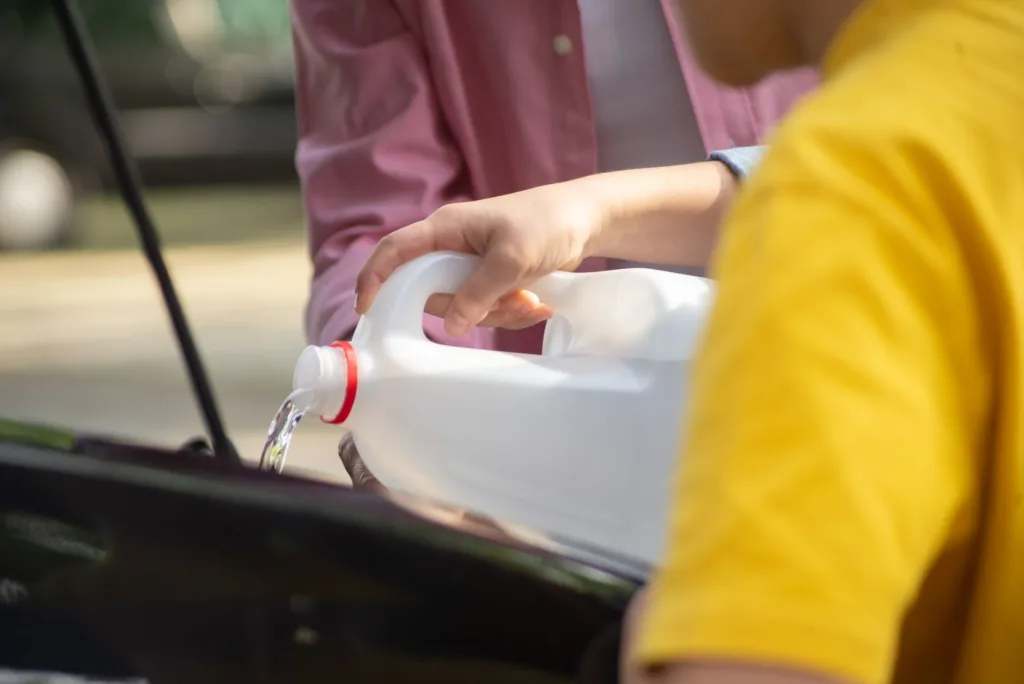
Coolant typically lasts 2 to 5 years, but the real answer depends on the type of coolant, the vehicle manufacturer’s maintenance schedule, driving conditions, and the health of the cooling system. Some older green coolants may need replacement around every 2 years or 30,000 miles, while many long-life coolants are designed to last 5 years, 100,000 miles, or longer. The safest rule is to follow your owner’s manual first, because using the wrong interval can shorten coolant life and increase the risk of overheating, corrosion, or water pump damage.
If the vehicle’s approved procedure involves topping up or refilling fluid, our automotive funnel sets guide compares filling tools; use the correct fluid and level check, and keep incompatible fluids separated.
That matters because coolant does more than prevent freezing. It also helps control engine temperature, lubricates certain cooling system components, and protects the radiator, heater core, and engine passages from rust and corrosion. Even if the coolant level looks fine, the fluid itself can still wear out over time.
If you are wondering whether your coolant is still good, the short version is this: age, mileage, contamination, and neglected maintenance all matter more than color alone. A cooling system can look normal from the outside while the fluid inside has already lost much of its protective additives.
How Long Coolant Usually Lasts
Coolant life varies by formulation and vehicle design. The chart below gives general ranges, but it does not replace the service interval listed for your specific car, truck, or SUV.
| Coolant Type | Typical Service Life | Common Notes |
|---|---|---|
| Conventional green coolant | About 2 years or 30,000 miles | Often found in older vehicles. Shorter additive life. |
| OAT long-life coolant | About 5 years or 100,000 to 150,000 miles | Common in many newer vehicles. Exact interval varies. |
| HOAT coolant | About 5 years or around 100,000 miles | Used by several manufacturers. Not always interchangeable. |
| Asian vehicle-specific coolants | Often 5 years initially, then shorter follow-up intervals | Some have a long factory-fill interval, then different replacement intervals later. |
| European vehicle-specific coolants | Often 4 to 5 years, sometimes longer | Must match manufacturer specs. Chemistry matters. |
Many vehicles leave the factory with a long-life coolant that lasts longer than replacement coolant used later. For example, a vehicle may have an initial fill that lasts 10 years or 150,000 miles, while later changes are recommended every 5 years or 50,000 miles. That is one reason generic advice can be misleading.
What Coolant Actually Does
To understand why coolant wears out, it helps to know what it is doing inside the engine.
It controls operating temperature
Coolant carries heat away from the engine to the radiator, where that heat is released into the air. Without properly functioning coolant, the engine can overheat, especially in traffic, hot weather, or when towing.
It protects against freezing and boiling
The mixture of antifreeze and water lowers the freezing point and raises the boiling point compared with plain water. That helps protect the engine in both winter and summer.
It prevents internal corrosion
Coolant contains corrosion inhibitors that protect metal surfaces inside the radiator, engine block, cylinder head, heater core, and cooling passages. Those additives do not last forever.
It helps protect seals and the water pump
Fresh coolant can help lubricate components such as the water pump seal. Old or contaminated coolant can contribute to premature wear.
Why Coolant Does Not Last Forever
Even though coolant is sealed inside a cooling system, it is still exposed to heat cycles, metal surfaces, pressure changes, and time. Over the years, the additives that protect against rust and corrosion become depleted.
Once that protection weakens, the coolant may still look like fluid, but it is no longer doing its full job. Acidity can increase, metal components can begin corroding internally, and deposits can form in narrow passages like the heater core or radiator.
That is why coolant replacement is a maintenance item, not just something you do after a leak.
Factors That Affect How Long Coolant Lasts
Coolant chemistry
Different coolants use different additive packages. Traditional inorganic additive coolants generally have shorter service lives than newer organic acid technology formulas. That does not mean one is universally better. It means your vehicle was designed around a specific chemistry.
Vehicle manufacturer recommendations
The owner’s manual or factory service information should be your primary reference. Some manufacturers specify time and mileage, while others give different schedules for normal and severe use.
Driving conditions
Frequent short trips, heavy traffic, extreme heat, towing, mountain driving, and long idle times all place more thermal stress on the cooling system. Severe-duty use can make coolant age faster.
Cooling system condition
A well-maintained sealed system helps coolant last longer. A system with small leaks, a weak radiator cap, contamination, or repeated overheating will shorten coolant life.
Water quality and mixing practices
If concentrate is mixed with tap water instead of distilled or deionized water, minerals can enter the system. Those minerals may contribute to scale deposits and reduce cooling system efficiency over time.
How to Tell If Coolant Is Still Good
Coolant should not be judged by age alone if there are signs of contamination or cooling system trouble. It also should not be judged by color alone, since dye does not reveal the true condition of the additive package.
Signs the coolant may still be in decent condition
- The vehicle is within the manufacturer’s service interval
- The coolant level remains stable
- The fluid looks clean and free of debris
- The engine runs at normal temperature
- There are no signs of rust, oil contamination, or sludge
Signs the coolant may be old or failing
- Rusty, brown, cloudy, or muddy appearance
- Floating debris or sediment in the reservoir
- Oily film on the surface
- Repeated low coolant level
- Sweet smell from leaks around the engine bay
- Engine running hotter than normal
- Weak cabin heat caused by restricted heater core flow
Testing coolant condition
Shops can test coolant with tools that check freeze protection, pH, and sometimes the strength of corrosion inhibitors. A simple hydrometer or refractometer helps check concentration, but concentration alone does not confirm the additive package is still healthy.
In other words, coolant can test fine for freeze protection and still be overdue for replacement because the anti-corrosion additives are worn out.
Does Coolant Expire by Time or by Mileage?
Coolant ages by both time and mileage. If your service interval says 5 years or 100,000 miles, you should service it when either limit comes first.
Time matters because the additives break down even if the vehicle is not driven much. Mileage matters because more miles usually mean more heat cycles and more work for the cooling system.
This catches some owners off guard. A low-mileage vehicle that sits a lot can still need coolant replacement because time is just as important as use.
Can Coolant Last Longer in a Low-Mileage Car?
Sometimes, but not indefinitely. A garage-kept car driven only a few thousand miles a year may look like an easy case, but the coolant still ages with time. The anti-corrosion package does not pause simply because the odometer moves slowly.
For example, a car that has only 28,000 miles after six years may still be due for coolant service if the manual says 5 years. Low mileage is helpful, but it does not override the calendar.
What Happens If You Leave Coolant in Too Long?
Old coolant does not always cause immediate failure, but it increases the chances of expensive cooling system problems. Related cooling-system planning should also account for how long a water pump lasts.
Corrosion inside the radiator and engine
Once inhibitors are depleted, rust and corrosion can attack aluminum, steel, and other metals. Internal corrosion may not be obvious until a radiator, heater core, or gasket begins to fail.
Sludge and deposits
Degraded coolant can form sludge or allow scale to build up, especially if mixed with poor-quality water or the wrong coolant chemistry. Deposits can restrict flow and reduce heat transfer.
Water pump wear
Old coolant may no longer lubricate and protect the system as well as fresh coolant. That can contribute to seal wear or pump failure.
Overheating risk
A neglected cooling system may lose efficiency before the dashboard temperature gauge ever gives a clear warning. Restricted flow, corrosion, and poor heat transfer all make overheating more likely.
Reduced heater performance
A partially clogged heater core can lead to weak cabin heat, especially in cold weather. Sometimes the complaint starts as a comfort issue and later becomes a cooling system repair.
How Often Should You Replace Coolant?
The best interval is the one listed in the owner’s manual, but the table below shows practical general guidance.
| Vehicle Situation | Practical Coolant Service Approach |
|---|---|
| Older vehicle using conventional green coolant | Usually every 2 years or 30,000 miles |
| Newer vehicle with long-life coolant | Often every 5 years or 100,000 miles, sometimes longer for factory fill |
| Vehicle with unknown maintenance history | Inspect and consider a coolant service sooner rather than later |
| Vehicle that overheated recently | Inspect the system and replace coolant if contaminated or degraded |
| Vehicle with rust, debris, or mixed coolant types | Flush and refill with the correct coolant after diagnosing the cause |
If you bought a used vehicle and cannot verify the coolant history, it is often smart to inspect the fluid and compare it to the manufacturer’s spec. Unknown coolant age is one of the most common reasons people end up doing preventive service earlier.
Coolant Change vs Coolant Flush
People often use these terms interchangeably, but they are not always the same service.
Coolant drain and refill
A drain and refill removes some of the old coolant and replaces it with fresh coolant. It is simpler and is often enough for routine maintenance if the system is clean and healthy.
Coolant flush
A flush is more thorough. It is meant to remove more old fluid, sediment, and contamination from the radiator, engine block, and heater core. This is more appropriate when the coolant is dirty, the wrong coolant was used, or the system has signs of corrosion or sludge.
| Service Type | What It Does | Best Used When |
|---|---|---|
| Drain and refill | Replaces part of the old coolant | Routine scheduled maintenance |
| Flush | Removes more old fluid and contamination | Dirty coolant, mixed coolant, overdue maintenance, system repair |
Can You Mix Old and New Coolant?
Adding the correct coolant to top off a low system is usually fine when needed, but regularly mixing old and new coolant is not the same as proper maintenance. Topping off does not restore depleted additives in the entire system.
Mixing different coolant types is a separate issue and can be a problem. Some coolants are not compatible, even if the colors look similar. Color is not a universal standard. Orange, green, pink, blue, and yellow can mean different things depending on the brand and specification.
If you are unsure what is already in the system, check the owner’s manual, the coolant reservoir cap if labeled, or service records. If the type is unknown and contamination is suspected, a full service is usually safer than guessing.
How Long Does Coolant Last After Opening the Bottle?
Unopened coolant has a longer shelf life than opened coolant. Once a bottle has been opened, contamination and moisture exposure become more likely. If it has been stored properly, sealed tightly, and still looks normal, it may still be usable later, but you should follow the storage guidance on the container.
Premixed and concentrate products can both degrade if they are stored poorly, exposed to dirt, or left in extreme temperatures. Do not use coolant that has visible contamination, unusual separation, or unclear labeling.
How Long Does Coolant Last in the Reservoir?
If the coolant is in a healthy, sealed system, it follows the same service life as the rest of the cooling system. The reservoir is part of that system, not a separate supply that stays fresh forever.
However, the reservoir is often the easiest place to inspect fluid condition and level. If you see discoloration, sludge, or debris there, it is a sign to inspect the entire system.
Real-World Examples of Coolant Lifespan
Daily commuter in moderate climate
A 5-year coolant in a modern sedan used for commuting may last close to the listed interval if the cooling system stays sealed and the engine never overheats. Routine inspections are usually enough between services.
Truck used for towing in hot weather
Heavy loads and high temperatures put extra stress on the cooling system. Even if the formal interval has not been reached, more frequent inspections make sense because leaks, hose wear, and fluid breakdown become more important.
Older car with unknown service history
If the coolant looks brown and the owner has no records, assuming it is fine can be a mistake. This is the kind of vehicle where a proper inspection and likely coolant service can prevent bigger issues.
Low-mileage weekend car
A vehicle driven only occasionally may still need coolant based on time. Owners often delay fluid service because the mileage is low, but coolant does not last forever just because the car spends most of its time parked.
Common Mistakes Vehicle Owners Make
Judging coolant by color only
Bright color does not guarantee the coolant is healthy. Dye can remain visible long after the additive package has weakened.
Ignoring the owner’s manual
Manufacturer intervals exist for a reason. Generic advice can be useful, but it should not override the service specification for your exact engine.
Mixing incompatible coolant types
This is one of the easiest ways to create cooling system problems. If you are unsure, do not guess based on color.
Using plain water long term
Water may help in an emergency, but it should not replace proper coolant for normal use. Water alone lacks the anti-corrosion and anti-freeze protection your system needs.
Waiting until the engine overheats
By the time overheating starts, the problem may already involve restricted flow, leaks, thermostat issues, or water pump wear. Coolant maintenance is preventive, not reactive.
Opening the radiator cap on a hot engine
This can be dangerous. Hot cooling systems are pressurized, and removing the cap can release scalding fluid and steam.
Practical Coolant Maintenance Tips
- Check your owner’s manual for the exact coolant specification and interval.
- Inspect coolant level regularly, especially before long trips, hot weather, or towing.
- Look at the condition of the coolant in the reservoir when the engine is cool.
- Use the correct coolant type, not just the right color.
- Fix leaks early, because low coolant level accelerates cooling system problems.
- Use distilled water if mixing concentrate, unless the manufacturer says otherwise.
- Replace coolant after major cooling system repairs when contamination or fluid loss is involved.
- Keep service records so you know when the next interval is due.
When You Should Have the Cooling System Inspected
Coolant age is only part of the picture. You should have the system checked if you notice any of the following: Because overheating has several possible causes, compare the signs of a bad thermostat before blaming another cooling-system part.
- Temperature gauge running hotter than usual
- Coolant warning light
- Frequent need to add coolant
- Puddles under the car with a sweet smell
- No heat or weak heat from the heater
- Visible rust or sludge in the reservoir
- Recent overheating event
- Used vehicle with unknown fluid history
An inspection may include checking hoses, the radiator cap, radiator, thermostat operation, water pump condition, fan operation, and pressure integrity. Replacing coolant alone will not fix a mechanical problem if a component is already failing.
Typical Coolant Service Costs
Costs vary by vehicle, region, and service type. Luxury vehicles, vehicles with difficult bleeding procedures, and vehicles requiring specialty coolant may cost more than average.
| Service | Typical Cost Range | Notes |
|---|---|---|
| Basic coolant drain and refill | About $100 to $200 | Can vary depending on coolant type and labor access |
| Cooling system flush | About $150 to $300 | Often higher if the system is heavily contaminated |
| DIY coolant service | Usually lower parts cost, but depends on coolant quantity and tools | Must use the correct procedure and properly bleed air from the system |
Improper DIY bleeding can create air pockets, which may cause overheating. On some vehicles, coolant service is straightforward. On others, it is easier to get wrong than many beginners expect.
FAQ
How long does engine coolant last in a car?
Usually 2 to 5 years, depending on the coolant type and the manufacturer’s service schedule. Many newer vehicles use long-life coolant that can last around 5 years or more.
Can coolant last 10 years?
Some factory-fill coolants are designed for very long initial intervals, sometimes close to 10 years. You should only rely on that if your owner’s manual specifically says so.
Does coolant go bad if the car is not driven much?
Yes. Coolant ages with time as well as mileage, so a low-mileage vehicle can still be due for service.
How do I know if my coolant needs to be changed?
Check the service schedule first. Also watch for rusty or cloudy fluid, debris, overheating, weak heater performance, or a history of neglected maintenance.
Can I just top off coolant instead of changing it?
Topping off helps restore level, but it does not fully renew the additive package. If the coolant is old, contaminated, or overdue, it should still be serviced.
What color should healthy coolant be?
There is no single correct color for healthy coolant. Different manufacturers use different dyes, and color alone does not prove the coolant is still good.
Is antifreeze the same as coolant?
People often use the terms interchangeably. Strictly speaking, antifreeze is the concentrate and coolant is usually the water-antifreeze mixture circulating in the system.
Can old coolant cause overheating?
Yes. Old coolant can contribute to corrosion, deposits, poor heat transfer, and reduced system efficiency, all of which can increase overheating risk.
Final Takeaway
Coolant does not last forever. In many vehicles it lasts about 2 to 5 years, but the correct interval depends on the coolant chemistry and your manufacturer’s maintenance schedule. If you remember only one thing, make it this: follow the owner’s manual and do not judge coolant by color alone.
If your vehicle has unknown service history, signs of contamination, or repeated low coolant, do not assume the fluid is still good. A timely coolant service is usually much cheaper and easier than dealing with overheating, corrosion, or major cooling system repairs later.