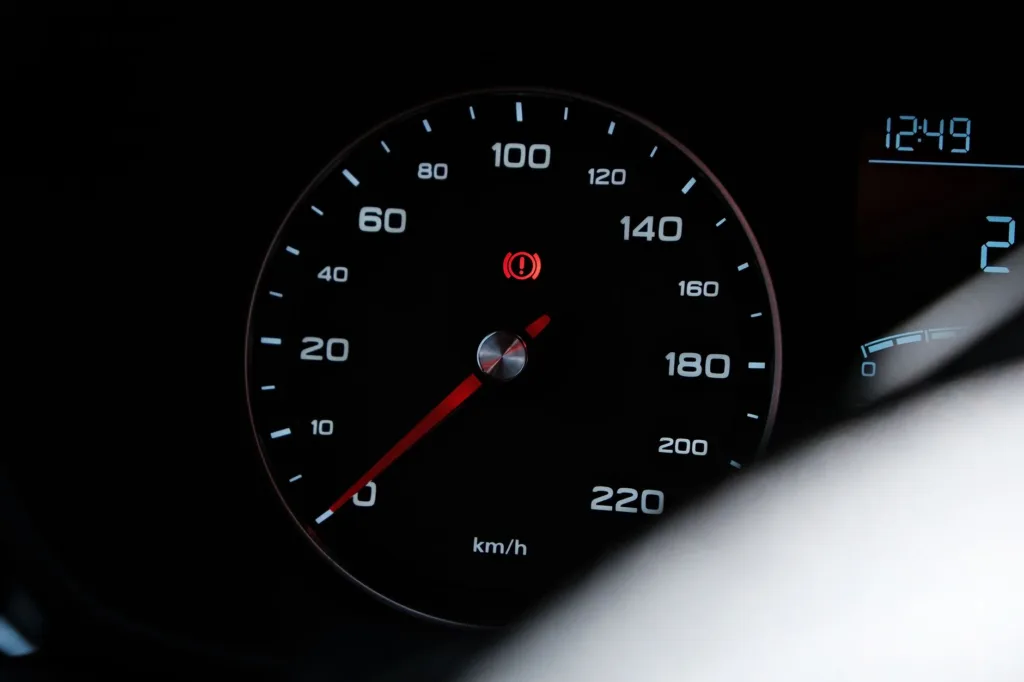
A bad ABS sensor often causes the ABS warning light to come on, and it may also trigger the traction control or stability control light. You might notice the anti-lock braking system engaging when it should not, failing to engage when it should, or a brake pedal that pulses at very low speeds. In some vehicles, a faulty wheel speed sensor can also affect cruise control, speedometer behavior, transmission shifting, or driver-assistance features that rely on wheel-speed data.
This matters because the ABS sensor helps the vehicle know how fast each wheel is turning. If that signal becomes weak, erratic, or disappears, the vehicle can no longer manage braking and traction properly. That does not always mean the car has no brakes, but it does mean an important safety system may be reduced or disabled.
If you suspect a bad ABS sensor, the best next step is to scan the vehicle for trouble codes and inspect the sensor wiring, connector, tone ring, and wheel area for damage or debris. Many ABS sensor symptoms overlap with bad wheel bearings, damaged tires, brake issues, and wiring faults, so diagnosis matters more than guessing.
What an ABS Sensor Does
An ABS sensor, often called a wheel speed sensor, monitors how fast a wheel is rotating. Most modern vehicles have one at each wheel. The sensor sends that information to the ABS control module, which compares wheel speeds many times per second.
If one wheel slows down much faster than the others during braking, the system interprets that as possible wheel lockup. The ABS module then rapidly adjusts brake pressure to help the wheel keep turning. This allows the driver to maintain more steering control during hard braking.
Wheel speed data is also used by other systems on many newer vehicles, including:
- Traction control
- Electronic stability control
- Hill-start assist
- Adaptive cruise control on some models
- All-wheel-drive torque management on some vehicles
- Transmission control on some vehicles
Because of that, one faulty sensor can create more than one warning light or symptom.
Most Common Signs of a Bad ABS Sensor
ABS Warning Light Stays On
This is the most common sign. If the ABS module detects a missing or implactical wheel speed signal, it usually turns on the ABS light. In many cases, conventional braking still works, but the anti-lock function may be disabled until the problem is fixed.
Sometimes the light appears only after the car starts moving. That happens because the system may not detect the bad signal until the wheels begin turning.
Traction Control or Stability Control Light Comes On
Since traction and stability systems depend on accurate wheel-speed information, a bad sensor can trigger those warning lights too. On some vehicles, the traction control light may flash unexpectedly, stay on continuously, or be accompanied by a message on the dash.
Drivers often assume this means a traction control module problem. In reality, a wheel speed sensor issue is one of the most common causes.
Unexpected ABS Activation at Low Speeds
A failing sensor can make the ABS think a wheel has suddenly stopped even when it has not. This often causes the brake pedal to pulse or grind lightly as you come to a stop, especially below about 10 mph.
This symptom is common when the sensor signal becomes weak because of rust buildup, metal debris on the sensor tip, a damaged tone ring, or excessive wheel bearing play. It may feel like the car is trying to activate ABS on dry pavement during a normal stop.
ABS Does Not Engage During Hard Braking
If the system cannot trust a wheel speed signal, it may shut down ABS operation entirely. In a panic stop on a slippery road, the wheels could lock more easily than expected because the system is not functioning properly.
Many drivers do not notice this until they need emergency braking. That is why warning lights should not be ignored.
Brake Pedal Pulsation or Vibration at the Wrong Time
Normal ABS activation causes a fast pedal pulsation during hard braking on loose or slippery surfaces. With a bad sensor, similar pulsation can happen during gentle braking on dry roads. That is not normal.
If the pedal only pulses during true emergency braking, that usually means the system is doing its job. If it pulses during parking lot speeds or routine stops, sensor data may be faulty.
Speedometer, Cruise Control, or Shifting Issues on Some Vehicles
Not every vehicle uses the same sensor signals the same way, but some do share wheel-speed information with other modules. A bad ABS sensor can sometimes cause:
- Inaccurate or erratic speedometer readings
- Cruise control not working
- Harsh or delayed shifting in some automatic transmissions
- All-wheel-drive or traction management warnings
These symptoms depend on vehicle design. They are not universal, but they do happen.
Intermittent Warning Lights
A sensor does not always fail completely. Sometimes the sensor wiring is damaged internally, the connector has corrosion, or the signal drops out only when turning, hitting bumps, or driving in wet conditions. In those cases, the ABS light may come and go.
Intermittent faults are especially common in areas with road salt, mud, or heavy moisture exposure.
Quick Symptom Guide
| Symptom | What It Can Mean | How Common With a Bad ABS Sensor |
|---|---|---|
| ABS light on | Module detected faulty wheel-speed data | Very common |
| Traction control light on | Shared wheel-speed signal issue | Very common |
| Pedal pulsation at low speed | False ABS activation | Common |
| No ABS function in hard stop | ABS disabled due to fault | Common |
| Erratic speedometer | Shared sensor data issue on some vehicles | Occasional |
| Cruise control stops working | System disables due to wheel-speed fault | Occasional |
| Harsh shifting | Transmission affected by bad speed input on some models | Less common |
| Intermittent warning lights | Loose, corroded, or damaged wiring | Common |
What Causes an ABS Sensor to Go Bad
Road Debris and Contamination
ABS sensors live in a harsh area near the wheel, brake rotor, and suspension. Dirt, water, road salt, mud, and metal particles can interfere with the signal or damage the sensor body over time.
In northern climates, corrosion is one of the biggest reasons for sensor problems. Rust can build under the sensor mounting surface and change the sensor gap enough to create a weak signal.
Damaged Wiring or Connectors
The sensor itself may be fine, but the wiring harness may be cracked, stretched, rubbed through, or corroded. This is common near moving suspension parts where the harness flexes constantly.
A loose connector can also create an intermittent problem that is hard to catch without testing.
Broken or Dirty Tone Ring
Many wheel speed systems rely on a tone ring, also called a reluctor ring, with teeth or magnetic encoding. If that ring cracks, rusts, loses teeth, or becomes packed with debris, the sensor reading can become erratic.
In some wheel bearing assemblies, the encoder is built into the bearing seal. If the bearing is replaced incorrectly or the encoder is damaged, the new problem may look like a bad sensor.
Wheel Bearing Wear
A worn wheel bearing can create enough movement at the wheel hub to disturb the sensor gap. That can lead to false ABS activation, intermittent wheel-speed codes, or unstable readings.
This is a good example of why replacing the sensor first does not always solve the issue.
Age and Heat
Like any electronic part, sensors can simply fail with age. Heat from nearby brakes, repeated temperature cycling, and years of vibration can weaken internal components.
Can You Drive With a Bad ABS Sensor?
In many cases, yes, the vehicle will still drive and the regular hydraulic brakes will still work. But that does not mean it is a good idea to ignore the problem.
With a failed ABS sensor, you may lose:
- Anti-lock braking assistance
- Traction control function
- Stability control support
- Some driver-assistance features, depending on vehicle design
That can make the vehicle harder to control during emergency braking or on wet, icy, or loose surfaces. If the brake pedal is pulsing unexpectedly at low speed or the braking behavior feels abnormal, the vehicle should be inspected soon.
If you also have other symptoms such as grinding noises, wheel play, or severe pulling while braking, do not assume it is only a sensor. Those signs may point to additional brake or wheel bearing problems that deserve immediate attention.
How a Bad ABS Sensor Feels While Driving
Many drivers expect a bad ABS sensor to create dramatic braking problems every time they stop. Often it does not. In routine driving, the car may feel mostly normal until you notice a warning light or strange pedal feedback.
Here are a few real-world ways it can show up:
- You back out of the driveway, start driving, and the ABS light comes on after 20 seconds.
- You slow for a stop sign and the brake pedal chatters briefly even though the road is dry.
- The traction control light appears after driving through slush or deep rain.
- Cruise control suddenly stops working with no obvious engine problem.
- The issue seems worse in cold weather or after hitting potholes.
These symptoms are often more annoying than dramatic at first, but they can signal that a safety system is no longer fully available.
How ABS Sensor Problems Are Diagnosed
Scanning for Trouble Codes
The first step is usually a scan tool that can read ABS data, not just basic engine codes. A standard code reader may miss chassis-related faults if it only reads powertrain codes.
Typical ABS-related codes often identify the wheel location, such as left front or right rear, but the code does not always prove the sensor itself is bad. It only tells you where the module sees a signal problem.
Reading Live Wheel-Speed Data
One of the best tests is to watch live wheel-speed readings while driving or while spinning the wheels safely during diagnosis. A bad sensor may drop out, read zero, spike unexpectedly, or lag behind the other wheels.
This can quickly separate a true sensor fault from a more general brake problem.
Visual Inspection
A technician or skilled DIYer may inspect:
- Sensor body damage
- Rust buildup around the mounting point
- Broken clips or loose harness routing
- Connector corrosion
- Tone ring cracks or missing teeth
- Metal debris stuck to the sensor tip
- Wheel bearing looseness
Electrical Testing
Depending on sensor type, testing may include checking resistance, power supply, ground, or signal output. Some newer sensors are active sensors and require more specific testing methods than older passive sensors.
This is one reason replacing parts based only on guesswork can become expensive.
Bad ABS Sensor vs Other Problems
Several issues can mimic ABS sensor symptoms. The table below helps show the difference.
| Problem | Common Clues | Can It Trigger ABS Light? |
|---|---|---|
| Bad ABS sensor | ABS light, traction light, false activation, wheel-speed code | Yes |
| Damaged sensor wiring | Intermittent warning lights, issue after bumps or turning | Yes |
| Bad wheel bearing | Humming noise, wheel play, sensor code possible | Yes |
| Broken tone ring | False ABS activation, repeated code on one wheel | Yes |
| Brake pad or rotor issue | Squeal, grinding, vibration during braking | Usually no |
| Low brake fluid | Brake warning light, soft pedal possible | Sometimes, depending on vehicle |
| ABS module problem | Multiple system faults, communication codes, widespread issues | Yes |
Common Mistakes Drivers Make
Ignoring the ABS Light Because the Car Still Stops
This is probably the most common mistake. The car may still have normal basic braking, but the anti-lock and stability functions may not be available when you need them most.
Replacing the Sensor Without Checking the Wheel Bearing
If a loose or noisy wheel bearing is causing the signal problem, a new sensor may not fix anything. This is especially common when false ABS activation happens at low speed.
Using a Basic Code Reader and Assuming There Are No Codes
Many low-cost scan tools read only engine and emissions codes. ABS faults require a scan tool that can communicate with the brake control module.
Damaging the New Sensor During Installation
Sensors can be damaged by improper handling, dirt on the mounting surface, or forcing them into a corroded bore. On some vehicles, the mounting area needs to be cleaned carefully so the sensor gap remains correct.
Overlooking Corrosion in the Connector
A clean-looking sensor can still have a poor electrical connection. Moisture and salt can create green or white corrosion inside the connector that causes signal dropouts.
Maintenance and Prevention Tips
You cannot prevent every sensor failure, but a few habits can reduce the odds of trouble.
- Have warning lights scanned early instead of waiting for more symptoms.
- Inspect wheel-speed sensor wiring during brake jobs or tire rotations.
- Address wheel bearing noise promptly before it affects the sensor signal.
- After driving in mud or heavy snow, clean the wheel area when practical.
- Use care around sensor wires when replacing brakes, hubs, or suspension parts.
- Fix torn splash shields or missing clips that leave harnesses exposed.
If you live in a rust-prone area, corrosion prevention matters even more. A sensor may fail not because the electronics wore out, but because rust changed the mounting height or damaged the tone ring.
Typical Repair Costs
Repair cost depends heavily on the vehicle, sensor location, and what actually failed. The sensor itself is sometimes only part of the bill.
| Repair Type | Typical Cost Range | Notes |
|---|---|---|
| ABS sensor replacement | $100 to $350 | Varies by labor time and part design |
| Sensor wiring repair | $100 to $300 | Depends on harness access and damage |
| Wheel hub or bearing replacement | $250 to $700+ | Common if encoder or bearing is the real issue |
| Tone ring replacement | $150 to $500+ | Varies widely by axle and design |
| Diagnostic scan and testing | $75 to $180 | May save money by preventing unnecessary parts replacement |
These are broad estimates, not fixed prices. Labor rates, vehicle type, and region can change the total significantly.
When You Should Get It Checked Right Away
Schedule diagnosis soon if any of these apply:
- The ABS light is on and stays on
- The brake pedal pulses during normal low-speed stops
- Traction or stability control warnings appear with no clear reason
- The issue happens in rain, snow, or icy conditions
- You hear wheel bearing noise along with ABS warnings
- More than one warning system is affected
Seek more urgent inspection if braking feels unstable, the vehicle pulls sharply, the wheel area makes grinding or humming noises, or the warning lights are accompanied by other brake system symptoms. A sensor issue alone is one thing. A sensor issue combined with a mechanical brake or hub problem is more serious.
DIY or Professional Repair?
Some ABS sensor replacements are straightforward, especially if the sensor is easy to access and there is no corrosion. Others can become difficult quickly because sensors seize in place, wiring is routed through tight suspension areas, or the real fault is not the sensor itself.
A DIY approach makes more sense when:
- You have a scan tool that reads ABS data
- The trouble code clearly points to one wheel
- The sensor and harness are easy to access
- You are comfortable inspecting brakes and suspension safely
Professional diagnosis makes more sense when:
- The warning lights are intermittent
- Multiple wheel-speed codes are present
- You suspect a wheel bearing or tone ring issue
- The sensor is rusted in place
- The vehicle has advanced stability or driver-assistance systems tied to wheel-speed data
Frequently Asked Questions
Will a bad ABS sensor cause the check engine light to come on?
Usually no, because ABS faults are often stored in the brake control module, not the engine computer. However, some vehicles may trigger other warning messages or related system lights.
Can a bad ABS sensor affect braking?
Yes. Regular braking usually still works, but ABS operation may be disabled or may activate incorrectly. That can affect control during emergency stops or slippery conditions.
Can low brake fluid cause ABS sensor symptoms?
Low brake fluid can trigger brake warnings and sometimes ABS-related warnings, but it does not usually mimic a single wheel-speed sensor failure by itself. It is still important to check fluid level when diagnosing brake lights.
How do I know which ABS sensor is bad?
The best way is with an ABS-capable scan tool that reads trouble codes and live wheel-speed data. The code often points to a wheel location, but wiring, tone rings, and bearings still need to be checked.
Can dirt or rust cause a false ABS sensor reading?
Yes. Rust under the sensor, debris on the sensor tip, or contamination around the tone ring can weaken or distort the signal enough to cause problems.
Is it safe to ignore an ABS light for a while?
It is better not to ignore it. The car may still stop normally in everyday driving, but ABS, traction control, and stability functions may be reduced or unavailable.
Can a bad ABS sensor cause wheel bearing-like symptoms?
No, a bad sensor usually does not cause humming or looseness by itself. But a bad wheel bearing can cause ABS sensor problems, so the two issues are often confused.
Do all cars have one ABS sensor per wheel?
Most modern vehicles do, but not all systems are identical. Some older designs or specialized systems may use different layouts.
Key Takeaways
The most common signs of a bad ABS sensor are an ABS warning light, traction control or stability control warnings, and unexpected ABS activation during normal low-speed braking. In some vehicles, you may also notice cruise control issues, erratic speed readings, or shifting problems.
The sensor itself is not always the only problem. Damaged wiring, corrosion, wheel bearing wear, and broken tone rings can produce the same symptoms. That is why a proper ABS scan and visual inspection are more useful than replacing parts based on a guess.
If your ABS light is on, the safest approach is to have the system diagnosed soon. The vehicle may still drive normally, but important braking and stability features may not be there when road conditions suddenly get worse.