The moment you bring home an EV, the garage starts to matter in a whole new way. Suddenly that blank wall near the breaker panel feels like prime real estate, and the difference between a slow overnight trickle and a proper Level 2 setup becomes very real the first time you roll in low on battery after a long commute. That is why so many buyers start hunting for the best EV charging station for home garage use. They want faster charging, cleaner cable management, safer daily use, and fewer little annoyances at 10 p.m. when they are plugging in after a long day.
A lot of shoppers make the same mistakes early. They focus on peak amperage and ignore plug type, or they buy a charger with smart features they will never open after week one. Others grab the cheapest unit they can find, then realize the cable is too short for the way they park, or that their garage outlet is a dryer-style 14-30 instead of a 14-50. The stuff that matters most is pretty practical: connector compatibility, circuit match, installation style, cable length, weather protection, certification, and how the charger actually fits your daily rhythm. Some drivers want a simple plug-and-charge box. Others want app scheduling, usage tracking, RFID access, or a portable charger they can toss in the trunk for backup.
After comparing the strongest options in this lineup, the ChargePoint HomeFlex J1772 with NEMA 14-50 plug stands out as the top overall pick for most home garages. It feels polished, trusted, and easy to recommend. Still, different garages and different EVs call for different answers, so there are several strong alternatives here depending on your outlet, budget, and whether you drive a Tesla or a J1772-based model.
If you want the fast version first, the quick picks and comparison table below make it easy to scan the top contenders before jumping into the full reviews.
Quick Picks
- Best Overall: ChargePoint HomeFlex J1772 (NEMA 14-50 Plug)
- Best Budget Pick: VEVOR Level 1&2 EV Charger 16 Amp
- Best Premium Option: Tesla Universal Wall Connector
- Best Value Choice: ChargeHere Level 1 & 2 EV Charger 32 Amp
Best EV Charging Station For Home Garage Comparison Table
| Product | Best For | Main Strength | Key Specs |
|---|---|---|---|
| ChargePoint HomeFlex J1772 (NEMA 14-50 Plug) | Most home EV owners | Trusted app ecosystem and polished setup | Level 2, J1772, 14-50 plug, up to 45 mi/hr |
| ChargePoint HomeFlex J1772 Hardwired | High-flexibility installations | Broad circuit support for custom installs | Level 2, J1772, hardwired, 20A to 80A circuit support |
| ChargeHere Level 1 & 2 32A | Value-focused buyers | Dual-voltage portability with useful controls | Up to 32A, 14-50 plug, 5-15 adapter, 25 ft cable |
| Tesla Universal Wall Connector | Premium garages and mixed EV households | Native NACS and J1772 support | Up to 48A, 24 ft cable, Wi-Fi, indoor/outdoor |
| AIMILER Level 2 EV Charger 32A | App-based scheduling on a moderate budget | Good feature mix for the money | 32A, 14-50 plug, Wi-Fi app, 25 ft cable |
| Fullwatt Level 2 EV Charger 50A | Smart hardwired performance | High output with RFID and app control | Up to 50A, 12kW, hardwired, 25 ft cable |
| EVDANCE Tesla 24A NEMA 14-30 | Tesla owners with dryer outlets | Easy 14-30 plug-and-play Tesla charging | 24A, Tesla-compatible, 14-30 plug, 25 ft cable |
| EVDANCE J1772 24A NEMA 14-30 | Non-Tesla owners with dryer outlets | No-rewire 14-30 garage solution | 24A, J1772, 14-30 plug, 25 ft cable |
| VEVOR Level 1&2 EV Charger 16A | Budget backup or light-duty home use | Low-cost dual-voltage flexibility | 16A, 6-20 plug, 5-15 adapter, 25 ft cable |
If you want the fuller picture, the reviews below show where each charger shines, where it cuts corners, and which kind of garage setup it actually suits.
1. Best Overall: ChargePoint HomeFlex J1772 (NEMA 14-50 Plug)

One reason this option stands out is how complete it feels from day one. A lot of home chargers can push power, but the HomeFlex adds the sort of daily polish that makes owning it feel easy. The app is one of the better-known platforms in this category, and that matters more than people think. You notice it on a cold night when you want to confirm charging started without walking back into the garage, or when you want a quick look at charging history after your utility bill lands in your inbox. It is also UL-certified, suitable for indoor or outdoor installation, and built with a cable that handles colder conditions better than many bargain units.
For a typical home garage, the 14-50 plug version lands in a sweet spot. It is faster than basic portable chargers, cleaner than relying on a Level 1 cord draped over a shelf, and simple for buyers who already have a compatible outlet. Non-Tesla owners get broad J1772 compatibility, while Tesla drivers can still use it with an adapter. It is the kind of charger that fits busy weekday life, where you plug in, hear that reassuring click, and move on with dinner, laundry, or whatever else the evening throws at you.
Pros
- Strong brand reputation with a mature app experience
- Fast Level 2 charging with up to roughly 45 miles of range per hour
- UL-certified and suitable for indoor or outdoor installation
- 14-50 plug setup is convenient for many home garages
- Works with most non-Tesla EVs and Tesla models with an adapter
Cons
- Requires a compatible 14-50 outlet and proper circuit
- Tesla owners need a separate adapter
- Costs more than entry-level portable chargers
This is the charger I would point most buyers toward first because it balances trust, speed, and everyday usability better than almost anything else here. If you want a proven home-garage charger that feels dependable on ordinary Tuesday nights and frantic Sunday evenings alike, this is a very safe pick. Shoppers chasing the absolute lowest upfront spend can do better elsewhere, and people planning a fully hardwired high-amperage install may prefer a different variant, but for broad appeal and low drama, this one earns the top spot.
To buy this product, click here.
2. Best For Flexible Installation: ChargePoint HomeFlex J1772 Hardwired

This model earns a place because it takes the same familiar ChargePoint formula and opens the door to more installation flexibility. If your garage is getting a fresh electrical setup, or if you are working with an electrician who wants to tailor the circuit to your panel capacity, the hardwired version can make more sense than a plug-in unit. That broader 20A to 80A circuit support is useful in the real world. Maybe your current panel can only comfortably support one amperage today, but you want a charger platform that still makes sense after a future service upgrade. That kind of foresight saves headaches later.
It keeps the same strengths that make the brand appealing in the first place. The app is familiar, scheduling is straightforward, and the charger has that tidy, permanent-install feel many homeowners want in a dedicated EV garage. You can picture it mounted cleanly beside a shelf of detailing supplies, cable wrapped neatly, ready every evening. If you are investing in a longer-term home charging setup rather than a temporary workaround, this version feels more built into the house and less like an accessory hanging on the wall.
Pros
- ChargePoint app and support ecosystem are well established
- Hardwired design can suit more customized installations
- Supports a wide circuit range for different home electrical setups
- UL-certified for safe home charging
- Works with most J1772 EVs and Tesla with an adapter
Cons
- Professional installation is the practical route for most buyers
- No plug-in portability if you move or want travel use
- Wi-Fi is needed for some smart features
Choose this one if your garage charging setup is part of a bigger home-upgrade plan and you want a cleaner, more permanent installation. It is especially appealing for homeowners who plan to keep an EV for years and would rather do the electrical work once, then forget about it. Buyers who rent, move often, or want to unplug the charger and bring it along will find the plug-in version friendlier. For a settled home garage with a proper install, though, this is a very strong option.
To buy this product, click here.
3. Best Value Choice: ChargeHere Level 1 & 2 EV Charger 32 Amp

If your goal is solid home charging without spending premium money, this ChargeHere unit hits a sweet spot. It gives you up to 32A charging on a 240V NEMA 14-50 outlet, plus a 120V adapter for slower backup charging. That combination is handy in a way that spec sheets rarely capture. One week it lives in the garage as your main charger. The next weekend, it rides in the trunk for a family visit where the only realistic option is a standard household outlet. That flexibility has real value, especially for newer EV owners still figuring out their habits.
The physical controls are another plus. Some buyers genuinely want smart features, but plenty of people would rather tap a button on the charger than wrestle with a flaky app in the garage. Here, you get adjustable current, delay start, and an LCD that shows the charging session clearly. It feels straightforward. Walk up, glance at the screen, set your amps, and you are done. The 25-foot cable adds welcome breathing room too, which matters if your charge port sits on the opposite corner from where the outlet happens to be.
Pros
- Strong feature set for a reasonable price bracket
- Supports both Level 1 and Level 2 charging
- Adjustable 6A to 32A current and delay start timer
- 25-foot cable works well in many garages and driveways
- UL listed with IP66 weather resistance
Cons
- No polished big-brand app ecosystem
- Less refined look than premium wall units
- Tesla and NACS vehicles need an adapter
This is a smart pick for budget-aware households that still want real everyday usability. It suits first-time EV buyers, two-car households adding a second charger, or anyone who wants one unit to cover home use and occasional travel backup. People seeking a more permanent, luxury-style install may want something sleeker, but for practical charging and broad flexibility, this one punches above its class.
To buy this product, click here.
4. Best Premium Option: Tesla Universal Wall Connector

For buyers who want a charger that feels truly future-ready, this Tesla unit is the premium standout. The big attraction is right there in the name: universal compatibility. Instead of forcing you into either NACS or J1772, it handles both. That matters in garages where one car is a Tesla today and the next vehicle could be something else entirely. It also matters in mixed households where one person drives a Model Y and the other parks an Ioniq 5 beside it. That dual-plug flexibility feels like a breath of fresh air in a market where connector standards can still trip people up.
The performance side is equally strong. Up to 48A and roughly 44 miles of range per hour is serious home charging for commuters who rack up real miles. The Wi-Fi connection supports updates and app access, and the unit is built for indoor or outdoor installation. Tesla’s power-sharing support is another neat detail for multi-EV homes planning ahead. You can imagine a clean, modern garage wall with this connector mounted permanently, cable hanging in a tidy loop, ready every night without fuss. It looks sharp and acts like a long-term solution rather than a stopgap.
Pros
- Supports both NACS and J1772, which is rare and genuinely useful
- Up to 48A charging with strong real-world speed
- Clean premium design for permanent home installation
- Wi-Fi updates and app connectivity add long-term convenience
- Power-sharing support is excellent for multi-EV households
Cons
- Higher cost than most alternatives here
- Best suited to a professionally installed setup
- Less appealing if you only need a simple budget charger
This one is ideal for homeowners building a polished, permanent charging setup and willing to pay more for flexibility and finish. It makes a lot of sense in high-use households, mixed-brand EV garages, and buyers who care about future compatibility. If your needs are basic and your budget is tight, it is more charger than you need. If you want one of the cleanest premium answers in this category, though, it is excellent.
To buy this product, click here.
5. Best For Smart Features On A Budget: AIMILER Level 2 EV Charger 32A

For buyers who prioritize app scheduling and current adjustment without jumping into premium pricing, the AIMILER makes a strong case. It offers 32A charging through a 14-50 plug, a 25-foot cable, app controls, and a screen with touch inputs. On paper that is a lot packed into one charger. In a real garage, it means you can schedule overnight charging for off-peak rates, tweak amperage to suit your circuit, and check charging status without squinting at your car’s dashboard through the windshield.
This charger feels aimed at people who like features and don’t mind spending a few minutes in setup menus. Think of the buyer who enjoys dialing things in. They want to track cost, view charging history, maybe reset Wi-Fi if they switch phones, and generally have a little more control over the charging routine. The cable is long enough for tricky parking layouts, and the overall package offers a lot for its class. It is not the most elegant user experience in this roundup, but for someone who wants a richer feature set than a bare-bones portable charger, it has appeal.
Pros
- Good mix of smart features and moderate pricing
- Adjustable amperage from 16A to 32A
- Wi-Fi app allows scheduling and monitoring
- 25-foot cable adds flexibility in a home garage
- ETL-certified with solid safety coverage
Cons
- App setup may take more patience than premium brands
- User instructions and interface feel less polished
- Tesla and some NACS vehicles need an adapter
This is a good fit for tinkerers, value hunters, and households that care about off-peak charging schedules. If your idea of a satisfying evening includes opening an app and confirming your charging cost dropped overnight, you will probably appreciate this one. Buyers who want the smoothest software experience should still lean toward ChargePoint or Tesla, but for affordable smart charging, the AIMILER holds its ground.
To buy this product, click here.
6. Best For High-Power Hardwired Charging: Fullwatt Level 2 EV Charger 50A

Some home garages need more than basic overnight charging, and that is where the Fullwatt starts to look interesting. This is a hardwired 50A unit with up to 12kW output, Wi-Fi and Bluetooth control, a display, and RFID cards to control access. That last detail might sound like overkill until you picture a shared driveway, a detached garage, or a rental property setup where you do not want anybody walking up and helping themselves to your electricity. Suddenly RFID seems pretty sensible.
The app-based current control and scheduling are useful, but the bigger draw is the power ceiling. Drivers with larger battery packs, longer commutes, or tighter overnight charging windows may appreciate what this unit can deliver, assuming the home electrical service can support it. The 25-foot cable and weather-resistant build help it handle typical garage life well, from dusty corners to humid summer evenings. It has a more tech-heavy feel than a simple portable charger, which some buyers will love and others will find unnecessary.
Pros
- High output hardwired charger for faster home charging
- App control with Wi-Fi and Bluetooth support
- RFID access adds a useful security layer
- Large display makes session monitoring easy
- 25-foot cable and solid weather resistance
Cons
- Hardwired installation raises complexity
- Higher power is only useful if your home can support it
- Less established brand than ChargePoint or Tesla
Buy this if you want a more serious charging station and have the electrical setup to justify it. It works best for households where fast turnaround matters, such as high-mileage commuters or homes with more than one EV taking turns on the charger. If your driving is light and your battery is small, this can be overkill. For the right garage, though, it offers serious capability without climbing all the way into top-tier premium pricing.
To buy this product, click here.
7. Best For Tesla Owners With A Dryer Outlet: EVDANCE Tesla 24A NEMA 14-30

Here is a very specific charger for a very common real-world situation: you drive a Tesla, your garage already has a 240V NEMA 14-30 dryer outlet, and you do not feel like paying for rewiring right now. In that scenario, this EVDANCE unit makes a lot of sense. It is plug-and-play, built for Tesla-compatible vehicles, and gives you a cleaner, faster step up from Level 1 charging without turning the garage into a mini electrical project. For many homeowners, that is the difference between action this week and “I’ll deal with it later” for six months.
The 25-foot reach helps if the dryer outlet is awkwardly placed, and the adjustable current plus delay charging add some welcome flexibility. It also includes a display for real-time charging info, which is nice if you want quick confirmation while standing in the garage with groceries in one hand and a backpack in the other. The build aims at durability and all-weather use, though the plug interface still deserves common-sense care around moisture. It is a niche product, yes, but it serves that niche pretty well.
Pros
- Excellent solution for Tesla owners using a 14-30 dryer outlet
- No major rewiring needed in many homes
- Adjustable current and delay charging are genuinely useful
- 25-foot cable helps with awkward garage layouts
- Display provides easy session monitoring
Cons
- Only makes sense if you have or plan to use a 14-30 outlet
- Not compatible with J1772 EVs without a separate adapter path
- 24A charging is slower than high-amperage wall units
This is a practical buy for Tesla households that want a smarter answer than Level 1 charging but are not ready for a full premium wall connector install. If that dryer outlet is sitting there a few feet away, this charger can feel like finding money in an old coat pocket. Buyers starting from scratch or wanting maximum charging speed should aim higher, but for the right garage, this is a very workable shortcut.
To buy this product, click here.
8. Best For J1772 EVs With A Dryer Outlet: EVDANCE J1772 24A NEMA 14-30
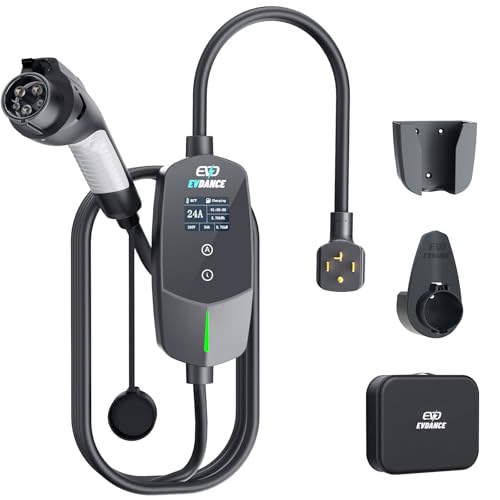
For buyers who prioritize a no-rewire solution for a non-Tesla EV, this EVDANCE version is the logical counterpart to the Tesla model above. It uses the same basic formula: 240V NEMA 14-30 plug, 24A output, 25-foot cable, adjustable current, delay start, and a display. The appeal is simple. If your garage or laundry-adjacent parking setup already has a dryer outlet, you can get much better charging than a standard wall plug without the mess and cost of a bigger install.
That makes it a smart fit for renters with permission to use an existing outlet, homeowners easing into EV life, or anyone in an older house where panel upgrades are not on this month’s agenda. The display and physical controls make it approachable, and the weather-resistant housing helps for semi-exposed garage or carport setups. It is not a glamorous charger, and it does not pretend to be. It is a practical tool for people who just want their Bolt, Kona, or Leaf ready by morning.
Pros
- Great fit for J1772 EV owners with a 14-30 outlet
- Plug-and-play approach avoids bigger installation work
- Adjustable current supports different circuit comfort levels
- 25-foot cable gives flexible reach
- Delay timer helps with off-peak charging schedules
Cons
- Charging speed is modest next to 32A to 50A units
- Tesla requires a separate adapter
- Best suited to a specific outlet type
Pick this charger if convenience matters more than maximum output and your garage already has the right outlet waiting. It is especially easy to like for older homes, practical budgets, and drivers who prefer a straightforward setup over a feature-heavy station. Skip it if you want a future-proof high-amperage install or if you do not have access to a 14-30 outlet. Within its lane, though, it is genuinely useful.
To buy this product, click here.
9. Best Budget Pick: VEVOR Level 1&2 EV Charger 16A
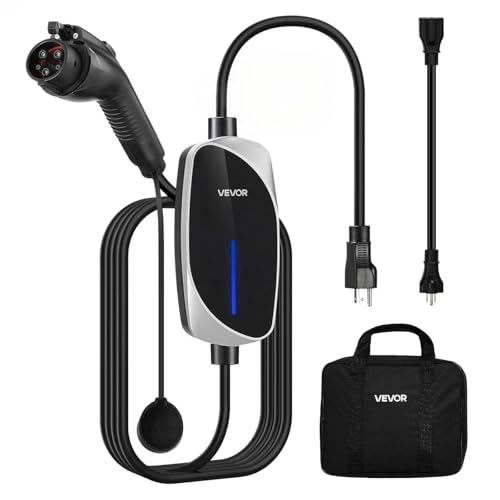
Budget chargers can be a little scary because this is one category where people do not want mystery-box electronics feeding power to a car overnight. The VEVOR makes the cut because it covers the basics in a sensible way. You get dual-voltage support, a 6-20 plug for Level 2 charging, a 5-15 adapter for Level 1 backup, a 25-foot cable, delay timer, and safety protections that at least keep the spec sheet grounded in practical needs. It is the kind of charger that suits a modest commute, a smaller battery, or a household that mainly needs dependable overnight top-ups rather than rapid recovery.
There is a certain charm to simple gear that does its job and gets out of the way. This charger feels like that. Toss it on a wall mount in the garage, keep the cable tidy, and use the delay timer to catch cheaper electricity overnight. For someone driving 20 or 30 miles a day, that may be all the charger they need. It is also a nice backup unit to keep around if your primary charger is hardwired and you want something portable for travel or emergencies.
Pros
- Very accessible price point for home EV charging
- Works on both 120V and 240V outlets
- 25-foot cable is generous at this end of the market
- Delay timer helps reduce charging costs
- Portable design is useful for backup or travel
Cons
- 16A output is much slower than stronger Level 2 units
- Less premium fit and finish than top picks
- Better for lighter daily charging needs than heavy mileage
This is the right buy for careful spenders, first-time EV owners, and drivers whose charging needs are modest and predictable. If your battery is large or your weekly mileage is high, you may outgrow it fast. If you simply want an affordable home-garage charger that can keep up with a normal commute, it is hard to ignore.
To buy this product, click here.
How To Choose The Right EV Charging Station For Home Garage
Match The Charger To Your Outlet First
This is where a lot of buying mistakes begin. A charger can look perfect until you notice it needs a NEMA 14-50 plug and your garage has a 14-30 dryer outlet, or no 240V outlet at all. Picture the frustration of unpacking a new charger, admiring the cable, then realizing it physically cannot plug in where your car parks. Start with the outlet and circuit you actually have. If you are hiring an electrician anyway, that opens your choices. If you want plug-and-play convenience, the outlet type should narrow the field immediately.
Think About Your Real Driving Week
A commuter doing 25 miles a day does not need the same setup as someone burning through 80 miles before dinner. Faster is nice, sure, but it is only worth paying for if it changes your daily life. A 16A or 24A charger may feel perfectly fine if the car sits in the garage for 10 hours every night. A bigger battery pack or tighter charging window pushes the math the other way. Think about the mornings when you leave early, the evenings when you return nearly empty, and how quickly you need the battery to bounce back.
Decide Between Portable And Permanent
Some chargers are happiest mounted to the wall and left there for years. Others can live in the garage all week, then head into the trunk for a road trip or family visit. There is no universal right answer here. Permanent chargers look cleaner and often feel more polished. Portable models give you flexibility and a backup plan. If your garage doubles as a workshop, gym, or storage cave full of bikes and strollers, a tidy wall setup may be worth a lot more than it seems at first glance.
Do Not Ignore Cable Length And Parking Layout
This sounds minor until it becomes deeply annoying. A few extra feet of cable can be the difference between easy nightly charging and awkward three-point parking just to reach the port. Front-left, rear-right, center nose-in, reverse-in, detached garage, driveway spillover, every layout changes the story. Think about where your EV’s charge port sits and how you actually park after a long day. A 25-foot cable often gives welcome flexibility, while shorter cables can feel restrictive faster than you expect.
Choose Smart Features You Will Actually Use
App control, Wi-Fi scheduling, energy tracking, Bluetooth, RFID, firmware updates. Some of these features are genuinely useful. Some become digital clutter after the first weekend. If your utility offers lower overnight rates, scheduling can save real money. If multiple people use the charger, access controls may help. If you know you hate fiddly apps and just want to plug in and hear the click, a simpler charger may leave you happier. The best feature is the one that still matters three months later.
Check Compatibility Beyond The Marketing Label
J1772 works for most non-Tesla EVs in North America, while Tesla and other NACS-based vehicles may need either a native connector or an adapter. Mixed-EV households should think ahead here. One person may be driving a Tesla now, while the next purchase could change the picture. A universal charger can make a lot of sense in a two-car garage where vehicle brands may shift over time. Getting compatibility right from the start is a lot less painful than replacing a charger later.
Look For Safety Credentials And Sensible Build Quality
Home charging is a nightly habit, often happening while everyone is asleep, so this is no place to get careless. Certification, weather resistance, solid cable construction, overheating protection, and clean installation all matter. The charger will live in a space that sees dust, humidity, temperature swings, and the occasional bump from a bike tire or lawn tool handle. A well-built unit with proper safeguards is worth more than flashy specs on a bargain charger that feels sketchy the first time it gets warm.
Best EV Charging Station For Home Garage FAQ
What Is The Best Type Of EV Charger For A Home Garage?
For most people, a Level 2 charger is the sweet spot. It charges far faster than a standard 120V outlet and makes daily EV ownership much easier. The best type depends on your outlet, your vehicle connector, and how much speed you actually need. A plug-in 14-50 charger is great for many garages, while a hardwired unit suits more permanent setups.
Is A 48A Charger Better Than A 32A Charger?
It can be, but only if your vehicle and home electrical system can make use of it. A 48A charger will usually refill a battery faster, which helps drivers with long commutes or tight overnight charging windows. For moderate daily driving, a 32A charger is often plenty and may cost less to buy and install.
Can I Use A Dryer Outlet For EV Charging?
Yes, many people do, provided the charger matches the outlet type and the circuit is appropriate. NEMA 14-30 dryer outlets are common examples. This can be a very practical option if you want Level 2 charging without adding a new 14-50 outlet right away. Just make sure the charger is built for that plug type and that the circuit condition is sound.
Do Tesla Drivers Need A Special Home Charger?
Tesla drivers can use either a Tesla-native charger or a J1772 charger with the proper adapter, depending on the vehicle and connector standard. A Tesla-specific or universal Tesla wall connector is usually the cleanest solution for a dedicated Tesla household. In mixed households, a universal unit that supports both connector types can be more convenient.
Should I Buy A Hardwired Or Plug-In EV Charger?
Plug-in chargers are easier to swap, move, or replace, and they work well if you already have the right outlet. Hardwired chargers are better for a clean, permanent installation and can support higher-power configurations in some cases. If you own your home and want a long-term setup, hardwired can be excellent. If you rent or want portability, plug-in is usually the easier route.
Are Smart App Features Worth It On A Home EV Charger?
They are worth it if you will use scheduling, charging history, or remote monitoring. They are less useful if you plan to plug in every night and forget about it. Buyers with off-peak electricity rates often get the most value from app scheduling. People who dislike troubleshooting Wi-Fi in the garage may be happier with a simpler charger that uses onboard controls.
How Long Should The Charging Cable Be For A Garage?
For many garages, 24 to 25 feet is a very comfortable range. It gives enough slack for different parking positions and helps if your outlet or wall-mount location is off to one side. Shorter cables can work in a tidy single-car setup, but extra reach often makes daily use much less annoying.
Can I Install An EV Charger Outdoors If My Garage Is Open Or Exposed?
Many modern chargers are built for indoor or outdoor use, but you should still check the weather-resistance rating and follow installation guidance. Outdoor-friendly chargers usually have protective housings and durable cables, yet the plug and connector still need sensible handling around standing water and severe weather. If your garage is open to the driveway or acts more like a carport, weather protection matters a lot.
Final Verdict
If I were narrowing this list down for the widest range of buyers, the ChargePoint HomeFlex J1772 with NEMA 14-50 plug is still the strongest all-around answer. It hits the right balance of trust, charging speed, app quality, and daily ease, which is why it earns the Best Overall spot. For shoppers who want to spend less while still getting solid everyday charging, the VEVOR 16A is the most approachable budget pick, and the ChargeHere 32A stands out as a smart value play with useful flexibility. If you are building a more polished long-term setup and want premium compatibility, the Tesla Universal Wall Connector is the charger that feels the most future-proof.
The trick is to buy for your actual garage, not some imaginary perfect setup. Check your outlet, confirm your connector type, think about where the car parks, and be honest about how many miles you drive in a normal week. A bigger number on the box is nice, but the right fit matters more than bragging rights. Get those basics right, and any of the 9 chargers above can turn home charging into one of the best parts of owning an EV.