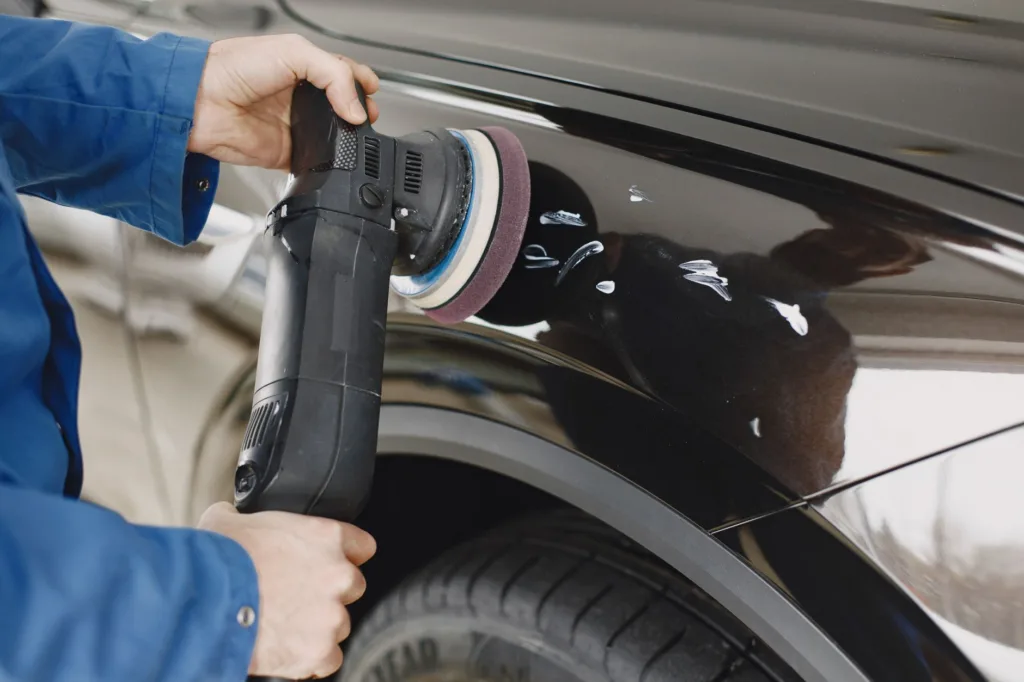
Wax can hide very light scratches, but it usually does not truly remove them. What wax does best is fill in fine swirl marks and make them less visible by increasing gloss and adding a reflective layer. If a scratch catches your fingernail, wax will not fix it. In those cases, polishing, compounding, touch-up paint, or professional repair may be needed.
What Wax Can and Cannot Do
Car wax is designed mainly to protect paint and improve appearance. It creates a thin layer on top of the clear coat or paint surface, which helps water bead and can make the finish look deeper and shinier. Because it adds gloss, it can also make very minor defects appear less noticeable.
That is why people often think wax removed a scratch when, in reality, it simply made the scratch harder to see. The difference matters. If the defect is only in the uppermost part of the clear coat and is extremely light, wax may partially mask it. If the scratch cuts deeper, wax has almost no corrective ability.
| What You See | What It Usually Means | Can Wax Help? |
|---|---|---|
| Very fine swirl marks | Light surface marring in the clear coat | Sometimes, but only by masking |
| Scratch not felt with a fingernail | Shallow defect in the clear coat | Maybe partially, but polishing works better |
| Scratch felt with a fingernail | Deeper scratch into the clear coat or paint | Usually no |
| White, gray, or primer showing | Paint or clear coat may be penetrated | No, repair is needed |
How Wax Affects the Look of Scratches
Wax changes how light reflects off the paint. On a smooth, glossy surface, the eye notices fewer imperfections. When a scratch is shallow, wax can fill microscopic grooves and scatter light differently, which makes the defect stand out less.
This effect is temporary. Washing, heat, and road grime gradually reduce the masking benefit. Once the wax wears off, the scratch usually becomes visible again.
Filling vs Removing
It helps to separate filling from removing. Filling means material settles into a defect and hides it from view. Removing means the damaged layer is actually leveled or corrected.
Most waxes are better at filling than removing. That is why a car can look dramatically better right after waxing, even though the scratch is still there. A polish or compound, by contrast, works by gently leveling the clear coat around the defect.
What Kind of Scratches Wax Might Mask
Wax is most likely to help with the lightest surface marks. These usually fall into a few categories.
Swirl Marks
Swirl marks are the spiderweb-like fine scratches often seen in sunlight. They are usually caused by poor washing technique, dirty towels, automated wash brushes, or dry wiping. A wax can make them less visible, but it will not permanently correct them.
Very Fine Wash Marring
Small marks from washing or drying can sometimes be hidden by wax, especially on darker paint where the defects are most noticeable. Again, this is cosmetic masking rather than repair.
Light Fingernail-Not-Detectable Defects
If you cannot feel the scratch with a fingernail and it is only visible under certain lighting, there is a chance a wax may reduce its appearance. Even then, a finishing polish is usually more effective.
What Kind of Scratches Wax Cannot Remove
Once a scratch goes beyond the clear coat surface, wax stops being useful as a corrective solution. It may still make the area shine, but the scratch remains.
Deep Clear Coat Scratches
If a scratch is clearly visible from several feet away or catches your fingernail, it is typically too deep for wax to fix. The defect may need machine polishing if there is enough clear coat left, or paint repair if the damage is more severe.
Paint Through Scratches
When the color layer is damaged, wax cannot restore what is missing. You may see a different color underneath, or the scratch may look white on dark paint. This usually calls for touch-up paint or body shop work.
Primer or Metal Exposure
If the scratch reaches primer or bare metal, the issue is not cosmetic alone. Bare metal can rust, and the damage should be repaired properly. Wax does not stop corrosion in a damaged spot like that.
How to Tell If Wax Might Help
A simple fingernail test can help you judge the depth of a scratch. Clean the area first, then gently run a fingernail across the mark. If your nail barely or does not catch, the scratch is likely shallow. If it catches clearly, wax will not remove it.
Lighting also helps. Inspect the scratch in direct sunlight or with a strong inspection light. If the mark changes a lot depending on angle, it may be a fine surface defect that can be improved with polishing and masked somewhat with wax.
Another clue is color. A white mark on dark paint may be a clear coat scratch, a transfer mark from another object, or a deeper defect. If the mark wipes away with a detailer spray or gentle cleaning, it may not be a scratch at all.
Wax vs Polish vs Compound
People often use the word “wax” for any paint product, but these products do different jobs. Understanding the difference helps set realistic expectations.
| Product Type | Main Purpose | Scratch Effect | Typical Use |
|---|---|---|---|
| Wax | Enhance gloss and add protection | Masks very light scratches | Routine paint protection |
| Polish | Refine paint and reduce light defects | Can improve shallow scratches and swirl marks | Light correction and finish enhancement |
| Compound | More aggressive defect removal | Can reduce deeper clear coat defects | Heavier correction before refining |
Wax sits at the protective, cosmetic end of the spectrum. Polish is the more appropriate step if the goal is actual scratch reduction. Compound is used when defects are more noticeable and the paint needs stronger correction.
Why Some Waxes Seem to “Remove” Scratches
There are a few reasons a scratch may appear to disappear after waxing.
Gloss Makes Defects Less Obvious
Shiny paint reflects light evenly. That alone can make many surface imperfections much harder to see. On dark colors, the effect can be dramatic.
Fillers Can Temporarily Hide Marks
Some waxes contain oils or fillers that settle into fine lines. These can reduce the appearance of micro-scratches, especially under indoor lighting. Once the fillers wash out, the scratch often returns to view.
Cleaning Before Waxing Removes Contamination
Sometimes what looks like a scratch is actually bonded contamination, paint transfer, or residue. A thorough wash and prep step can make the surface look much better before the wax is even applied.
When a Scratch Is Actually Something Else
Before trying to fix a scratch, it helps to confirm what you are seeing. A surprising number of “scratches” are not true paint damage.
Paint Transfer
If another object rubbed against the car, it may leave paint behind. For example, a shopping cart, garage wall, or another vehicle can transfer color onto your paint. In many cases, this can be reduced with a gentle cleaner or polish rather than wax alone.
Oxidation or Water Spots
Faded paint, etched water spots, or oxidation can look like scratches from a distance. Wax may improve gloss, but it will not fully fix surface damage caused by weathering or mineral etching.
Clear Coat Crazing or Holograms
Some defects are caused by poor machine polishing or aged paint. These marks often need a proper correction process rather than just a wax layer.
How to Improve Light Scratches the Right Way
If you want the best chance of improving a minor scratch, the process matters. Wax is usually the final step, not the first one.
1. Wash and Dry the Area Carefully
Start with a clean panel. Dirt left on the paint can cause more scratching while you work. Use a gentle wash method and a clean microfiber drying towel.
2. Inspect the Defect Closely
Look at the scratch from different angles and lighting. If it is still visible after cleaning, you can judge whether it is likely a surface defect or a deeper scratch.
3. Try a Paint Cleaner or Light Polish
For shallow scratches and swirl marks, a mild polish or cleaner is often more effective than wax. This step may actually reduce the defect rather than just hide it.
4. Apply Wax Last
Once the paint is corrected as much as possible, wax can be used to add gloss and protection. It may further minimize the appearance of any remaining very light marks.
Common Mistakes People Make When Trying to Fix Scratches with Wax
Wax is easy to use, but it is also easy to misunderstand. A few common mistakes lead to disappointment or even more damage.
Expecting Wax to Repair Deep Damage
This is the biggest mistake. Wax does not rebuild missing paint. If the scratch is deep, no amount of wax will make it disappear permanently.
Applying Wax to a Dirty Surface
Wax should never be used to hide dirt or contamination. If the paint is dirty, the wax can trap grime and reduce the quality of the finish. Worse, rubbing dirt into the surface can create more fine scratches.
Using Too Much Product
More wax does not equal more scratch removal. Thick application often just wastes product and makes buffing more difficult. A thin, even layer is usually enough.
Skipping Proper Correction
If the paint needs polishing, wax should not be used as a shortcut. It may improve appearance briefly, but the scratch will still be there underneath.
Can Wax Remove Scratches on Different Paint Colors?
Paint color changes how visible scratches are, but it does not change what wax can actually do.
Dark Paint
Black, dark blue, and deep red paint show swirl marks and micro-scratches more easily. Wax can make them less noticeable, but the masking effect may be temporary and limited.
Light Paint
White, silver, and light gray paint tend to hide minor defects better. A waxed finish may look nearly flawless from a normal viewing distance even if fine scratches are still present.
Single-Stage Paint vs Clear Coat
Older single-stage paint systems behave differently from modern clear coat systems. Many older finishes are more delicate and may respond differently to polishing and waxing. If you are not sure what your vehicle has, it is worth identifying the paint type before using more aggressive correction methods.
How Long Does the Masking Effect Last?
The cosmetic improvement from wax is temporary. How long it lasts depends on the product, weather, washing habits, and how much the car is driven.
Frequent washing, harsh detergents, road salt, and sun exposure all shorten the life of the wax layer. Once it wears down, the scratch or swirl mark usually becomes easier to see again.
That is why wax should be thought of as maintenance and appearance care, not a permanent scratch repair method.
When You Need More Than Wax
There are clear situations where wax is not the right solution.
- The scratch catches your fingernail.
- The color coat or primer is visible.
- The damage has rust around it.
- The scratch is large or very noticeable.
- You want a real repair, not a cosmetic disguise.
In those cases, a polishing step, touch-up paint, or professional refinishing may be more appropriate. The right fix depends on depth, location, and how visible the damage is.
Typical Cost Considerations
If you are trying to improve scratches, cost often depends on how much correction is needed. Wax itself is usually one of the least expensive detailing products, but it is also the least effective for true scratch removal.
A light hand polish or cleaner may cost more than wax but can produce better results on shallow defects. Machine polishing, paint repair, and body shop refinishing cost more still, especially if the scratch is deep or spans a large area.
For many owners, the decision comes down to appearance expectations. If the goal is simply to make minor marks less visible before a car show, sale, or special event, wax may be enough. If the goal is long-term correction, it usually is not.
Practical Examples
Example 1: Fine Swirls on a Black Sedan
A black sedan has visible swirl marks under sunlight after years of automated washes. Wax improves the gloss and makes the swirls less obvious, but they still appear under strong light. A polishing step would be needed to actually reduce them.
Example 2: A Light Mark Near the Door Handle
A shallow mark near the door handle is visible only at certain angles. After cleaning and waxing, the mark becomes difficult to notice. In this case, wax helped mask a minor defect, but it did not truly remove the scratch.
Example 3: Key Scratch Down to Primer
A deeper scratch shows white primer on a dark car. Wax makes the surrounding paint glossy, but the scratch remains obvious. This needs touch-up or body repair, not wax.
How to Prevent Scratches in the First Place
Prevention is often more effective than trying to hide damage later. Good washing and drying habits make a big difference over time.
- Use a clean wash mitt and plenty of lubrication.
- Rinse grit off before touching the paint.
- Dry with a clean microfiber towel instead of a rough cloth.
- Avoid dry wiping dust from the paint.
- Be careful around door handles, trunk lips, and gas doors.
- Park away from shopping carts and tight spaces when possible.
Regular washing and gentle handling reduce the need for scratch masking later. A car that is maintained carefully usually needs less correction and keeps its finish looking better for longer.
FAQ
Can wax remove scratches completely?
No. Wax can sometimes hide very light scratches, but it does not permanently remove most scratches.
Does wax fill in scratches?
Yes, to a limited extent. Some waxes contain fillers that reduce the appearance of fine swirls and shallow marks.
Can wax fix swirl marks?
It can make them less visible, but it usually does not correct them. A polish is better for actual swirl mark removal.
How do I know if a scratch is too deep for wax?
If you can feel it with a fingernail or see primer, paint, or metal underneath, wax will not remove it.
Should I wax before or after polishing?
Wax goes after polishing. Polish corrects or improves the surface, and wax adds gloss and protection afterward.
Is scratch remover the same as wax?
No. Scratch removers, polishes, and compounds are made to correct paint defects. Wax is mainly for protection and shine.
Will washing remove the wax and bring scratches back?
Eventually, yes. As wax wears off, any scratches it was masking may become easier to see again.
Conclusion
Wax does not truly remove scratches in the way most people mean it. It can hide very light marks, improve gloss, and make minor swirls less noticeable, but it cannot repair deep damage or restore missing paint.
If a scratch is shallow, wax may help cosmetically. If the defect is more than surface-level, polishing, compounding, touch-up paint, or professional repair is usually the right approach. The most accurate way to think about wax is as a finishing and protection product, not a scratch repair method.
For the best results, identify the depth of the damage first, clean the paint properly, correct the surface if needed, and use wax as the final step to enhance appearance and help protect the finish.