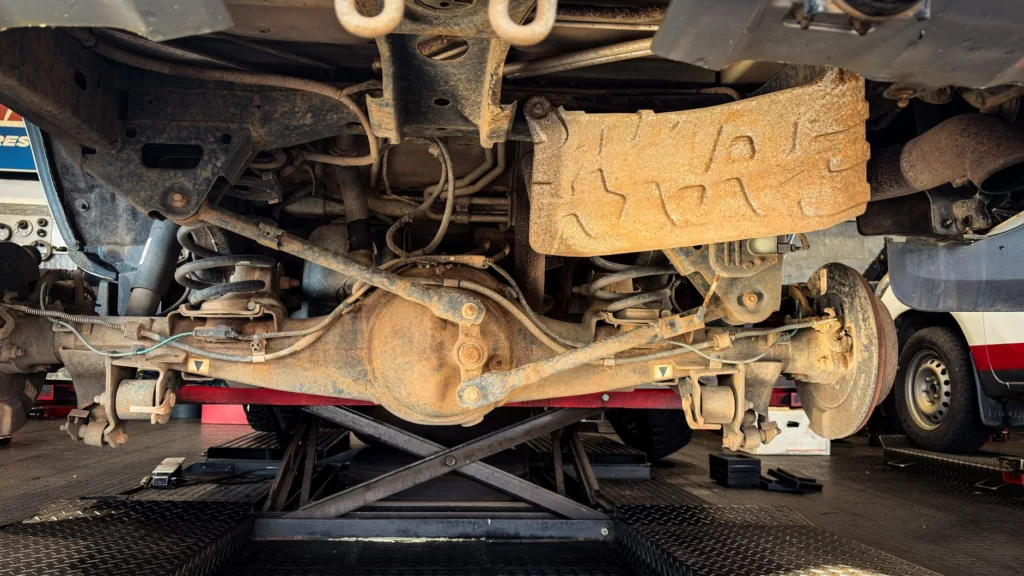
Suspension repair can cost anywhere from about $150 to more than $3,000, depending on what failed, how many parts need replacement, the type of vehicle, and local labor rates. A simple sway bar link or shock replacement may stay in the low hundreds. A larger job involving struts, control arms, ball joints, bushings, and alignment can climb well past $1,000. On luxury vehicles, trucks, SUVs, and vehicles with air suspension or adaptive suspension, costs can rise much higher.
That wide range is why suspension estimates often confuse drivers. “Suspension repair” is not one single service. It is a category that includes many parts that affect ride comfort, steering stability, braking feel, tire wear, and overall control of the vehicle.
If your car feels bouncy, clunks over bumps, pulls to one side, wears tires unevenly, or shakes at speed, the suspension may be part of the problem. Understanding what parts commonly fail, what each repair usually costs, and when it is safe to keep driving can help you make a smarter decision before approving the work.
What Suspension Repair Cost Usually Looks Like
Most suspension repairs fall into one of three rough categories:
- Minor repairs: roughly $150 to $500
- Moderate repairs: roughly $500 to $1,200
- Major repairs: roughly $1,200 to $3,000+
Minor repairs often include sway bar links, individual bushings, or one shock absorber on an older basic suspension setup. Moderate repairs often include a pair of front struts, a control arm replacement, or several worn components replaced together. Major repairs usually involve multiple front-end parts, four-corner shock or strut replacement, or high-cost systems like air suspension.
Labor has a major effect on the final bill. A part that costs $80 may turn into a $350 repair if it is hard to access and requires additional setup or alignment afterward. On the other hand, a more expensive part may install quickly and keep the total lower than expected.
Average Suspension Repair Costs by Component
The table below shows common suspension-related repairs and broad price ranges for parts and labor combined. These are general estimates for passenger cars, crossovers, and light trucks in 2026. Actual pricing varies by region, shop type, and vehicle design.
| Suspension Component or Service | Typical Total Cost | Notes |
|---|---|---|
| Sway bar link replacement | $150 to $350 | Often replaced in pairs on the same axle |
| Sway bar bushing replacement | $150 to $300 | Usually lower cost if easily accessible |
| Shock absorber replacement | $250 to $800 per pair | Common on rear suspensions |
| Strut replacement | $450 to $1,500 per pair | Front struts usually cost more than shocks |
| Loaded strut assembly replacement | $600 to $1,600 per pair | Includes spring and mount in many cases |
| Ball joint replacement | $250 to $700 each | Some require full control arm replacement |
| Control arm replacement | $400 to $1,000 each | Often includes bushings and ball joint |
| Tie rod end replacement | $150 to $400 each | Alignment usually needed afterward |
| Suspension bushing replacement | $200 to $800+ | Labor-heavy on many vehicles |
| Wheel alignment | $80 to $250 | Frequently needed after suspension work |
| Coil spring replacement | $350 to $900 per pair | Broken springs should be addressed promptly |
| Air suspension bag or air spring | $700 to $2,000+ each | Luxury and premium SUVs can be much higher |
| Air suspension compressor | $900 to $2,500+ | Often replaced with other failed air components |
These numbers are not guarantees, but they are useful for understanding whether a quote is in a normal range. If you receive an estimate far outside these numbers, it is worth asking for a detailed parts and labor breakdown.
Why Suspension Repair Costs Vary So Much
Type of vehicle
A compact sedan usually costs less to repair than a full-size truck, luxury SUV, or performance car. Larger vehicles may use heavier-duty parts, and luxury models often have more complex systems.
Front suspension versus rear suspension
Front suspension repairs are often more expensive because the front end handles steering, braking forces, and more of the vehicle’s weight. There are also more wear items in the front on many vehicles.
One part versus a complete assembly
Sometimes a mechanic can replace one bushing or one ball joint. Other times the manufacturer only sells the complete control arm or strut assembly. That changes the cost quickly.
Need for alignment
Many suspension jobs require a wheel alignment afterward. If alignment is not included in the quote, that can add another $80 to $250.
Rust and corrosion
Vehicles driven in snowy regions or near the coast often have rusted fasteners, seized components, and extra labor time. Rust can turn a routine repair into a more time-consuming job.
OEM parts versus aftermarket parts
Original-equipment parts are often more expensive than aftermarket alternatives. In some cases, the price difference is small. In others, it can be substantial, especially on imported or premium-brand vehicles.
Standard suspension versus air or adaptive suspension
Traditional shocks, springs, and control arms are usually much cheaper than electronically controlled dampers or air suspension components. Vehicles with height adjustment or adaptive ride systems can have very high repair costs.
How Much Does It Cost to Replace Shocks or Struts?
Shock and strut replacement is one of the most common suspension repairs. The average cost usually falls between $250 and $800 for a pair of shocks or $450 and $1,500 for a pair of struts. Luxury or heavy-duty applications can exceed that range.
Shocks and struts do similar jobs, but they are not identical. A shock absorber mainly controls spring movement. A strut is a structural suspension component that also helps support the vehicle and can affect wheel alignment geometry.
Why struts cost more than shocks
- Struts are larger and more complex
- They often include mounts, bearings, and spring hardware
- Replacement may require more labor
- An alignment is commonly needed afterward
Loaded struts versus bare struts
A bare strut may require the old coil spring and mount to be transferred over, which adds labor. A loaded strut assembly includes the spring and related hardware already assembled. That can save labor time, though the part itself may cost more.
For many drivers, loaded struts make sense because they replace several aging components at once. This can improve ride quality and reduce the chance of paying labor twice later if the mount or spring fails.
How Much Does Control Arm or Ball Joint Replacement Cost?
Control arm and ball joint repairs usually range from $250 to $1,000 per side, depending on the vehicle and whether the components are sold separately. On some vehicles, the ball joint can be replaced by itself. On others, it is integrated into the control arm.
Control arms connect the wheel assembly to the frame or subframe and allow movement while keeping the wheel properly located. Ball joints act as pivot points. When either part wears out, you may notice clunking, wandering steering, uneven tire wear, or looseness over bumps.
Typical cost scenarios
| Repair Scenario | Typical Cost | Common Reason |
|---|---|---|
| Lower ball joint only | $250 to $700 | Wear in a serviceable joint |
| One control arm assembly | $400 to $1,000 | Worn bushings or integrated ball joint |
| Both front control arms | $800 to $2,000 | High-mileage front-end refresh |
These repairs can look expensive, but they often restore steering stability and prevent rapid tire wear. In many cases, replacing a complete control arm is also more efficient than pressing in individual bushings.
How Much Does Sway Bar Repair Cost?
Sway bar links and sway bar bushings are often among the less expensive suspension repairs. Most sway bar link replacements cost about $150 to $350, while sway bar bushing jobs commonly run $150 to $300.
If your vehicle makes a light clunking or rattling noise over small bumps, especially at low speeds, worn sway bar links are one possible cause. Bushings can also squeak or knock as they age.
These parts help reduce body roll in corners, but they usually do not carry the same safety urgency as a severely worn ball joint or broken spring. Still, ignoring them too long can make the vehicle feel looser and less controlled.
What Air Suspension Repair Costs Can Look Like
Air suspension repairs are in a different price category from standard suspension work. Replacing one air spring or air bag may cost $700 to $2,000 or more. A compressor replacement often runs $900 to $2,500+. If multiple components fail together, the total can become several thousand dollars.
Air suspension uses rubber air springs, a compressor, sensors, lines, and electronic controls to maintain ride height and ride quality. It is common on some luxury sedans, premium SUVs, and vehicles with self-leveling systems.
Why air suspension gets expensive
- Parts are usually more complex and model-specific
- Electronic diagnosis is often required
- One failed part can overload another part, such as the compressor
- Some systems require recalibration after repair
If a vehicle sits low overnight, raises slowly, or shows a suspension warning message, air suspension should be checked soon. Continued driving on a leaking air spring can overwork the compressor and increase the total repair bill.
Labor Costs for Suspension Repair
Labor rates vary widely by location and shop type. In many areas, independent repair shops charge less per hour than dealerships, though that is not always true. Labor rates may range from around $90 to more than $220 per hour.
Suspension labor time depends on how easy the part is to reach, whether rust is present, and whether extra work is needed. For example:
- A sway bar link may take well under an hour on one car but much longer on another
- A strut replacement may involve removing brake line brackets, disconnecting steering components, and performing an alignment
- Bushing replacement may require pressing out old components, which increases labor
This is one reason two estimates for “front suspension repair” can be very different even when the symptoms sound similar.
Signs You May Need Suspension Repair
Not every rough ride means major suspension damage, but several symptoms are common warning signs:
- Clunking, knocking, or rattling over bumps
- Vehicle pulls to one side
- Steering feels loose or wanders
- Front end dips hard when braking
- Vehicle bounces more than usual after bumps
- Uneven tire wear
- One corner of the vehicle sits lower than the others
- Steering wheel vibration
- Squeaking from suspension movement
Some of these symptoms can also be caused by tires, wheel balance, steering issues, or brakes. A proper inspection matters before you agree to replace parts.
Can You Keep Driving With a Bad Suspension?
Sometimes, but not always. A worn sway bar link or weak shock may allow limited short-term driving, although the vehicle may handle poorly and wear tires faster. A bad ball joint, broken spring, loose control arm, or severe air suspension issue can be much more urgent.
The problem is that many drivers cannot tell the difference just from the way the car feels. A minor clunk and a dangerous amount of suspension play may sound similar to an untrained ear.
Get the car checked quickly if you notice:
- A loud metal-on-metal clunk
- Sudden change in ride height
- Vehicle leaning heavily to one side
- Steering that feels unstable or unpredictable
- Rapid or severe tire wear
- Popping when turning
If the vehicle feels unsafe, avoid highway driving until it is inspected.
How Shops Diagnose Suspension Problems
Diagnosis usually begins with a road test and a visual inspection. A technician may check for looseness, damaged bushings, leaking shocks or struts, broken springs, torn ball joint boots, and abnormal tire wear patterns.
On some vehicles, diagnosis also includes:
- Checking wheel play with the car lifted
- Inspecting alignment angles
- Looking for signs of impact damage
- Scanning electronic suspension modules
- Testing air suspension leaks or compressor function
Some shops charge a separate diagnostic fee, while others roll it into the repair if you approve the work. Ask before authorizing anything.
What Makes a Suspension Estimate Higher Than Expected
Drivers are often surprised when a suspension estimate grows after inspection. Common reasons include:
- Multiple worn parts: One failed part often means others nearby are worn too
- Alignment required: This may be listed separately
- Corrosion: Rusted fasteners increase labor time
- Tire damage: Bad suspension may have already caused uneven tire wear
- Mounts and hardware: Strut mounts, bearings, and related hardware may need replacement
- Paired replacement: Shops often recommend replacing shocks or struts in pairs for balanced handling
For example, a driver may come in expecting one front strut replacement and leave with a quote for two loaded struts, alignment, and worn sway bar links. That does not always mean the shop is overselling. It may mean several related parts are at the end of their service life.
Typical Real-World Suspension Repair Scenarios
Scenario 1: Older sedan with front-end clunk
A 12-year-old sedan with 140,000 miles has a clunk over potholes. The inspection finds worn sway bar links and cracked control arm bushings. The final bill might land around $600 to $1,200, depending on whether full control arms are replaced and whether alignment is needed.
Scenario 2: Compact SUV with bouncy ride
A compact SUV feels floaty on the highway and dips when braking. The front struts are leaking, and the rear shocks are weak. A four-corner replacement with alignment could cost roughly $900 to $2,000, depending on parts quality and vehicle design.
Scenario 3: Luxury SUV with sagging rear suspension
The rear of the SUV sits low after parking overnight. Diagnosis finds a leaking rear air spring and an overworked compressor. Repairing both could cost $1,800 to $4,000+, especially on a premium model.
Scenario 4: Pickup truck with uneven front tire wear
A truck owner notices inner tire wear and loose steering. The problem turns out to be worn tie rod ends, a ball joint, and poor alignment. Depending on how many parts are replaced, the repair might range from $500 to $1,500 plus any tire replacement costs.
Should You Replace Suspension Parts in Pairs?
In many cases, yes. Shocks and struts are commonly replaced in pairs on the same axle because uneven damping from side to side can affect ride and handling. Springs are also often replaced in pairs if one breaks or sags badly.
Control arms, ball joints, or sway bar links do not always need to be replaced in pairs, but many shops recommend it when wear is similar on both sides or labor overlap makes it practical. The right choice depends on inspection results, mileage, and budget.
Common Mistakes Drivers Make With Suspension Repairs
- Ignoring early symptoms: A small clunk can turn into tire wear, poor alignment, and more expensive repairs later.
- Replacing parts based only on guesswork: Tire, steering, and brake problems can mimic suspension issues.
- Skipping alignment: After many front-end repairs, alignment is necessary to protect tire life and handling.
- Replacing only the cheapest visible part: The noise source and the actual worn component are not always the same.
- Focusing only on the part price: Labor and follow-up alignment often matter just as much.
- Waiting too long on air suspension leaks: This can damage the compressor and increase total cost.
Maintenance Tips That May Help Reduce Suspension Repair Costs
You cannot prevent all suspension wear, but you can often reduce how quickly parts wear out.
- Avoid potholes and curbs when possible
- Keep tires inflated to the correct pressure
- Rotate tires on schedule
- Address alignment issues early
- Inspect suspension during tire service or brake service
- Do not ignore new noises after hitting a pothole or road debris
- Wash the underbody in winter if you live where roads are salted
High-mileage vehicles, delivery vehicles, and vehicles used on rough roads typically need suspension work sooner than lightly driven garage-kept cars. Driving conditions matter as much as age in many cases.
How to Read a Suspension Repair Estimate
Before approving a repair, look for these details on the estimate:
- Exact part names being replaced
- Whether the quote covers one side or both sides
- Labor hours
- Whether alignment is included
- Whether related hardware or mounts are included
- Whether the shop recommends immediate repair or future monitoring
If the estimate simply says “front suspension work” with one large total, ask for a line-by-line breakdown. That makes it easier to compare quotes and understand which repairs are essential now.
When It Makes Sense to Get a Second Opinion
A second opinion is reasonable if:
- The estimate is very high
- The vehicle has multiple recommended repairs but few symptoms
- You were told many parts are bad without a clear explanation
- The diagnosis seems uncertain
- The vehicle has had recent front-end work elsewhere
That said, low quotes are not automatically better. A very cheap estimate may exclude alignment, hardware, mounts, or quality parts. Compare the scope of work, not just the total number.
FAQ
How much does it cost to fix a suspension on a car?
It depends on the failed parts. Minor suspension repairs may cost $150 to $500, while larger repairs often range from $500 to $1,500. Complex or luxury suspension systems can exceed $3,000.
Is suspension repair expensive?
It can be. Basic parts like sway bar links are often affordable, but struts, control arms, ball joints, and air suspension components can become expensive, especially when multiple parts are worn at once.
How much does it cost to replace all four shocks or struts?
Many vehicles fall between about $900 and $2,500 for all four corners, depending on whether the vehicle uses shocks, struts, loaded assemblies, or premium suspension components.
Do I need an alignment after suspension repair?
Often, yes. Many front suspension repairs affect wheel angles. Even when alignment is not strictly required, it is commonly recommended to protect tire life and handling.
What is the most expensive suspension repair?
Air suspension and adaptive suspension repairs are often the most expensive. Replacing multiple air springs, electronic dampers, or a compressor can cost several thousand dollars.
Can bad suspension ruin tires?
Yes. Worn suspension parts can cause uneven tire wear, cupping, feathering, and alignment problems. Delaying repair may increase your total ownership cost by shortening tire life.
How long do suspension parts usually last?
There is no single interval. Some parts may last 50,000 to 80,000 miles, while others can go much longer. Road quality, driving style, vehicle weight, climate, and maintenance all affect lifespan.
Can I drive with worn shocks or struts?
You may be able to drive for a short time, but the vehicle can handle worse, stop less confidently, and wear tires faster. If the problem is severe or the car feels unstable, have it inspected promptly.
What to Take Away About Suspension Repair Cost
Suspension repair cost is highly variable because the suspension system includes many different parts, from low-cost links and bushings to expensive struts, control arms, and air suspension components. For many drivers, the realistic range is somewhere between a few hundred dollars and around $1,500. More complex jobs can go well beyond that.
The best way to understand a quote is to look at the specific components, labor time, and whether alignment is included. If the vehicle is clunking, bouncing, sagging, or wearing tires unevenly, do not assume it is only a comfort issue. Suspension problems can affect control, tire life, and braking stability.
A clear inspection report and a detailed estimate will tell you far more than a generic “suspension repair” price ever can.