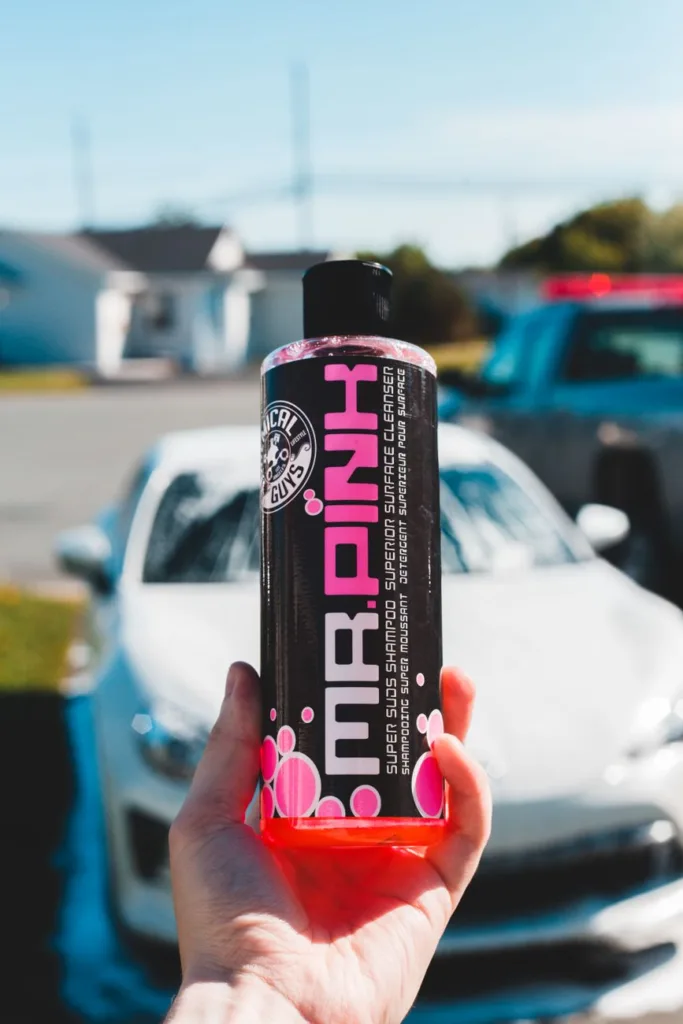
Yes, you can use shampoo to wash a car in a pinch, but it is usually not the best choice for regular car care. Most human shampoos are made for skin and hair, not for automotive paint, clear coat, rubber trim, wax, or sealants. They may clean dirt off the surface, but they can also leave residue, strip protection faster than a car wash soap, or be harder to rinse cleanly.
If you only need to remove light dirt in an emergency and you have nothing else available, shampoo is generally less risky than using harsh household cleaners like dish soap, bleach, or all-purpose degreasers. Even so, the safest long-term approach is to use a soap made for cars. Car wash soaps are designed to lift grime while being gentle on exterior finishes and existing protective layers.
What Happens If You Use Shampoo on a Car?
Shampoo can remove surface dirt because it contains cleaning agents and surfactants, the same general type of ingredients used in many soaps. The problem is that car paint has different needs than hair and skin. Automotive surfaces are exposed to road film, brake dust, tree sap, tar, UV exposure, and protective coatings, so the soap needs to clean without being overly aggressive.
Depending on the shampoo, several things can happen:
- It may clean the car reasonably well if diluted properly.
- It may leave a film or sticky residue.
- It may reduce the lifespan of wax or sealant.
- It may be harder to rinse off than a dedicated car soap.
- It may not lubricate well enough to help the wash mitt glide safely.
The biggest concern is not usually immediate damage from one wash. The bigger issue is repeated use. Over time, the wrong soap can slowly strip protective layers and make future washing less effective.
Is Shampoo Safe for Car Paint?
In many cases, shampoo is not immediately harmful to modern clear coat paint if it is diluted and rinsed well. Still, “not immediately harmful” is not the same as “ideal.” Automotive clear coat is durable, but it is also easier to mar with poor washing technique, leftover residue, or a soap that does not rinse cleanly.
If the shampoo is heavily fragranced, loaded with moisturizers, oils, or conditioning agents, those ingredients can leave a slippery or cloudy film on paint and glass. That film can make the car look streaky and can interfere with wax or sealant bonding later.
For older vehicles, repainted panels, matte finishes, or cars with delicate protective coatings, using household shampoo becomes even less attractive. These surfaces benefit from products specifically meant for automotive finishes.
Shampoo vs Car Wash Soap
The easiest way to understand the difference is to compare what each product is designed to do.
| Feature | Shampoo | Car Wash Soap |
|---|---|---|
| Main purpose | Clean hair and scalp | Clean vehicle surfaces safely |
| Paint safety | Can be acceptable in a pinch, but not ideal | Formulated for automotive clear coat and trim |
| Rinsing | May leave residue or film | Designed to rinse cleanly |
| Wax and sealant compatibility | May strip or weaken protection faster | Usually gentler on protection |
| Lubrication for wash mitt | Varies widely | Usually better for reducing wash marring |
| Best use | Emergency or temporary use | Routine washing |
Car wash soap is built to balance cleaning power with lubrication and easy rinsing. That balance matters because a car is not just a dirty object. It has sensitive finishes that can be scratched by gritty dirt if the soap does not help carry contamination away safely.
Can Hair Shampoo Strip Wax or Sealant?
It can, depending on the formula and how often you use it. Wax and sealants are sacrificial layers meant to protect the paint underneath. Strong cleaners, repeated washing, and poor rinsing can weaken them faster.
Many shampoos contain conditioners, oils, or detergents that are great for hair but not ideal for maintaining automotive protection. Some may leave behind ingredients that temporarily change the appearance of the finish, while others can reduce water beading and shorten protection life.
If your car relies on wax or sealant for gloss and water behavior, using shampoo occasionally is usually less of a problem than making it your regular wash solution. Still, it is better to think of it as a temporary backup, not a routine method.
When Shampoo Might Be an Acceptable Emergency Option
There are situations where shampoo may be reasonable as a one-time solution. The key is to use it sparingly, dilute it properly, and understand the tradeoffs.
- You are on a road trip and need to remove bug splatter or road grime before it etches.
- You do not have access to car wash soap and need a temporary wash.
- You are cleaning a very lightly soiled vehicle and plan to rinse thoroughly.
- You are washing a beater car where appearance and protection are not a major concern.
Even in these cases, the goal should be to minimize risk. Use plenty of water, a clean wash mitt, and a careful drying method. The washing process matters as much as the soap choice.
When You Should Not Use Shampoo on a Car
There are also situations where shampoo is a poor choice and can create avoidable problems.
- You have matte paint or matte vinyl. These finishes can be affected by residue and uneven cleaning.
- Your car has ceramic coating or a fresh wax layer. A household shampoo can reduce the performance of the protection.
- The shampoo contains oils, conditioners, or heavy moisturizers. These can leave streaks or film.
- The vehicle is heavily dirty. More dirt means more chance of scratching if lubrication is weak.
- You plan to wash the car often with it. Repeated exposure increases the chances of buildup and protection loss.
Also avoid using shampoo on sensitive exterior components if you are not confident about the formula. Trim, rubber seals, and glass can all show residue more clearly than paint.
Types of Shampoo and How They Behave on Cars
Not all shampoos act the same way. Some are relatively mild, while others are loaded with ingredients that are not ideal for automotive use.
| Shampoo Type | Likely Behavior on a Car | Overall Suitability |
|---|---|---|
| Mild, basic shampoo | May clean light dirt with less residue | Possible in an emergency |
| Moisturizing shampoo | Can leave oils or conditioning residue | Not ideal |
| 2-in-1 shampoo and conditioner | More likely to leave film | Poor choice |
| Sulfate-heavy shampoo | Can clean more aggressively and strip protection faster | Riskier for repeated use |
| Fragranced or specialty salon shampoo | Ingredients vary, residue is possible | Unpredictable |
If you do not know exactly what is in the shampoo, assume it was not formulated with paint safety in mind. The unknowns are part of the reason car wash soap exists.
Why Car Wash Soap Is Better for Regular Use
Car wash soaps are designed with the wash process in mind. They aim to remove road film while keeping the surface slick enough for wash mitts to glide. That lubrication helps reduce the chance of micro-scratches, often called wash marring.
They also tend to rinse cleaner. That matters because residue can attract dust, leave streaks, or make future drying more difficult. A soap made for cars is generally more predictable and more compatible with waxes, sealants, and coatings.
Another advantage is consistency. When you use a product designed for vehicles, you are less likely to run into unexpected effects on rubber, plastic, chrome, or glass. That makes it easier to build a reliable wash routine.
Common Mistakes People Make When Using Shampoo on a Car
The biggest mistakes usually come from treating a car like a shower stall or a sink. Automotive washing has its own rules because paint scratches easily when grit is moved around improperly.
Using Too Much Shampoo
More soap does not always mean a better wash. Excess shampoo can be difficult to rinse and may leave more residue behind. It can also waste product without improving cleaning much.
Not Diluting It Properly
Undiluted shampoo can be overly concentrated on paint. Always mix it with plenty of water if you must use it. A bucket solution is usually safer than pouring it directly on the vehicle.
Washing a Dirty Car Without Pre-Rinsing
If the car is dusty, muddy, or covered in road film, spraying it down first helps remove loose debris. Skipping this step can trap grit under the wash mitt and increase swirl marks.
Using the Wrong Wash Tool
A soft wash mitt or microfiber wash pad is much safer than a rough sponge or towel. The tool matters because it influences how much dirt is dragged across the paint.
Letting Soap Dry on the Surface
Shampoo residue can dry into streaks or spots, especially in direct sun. Work in smaller sections and rinse quickly before the product dries.
How to Wash a Car with Shampoo If You Have No Other Option
If shampoo is all you have, the goal is to reduce risk, not to achieve a perfect detailing result. A careful wash can limit damage and remove grime safely enough for a temporary solution.
What You Will Need
- A clean bucket
- Plenty of water
- A soft microfiber wash mitt or similar soft wash tool
- A separate rinse bucket if possible
- Microfiber drying towels or a clean soft drying cloth
Basic Steps
- Rinse the car thoroughly to remove loose dirt.
- Mix a small amount of shampoo with water in the bucket.
- Wash one panel at a time using light pressure.
- Rinse each section before the soap dries.
- Rinse the whole vehicle again after washing.
- Dry with a clean microfiber towel to reduce water spots.
If possible, use the two-bucket method. One bucket holds the shampoo solution, and the other holds rinse water for the mitt. This helps keep grit out of the wash solution and lowers the chance of scratches.
How to Tell If the Shampoo Is Causing Problems
Problems are not always immediate, but there are signs to watch for after a wash.
- Streaking or hazy residue on paint or glass
- Reduced water beading if your car was previously waxed or sealed
- Sticky feel on the surface after rinsing
- More dust attraction shortly after washing
- Trim discoloration or dullness if residue remains
If you notice these issues, wash the car again with a proper automotive soap as soon as practical. That will not reverse all effects, but it can help remove leftover residue and restore a more consistent finish.
Shampoo, Dish Soap, and Car Wash Soap Compared
People often ask about shampoo and dish soap in the same conversation because both are household cleaners. They are not the same, and neither is ideal compared with car wash soap.
| Cleaner | Main Use | Car Wash Suitability |
|---|---|---|
| Shampoo | Hair and scalp cleaning | Acceptable only as an emergency backup in some cases |
| Dish soap | Cutting grease and food oils | More likely to strip wax and protection |
| Car wash soap | Vehicle exterior cleaning | Best choice for regular washing |
Dish soap is often harsher on wax and sealants because it is designed to break down grease aggressively. Shampoo is usually milder than dish soap, but that does not automatically make it ideal for paint. Car wash soap still remains the safer and more predictable option.
Can Shampoo Damage Ceramic Coating?
It might not damage the coating itself in a dramatic way, but it can affect how the coating performs. Ceramic coatings are meant to be durable, but they still need compatible maintenance products. A shampoo with heavy oils, conditioners, or strong detergents may leave residue that interferes with water behavior or causes the coating to seem less effective.
For coated cars, the goal is usually to keep the surface clean without introducing ingredients that bond poorly to the coating or leave a film. A one-time shampoo wash is unlikely to ruin a coating, but repeated use is not the right maintenance strategy.
What About Washing Wheels, Tires, or Door Jambs with Shampoo?
Shampoo is still not ideal, but the risk is a little different on these parts because they are not painted the same way as exterior body panels. Wheels and tires deal with brake dust, road grime, and rubber dust, so they often need a more targeted cleaner. Shampoo may clean light dirt on wheel faces or door jambs, but it may not be strong enough for heavy buildup.
For tires and heavily soiled wheels, specialized cleaners are usually more effective. That said, if you are only doing a basic wash and the vehicle is not heavily contaminated, shampoo can be a temporary clean-up tool.
Real-World Examples
If you are on a family road trip and your car is covered in bug residue after a long highway drive, shampoo may help remove the mess until you can get home and wash it properly. In that situation, a careful rinse and wash is better than letting bug acids sit on the paint for days.
On the other hand, if you routinely wash your car every week with salon shampoo, you may notice more streaking, less water beading, and faster loss of protective layers. The car might still look clean at first, but the long-term finish may suffer.
For a vehicle with older clear coat or faded paint, shampoo might not cause visible damage right away, but it can leave residue in small cracks, trim edges, and textured plastic. Those areas often show the downside of using a product that was never meant for automotive surfaces.
How Often Can You Use Shampoo on a Car?
There is no universal safe frequency because formulas vary, but the safest answer is as rarely as possible. If you must use it once due to an emergency, that is usually less concerning than regular use. If you are using it more than occasionally, it is time to switch to a car wash soap.
Think of shampoo as an emergency backup, not a maintenance plan. Regular car washing works best when the soap, wash method, and drying process are all designed for automotive surfaces.
Signs You Should Switch to a Proper Car Wash Soap
You should move to a dedicated car soap if you notice any of the following:
- The finish looks cloudy after washing.
- Water no longer beads the way it used to.
- The surface feels slick in some areas and sticky in others.
- You see repeated streaks or film after drying.
- You wash your car often and want to preserve wax or sealant longer.
These are practical signs that the shampoo is not doing the job as cleanly as a car-specific soap would.
Practical Tips for Better Car Washing
Whether you use shampoo once or a proper automotive soap every time, a few habits make the wash safer and more effective.
- Rinse first. Remove loose dirt before touching the paint.
- Use clean tools. Dirty mitts and towels can scratch the finish.
- Work from top to bottom. The lower panels are usually the dirtiest.
- Do not wash in direct heat if possible. Heat dries soap too quickly.
- Dry carefully. Water spots can be as annoying as dirt.
These steps matter because most wash-related paint damage comes from technique, not just from the soap itself.
FAQ
Can you use shampoo to wash a car in an emergency?
Yes. A mild shampoo can be used as a temporary backup if you dilute it properly and rinse thoroughly, but it is not the best long-term choice.
Will shampoo hurt car paint?
Usually not in a catastrophic way if used once, but it can leave residue or weaken wax and sealant faster than a proper car wash soap.
Is shampoo better than dish soap for washing a car?
Usually yes, but only in the sense that it is often less harsh. Neither is a substitute for car wash soap.
Can shampoo remove wax from a car?
It can reduce or strip wax more quickly than a product designed for automotive washing, especially with repeated use.
Can I use shampoo on a ceramic-coated car?
A one-time wash is unlikely to ruin the coating, but shampoo is not ideal for regular maintenance because it may leave residue or affect how the coating behaves.
What should I use instead of shampoo?
Use a car wash soap made for exterior vehicle cleaning. It is designed to be gentler on paint, trim, and protective layers.
Is baby shampoo safer for cars?
It may be milder than some other household shampoos, but it is still not formulated specifically for automotive paint, so it is better treated as a backup only.
Conclusion
You can use shampoo to wash a car if you have no better option, but it should be treated as an emergency workaround rather than a regular cleaning method. Shampoo may clean lightly soiled paint, yet it can also leave residue, reduce protection, and rinse less cleanly than a proper car wash soap.
For routine washing, a soap made for cars is the safer and more effective choice. It is easier on paint, better for wax and sealant, and more predictable across different surfaces. If you do use shampoo, keep it occasional, dilute it well, and rinse the car thoroughly to limit any downside.