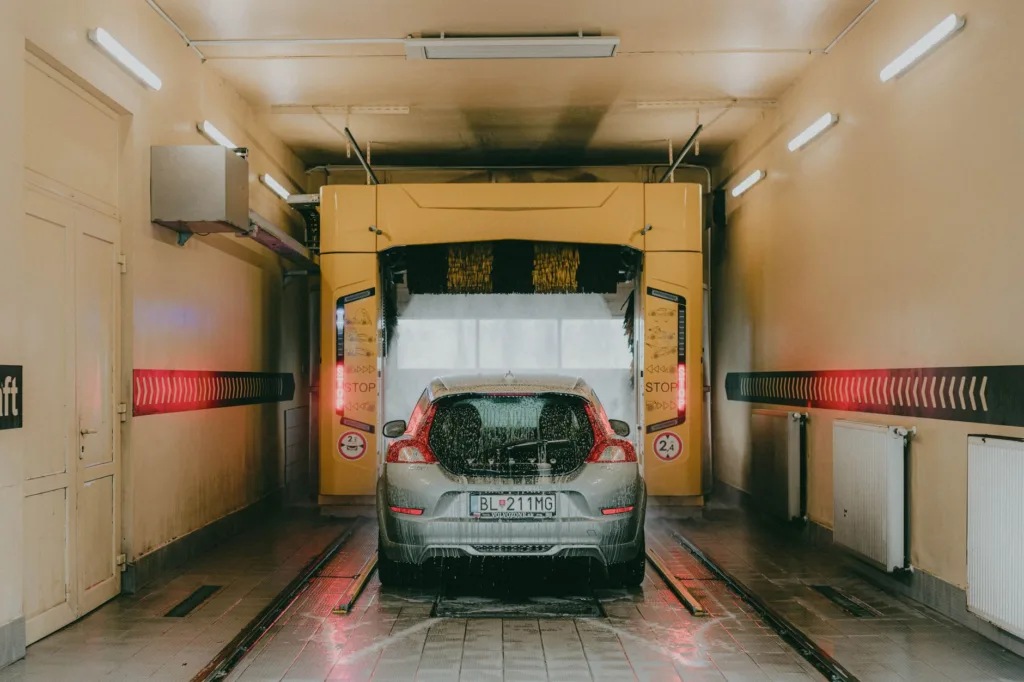
Automatic car washes can damage paint, but the risk depends heavily on the type of wash, the condition of your paint, and how often the vehicle is washed. The biggest concern is not usually one dramatic scratch from a single visit. It is the repeated, gradual wear that can create fine swirl marks, micro-scratches, and a duller finish over time.
For many daily drivers, an automatic wash is still a practical way to remove dirt before it builds up and causes larger problems. The key is understanding which wash methods are gentler, which ones are more abrasive, and what steps you can take to reduce the risk of paint damage.
How Automatic Car Washes Can Affect Paint
Paint damage from automatic car washes usually comes from physical contact, dirty wash media, and improper drying. Modern automotive paint is more durable than many people think, but it is not immune to abrasion. Clear coat, which is the transparent layer over the color coat, is what usually shows the wear first.
When a brush, cloth strip, or drying towel picks up grit from a dirty vehicle, that grit can act like fine sandpaper. Even if the damage is too small to notice after one wash, repeated contact can leave the finish looking hazy or swirled under direct light.
What paint damage looks like
- Swirl marks – Fine circular scratches visible in sunlight or under garage lighting.
- Micro-marring – Light haze or faint straight-line scratching from rubbing contact.
- Water spotting – Mineral deposits left behind when water dries on the surface.
- Oxidation appearance – A dull, aged look that can become more noticeable on neglected paint.
Not every mark is caused by the wash itself. Dirt, road salt, bird droppings, tree sap, and improper hand washing can also harm paint. The challenge is separating normal wear from damage caused by the wash process.
Which Automatic Car Wash Types Are Hardest on Paint?
Not all automatic washes are equally aggressive. The main difference is whether the wash uses moving contact materials or a mostly touchless process.
| Wash Type | How It Cleans | Paint Risk | Typical Concern |
|---|---|---|---|
| Touchless wash | High-pressure water and detergents, little or no physical contact | Lower | May leave heavy grime behind if the chemistry is weak or the car is very dirty |
| Soft-cloth wash | Fabric strips or foam materials make contact with the vehicle | Moderate | Can trap grit and create fine scratches over time |
| Brush wash | Rotating brushes scrub the surface | Higher | Brushes can hold dirt and are more likely to leave visible swirl marks |
| Self-serve wash bays | You control the wand, soap, and rinse process | Usually lower if used correctly | Damage can still happen if the car is rubbed with dirty towels or sponges afterward |
Touchless washes are often the gentlest on paint because they avoid contact. However, they may rely on stronger detergents and more pressure to remove road film. That means they reduce the chance of scratching, but they may not clean as deeply as a carefully done hand wash or a high-quality contact wash.
Are touchless washes always safe for paint?
Touchless washes are generally safer for the finish than dirty brushes or cloth systems, but they are not perfect. High-pressure water can force debris around the car, and strong cleaning chemicals can be harsh on waxes, sealants, or trim if used frequently.
They are a good choice when you want to minimize direct abrasion. They are especially useful in winter when road salt builds up quickly and you want to remove contamination before it sits on the surface for too long.
Why Brush and Cloth Washes Can Be a Problem
Any automatic wash that physically rubs the surface carries some risk. The main issue is contamination. If a brush or cloth strip has picked up sand, mud, or other particles from previous vehicles, those particles can get dragged across your paint.
Even when wash equipment looks clean, it may still contain tiny abrasive particles. That does not mean every contact wash is bad. It means the quality of maintenance, cleaning cycles, and wash design matter a lot.
Common ways contact washes damage paint
- Embedded grit in brushes or cloth strips.
- Dirty vehicle transfer when debris from one car is carried to the next.
- Insufficient pre-rinse that leaves heavy particles on the surface.
- Dry contact from worn or poorly rinsed materials.
- Repeated friction that slowly reduces gloss even if no obvious scratch appears.
Older or heavily used wash equipment can be more likely to cause marks. That said, well-maintained modern soft-cloth washes are often much better than the old rough brush systems many people remember from years ago.
Does the Condition of Your Paint Change the Risk?
Yes. The condition of your paint matters just as much as the type of wash. A new car with clean paint and a healthy clear coat is less likely to show damage than an older car with already worn or contaminated paint. Once a finish already has swirl marks or oxidation, additional wear becomes easier to see.
Vehicles with soft paint finishes are also more vulnerable. Some paints, especially on certain dark colors, show defects more readily. Black, dark blue, and dark gray often reveal swirl marks faster than lighter colors.
Higher-risk situations for paint damage
- The car is heavily coated in dirt, salt, or sand.
- The paint already has swirl marks or a thin clear coat.
- The vehicle has black or other dark-colored paint that shows defects easily.
- The car has aftermarket paint correction or ceramic coating that still needs proper maintenance.
- The wash is used frequently, such as several times per week.
A vehicle that is already clean or lightly dusty is less likely to suffer noticeable damage in a contact wash. The more heavy contamination present before the wash begins, the greater the chance that abrasive particles will be dragged across the finish.
What Parts of the Car Are Most at Risk?
Automatic car wash damage is not always evenly spread across the vehicle. Some surfaces get more abuse than others because of the way washers, brushes, and drying systems contact the car.
High-risk areas
- Hood and roof, because they are large, flat surfaces that show swirl marks easily.
- Horizontal panels, which tend to collect dirt and fine debris.
- Rear bumper and trunk area, where road grime often accumulates.
- Side mirrors and mirror housings, which can have rough edges and tight angles.
- Plastic trim, which may show scuffing or become discolored with harsh chemicals.
These areas often show damage first simply because they are exposed to the most contamination or the most contact. If your car has already started to show faint swirls on the hood or trunk, that is a common sign that repeated washing is contributing to surface wear.
Can Automatic Car Washes Remove Wax or Sealant?
Yes. Even if the wash does not visibly scratch the paint, it can strip or reduce protection. Traditional wax, spray sealants, and some polymer protectants wear down faster when exposed to aggressive detergents, repeated friction, and strong rinse chemistry.
This matters because protection is not just about shine. A good protective layer can make dirt easier to remove and reduce the chance that contaminants stick to the paint. Once that layer weakens, the car may need more frequent reapplication to maintain the same level of defense.
| Protection Type | Effect of Automatic Washes | Typical Result |
|---|---|---|
| Carnauba wax | Can wear off relatively quickly | Gloss may fade sooner after repeated washes |
| Synthetic sealant | Usually more durable than wax, but still degrades over time | Often holds up better to routine washing |
| Ceramic coating | More resistant, but not immune to harsh chemicals or friction | Can last longer if washed properly |
If your car is protected, automatic washing does not automatically ruin the protection. It just means the choice of wash matters more, and the coating or sealant may need upkeep sooner than it would with gentler washing methods.
When Automatic Car Washes Are a Reasonable Choice
Automatic washes are not inherently bad. For many drivers, they are the most practical way to keep a car reasonably clean, especially in busy schedules or harsh weather. The real question is whether the convenience is worth the level of risk for your specific vehicle and paint condition.
They can make sense when you need to remove salt, mud, pollen, or general grime quickly. In winter, removing corrosive road salt matters more than avoiding every tiny cosmetic mark. A slightly imperfect wash is often better than leaving damaging contamination on the vehicle for days or weeks.
Situations where an automatic wash may be the better option
- You drive a daily commuter and value convenience.
- The car is exposed to winter road salt or coastal grime.
- You do not have access to a safe hand-washing setup.
- The vehicle is already less concerned with show-car paint perfection.
- You choose a touchless or well-maintained soft-cloth system.
For a work truck, family SUV, or winter daily driver, the practical benefits can outweigh the minor cosmetic risk. For a freshly corrected weekend car with dark paint, the calculation may be different.
When You Should Avoid Certain Automatic Washes
Some vehicles and situations deserve extra caution. If the paint is delicate, the finish is freshly corrected, or the vehicle has special surface treatments, a rough contact wash may cause more harm than good.
Avoid high-contact washes when:
- The car is brand new and you want to preserve the finish as long as possible.
- The paint is black or another color that shows defects easily.
- The vehicle has loose dirt, mud, or sand stuck to it.
- The wash uses visibly worn brushes or poor maintenance.
- You notice paint already feels rough or looks scratched in sunlight.
If the car is covered in gritty debris, a contact wash can drag that debris across the finish. In that case, a thorough pre-rinse or touchless wash is usually safer than sending the car straight through brushes.
How to Reduce Paint Damage from Automatic Car Washes
You can lower the risk without giving up convenience. A few simple choices make a noticeable difference in how your paint looks over time.
Choose the gentlest wash available
If a touchless wash is available and reasonably effective, it is usually the safer option for paint. If you use a soft-cloth wash, look for a location that appears clean and well maintained. Avoid washes with visibly dirty, frayed, or matted equipment.
Wash more often instead of letting dirt build up
It sounds counterintuitive, but frequent light cleaning is often better than waiting until the car is heavily soiled. Heavy grime increases the chance of scratching because there is more abrasive material on the surface.
Rinse off heavy debris first if possible
If your vehicle is caked with mud, road salt, or sand, a pre-rinse helps remove the biggest contaminants before contact is made. Even a short self-serve rinse can reduce the risk of scratches.
Dry carefully after the wash
Some automatic washes use blowers, and some leave the car to air dry. Either way, leftover water can leave spots if it contains minerals. If you dry the vehicle yourself afterward, use a clean microfiber drying towel and avoid dragging dirt across the surface.
Maintain paint protection
A wax, sealant, or ceramic coating can make routine washing easier by helping dirt release more readily. It will not eliminate risk, but it can reduce the amount of friction needed to clean the car.
Common Mistakes Drivers Make
Many paint problems blamed on automatic car washes are really caused by poor wash habits. Avoiding these mistakes can make a big difference.
- Using a contact wash on a very dirty vehicle without pre-rinsing first.
- Assuming all automatic washes are the same when equipment quality varies widely.
- Ignoring existing paint defects until they become more visible after repeated washes.
- Using old towels or dirty drying cloths after the wash.
- Expecting one wash type to be perfect for every situation.
Another common mistake is focusing only on scratches and ignoring protection loss. Even if the car still looks clean, repeated harsh washing can shorten the life of wax or sealant and make the next wash more difficult.
Automatic Wash vs Hand Wash: Which Is Safer for Paint?
A careful hand wash is generally safer for paint than most automatic contact washes because you can control the materials, pressure, and technique. However, a sloppy hand wash with dirty sponges, buckets, or towels can do more damage than a decent automatic system.
| Method | Paint Safety | Main Advantage | Main Risk |
|---|---|---|---|
| Careful hand wash | Very good when done correctly | Maximum control and gentler technique | Human error, dirty towels, or poor technique |
| Touchless automatic wash | Good | No direct contact with the paint | May need stronger detergents or leave residue |
| Soft-cloth automatic wash | Moderate | Convenient and often effective | Can create fine swirls over time |
| Brush automatic wash | Lower | Fast and widely available | Higher chance of visible scratching |
If your main concern is preserving paint clarity, a careful hand wash or touchless wash is usually the safest path. If your main concern is removing road salt or mud quickly, a well-maintained automatic wash may be the more practical choice.
Do Ceramic Coatings Make Automatic Washes Safer?
Ceramic coatings can help reduce the risk of visible damage by making the surface slicker and easier to clean. Dirt may not stick as tightly, which can reduce how much rubbing is needed during washing. That said, a coating does not make a car scratch-proof.
Automatic contact washes can still create swirl marks on coated paint, especially if the wash media is dirty or the vehicle is already contaminated. Coating also does not protect against every type of defect, such as etching from bird droppings or water spots from minerals left to dry.
If your car is coated, it is still smart to choose the gentlest wash method available and avoid frequent harsh brushing.
How Often Is Too Often?
There is no universal number that applies to every vehicle. Washing frequency depends on climate, driving conditions, paint type, and wash method. A car driven daily in winter may need frequent cleaning to remove salt, while a garage-kept weekend car may only need occasional washing.
What matters most is not the number of washes alone, but how aggressive those washes are and how dirty the car is when it goes in. A frequent touchless wash can be preferable to letting contamination sit for too long. On the other hand, repeated rough brush washes on a dark vehicle can build visible wear faster.
Signs Your Automatic Wash Is Causing Problems
If you suspect the wash is harming the paint, look for repeatable patterns after several visits. One wash may not tell the whole story, but trends are easier to spot.
Warning signs to watch for
- Swirl marks appear under direct sunlight or LED lighting.
- The paint looks duller even after a fresh wash.
- Water no longer beads or sheets the way it used to, suggesting protection is fading.
- New fine scratches appear mainly on horizontal panels.
- Plastic trim or emblems look scuffed or faded.
If you notice these signs, the wash method may be too aggressive for your paint or the facility may not be maintaining its equipment well enough. Switching to a touchless wash or reducing frequency can help slow further damage.
Typical Cost Considerations
Cost does not always predict paint safety, but it can reflect wash quality. Lower-cost automatic washes may rely on simpler equipment and faster cycles, while higher-end facilities sometimes offer better maintenance or gentler wash options. That said, price alone is not a guarantee.
What you should look for is consistency. A clean facility, well-maintained equipment, clear wash options, and proper rinsing are more important than a flashy menu or marketing claims. Even a reasonably priced wash can be acceptable if the process is gentle and well run.
Practical Recommendations by Vehicle Type
Daily driver
A daily driver can usually handle automatic washing if you choose the gentlest practical option. Touchless is ideal when available. Soft-cloth can still be acceptable if the equipment is well maintained and the car is not heavily dirty.
New car
For a new car, especially one with dark paint, minimizing friction is worth the effort. If possible, stick with touchless washes or careful hand washing for as long as you want to preserve a near-perfect finish.
Older car
An older car with already worn clear coat may not be as sensitive to minor swirling, but harsh washes can still worsen its appearance. If the finish is thin or already dull, gentler cleaning becomes even more important.
Coated or polished car
These cars benefit from gentler washing because the surface finish is part of the investment. A coating helps, but it does not excuse rough handling. Use the least abrasive method that still gets the vehicle clean.
FAQ
Do automatic car washes scratch paint every time?
No. They do not necessarily scratch paint every time, but repeated contact washes can create fine swirl marks over time, especially if the wash equipment is dirty or the car is heavily contaminated.
Are touchless car washes better for paint?
Usually yes. Touchless washes reduce direct abrasion because they rely on water pressure and chemicals instead of brushes or cloth, which lowers the chance of scratching.
Can automatic car washes ruin a new car’s paint?
They can contribute to early swirl marks and protection loss, especially on dark paint or in contact washes. A single wash is unlikely to ruin the paint, but repeated aggressive washing can affect appearance.
Do brushless car washes damage paint?
Brushless usually means touchless, which is generally safer for paint. However, stronger cleaning chemicals or high pressure can still affect wax, sealant, or trim over time.
Is it better to hand wash or use an automatic wash?
A careful hand wash is usually safest for paint. A good touchless automatic wash is the next best option for convenience. Poor hand washing can still cause damage if dirty towels or improper methods are used.
How can I tell if a wash is too harsh for my paint?
If you start noticing new swirls, haze, or dullness after several visits, the wash may be too aggressive. Dark colors often reveal this damage faster than light colors.
Should I wax my car if I use automatic car washes often?
Yes, regular protection can help dirt release more easily and reduce the friction needed for cleaning. It will not prevent all wear, but it can help maintain the finish.
Conclusion
Automatic car washes can damage paint, but the level of risk depends on the wash type, the condition of the vehicle, and how the wash is used. Touchless systems are generally safer than brush or cloth systems, while frequent contact washes can gradually create swirl marks and dull the finish.
If your priority is preserving paint, choose the gentlest wash available, avoid washing a heavily dirty vehicle without pre-rinsing, and keep up with paint protection. If your priority is removing salt, grime, and daily contamination efficiently, a well-maintained automatic wash can still be a practical and reasonable choice.