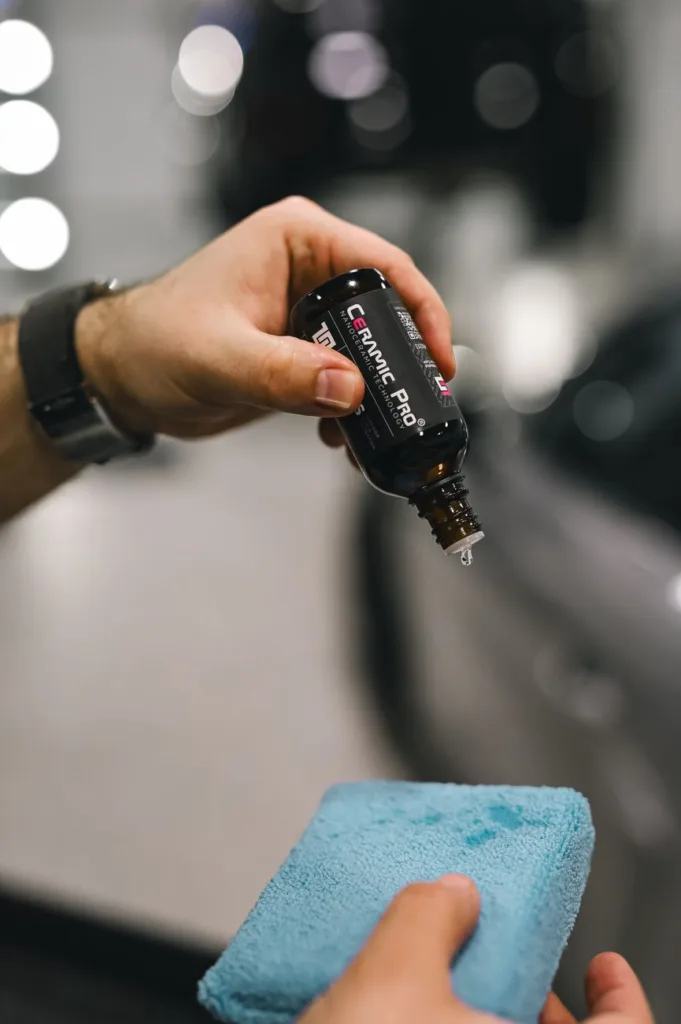
Ceramic coating works by creating a very thin, transparent protective layer that bonds to your vehicle’s clear coat. Once cured, it helps repel water, slows down contamination buildup, and makes the paint easier to clean. It does not make a car scratch-proof or eliminate maintenance, but it can improve gloss, reduce how often dirt sticks, and add a more durable layer of protection than traditional wax.
For many car owners, the simplest way to think about ceramic coating is this: it is a liquid protective product that hardens into a semi-permanent surface layer. Instead of sitting loosely on top of paint like wax, it chemically bonds with the existing finish. That bond is what gives ceramic coating its longer lifespan and its water-repelling behavior.
What Ceramic Coating Actually Is
Ceramic coating is a liquid polymer, often based on silicon dioxide, that is applied to paint and allowed to cure. After curing, it forms a hard, clear layer that sits on top of the clear coat. The coating is extremely thin, usually measured in microns, so it is not a thick shell or film in the way many people imagine.
The coating’s job is not to replace the paint or clear coat. Instead, it acts as an additional sacrificial layer that absorbs some of the environmental abuse your paint would otherwise take. That includes UV exposure, road grime, bird droppings, tree sap, light chemical fallout, and general washing wear.
It is important to separate marketing claims from actual function. Ceramic coating can improve appearance and make maintenance easier, but it does not stop rock chips, deep scratches, or dents. It is best understood as a protective and hydrophobic finish enhancement, not an armor system.
How Does Ceramic Coating Work on a Chemical Level?
The short answer is that it bonds with the vehicle’s clear coat and cures into a hard, water-repelling layer. The longer answer involves surface chemistry, adhesion, and curing time. When applied correctly, the coating cross-links and forms a tightly bonded surface that is much more resistant to contamination than untreated paint.
Most modern ceramic coatings use silane or siloxane compounds, and many consumer products are marketed as SiO2-based. Once exposed to air and moisture during the curing process, these compounds create a durable network on the surface. That network is what gives the coating its slick feel and strong water beading.
The coating changes the surface energy of the paint. In simple terms, it makes it harder for water and grime to spread out and cling evenly to the surface. Water tends to gather into beads or sheet off more easily, which can help reduce water spotting and make rinsing faster.
Bonding to the Clear Coat
The clear coat on a car is the top transparent layer over the color coat. A ceramic coating bonds to this surface after proper preparation. The cleaner and smoother the paint is before application, the better the coating can attach and cure evenly.
This is one reason paint prep matters so much. If the surface still has wax, oils, road film, or embedded contamination, the coating may not bond properly. In real-world terms, poor prep can shorten durability and leave patchy performance.
Curing Into a Protective Layer
After application, the coating needs time to cure. During this stage, the liquid carrier evaporates and the coating hardens into its final form. Depending on the product and environmental conditions, initial curing can take hours, while full cure can take several days or even longer.
Temperature, humidity, and airflow all affect curing. Too much moisture too soon, or washing the car before the coating has cured, can interfere with how well it performs. That is why many coating instructions emphasize keeping the vehicle dry for a set period after application.
What Ceramic Coating Does Well
Ceramic coating has real advantages, but they are often misunderstood. It is useful when you want to preserve appearance, simplify washing, and reduce environmental wear. The main benefits are related to surface behavior rather than physical hardness alone.
- Hydrophobic effect: Water beads or sheets off more easily.
- Improved cleaning: Dirt and grime tend to release more easily during washing.
- Gloss enhancement: Paint often looks deeper and slicker after application.
- UV resistance support: It can help slow oxidation and fading over time.
- Contamination resistance: It can reduce how strongly some contaminants bond to paint.
These benefits make ceramic coating especially attractive for daily drivers, garage-kept vehicles, and cars that are washed regularly. It can also help reduce the effort needed to maintain a clean finish in dusty, rainy, or urban environments.
What Ceramic Coating Does Not Do
Understanding the limitations is just as important as understanding the benefits. Ceramic coating is not a magic shield, and some of the most common disappointments come from unrealistic expectations.
- It does not prevent rock chips.
- It does not make a car scratch-proof.
- It does not replace regular washing.
- It does not fix paint defects like swirls, oxidation, or etching.
- It does not last forever.
Light marring can still happen if you wash the vehicle improperly. Automatic brushes, dirty wash mitts, and dry wiping can still damage the clear coat and the coating itself. Ceramic coating can reduce some wear, but it cannot eliminate the need for careful maintenance.
How Ceramic Coating Differs from Wax and Sealant
Many people compare ceramic coating with wax because both are applied to paint and both improve shine. The difference is in chemistry, durability, and performance. Wax usually sits on the surface and provides shorter-term protection, while ceramic coatings bond more strongly and last longer.
| Feature | Ceramic Coating | Wax | Synthetic Sealant |
|---|---|---|---|
| Bonding | Bonds to clear coat | Sits on top of surface | Primarily surface film |
| Durability | Typically months to years | Typically weeks to a few months | Typically a few months |
| Water repellency | Strong | Moderate | Moderate to strong |
| Ease of washing | Improved | Improved slightly | Improved |
| Resistance to chemicals | Generally better | Lower | Moderate |
| Appearance | Deep gloss, slick feel | Warm shine | Glossy finish |
Wax still has a place. It is inexpensive, easy to apply, and can be a good option for someone who enjoys frequent detailing. A synthetic sealant offers a middle ground for those who want easier application than coating without the maintenance demands of true ceramic products.
Why Ceramic Coating Beads Water
Water beading is one of the most visible signs that a coating is working. The reason is surface tension. A properly coated surface has lower surface energy, so water has a harder time spreading out flat. Instead, it pulls into round beads that can roll off more easily.
That beading effect helps the vehicle dry faster and can reduce the amount of water left behind after a rinse. In some cases, water sheets off in larger areas rather than forming countless tiny droplets. Either way, the goal is the same, which is to minimize how much moisture remains on the finish.
However, beading alone is not proof of long-term coating health. A car can still bead water even if the coating is partially worn or contaminated. If water behavior becomes weak or uneven, the coating may need cleaning or rejuvenation rather than immediate replacement.
How Long Ceramic Coating Lasts
Durability varies widely based on product quality, preparation, climate, maintenance, and how the vehicle is used. Consumer-grade coatings may last around one to three years in real-world conditions. Higher-end professional coatings can last longer, but only if they are properly applied and maintained.
A garage-kept vehicle that is washed carefully may keep performance longer than a daily driver that sits in harsh sun, sees winter salt, and goes through automatic washes. The coating’s lifespan is not just about the label on the bottle. It depends heavily on how it is treated after installation.
It is also worth noting that a coating may still be present even if its hydrophobic behavior fades. Sometimes the surface becomes contaminated with road film or mineral deposits, which makes it seem like the coating failed. In many cases, a proper decontamination wash can restore much of the performance.
What Affects Ceramic Coating Performance?
Several factors determine how well a ceramic coating works and how long it lasts. These are the main ones to consider:
- Paint preparation: Decontamination and polishing improve bonding.
- Application quality: Even coverage and proper leveling matter.
- Curing conditions: Temperature and humidity affect how the coating hardens.
- Driving environment: Salt, sun, pollution, and dust all impact wear.
- Maintenance habits: Gentle washing helps preserve performance.
For example, a coating applied to a black sedan that is washed with harsh brushes every week will likely show wear sooner than the same coating on a garage-kept weekend car washed by hand. The coating is only part of the equation.
How Ceramic Coating Is Applied
The application process is one reason professional detailing services often charge significantly more than a basic wax service. Ceramic coating requires preparation and attention to detail. Skipping steps usually shows up later as streaking, high spots, or uneven protection.
1. Wash and Decontaminate
The car should be thoroughly washed to remove dirt, road film, and loose contamination. Many detailers then use iron removers or clay treatment to eliminate bonded debris that washing alone cannot remove. This step is critical because a coating cannot bond well to a dirty surface.
2. Correct the Paint if Needed
Polishing removes swirls, light scratches, and oxidation. It also improves the appearance of the paint before the coating locks it in. Since ceramic coating does not hide defects very well, any marks left behind may become more noticeable under the added gloss.
3. Prep the Surface
After polishing, the paint is typically wiped down with an appropriate panel prep solution to remove oils and residue. This helps the coating bond directly to the clear coat rather than to leftover polishing oils. Skipping this step can reduce durability.
4. Apply the Coating
The coating is spread in small sections using a soft applicator. It is then leveled off with microfiber towels before it flashes or cures unevenly. If too much product is left behind, it can create dark smears or high spots that may need machine correction to remove.
5. Cure and Protect the Vehicle
After application, the car must be kept dry and handled carefully during the initial cure period. Some coatings can be topped with maintenance sprays after the first cure window, but the exact timing depends on the product. This step should follow the manufacturer’s instructions or professional guidance.
Common Mistakes People Make with Ceramic Coating
Many ceramic coating problems are not caused by the coating itself. They come from poor prep, poor application, or unrealistic expectations. Here are some common mistakes worth avoiding.
Skipping Paint Correction
If the paint has swirl marks, scratches, or water spots, coating it will not make those defects disappear. In fact, the coating can make them more obvious because it improves clarity and shine. Proper correction before coating is often the difference between an average result and a strong one.
Applying Over Contamination
Trying to coat over wax, oil, or embedded dirt weakens the bond. That can lead to inconsistent water behavior or shorter life. Surface prep is not optional if the goal is durable protection.
Using Too Much Product
More coating is not better. Excess product can leave streaks, uneven high spots, or haze. Thin, even application is usually the right approach.
Washing Too Soon
The coating needs time to cure. Washing too early can interfere with the final bond, especially if strong chemicals or high-pressure washing are involved. A short delay is far safer than rushing the process.
Expecting It to Replace Maintenance
Ceramic coating helps with cleaning, but it does not eliminate the need to wash the vehicle. Road film, pollen, brake dust, and water spots still need to be removed. Letting grime sit too long can reduce the coating’s performance.
How to Maintain a Ceramic Coating
Maintenance is usually simpler than maintaining unprotected paint, but it still matters. Gentle washing and periodic decontamination help the coating keep performing well. The goal is to avoid buildup that can mask the coating’s water-repelling properties.
- Wash with a pH-balanced car shampoo when possible.
- Use clean wash mitts and drying towels.
- Avoid harsh automatic brush washes.
- Do not dry-wipe dusty panels.
- Remove bird droppings and bug splatter quickly.
In many cases, a coated vehicle can be washed faster because dirt releases more easily. That said, automatic wash chemicals, hard water, and neglect can still weaken performance over time. Gentle care preserves the coating and the clear coat underneath it.
Does Ceramic Coating Prevent Scratches?
No coating should be treated as scratch-proof. Ceramic coatings can add some surface hardness, but they do not make the paint immune to scratches, swirls, or chips. The clear coat itself is still the main physical defense, and it remains vulnerable to improper washing and contact damage.
What the coating can do is reduce the chance of very light marring under controlled conditions. For example, a well-coated surface may be easier to clean without dragging grit across the paint. But if a dirty towel is used or someone brushes against the car with abrasive debris, the coating will not stop damage.
Is Ceramic Coating Worth It?
Whether it is worth it depends on how you use and maintain your vehicle. For someone who wants easier cleaning, stronger gloss retention, and longer-lasting protection than wax, it can make good sense. For someone who rarely washes their car or expects it to solve every paint problem, the value is much lower.
Here is a simple way to think about it:
| Situation | Likely Value of Ceramic Coating |
|---|---|
| Daily driver with regular washes | High |
| Garage-kept enthusiast vehicle | High |
| Car washed rarely or improperly | Moderate to low |
| Vehicle with badly damaged paint | Low until paint is corrected |
| Lease vehicle that must look good with minimal upkeep | Often useful, depending on budget |
The main payoff is convenience and preservation. If those matter to you, ceramic coating can be a smart investment. If your priority is only short-term shine, wax or sealant may be enough.
Ceramic Coating on Glass, Wheels, and Trim
Ceramic coatings are not limited to paint. They are also sometimes used on glass, wheels, and exterior trim. The performance can be helpful in each area, but the results and practical benefits differ.
Glass
On glass, coatings can help water bead and move off more easily, which may improve visibility in rain. They do not replace wipers, and they are not a substitute for safe driving in poor conditions. They can, however, make windshield maintenance easier.
Wheels
On wheels, the coating can help brake dust release more easily during cleaning. Since wheels face high heat and heavy contamination, they often benefit from easier wash-off. Proper prep is still important because wheel surfaces get hot and dirty fast.
Trim
On plastic trim, ceramic products can help preserve appearance and slow fading. Results vary by material, and some trim needs special products or techniques to avoid uneven appearance. Not every coating behaves the same on textured plastic as it does on painted metal.
How Ceramic Coating Compares to Paint Protection Film
People often confuse ceramic coating with paint protection film, or PPF. They solve different problems. Ceramic coating improves surface cleanliness and chemical resistance, while PPF is a physical film designed to absorb impact and reduce rock chip damage.
| Feature | Ceramic Coating | Paint Protection Film |
|---|---|---|
| Main purpose | Surface protection and ease of cleaning | Impact protection and chip resistance |
| Thickness | Very thin | Much thicker |
| Rock chip resistance | Minimal | Much better |
| Hydrophobic effect | Strong | Usually improved with top coatings |
| Maintenance | Simplifies washing | Also simplifies washing, depending on finish |
Some owners use both. A vehicle may have PPF on high-impact areas like the front bumper and ceramic coating over the rest of the paint, or even over the film itself. That combination can make sense for drivers who want both impact protection and easier maintenance.
Typical Cost Considerations
Costs vary a lot depending on whether you do the work yourself or hire a professional. DIY coating kits are generally less expensive, but they still require prep tools, lighting, towels, and careful technique. Professional application costs more because of labor, paint correction, and controlled installation time.
Even when comparing prices, it helps to look at the total condition of the paint. A lower-cost application on uncorrected paint may not be a good value if the finish still looks flawed. In many cases, the true cost is tied to how much prep is needed before the coating can be applied properly.
Signs a Ceramic Coating Is Working
There are a few practical signs that the coating is functioning as intended:
- Water beads or sheets off readily during rinsing.
- Dirt releases more easily during washing.
- The paint feels slick after cleaning.
- The finish appears glossy and clear.
- Road grime does not cling as aggressively as it did before.
Keep in mind that performance can change after exposure to winter roads, hard water, or heavy contamination. If water behavior weakens, the coating may need a decontamination wash rather than immediate replacement.
When Ceramic Coating Is Not the Right Solution
There are situations where ceramic coating is not the best answer. If the paint is badly oxidized, full of chips, or needs bodywork, coating it will not solve those issues. The surface should be corrected or repaired first.
It may also be a poor fit for owners who want the easiest possible maintenance with no special washing habits. A coating still requires proper care. If the car is going to be run through abrasive washes or neglected for long periods, much of the potential benefit will be lost.
Frequently Asked Questions
Does ceramic coating make a car glossy?
Yes, it usually increases gloss and clarity. It does not create shine by itself, but it enhances the appearance of well-prepared paint.
How long does ceramic coating last?
That depends on the product, preparation, and maintenance. Real-world life can range from months to several years.
Can ceramic coating be removed?
Yes. It can wear down naturally, or it can be removed through polishing or correction if needed.
Does ceramic coating stop swirl marks?
No, but it may reduce minor marring if the vehicle is washed carefully. Swirl marks can still happen.
Can I apply ceramic coating over wax?
No, not if you want proper bonding. The surface should be stripped of wax, oils, and contamination first.
Is ceramic coating better than waxing?
In terms of durability and chemical resistance, usually yes. Wax is easier and cheaper, but it does not last as long.
Does ceramic coating work on older cars?
Yes, as long as the paint is in suitable condition and properly prepared. Older paint may need more correction first.
Will ceramic coating protect against bird droppings?
It can help make cleanup easier and may slow staining, but droppings should still be removed quickly. No coating is a complete guarantee against etching.
Conclusion
Ceramic coating works by bonding to a vehicle’s clear coat and curing into a thin, durable protective layer. Its main strengths are water repellency, easier cleaning, improved gloss, and added resistance to everyday contamination. It is not a replacement for paint correction, regular washing, or physical damage protection, but it can be a useful part of a long-term paint care routine.
If you understand its limits and maintain the car properly, ceramic coating can make ownership easier and help the finish stay cleaner for longer. The best results come from careful preparation, correct application, and realistic expectations about what the coating can and cannot do.