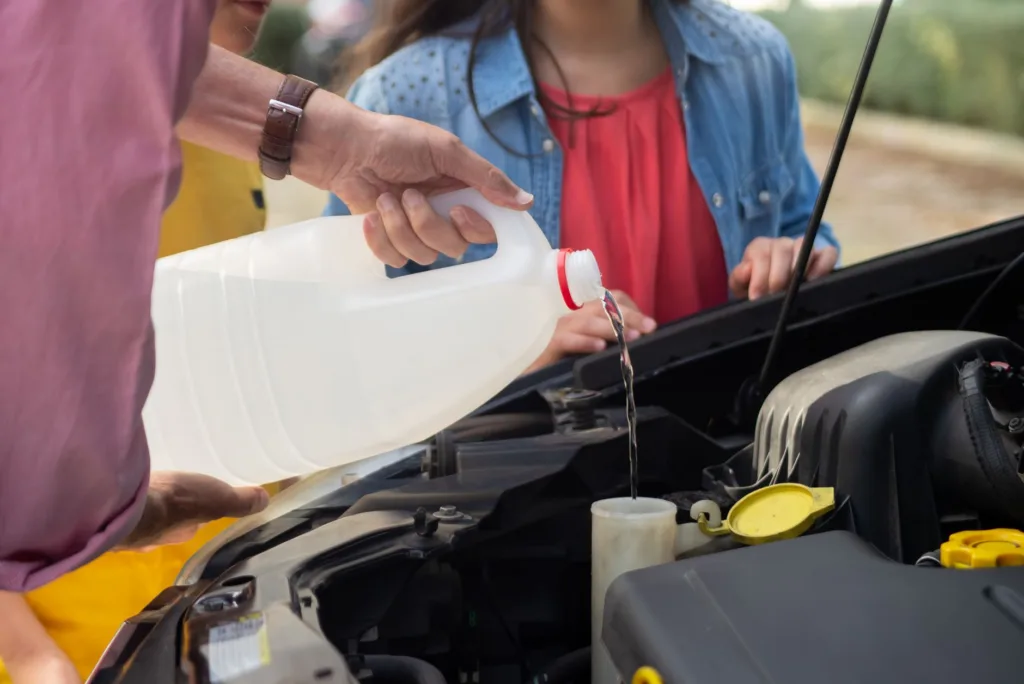
Windshield washer fluid should be refilled whenever the reservoir gets low, but for most drivers that usually means checking it at least once a month and topping it off more often during winter, road-trip season, or periods of heavy bug, dust, salt, or pollen buildup. There is no single mileage interval that fits every vehicle because washer fluid use depends far more on driving conditions than on odometer readings.
If you drive in snowy areas, on muddy roads, through bug-heavy highways, or during long highway commutes, you may need to refill the reservoir every few weeks. If you drive lightly in mild weather, you might go months between top-offs. The key is simple: do not wait until you need it to discover it is empty.
Washer fluid seems minor compared with engine oil or brake fluid, but it plays a direct role in visibility and safety. A dirty windshield can create glare, streaking, and reduced vision, especially at night or in bad weather. Keeping the reservoir filled is one of the easiest maintenance tasks on any car.
How often should you check windshield washer fluid?
A good rule is to check your washer fluid every month and also before any long drive. Many drivers include it in a quick under-hood routine with engine oil, coolant level, and a general look for leaks.
You should also check it sooner if any of these apply:
- You recently drove through snow, slush, or salted roads
- You have been using the washers frequently to clear bugs or dust
- Your vehicle displayed a low washer fluid warning light
- Your spray seems weak or stops unexpectedly
- You are preparing for a road trip
For many people, monthly checks are enough. For drivers in harsher conditions, every fuel fill-up or every other fill-up may be more realistic during peak seasons.
Why there is no fixed refill interval
Unlike engine oil or transmission fluid, windshield washer fluid is a consumable. You use it only when needed, and some driving conditions use much more than others.
Two drivers with the same car can have completely different refill schedules. One may top it off twice a year. Another may empty a reservoir in a week during a snowy commute or after a summer road trip through bug-heavy areas.
The biggest factors are:
- Climate
- Road conditions
- Driving frequency
- Windshield cleanliness
- Vehicle size and reservoir capacity
- How often you use the rear washer on SUVs and hatchbacks
Typical refill frequency by driving conditions
| Driving Situation | Typical Refill Pattern | Why Usage Changes |
|---|---|---|
| Light city driving in mild weather | Every 2 to 6 months | Less highway spray, fewer bugs, less road grime |
| Daily highway commuting | Every few weeks to 2 months | More bug splatter, dust, and windshield contamination |
| Winter driving in snowy or salted areas | As often as weekly or every few weeks | Salt, slush, and grime quickly coat the glass |
| Spring pollen season | Every few weeks | Pollen buildup causes hazy film and smearing |
| Summer road trips | Before trip, then as needed during trip | Bugs and long highway hours increase use |
| Rural, dusty, or muddy roads | Every few weeks to monthly | Dirt and mud create frequent visibility issues |
These are rough patterns, not strict maintenance intervals. Your actual usage may vary a lot.
How much windshield washer fluid does a car hold?
Most passenger vehicles hold roughly 1 to 1.5 gallons of washer fluid, though capacities vary. Some compact cars hold less, while larger trucks, SUVs, and vehicles with rear washer systems may hold more.
This matters because a larger reservoir can make it feel like you rarely need refills, while a smaller one can run low quickly in bad weather. If you are not sure about your vehicle’s capacity, check the owner’s manual.
Even if the reservoir is fairly large, heavy use can drain it fast. In winter, a few days of slushy commuting can consume far more fluid than months of fair-weather driving.
Signs your windshield washer fluid is low
Some signs are obvious, and others are easy to miss until you need the system urgently.
Low washer fluid warning light
Many newer vehicles have a dashboard warning that tells you when the washer fluid level is low. If that light comes on, refill it soon. Do not assume you still have enough for several days.
Weak or uneven spray
If the spray becomes weak, intermittent, or only reaches part of the windshield, low fluid is one possible cause. However, clogged nozzles or a weak pump can cause similar symptoms.
No spray at all
If you hear the washer pump running but no fluid reaches the glass, the reservoir may be empty. It can also mean a frozen line, clogged nozzle, or disconnected hose.
You use it often during certain seasons
Even without a warning light, frequent use is your clue to check the level more often. Drivers often forget how quickly winter grime or summer bugs can drain the tank.
When should you refill it immediately?
Some situations call for a top-off right away, not later in the week.
- Before a long highway trip
- Before a winter storm or freezing weather
- After the low-fluid warning appears
- If your windshield is already smearing badly
- If you are heading into dusty, muddy, or bug-heavy conditions
- Any time the reservoir is visibly low
Washer fluid is inexpensive compared with the inconvenience and safety risk of poor visibility. Running out during traffic, snow spray, or night driving is a problem worth avoiding.
Seasonal changes that affect refill frequency
Winter usually uses the most washer fluid
In many regions, winter is the season when washer fluid disappears fastest. Snow, slush, road salt, sand, and dirty spray from other vehicles can coat the windshield in minutes.
Drivers in northern climates sometimes go through an entire reservoir in a short period, especially during highway commuting. If that sounds familiar, check the level every week or at each fuel stop.
Summer can still use a lot
Summer often means fewer weather-related washes, but highway bugs can become a major issue. Bug residue can smear badly and may need repeated sprays to clear.
Long road trips also increase use because the windshield collects insects, dust, and road film more quickly at highway speeds.
Spring and fall bring their own issues
Spring pollen can create a yellow or green film on the windshield. Fall may bring rain, leaf residue, and dirt. Neither season is usually as demanding as winter, but both can still increase fluid use.
How to check windshield washer fluid correctly
Checking washer fluid is usually one of the easiest under-hood tasks.
- Park on a level surface and turn off the engine.
- Open the hood.
- Find the washer fluid reservoir cap. It is usually marked with a windshield or spray icon.
- Look at the reservoir if it is translucent. Many tanks let you see the level from the outside.
- If needed, open the cap and add washer fluid until the reservoir is near full.
- Close the cap securely.
Some reservoirs are tucked deeper into the engine bay and harder to see. If yours does not show the fluid level clearly, topping it off periodically is often the simplest approach.
Can you overfill windshield washer fluid?
In most cases, slightly filling it to the top is not a major issue. Washer reservoirs are not pressurized like cooling systems. Still, it is best not to spill fluid all over the engine bay.
Pour slowly, especially if the fill neck is narrow. If some fluid splashes out, wipe it up. The goal is a full reservoir, not a mess.
What type of windshield washer fluid should you use?
You should use windshield washer fluid made for automotive washer systems. Different formulas are designed for different temperatures and cleaning needs.
| Type | Best Use | Why It Matters |
|---|---|---|
| Standard all-season fluid | General year-round driving in mild climates | Handles normal dirt and light grime |
| Winter or de-icer fluid | Freezing temperatures and snowy roads | Resists freezing better and helps cut winter film |
| Bug-removing summer fluid | Warm-weather highway driving | Helps loosen bug residue and road film |
Always consider your local climate. In freezing areas, using the wrong fluid can lead to poor performance or frozen lines.
Can you use plain water instead?
Plain water is not a good long-term substitute. It may work temporarily in warm weather, but it does not clean as well, can freeze in cold temperatures, and may allow more mineral buildup in the system.
Water also lacks the detergents and additives that help cut through bug residue, oily film, and winter grime. In freezing conditions, it can create a serious problem by icing in the reservoir, lines, or nozzles.
If you are in an emergency and need temporary visibility help in warm weather, water may get you by until you can add proper washer fluid. But it should not become your normal practice.
What happens if you let washer fluid run out?
The vehicle will still run, but your visibility can suffer at the worst possible moment. That is the real risk.
If you run out of washer fluid, you may not be able to clear:
- Road salt spray
- Bug splatter
- Mud or dust
- Bird droppings residue
- Pollen film
- Night glare caused by dirty glass
Running the pump repeatedly on an empty reservoir is also not ideal. While occasional dry operation may not immediately damage the system, it is better not to make a habit of it.
Washer fluid use in real-world driving
Daily commuter in winter
A driver commuting 30 miles each way on salted highways may use the washers several times per trip. In that situation, the reservoir could need topping off every few days or every week.
Weekend city driver in a mild climate
A person who drives short city errands in mostly dry weather may only need to refill every few months. Their windshield simply does not collect as much grime at speed.
Family road trip in summer
A long interstate drive through warm weather often leads to heavy bug buildup. Even a full reservoir before departure may not last the entire trip.
Rural gravel-road driver
Dust and mud can make frequent washer use necessary even without snow or bugs. Drivers in agricultural areas often use more fluid than expected.
How windshield condition affects fluid usage
If your windshield is already dirty, greasy, or streaky, you may use more washer fluid than necessary because each spray is less effective. Sometimes the issue is not fluid level alone, but dirty glass or worn wiper blades.
Clean the windshield regularly by hand, inside and outside. Replace worn wiper blades when they smear, chatter, or leave missed areas. A clean windshield and healthy blades often reduce fluid use because each wash cycle works better.
How long does a full reservoir usually last?
A full reservoir can last anywhere from a few days to several months. That wide range is normal.
It may last only days if:
- You drive in winter slush every day
- You are on a long road trip
- Your windshield gets covered in bugs or mud often
It may last months if:
- You drive infrequently
- You mostly use clean city roads
- You live in a mild, dry climate
This is why time-based checks work better than waiting for a certain mileage number.
Maintenance tips to avoid running low
Washer fluid is easy to stay ahead of if you build a simple habit.
- Check it monthly
- Top it off before long drives
- Refill before winter weather arrives
- Keep an extra container in the garage
- Pay attention to warning lights
- Use season-appropriate fluid
- Inspect spray nozzles if the stream seems weak
If you live where road salt is common, checking the level at every oil change is not enough. In that environment, the fluid may run low many times between services.
Common mistakes drivers make with windshield washer fluid
Only checking it during oil changes
This is one of the most common mistakes. Oil changes may be thousands of miles apart, but washer fluid can run out in days during heavy use.
Using water year-round
Water may seem convenient, but it is a poor replacement for proper fluid, especially in freezing weather. It also does not clean the glass as effectively.
Ignoring weak spray
Drivers often assume weak spray is normal when the reservoir may be low or the nozzles may be partially clogged. That small symptom is worth checking before it becomes a no-spray situation.
Not switching to winter-rated fluid
In cold regions, summer or diluted fluid may not perform well enough. Seasonal changes matter.
Forgetting the rear washer
SUVs, wagons, vans, and hatchbacks often have rear washer systems that use the same reservoir. Frequent rear-window cleaning drains the tank faster than some owners expect.
Assuming the warning light is urgent only when empty
A low-fluid light usually means you still have some fluid left, but not much. It is a warning to refill soon, not to keep ignoring it for another week.
When low washer performance is not caused by low fluid
If you just filled the reservoir and the system still does not work properly, the problem may be elsewhere.
Clogged spray nozzles
Dirt, wax residue, or mineral deposits can block the nozzles. This often causes uneven or misdirected spray.
Frozen lines
In cold weather, incorrect or diluted fluid can freeze in the washer lines or nozzles. The pump may run, but nothing reaches the glass.
Faulty pump
If you hear no pump sound at all when activating the washers, the pump, fuse, switch, or wiring may have an issue.
Leaking reservoir or hose
If the fluid seems to disappear very quickly without much use, check for a leak. A cracked reservoir or loose hose can empty the system unexpectedly.
Typical cost to refill windshield washer fluid
Windshield washer fluid is usually one of the least expensive automotive fluids to maintain. Refilling it yourself generally costs only the price of the fluid container.
If a shop tops it off during routine service, it may be included as part of a general inspection or billed in a small amount depending on the location. Actual prices vary by region and service provider.
The bigger cost issue is usually not the fluid itself, but the inconvenience of poor visibility or the need to diagnose a washer system problem if neglect leads to freezing, clogging, or unnoticed leaks.
A simple refill schedule most drivers can follow
If you want an easy rule of thumb, this schedule works well for most vehicles:
| When to Check | Who It Works For | Why It Helps |
|---|---|---|
| Once a month | Most drivers | Catches low fluid before it becomes a problem |
| Before every road trip | All drivers | Prepares for bugs, dirt, and long highway use |
| Every fuel stop in harsh winter | Snow-belt and salted-road drivers | Prevents unexpectedly running dry in slush |
| Whenever the warning light appears | Vehicles with fluid-level monitoring | Provides an easy reminder to refill soon |
FAQ
How often should windshield washer fluid be topped off?
Top it off whenever the level is low. As a routine, checking it once a month and before long trips is a smart habit.
Can windshield washer fluid run out quickly?
Yes. In winter, on long highway drives, or in bug-heavy areas, a full reservoir can be used up much faster than many drivers expect.
Is it bad to drive with empty washer fluid?
The car will still drive, but your ability to clear the windshield is reduced. That can become a visibility problem in bad weather, salt spray, or heavy dirt.
Do all cars have a low washer fluid warning light?
No. Many modern vehicles do, but some do not. If your car lacks that feature, regular manual checks are more important.
Can I mix different windshield washer fluids?
Usually yes, but it is better to use fluids suited to the current season and climate. Mixing can dilute freeze protection if one fluid is not rated for cold temperatures.
Should washer fluid be changed seasonally?
In colder climates, switching to winter-rated fluid before freezing weather is a good idea. In mild climates, a general all-season fluid is often fine year-round.
Why is my washer fluid full but not spraying?
Possible causes include clogged nozzles, frozen lines, a failed pump, a blown fuse, or a disconnected hose. A full reservoir does not rule out a washer system problem.
How do I know which washer fluid my car needs?
Check your owner’s manual and choose a fluid appropriate for your climate. Freeze protection is especially important in cold regions.
Final takeaway
There is no universal mileage interval for windshield washer fluid because usage depends on weather and driving conditions. For most drivers, the best approach is to check it monthly, refill it whenever it is low, and top it off before long trips or harsh weather.
If you drive in winter slush, dusty rural roads, or bug-heavy highway conditions, expect to refill it much more often. Staying ahead of it is simple, inexpensive, and important for clear visibility when you need it most.