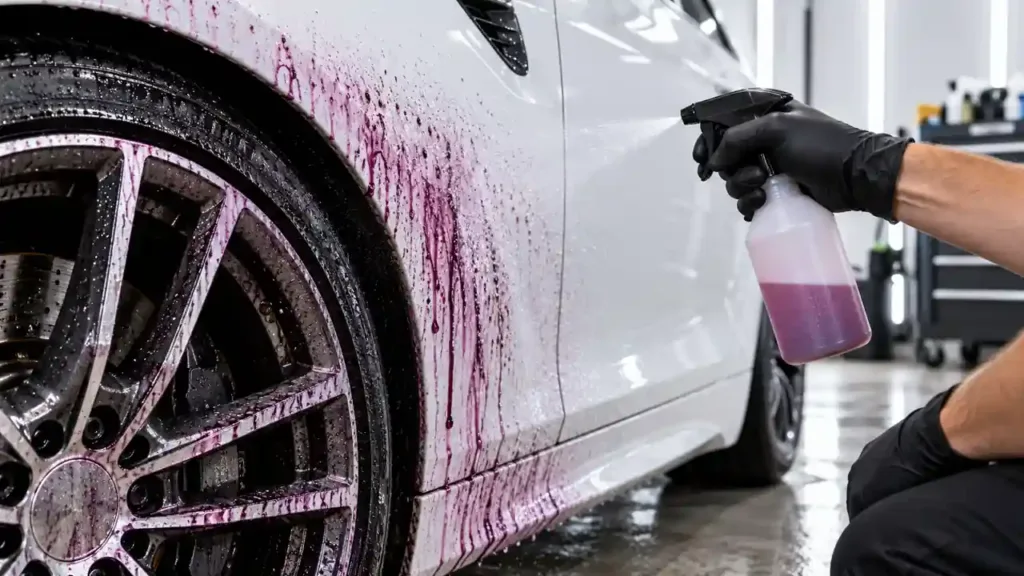
Tiny orange specks and a rough finish can come from ferrous fallout rather than ordinary dirt. A dedicated iron remover chemically targets that contamination before you decide whether physical claying is needed. It is a different job from washing away mud, dissolving tar, or polishing out a scratch.
The best iron remover for car paint should explicitly permit paintwork use and provide clear application, dwell, and rinse instructions. A strong purple reaction looks dramatic, but it is not an independent measure of cleaning superiority. Surface temperature, contamination, and application conditions all affect what you see.
We compare focused paint decontaminants and products also labeled for compatible wheels. Formulation claims such as pH-balanced or acid-free are identified as claims, not treated as guarantees for damaged paint, unusual trim, or every wheel finish. These recommendations compare documented product features and current listed configurations, not hands-on test results. Verify the exact model and instructions before purchase. This article contains affiliate links; qualifying purchases may earn the site a commission.
Quick Answer
Start with the first option for the most balanced documented feature set, then use the alternatives below when their particular configuration better matches your job. Compatibility and the stated limitations take priority over the ranking.
- Best Overall: CARPRO IronX — Dedicated iron decontamination; paint and wheel application.
- Best for a Familiar Paint-Care Line: Meguiar's Ultimate Iron Remover — Iron-removal application; paint decontamination.
- Best for a Compact Detailing Bottle: Adam's Iron Remover — Dedicated iron-removal formula; paint decontamination use.
Best Iron Remover for Car Paint Comparison Table
| Product | Best For | Decontamination Format | Labeled Exterior Tasks | Check Before Buying |
|---|---|---|---|---|
| CARPRO IronX | Best Overall | Dedicated liquid iron remover | Paint and wheels | Distinctive chemical odor |
| Meguiar's Ultimate Iron Remover | Best for a Familiar Paint-Care Line | Dedicated iron-removal spray | Paint decontamination | Not a substitute for tar remover |
| Adam's Iron Remover | Best for a Compact Detailing Bottle | 16-ounce iron-removal spray | Paint and fallout | Limited volume for repeated full-vehicle jobs |
| Turtle Wax Hybrid Solutions Iron Remover | Best for Paint and Wheel Use | Iron-remover / wheel-cleaner spray | Paint and compatible wheels | Wheel suitability still depends on finish |
| GYEON Iron | Best for a Coating-Maintenance Routine | Color-reactive iron remover | Paint and wheel fallout | Coating compatibility is not unlimited chemical resistance |
| Griot's Garage Iron and Fallout Remover | Best for Vertical-Panel Cling | Gel-style iron remover | Paint, wheels, selected trim | Cling does not justify excessive dwell |
| 3D BDX | Best for a Paint-and-Brake-Dust Decon Step | Acid-free claim; reactive spray | Paint and brake dust | Acid-free does not mean safe on every finish |
| SONAX Iron and Fallout Remover | Best for Pre-Clay Preparation | pH-balanced claim; reactive spray | Paint, glass, wheels | Does not remove every bonded contaminant |
| P&S Iron Buster | Best for a Shared Wheel-and-Paint Bottle | pH-balanced claim; reactive spray | Wheel and paint decontamination | Finish compatibility must be checked |
1. CARPRO IronX — Best Overall

IronX is a focused choice when the goal is ferrous contamination on paint rather than general wheel cleaning. It fits a wash-and-decontamination routine before deciding whether clay is still needed. The 500mL configuration provides a manageable bottle for periodic decontamination rather than committing to a large bulk container. Paint and wheel applications also allow the same labeled chemistry to serve two exterior tasks with separate tools. The color reaction is useful for observing activity, but it should be interpreted alongside the prescribed dwell time and a complete rinse.
Use the color change as an indication of a chemical reaction, not as a comparison score against other brands or proof that every remaining rough spot is iron. IronX suits an owner who has identified ferrous contamination as the problem rather than selecting a cleaner by stain color alone. Its distinctive odor is a practical consideration when choosing a work area. Check the surface restrictions before treating repaired panels, films, or unusual finishes. Keep the sprayer in working condition and store the bottle under the label instructions so a focused decontamination product remains controlled during application.
Pros
- Dedicated iron decontamination
- Paint and wheel application
- Color reaction
- Liquid spray format
- 500mL configuration
Cons
- Distinctive chemical odor
- Must not dry on the surface
To buy this product, click here.
2. Meguiar's Ultimate Iron Remover — Best for a Familiar Paint-Care Line

Meguiar's is an accessible option for an owner who wants a dedicated iron-removal step within a familiar detailing range. Its purpose should remain separate from removing asphalt spots or correcting scratches. A 24-ounce spray format is convenient for applying a dedicated chemical step without mixing a concentrate. Its specific iron-removal role gives it a clearer purpose than using a general cleaner repeatedly on bonded fallout. The bottle should be compared with the area and frequency of the expected work, not treated as evidence of greater chemical strength than a smaller product.
Choose it for the contamination it is designed to dissolve, then reassess the surface after rinsing rather than stacking every decontamination process by default. Meguiar's is a practical starting point for an owner adding one focused exterior decontamination product. The result still needs to be assessed after the reacted material has been removed. Check the actual surface instructions before spraying neighboring trim or a specialized finish. Store the product as directed and inspect the trigger so even coverage does not turn into a heavy uncontrolled stream over one small area.
Pros
- Iron-removal application
- Paint decontamination
- Spray-bottle format
- 24-ounce listed size
- Dedicated exterior product
Cons
- Not a substitute for tar remover
- Follow label dwell and rinse instructions
To buy this product, click here.
3. Adam's Iron Remover — Best for a Compact Detailing Bottle

Adam's suits a home detailer who wants a manageable bottle for periodic paint decontamination. A smaller bottle is convenient to store and handle, although full-vehicle coverage can consume it quickly. The 16-ounce size is useful when the task is occasional inspection and treatment rather than repeated high-volume detailing. A dedicated spray format also helps keep iron removal separate from ordinary shampoo or a clay-lubricant bottle. That separation matters because each product addresses a different part of the cleaning process and has its own application instructions.
Concentrate on even application to a cool surface and a thorough rinse rather than repeatedly spraying an area merely to produce a stronger-looking reaction. Adam's is most relevant when a smaller bottle matches the owner's actual contamination and storage needs. A larger container may be more convenient for repeated full-vehicle jobs, but volume alone does not improve removal. Check the remaining amount before beginning a planned treatment so coverage can stay controlled rather than being stretched too thin. Clean the exterior of the bottle and store it as directed without transferring it into an unidentified spray container.
Pros
- Dedicated iron-removal formula
- Paint decontamination use
- Spray application
- Sixteen-ounce configuration
- Detailing-oriented product
Cons
- Limited volume for repeated full-vehicle jobs
- No scratch-correction function
To buy this product, click here.
4. Turtle Wax Hybrid Solutions Iron Remover — Best for Paint and Wheel Use
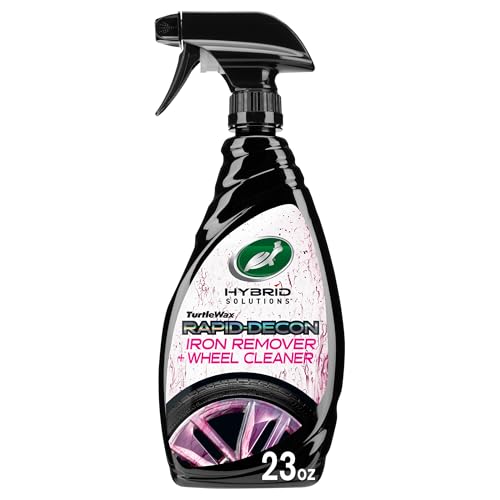
Turtle Wax is useful when you want one labeled iron-removal product for compatible paint and wheels. That shared use can simplify a small detailing shelf. The combined iron-remover and wheel-cleaner role can simplify a small exterior-care shelf. Its 23-ounce configuration also gives a clear quantity to compare with dedicated paint-only purchases. The useful distinction is shared labeled chemistry, not permission to use a wheel brush or dirty towel on a painted door.
It does not mean the same contaminated brush or towel should move from wheels to paint, and unusual wheel finishes still need checking against the current product instructions. Turtle Wax is suited to a buyer who wants to maintain both compatible bodywork and wheels without collecting separate bottles for overlapping tasks. Check the exact wheel finish before assigning the same product to both areas. Schedule application around cool surfaces rather than spraying immediately after the car has been driven. Follow the rinse and storage requirements so reacted contamination is removed from the vehicle instead of left to dry around trim and wheel details.
Pros
- Iron-removal chemistry
- Paint use listed
- Wheel use listed
- Spray application
- Twenty-three-ounce configuration
Cons
- Wheel suitability still depends on finish
- Do not apply to hot panels
To buy this product, click here.
5. GYEON Iron — Best for a Coating-Maintenance Routine

GYEON is a logical candidate for an owner maintaining a coated vehicle who wants to remove ferrous contamination without mechanical claying every time. The distinction is chemical decontamination, not adding another coating layer. Its dedicated iron-and-fallout role is useful when a maintenance wash leaves bonded ferrous particles behind. The visible reaction can help locate activity across a panel without turning the application into an improvised strength test. A spray product also allows selected areas to be treated rather than assuming the entire vehicle needs the same level of intervention.
Follow the current dilution and dwell instructions, and judge the need for further steps only after the product and loosened contamination have been fully rinsed away. GYEON is relevant to an owner who wants to maintain existing protection while addressing contamination selectively. It does not apply a fresh protective layer simply because it appears within a coating-care product range. Verify the current instructions for the particular finish before extending use to nearby materials. Keep the bottle correctly labeled and stored, especially when several similar-looking detailing sprays are used during the same wash session.
Pros
- Iron and fallout removal
- Paint and wheel use
- Color-changing reaction
- Spray format
- Coating-care positioning
Cons
- Coating compatibility is not unlimited chemical resistance
- Requires controlled dwell time
To buy this product, click here.
6. Griot's Garage Iron and Fallout Remover — Best for Vertical-Panel Cling
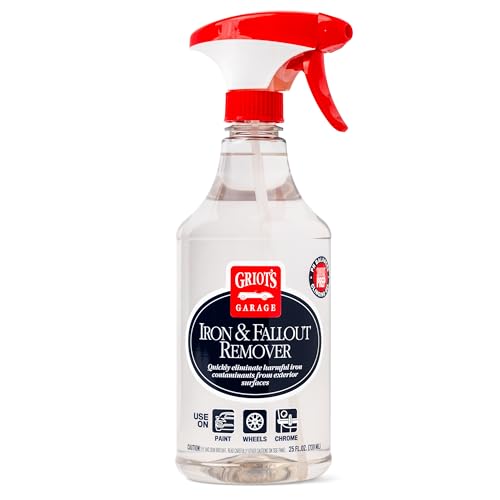
Griot's gel-style formula is worth considering when lower doors and vertical panels are the main problem areas. Better cling can keep product at the intended spot instead of immediately running off, but it also makes proper rinsing important. Cling is particularly relevant along vertical lower panels where a thin liquid may immediately run toward the sill. The color-change feature gives an indication of chemical activity while that film remains on the surface. Listed applications beyond paint should still be checked individually, since a broad material list does not establish compatibility with every coating or damaged trim piece.
A longer visible wet film is a handling feature, not evidence that the remover should be left on until it dries. Griot's is a useful comparison when product placement is the main practical challenge. A gel-like film also makes careful rinsing around edges and crevices important. Work in a manageable area so the cling advantage does not become an excuse to leave the remover unattended. Check the sprayer and storage instructions after the job, keeping this chemical distinct from an ordinary wash or quick-detailer bottle.
Pros
- Gel-style formula
- Color-change indication
- Paint and wheel applications
- Chrome and glass uses listed
- pH-balanced formulation claim
Cons
- Cling does not justify excessive dwell
- Confirm suitability for delicate trim
To buy this product, click here.
7. 3D BDX — Best for a Paint-and-Brake-Dust Decon Step
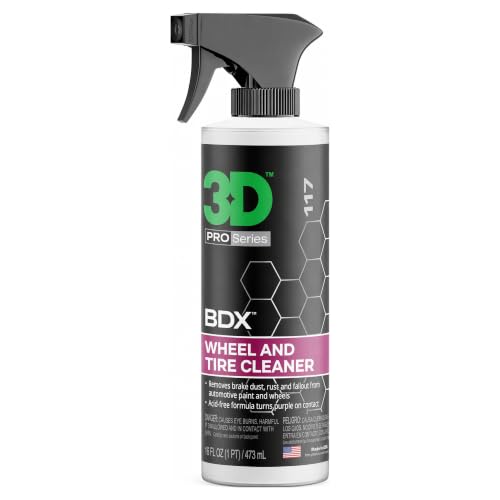
3D BDX bridges paint decontamination and compatible wheel fallout cleaning, making it useful for a compact maintenance kit. Its acid-free description should be read as formulation information rather than a blanket guarantee for damaged paint or specialized finishes. The purple reaction is an application indicator rather than a substitute for inspecting the clean surface afterward. Its listed paint and wheel tasks also make BDX useful to compare with products sold only for one exterior area. The acid-free description is a formulation detail, while the label's surface restrictions determine whether it belongs on the actual finish.
Start with the label's specified process and a cool surface, then rinse away the reacted residue before evaluating the result. 3D is a practical choice to investigate where a shared fallout-removal product would reduce unnecessary duplication. Keep the wheel and bodywork tools separate even when the bottle is shared. Check the work area's ventilation and surface temperature before starting a larger treatment. After the rinse, reassess any remaining spots instead of applying more BDX automatically to contamination that may be tar, mineral residue, or paint damage.
Pros
- Iron-removal function
- Brake-dust application
- Paint use listed
- Purple reaction
- Acid-free formulation claim
Cons
- Acid-free does not mean safe on every finish
- Odor and ventilation still matter
To buy this product, click here.
8. SONAX Iron and Fallout Remover — Best for Pre-Clay Preparation

SONAX is particularly relevant when planning to clay a vehicle but wanting to remove iron chemically first. Reducing the amount of bonded contamination before physical contact is a sensible process choice. The acid-free and pH-balanced claims provide formulation information to consider alongside the material restrictions. A color-changing spray can help the user see where the product is reacting during the permitted working time. Its pre-clay positioning is especially useful when the aim is to reduce ferrous material before introducing physical contact with a clay medium.
The product should not be judged by whether it eliminates every rough area; tar, overspray, and other deposits may need a different diagnosis and treatment. SONAX suits a buyer planning a deliberate decontamination sequence rather than adding every available cleaning step. The amount of clay work needed should be judged only after washing, reaction, and rinsing are complete. Check glass, wheel, and trim instructions independently before extending application beyond paint. Maintain a clear product label and sound trigger so the dedicated preparation chemical is not confused with a routine detail spray during later use.
Pros
- Dedicated fallout removal
- Paint and wheel use
- Acid-free claim
- pH-balanced claim
- Color-changing indicator
Cons
- Does not remove every bonded contaminant
- Mechanical clay may still be needed selectively
To buy this product, click here.
9. P&S Iron Buster — Best for a Shared Wheel-and-Paint Bottle

P&S provides a focused iron-removal option for a buyer who wants to use the same labeled chemistry on compatible wheels and exterior paint. Keep separate application tools for those areas. The wheel-and-paint labeling gives Iron Buster a practical dual-use role within an exterior detailing kit. Its pH-balanced positioning is useful information, but it does not replace checking delicate or damaged finishes. A visible reaction helps observe the application without establishing that the darkest-looking area needs the longest possible dwell.
The shared bottle is a convenience, while the actual condition of the surface and the manufacturer's instructions determine whether the product is suitable for a particular job. P&S is most relevant when one properly labeled decontaminant can serve several compatible exterior jobs. The convenience lies in shared chemistry rather than shared dirty tools. Confirm the actual surface requirements and keep the product wet only within its stated working limits. Once the vehicle is rinsed, inspect what remains so a second treatment is based on actual ferrous contamination rather than the desire to produce another dramatic color reaction.
Pros
- Wheel and paint decontamination
- pH-balanced formula claim
- Color reaction
- Spray format
- Industrial-fallout application
Cons
- Finish compatibility must be checked
- Not a general-purpose interior cleaner
To buy this product, click here.
Buying Guide
Confirm paint compatibility
Choose a product explicitly intended for automotive paint, not just an aggressive wheel cleaner. Check restrictions for matte finishes, films, wraps, trim, and damaged surfaces. A small inconspicuous test is useful where the finish or repair history is uncertain. The product label and the surface manufacturer's care requirements both matter when deciding whether application is appropriate.
For related background, see How Does a Clay Bar Work? A Simple Guide.
Wash and assess before decontamination
Remove loose dirt under a suitable wash process before judging bonded contamination. Iron remover addresses ferrous particles; it does not resolve every rough spot or dark speck. Tar, overspray, mineral deposits, and paint defects may require different treatment. Avoid adding more aggressive steps simply because the first product did not remove a contaminant outside its intended purpose.
Control temperature and dwell time
Work on a cool surface under the product instructions and keep the remover from drying. Sun, wind, and warm panels can shorten the usable working time. A thicker formula or stronger visible reaction does not justify a longer dwell than permitted. Rinse thoroughly, including around trim and panel edges where product can collect.
Treat wheels and paint as separate work areas
A shared product bottle can simplify storage when its label permits both applications. Keep the application tools separate so wheel grit and metallic debris do not migrate to paint. Verify wheel-finish compatibility rather than assuming that a product suitable for painted bodywork is suitable for every polished, coated, or specialized wheel surface.
For related background, see Clay Bar vs Clay Mitt: Which Is Better?.
Decide whether clay is still needed
After chemical decontamination and rinsing, reassess the clean surface. Claying can address remaining bonded contamination but introduces physical contact and possible marring. It should be a need-based step, not an automatic requirement after every iron-removal application. If polishing or coating is planned, follow the complete preparation process required by those products.
Frequently Asked Questions
Does more purple color mean a better remover?
Not necessarily. Reaction appearance depends on contamination and conditions. It is not a controlled cross-brand performance test.
Can iron remover replace a clay bar?
It removes a different category of contamination chemically. Some surfaces may still need selective claying, while others may not need any further physical decontamination.
Will iron remover repair rust or scratches?
It is not a structural rust repair or paint-correction product. Identify the actual problem before choosing the treatment.
How often should I use iron remover?
Base use on contamination, environment, and product instructions rather than applying it at every wash by default.
Does pH-neutral mean safe on any surface?
No. Formulation pH does not establish compatibility with every material, damaged finish, or coating. Follow the exact label restrictions.
Final Verdict
CARPRO IronX is our overall starting point for dedicated paint decontamination. Meguiar's Ultimate Iron Remover is a practical alternative in a familiar paint-care line, while Griot's gel-style formula is worth comparing for vertical-panel cling. Choose by surface compatibility and controlled application, then reassess whether any remaining contamination actually needs clay or another treatment. Confirm the exact model, included components, compatibility, and current instructions before ordering.