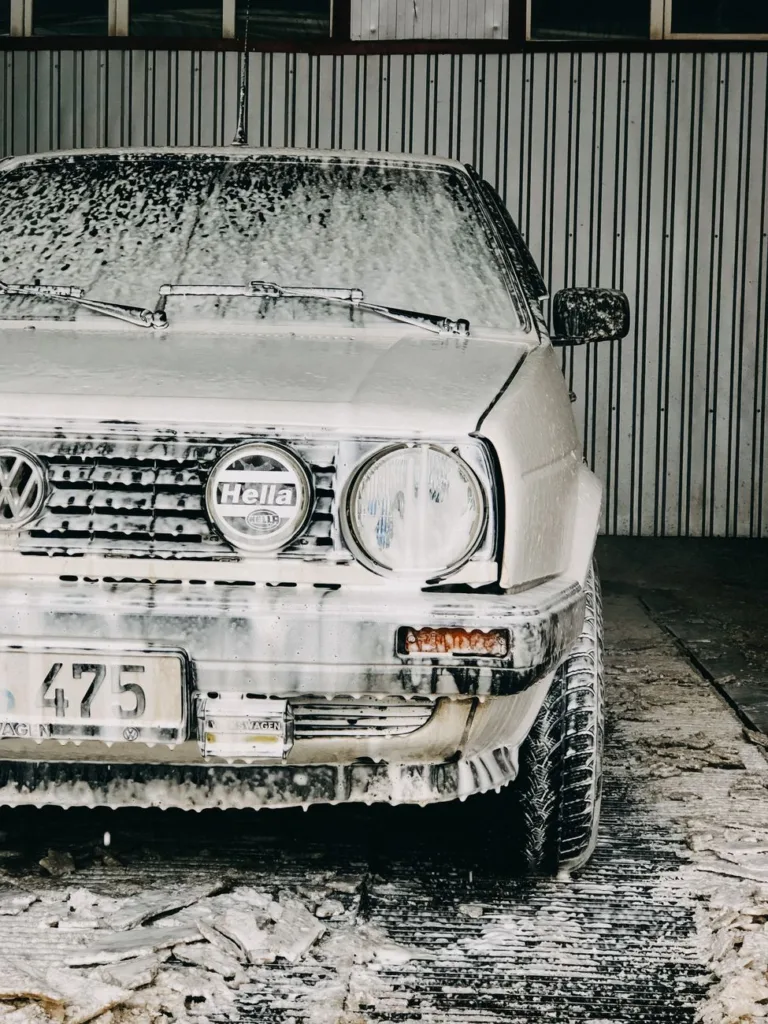
Yes, in most cases you should wash your car after snow, especially if the roads were treated with salt, brine, or other de-icing chemicals. Snow itself is not the main problem. The bigger concern is what gets mixed into the snow and left behind on your paint, underbody, wheels, brake components, and suspension parts.
For compatible pressure-washer equipment used during underside cleaning, compare our undercarriage cleaner options; rinsing road residue is one part of a wider winter-care routine.
If your car was only lightly dusted with clean snow and never driven, a wash may not be urgent. But if you drove on salted roads, slushy streets, or through repeated freeze-thaw cycles, washing soon afterward can help reduce corrosion, protect finishes, and keep dirt from hardening onto the vehicle.
Why Snow Can Be Hard on Your Car
Snow on its own is mostly water. The trouble starts when that snow becomes packed with road salt, sand, magnesium chloride, calcium chloride, grime, and melted slush. Once that mixture dries, it can stick to paint and collect in places you cannot easily see.
When temperatures swing above and below freezing, the wet film on your car can repeatedly thaw and refreeze. That creates more opportunities for moisture to sit in seams, behind trim, inside wheel wells, and on exposed metal parts. Over time, that can accelerate rust and wear.
What Actually Causes Damage?
There are a few common winter hazards:
- Road salt and brine, which attract moisture and speed up corrosion.
- Dirty slush, which holds abrasive grit against paint and clear coat.
- Ice buildup, which can trap moisture in seams and around badges, emblems, and trim.
- Sand and gravel, which can chip paint and damage wheel finishes.
Salt is the biggest long-term concern. Even if your car looks clean after a snowy drive, salt residue may still be present on the lower panels, wheels, and underbody.
Should You Wash Your Car After Snow?
Usually, yes. If your vehicle has been exposed to salted winter roads or dirty slush, washing it after snow is a smart maintenance habit. You do not need to wash it after every light snowfall if the car stayed parked and clean, but regular winter washing is often worth the effort.
The goal is not just appearance. Winter washing helps remove contaminants that can cause long-term damage, especially in the underbody, wheel wells, rocker panels, and door edges.
When Washing Matters Most
Washing after snow is especially important if:
- You drove on roads treated with salt or brine.
- Your car is covered in slush or gritty residue.
- You notice white film on body panels or wheel arches.
- Snow packed into wheel wells and under the car melted and refroze.
- You keep your vehicle long term and want to limit rust.
If you live in a region with heavy winter road treatment, washing may be part of routine seasonal maintenance rather than an occasional cosmetic choice.
When You Can Skip a Wash
You do not always need to wash the car after every snow event. If the car was parked outdoors during a light, clean snowfall and never driven, the risk is much lower. In that case, brushing off the snow carefully may be enough.
You can also wait if road conditions were dry, no salt was used, and the vehicle did not pick up much grime. Even then, once winter road treatment begins, the threshold for washing becomes much lower.
Situations Where a Wash Is Less Urgent
- The vehicle stayed in a garage during the storm.
- The snow was dry and clean, with no road exposure.
- Temperatures stayed consistently below freezing and the car was not driven.
- You only drove a very short distance on untreated roads.
Even in these situations, it is still important to remove snow from safety-critical areas like lights, mirrors, the roof, and windows before driving.
How Winter Salt Damages Cars
Road salt speeds up the corrosion process by helping water conduct electricity more easily. That makes metal oxidation happen faster when moisture is present. In practical terms, salt makes rust more likely and more aggressive. For the wider cold-weather routine, see our guide to protecting car paint during winter.
Salt also sticks to surfaces. A car can look dry while still carrying a layer of salty residue in seams, behind wheel spokes, or under the chassis. That residue can keep pulling moisture from the air even after the snow is gone.
Common Areas at Risk
Some parts of the car are more vulnerable than others:
- Underbody, where salt and slush accumulate and are hard to see.
- Wheel wells, which collect spray from the tires.
- Rocker panels, which take a lot of direct road splash.
- Brake components, which are exposed to moisture and grit.
- Door bottoms and seams, where grime can settle and trap moisture.
Modern vehicles are better protected than older ones, but they are not immune. A few winters of repeated salt exposure can still lead to cosmetic corrosion, pitting, and premature wear if the car is never cleaned.
How Often Should You Wash a Car in Winter?
There is no single rule that fits every climate, but a practical approach is to wash the car after major snowstorms, after driving on salted roads, and whenever visible salt buildup appears. Some drivers wash weekly in heavy winter areas, while others may only need to wash after specific storms. To turn the cleaning method into a practical routine, see how often to wash your car.
Frequency depends on road treatment, driving distance, storage conditions, and local weather. A car kept in a heated garage may accumulate more melting and refreezing than one stored in a colder, drier space.
| Winter Condition | Wash Needed? | Why |
|---|---|---|
| Light snow, car parked, no road exposure | Usually not urgent | Low contamination risk |
| Driven on salted roads | Yes | Salt residue can promote corrosion |
| Heavy slush and spray | Yes | Dirty moisture can stick to paint and underbody |
| Dry cold weather, untreated roads | Maybe | Less residue, lower risk |
| After repeated freeze-thaw cycles | Often yes | Moisture and contaminants may keep cycling on and off the vehicle |
Best Time to Wash Your Car After Snow
The best time is usually after the roads are safe enough to drive and temperatures are above freezing, or at least high enough that wash water will not freeze immediately on the vehicle. That timing reduces the chance of doors freezing shut, locks icing up, or residual water refreezing on seals and handles.
If a heated wash bay or indoor wash is available, that can make winter washing easier. The key is to avoid introducing a lot of water when temperatures are so low that the vehicle will freeze solid before it dries.
Should You Wash It Immediately?
Not always. If the weather is dangerously cold, it may be better to wait for a safer window rather than wash the car in subfreezing conditions. A rushed wash in extreme cold can create more problems than it solves.
That said, do not wait so long that salt and slush sit on the car for weeks. The longer contaminants stay on the vehicle, the greater the chance of buildup and corrosion.
What Parts of the Car Need the Most Attention?
During winter, it is not enough to rinse only the visible body panels. The most important areas are often the parts people forget to clean.
Underbody
The underbody is one of the most important areas to rinse after snow. It collects salt spray, slush, and grit from the road, and that buildup can be difficult to remove once it dries.
Wheel Wells and Wheels
Wheel wells catch a lot of spray from the tires. Wheels also see heavy exposure to salt and brake dust, which can combine into stubborn grime. This is especially important for cars with alloy wheels, where finish damage can become visible quickly.
Lower Body Panels
Rocker panels, lower doors, and rear quarter panels get blasted by winter road spray. These areas often look the dirtiest first, and they are also among the most vulnerable to corrosion over time.
Door Jambs and Seals
Snowmelt and salt can collect around door edges, trunk openings, fuel doors, and hatch seams. These areas are easy to overlook during a basic rinse, but they are worth cleaning because trapped moisture can remain in place for a long time.
Touchless Wash, Hand Wash, or Rinse?
Different wash methods have different strengths in winter. The right choice depends on temperature, road conditions, and how dirty the vehicle is.
| Wash Method | Pros | Cons | Winter Use |
|---|---|---|---|
| Touchless automatic wash | Fast, good for salt removal, limited contact | May not remove heavy grime as thoroughly as a hand wash | Often a practical winter option |
| Hand wash | Most control, can focus on problem areas | Harder in freezing temperatures, more time-consuming | Good if conditions allow |
| Rinse only | Can remove loose salt and slush quickly | May not clean bonded residue well | Useful as a temporary step |
A touchless wash is often a reasonable compromise in winter because it can remove a lot of salt without brushing grit across the paint. However, if the car is heavily soiled, a careful hand wash may do a better job once temperatures allow.
How to Wash a Car Safely After Snow
Winter washing should focus on removing contaminants without creating new problems. The main concerns are frozen doors, water trapped in seals, and ice on the ground around the vehicle.
Simple Winter Washing Steps
- Remove loose snow from the roof, hood, windows, lights, and mirrors before driving or washing.
- Choose a wash method that matches the temperature and road conditions.
- Rinse the underbody, wheel wells, and lower panels thoroughly.
- Pay attention to door jambs, fuel door areas, and the rear of the vehicle where slush collects.
- Dry key areas like door handles, mirrors, and seals if freezing temperatures are expected.
- Move the car if needed so water does not freeze into a sheet beneath it.
If you wash at home, make sure runoff does not create a slipping hazard. A thin layer of water can freeze quickly on driveways and sidewalks in winter.
What About Pressure Washers?
A pressure washer can be useful for winter cleaning, especially for the underbody and wheel wells. But it should be used carefully. High pressure too close to trim, seals, or delicate parts can force water into areas that should not be saturated.
A moderate rinse is usually enough. The goal is to remove salt and grime, not blast every surface at maximum pressure.
Should You Wash the Undercarriage After Snow?
Yes, if possible. The undercarriage is one of the most important areas to rinse after winter driving. It is where salt and slush hide, and it is also where corrosion can do the most lasting damage.
Many automatic washes offer an underbody rinse, which can be very helpful after snowy driving. A separate rinse at home can also help, as long as you can access the area safely and without crawling under an unsafe vehicle.
Why Undercarriage Cleaning Matters
- It helps remove trapped salt from suspension parts.
- It reduces buildup on brake lines and fasteners.
- It can slow corrosion on exhaust components.
- It helps loosen packed slush before it freezes into hard chunks.
Even if you only wash the body of the car, consider adding an underbody rinse during winter whenever possible.
Common Mistakes People Make After Snow
Winter car care is often about avoiding small mistakes that create bigger problems later. Many of the most common errors are easy to prevent.
Using Hot Water on a Frozen Car
Hot water can crack glass or damage paint in extreme temperature differences. It may also refreeze quickly on frozen surfaces. Lukewarm or controlled wash water is much safer.
Ignoring the Undercarriage
Cleaning only the visible exterior leaves the most corrosion-prone areas untouched. Salt on the body is a problem, but salt under the car is often worse because it is harder to see and remove.
Washing Right Before a Deep Freeze
If the temperature is dropping fast, water can freeze in door seals, locks, mirrors, and latches. It is better to wait for a safer weather window than to create ice problems on the vehicle.
Forgetting the Wheels and Wheel Wells
These areas take a lot of abuse from winter roads. If they are left dirty, salt can sit on painted and unpainted surfaces for long periods.
Letting Snow Sit for Too Long
Snow that melts during the day and refreezes at night can create a heavy layer of grime around seams and lower panels. The longer the buildup sits, the harder it becomes to remove.
Does Washing Help Prevent Rust?
Washing does not eliminate rust risk entirely, but it can reduce it by removing salt and grime before they have time to stay on the vehicle. That is especially important in areas where roads are heavily treated every winter.
Rust prevention is really a combination of habits. Washing is one part, but so are underbody inspections, keeping drain holes open, touching up paint chips, and not ignoring damaged wheel liners or missing splash shields.
What Washing Can and Cannot Do
| Can Help With | Cannot Fully Solve |
|---|---|
| Removing salt residue | Existing rust already started in hidden areas |
| Reducing buildup on the underbody | Paint chips and bare metal exposure |
| Cleaning wheel wells and seams | Structural corrosion from years of neglect |
| Improving visibility and safety | Mechanical wear caused by age or poor maintenance |
Washing is a preventive step, not a cure. Still, it is one of the simplest ways to slow winter-related damage.
What If You Have a Ceramic Coating or Wax?
Protective coatings can make winter cleanup easier, but they do not mean you can skip washing after snow. Wax or ceramic protection may help snow and grime release more easily, yet salt can still remain on the car.
Think of protection as making the wash easier, not unnecessary. The vehicle still needs regular cleaning to remove residue from the underbody and lower panels.
How Protection Changes Winter Washing
- Snow and grime may rinse off more easily.
- Less scrubbing may be needed on the paint.
- Salt still collects in hidden areas.
- Protective layers do not replace routine maintenance.
Should You Wash Inside a Car Wash or At Home?
Both approaches can work. A car wash is often more convenient in winter because it can be faster and may include an underbody rinse. Washing at home gives you more control, but it can be harder to do safely in freezing weather.
The best option is the one that lets you clean the car consistently without creating a safety risk for you or the vehicle.
Home Washing Considerations
At-home washing can be effective if you have mild temperatures, good drainage, and enough time to dry the car afterward. The main drawbacks are cold hands, frozen hoses, and slippery surfaces.
Automatic Wash Considerations
Automatic washes are convenient during winter, especially when the car is dirty but the weather is not ideal for hand washing. However, some washes may not clean as thoroughly in heavily soiled conditions, and not every location offers the same underbody coverage.
How to Tell If Your Car Needs a Wash After Snow
Some signs are obvious, while others are easy to miss. A visual inspection can help you decide whether it is time to clean the vehicle.
Look for These Signs
- White or gray film on paint and trim.
- Salt crust on lower doors or rocker panels.
- Dirty wheel wells or visible slush buildup.
- Grimy streaks behind the wheels.
- Dull or rough-feeling surfaces after the snow melts.
If the car looks clean on top but still has heavy residue around the lower half, that is usually a sign that a wash would be worthwhile.
Seasonal Maintenance Tips for Winter Car Care
Washing after snow works best when it is part of a broader winter routine. That includes checking tire pressure, keeping washer fluid full, and making sure wipers and seals are in good shape.
Cold weather often reveals small issues that are easy to ignore in warmer months. Missing splash shields, cracked trim, and clogged drain paths can all make winter contamination worse.
Practical Winter Habits
- Rinse the car more often after storms that use road salt.
- Inspect the lower body and wheel wells regularly.
- Remove packed snow from the wheel arches if it is safe to do so.
- Do not let heavy slush sit for long periods.
- Fix chips or damaged paint before winter if possible.
FAQ
Should you wash your car after snow if you did not drive it?
Usually not immediately. If the car stayed parked and did not pick up road salt or slush, a wash is less urgent. You can just remove the snow safely.
How soon should you wash a car after driving in snow?
As soon as practical, especially if the roads were salted. You do not need to wash it the same minute you get home, but do not leave salt and slush on the vehicle for too long.
Is a car wash safe in freezing weather?
It can be, if the weather is not extremely cold and the wash is designed for winter use. The main risk is water freezing in doors, seals, or on the ground after the wash.
Do you need to wash the undercarriage after every snowfall?
Not necessarily after every snowfall, but it is very helpful after storms involving road salt, brine, or heavy slush. The underbody is one of the most important areas to clean in winter.
Can snow alone damage your car?
Snow by itself is usually not the main issue. The bigger problem is contaminated snow, ice buildup, and moisture mixed with road salt and grit.
Does washing after snow prevent rust completely?
No. It reduces risk, but it does not prevent rust entirely. Rust can still develop from chips, trapped moisture, age, and long-term exposure to winter roads.
Is rinsing with plain water enough after snow?
Sometimes a rinse is enough for light contamination, but heavier salt buildup may need a more complete wash. The underbody and lower panels are the main areas to focus on.
Conclusion
In most cases, yes, you should wash your car after snow if the vehicle was exposed to salted roads, slush, or winter grime. Snow itself is not usually the problem, but the contaminants mixed into it can damage paint, wheels, and underbody components over time.
The most important areas to clean are the undercarriage, wheel wells, lower body panels, and door seams. Winter washing does not need to be perfect, but regular cleanup helps reduce corrosion risk and keeps buildup from becoming harder to remove later.
If the car only saw clean snow and no road exposure, a wash may not be necessary right away. The right approach depends on how the car was used, how much salt was on the roads, and how severe the weather conditions were.