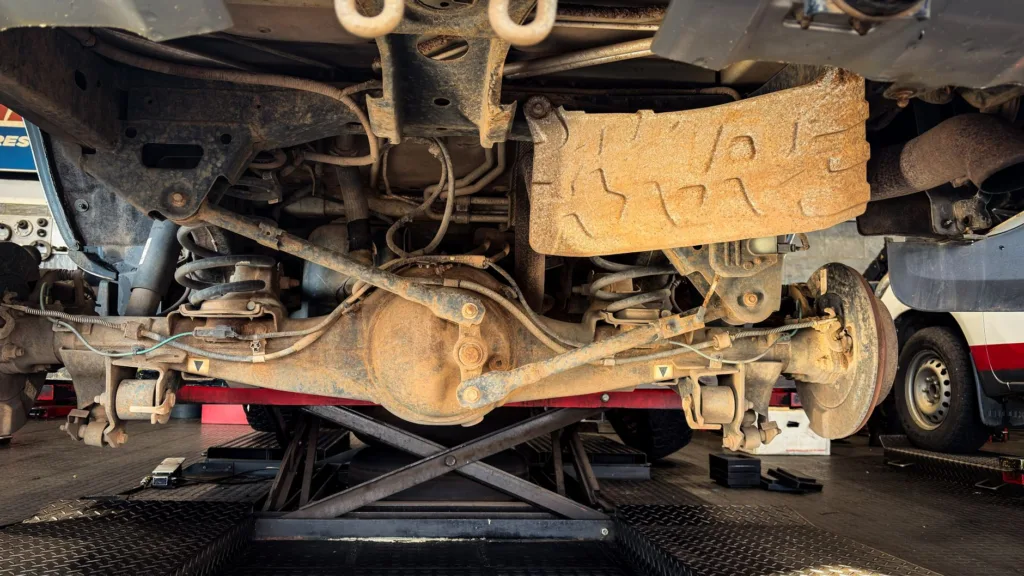
You should inspect your shock absorbers at least once a year, and more often if you drive on rough roads, carry heavy loads, tow, or notice changes in ride quality. A good rule is to have them checked during every tire rotation or routine service interval, which for many vehicles is about every 5,000 to 8,000 miles. Even if shocks are not visibly leaking, they can wear out gradually and affect braking, handling, tire wear, and overall control.
If the inspection or repair procedure requires lifting the vehicle, our floor jacks for a home garage guide compares equipment; use rated stands and the specified support points before working underneath.
Shock absorbers are easy to ignore because they usually do not fail all at once. Instead, performance tends to decline slowly over time. That makes regular inspection important, especially on higher-mileage vehicles where the driver may have adapted to the softer, less stable ride without realizing it.
This guide explains how often to inspect shocks, what signs to look for, what affects their lifespan, and when inspection should turn into repair or replacement.
How Often Should You Inspect Shock Absorbers?
For most drivers, the safest and most practical schedule is to inspect shock absorbers:
- At least once every 12 months
- At every tire rotation, usually every 5,000 to 8,000 miles
- Any time you notice ride or handling changes
- Before long road trips
- After hitting a major pothole, curb, or road hazard
This does not always mean removing the shocks for testing. A routine inspection often starts with a visual check and a road feel assessment. A technician may also look for uneven tire wear, damaged mounts, fluid leaks, and excessive bouncing.
Many manufacturers do not list a fixed replacement mileage for shocks because wear depends heavily on driving conditions. Still, once a vehicle gets into higher mileage, more frequent evaluation becomes wise. Around 50,000 miles and beyond, extra attention is especially helpful.
Why Shock Absorber Inspections Matter
Shock absorbers do more than make the ride comfortable. They help keep the tires in contact with the road by controlling spring movement. When they wear out, the vehicle may still drive, but it often becomes less stable and less predictable.
Worn shocks can lead to:
- Longer stopping distances
- Reduced control on rough pavement
- More body roll in turns
- Nose-diving during braking
- Squatting during acceleration
- Premature tire wear
- Extra wear on suspension components
In other words, shock inspection is not just about comfort. It is also about maintaining safe, consistent handling.
How Shock Absorbers Work
A shock absorber controls suspension movement by forcing hydraulic fluid through internal valves. Springs support the vehicle’s weight, while shocks manage how quickly the springs compress and rebound. Without shocks, the car would continue bouncing after every bump.
As shocks age, internal seals, valves, and fluid performance can degrade. The shock may still be attached and not visibly broken, yet it may no longer control motion effectively. That is why periodic inspection matters even when nothing looks obviously wrong.
Recommended Shock Inspection Schedule by Driving Situation
| Driving Situation | Inspection Frequency | Why More or Less Frequent |
|---|---|---|
| Normal commuting on smooth roads | Every 12 months or 5,000 to 8,000 miles | Regular wear develops gradually |
| Frequent potholes or rough roads | Every 6 months or each service visit | Impacts accelerate wear and damage |
| Towing or carrying heavy loads | Every 6 months | Added suspension stress shortens lifespan |
| High-mileage vehicle over 50,000 miles | At every tire rotation or oil service check | Shock performance often declines with age |
| Off-road or gravel road use | After demanding use and at least twice a year | Dust, vibration, and suspension travel increase wear |
| Before a long trip | Inspect before departure | Better control and comfort over long distances |
Signs Your Shock Absorbers Need Inspection Sooner
You should not wait for the annual check if the vehicle starts behaving differently. Suspension problems often show up in the way the vehicle moves, brakes, and responds to steering input.
Excessive Bouncing After Bumps
If the car continues to bounce after going over a speed bump, dip, or rough patch, the shocks may not be controlling spring movement properly. One bounce and settle is normal. Repeated bouncing is not.
Nose-Diving During Braking
When the front of the vehicle dips sharply during braking, front shocks or struts may be worn. This can make braking feel less stable and can shift weight too abruptly.
Body Roll in Corners
If the vehicle leans more than usual while turning, weak shocks may be part of the problem. Excessive body roll can reduce driver confidence and make the car feel less planted.
Rear Squat During Acceleration
A sagging or squatting rear end during acceleration can point to worn rear shocks, especially on trucks, SUVs, and vehicles that carry cargo regularly.
Uneven or Cupped Tire Wear
Bad shocks can allow the tire to bounce instead of staying firmly planted on the road. This may create cupping or scalloped wear patterns. If you notice unusual tire wear, the suspension should be checked.
Fluid Leaking From the Shock Body
A light film may not always mean immediate failure, but a wet, oily shock body usually indicates the seal is leaking. Once hydraulic fluid escapes, damping performance drops.
Clunking or Knocking Sounds
Noises from damaged mounts, bushings, or worn shock hardware may sound like clunks over bumps. The shock itself may not be the only problem, but the whole assembly should be inspected.
Steering Feels Loose or Unstable
If the vehicle wanders, feels unsettled on uneven roads, or seems less controlled at highway speed, worn shocks may be contributing. Alignment, tires, and steering components can also cause similar symptoms, so a complete inspection helps.
What a Shock Absorber Inspection Includes
A proper shock inspection is more than pushing down on a corner of the car. The old bounce test can give a clue, but modern suspensions often require a more complete assessment.
Visual Inspection
A technician typically checks for:
- Fluid leaks
- Dented or damaged shock bodies
- Corrosion
- Worn bushings
- Damaged mounts
- Loose hardware
- Torn dust boots
Tire Wear Inspection
Tires can reveal suspension problems before the driver notices handling changes. Cupping, feathering, and patchy wear may point toward weak damping or related alignment issues.
Road Test
A road test may reveal floating, excessive bounce, poor braking stability, harsh impact response, or body sway. These symptoms often show up better while driving than when the vehicle is parked.
Related Suspension Check
Shocks do not work alone. Ball joints, control arm bushings, sway bar links, springs, and strut mounts can all affect ride quality and control. A complete suspension inspection helps avoid replacing shocks when another worn part is the real cause.
How Long Do Shock Absorbers Usually Last?
Shock absorber lifespan varies widely. Some last well beyond 50,000 miles, while others lose noticeable performance earlier, especially under hard use. There is no universal mileage that applies to every vehicle.
Factors that affect shock lifespan include:
- Road quality
- Vehicle weight
- Driving style
- Climate
- Towing and cargo use
- Frequency of pothole impacts
- Quality of the original suspension design
Many drivers start to notice wear somewhere in the 50,000 to 100,000 mile range, but inspection is more useful than relying on mileage alone. Some shocks are still serviceable at higher mileage, while others are clearly worn much sooner.
Shock Absorbers vs Struts: Does Inspection Frequency Change?
Many vehicles use struts in the front and shocks in the rear. Both control suspension movement, but a strut is also a structural suspension component. Inspection frequency is similar for both. For the safety consequences of a related suspension fault, see what happens if a strut fails while driving.
| Component | Main Role | Inspection Frequency | Notes |
|---|---|---|---|
| Shock absorber | Controls spring movement | At least yearly or every 5,000 to 8,000 miles | Common on rear suspensions and some front setups |
| Strut | Controls movement and supports suspension structure | At least yearly or every 5,000 to 8,000 miles | Often includes spring and mount components |
If your vehicle has struts, ignoring inspection can be even more problematic because strut wear may affect alignment and steering feel along with ride control.
Driving Conditions That Require More Frequent Inspections
Rough Urban Roads and Potholes
Repeated pothole hits put heavy strain on shocks, mounts, bushings, and springs. If your daily commute includes broken pavement, inspections every six months are reasonable.
Rural Gravel Roads
Gravel and washboard roads create constant vibration and repeated suspension cycling. This can wear out shocks faster than smooth highway driving.
Towing and Hauling
Trucks, vans, and SUVs used for trailers or cargo work harder at the rear suspension. In these cases, a more frequent schedule helps catch wear before stability declines.
Extreme Climates
Road salt can accelerate corrosion. High heat can also affect seals and fluid over time. Climate alone may not destroy shocks quickly, but it can shorten service life when combined with rough roads or high mileage.
Commercial or High-Use Driving
Delivery vehicles, rideshare cars, and long-distance commuter vehicles may rack up miles quickly. In heavy-use situations, inspection at every service stop makes sense.
Can You Inspect Shock Absorbers Yourself?
Yes, a basic inspection is possible for many vehicle owners, especially if the shocks are easy to see. You can look for obvious leaks, damage, rust, or broken mounts. You can also pay attention to changes in ride behavior.
However, a DIY check has limits. Some wear can only be confirmed during a road test or lift inspection. On many modern vehicles, especially those with struts or tight packaging, access is limited.
Simple DIY Checks
- Look behind each wheel for oily residue on the shock body
- Check tires for cupping or unusual wear
- Notice whether the car bounces too much after bumps
- Listen for clunks over rough roads
- Observe whether the front dives heavily under braking
When DIY Is Not Enough
If handling feels unstable, tires are wearing unevenly, or you hear suspension noise, a professional inspection is the better choice. Shock issues can overlap with alignment, tire, steering, and bushing problems.
Common Mistakes People Make With Shock Absorber Maintenance
Waiting for a Complete Failure
Many people assume shocks are fine until fluid pours out or the ride becomes extreme. In reality, shocks can lose a lot of effectiveness gradually. By the time failure is obvious, tire wear and control problems may already be developing.
Ignoring Tire Wear Clues
Uneven tire wear is often blamed only on alignment. Alignment matters, but weak shocks can also contribute. Looking at tire condition can reveal a suspension problem early.
Replacing Tires Without Checking Suspension
Installing new tires on a vehicle with worn shocks can lead to the same uneven wear pattern returning. If the old tires show cupping, have the suspension inspected before or during tire replacement.
Only Replacing One Shock
Shocks are usually best replaced in pairs on the same axle. Replacing only one side can create uneven damping and inconsistent handling.
Assuming No Leak Means No Problem
Not all worn shocks leak externally. Internal wear can reduce performance without obvious visible signs.
Skipping Inspection After a Hard Impact
Hitting a deep pothole, curb, or debris can damage shocks, mounts, wheels, or alignment settings. Even if the car still drives, a check is worthwhile.
Practical Maintenance Tips for Longer Shock Life
You cannot prevent all suspension wear, but a few habits can reduce unnecessary stress and help catch problems early.
- Inspect shocks during tire rotations. This is one of the easiest times to catch leaks or damage.
- Keep tires inflated properly. Underinflated or overinflated tires can increase impact harshness and suspension stress.
- Slow down for potholes and speed bumps. Even one hard hit can damage suspension parts.
- Do not overload the vehicle. Exceeding payload limits adds strain to shocks and springs.
- Pay attention to small changes. A softer ride, new body roll, or braking dive often appears before major failure.
- Check alignment and suspension together. Problems often overlap.
Typical Inspection and Replacement Cost Considerations
A basic visual suspension inspection may be included with other service visits, though policies vary by shop. A more detailed diagnostic inspection may have a separate labor charge, especially if a road test or partial disassembly is required.
| Service | Typical Cost Range | Notes |
|---|---|---|
| Basic suspension inspection | Often included or about $20 to $80 | Varies by shop and service package |
| Diagnostic suspension evaluation | About $80 to $180 | May include road test and detailed checks |
| Shock replacement per axle | Often a few hundred dollars or more | Depends heavily on vehicle and parts design |
| Strut replacement per axle | Usually higher than simple shocks | Labor and related parts increase cost |
Costs vary by region, labor rate, and vehicle type. Luxury vehicles, trucks, performance suspensions, and electronically controlled dampers can cost significantly more.
When Should Inspection Turn Into Replacement?
An inspection should turn into replacement when the shocks are clearly worn, leaking, damaged, or no longer controlling movement properly. The decision is usually based on symptoms, inspection findings, and vehicle mileage together, not just one factor.
Replace Shocks if You Have:
- Visible fluid leakage
- Excessive bouncing
- Poor braking stability
- Cupped tire wear tied to suspension movement
- Damaged mounts or bushings
- Bent or dented shock bodies
- Noticeably uneven damping side to side
If the vehicle feels vague, floaty, or unstable and other components check out, worn shocks are often the reason.
Real-World Examples of Inspection Timing
Daily Commuter on Smooth Roads
A sedan driven mostly on highways and maintained regularly may only need annual inspection plus checks at tire rotations. Wear will likely develop slowly.
City Driver With Frequent Potholes
A compact SUV used in a city with poor pavement should have shocks checked more often, ideally every six months. Pothole damage can shorten lifespan substantially.
Pickup Used for Hauling
A half-ton truck carrying tools or materials most weeks should have the rear shocks inspected often. Rear squat and bounce under load are common early warning signs.
Older High-Mileage Vehicle
A 10-year-old car with 120,000 miles may still be on its original shocks. Even if no major leak is visible, reduced control and tire wear are enough reason for a detailed suspension evaluation.
FAQ
How often should shock absorbers be checked?
At least once a year, and ideally during every tire rotation or routine service visit. Check them sooner if ride quality changes or after a hard impact.
Do shock absorbers need inspection if the car still feels fine?
Yes. Shock wear often happens gradually, so the driver may not notice the change right away. Regular inspection helps catch issues early.
At what mileage do shocks usually start wearing out?
Many begin showing noticeable wear somewhere between 50,000 and 100,000 miles, but it varies widely based on road conditions, load, and driving habits.
Can bad shocks cause uneven tire wear?
Yes. Worn shocks can allow the tires to bounce and lose steady road contact, which can lead to cupping or irregular wear patterns.
Should shocks be replaced in pairs?
Yes, in most cases shocks should be replaced in pairs on the same axle. This helps maintain balanced handling and ride control.
Can I drive with worn shock absorbers?
You may still be able to drive, but the vehicle can become less stable, take longer to stop, and wear tires faster. It is better to address the problem before it gets worse.
What is the difference between a shock inspection and a suspension inspection?
A shock inspection focuses on the dampers themselves, while a suspension inspection also includes related parts like springs, bushings, ball joints, mounts, and sway bar links.
Do electric vehicles need shock inspections too?
Yes. EVs still use suspension components that wear over time. In some cases, extra vehicle weight can make regular inspections even more important.
Final Takeaway
Shock absorbers should be inspected at least yearly, and more often for high-mileage vehicles, rough-road driving, towing, or any noticeable change in ride and handling. A practical habit is to have them checked during tire rotations or other regular maintenance visits.
Because shock wear is often gradual, inspection matters more than waiting for a dramatic failure. If your vehicle bounces more than usual, dives during braking, rolls heavily in turns, or shows uneven tire wear, it is time for a closer look. Catching worn shocks early can help preserve comfort, control, and tire life.