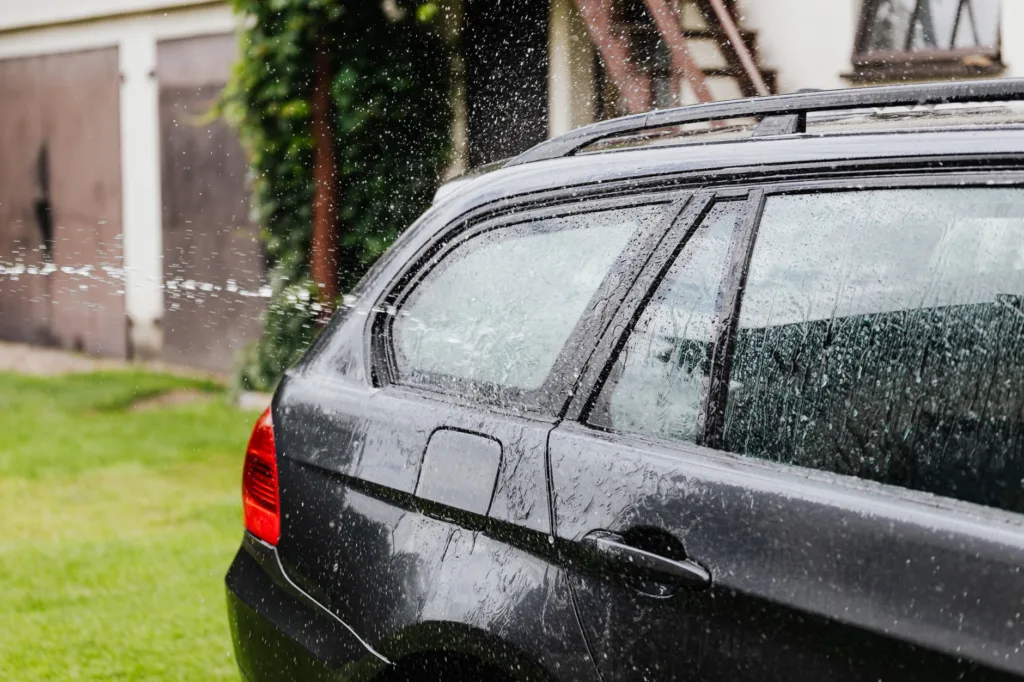
How much water it takes to wash a car depends on the washing method, the size of the vehicle, and how careful you are with rinsing. A quick bucket wash may use as little as 10 to 15 gallons, while a driveway wash with a hose can easily use 40 gallons or more. A commercial automatic wash may use less fresh water than many people expect because much of it is recycled, but that varies by facility.
If you are planning an equipment-assisted wash, our pressure washers for car detailing guide compares options; water use still depends on flow rate, technique, and rinse time.
If you want a practical answer, the average home wash often uses somewhere between 10 and 50 gallons of water. A more efficient hand wash can stay near the low end of that range, while an inefficient hose-and-spray approach can use far more. The exact amount matters less than understanding where the water goes and how to avoid wasting it.
How Much Water Does It Take to Wash a Car?
There is no single number that fits every car wash. Water use changes based on whether you use a bucket, a hose, a pressure washer, a foam cannon, or an automatic wash bay. Even the same person can use very different amounts of water depending on how long they keep the water running.
For a typical passenger car, a careful hand wash might use about 10 to 20 gallons. Larger vehicles such as SUVs, pickup trucks, and vans may need more because of extra surface area and more soiled panels. If the car is very dirty, you may also use more water during the pre-rinse and final rinse stages.
For context, many household garden hoses can deliver several gallons per minute. If a hose is left running the whole time, it is easy to use 30, 40, or even 50 gallons before the wash is done. That is why the method is usually more important than the vehicle itself.
Typical Water Use by Car Wash Method
The easiest way to understand water consumption is to compare common washing methods. The numbers below are approximate, since water flow rates and habits vary.
| Washing method | Typical water use | What affects it most |
|---|---|---|
| Two-bucket hand wash with limited rinsing | 10 to 20 gallons | Bucket size, rinse habits, hose use |
| Hose-assisted driveway wash | 20 to 50+ gallons | How long the hose runs, nozzle type, pre-rinse time |
| Pressure washer wash | 2 to 8 gallons per minute, depending on use | Machine flow rate, trigger time, technique |
| Automatic tunnel wash | Varies widely, often less fresh water than a home wash | Recycling systems, wash type, equipment age |
| Touchless wash | Often moderate to high, depending on system | Chemical use, spray cycles, recycling |
| Waterless or rinseless wash | Under 1 gallon, sometimes only a few quarts | Product method, dirt level, vehicle size |
These ranges are not exact measurements for every situation. They are practical estimates that help you compare one method to another. If water conservation matters to you, the lowest numbers usually come from careful hand washing, rinseless washing, or professional systems that recycle water effectively.
What Actually Uses the Water During a Car Wash?
Most people think the water goes mostly into the bucket, but the biggest usage often comes from rinsing. A hose that runs continuously can use more water than the soap stage, the scrubbing stage, and the final rinse combined. To turn the cleaning method into a practical routine, see how often to wash your car.
1. Pre-rinse
The pre-rinse loosens dust, road film, and loose grit. If the vehicle is only lightly dirty, this step can be short. If it has mud, salt, or heavy grime, the pre-rinse may take much longer and use more water.
2. Soap application and agitation
Soap itself does not use much water, but the tools you use to apply it may. A bucket wash typically keeps this stage efficient because the wash mitt is loaded from a bucket instead of a running hose. Foam can help with lubrication, but it does not automatically reduce water use unless the rest of the process is controlled.
3. Rinsing
This is usually the biggest water consumer. A thorough rinse is important because leftover soap can leave streaks, residue, or spotting. Many people use far more water here than necessary by leaving the hose running while they scrub a panel.
4. Wheel and tire cleaning
Wheels often require extra rinsing because brake dust and road grime cling tightly. If you clean wheels first, you may need more water initially but reduce how much dirt gets dragged onto the paint later. Dirty wheels can also make a wash feel longer than it needs to be.
How Much Water Does a Hose Use?
A standard garden hose can use a surprising amount of water. Depending on water pressure and nozzle type, many hoses flow roughly several gallons per minute. That means a hose left open for 10 minutes can easily use 20 to 30 gallons or more.
The biggest mistake is not the hose itself. It is leaving it running while you walk around the vehicle, scrub a panel, or take a break. Turning the water off when you are not actively rinsing can cut water use dramatically.
Simple example
If a hose uses 5 gallons per minute and stays on for 12 minutes, that is 60 gallons. If you only need the hose for 4 minutes total because you shut it off between rinses, water use drops to 20 gallons. The wash can look nearly the same, but the water use is very different.
Does a Pressure Washer Use Less Water?
Often, yes, but not always in the way people expect. A pressure washer uses a concentrated spray that can clean effectively with less total water than a standard hose. However, actual usage depends on the machine’s flow rate and how long the trigger is held.
Many pressure washers use less water per minute than a hose, but because they work through pressure rather than volume, they can still seem messy or excessive if used carelessly. Short bursts are usually efficient. Long, continuous spraying can increase total water use quickly.
| Tool | Typical water behavior | Efficiency notes |
|---|---|---|
| Garden hose | High continuous flow | Can waste water if left running |
| Pressure washer | Lower flow, higher pressure | Often more efficient when used briefly |
| Bucket | Controlled fixed amount | Usually best for predictable water use |
How Much Water Does an Automatic Car Wash Use?
An automatic car wash can use less fresh water than a home wash, especially if it recycles water. Modern tunnel washes often reuse a portion of the water after filtering it. That means the amount of fresh water entering the system may be lower than what you would use in the driveway.
That said, the numbers vary a lot by location, equipment, and wash type. A touchless wash may use more water than a soft-touch wash because it relies heavily on spray and detergent to remove dirt without physical contact. Older systems may also be less efficient than newer ones.
If your goal is to reduce water use, a well-managed commercial wash is often more efficient than a driveway wash with a running hose. If your goal is to control the process carefully, hand washing gives you more flexibility, but you need to manage water use actively.
What About Waterless and Rinseless Washing?
Waterless and rinseless washing are popular when water conservation is important or when washing restrictions apply. These methods do not eliminate water entirely, but they greatly reduce how much is needed. For the wider tradeoffs in control, time, and paint care, compare hand washing versus automatic washing.
A rinseless wash usually uses a small bucket of water mixed with a cleaning solution. You wash panels with a microfiber towel or mitt and do not rinse with a hose afterward. A waterless wash uses even less liquid and is better suited to light dust rather than heavy grime.
These methods are not for every situation. A muddy vehicle, winter road salt, or heavily contaminated paint still benefits from a traditional rinse. If used on a very dirty car, waterless methods can increase the risk of scratching because grit is not removed first.
Comparison of Water Use and Practical Tradeoffs
| Method | Water use | Pros | Limitations |
|---|---|---|---|
| Two-bucket hand wash | Low to moderate | Good control, predictable use | Still needs careful technique |
| Hose wash | Moderate to high | Simple, fast rinsing | Easy to waste water |
| Pressure washer | Low to moderate | Efficient rinsing, good cleaning power | Can be overused if trigger stays open |
| Automatic wash | Variable | Often efficient, convenient | Quality and recycling vary |
| Rinseless wash | Very low | Water-saving, useful where runoff is restricted | Not ideal for very dirty vehicles |
How to Wash a Car With Less Water
If you want to reduce water use without making the wash less effective, focus on technique. Most savings come from cutting unnecessary running water, not from skipping important cleaning steps.
Use a bucket instead of a constantly running hose
Fill one or two buckets, then turn the hose off. Use the bucket to load your wash mitt, and only turn the water back on when it is time to rinse. This simple habit is one of the easiest ways to reduce consumption.
Rinse strategically
Instead of rinsing the whole vehicle every time you move to a new panel, rinse in sections when necessary. If the car is lightly dusty, you may not need a long pre-rinse at all. If the car is heavily dirty, a quick rinse to remove loose grit can prevent scratching while still limiting waste.
Wash in the shade or during cooler parts of the day
When panels are hot, soap and water can dry quickly, forcing you to re-rinse sections or use extra water to remove spots. Cooler conditions help slow evaporation and make the wash more efficient.
Choose a nozzle that shuts off flow easily
A trigger nozzle or shutoff valve can prevent a running hose from wasting water between steps. Even if the actual flow rate stays the same during rinsing, the savings from shutting it off between uses can be substantial.
Pre-soak heavy dirt only where needed
For road grime on the lower panels, wheel arches, or rear bumper, target those areas rather than soaking the entire car. A focused rinse often works better than a broad, extended spray.
Common Mistakes That Waste Water
Water waste often happens because the process is not organized. The following mistakes are common and easy to avoid.
- Leaving the hose on while scrubbing or walking around the car.
- Using too much rinse water on panels that only need a quick pass.
- Washing in direct sun, which causes soap and water to dry too fast.
- Over-pre-rinsing a lightly dirty car when a short rinse would do.
- Using a dirty bucket or mitt, which can lead to repeat washing and more water use.
- Skipping a proper plan, which leads to backtracking and extra rinsing.
Another common issue is confusing “more water” with “better cleaning.” In reality, better technique usually matters more. A controlled wash with the right tools can clean well while using less water than a sloppy wash with lots of runoff.
Does the Size of the Vehicle Matter?
Yes, but not as much as people think. A compact sedan will usually need less water than a full-size truck or large SUV because there is less surface area to rinse. More surface area means more soap, more rinse water, and more time.
Still, technique can outweigh vehicle size. A careful owner washing a large SUV with buckets and controlled rinsing may use less water than someone washing a compact car with a hose left on continuously.
How Dirty the Car Is Also Matters
A lightly dusty car may need only a quick rinse and a short wash. A vehicle covered in mud, salt, or road film needs more water to remove grit safely. Winter driving is a good example, since road salt often requires a more thorough rinse under the wheel wells and lower body panels.
Do not try to save water by under-rinsing a heavily contaminated vehicle. If grit stays on the paint, you may drag it across the surface while washing and create scratches. In other words, efficient washing should still be thorough enough to be safe for the paint.
Can Washing a Car Use Too Little Water?
Yes. Using too little water can be just as problematic as using too much, especially if the car is dirty. Water is needed to float away abrasive particles before they are wiped across the paint. Without enough rinse water or lubrication, you can increase the risk of swirl marks and fine scratches.
This is why very low-water methods are best matched to the right conditions. A rinseless wash works well on light to moderate dust. It is less suitable for caked-on mud or winter road residue. The goal is to use the smallest practical amount of water, not to eliminate water at the expense of paint safety.
Typical Water Use Scenarios
These examples show how the same car wash can look very different in practice.
Scenario 1: Lightly dusty sedan
A sedan that has only light dust and fingerprints may need a short rinse, a bucket wash, and a final rinse. If the hose is turned off between steps, water use may stay near 10 to 15 gallons.
Scenario 2: SUV after a rainy week
An SUV with road film and dirty lower panels may need more rinse time and more wheel cleaning. If a hose is left on, total use can climb into the 25 to 40 gallon range or more.
Scenario 3: Pickup truck with mud and salt
A truck exposed to winter roads or muddy roads often needs a heavier rinse first. Wheel wells, tailgate edges, and lower panels usually take more water than the body panels. In this case, safety and thoroughness matter more than chasing an ultra-low water number.
How Water Use Relates to Cost
Water cost is usually not the biggest expense in car washing, but it can still matter over time. The real issue is often waste rather than cost. If you are washing frequently, a few extra gallons each time add up.
For most households, the cost difference between a careful wash and an inefficient one is not dramatic on a single wash day. However, conserving water can still be worthwhile, especially in areas with drought concerns, water restrictions, or high utility rates. It also tends to reduce runoff, which is another practical benefit.
Environmental and Local Considerations
How and where you wash your car can matter as much as how much water you use. In some places, local rules limit driveway washing or runoff into storm drains. These rules vary by location, so it is worth checking what applies where you live.
Even when washing at home is allowed, using less water can reduce the amount of contaminated runoff carrying soap, dirt, oil residue, and brake dust away from your driveway. A commercial wash may collect and treat water differently than home washing, which is another reason many people choose it when convenience matters.
Practical Water-Saving Car Wash Tips
- Use two buckets if you hand wash, one for soapy water and one for rinsing the mitt.
- Shut off the hose whenever you are not actively rinsing.
- Pre-rinse only the dirty areas if the vehicle is not heavily contaminated.
- Work top to bottom so cleaner sections do not get rewashed.
- Wash in the shade to reduce drying and repeated rinsing.
- Consider a rinseless wash for lightly dirty cars when conditions allow.
When Is a Low-Water Method a Good Idea?
A low-water method makes sense when the car is lightly dirty, when water conservation matters, or when you need a quick maintenance wash. It can also be useful in places where water access is limited.
It is not the best choice for every vehicle or every season. If the car is covered in mud, salt, or sand, a more traditional rinse is safer. The general rule is simple: the dirtier the vehicle, the more important a thorough rinse becomes.
FAQ
How much water does it take to wash a car at home?
Most home car washes use about 10 to 50 gallons, depending on the method. A careful bucket wash uses less than a hose left running for the whole job.
Is it better to wash a car with a hose or bucket?
A bucket is usually more water-efficient because it limits continuous flow. A hose is useful for rinsing, but it can waste a lot of water if left on.
Does a pressure washer use less water than a hose?
Often yes, because it uses a more focused spray and typically lower flow than a standard hose. Actual savings depend on how long you hold the trigger and the machine’s flow rate.
How much water does an automatic car wash use?
It varies widely. Many automatic washes recycle water, so they may use less fresh water than a home wash, but the exact amount depends on the facility and equipment.
Can you wash a car with very little water?
Yes, using rinseless or waterless methods. These work best for lightly dirty cars, not for heavy mud, salt, or gritty contamination.
What uses the most water when washing a car?
The rinse stage usually uses the most water, especially if a hose is left running. Pre-rinsing and prolonged wheel cleaning can also add a lot to total use.
Does washing a larger vehicle use more water?
Usually yes, because there is more surface area to clean and rinse. Still, technique matters more than size in many cases.
Conclusion
How much water it takes to wash a car depends mostly on the method you use. A careful hand wash may use around 10 to 20 gallons, while an inefficient hose wash can use much more. Automatic washes may use less fresh water than many driveway washes, especially when they recycle water, and rinseless methods can reduce usage even further for lightly dirty vehicles.
The main takeaway is simple: water use is controlled more by technique than by the car itself. Turning off the hose when possible, rinsing only as needed, and choosing the right wash method for the dirt level can save water without sacrificing cleaning quality. The goal is not to use the least possible water at all costs, but to use enough water to wash safely and efficiently.