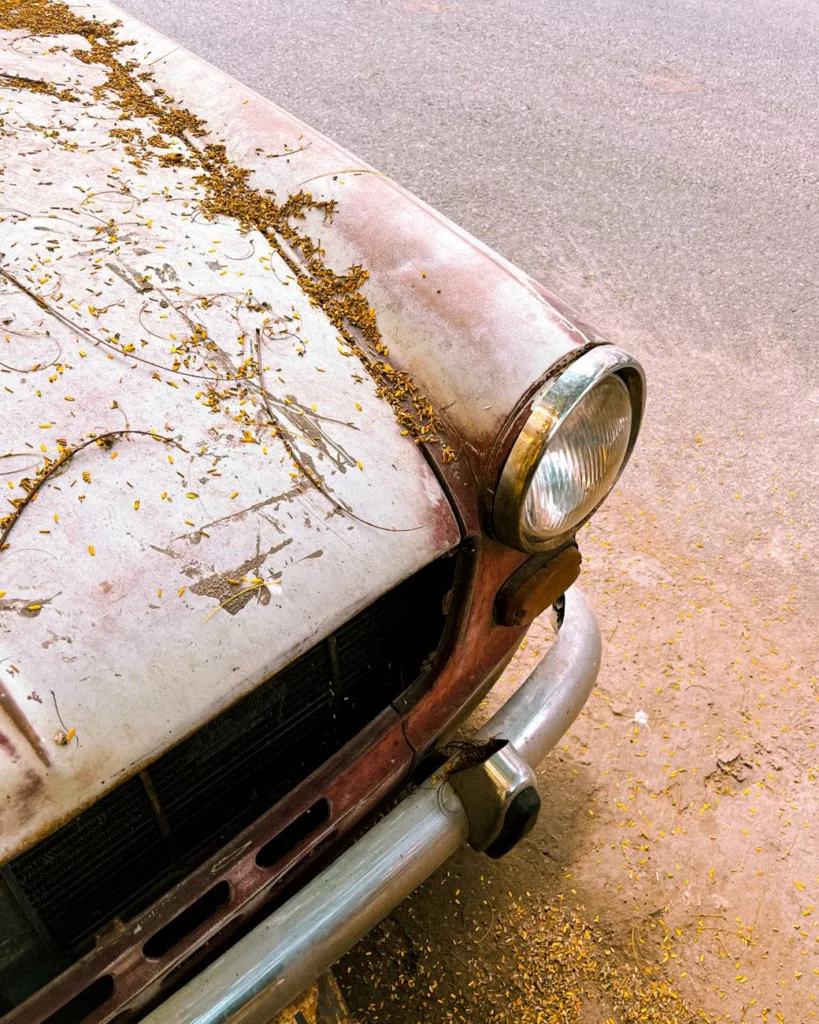
Car paint usually fades because the clear coat and color coat are breaking down from sun exposure, oxidation, contamination, poor washing habits, and age. In many cases, fading starts with the clear coat losing its UV protection, then the paint underneath slowly loses gloss, depth, and color. Once that happens, the finish can look chalky, dull, or uneven.
For a sacrificial protective layer on sound paint, our car wax for UV protection guide compares products; application and reapplication should follow the chosen product’s instructions.
The short version is this: paint fading is a damage process, not just a cosmetic issue. Heat, ultraviolet light, road grime, bird droppings, acid rain, tree sap, and neglected maintenance all wear down the paint system over time. Some vehicles fade faster than others because of paint quality, color choice, climate, and where the car is parked.
If you understand what causes paint fading on cars, it becomes much easier to slow it down. You can also tell the difference between faded paint, surface contamination, oxidation, and clear coat failure, which matters because each problem needs a different fix.
What Does Faded Paint Actually Mean?
Faded paint does not always mean the color has disappeared. In many cases, the paint is still there, but it has lost gloss and depth because the surface has oxidized or the clear coat has degraded. The result is a finish that looks flat, hazy, washed out, or uneven in color.
On modern cars, fading usually starts in the clear coat. The clear coat is the transparent top layer that protects the color coat underneath. When it wears down, the color below becomes exposed to more UV damage, and the surface can take on a chalky appearance.
On older vehicles or some repainted panels, the color itself may fade more directly if the paint system lacks a strong protective clear coat. Red, black, and darker blue finishes often show this first because fading and dullness are easier to see on darker colors.
The Main Causes of Paint Fading on Cars
Several factors usually work together. Rarely is there only one reason a paint finish fades. The most common causes include UV exposure, heat, oxidation, chemical contamination, poor cleaning practices, and physical wear from the environment. For a wider prevention routine, see how to prevent clear coat failure, including washing, contamination control, and sun exposure.
1. Ultraviolet Sunlight
Sunlight is one of the biggest reasons paint fades. Ultraviolet rays slowly break down the chemical bonds in both the clear coat and the color layer. Over time, this causes the finish to lose gloss, become brittle, and look faded or hazy.
Cars parked outside every day usually fade faster than garage-kept vehicles. Vehicles in hot, sunny regions often show faster deterioration because UV exposure is stronger and more constant. Even if a car is washed regularly, long-term sun exposure still adds up.
2. Heat Cycles
Heat speeds up paint breakdown. When a car sits in the sun, its surfaces get hot. Then the car cools down at night or in shade. This repeated expansion and contraction stresses the clear coat and paint layers.
Heat does not just come from the weather. Exhaust areas, hood surfaces, and roof panels can get especially hot. Horizontal surfaces usually fade first because they take the most direct sunlight and heat.
3. Oxidation
Oxidation happens when oxygen interacts with the paint surface and helps break down the resins and binders in the finish. On older paint systems, oxidation can produce a dull, powdery look. On modern finishes, it often shows up as loss of gloss and a cloudy appearance.
This process is often mistaken for dirt. In reality, no amount of washing alone will restore the finish if oxidation has already attacked the clear coat. Light oxidation can often be improved with polishing, but severe oxidation may mean the paint is permanently damaged.
4. Clear Coat Breakdown
The clear coat is the first line of defense. When it fails, the underlying paint loses protection quickly. Common signs include fading, rough texture, peeling, flaking, or patches that look noticeably different from surrounding areas.
Clear coat failure is different from simple dullness. Once the clear coat has delaminated or started peeling, polishing will not solve the problem. At that point, repair usually requires repainting the affected panel or panels.
5. Improper Washing and Drying
Poor wash habits do more than create swirl marks. Strong detergents, dirty wash mitts, abrasive towels, and repeated scrubbing can slowly wear down the protective layers of the paint. Over time, this accelerates fading.
Drying the car with a rough towel or letting mineral-heavy water dry on the surface can also create spotting and etching. Those marks can damage the finish enough that the paint appears more faded than it really is.
6. Bird Droppings, Tree Sap, and Bug Residue
Organic contaminants can be surprisingly damaging. Bird droppings are acidic, tree sap can be sticky and difficult to remove, and bug remains can etch into the finish when left in the sun. These contaminants can eat into the clear coat and leave dull spots behind.
The longer they sit, the more likely they are to stain or etch the surface. A small untreated spot can leave a visible mark that looks like localized fading.
7. Acid Rain and Industrial Fallout
Rain is not always harmless. In areas with pollution, acid rain and airborne industrial particles can settle onto the paint and slowly damage the surface. These contaminants can react with moisture and sunlight, making the clear coat weaker over time.
Rail dust, brake dust, and industrial fallout can also embed in the paint surface. If not removed, they can contribute to roughness and discoloration.
8. Road Salt and Harsh Winter Conditions
Winter driving is hard on paint. Road salt, slush, and repeated freeze-thaw cycles can attack exposed surfaces and undercarriage areas. Salt does not usually cause classic sun fading by itself, but it can weaken the finish and make damage worse.
In colder climates, paint can look dull sooner because grime builds up faster and the car is washed less often during winter. Salt residue can also stain trim and trim-to-paint edges.
9. Poor-Quality Paint or Thin Factory Coating
Not all paint systems are equally durable. Some vehicles leave the factory with thinner clear coats or paint formulations that are more prone to early dulling. This does not mean the car was badly maintained. It may simply have a less durable finish from the start.
Economy models, certain fleet vehicles, and some repainted panels can be more vulnerable. In some cases, a repaint performed with lower-quality materials or poor preparation can fade faster than the original finish.
10. Parking Habits
Where a car spends most of its time matters. Vehicles parked outdoors all day, especially under direct sun, experience much more paint stress than garage-kept cars. Parking under trees can also cause problems because of sap, pollen, and bird droppings.
Even daily use patterns matter. A commuter car parked in an uncovered lot will often fade faster than a weekend car that lives in a shaded garage.
Which Parts of the Car Fade First?
Not every surface fades at the same rate. Horizontal areas usually take the worst beating because they face the sun directly. These include the roof, hood, trunk lid, and the tops of fenders and mirrors.
Vertical panels such as doors may fade more slowly, but they can still lose gloss and color over time. Trim pieces and plastic components may not fade in the same way as painted metal, but they can discolor, chalk, or turn gray from UV exposure.
| Area of the Car | Why It Fades Faster or Slower | Common Signs |
|---|---|---|
| Roof | Gets direct sun exposure all day | Dullness, chalking, clear coat breakdown |
| Hood | High heat and constant UV exposure | Loss of gloss, uneven color, oxidation |
| Trunk lid | Horizontal surface, often overlooked | Fading, water spotting, dull finish |
| Door panels | Less direct sun than roof or hood | Gradual dulling, color loss |
| Plastic trim | UV exposure affects plastic differently than paint | Graying, chalky texture, discoloration |
How Different Paint Colors Handle Fading
Color affects how fading appears, but it does not change the fact that all paint is vulnerable. Dark colors often show swirl marks, dullness, and fading more quickly because they reflect less light and make imperfections easier to notice. Red is especially known for fading because some pigments are more vulnerable to UV breakdown.
White, silver, and light gray can also fade, but the change may be less obvious at first. Instead of turning obviously washed out, these colors may simply lose gloss and look slightly chalky or flat. That can make fading harder to spot until it becomes advanced.
| Color | How Fading Usually Appears | Visibility of Damage |
|---|---|---|
| Red | Loss of richness, pinkish or dull appearance | Often noticeable early |
| Black | Loss of gloss, hazing, swirl marks, oxidation | Very noticeable |
| Blue | Washed-out look, reduced depth | Moderately noticeable |
| White | Chalkiness, dullness, slight discoloration | Sometimes harder to spot early |
| Silver or gray | Loss of shine and metallic effect | Often subtle at first |
Fading Versus Oxidation Versus Clear Coat Failure
These terms are often used interchangeably, but they are not exactly the same. Knowing the difference helps you choose the right repair approach.
| Condition | What It Looks Like | Typical Cause | Can It Be Improved? |
|---|---|---|---|
| Fading | Color looks washed out or less vibrant | UV damage, age, contamination | Sometimes, if damage is mild |
| Oxidation | Dull, chalky, hazy finish | Surface breakdown from oxygen and UV | Often, if not severe |
| Clear coat failure | Peeling, flaking, cracking, severe dullness | Advanced UV and environmental damage | Usually requires repainting |
A quick test is to wash the car and dry it thoroughly. If the paint still looks dull or faded, the issue is likely in the finish itself, not just surface dirt. If the surface feels rough and looks hazy, oxidation or contamination may be part of the problem.
Environmental Factors That Speed Up Paint Fading
Some environments are tougher on paint than others. A car in the desert faces strong UV and high heat. A car near the ocean faces salt air and moisture. A car in a city may face pollution, brake dust, and airborne contaminants.
These conditions do not always cause dramatic damage overnight. Instead, they slowly wear down the protective layers, making fading more likely over months and years.
Hot, Sunny Climates
Strong sun and heat are the classic recipe for fading. Vehicles in these regions often show faster roof and hood deterioration, especially if parked outdoors daily. Even good paint care may only slow the process, not eliminate it.
Coastal Areas
Salt in the air can settle on the surface and contribute to corrosion and residue buildup. While salt does not directly bleach paint, it can create conditions that make the finish deteriorate faster. Frequent washing becomes more important in coastal environments.
Urban and Industrial Areas
Pollution, soot, fallout, and airborne chemicals can settle on the car and etch into the paint. Over time, this can make the finish appear tired and faded. Regular cleaning matters more in these areas than many owners realize.
Can Washing Too Much Cause Paint to Fade?
Normal washing does not cause fading. In fact, regular gentle washing helps prevent it by removing contaminants before they can damage the finish. The problem starts when washing is too harsh.
Using strong degreasers, abrasive pads, dirty sponges, or old towels can wear the clear coat down faster. Automatic car washes with aggressive brushes can also contribute to swirl marks and gradual finish deterioration, especially on softer paint.
The issue is not frequency by itself. A car can be washed often if the method is gentle. It is aggressive technique, harsh chemicals, and dirty tools that create avoidable wear.
How Long Does It Take for Paint to Fade?
There is no single timeline. A garage-kept car may look good for many years, while a vehicle parked outside in strong sun may show fading much sooner. Paint quality, climate, color, and maintenance all affect the timeline.
Some cars begin losing gloss within a few years if exposed to harsh conditions. Others last much longer. The important point is that fading is cumulative, so small daily exposures add up over time.
If a car is older and has never been protected, fading can happen gradually until the owner notices it all at once. By then, the damage may have been developing for a long time.
How to Slow Down Paint Fading
You cannot stop weathering completely, but you can slow it down a lot. Good prevention usually focuses on keeping contaminants off the surface and limiting UV exposure. To put the protection claims in context, read how wax protects against UV damage.
Wash the Car Regularly
Routine washing removes dirt, salt, sap, bird droppings, and other contaminants before they can etch the paint. Use a gentle wash method with clean tools and rinse well. A clean surface lasts longer than a dirty one.
Dry the Car Properly
Letting hard water dry on the paint can create spots and etching. Dry the vehicle with a soft, clean microfiber towel or another safe drying method. Do not use an old bath towel or anything that can drag grit across the surface.
Park in Shade or Indoors When Possible
Reducing direct sun exposure is one of the most effective ways to slow fading. A garage, carport, covered parking, or even partial shade helps. If shade is not available, try to limit long-term exposure during peak sun hours.
Remove Contaminants Quickly
Bird droppings, bug splatter, and tree sap should be removed as soon as safely possible. The longer they sit, the more likely they are to stain or etch the surface. Quick removal can prevent permanent marks that look like localized fading.
Keep the Surface Protected
Paint protection helps reduce UV and contamination damage. The exact protection method may vary, but the main idea is to keep a sacrificial layer between the environment and the paint. Even basic protection is better than leaving the finish exposed.
Maintain Trim and Plastic Separately
Do not forget the trim. Plastic pieces can fade and discolor too, sometimes making the whole car look older than it is. Keeping trim clean and protected improves the overall appearance and reduces the contrast between faded trim and glossy paint.
Can Faded Paint Be Restored?
Sometimes, yes. The answer depends on how far the damage has progressed. Light oxidation and mild dullness can often be improved through thorough cleaning and polishing. This can remove surface haze and restore some gloss.
However, if the clear coat is peeling, cracked, or gone, polishing will not bring it back. Once the protective layer fails, the only real fix is refinishing or repainting the damaged section. That is why early attention matters.
It is also important to avoid over-polishing. Polishing removes a very thin layer of clear coat. Used too often or too aggressively, it can reduce the paint’s remaining protective thickness.
Common Mistakes That Make Fading Worse
Many owners accidentally speed up fading by trying to clean or “restore” the paint the wrong way. A few common mistakes are especially worth avoiding.
- Using harsh household cleaners on the paint, which can strip protection and damage the finish.
- Washing with dirty sponges or towels that drag grit across the surface.
- Ignoring bird droppings and sap until they have etched the paint.
- Parking under trees without considering sap, pollen, and bird mess.
- Relying on a quick rinse only when salt and road grime are stuck to the car.
- Polishing too aggressively and wearing down the clear coat.
- Assuming all dull paint is dirty when the clear coat may already be failing.
Typical Repair and Correction Considerations
The right repair depends on the level of damage. Mild fading might only need a deep clean and paint correction. Moderate oxidation may need more aggressive polishing and possibly a protective layer afterward. Severe clear coat failure usually needs body shop attention.
Costs vary widely depending on the car, the number of panels, and the level of correction needed. A light correction job can be much less expensive than repainting multiple panels. Once fading becomes severe enough to require repainting, the price rises quickly.
One important point is that a repaint should be done carefully. Poor prep or low-quality materials can fade again sooner. Proper surface preparation, matching, and curing matter a lot.
How to Tell When Paint Is Too Far Gone
If the surface is only dull, it may still be restorable. If the paint is chalky but intact, there may still be some improvement available. If the clear coat is peeling, cracking, or completely missing in places, the damage is usually beyond simple detailing.
Another clue is whether the surface becomes much more glossy after polishing a small section. If there is little to no change, the paint may be too damaged to recover fully. In that case, repainting may be the only realistic option.
FAQs
Why does car paint fade faster on the roof and hood?
Because those are horizontal surfaces that get the most direct sunlight and heat. They are exposed longer and more intensely than side panels.
Does waxing prevent paint from fading?
Wax can help slow fading by adding a temporary protective layer, but it does not make paint fade-proof. Regular maintenance and shade still matter.
Can bird droppings really cause paint to fade?
Yes. Bird droppings are acidic and can etch into the clear coat if left on the surface, creating dull marks that look like faded spots.
Is faded paint the same as oxidation?
Not exactly. Fading usually refers to loss of color or visual richness, while oxidation is the chemical breakdown of the surface that often causes dullness and chalkiness.
Can I fix faded paint by washing the car more often?
Washing helps prevent further damage, but it will not restore paint that is already faded. Mild cases may improve with polishing, but severe damage will not.
Do all car colors fade the same way?
No. Some colors, especially red and black, often show fading and dullness more visibly. Light colors can fade too, but the change may be harder to notice at first.
How do I know if my clear coat is failing?
Look for peeling, flaking, cracking, or very rough, chalky areas that do not improve after washing or polishing. Those are common signs of clear coat failure.
Conclusion
Paint fading on cars is usually caused by a combination of UV exposure, heat, oxidation, contamination, poor washing habits, and long-term environmental wear. In most cases, the clear coat breaks down first, then the color underneath loses protection and visual depth.
The fastest way to slow fading is to reduce sun exposure, wash gently, remove contaminants quickly, and keep the surface protected. If the paint is only dull or lightly oxidized, it may still be restorable. If the clear coat is peeling or missing, repainting is usually the real solution.
Understanding what causes paint fading on cars helps you protect the finish before the damage becomes permanent.