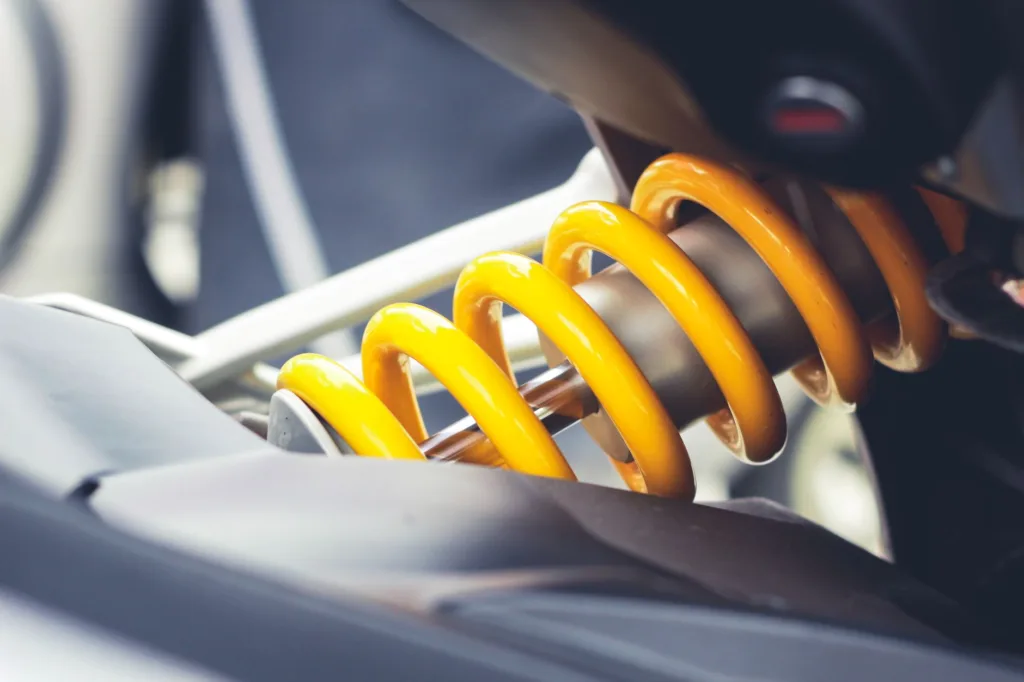
Shock absorbers typically last 50,000 to 100,000 miles, but there is no single replacement interval that fits every vehicle. Some shocks begin to lose performance closer to 40,000 to 60,000 miles, especially on rough roads or heavily loaded vehicles, while others can remain serviceable beyond 100,000 miles under gentler driving conditions. What matters most is not just mileage, but how the vehicle rides, handles, and brakes.
That is important because shocks do more than improve comfort. They help keep the tires planted on the road, control body movement, reduce bouncing, and support stable braking and cornering. A worn shock absorber may not fail all at once. In many cases, it degrades slowly enough that drivers adapt to the decline without realizing how much control the vehicle has lost.
If you are wondering whether your shocks are near the end of their life, the best approach is to look at mileage, symptoms, driving conditions, and inspection results together. The sections below explain how long shock absorbers usually last, what shortens their life, how to spot wear, and when replacement makes sense.
How Long Do Shock Absorbers Usually Last?
For most passenger vehicles, a reasonable general range is 50,000 to 100,000 miles. That said, “lasting” can mean different things. A shock absorber can still be physically attached to the car and not leaking badly, yet already be worn enough to reduce ride quality and handling.
Many drivers first notice declining shock performance around the middle of that range. The vehicle may start feeling floaty on the highway, nose-dive more under braking, or bounce longer after hitting a dip. Those changes often happen gradually.
Here is a simple way to think about typical shock life:
| Driving Situation | Typical Shock Life | What Often Happens |
|---|---|---|
| Smooth roads, light daily driving | 75,000 to 100,000+ miles | Slower wear, gradual decline in ride control |
| Mixed city and highway use | 50,000 to 80,000 miles | Common range where performance loss becomes noticeable |
| Rough roads, potholes, gravel, frequent heavy loads | 40,000 to 70,000 miles | Faster wear, increased chance of leaks or handling complaints |
| Commercial or severe-duty use | Variable, often shorter | More frequent inspections and earlier replacement are common |
These are broad expectations, not guaranteed intervals. Your owner’s manual may not list a fixed replacement mileage for shocks, but many manufacturers and repair shops recommend inspection at regular service intervals, especially once the vehicle has accumulated significant mileage.
What Shock Absorbers Actually Do
Shock absorbers do not hold the vehicle up. That job belongs primarily to the springs. The shock absorber’s job is to control spring movement so the vehicle does not keep bouncing after every bump.
When you hit a pothole, driveway edge, or uneven patch of pavement, the spring compresses and rebounds. Without damping from the shock, that motion would continue much longer. Good shocks help the tire return to the road quickly and keep the body of the vehicle from rocking excessively.
That affects several parts of everyday driving:
- Ride comfort, because the cabin stays more controlled over bumps
- Braking stability, because excessive front-end dive can reduce control
- Cornering, because body roll is better managed
- Tire wear, because bouncing can lead to uneven contact with the road
- Emergency handling, because stable suspension response matters during quick maneuvers
As shocks wear out, the vehicle may still be drivable, but it often becomes less composed and less predictable.
Factors That Affect How Long Shock Absorbers Last
Road Conditions
One of the biggest factors is the type of roads you drive on. Smooth pavement is much easier on suspension parts than broken city streets, gravel roads, speed bumps, washboard surfaces, or pothole-heavy routes.
Each bump forces the shock to cycle. The more often and more aggressively it cycles, the more internal wear it experiences. Drivers in areas with poor road maintenance often see shorter shock life than drivers in suburban or highway-focused environments.
Driving Style
Aggressive driving can shorten shock life. Fast cornering, hard braking, accelerating over rough surfaces, and taking speed bumps too quickly all increase load on the suspension.
By contrast, smoother driving habits reduce repeated suspension impacts. That will not make shocks last forever, but it can help them wear more slowly.
Vehicle Weight and Loads
A vehicle that often carries heavy cargo, tools, towing loads, or multiple passengers places more demand on its shocks. This is especially true for SUVs, pickups, vans, and vehicles used for work.
Even if the load stays within the vehicle’s rating, repeated heavy loading can accelerate suspension wear. If your car is lightly used most of the time, the shocks may last longer than those on a work truck covering the same miles.
Climate and Environment
Climate can play a supporting role. Extreme temperature swings, road salt, mud, and moisture can all contribute to corrosion or deterioration of related suspension components and mounts.
While internal shock wear is usually the main issue, rusted hardware, damaged boots, and corroded mounting points can complicate service life and replacement timing.
Shock Quality and Vehicle Design
Not all shocks wear at exactly the same rate. Vehicle weight, suspension geometry, and the design of the shock or strut all matter. Some vehicles are simply harder on suspension parts than others.
Also, front and rear components may age differently depending on the vehicle. Front struts often deal with steering and braking forces, while rear shocks may be more affected by load carrying.
Shocks vs Struts: Does Lifespan Differ?
Many people use the terms shocks and struts interchangeably, but they are not exactly the same. Both help control suspension movement, but a strut is usually a more structural suspension component.
| Component | Main Function | Common Lifespan Expectation |
|---|---|---|
| Shock absorber | Dampens spring movement | Often 50,000 to 100,000 miles |
| Strut | Dampens movement and serves as part of suspension structure | Often similar, though replacement costs are usually higher |
In practical terms, both can wear gradually over similar mileage ranges. The signs of wear also overlap. If your vehicle has struts instead of conventional shocks, the same inspection logic usually applies: age, mileage, symptoms, and condition all matter.
Signs Your Shock Absorbers May Be Worn Out
Worn shocks do not always produce one dramatic symptom. More often, they create a pattern of changes that become obvious once you know what to look for.
Excessive Bouncing After Bumps
If the vehicle continues to bounce after crossing a bump or dip, the shocks may not be controlling the springs properly. A healthy suspension should settle quickly.
This can be especially noticeable on uneven highways, bridge joints, or driveway entrances.
Nose Diving Under Braking
When front shocks or struts wear out, the front end may dip more than normal during braking. Some forward weight transfer is expected, but too much can feel unstable.
This symptom often becomes more obvious in stop-and-go driving or during sudden braking.
Rear Squatting During Acceleration
On some vehicles, worn rear shocks can allow the rear to squat more than usual when accelerating. Again, some movement is normal, but excess motion points to reduced damping control.
Body Roll in Corners
If your vehicle leans more than it used to during turns, especially on ramps or curved roads, worn shocks may be contributing. Body roll can also involve springs or sway bar components, so it is not always shocks alone.
Uneven or Cupped Tire Wear
Bad shocks can allow the tires to bounce rather than stay planted, which may create a cupped or scalloped wear pattern. Tire wear can have multiple causes, including alignment issues, but shocks are one possible factor.
Fluid Leaks on the Shock Body
A hydraulic shock that is leaking oil is usually a strong sign of failure or near-failure. A light film of grime is one thing. Noticeable wetness or streaking from fluid is different.
If a shock is leaking, it should be inspected promptly.
Longer Stopping Feel or Reduced Stability
Worn shocks do not directly wear the brakes, but they can affect how planted the vehicle feels during braking. If the car feels unsettled under braking, especially on rough pavement, worn shocks may be part of the issue.
Rattling or Clunking
Noise does not always mean the shock itself is bad. Sometimes the issue is a worn mount, bushing, or another suspension part. Still, clunks and rattles over bumps should not be ignored.
How to Tell if Shock Absorbers Need Replacement
The best answer comes from combining symptoms, mileage, and a physical inspection. No single clue always tells the full story.
Mileage-Based Clues
If your shocks have more than 50,000 to 75,000 miles on them and you are noticing ride or handling changes, replacement becomes more likely. If the vehicle is over 100,000 miles on original shocks, wear is very common even if no single symptom seems extreme.
Visual Inspection
A mechanic may check for:
- Fluid leaks
- Dented or damaged shock bodies
- Worn bushings or mounts
- Broken boots
- Irregular tire wear
Some wear is obvious from underneath the vehicle. Other times, the shock may look acceptable externally while still performing poorly internally.
Road Test Evaluation
A test drive can reveal float, bounce, instability, brake dive, or excessive body movement. This is often one of the most useful ways to assess worn shocks, especially when symptoms are subtle.
The Bounce Test
You may have heard of pushing down on one corner of the car and watching how it settles. This can sometimes reveal a badly worn shock, but it is not very precise on many modern vehicles. A vehicle can pass a casual bounce test and still have shocks that are past their best.
So, treat the bounce test as a rough clue, not a final diagnosis.
How Driving Conditions Change Shock Life
Two vehicles with the same mileage can have very different suspension wear depending on how they are used.
Daily Highway Commuter
A car driven mostly on smooth highways often keeps its shocks longer. The suspension still works constantly, but the impacts are typically smaller and more predictable.
Urban Stop-and-Go Driver
City driving can be harder on shocks because of potholes, sharp pavement edges, speed humps, curbs, and repeated braking and acceleration. Mileage may be lower, but wear can still be significant.
Rural Gravel or Rough Road Use
Frequent rough-road driving often shortens shock life. Washboard roads and uneven surfaces make the suspension work much harder and much more often.
Towing or Carrying Heavy Cargo
If you regularly tow a trailer or carry heavy loads, the rear shocks in particular may wear faster. Even when everything is within the rated capacity, repeated heavy use increases stress.
What Happens If You Keep Driving on Worn Shocks?
You can often drive on worn shocks longer than you should, because they usually degrade gradually. That does not mean it is a good idea to ignore them.
Driving on worn shocks can lead to:
- Reduced ride comfort
- Less stable braking feel
- More body movement in turns
- Increased tire wear
- Extra stress on suspension parts
- Reduced confidence in wet or uneven road conditions
Worn shocks may not create an immediate breakdown the way a dead battery or broken belt might. Instead, they slowly reduce the vehicle’s control and composure. That can be easy to ignore until you drive a car with fresh shocks and realize how much performance had been lost.
Should You Replace All Four Shocks at Once?
Not always, but it is often worth considering. If one shock is clearly failed due to damage or a leak and the others are still fairly new, replacing only the bad one or the pair on that axle may be reasonable.
However, if the vehicle has high mileage and the shocks are original, replacing them in pairs, or all four if needed, often restores more balanced ride and handling.
Typical Replacement Approach
- Front pair together, if both front units are worn
- Rear pair together, if both rear units are worn
- All four, if the entire set is old and performance has dropped noticeably
Mixing one new shock with one very worn shock on the same axle can create uneven behavior.
Typical Replacement Costs
Replacement cost depends on vehicle type, whether the vehicle uses shocks or struts, labor rates, and whether related parts need replacement.
| Service Type | Typical Cost Range | Notes |
|---|---|---|
| Rear shock replacement, pair | About $300 to $800 | Often simpler than front strut work |
| Front strut replacement, pair | About $600 to $1,500+ | Varies widely by design and labor |
| All four corners | About $800 to $2,500+ | Vehicle type and parts quality make a big difference |
| Wheel alignment after suspension work | About $100 to $200 | Often recommended, especially after strut replacement |
These are broad ranges, not fixed prices. Luxury vehicles, trucks, performance suspensions, or electronically controlled dampers can cost much more.
Common Mistakes Vehicle Owners Make
Waiting for a Complete Failure
Shocks often do not fail in a dramatic way. Many drivers wait until there is a major leak or severe bouncing, but performance may have been declining for a long time before that point.
Assuming Tire or Alignment Issues Are the Only Cause
If the ride feels unstable or the tires show strange wear, it is easy to focus only on alignment or tire balance. Those issues are common, but worn shocks can be part of the problem too.
Replacing Only One Side on the Same Axle
Unless one unit is nearly new and the other was damaged unexpectedly, replacing just one side can create uneven damping.
Ignoring Suspension Noise
Clunks and rattles over bumps may not come from the shock itself, but they still deserve inspection. Shock mounts, bushings, sway bar links, and control arm components can all affect ride quality and safety.
Judging Shocks by Comfort Alone
Some drivers think shocks only matter if the ride feels harsh. In reality, a shock can be worn and still feel soft. The larger issue is often control, not comfort.
Practical Tips to Help Shock Absorbers Last Longer
You cannot stop normal wear, but you can reduce unnecessary stress.
- Avoid hitting potholes at speed when possible
- Slow down for speed bumps and rough pavement
- Do not overload the vehicle
- Check tire pressure regularly, because underinflated tires can worsen impacts
- Inspect the suspension if you notice uneven tire wear or handling changes
- Have shocks checked during tire replacement or major suspension service
These habits will not double shock life, but they can help prevent premature wear and make it easier to catch problems early.
When Should You Have Shock Absorbers Inspected?
A good rule is to have them looked at whenever:
- The vehicle reaches around 50,000 miles or more
- You notice bouncing, float, or brake dive
- You see unusual tire wear
- The car feels less stable than it used to
- You hit a severe pothole or curb and the ride changes afterward
- You are already having suspension or steering work performed
Inspection does not always mean replacement. It simply helps determine whether the shocks are still performing well enough for the way the vehicle is used.
Shock Absorber Lifespan by Scenario
| Scenario | Likely Wear Pattern | Inspection Priority |
|---|---|---|
| 8-year-old commuter car, 90,000 miles, mostly highway | Gradual wear, may still feel acceptable but likely reduced from new | High |
| 5-year-old SUV, 60,000 miles, rough suburban roads | Moderate to significant wear possible | High |
| Pickup used for hauling, 50,000 miles | Rear shocks may be wearing early | High |
| Sedan, 40,000 miles, smooth roads, gentle driving | Often still in good shape | Moderate if symptoms appear |
| High-mileage car, 120,000 miles, original shocks | Very likely worn even if no obvious leak | Very high |
FAQ
Can shock absorbers last 150,000 miles?
They can, but that does not mean they are still performing well. Some shocks remain usable at very high mileage, but most have lost noticeable damping long before that point.
How do I know if my shocks are bad or if it is just the tires?
Tire issues often cause vibration, noise, or uneven wear, while bad shocks more often cause bouncing, float, brake dive, and poor control over bumps. In many cases, both problems can exist at the same time.
Do shocks wear out from age or mileage?
Both matter. Mileage reflects how much the shock has worked, while age can contribute to seal wear, corrosion, and general deterioration.
Should shocks be replaced preventively?
Sometimes, yes. If the vehicle has high mileage, original shocks, and clear signs of reduced control, preventive replacement can make sense even before a dramatic failure occurs.
Can bad shocks cause steering problems?
They can contribute to unstable or vague handling, especially over bumps or during braking. However, true steering problems can also involve alignment, tires, tie rods, ball joints, or other suspension parts.
Do new shocks improve braking distance?
They can improve braking stability and tire contact with the road, which helps overall control. Exact braking distance changes vary by vehicle condition and road surface.
Is it safe to drive with leaking shocks?
A leaking shock should be inspected soon. The more fluid it loses, the less effectively it can control suspension movement.
Do I need an alignment after replacing shocks?
Often after rear shock replacement, alignment may not be required, but after front strut replacement it is commonly recommended. Follow the repair procedure for your specific vehicle.
Key Takeaways on Shock Absorber Lifespan
Shock absorbers usually last 50,000 to 100,000 miles, but real lifespan depends heavily on road conditions, driving style, vehicle load, and overall suspension design. A shock does not need to be completely blown out to be worn. Many lose performance gradually long before obvious failure.
If your vehicle bounces more than it used to, dives under braking, feels unstable in corners, shows uneven tire wear, or has visible fluid leaks, the shocks should be inspected. For high-mileage vehicles, especially those still on original suspension components, checking shock condition is a smart maintenance step even if the symptoms seem mild.
The practical answer is simple. Do not judge shock absorbers by mileage alone. Use mileage as a guide, but make the final decision based on ride quality, handling, tire wear, and inspection results.