
You usually start looking for the best EV extension cord for level 1 charging after one of those annoying driveway moments. The car is parked a little too far from the garage wall, the portable charger cable comes up short by a few feet, and suddenly a simple overnight top-up turns into a puzzle involving parking angles, garage clutter, and a lot of muttering. That is where the right extension solution matters. For level 1 charging, buyers want safe reach, solid weather resistance, and a connector setup that does not feel sketchy at 10 p.m. in the rain.
The biggest mistake people make is buying the first “EV extension cord” they see without checking what kind of extension it actually is. Some products here are true J1772 extension cables that extend the charging connector side. Others are portable level 1 chargers with a long built-in cable, which can solve the same problem in a cleaner way for some households. Another common miss is focusing on amp rating alone while ignoring waterproofing, certification claims, connector quality, and whether the cable is practical to coil, store, and handle every day. A thick cable that fights you like a frozen garden hose can get old fast.
What matters most depends on your setup. Apartment dwellers may care about portability and manageable length. Homeowners with awkward parking layouts may want maximum reach. Some buyers want a simple budget pick for occasional overnight charging, while others want a heavier-duty cable that can also support future level 2 use. After comparing the options here, the VEVOR 32Amp 21 ft J1772 Extension Cable stands out as the strongest all-around choice for most level 1 users because it balances reach, durability, weather protection, and everyday usability without feeling excessive.
If you want the fast version first, the quick picks and table below make the shortlist easy to scan.
Quick Picks
- Best Overall: VEVOR 32Amp 21 ft J1772 Extension Cable
- Best Budget Pick: 16Amp J1772 EV Charger Extension Cable 17ft
- Best Premium Option: VEVOR 40Amp 40 ft J1772 Extension Cable
- Best Value Choice: Leheyhey 21FT 32A J1772 Extension Cable
Best EV Extension Cord For Level 1 Charging Comparison Table
| Product | Best For | Main Strength | Key Specs |
|---|---|---|---|
| VEVOR 32Amp 21 ft J1772 Extension Cable | Most buyers | Balanced length and rugged build | 21 ft, 32A, J1772, IP66 |
| 16Amp J1772 EV Charger Extension Cable 17ft | Budget-focused level 1 users | Practical 16A match for level 1 charging | 17 ft, 16A, J1772, IP67 |
| VEVOR 40Amp 40 ft J1772 Extension Cable | Long driveways and premium setups | Huge reach with strong weather resistance | 40 ft, 40A, J1772, IP66 |
| Leheyhey 21FT 32A J1772 Extension Cable | Value shoppers | Useful specs without the bulk | 21 ft, 32A, J1772, weather-resistant TPE |
| Lectron Level 1 EV Charger | Buyers who need a full charger, not just an extension | Portable charger with built-in reach | 120V, 15A, 16 ft cable, ETL |
| Grasside Level 1&2 EV Charger | Travel and flexible home charging | Adjustable current and long cord | 25 ft, 8-16A, J1772, timer, LCD |
| Seguma 21ft 40Amp J1772 Extension Cable | Daily garage charging | Solid middle-ground length and capacity | 21 ft, 40A, J1772, IP66 |
| Seguma 30ft 40Amp J1772 Extension Cable | Extra reach without going to 40 ft | Longer reach with manageable size | 30 ft, 40A, J1772, IP66 |
| EVPEIWE 48Amp 33ft J1772 Extension Cable | Heavy-duty future-proofing | High amp ceiling with long reach | 33 ft, 48A, J1772, IP55 |
If you want the fuller picture, the reviews below show where each option fits and where each one asks for compromise.
1. Best Overall: VEVOR 32Amp 21 ft J1772 Extension Cable
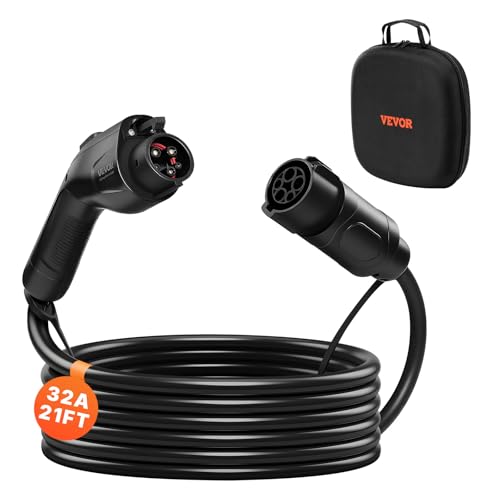
One reason this option stands out is how neatly it matches what most level 1 drivers actually need. A 21-foot extension is usually enough to solve the classic driveway headache without turning your garage into a cable jungle. Picture backing in after work, missing the ideal spot by a few feet because the bikes are leaning into the aisle again, and still being able to plug in without that silly three-point shuffle. That is the kind of everyday win this cable is built for.
The 32-amp rating is more than enough for level 1 charging, yet it gives this cord broader usefulness if your charging setup changes later. The dual-voltage compatibility and IP66 weather resistance make it feel less like a single-purpose stopgap and more like a long-term accessory. VEVOR also includes the practical stuff people actually use, including a carrying bag, cable tie, and cleaning cloth. Those details sound small, but anyone who has wrestled a dirty cable off a damp garage floor on a cold morning knows that storage and connector care matter more than spec-sheet bragging.
Pros
- Excellent 21-foot length for most home parking setups
- 32A capacity easily covers level 1 charging and leaves room for future level 2 use
- IP66 weather resistance suits outdoor or semi-exposed charging spots
- Dual-voltage compatibility adds flexibility
- Useful accessories included for storage and upkeep
Cons
- Heavier than a basic 16A cable
- May be more capacity than a strict level 1-only buyer needs
- Bulkier to coil than shorter options
This is the one to buy if you want a straightforward answer and do not feel like overthinking the purchase. It suits homeowners, renters with dedicated parking, and anyone who wants enough reach to fix placement headaches without moving into the extra-large 30- or 40-foot category. Buyers who only need a very light occasional-use cable may prefer a 16A option, and people with truly awkward parking geometry may need something longer. For most households, though, this VEVOR hits the sweet spot between convenience, durability, and future usefulness.
To buy this product, click here.
2. Best Budget Pick: 16Amp J1772 EV Charger Extension Cable, 17ft

For buyers who prioritize a sensible match for level 1 charging, this 16-amp 17-foot cable makes a lot of sense. Sometimes the smartest buy is the one that fits the actual job instead of flexing oversized specs. If your portable charger runs on a standard 120V outlet and your car only needs a few more feet of reach each night, a compact 16A extension can feel refreshingly no-drama. It is the kind of gear that solves the problem quietly, then gets out of your way.
This model brings a few reassuring touches that help it punch above its modest positioning. The IP67 waterproof rating is strong for outdoor exposure, and the listing calls out UL and ETL certification along with silver-plated conductive terminals and corrosion-resistant connectors. That combination is appealing for buyers who charge on a side driveway or open carport where mist, dirt, and winter grime can creep into everything. The 17-foot length is also easier to handle than longer heavy-duty cords. You are far less likely to dread uncoiling it after a long day.
Pros
- 16A rating aligns well with many level 1 charging setups
- IP67 waterproof design is strong for outdoor use
- Shorter 17-foot length is easier to store and manage
- UL and ETL claims add confidence for safety-minded buyers
- Includes storage bag and long warranty support
Cons
- Less flexible for future higher-amp charging needs
- 17 feet may still be too short for difficult driveway layouts
- Brand recognition is lighter than some bigger names
Buy this if your goal is simple, safe reach for level 1 charging and you do not want to pay for capacity you will never use. It is especially appealing for compact garages, apartment parking spaces, or backup travel duty in the trunk. Skip it if you expect to move into a stronger level 2 home setup soon or if your charging spot needs major extra length. For the buyer who wants solid basics and fewer pounds of cable to wrestle, this one earns its place.
To buy this product, click here.
3. Best Premium Option: VEVOR 40Amp 40 ft J1772 Extension Cable

If your charging setup is a circus of distance, this cable is the one that calms things down. Think detached garage, deep driveway, awkward side-yard outlet, or a parking routine where one vehicle always seems to block the cleanest line to the port. Forty feet is a lot of reach, and in the right situation it feels glorious. You stop planning your evening around cable geometry and simply plug in.
The premium case here is less about luxury and more about capability. This VEVOR cable supports level 1 and level 2 chargers, handles 120V to 240V use, and pairs that versatility with IP66 protection and a fire-resistant build. It is still a serious chunk of cable, though, and that is the tradeoff. Longer cords take up space, weigh more, and demand a little more discipline with storage. Still, if you have ever tiptoed through a puddle with a flashlight in your teeth trying to see whether your charger will reach, this kind of extension can feel like sweet relief.
Pros
- Massive 40-foot reach solves difficult parking layouts
- 40A capacity supports broad charging compatibility
- Works with both 120V and 240V charger setups
- IP66 weather resistance suits outdoor use
- Includes carrying bag, cable tie, and cleaning cloth
Cons
- Bulkier and heavier than shorter extensions
- More cable than many level 1 users actually need
- Storage can be cumbersome in small garages
This is the best pick for buyers who know they need real distance and would rather solve the problem once than keep buying “almost long enough” gear. It works well for homes with difficult charger placement, shared driveways, or travel situations where outlet location is unpredictable. If your car is always parked close to the outlet, you will be carrying extra bulk for no real benefit. For everyone else fighting bad parking angles and far-off sockets, this premium VEVOR is a beast in the best way.
To buy this product, click here.
4. Best Value Choice: Leheyhey 21FT 32A J1772 Extension Cable

This model earns its place because it lands in a very appealing middle lane. You get a useful 21-foot extension, a healthy 32A rating, compatibility across level 1 and level 2 J1772 chargers, and a weather-resistant TPE build without jumping into the larger, heavier, pricier end of the category. For many buyers, that is the sweet smell of value. It is enough cable to matter, enough capacity to stay relevant, and not so overbuilt that you feel like you bought a fire hose to water a houseplant.
There is also something to be said for a cable that sounds uncomplicated in use. The listing emphasizes 100% copper wiring to reduce resistance and a jacket that stays flexible in cold weather. That matters more than it gets credit for. Anyone who has handled cheap outdoor cable on a frosty morning knows the feeling: it stiffens up, fights every bend, and turns a two-minute plug-in into a mini workout. A cable that stays manageable is one you are more likely to use properly every single night.
Pros
- Strong value for a 21-foot 32A extension
- Compatible with level 1 and level 2 J1772 chargers
- Cold-weather flexibility is a real everyday plus
- Manageable size compared with very long heavy-duty cables
- Good fit for home, workplace, or public charging overflow situations
Cons
- Less detailed safety and certification language than some rivals
- Brand is less established than larger names
- Tesla owners still need an adapter
Choose this one if you want the practical center of the market. It suits buyers who care about performance but still want to keep spending under control. It is especially good for people who use level 1 now but may transition later, since the 32A ceiling gives it a little staying power. Skip it if your priority is the strongest documented certification story or if you need much more than 21 feet. For the average EV owner with a J1772 port and a slightly annoying parking setup, this is a savvy buy.
To buy this product, click here.
5. Best All-In-One Alternative: Lectron Level 1 EV Charger

Here is where the category gets interesting. This is not a J1772 extension cable. It is a full portable level 1 charger with a built-in 16-foot cable. That makes it a strong alternative for buyers who searched for an extension cord because their existing charger is too short, but who might be better off replacing the whole unit instead of adding another connection point. Sometimes the cleanest fix is one piece of equipment instead of stacking cable onto cable and hoping the setup stays tidy.
Lectron has name recognition that helps here, and the ETL certification, overcurrent protection, and IP65 rating make the unit feel aimed at real everyday use. The 15-amp level 1 setup is well suited to overnight home charging, especially for plug-in hybrids or drivers with shorter daily commutes. Picture a second charger living in the trunk for trips to family or a backup unit hanging on a garage hook for rainy-night convenience. That sort of grab-and-go portability is where this unit shines. The catch is simple. It does not extend your existing charger. It replaces that function with its own cable and control box.
Pros
- Good option if you need a full portable level 1 charger rather than only an extension
- ETL certified with built-in safety protections
- 16-foot cable helps solve reach problems cleanly
- Portable and easy to keep as a backup charger
- Strong fit for overnight home charging
Cons
- Not a true extension cable
- 15A level 1 charging is slower than level 2 setups
- Tesla vehicles require a separate adapter
This is the right pick for buyers who have stepped back and realized they need a complete portable charger more than a standalone extension. It works well for first-time EV owners, PHEV drivers, and anyone who wants a spare charging unit without spending into premium territory. Skip it if your current charger is fine and you only need more reach from the J1772 end. In that case, a true extension cable is the better tool. But as an all-in-one workaround, Lectron makes a lot of practical sense.
To buy this product, click here.
6. Best For Travel Flexibility: Grasside Level 1&2 EV Charger
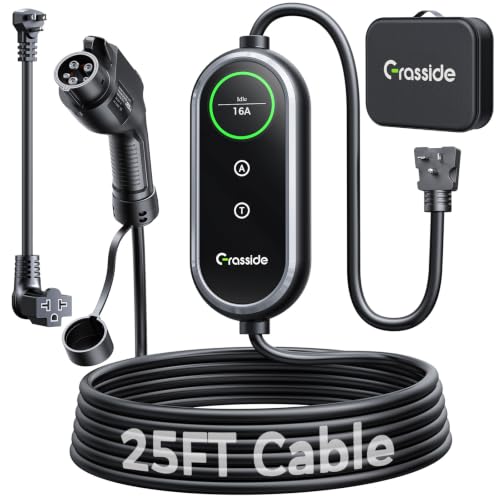
If your charging life happens in more than one place, this Grasside unit has a lot going for it. Like the Lectron above, it is a charger rather than a pure extension cable, but it directly addresses the “I need more reach for level 1 charging” problem with a 25-foot cord and broader versatility. The first time you pull into a relative’s driveway and realize the nearest outlet is farther than expected, a long portable charger feels like a tiny miracle. No elaborate parking ballet. No awkward conversation about whether you can move patio furniture for an inch more clearance.
Its adjustable current settings are especially useful for older household circuits. Being able to step down to 8A, 10A, or 12A gives cautious buyers more control, while the timer and LCD display add convenience without requiring an app circus. It also supports 240V through the included plug arrangement, so it has real life beyond level 1 use. That flexibility is a big part of its appeal. The tradeoff is that this is more equipment than a simple extension cable, with more features to learn and a charging box to manage during storage.
Pros
- Long 25-foot cord is excellent for home or travel
- Adjustable current is useful for different household circuits
- Can function as level 1 or level 2 charger
- LCD display and timer add practical control
- Portable carry case helps with trunk storage
Cons
- Not a dedicated extension cable
- More complex than a simple plug-through solution
- Max level 1 output on standard 120V remains modest
Buy this if you want a travel-friendly charger that also happens to solve reach issues. It is great for drivers who split time between home, relatives’ houses, cabins, and older properties where outlet access is unpredictable. If you only need a short J1772 extension for a stable home setup, this may be more feature-rich than necessary. For mixed-use households that value flexibility, though, this Grasside is a clever pick with real everyday upside.
To buy this product, click here.
7. Best For Daily Use: Seguma 21ft 40Amp J1772 Extension Cable

This Seguma cable hits a familiar and useful size for everyday home charging. Twenty-one feet is often the difference between “plug in and walk away” and “reverse the car again because the port is on the wrong side.” For level 1 charging, that kind of convenience matters because you are using the setup frequently, often at night, and often when you do not feel like fiddling with anything. The appeal here is that the cable aims for a durable, steady routine rather than flashy extras.
With a 40A rating, silver-plated inlets, 100% copper TPE construction, and IP66 weather protection, it is clearly built for more than the mild demands of level 1 charging alone. That is actually one of its best selling points. It can grow with you if your setup changes, while still being a reasonable size for current home use. The carrying bag is welcome, too. Cables tossed loose into a corner tend to get dirty, stepped on, and generally treated like a forgotten extension cord from the shed. A bit of organization helps preserve the connectors over time.
Pros
- 21-foot length is ideal for many everyday home setups
- 40A rating adds headroom for future charging needs
- Silver-plated inlets support conductivity and heat management
- IP66 protection is good for outdoor exposure
- Durable TPE and copper construction
Cons
- Heavier than a true level 1-specific 16A cable
- Warranty period is shorter than some rivals
- Some shoppers may prefer a more established brand
This is a solid choice for people who charge at home often and want a dependable extension without moving into extreme lengths. It fits daily driveway use, garage charging, and households where different EVs may cycle through the same spot. If you want the lightest, simplest, cheapest cable, there are leaner options. If you want a sturdier long-term piece that still feels manageable every night, this Seguma makes a strong case.
To buy this product, click here.
8. Best For Extra Reach: Seguma 30ft 40Amp J1772 Extension Cable

If 21 feet feels close but risky, this 30-foot Seguma can be the sweet spot. There is a big difference between needing “a bit more” and needing a massive 40-foot cable. Thirty feet often covers those frustrating real-life scenarios where your outlet is on the wrong wall, one family vehicle is always parked in the useful spot, or your charging port location turns every parking choice into a guessing game. This length gives breathing room without going fully oversized.
The features closely mirror Seguma’s shorter model, including a 40A rating, silver-plated inlets, TPE construction, and IP66 protection. That makes it a sensible step up if you already know the 21-foot class is slightly too short. The main thing to respect here is cable management. A 30-foot EV cable can quickly become a tripping snake if left sprawled across a garage. Fully uncoiling it before use, as the listing stresses, also matters for thermal performance. This is a buy for organized users or for setups where the extra length genuinely solves a recurring problem.
Pros
- 30-foot length is a strong middle ground between standard and oversized options
- 40A capacity gives excellent compatibility headroom
- IP66 waterproof rating works well for outdoor charging
- Good fit for awkward driveways and offset parking
- Built from copper TPE with solid J1772 connectors
Cons
- Bulkier to handle and store than 17- or 21-foot cables
- Requires disciplined uncoiling before use
- Can be more cable than needed for simple garage charging
Choose this if your charging frustration is specifically about distance and you want a serious step up without committing to a full 40-foot monster. It is especially handy for longer driveways, side parking pads, and shared household parking that changes from day to day. Skip it if your outlet is close and you just need a few extra feet. In that case, shorter cables are easier to live with. For messy parking situations, this one can feel like a nightly sanity saver.
To buy this product, click here.
9. Best Heavy-Duty Build: EVPEIWE 48Amp 33ft J1772 Extension Cable

This model is for buyers who want a cord that feels ready for bigger demands than level 1 alone. A 48A rating and 33-foot length put it squarely in heavy-duty territory, which can be reassuring if you expect to upgrade charging equipment later or share the accessory across different setups. It has that “buy once, use for years” flavor. If your current level 1 charger is a small part of a broader EV ownership plan, that can be pretty appealing.
The tradeoff is that its spec sheet is more ambitious than many level 1 owners strictly need. Still, the tough PC+ABS shell, UL94 V-0 insulation claim, wide operating temperature range, and included storage pouch suggest a product meant for serious use in real outdoor conditions. The IP55 rating is decent, though not as confidence-inspiring on paper as the IP66 or IP67 rivals here. Picture a household where the cable may live through hot summers, freezing mornings, and frequent plug-ins across multiple vehicles. That is the kind of life this extension seems built to handle.
Pros
- High 48A rating offers strong long-term versatility
- 33-foot length provides excellent reach
- Heavy-duty housing and insulation claims
- Wide temperature tolerance for outdoor use
- Useful for buyers thinking beyond a basic level 1 setup
Cons
- IP55 rating trails some competitors for water protection
- More cable and capacity than many level 1 users need
- Heavier and less convenient than shorter options
Buy this if you care about robustness first and convenience second. It is a strong fit for buyers who want one cable for current level 1 use and possible future upgrades, or for households with challenging outdoor charging conditions. If you want the lightest daily-use solution, this is overkill. If you like the idea of a tougher, longer, higher-capacity extension that can stick around as your EV setup evolves, this EVPEIWE deserves a close look.
To buy this product, click here.
How To Choose The Right EV Extension Cord For Level 1 Charging
Start With The Kind Of Problem You Are Actually Solving
A lot of buyers search for an extension cord when what they really need is either a J1772 extension cable or a longer portable charger. Those are different tools. If your existing charger works well and only the connector side comes up short, a J1772 extension is the clean answer. If your whole charger setup feels limiting, clunky, or too short, a portable charger with a longer cable can be the better fix. That small distinction saves money and prevents the classic “why doesn’t this connect the way I expected?” moment in the driveway.
Match Cable Length To Your Parking Reality
More length sounds better until you have to coil the thing every day. A 17- to 21-foot cable works well for many garages and short driveways. Thirty feet helps with offset parking or homes where the outlet is badly placed. Forty feet is best reserved for truly difficult layouts, detached garages, or travel scenarios with unpredictable outlet locations. Think about your worst normal parking day, not your best one. If the cable only works when the car is parked perfectly, it is too short.
Do Not Get Distracted By Huge Amp Numbers
For level 1 charging, you do not need a monster amp rating to make the setup work. A well-made 16A extension can be a very smart match. Higher ratings such as 32A, 40A, or 48A can still be useful because they may support future charging upgrades, but they usually bring more weight, more stiffness, and more bulk. That is the tradeoff. If your EV will live on 120V overnight charging for years, a lighter cable may be nicer to handle. If you expect a level 2 setup later, extra capacity can be worth carrying around.
Pay Attention To Weather Resistance And Connector Quality
Charging gear often lives a rough life. Rain. Dust. Cold mornings. Hot garage afternoons. Connectors dragged across concrete. Look for solid waterproof ratings, good jacket materials like TPE, and features such as silver-plated contacts or corrosion-resistant terminals. These details help the cable perform consistently over time. A fancy-looking cord with vague build information can be more annoying than a plain one with strong materials and better sealing.
Think About Daily Handling, Not Just Specs
This is where real ownership kicks in. Will the cable stay flexible in winter? Does it come with a bag or tie so it is not always flopped in a dirty pile? Can you carry it in the trunk without sacrificing half your storage? A cable can be perfectly adequate on paper and still drive you nuts in practice. If you plug in every night after work, the feel of the cable matters. A lot.
Check Compatibility Carefully
Most of the true extension cables here are J1772 models for non-Tesla vehicles, though Tesla owners can sometimes use them with the correct adapter. That does not mean every setup is equally convenient. Always confirm your vehicle inlet, your charger connector type, and whether an adapter is required. A few minutes checking this before buying beats the dull heartbreak of opening a package that cannot plug into your car.
Avoid Common Safety Mistakes
Fully uncoil the cable before use, especially with longer heavier-duty models. Do not leave it tightly wound during charging. Keep connectors clean and off wet, dirty ground where possible. Store the cable thoughtfully instead of cramming it under other garage junk. Most frustrations with charging accessories come from setup habits, not from dramatic failures. A little care goes a long way, and it keeps your overnight charging routine boring in the best possible way.
Best EV Extension Cord For Level 1 Charging FAQ
Is it safe to use an EV extension cord for level 1 charging?
It can be safe if you use a purpose-built EV charging extension or portable charger from a reputable listing, match it correctly to your charger and vehicle connector, and fully uncoil it during use. The safest path is to use a J1772 extension cable for a J1772 charger rather than improvising with a generic household extension cord.
Can I use a regular outdoor extension cord with my level 1 EV charger?
That is usually the mistake people should avoid. A standard household extension cord is different from an EV charging extension designed around the charging connector. Many EV manufacturers and charger brands discourage generic extension cords because heat, voltage drop, and connection quality can become concerns fast. A dedicated EV solution is the better route.
What length is best for level 1 EV charging?
For many homes, 17 to 21 feet is enough. That range usually solves common garage and driveway reach problems without making storage annoying. If your outlet is far from where the vehicle must park, 30 feet or 40 feet may be worth it. The best length is the shortest one that comfortably reaches your normal parking position.
Do I need a 40A or 50A extension cord for level 1 charging?
No, level 1 charging itself does not require that much capacity. Higher amp-rated cables can still be useful for durability or future-proofing, especially if you may switch to level 2 later. If you plan to stay with level 1 for a long time, a quality 16A or 32A option can be more practical and easier to handle.
Will these extension cables work with Tesla vehicles?
Most of the J1772 products reviewed here are built for J1772 vehicles and chargers. Tesla owners usually need a compatible adapter to use J1772-based charging accessories. Always verify the exact adapter and charging setup before buying. The Tesla-specific NACS extension listed in the source products was excluded from the final nine because this roundup focuses on the J1772 level 1 use case most closely tied to the keyword.
What is the difference between a J1772 extension cable and a portable level 1 charger?
A J1772 extension cable adds length between your existing charger and your vehicle. A portable level 1 charger is the charger itself, usually with its own plug, control box, and cable. Buyers often search for one while meaning the other. If your current charger is fine, buy the extension. If you want a second charger or a cleaner all-in-one fix, a portable charger may be better.
Should I choose the highest waterproof rating available?
If you charge outside often, stronger weather resistance is a real plus. IP66 and IP67 ratings are appealing for wet or dirty conditions. Still, waterproof rating is only one part of the picture. Connector quality, jacket material, and proper use matter too. A well-made IP66 cable from a trustworthy listing may be a better buy than a vague product with flashy claims.
How should I store an EV charging extension cable?
Keep it clean, dry when possible, and loosely coiled. Use the included bag or cable tie if one comes with the product. Avoid sharp bends, crushing the cable under heavy items, or leaving the connector ends in dirt or standing water. Good storage habits help the cable last longer and make nightly charging less of a hassle.
Final Verdict
If you want the best EV extension cord for level 1 charging for most real households, the VEVOR 32Amp 21 ft J1772 Extension Cable is the strongest all-around pick. It has enough reach to solve the common driveway headache, enough weather protection for outdoor use, and enough capacity to stay useful if your charging setup grows later. It feels like the practical center of this roundup. For shoppers who want to spend less and keep things simple, the 16Amp J1772 EV Charger Extension Cable 17ft is the most sensible budget-friendly option. If distance is your main headache and you want a more serious reach upgrade, the VEVOR 40Amp 40 ft is the premium choice that makes awkward parking far less annoying.
The biggest takeaway is to buy for your actual setup, not for the flashiest spec line. Measure the distance from your charger to your charge port in the least convenient parking position. Think about weather exposure, how often you will handle the cable, and whether you need a true extension or a full portable charger. Get that part right, and your nightly charging routine becomes pleasantly dull. Plug in, walk away, sleep, repeat. That is the whole point.