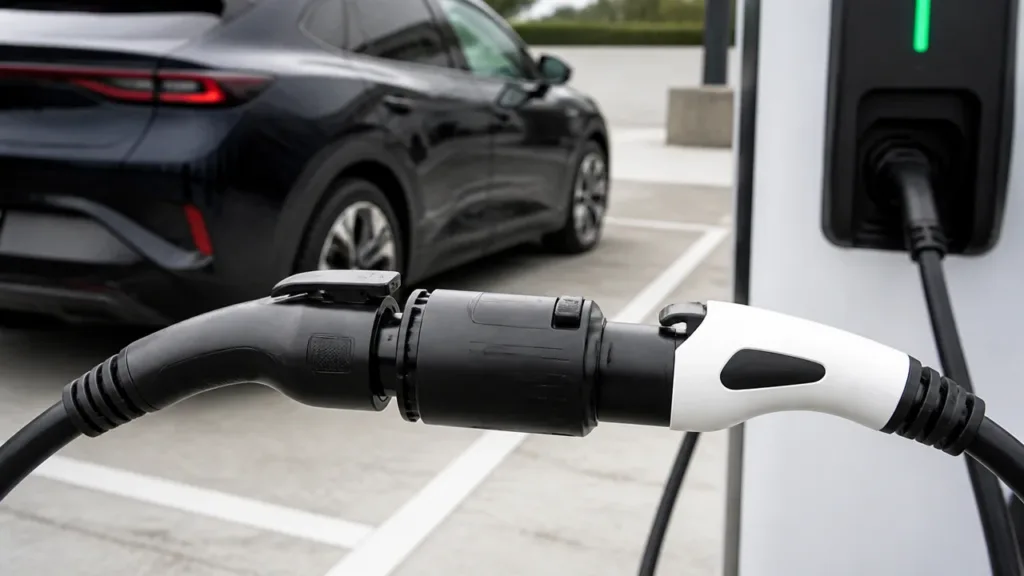
You usually notice you need an EV charging adapter at the worst possible moment. Maybe you pull into a hotel after a long highway slog, spot an open charger, and then realize the plug shape does not match your car. Or maybe a friend says, “Yeah, just top off in my garage,” and you stand there in the driveway holding two connectors that look close, but absolutely do not fit. That little chunk of plastic and metal can be the difference between an easy overnight charge and a very annoying detour.
That is why shoppers hunt for the best EV charging adapter in the first place. They want more charging options, fewer dead ends, and less guesswork. The common mistake is buying the first adapter that looks right without checking the direction of conversion, the charging type, and whether it supports AC Level 1/2 or DC fast charging. Another frequent slip is assuming every Tesla-related adapter works with Superchargers. Plenty do not. For most buyers, the big things that matter are compatibility, current rating, certification, weather resistance, lock design, and how easy the adapter is to toss in the trunk and trust when rain is spitting and your battery is getting low.
Different drivers need different solutions. A Tesla owner trying to use J1772 chargers has a very different job than a Ford or Hyundai driver trying to access Tesla destination chargers, and that is miles away from a CCS1 owner looking for Supercharger access. After comparing the field, the LENZ J1772 to NACS Charging Adapter stands out as the top all-around pick for Tesla and newer NACS EV owners who want broad Level 1 and Level 2 charging flexibility without paying a premium for features they may never use.
If you want the short version first, the quick picks and table below make it easy to compare the strongest options fast.
Quick Picks
- Best Overall: LENZ J1772 to NACS Charging Adapter
- Best Budget Pick: FOCSPROD J1772 to Tesla Charger Adapter
- Best Premium Option: Lectron NACS to CCS Adapter with Interlock
- Best Value Choice: Seguma Tesla to J1772 Adapter
Best EV Charging Adapter Comparison Table
| Product | Best For | Main Strength | Charging Type |
|---|---|---|---|
| LENZ J1772 to NACS Charging Adapter | Tesla and newer NACS EV owners | Broad compatibility with strong 80A AC rating | Level 1 and Level 2 AC |
| FOCSPROD J1772 to Tesla Charger Adapter | Budget-minded Tesla drivers | Low-cost access to J1772 chargers | Level 1 and Level 2 AC |
| Lectron NACS to CCS Adapter with Interlock | CCS1 EV owners with Supercharger access | UL 2252 certified DC fast charging | DC fast charging |
| Seguma Tesla to J1772 Adapter | J1772 EV owners wanting strong value | 60A rating with wide Tesla AC charger access | Level 1 and Level 2 AC |
| Lectron Tesla to J1772 EV Charging Adapter | Established brand shoppers | Strong reputation and simple fit for Tesla AC chargers | Level 2 AC |
| LENZ NACS to CCS Adapter for Superchargers | Frequent DC fast chargers | Travel case and Supercharger-focused design | DC fast charging |
| VIPTOO Tesla to J1772 Adapter | Drivers who want a status display | Built-in charging status screen | Level 2 AC |
| Zanch Tesla to J1772 Adapter | All-weather daily use | Rugged build and wide temperature tolerance | Level 2 AC |
| NACS to J1772 Adapter 80A 250V | Buyers who want higher AC headroom | 80A rating in a compact package | Level 1 and Level 2 AC |
If you want a closer look, the reviews below show where each adapter fits best and where the tradeoffs start to show.
1. Best Overall: LENZ J1772 to NACS Charging Adapter

One reason this option stands out is how cleanly it fits the reality of charging in 2026. Plenty of Tesla owners still run into J1772 plugs at apartments, office garages, hotels, and older public stations. This adapter opens that door without making the whole process feel fiddly or sketchy. LENZ rates it for up to 80A and 250V for AC charging, and it is built for Level 1 and Level 2 use, which is exactly what most drivers need for everyday top-offs and overnight charging sessions.
It also has a broader future-proof angle than many bargain picks. LENZ says it works with Tesla vehicles and newer non-Tesla EVs that use NACS, which matters now that more automakers are shifting ports. The glove-box-friendly size helps too. This is the kind of adapter you keep tucked next to a tire inflator and forget about until a random parking garage charger saves your day. Add UL 2251 compliance, silver-plated copper alloy pins, and an IP54 rating, and it lands in that sweet spot between practical price, trustworthy safety, and real usefulness on the road.
Pros
- Works with Tesla vehicles and many newer NACS-equipped EVs
- Supports Level 1 and Level 2 AC charging
- Strong 80A and 250V rating for high-capacity AC use
- Compact, lightweight design fits easily in a glove box or trunk bin
- UL 2251 compliant with solid materials and silver-plated pins
Cons
- AC charging only, so it will not help with DC fast charging
- IP54 protection is good, though some rivals advertise higher water resistance
- Compatibility with newer NACS non-Tesla models still depends on vehicle-specific behavior
This is the best pick for Tesla owners who regularly use mixed charging networks and for early adopters of new NACS-equipped EVs who still run into J1772 stations everywhere. If your charging life is mostly hotel lots, office decks, condo garages, and home chargers shared with friends, it makes a ton of sense. Buyers who need Supercharger access for a CCS vehicle should skip it, because that is a completely different job. For mainstream AC charging flexibility, though, this LENZ adapter feels like the right tool without any extra fluff.
To buy this product, click here.
2. Best Budget Pick: FOCSPROD J1772 to Tesla Charger Adapter
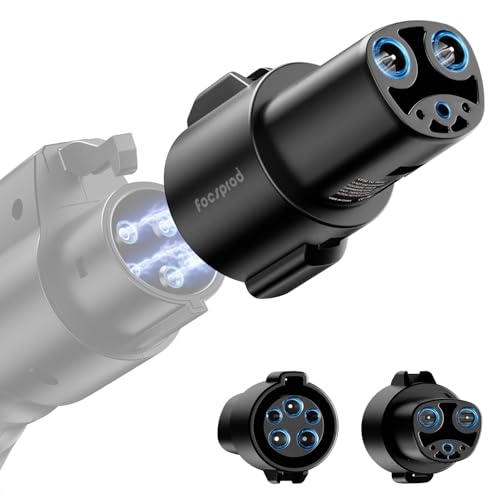
For buyers who prioritize basic function and low spend, this FOCSPROD adapter is the one that catches the eye fast. The appeal is simple. Tesla owners get access to J1772 Level 1 and Level 2 chargers without paying a premium. If you have ever rolled into a municipal garage and seen a row of J1772 plugs humming away while your battery percentage is making you sweat, you already get the point. This kind of adapter is all about turning more chargers into usable chargers.
The specs look stronger than the bargain-bin feel would suggest. FOCSPROD rates it up to 80A and 250V, uses silver-plated pins, and says it complies with UL 2252 through SGS certification. It is also compact, which sounds small on paper but matters a lot in practice. Nobody wants a chunky adapter rattling around in the center console like a loose coffee tumbler. This one is meant to be portable and easy to plug in at home, at work, or while traveling. The three-year warranty helps calm nerves a bit, which is nice at the budget end of the category.
Pros
- Very affordable way to add J1772 access for Tesla owners
- Supports Level 1 and Level 2 charging
- High 80A and 250V rating for AC use
- Compact design is easy to keep in the car
- Three-year limited warranty adds some reassurance
Cons
- Less established brand than some competitors
- Fit and finish may feel more basic than pricier adapters
- Best for occasional to regular AC use, not buyers chasing premium build quality
This is a smart buy for Tesla drivers who want a backup adapter, a spare for a second car, or a low-cost way to expand charging options without overthinking it. It is also a good fit for city drivers who use public AC charging more than DC fast charging. If you care deeply about premium materials, brand recognition, or long-term heavy daily use, one of the step-up options may feel better in the hand. But as a budget pick, it gets the main job done and does it without drama.
To buy this product, click here.
3. Best Premium Option: Lectron NACS to CCS Adapter with Interlock

If your goal is DC fast charging at Tesla Superchargers with a compatible CCS1 vehicle, this product plays in a different league from the little AC adapters above. The Lectron Vortex Plus is a serious piece of hardware meant for high-voltage, high-current use, with a 500A and 1000V rating and a secure interlock design. That sounds technical, because it is. This adapter is for drivers who want to tap into Tesla’s Supercharger network after their automaker has granted access, and that can be a huge deal on road trips where charger availability still shapes your route.
Lectron also brings a strong credibility angle here. The Vortex Plus is marketed as the first publicly available UL 2252 certified adapter of its kind, which gives it real weight in a category where safety matters more than saving a few bucks. Picture a cold, windy charging stop off the interstate. You are tired, the battery is low, and all you want is a connection that locks in cleanly and gets current flowing fast. That is the scenario this adapter is built for. It is not universal, though. Your vehicle must be a supported CCS1 EV with actual Supercharger access.
Pros
- Built for Tesla Supercharger access with approved CCS1 vehicles
- UL 2252 certification adds welcome safety confidence
- 500A and 1000V rating supports true DC fast charging use
- Interlock design helps create a secure high-power connection
- Strong fit for long-distance drivers who rely on DC charging
Cons
- Much pricier than basic AC adapters
- Will not work for AC Level 1 or Level 2 charging
- Compatibility depends on automaker approval for Supercharger access
This is the right buy for CCS1 EV owners who road-trip often and know their vehicle is approved for Tesla Supercharger use. For that audience, it can feel like a big upgrade in charging convenience and route flexibility. If your needs are mostly overnight AC charging at home, hotels, or destination chargers, this is overkill and the wrong category entirely. Premium shoppers with the right vehicle and usage pattern, though, will appreciate what this Lectron brings to the table.
To buy this product, click here.
4. Best Value Choice: Seguma Tesla to J1772 Adapter

This model earns a place because it hits a really appealing middle ground. J1772 EV owners who want access to Tesla wall connectors, mobile chargers, and destination chargers often have to choose between a cheap no-name option and a pricier brand-name unit. Seguma threads that needle pretty well. It is rated for up to 60A and 250V, offers Tesla AC charging access for J1772 vehicles, and includes a push-pull locking design plus IP65 weather resistance, all at a price that usually sits in the sensible middle of the pack.
In day-to-day use, that matters. Think about the driver visiting family for the weekend who can plug into a Tesla wall connector in the garage instead of hunting for a public station after dinner. Or the hotel guest who finds a Tesla destination charger out front and can actually use it. Those are the little quality-of-life wins this adapter is built for. Seguma also keeps it portable at 12.5 ounces and includes a velvet bag, which is a small touch but genuinely handy. This feels like a product aimed at regular drivers, not spec-sheet collectors.
Pros
- Good mix of price, charging capacity, and weather resistance
- Works with many J1772 EVs and PHEVs at Tesla AC chargers
- 60A and 250V support is strong for everyday AC charging
- IP65 rating adds confidence for outdoor charging
- Compact size and included storage bag help with travel use
Cons
- Not compatible with Tesla Superchargers
- Some vehicle exclusions are called out, so compatibility checks matter
- Less brand cachet than Lectron for cautious buyers
Choose this one if you want solid specs without jumping to the most expensive AC adapter in the list. It suits J1772 EV owners who expect to use Tesla destination or home chargers regularly and want something easy to stash in the trunk. If you want DC fast charging access, keep walking. If you want dependable AC flexibility and strong value, Seguma is one of the easiest recommendations here.
To buy this product, click here.
5. Best For Brand Confidence: Lectron Tesla to J1772 EV Charging Adapter

If your shopping style leans toward known names and proven categories, Lectron has obvious appeal. Plenty of EV owners recognize the brand, and that familiarity can feel reassuring when you are buying a part that sits between your car and a live charging source. This adapter is meant for J1772 vehicles using Tesla high powered wall connectors, destination chargers, and mobile connectors, with support up to 48A and 240V. For many drivers, that is plenty for Level 2 AC charging at a solid clip.
The experience here is all about simplicity. Keep it in the car, pull up to a Tesla destination charger, connect, and go. That sounds mundane, but mundane is exactly what you want from an adapter. No weird dance, no mystery lights, no vague feeling that you are asking too much from a tiny plastic coupler. Lectron also notes SGS certification under UL 2251, which helps separate it from the flood of generic listings. The downside is that it is pricier than a few rivals that offer higher amperage on paper, so some buyers may question the raw value.
Pros
- From a well-known EV accessory brand
- Compatible with Tesla wall connectors, destination chargers, and mobile connectors
- Compact and easy to carry
- SGS certified under UL 2251
- Simple choice for J1772 EV owners who want fewer brand worries
Cons
- 48A rating is lower than some competing AC adapters
- Often costs more than lesser-known alternatives
- Not for Supercharger or DC fast charging use
This is a good fit for buyers who would rather pay a bit more for a recognizable brand than gamble on the cheapest listing. It works best for J1772 drivers who use Tesla AC infrastructure regularly and care about a straightforward, no-fuss adapter. Budget shoppers can find cheaper options. Spec hunters can find higher amperage claims. But if brand confidence matters to you, Lectron remains a strong pick.
To buy this product, click here.
6. Best For Frequent Supercharger Stops: LENZ NACS to CCS Adapter for Superchargers

If your EV life includes a lot of interstate miles, coffee-fueled charging stops, and weather that cannot decide what it is doing, this LENZ DC adapter deserves a hard look. It is purpose-built for compatible CCS1 EVs charging at Tesla NACS Supercharger stations, with a 500A and 1000V rating plus UL 2252 compliance through SGS. That puts it in the serious hardware camp, not the casual accessory drawer. It is also focused. No AC charging, no mixed-use ambiguity, just Supercharger access for the right vehicles.
What I like here is the travel-minded packaging of the idea. LENZ includes a protective travel case, and that makes sense because DC adapters are the kind of thing you will actually carry from stop to stop, maybe set on a wet concrete pad, maybe toss back into the frunk while your hands are still cold. LENZ also gives clear usage guidance, including connecting to the Supercharger first and then to the EV, which is the kind of practical detail that helps avoid headaches. It is still dependent on vehicle eligibility, so buyers need to verify access before ordering.
Pros
- Made specifically for Tesla Supercharger use with approved CCS1 EVs
- 500A and 1000V rating supports DC fast charging needs
- UL 2252 compliant and SGS certified
- Protective travel case is genuinely useful
- Clear focus makes it easy to understand its purpose
Cons
- Will not work with Level 1 or Level 2 AC chargers
- Only for vehicles granted Supercharger access
- Less versatile than an AC adapter for everyday charging
Buy this if DC fast charging access is your real pain point and your vehicle is approved to use the Tesla network. It is a better fit for road-warriors than suburban overnight chargers. Drivers who mainly charge at home or at work will get far more use from an AC adapter instead. For the right owner, though, this LENZ can make long-distance charging feel a lot less patchy.
To buy this product, click here.
7. Best Feature-Rich AC Adapter: VIPTOO Tesla to J1772 Adapter
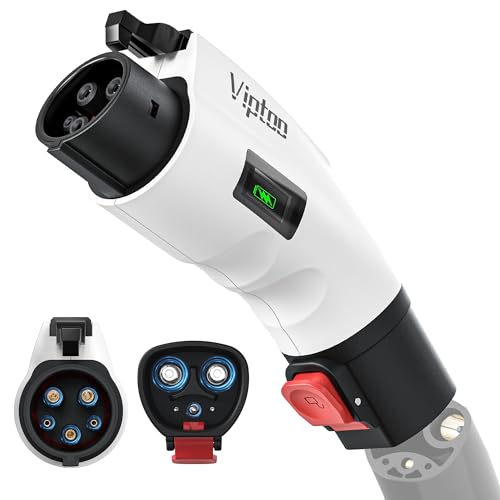
If your favorite products are the ones that save you two extra walks across the parking lot, the VIPTOO has a neat trick. Its built-in charging status display gives you a quick visual check instead of forcing you to peer into the car screen or wait for the charger app to catch up. That is a small convenience, sure, but picture a dark driveway, light rain, hoodie pulled over your head, and a charger session you want to confirm fast. Suddenly that display feels pretty smart.
Beyond the screen, the core specs are solid for a Tesla-to-J1772 AC adapter. It supports up to 60A and 250V for Level 2 AC charging and uses a dual-lock design for a more stable connection. VIPTOO also claims over 15,000 plug-in cycles and IP65 weather protection, with a very wide temperature tolerance. That gives it a slightly tougher, more gadget-forward personality than the plainest adapters in the group. It still does not touch Superchargers, of course, but for J1772 EV owners using Tesla wall, mobile, or destination chargers, it offers a little extra convenience without going wildly upscale.
Pros
- Built-in charging status display is genuinely handy
- 60A and 250V support for strong AC charging capability
- Dual-lock design helps connection security
- IP65 protection and wide temperature tolerance suit outdoor use
- Portable size is easy to keep in the vehicle
Cons
- Display is a convenience feature, not a must-have for everyone
- AC charging only
- Less proven brand name than top-tier category leaders
This is a great pick for drivers who appreciate small usability upgrades and often charge outdoors or away from home. It suits J1772 EV owners who use Tesla AC chargers enough to care about convenience details. If you want the cheapest working adapter, skip the bells and whistles. If you like smarter gear and a clearer at-a-glance charging check, the VIPTOO is easy to like.
To buy this product, click here.
8. Best For All-Weather Durability: Zanch Tesla to J1772 Adapter
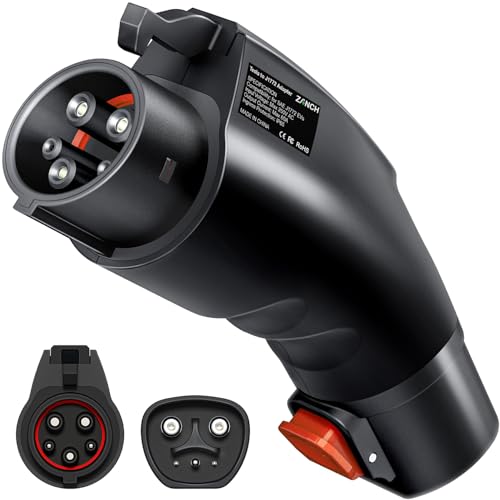
Some adapters sell themselves on max current numbers. This Zanch leans harder into durability, and that is a valid angle. It supports 60A and 250V AC charging for J1772 and CCS1 EVs using Tesla Level 2 wall, mobile, and destination chargers, but the real selling point is the rugged build story. Wide operating temperatures, IP65 resistance, flame-retardant housing, double anti-drop locks, and 10,000 mating cycles all point to a product aimed at regular outdoor use.
That makes it appealing for drivers who leave the adapter in the car year-round and use it in real weather instead of ideal garage conditions. Think slushy winter parking lots, summer pavement heat, and windy evening charging stops at destination properties. Zanch also includes a velvet pouch and lifetime technical support, which sweetens the package. It does not carry the same mainstream brand pull as Lectron, and it is still AC only, but it brings a reassuringly tough vibe that many daily drivers will appreciate.
Pros
- Rugged build with flame-retardant housing and double locks
- IP65 weather resistance supports outdoor use
- 60A and 250V rating is strong for Level 2 AC charging
- Wide operating temperature range suits harsh climates
- Compact size and included pouch help with storage
Cons
- Not compatible with Tesla Superchargers
- Brand is less established than some competitors
- Some shoppers may prefer a certified standard listed more prominently
Pick this one if durability is your main concern and your charging routine regularly involves outdoor AC chargers. It makes a lot of sense for drivers in places with rough winters or blazing summers. Shoppers who mainly charge indoors and want the lowest possible price can go cheaper. Buyers who want a sturdier everyday companion, though, will find this Zanch pretty compelling.
To buy this product, click here.
9. Best High-Amperage Backup Pick: NACS to J1772 Adapter 80A 250V

If your shopping instincts pull you toward higher headroom, this 80A NACS-to-J1772 adapter has obvious appeal. It is built to let J1772 EVs use Tesla wall, mobile, home, and destination chargers, with an 80A and 250V rating for AC charging. That is more than enough for many real-world AC setups, and while the charger and vehicle ultimately decide actual charging speed, extra current headroom can still be a confidence booster for buyers who hate buying close to the limit.
The design sounds practical too. It is compact, portable, tested for many plug cycles, and includes anti-drop locking plus IP65 weather protection. In other words, it tries to hit the shopping checklist squarely. I see this as the kind of adapter a driver buys after getting annoyed one too many times by limited public options around town. Toss it in the trunk, keep it with your charging cable, and suddenly more Tesla AC stations become usable. It lacks the brand identity of the big names, but the paper specs are attractive.
Pros
- High 80A and 250V AC rating
- Compatible with many Tesla AC charger types for J1772 EVs
- Compact and easy to store in the car
- IP65 weather resistance supports outdoor charging
- Anti-drop lock and durability testing add practical reassurance
Cons
- Not compatible with Tesla Superchargers
- Vehicle exclusions mean compatibility checks still matter
- Generic branding may give cautious buyers pause
This is a solid backup or primary adapter for J1772 EV owners who want higher-rated AC capability and do not mind choosing a less prominent brand. It works best for drivers who want access to Tesla AC chargers on trips or around town. If you want the comfort of a stronger brand reputation, Lectron or LENZ may feel safer. If you mainly care about specs and portability, this is a worthy ninth pick.
To buy this product, click here.
How To Choose The Right EV Charging Adapter
Start With Plug Direction, Because This Is Where Most Mistakes Happen
This is the big one. A J1772-to-NACS adapter and a NACS-to-J1772 adapter do completely different jobs. Tesla and newer NACS EV owners usually need an adapter that lets them use J1772 chargers. Many non-Tesla EV owners need the reverse so they can use Tesla AC chargers. Then there are NACS-to-CCS adapters for DC fast charging, which are another category entirely. If you buy the wrong direction, the adapter is basically a paperweight with nice molding.
Separate AC Charging From DC Fast Charging
This trips people up all the time. Most adapters in this category are for Level 1 and Level 2 AC charging, like home wall units, destination chargers, and workplace stations. They do not work at Tesla Superchargers. DC fast charging adapters are larger, more specialized, and usually far more expensive. If your plan is hotel charging, condo charging, or plugging into a friend’s wall connector, AC is your lane. If your dream is opening up Tesla Superchargers for a compatible CCS1 vehicle, you need a dedicated DC adapter.
Check Your Vehicle’s Real Compatibility, Not The Marketing Vibe
A product listing can sound broad and confident, but your specific vehicle still matters. Some adapters exclude certain plug-in hybrids. Some work with Tesla chargers but not Superchargers. Some NACS-to-CCS adapters only work after your automaker enables access through software and account support. Take sixty seconds and confirm your car, model year, and charging use case. That quick check beats standing in a cold parking lot tapping an app that refuses to start a session.
Look For Safety Certification And Solid Materials
Adapters deal with serious current. This is not the spot to get reckless for the sake of saving a few dollars. UL 2251 or UL 2252 compliance, SGS certification claims, silver-plated contacts, flame-retardant housings, and secure locking designs all matter. You do not need aerospace poetry in the product description, but you do want signs that the adapter was built for repeated use and stable current transfer. A good adapter should feel like a dependable tool, not a novelty accessory from a bargain bin.
Think About Your Real Charging Routine
Are you mostly charging overnight at home or at work? Do you road-trip a lot? Are you trying to use Tesla destination chargers at hotels and restaurants, or are you aiming for high-speed Supercharger stops on long drives? The right answer depends on where your car spends its time. A compact AC adapter is perfect for the driver who spends weekends at relatives’ houses and wants more Level 2 options. A bulky DC adapter makes more sense for someone who logs hundreds of highway miles every week.
Weather Resistance And Locking Design Matter More Than They Sound
Charging rarely happens in perfect showroom weather. It happens in sleet, sticky heat, dim garages, and windy parking lots with leaves skittering around your ankles. An IP-rated housing, firm locking tabs, and a secure fit make everyday charging much less annoying. A sloppy connection can turn a quick plug-in into a repeat attempt, and that gets old fast. Buyers in wet or cold climates should care about this more than a flashy extra feature.
Do Not Overpay For Features You Will Never Use
Some people need a DC fast charging adapter with interlock protection and high-voltage certification. Others just need a simple AC adapter to use the charger at work twice a week. A built-in display is neat, but not everyone needs it. An 80A rating sounds impressive, but many home and destination chargers operate well below that. Buy for your actual charging life, not the most dramatic spec line on the page. That is where the best value usually hides.
Best EV Charging Adapter FAQ
What is the difference between J1772, NACS, and CCS?
J1772 is a common AC charging connector used by many non-Tesla EVs for Level 1 and Level 2 charging. NACS is the Tesla-style connector now spreading to more brands in North America. CCS1 is used for DC fast charging on many non-Tesla EVs. The adapter you need depends on which plug your car has and which charger you want to use.
Can any EV charging adapter use Tesla Superchargers?
No. Most adapters cannot. Tesla Superchargers use DC fast charging, so you need a dedicated DC adapter such as a NACS-to-CCS unit, and your vehicle must also be approved for Supercharger access. A basic Tesla-to-J1772 or J1772-to-Tesla adapter is usually for AC charging only.
Are EV charging adapters safe to use?
They can be very safe if you buy a well-built adapter with proper certification claims, solid locking design, and compatibility with your vehicle and charger. Problems usually start when buyers choose the wrong adapter type, use damaged equipment, or go with ultra-cheap products that do not inspire much confidence. Checking fit, certification, and usage instructions matters.
Do higher amp ratings mean faster charging every time?
No. The actual charging speed depends on the charger, the car’s onboard charging system, battery condition, and sometimes temperature. A higher-rated adapter gives more headroom, which is good, but it does not force the station or the car to charge faster than they already can.
Do I need an AC adapter or a DC fast charging adapter?
If you mainly charge at home, at work, at hotels, or at destination chargers, you probably need an AC adapter. If you are trying to access Tesla Superchargers with a supported CCS1 vehicle, you need a DC fast charging adapter. Think about where you actually charge most often and the answer usually gets obvious quickly.
Can Tesla owners use J1772 chargers with an adapter?
Yes. That is one of the most common uses for an EV charging adapter. A J1772-to-NACS adapter lets Tesla and some newer NACS EV owners connect to public and home J1772 chargers for Level 1 or Level 2 AC charging.
Can a J1772 EV use Tesla destination chargers?
Yes, with the right Tesla-to-J1772 or NACS-to-J1772 AC adapter. These adapters let many J1772 EVs use Tesla wall connectors, mobile chargers, and destination chargers. They generally do not provide access to Tesla Superchargers.
What is the most common buying mistake with EV charging adapters?
The most common mistake is buying the wrong conversion direction. The second is assuming every Tesla-related adapter works with Superchargers. A close third is skipping compatibility checks for a specific model or model year. A two-minute check before buying can save a lot of frustration later.
Final Verdict
If I were picking one best EV charging adapter for the widest group of drivers in this roundup, I would go with the LENZ J1772 to NACS Charging Adapter. It nails the basics that matter most for everyday use. Strong 80A AC rating, practical portability, safety-minded construction, and compatibility that reaches beyond current Tesla owners into newer NACS vehicles. It feels like the kind of adapter you buy once, toss in the glove box, and end up quietly appreciating again and again at office chargers, hotel lots, and apartment garages.
That said, the right choice depends heavily on which side of the plug you live on. For Tesla owners chasing affordable J1772 access, the FOCSPROD J1772 to Tesla is the best budget move. For J1772 EV owners who want Tesla AC charging access at a fair price, the Seguma Tesla to J1772 is the best value pick. And for supported CCS1 drivers who need true Tesla Supercharger access, the Lectron NACS to CCS Adapter with Interlock is the premium standout. Match the adapter to your car, your charger type, and your real charging habits, and you will avoid the most expensive mistake of all, buying the wrong little gadget for a very important job.