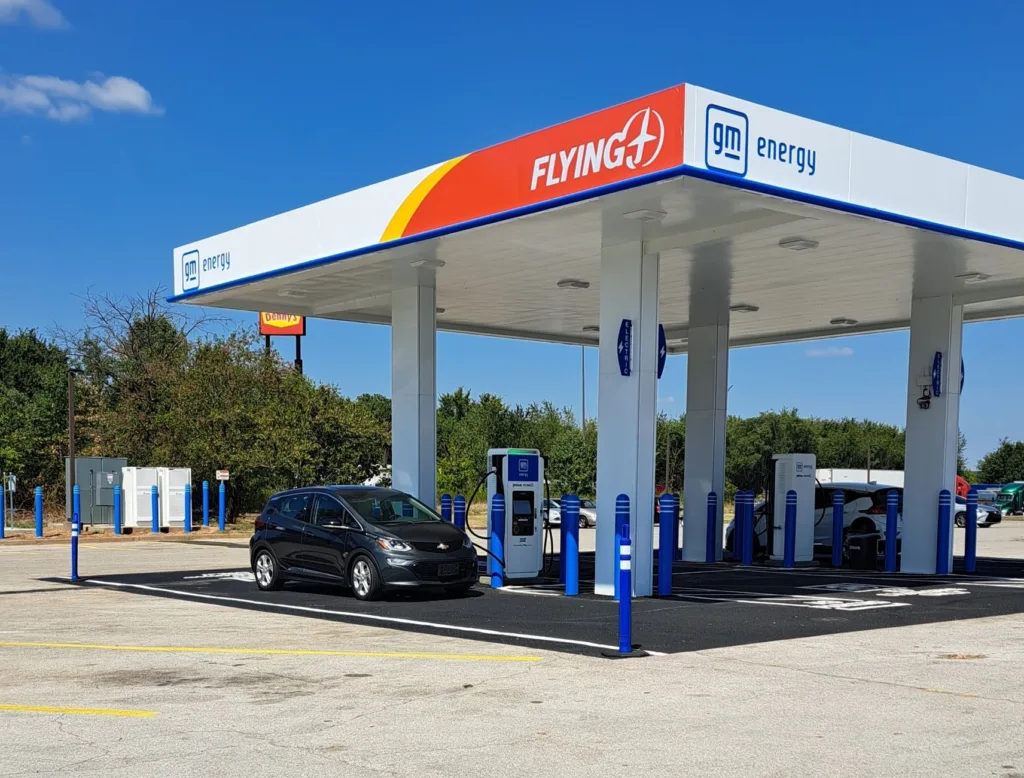
Picking the right charger for a Chevy Bolt can feel weirdly high stakes. One bad choice and you end up staring at your garage wall at 10 p.m., wondering why your car is sipping power like it is using a cocktail straw. Bolt owners usually start shopping because Level 1 charging feels painfully slow, public charging is hit or miss, or they want a more convenient setup at home before the next workweek scramble begins.
The biggest mistake people make is chasing the highest amperage without checking their outlet, circuit, and actual daily driving needs. A Chevy Bolt does not need the flashiest charger on the page to be practical. What matters more is connector compatibility, safe charging on the circuit you actually have, cable length, weather resistance, easy controls, and whether you want a simple plug-and-charge unit or smarter scheduling through an app. Some buyers want a travel-friendly backup they can toss in the trunk. Others want a home charger that feels solid enough for years of nightly use.
Different Bolt owners have different priorities, and that is where this list helps. After comparing the strongest options, the ChargePoint HomeFlex stands out as the best overall pick for buyers who want trusted hardware, strong app support, and room to grow into a more permanent home-charging setup without second-guessing the purchase.
If you want the highlights first, the quick picks below make the shortlist easy to scan.
Quick Picks
- Best Overall: ChargePoint HomeFlex
- Best Budget Pick: eTimxon 16A Portable Level 1&2 EV Charger
- Best Premium Option: AIMILER 48A Level 2 EV Charger
- Best Value Choice: ChargeHere 32 Amp Level 1 & 2 EV Charger
Best EV Charger For Chevy Bolt Comparison Table
| Product | Best For | Main Strength | Power / Plug |
|---|---|---|---|
| ChargePoint HomeFlex | Most buyers | Trusted brand, polished app, strong home charging performance | Level 2, NEMA 14-50 |
| eTimxon 16A Portable EV Charger | Low-cost backup charging | Very affordable dual-level portability | 16A max, NEMA 6-20 + 5-15 adapter |
| AIMILER 48A Level 2 EV Charger | Higher-output home setup | Up to 48A with smart controls | 48A max, NEMA 14-50 / hardwire-style capability |
| ChargeHere 32 Amp EV Charger | Strong value | 32A charging with adjustable current and delay timer | 32A max, NEMA 14-50 + 5-15 adapter |
| AIMILER 32A Level 2 EV Charger | Smart scheduling on a budget | App control, adjustable amperage, long cable | 32A max, NEMA 14-50 |
| EVDANCE 24A EV Charger | Dryer outlet charging | NEMA 14-30 plug fits many existing laundry circuits | 24A max, NEMA 14-30 |
| ELEGRP 16 Amp EV Charger | Weather exposure | IP67 design and cooler-running cable tech | 16A max, NEMA 6-20 + 5-15 adapter |
| BETUMODA 16 Amp EV Charger | Simple touch controls | Large touch display and flexible delay settings | 16A max, NEMA 6-20 + 5-15 adapter |
| AplysiaTech Level 1 EV Charger | Apartment or emergency use | Plain, portable 120V charging | 15A, NEMA 5-15 |
If you want the fuller story behind each pick, the reviews below show where each charger fits and where the tradeoffs start to show.
1. Best Overall: ChargePoint HomeFlex

ChargePoint HomeFlex earns the top spot because it feels like the charger you buy once and stop worrying about. For a Chevy Bolt owner who wants dependable home charging, that matters. You come home from work, plug in, hear the connector click, and move on with your evening instead of fiddling with settings in the driveway. Its NEMA 14-50 plug makes it a natural match for many home Level 2 setups, and the J1772 connector works directly with the Bolt.
What really separates it from a stack of lesser-known portable chargers is the ecosystem around it. The app is mature, the brand has a long track record, and the unit is built for indoor or outdoor installation with a cold-resistant cable. Buyers who care about scheduling, energy tracking, reminders, and long-term ownership tend to appreciate that polished feel. It is the sort of charger that suits someone who parks in the same spot every night and wants the experience to feel clean, fast, and routine instead of improvised.
Pros
- Trusted brand with strong reputation in home EV charging
- J1772 connector is a direct fit for the Chevy Bolt
- Smart app features are more polished than many budget models
- UL-certified build with indoor or outdoor installation flexibility
- NEMA 14-50 plug suits common Level 2 home charging setups
Cons
- Typically costs more than many portable no-name chargers
- Best experience usually assumes a dedicated home charging location
- May be more charger than casual low-mileage drivers really need
This is the right pick for most Bolt owners who want a primary home charger and care about reliability more than chasing the lowest upfront spend. If you live in a house, plan to keep your EV for a while, and want a charger that feels established and easy to live with, this one makes a lot of sense. Shoppers who only need a lightweight backup for occasional travel can save money elsewhere, but for everyday charging, HomeFlex is the safest all-around bet in this group.
To buy this product, click here.
2. Best Budget Pick: eTimxon 16A Portable Level 1&2 EV Charger

This model stands out because it tackles the basic Chevy Bolt charging problem without asking for a huge spend. If your current routine involves a standard wall outlet and a lot of patience, moving up to a 240V NEMA 6-20 setup can feel like a breath of fresh air. For budget shoppers, that jump matters more than fancy branding. The eTimxon gives you dual-level charging, a 25-foot cable, and enough flexibility for garage use, travel, or backup duty.
It fits especially well for drivers who do modest daily mileage and simply need their Bolt topped off overnight. Picture an owner with a short commute, a detached garage, and a mild case of charger sticker shock. This is the kind of option that solves the real problem without turning the shopping process into a research spiral. The catch is that you need to be realistic about its place in the lineup. It is a practical, value-focused portable charger, not a premium permanently mounted showpiece.
Pros
- Affordable way to step into Level 2 charging
- Includes both NEMA 6-20 plug and 5-15 adapter
- 25-foot cable gives good parking flexibility
- ETL-certified with temperature protection features
- Portable enough for backup or travel use
Cons
- 16A max output is much slower than 32A or 40A chargers
- Requires manual current awareness on 120V use
- Brand recognition is limited compared with bigger names
Buy this if you want the cheapest sensible upgrade from plain Level 1 charging and your Bolt does not need huge nightly replenishment. Skip it if you regularly run the battery low and want faster recovery before morning. In real use, it works best as a budget home charger, a second charger for another location, or a trunk backup for road trips where outlet access is unpredictable.
To buy this product, click here.
3. Best Premium Option: AIMILER 48A Level 2 EV Charger

If your goal is a higher-output home setup with extra headroom, this AIMILER 48A model is the premium pick. A Chevy Bolt cannot use the absolute maximum output the way some larger EVs can, but there is still value in buying a charger with room to spare if you are thinking ahead. Maybe the Bolt is your current daily driver and a future EV in the household might want more current. That kind of future-proofing is where this charger starts to make sense.
It also brings smart features that many buyers want now, not later. You get adjustable amperage, app control, a touch screen, scheduling support, and a 25-foot cable. In a real garage, that means fewer awkward parking adjustments and easier overnight charging during off-peak hours. The main caution is electrical setup. A charger in this class deserves serious attention to circuit requirements, and many buyers will be happiest with professional installation. This is less of a casual plug-it-anywhere tool and more of a serious home charging station.
Pros
- Higher-output capability with room for future EV needs
- Adjustable amperage and app-based scheduling
- 25-foot cable is convenient for larger garages and driveways
- ETL/FCC certifications and weather-resistant construction
- Useful display for current, voltage, and charging status
Cons
- Overkill for some Bolt owners with basic charging needs
- Electrical requirements are more demanding than 16A or 32A units
- Less ideal as a lightweight travel charger
This is best for buyers setting up a primary home charger and thinking long-term, especially households with more than one EV or likely future upgrades. If you rent, move often, or mainly want a portable backup, it is probably too much hardware. For a permanent garage install with strong feature depth, though, it is the premium choice in this list.
To buy this product, click here.
4. Best Value Choice: ChargeHere Level 1 & 2 EV Charger

ChargeHere hits a sweet spot that a lot of Chevy Bolt owners are chasing. It offers up to 32 amps, includes a NEMA 14-50 plug for proper Level 2 charging, throws in a 5-15 adapter for basic household use, and keeps controls simple with physical buttons and an LCD. That combination makes it feel less stripped down than entry-level chargers and less expensive-feeling than some suspiciously cheap listings.
In practice, this is the kind of charger that works for the person who wants one unit to cover home charging, occasional travel, and off-peak overnight scheduling without depending on Wi-Fi. There is something refreshing about pressing a button, setting your current, and getting on with it. No app pairing drama, no wondering whether the garage Wi-Fi is strong enough, no extra fluff. The 25-foot cable also helps in those real-life parking situations where the Bolt ends up a little too far from the outlet after a grocery run or rainy-night pull-in.
Pros
- 32A output is a meaningful step up from 16A portable chargers
- Includes both NEMA 14-50 plug and 120V adapter
- UL listed with adjustable current and delay start
- LCD display is easy to read at a glance
- Good fit for home use and backup travel charging
Cons
- No app features for buyers who want remote control
- Bulkier than smaller 16A travel-focused units
- Less established brand than ChargePoint
Choose this one if value means getting strong real-world capability without paying extra for features you may never touch. It is especially good for drivers who want faster home charging than a 16A unit can offer but still want some portability. Buyers who prioritize brand prestige or a more advanced software ecosystem may lean elsewhere, but for straightforward function per dollar, this is one of the smartest picks here.
To buy this product, click here.
5. Best For Smart Scheduling: AIMILER 32A Level 2 EV Charger

One reason this option stands out is how neatly it balances speed, adjustability, and convenience. For a Chevy Bolt, 32A is a very practical zone. It is fast enough to feel like a real upgrade over 16A portable units, but it usually stops short of the heavier electrical demands that come with higher-output premium models. If your local utility offers cheaper overnight rates, the app scheduling and adjustable amperage become more than gimmicks. They become the part that saves you money and hassle every week.
The onboard screen and touch controls are also useful in a very down-to-earth way. Imagine getting home late, backing the Bolt into the driveway, and checking charging status right there without fumbling through menus on your phone. That tactile, visible feedback matters more than people think. The 25-foot cable gives this charger a flexible footprint, and the weather-resistant housing helps it handle normal outdoor placement. The caution is that app-based budget chargers can sometimes feel less polished than top-tier smart brands.
Pros
- 32A charging is a strong match for many Bolt owners
- App control supports scheduling and monitoring
- Adjustable amperage helps match available circuits
- 25-foot cable adds useful reach
- Display shows charging data clearly
Cons
- App setup may take patience on some home networks
- Less brand history than more established EV charging companies
- Best performance assumes a proper 14-50 outlet setup
This is a strong pick for buyers who want smarter features without paying top-shelf prices. It makes the most sense in a home garage or driveway where the charger stays mostly in place and gets used several nights a week. If you dislike apps or want a more bare-bones control scheme, another model here will fit better. For scheduling-focused Bolt owners, though, this one punches above its class.
To buy this product, click here.
6. Best For Dryer Outlet Setups: EVDANCE Level 2 EV Charger 24Amp
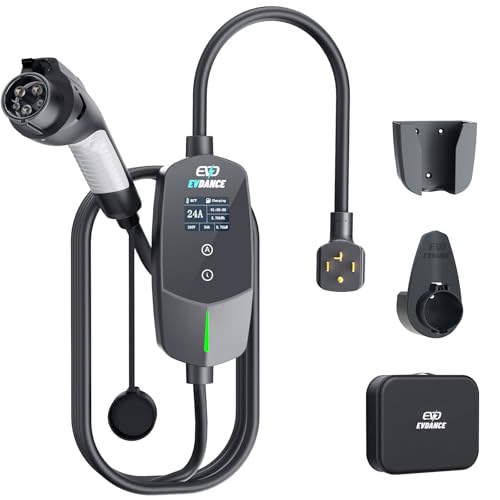
For buyers who already have a NEMA 14-30 dryer outlet nearby, the EVDANCE charger is immediately interesting. That single detail can save a ton of friction. Instead of planning a brand-new charging circuit from scratch, some Bolt owners can plug into an existing laundry-area outlet and start charging at Level 2 speeds. That is the kind of practical shortcut that makes a charger feel tailor-made for a real house instead of a spec sheet fantasy.
Its 24A output sits in a useful middle ground. It is quicker than many 16A portable units, while being friendlier to homes that are not set up for a 40A or 50A charging circuit. The display, adjustable current, and delay settings give it enough flexibility for everyday use, especially if you want to run the charger overnight after the dryer is done. The 25-foot reach also helps if the outlet is in an awkward spot. Still, you absolutely need the right plug type. This is a niche fit, but for the right garage or laundry-room layout, it is a sharp one.
Pros
- Excellent fit for homes with a NEMA 14-30 dryer outlet
- 24A charging is faster than many entry-level portable chargers
- Adjustable current and delay charging features are practical
- 25-foot cable helps with outlet-to-car distance
- Weather-resistant housing adds flexibility for placement
Cons
- Specific plug type limits who this charger suits
- Slower than 32A or 40A home chargers
- Less flexible if you later move to a different outlet standard
Buy this if your home already has the right dryer outlet and you want to avoid extra installation headaches. Skip it if your garage is wired around a 14-50 or 6-20 setup instead, because the plug mismatch will kill the convenience factor fast. For the right home layout, though, this is one of the more sensible and targeted options in the roundup.
To buy this product, click here.
7. Best For Weather Resistance: ELEGRP Level 1/2 EV Charger

For buyers who park outside or have a semi-exposed charging area, weather resistance starts feeling less like a bullet point and more like peace of mind. The ELEGRP brings an IP67 rating, solid durability claims, and a 21-foot cable that still feels manageable for everyday handling. If you have ever unplugged a stiff cord on a cold morning while the driveway is wet and the wind is doing its usual nonsense, you know cable quality matters.
Performance-wise, this is still a 16A charger, so expectations need to stay grounded. It is a practical Level 2 option for lighter daily driving, not a high-output beast. Still, the combination of dual-voltage support, cooler-running cable technology, and a longer warranty gives it credibility in a category where many units blur together. This one feels aimed at the owner who wants a reliable, portable charger that can handle rougher daily conditions without looking flimsy or disposable.
Pros
- IP67 weather resistance is stronger than many rivals
- Dual-level charging adds flexibility for home and travel
- 21-foot cable is easier to manage than extra-long bulky cords
- Focus on conductivity and cooler operation is reassuring
- Two-year warranty is better than many budget options
Cons
- 16A charging speed is modest for larger daily charging needs
- Shorter cable than some 25-foot competitors
- Less suitable as a primary charger for high-mileage drivers
This is a smart buy for Bolt owners charging outdoors, in carports, or in climates where rain, snow, and temperature swings are part of the routine. If your daily use is heavier and you want the quickest overnight refill possible, step up to a 32A or higher unit. If ruggedness and portability matter more than maximum speed, the ELEGRP has a very believable niche.
To buy this product, click here.
8. Best For Easy Controls: BETUMODA Level 1 EV Charger

If your goal is simple setup with clearer controls than the average budget charger, the BETUMODA has a nice hook. The 2.8-inch touch screen is larger than what you get on many rivals, and for plenty of drivers that means less squinting, less second-guessing, and fewer weird button combinations at the car. The charger also offers adjustable current and a delayed start timer, which is handy if your utility rates drop late at night.
This is the sort of charger that suits a Bolt owner who wants an approachable interface more than advanced brand ecosystems. Picture someone helping a parent transition into EV ownership or setting up a second charger at a vacation place where ease matters more than speed bragging rights. With NEMA 6-20 and 5-15 compatibility, it can work in a few different scenarios, though its 16A ceiling keeps it firmly in the moderate-speed camp. The upside is flexibility and low fuss. The tradeoff is pace.
Pros
- Large touch display is easier to use than many budget competitors
- Adjustable current helps match household circuit limits
- Dual plug compatibility supports 120V and 240V use
- 25-foot cable provides generous reach
- Delay charging feature can help reduce electricity costs
Cons
- 16A max output is fairly modest
- Brand is less proven than major EV charging names
- CE/FCC claims are less reassuring to some buyers than UL-focused branding
Buy this if you value a friendlier interface and moderate charging needs over raw power. It works well for shorter commutes, second-home charging, or buyers who dislike tiny displays and fiddly controls. If your Bolt sees a lot of miles every day, faster options on this list will be a better long-term fit.
To buy this product, click here.
9. Best For Emergency Backup: AplysiaTech Portable EV Charger Level 1

This model earns its place because plain old 120V charging still has a role for Chevy Bolt owners. It is slow, sure, and nobody is mistaking it for a fast home station. But there is a real comfort in having a simple Level 1 charger in the trunk or at a second location. Think of a weekend visit to family, a rental house with no Level 2 option, or a work location where a standard outlet is the only thing on offer. In those moments, “slow” beats “stranded” every time.
The AplysiaTech is best viewed as a backup, apartment-friendly, or low-mileage solution. Its 21-foot cord and J1772 compatibility keep things straightforward, and the portable format is easy to store. Bolt drivers who cover short daily distances can sometimes make Level 1 work surprisingly well overnight. Still, expectations matter. This is the charger you pack for flexibility, not the one you buy to refill a heavily used battery at speed.
Pros
- Works from a standard 120V household outlet
- Portable and easy to keep in the car
- Simple J1772 compatibility for the Chevy Bolt
- Useful as an emergency or travel backup charger
- Affordable entry point for basic charging needs
Cons
- Level 1 charging is very slow for daily heavy use
- 21-foot cable is shorter than some alternatives
- Not the right choice for drivers needing fast overnight replenishment
Choose this if you need a dependable backup, live where 240V access is unrealistic, or want a charger to stash in the cargo area for peace of mind. Skip it as your only charger if your Bolt sees regular long commutes or frequent low-battery evenings. In those cases, a 16A, 24A, or 32A option will feel dramatically better in everyday life.
To buy this product, click here.
How To Choose The Right EV Charger For Chevy Bolt
Match The Charger To Your Real Outlet, Not Your Dream Setup
A lot of shopping mistakes start here. People see “40A” or “48A” and assume bigger automatically means better, then realize their garage only has a standard outlet or a lower-amperage 240V circuit. Start by checking what receptacle you actually have, such as NEMA 5-15, 6-20, 14-30, or 14-50. A charger that fits your current setup cleanly is usually a smarter buy than a faster model that forces expensive changes right away.
Think About Your Daily Miles
If your Bolt handles a short commute, a 16A Level 2 charger may be plenty. For drivers piling on mileage, faster 24A or 32A charging can feel much more comfortable, especially after a late-night errand run or back-to-back busy days. A slow charger can work fine until the first time you come home nearly empty and need the car ready again by sunrise. That is where charging speed becomes very real.
Decide Between Portable Flexibility And Permanent Home Use
Some chargers are happiest living on a garage wall every day. Others are better as portable units you can take on trips or move between locations. If you own your home and charge in the same place nightly, a sturdier home-focused model often feels better long term. If you split time between homes, travel often, or want a backup in the trunk, portability matters more.
Pay Attention To Cable Length
This sounds boring until you park nose-first one day and the plug suddenly will not reach. A 25-foot cable gives much better flexibility than a shorter cord, especially in shared garages, narrow driveways, or awkward parking spaces. Still, longer cables can be heavier and messier to coil. Think about where your outlet sits relative to the Bolt’s charge port and how tidy you want the setup to feel.
Choose Smart Features Only If You Will Actually Use Them
App control, Wi-Fi scheduling, charging history, and remote alerts can be genuinely useful, especially for off-peak power rates. They can also be extra clutter if you just want to plug in and walk away. Some buyers love checking charging sessions from the couch. Others want physical buttons and zero software drama. Pick the style that matches your patience level.
Weather Resistance Matters More For Outdoor Parking
If your charger will live in a covered garage, moderate weather protection may be enough. If it will face rain, dust, snow, or temperature swings, look harder at IP ratings and cable durability. Outdoor charging always feels a little different at 6 a.m. in bad weather, and a sturdier charger can make that routine less annoying.
Do Not Ignore Brand Trust And Safety Certifications
An EV charger handles serious power, often night after night. That is a bad place to get careless. Look for credible certifications, honest electrical requirements, and a brand or seller that appears prepared to support the product after the sale. Saving a little money is nice. Feeling uneasy every time the charger kicks on is not.
Best EV Charger For Chevy Bolt FAQ
Does the Chevy Bolt use a J1772 charger?
Yes. The Chevy Bolt uses a J1772 port for AC charging, so the chargers in this roundup are compatible without needing a special adapter for the car itself. That makes shopping simpler than it is for some other EVs.
Is a 16A charger enough for a Chevy Bolt?
For many drivers, yes. If your daily mileage is modest, a 16A Level 2 charger can add enough range overnight to keep the Bolt ready for normal commuting. If you drive farther each day or want faster recovery from a low battery, a 24A or 32A unit will feel more comfortable.
Can I charge a Chevy Bolt from a regular household outlet?
Yes, with a Level 1 charger or a dual-voltage charger using its 120V adapter. It is the slowest option, but it still works. This setup suits emergency use, apartment parking, very short commutes, or situations where 240V access is unavailable.
What is the best plug type for home charging a Chevy Bolt?
For many homes, a NEMA 14-50 outlet is the most common target for faster Level 2 charging. That said, a NEMA 6-20 or 14-30 setup can still be very practical if it matches your existing wiring. The best plug type is the one that safely fits your real circuit and charging needs.
Do I need Wi-Fi or an app for an EV charger?
No. Plenty of excellent chargers work perfectly well without Wi-Fi. Smart features help with scheduling, tracking energy use, and remote monitoring, but a simple charger with physical controls can be easier to live with if you prefer less setup.
Should I buy a portable charger or a wall-mounted home charger?
If you charge in one spot every night and want a cleaner setup, a home-focused model is often the better experience. If you travel often, split time between locations, or want backup flexibility, a portable charger makes more sense. Some models in this list can cover both roles fairly well.
Can a higher-amperage charger damage my Chevy Bolt?
No, as long as the charger and installation are correct. The car controls how much power it accepts. The bigger concern is whether your outlet and circuit are properly matched to the charger’s maximum output. That is why checking electrical compatibility matters so much before buying.
Final Verdict
If you want the safest all-around recommendation, the ChargePoint HomeFlex is still the one to beat. It brings the strongest blend of brand trust, dependable everyday performance, and smart features that feel mature instead of half-baked. For a Chevy Bolt owner who wants a primary home charger and plans to use it often, it is the easiest pick to recommend. If your budget is tighter, the eTimxon 16A gives you a very affordable path into Level 2 charging, while the ChargeHere 32A stands out as the best value for shoppers who want stronger charging speed without jumping into premium territory.
The right charger really comes down to how you live with your Bolt. Short commute and basic outlet access? A simpler 16A or Level 1 option may be enough. Dedicated garage setup and heavier weekly driving? A 32A or better charger will feel much more satisfying. Future-proofing for another EV in the household? That is where a higher-output option like the AIMILER 48A starts looking smart. Pick the charger that fits your outlet, your parking routine, and your actual driving pattern, and the whole EV ownership experience gets smoother fast.